Omega-3 fatty acids are typically marketed for heart health, their face on fish oil bottles alongside claims about lower triglycerides, reduced inflammation, and cardiovascular disease prevention. All of this is true and valuable, but it may not be the most compelling reason to prioritize these fatty acids in your diet. The most intriguing and personally relevant evidence for omega-3s might be in an entirely different organ: your brain.
Your brain is approximately 60% fat by dry weight, making it the fattiest organ in your body. Of that fat, a substantial portion is DHA (docosahexaenoic acid), one of the two primary marine omega-3 fatty acids. DHA isn’t just stored there passively; it’s a structural component of brain cell membranes, directly affecting how neurons signal to each other, how neurotransmitters function, and how your brain processes information moment to moment. The fluidity and responsiveness of your neural architecture depends, quite literally, on having enough of this specific fatty acid available.
Population studies consistently show that low omega-3 intake correlates with higher rates of depression, anxiety, cognitive decline, and neurodegenerative disease risk. Supplementation trials show measurable benefits for mood disorders, ADHD symptoms, and potentially slowing age-related cognitive deterioration. This isn’t about preventing a heart attack in 30 years, though that matters too. This is about how your brain functions today, how your mood operates this week, and whether you maintain cognitive capacity as you age. The evidence suggests that what you eat for breakfast might affect how you think by afternoon.
The Two Omega-3s That Matter for Your Brain
When researchers study omega-3s and brain health, they’re specifically examining two fatty acids: EPA (eicosapentaenoic acid) and DHA (docosahexaenoic acid). Both come primarily from marine sources, and while they’re often discussed together, they have distinct roles in brain function. Understanding the difference helps you choose the right supplementation strategy for your specific goals.
EPA is a 20-carbon fatty acid that primarily influences inflammation and mood. It doesn’t accumulate in brain tissue the way DHA does, but it exerts powerful effects through anti-inflammatory pathways and neurotransmitter modulation. Studies focusing on depression and anxiety tend to find stronger benefits from EPA-dominant formulations, suggesting that EPA’s mechanisms, likely related to reducing neuroinflammation and enhancing serotonin signaling, are particularly relevant for mood regulation. For someone primarily concerned with depression or anxiety symptoms, EPA is the omega-3 to prioritize.
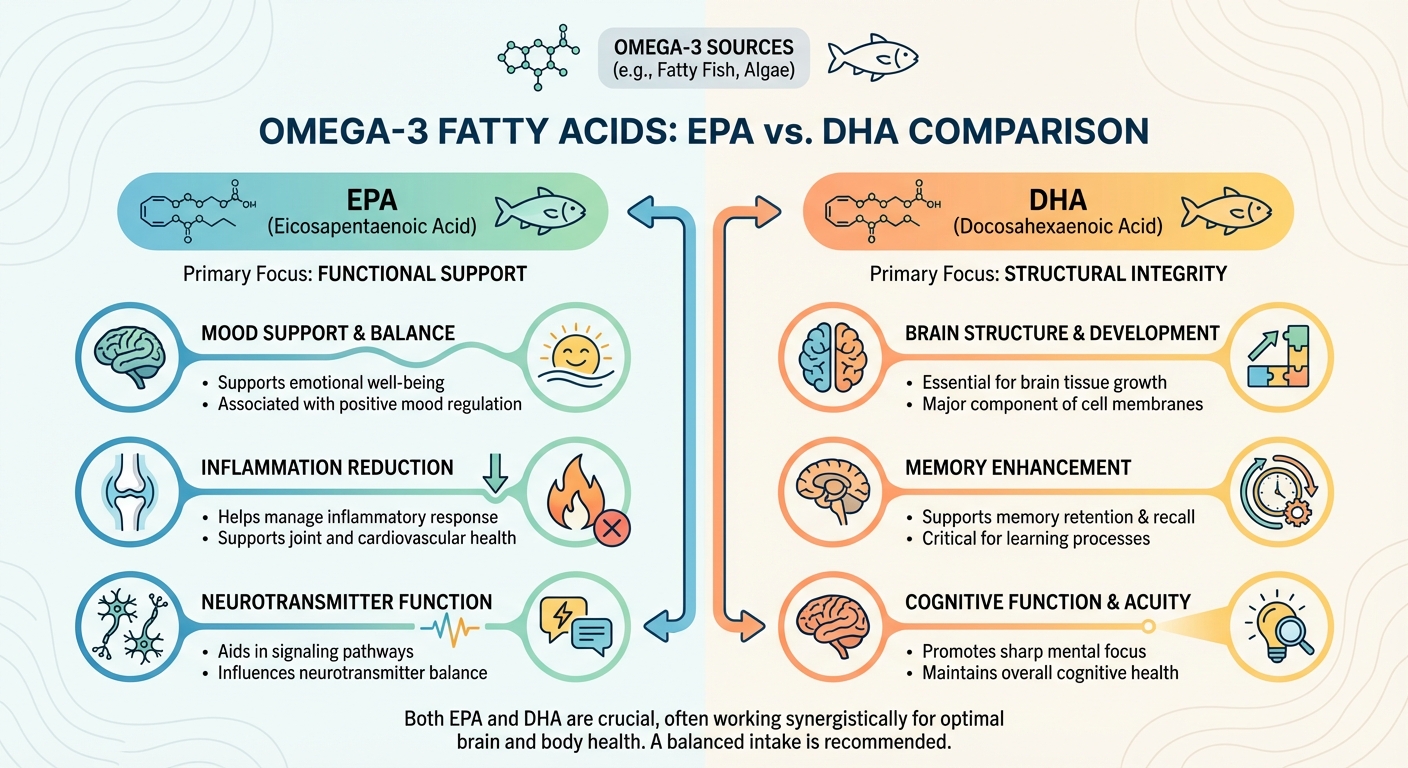
DHA is a longer 22-carbon fatty acid that serves as the primary structural omega-3 in brain tissue. It accumulates in neuronal membranes, particularly in areas involved in learning, memory, and cognitive processing. Studies on cognitive function, brain structure, and dementia prevention tend to emphasize DHA’s importance, because maintaining adequate DHA levels appears to preserve the physical architecture of the brain itself. The hippocampus (memory center) and prefrontal cortex (executive function) have particularly high DHA concentrations, and imaging studies show correlations between DHA levels and the size and integrity of these regions.
Most fish oil supplements contain both EPA and DHA, but the ratio varies considerably between products. Some formulations are EPA-dominant (typically marketed for mood support), some are balanced, and some are DHA-dominant (marketed for cognitive function and brain health). Neither is “better” in absolute terms; the optimal choice depends on whether your primary concern is mood regulation or cognitive preservation. For general brain health, a balanced formulation or one emphasizing DHA makes sense. For mood disorders specifically, EPA-dominant formulations have stronger research support.
ALA (alpha-linolenic acid) from plant sources like flax, chia, and walnuts can theoretically convert to EPA and DHA, but the conversion rate is discouragingly low, typically 5-10% for EPA and under 5% for DHA. Plant omega-3s provide other benefits and shouldn’t be dismissed, but they’re not equivalent to marine sources for brain-specific applications. Vegetarians and vegans need to consider algae-derived EPA/DHA supplements to achieve the brain health benefits that research associates with these fatty acids.
Depression and Mood: The Strongest Evidence
The most robust evidence for omega-3s’ mental health benefits comes from depression research. Multiple meta-analyses examining dozens of randomized controlled trials consistently show that omega-3 supplementation reduces depression symptoms, with effect sizes that, in mild to moderate cases, approach those of first-line antidepressant medications. This isn’t a marginal finding or cherry-picked data; it’s a consistent pattern across different study populations, methodologies, and research groups.
A 2019 meta-analysis published in Translational Psychiatry, analyzing 26 randomized controlled trials with over 2,160 participants, found that EPA-dominant supplements significantly reduced depression scores compared to placebo. The effect was most pronounced in individuals already taking antidepressants, suggesting omega-3s work synergistically with standard treatment rather than replacing it. Dosing in effective studies typically ranged from 1-2 grams of EPA daily, with formulations having an EPA-to-DHA ratio of at least 2:1 showing stronger effects than balanced or DHA-dominant formulations.
The mechanisms underlying omega-3s’ antidepressant effects likely involve multiple pathways. Neuroinflammation is increasingly implicated in depression, and EPA has potent anti-inflammatory properties that may reduce the inflammatory markers elevated in depressed individuals. Omega-3s also appear to influence neurotransmitter function, enhancing serotonin and dopamine signaling through effects on receptor sensitivity and membrane fluidity. Additionally, they protect neurons from oxidative stress and may support neuroplasticity, the brain’s ability to form new connections and adapt.
This doesn’t mean omega-3s should replace antidepressants or therapy for moderate to severe depression. The research supports them as adjunct therapy, enhancing the effectiveness of standard treatment, or as a first-line intervention for mild symptoms where the risk-benefit calculation favors starting with something gentler than medication. Some psychiatrists now routinely recommend omega-3 supplementation alongside conventional treatment, viewing it as a low-risk addition that may accelerate or enhance response. For someone with subclinical depressive symptoms or a family history of depression, omega-3 optimization represents a reasonable preventive strategy.
Anxiety and Stress Resilience
The evidence for omega-3s reducing anxiety is somewhat less consistent than for depression, but still promising enough to warrant attention. A 2018 meta-analysis published in JAMA Network Open, examining 19 clinical trials with over 2,200 participants, found that omega-3 supplementation reduced anxiety symptoms across both clinical populations (those with diagnosed anxiety disorders) and non-clinical populations facing stressful situations. The effects were modest but statistically significant, with larger benefits observed at higher doses (2+ grams daily).
The anti-inflammatory mechanism likely plays a central role, as chronic low-grade inflammation is associated with anxiety and heightened stress reactivity. Omega-3s may also influence the hypothalamic-pituitary-adrenal (HPA) axis, the body’s central stress response system, promoting more adaptive cortisol responses to stressors. Some research suggests omega-3s enhance GABA signaling, the brain’s primary inhibitory neurotransmitter system that counteracts anxiety and promotes calm.
Interestingly, studies on medical students facing examination stress, a controlled and predictable stressor, have shown particularly clear benefits. A 2011 study in Brain, Behavior, and Immunity found that medical students given 2.5 grams of omega-3s daily for 12 weeks showed a 20% reduction in anxiety symptoms compared to placebo, along with reduced inflammatory markers. The students were healthy, non-anxious at baseline, suggesting omega-3s may build stress resilience even in people without clinical anxiety disorders.
Cognitive Function and Dementia Prevention
The relationship between omega-3s and cognitive health is complex, and the research presents a somewhat nuanced picture. Cross-sectional studies consistently show that people with higher omega-3 intake have better cognitive function and lower dementia risk. But intervention trials, where researchers give supplements and measure outcomes, show mixed results depending on when supplementation begins and what outcomes are measured.
The clearest pattern is this: omega-3s appear to help maintain brain health and slow decline when started in midlife, but show minimal benefit once significant cognitive impairment has already developed. Dr. Rhonda Patrick, a biochemist specializing in nutritional health, has emphasized this distinction, noting that DHA supplementation in older adults with mild cognitive impairment shows modest improvements in some studies, while supplementation in patients with established Alzheimer’s disease shows essentially no benefit. Prevention appears far more promising than treatment.
Imaging studies add anatomical context to these findings. Higher DHA levels correlate with larger hippocampal volume (the brain’s memory center), better white matter integrity (the connections between brain regions), and preserved total brain volume with aging. Lower DHA levels associate with accelerated brain shrinkage, higher dementia risk, and worse performance on cognitive tests. These correlations don’t prove DHA causes better brain structure, but combined with the mechanistic understanding that DHA is literally a building block of brain tissue, the connection is biologically plausible and supported by animal research.
The practical implication is that waiting until cognitive symptoms appear to start omega-3 supplementation misses the window of maximal benefit. If cognitive preservation is your goal, the time to optimize omega-3 intake is in your 40s and 50s, not your 70s. Think of it as brain insurance, a relatively low-cost intervention that may not show obvious benefits in the short term but potentially reduces risk decades later. The omega-3s you eat at 45 may influence the brain you have at 75.
ADHD, Focus, and Attention
For attention deficit hyperactivity disorder, omega-3s show modest but consistent benefits that make them worth considering as part of a comprehensive management strategy. Children with ADHD consistently test lower in omega-3 blood levels compared to controls, suggesting either higher requirements, lower intake, or altered metabolism. Supplementation studies show improvements in attention, impulsivity, and hyperactivity symptoms, though the effects are smaller than those of stimulant medications.
A 2017 meta-analysis in Neuropsychology Review found that omega-3 supplementation improved ADHD symptoms with an effect size of approximately 0.26, which is considered small to moderate in clinical terms. To put this in perspective, methylphenidate (Ritalin) has an effect size of approximately 0.8-1.0 for ADHD symptoms. Omega-3s aren’t a replacement for medication in moderate to severe cases, but they may provide meaningful benefits as an adjunct or as a first-line intervention in mild cases where families prefer to try nutritional approaches before medication.
The dosing in ADHD studies typically ranges from 500-1,000mg of combined EPA+DHA daily for children and 1-2 grams for adults. Effects take 8-12 weeks to fully manifest, so short trials don’t capture the full potential benefit. For adults with attention difficulties short of full ADHD diagnosis, omega-3 optimization may improve focus and cognitive function, particularly if baseline intake is low.
Dosing for Specific Brain Health Goals
Research suggests different dosing strategies depending on what you’re trying to achieve. These recommendations synthesize findings from clinical trials, expert recommendations, and mechanistic understanding of how EPA and DHA function.
For general brain health and prevention, target 500-1,000mg of combined EPA+DHA daily. This can come from fish or supplements. The ratio matters less here; a balanced formulation is fine. Consistency over years matters more than heroic short-term dosing. The goal is maintaining adequate levels as a foundation for brain function, not treating any specific condition.
For mood support (depression or anxiety), research supports 1-2 grams of EPA daily, with formulations having higher EPA-to-DHA ratios (2:1 or 3:1) showing stronger effects. Some studies have used up to 3 grams of EPA for clinical depression with good results and acceptable tolerability. Effects typically take 4-8 weeks to manifest, so give any supplementation trial adequate time before judging effectiveness.
For cognitive function and dementia prevention, emphasize DHA at 500-1,000mg daily. Start in midlife (40s-50s) rather than waiting for symptoms. Combine with other evidence-based brain health behaviors: exercise, sleep optimization, Mediterranean dietary pattern, cognitive engagement, and social connection. DHA alone won’t prevent dementia, but it’s one piece of a multi-factorial prevention strategy.
For ADHD support, use 500-1,000mg combined EPA+DHA daily for children and 1-2 grams for adults. Combined formulations work here; there’s no strong evidence favoring EPA or DHA dominance for attention. Effects take 8-12 weeks to fully develop. Continue standard treatment if using omega-3s as an adjunct.
Food Sources Versus Supplements
The ideal way to obtain omega-3s is through whole food sources, particularly fatty fish. Whole foods provide EPA and DHA in their natural context alongside protein, vitamin D, selenium, iodine, and other beneficial nutrients. There’s also some evidence suggesting omega-3s from fish are better absorbed and utilized than those from supplements, possibly due to the phospholipid form in which they occur in fish tissue versus the triglyceride or ethyl ester forms common in supplements.
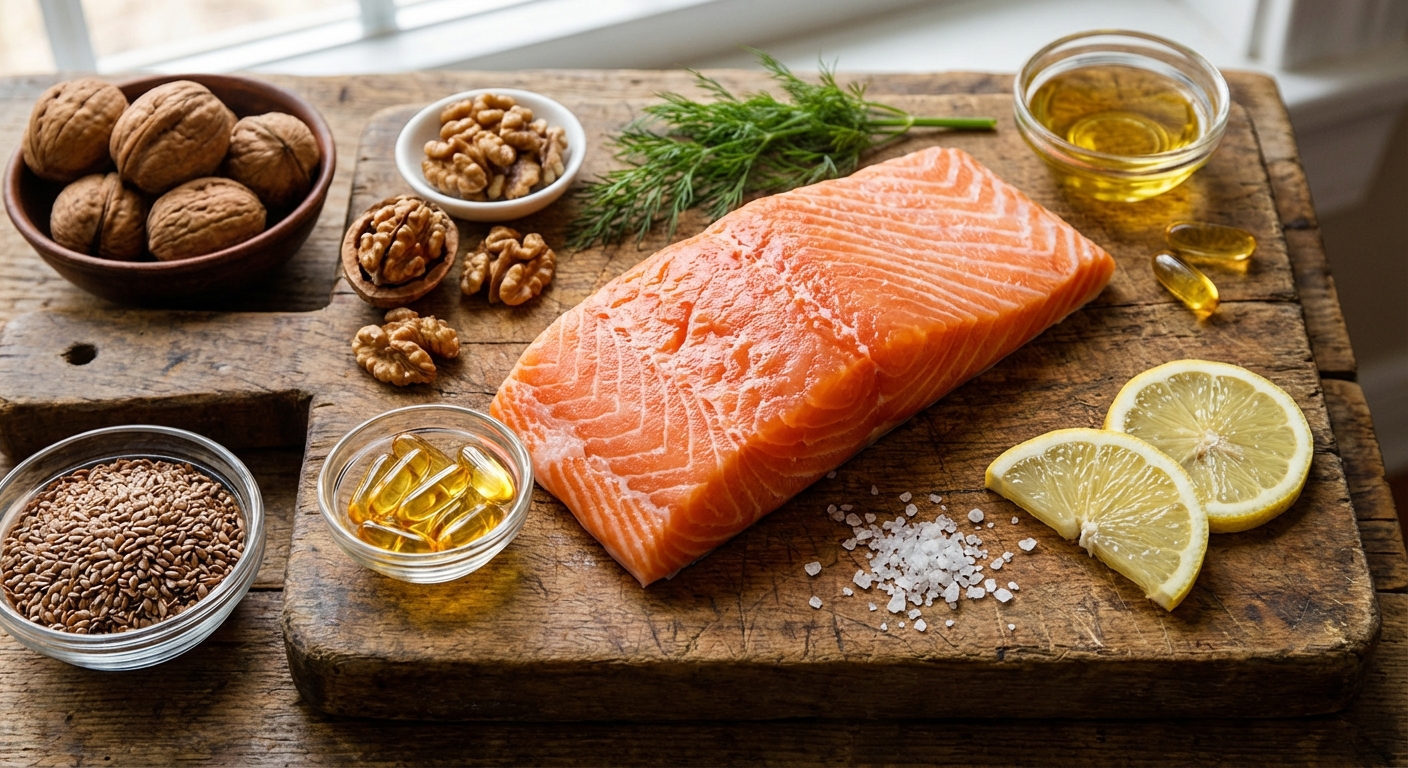
Fatty fish are the richest sources: wild-caught salmon delivers 1,500-2,500mg of EPA+DHA per 3.5-ounce serving; mackerel provides 2,500-3,000mg; sardines offer 1,000-1,500mg; and anchovies and herring each provide 1,500-2,000mg. Eating fatty fish 2-3 times weekly provides roughly 500-1,000mg of combined EPA+DHA daily on average, meeting the general health recommendation. Beyond omega-3s, these fish provide high-quality protein and micronutrients that support overall health.
That said, supplements make practical sense in several situations. If you don’t eat fish regularly due to cost, access, taste preferences, or concerns about contamination, supplements provide a reliable way to obtain therapeutic doses. When targeting specific therapeutic purposes, supplements allow precise dosing that’s difficult to achieve through food alone. Vegetarians and vegans need algae oil supplements since plant omega-3s convert poorly to EPA and DHA. And if you need higher doses for mood disorders, achieving 2-3 grams of EPA daily through food alone would require impractical amounts of fish.
Supplement quality varies enormously. Omega-3s are prone to oxidation, and the market contains products with degraded, rancid oils or lower actual content than labels claim. Look for third-party testing certifications from IFOS (International Fish Oil Standards), ConsumerLab, or USP. These verify that the product contains what it claims, isn’t oxidized, and is free from heavy metal contamination. Store supplements in a cool, dark place and trust your nose; rancid fish oil has a distinctively foul smell that differs from the mild fishiness of fresh oil.
Safety, Side Effects, and Realistic Expectations
Omega-3s are generally well-tolerated, but some considerations are worth noting. At very high doses (over 3-4 grams daily), omega-3s can increase bleeding risk due to their antiplatelet effects. If you’re taking blood thinners, preparing for surgery, or have a bleeding disorder, consult your doctor before high-dose supplementation. At typical doses (1-2 grams daily), this isn’t a significant concern for most people.
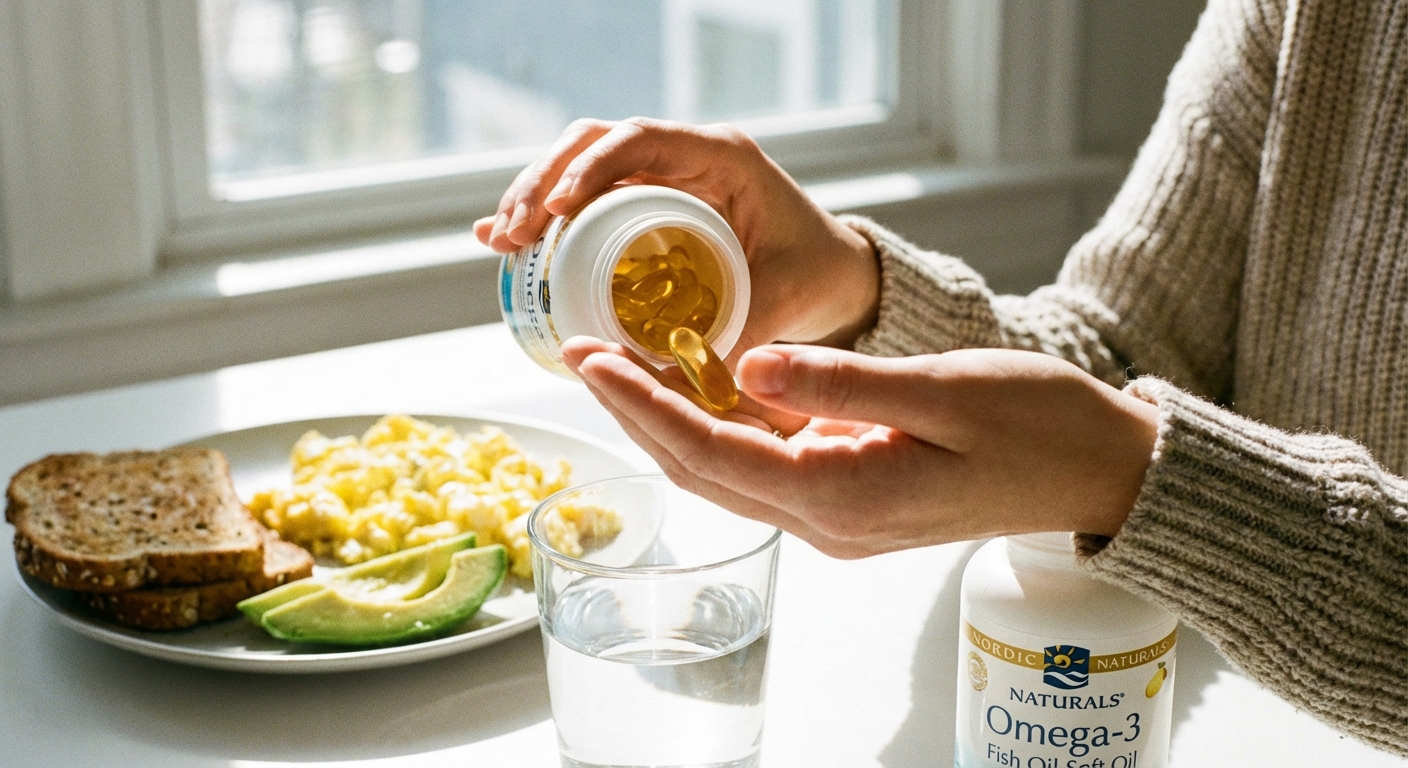
Common side effects include fishy burps, digestive upset, and occasional loose stools. Taking supplements with food, especially a fat-containing meal, improves both absorption and tolerability. Freezing fish oil capsules before taking them can reduce digestive side effects. Enteric-coated capsules are designed to dissolve in the intestine rather than the stomach, reducing fishiness but potentially affecting absorption.
Mercury concerns are valid but manageable. Smaller fish (sardines, anchovies, herring) accumulate less mercury than larger predatory fish (shark, swordfish, king mackerel). Salmon is generally low in mercury. Quality supplements should be tested for heavy metals and will display test results or certifications. The benefits of omega-3 intake generally outweigh mercury risks, especially from lower-mercury sources.
Perhaps most important: maintain realistic expectations. Omega-3s are not miracle supplements that will transform your brain overnight. The evidence supports modest benefits, perhaps 10-30% improvement in depression symptoms for those with depression, modest anxiety reduction, and potentially slowed cognitive decline over decades if started in midlife. These are meaningful effects, but they’re incremental improvements rather than dramatic transformations. Omega-3s are one component of a comprehensive brain health strategy, not a singular solution.
The Bottom Line
Your brain needs omega-3s, particularly DHA, to function optimally, and most people aren’t getting enough from diet alone. The evidence supports meaningful benefits for mood, anxiety, cognitive function, and potentially long-term brain health preservation.
Next Steps:
- Assess your current omega-3 intake: do you eat fatty fish 2-3 times weekly?
- If not, consider supplementing with 1-2 grams of EPA+DHA daily from a quality-tested product
- For mood support specifically, look for EPA-dominant formulations (2:1 or 3:1 EPA:DHA ratio)
- For cognitive preservation, start in midlife and combine with exercise, sleep, and Mediterranean eating pattern
- Give any supplementation trial 8-12 weeks before evaluating effectiveness
For related reading on brain health, explore our articles on the gut-brain axis connection and anti-inflammatory lifestyle strategies. These topics interconnect; optimal brain health emerges from multiple interventions working together.
Sources: Translational Psychiatry (2019 meta-analysis on omega-3s and depression), JAMA Network Open (2018 meta-analysis on omega-3s and anxiety), Neuropsychology Review (2017 ADHD meta-analysis), JAMA Neurology (cognitive decline research), Brain, Behavior, and Immunity (medical student stress study), Dr. Rhonda Patrick research on omega-3s and brain health.