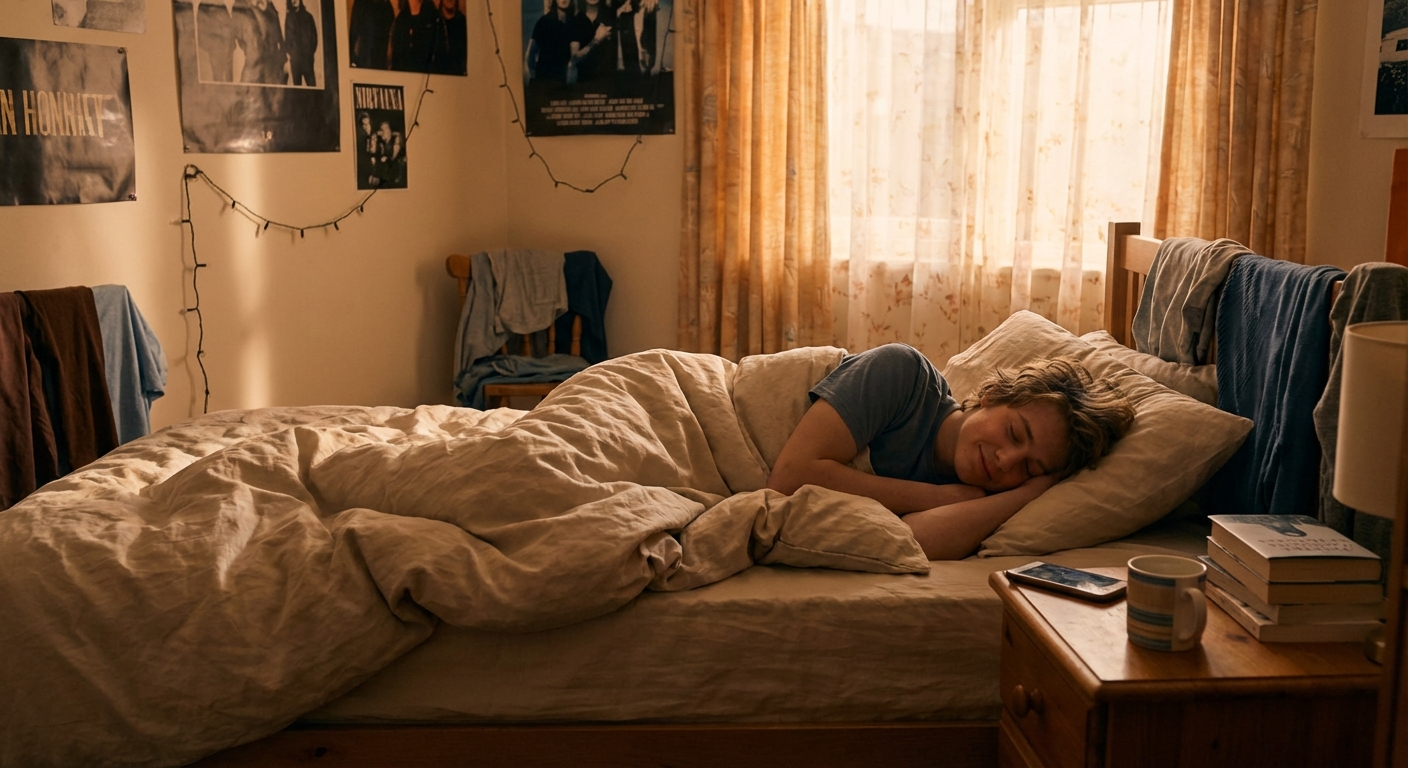
Every sleep expert you’ve ever heard has delivered the same message: maintain a consistent sleep schedule. Go to bed at the same time every night. Wake up at the same time every morning. Yes, even on weekends. Sleeping in on Saturday disrupts your circadian rhythm, they warn, making Monday morning even harder.
Now a new study suggests that advice might be exactly wrong for teenagers. Researchers analyzing data from the National Health and Nutrition Examination Survey found that adolescents ages 16 to 24 who caught up on sleep over the weekend were 41% less likely to report depressive symptoms compared to peers who didn’t make up for their weekday sleep deficit. Rather than harming their mental health, weekend sleep recovery appeared to protect it.
The finding comes at a critical time. Teen depression rates have climbed steadily for over a decade, with approximately one in five adolescents experiencing a major depressive episode before adulthood. Sleep deprivation is endemic in this age group, driven by biology that delays their natural bedtimes, early school start times that ignore that biology, and a social world that keeps them connected well past midnight. If weekend sleep recovery can buffer some of the mental health damage from chronic weekday sleep loss, it offers a practical intervention that requires no prescriptions, no therapy appointments, and no policy changes. Just let them sleep.
Why Teenagers Can’t Sleep When We Want Them To
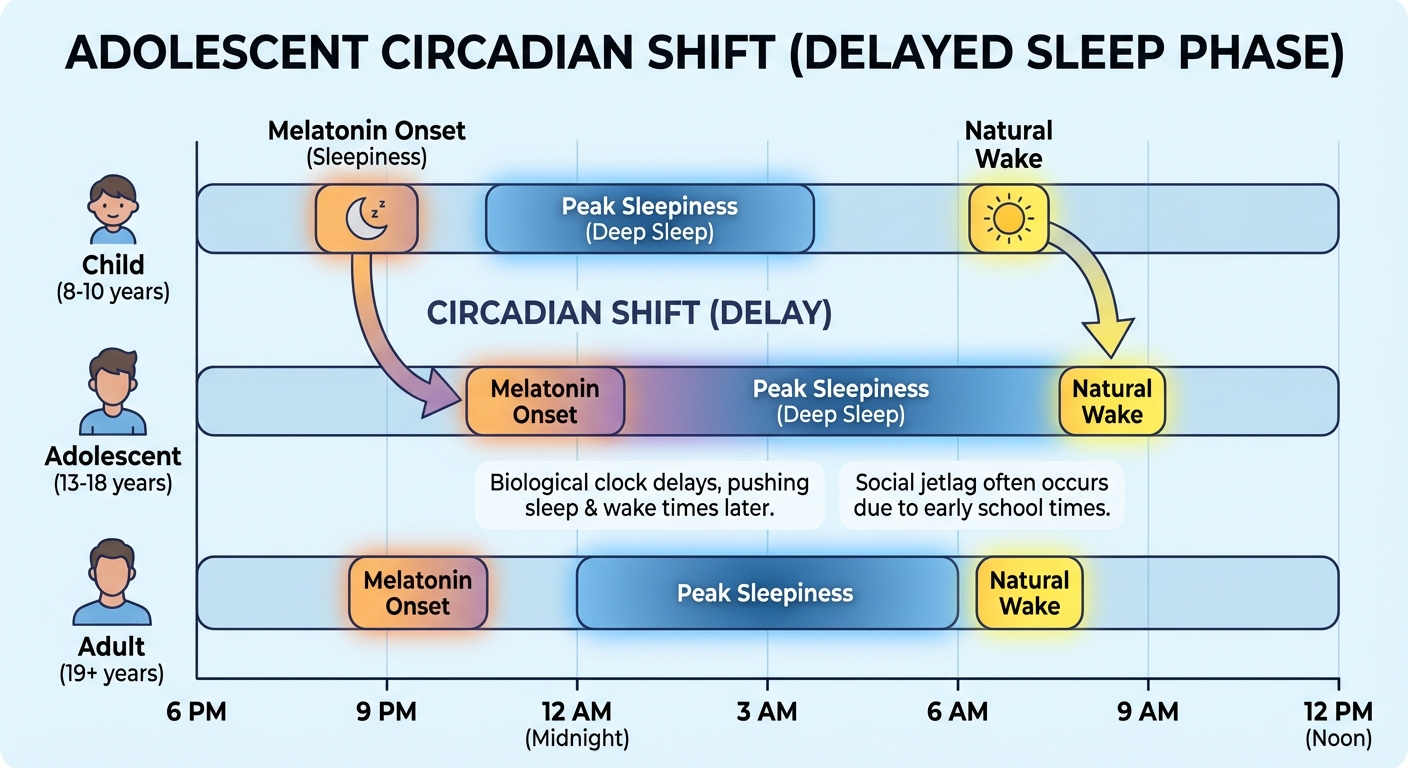
The conflict between teenage sleep biology and modern school schedules is well-documented but poorly addressed. During puberty, the circadian system undergoes a programmed shift that delays the natural onset of sleepiness by approximately two hours. A teenager who fell asleep easily at 9 PM as a child now doesn’t feel tired until 11 PM or later. This isn’t laziness or poor discipline; it’s biology as predictable as the voice changes and growth spurts that happen around the same time.
Meanwhile, school start times have actually gotten earlier over the decades in many districts, driven by transportation logistics and after-school activity schedules. The American Academy of Pediatrics has recommended since 2014 that middle and high schools start no earlier than 8:30 AM, but only about 20% of schools comply. Most teenagers are expected in classrooms by 7:30 or 8:00 AM, requiring wake times of 6:00 or 6:30 AM. For a student whose biology prevents sleep before 11 PM, that means five hours of sleep on school nights, roughly half what their developing brains need.
The standard advice, adjust your schedule so you’re sleepy earlier, ignores the biological constraints at play. Research on adolescent circadian rhythms shows that attempting to force earlier sleep onset doesn’t work; teenagers simply lie awake in bed, accumulating sleep anxiety that makes the problem worse. Light exposure manipulation and melatonin supplementation can shift circadian phase modestly, but neither overcomes the fundamental mismatch between biology that wants an 11 PM to 8 AM sleep schedule and schools that demand a 6 AM wake time.
What the Research Found
The study analyzed data from participants ages 16 to 24 in the 2021-2023 waves of the National Health and Nutrition Examination Survey, a nationally representative sample designed to assess health behaviors across the American population. Participants reported their typical bedtimes and wake times on weekdays versus weekends, allowing researchers to calculate “catch-up sleep,” the additional sleep obtained on non-school or non-work days compared to regular weekdays.
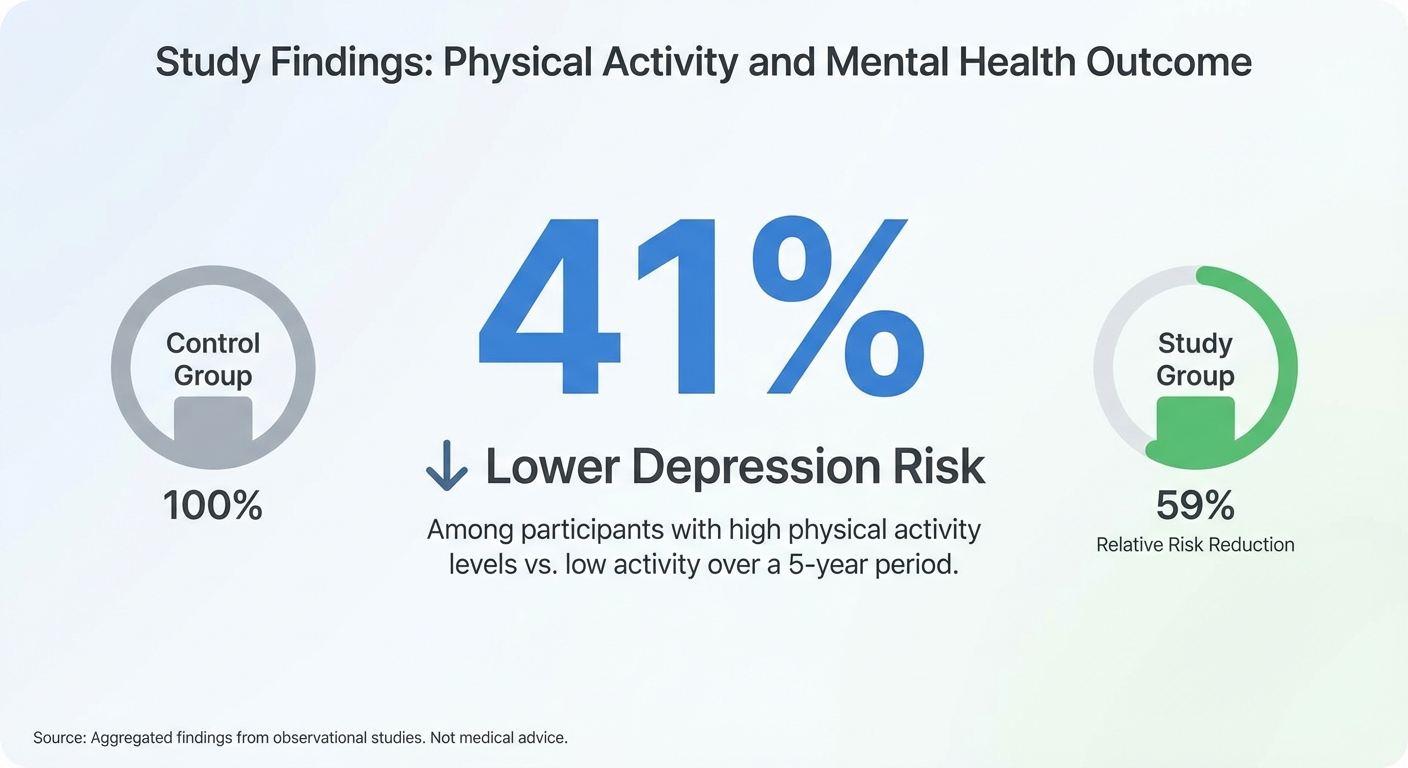
The researchers then correlated catch-up sleep patterns with self-reported depressive symptoms. Among those who made up for lost sleep on weekends, the risk of reporting depression symptoms dropped by 41% compared to those who maintained consistent, insufficient sleep schedules throughout the week. The protective effect remained significant after controlling for age, sex, socioeconomic status, and other factors known to influence both sleep and depression.
Lead researcher Dr. Melynda Casement from the University of Oregon and State University of New York Upstate Medical University offered a nuanced interpretation: “While ideally adolescents would sleep enough every night, that’s unrealistic given current school schedules and social demands. Our findings suggest that if they can’t get enough sleep during the week, letting them catch up on weekends is likely to be somewhat protective.” The phrasing is important. Weekend recovery isn’t ideal; getting adequate sleep every night would be better. But given the realities teenagers face, sleep catch-up appears to mitigate some of the mental health damage from chronic weekday deprivation.
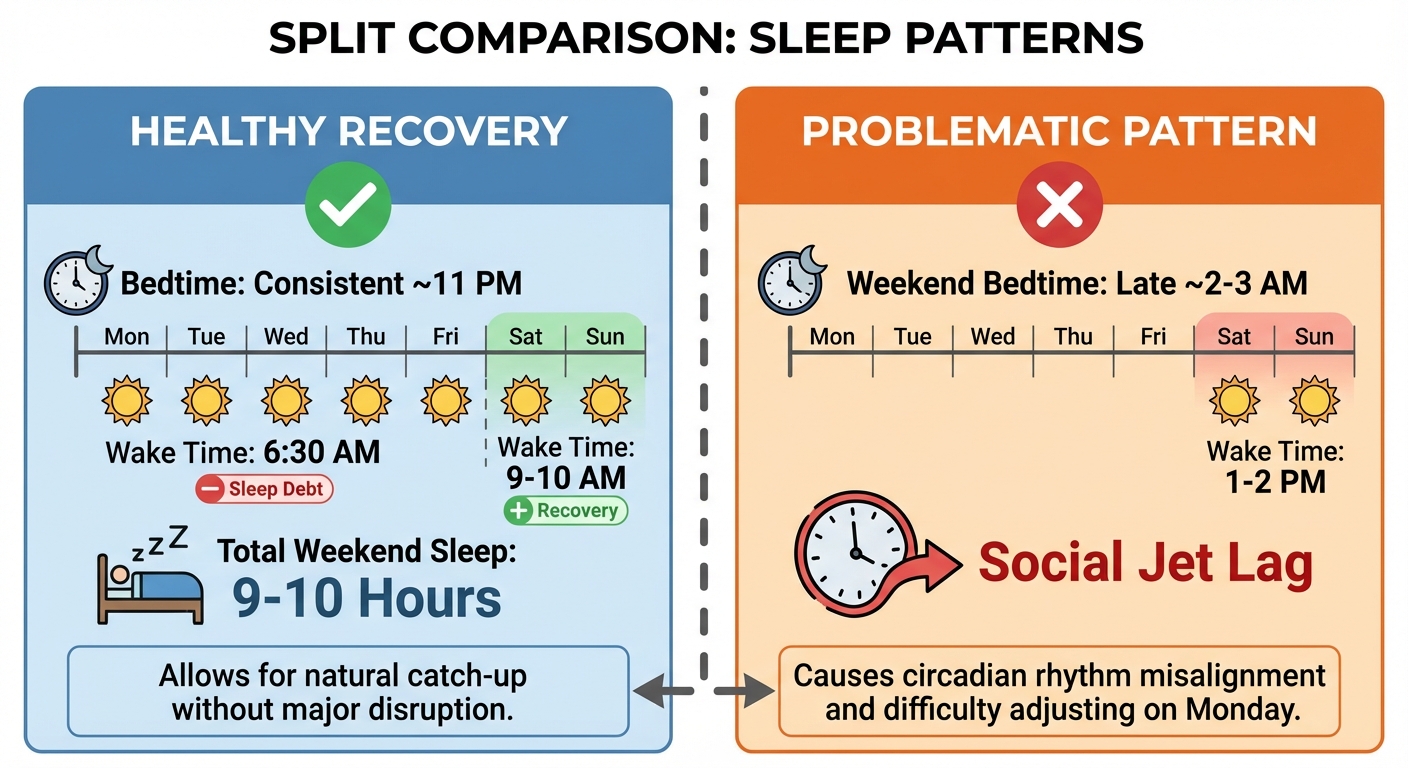
The findings challenge the absolutism of typical sleep advice. For years, experts have warned that irregular sleep schedules confuse the circadian system, leading to the equivalent of perpetual jet lag. While there’s truth to this concern for adults with full control over their schedules, teenagers face a different calculation. The damage from chronic sleep debt is substantial and cumulative. If weekend recovery partially repays that debt, the tradeoff may favor some schedule inconsistency over unremitting deficiency.
The Biology of Sleep Recovery
Sleep debt isn’t an abstract concept; it represents real physiological deficits that accumulate when you consistently get less sleep than your body needs. Memory consolidation suffers. Immune function declines. Emotional regulation becomes more difficult. Hormones that control appetite, stress response, and mood fall out of optimal balance. The question is whether these deficits can be partially reversed by getting more sleep when the opportunity arises.
Research suggests the answer is yes, at least partially. Studies measuring cognitive performance, immune markers, and hormonal profiles after sleep deprivation show measurable recovery after extended sleep periods. You can’t fully erase a week’s worth of lost sleep in two nights, but you can make significant progress. The brain seems particularly eager to catch up on REM sleep and slow-wave sleep, the stages most important for emotional processing and physical restoration, which may explain why weekend recovery helps with depression specifically.
For teenagers, the weekend recovery period may be especially valuable because of what happens during adolescent brain development. The teenage brain is undergoing massive reorganization, with neural pruning and myelination occurring most actively during sleep. Disrupting this process through chronic sleep deprivation may have consequences for brain maturation that extend beyond immediate fatigue. Weekend sleep, even if it doesn’t fully compensate for weekday losses, may allow critical developmental processes to proceed that couldn’t happen on five hours per night.
The mental health connection makes sense through multiple pathways. Sleep deprivation directly affects the brain regions involved in emotional regulation, with the amygdala showing heightened reactivity and reduced prefrontal cortical oversight after even one night of poor sleep. Chronic deprivation creates a state of sustained emotional vulnerability. Additionally, sleep loss disrupts the clearance of metabolic waste from the brain, potentially including proteins associated with neurodegenerative and psychiatric conditions. Any sleep recovery that allows these processes to function better, even intermittently, could be protective.
What This Means for Parents and Teens
If you’re a parent who has been fighting with your teenager about sleeping until noon on Saturday, this research suggests you might be fighting the wrong battle. The bigger concern isn’t weekend sleeping in; it’s the chronic sleep deprivation that makes weekend recovery necessary in the first place. Rather than trying to force weekend wake times that match school days, focus on maximizing sleep opportunity when it’s available.
This doesn’t mean abandoning all structure. The research supports catch-up sleep, not staying up until 3 AM gaming and then sleeping until 2 PM. Maintaining a reasonably consistent bedtime, even on weekends, probably still matters. What shifts is the wake time. A teenager who goes to bed at 11 PM on Friday and Saturday can still benefit from sleeping until 9 or 10 AM rather than being dragged out of bed at 7 AM to match their school schedule. The goal is giving the brain the sleep it needs, not training it to accept less.
Parents can support healthy sleep catch-up by protecting weekend mornings from unnecessary commitments. Early sports practices, SAT prep classes, and other activities that require 7 AM wake times on Saturdays directly interfere with the recovery period this research shows is protective. When scheduling is flexible, prioritizing sleep over productivity may pay mental health dividends.
For teenagers themselves, the message is empowering rather than permissive. Your body isn’t wrong for wanting more sleep than school schedules allow. The tiredness you feel isn’t a character flaw that more discipline would fix. When you can sleep more, whether on weekends, holidays, or summer breaks, your brain is doing important work that protects your mental health. Prioritizing that sleep, choosing it over the party that runs until 2 AM, isn’t missing out; it’s investing in your wellbeing.
The Bigger Picture: Why School Start Times Matter
This research adds to the case for later school start times, a policy change that has shown dramatic benefits where implemented but remains rare nationally. Districts that have pushed high school start times to 8:30 AM or later have documented improvements in attendance, academic performance, car accident rates, and mental health metrics. If weekend sleep catch-up is protective, it’s because weekday sleep is insufficient. The real solution isn’t to optimize recovery; it’s to reduce the need for recovery by aligning school schedules with adolescent biology.
Until that systemic change happens, weekend recovery serves as a harm reduction strategy. It’s not optimal, but it’s practical and evidence-based. Parents who have been told their teenager’s sleeping in is unhealthy can now point to research suggesting the opposite. The circadian reset that happens naturally when teenagers sleep according to their biology, rather than fighting it, may be one of the most accessible interventions for the teen mental health crisis.
The study also highlights depression as a public health emergency in this age group. According to the researchers, depression is “a leading cause of disability” among 16 to 24 year olds. Any modifiable factor that reduces risk by 41% deserves attention, particularly when the intervention costs nothing and has no side effects. For parents worried about their teenager’s mood, protecting their weekend sleep may be as valuable as any other intervention they’re considering.
The Bottom Line
The standard advice to maintain consistent sleep schedules deserves an asterisk when applied to teenagers. New research shows that adolescents who catch up on sleep over weekends are 41% less likely to experience depressive symptoms than those who maintain consistent but insufficient sleep. Given the biological constraints that prevent most teenagers from getting adequate sleep on school nights, weekend recovery may be protective rather than harmful.
Practical Takeaways:
- Let teenagers sleep in on weekend mornings without guilt or forced early waking
- Maintain consistent bedtimes even on weekends to avoid extreme schedule shifts
- Protect weekend mornings from commitments that require early wake times
- Recognize that daytime tiredness in teenagers isn’t laziness; it’s sleep debt
- Advocate for later school start times as a systemic solution
Sometimes the best thing you can do for a teenager’s mental health is close their bedroom door on Saturday morning and let them sleep.
Sources: National Health and Nutrition Examination Survey 2021-2023 data, University of Oregon and SUNY Upstate Medical University research, Dr. Melynda Casement’s study on adolescent sleep and depression, American Academy of Pediatrics school start time recommendations, adolescent circadian rhythm research.