When you feel anxious, your breathing changes before you’re consciously aware of the anxiety. It becomes faster, shallower, centered in your chest rather than your belly. This isn’t just a symptom of anxiety. It’s part of the feedback loop that maintains and intensifies it. The shallow breathing reduces carbon dioxide levels in your blood, which triggers physiological changes that feel identical to anxiety: racing heart, tingling in extremities, lightheadedness, a sense that something is wrong. Your brain interprets these sensations as confirmation of threat, and the cycle accelerates.
What’s less commonly understood is that your tolerance for carbon dioxide, how comfortable your body is with slightly elevated CO2 levels, is a measurable predictor of anxiety vulnerability. People with low CO2 tolerance tend to breathe faster and more shallowly at baseline, maintaining lower CO2 levels through chronic overbreathing. Their chemoreceptors, the sensors that monitor blood CO2, are calibrated to trigger alarm at levels that most people tolerate easily. Every slight rise in CO2 registers as a breathing emergency, keeping them in a subtle but constant state of respiratory distress.
The emerging research on CO2 tolerance training suggests that this calibration isn’t fixed. Through specific breathing practices that deliberately raise CO2 levels in a controlled way, you can reset your chemoreceptors to tolerate higher CO2, reduce baseline breathing rate, and fundamentally change your body’s relationship to the physiological sensations that drive anxiety.
The Biology of Breath and Anxiety
Your body’s primary drive to breathe isn’t triggered by lack of oxygen, as most people assume. It’s triggered by rising carbon dioxide levels. CO2 is a metabolic waste product, and as it accumulates in your blood, chemoreceptors in your brainstem and carotid arteries signal the need to exhale and take a fresh breath. The sensitivity of these chemoreceptors determines how strongly you feel the urge to breathe at any given CO2 level.
Research from the Human Health Performance Foundation and other institutions has established that people with anxiety disorders typically have heightened CO2 sensitivity. Their chemoreceptors trigger the breathing urge at lower CO2 levels, which means they tend to breathe more frequently to keep CO2 suppressed. But this creates a paradox: the chronic overbreathing that keeps CO2 low also prevents the body from adapting to normal CO2 levels, maintaining or even increasing chemoreceptor sensitivity over time.
The connection extends into brain structure. The amygdala, the brain region most associated with fear and threat detection, has been shown to play a role in CO2-induced fear responses. Neuroimaging research has found that patients with clinical anxiety have smaller amygdalae and heightened sensitivity to CO2, suggesting a structural component to the relationship between breath, CO2 tolerance, and anxiety.
This creates a vicious cycle: anxiety leads to overbreathing, which lowers CO2, which increases CO2 sensitivity, which makes normal breathing feel uncomfortable, which triggers more anxiety and more overbreathing. Breaking this cycle requires interventions that deliberately reverse the pattern, and that’s where CO2 tolerance training enters the picture.

What the 2024-2025 Research Shows
Recent research has moved beyond correlational studies to test whether deliberately training CO2 tolerance can actually reduce anxiety. A 2024 pilot study involving high school students found that after six weeks of breathing practice targeting CO2 tolerance, trait anxiety scores (the general, ongoing tendency toward anxiety) significantly improved across all participants. State anxiety (in-the-moment anxiety) and CO2 tolerance showed immediate improvements following each practice session in most weeks.
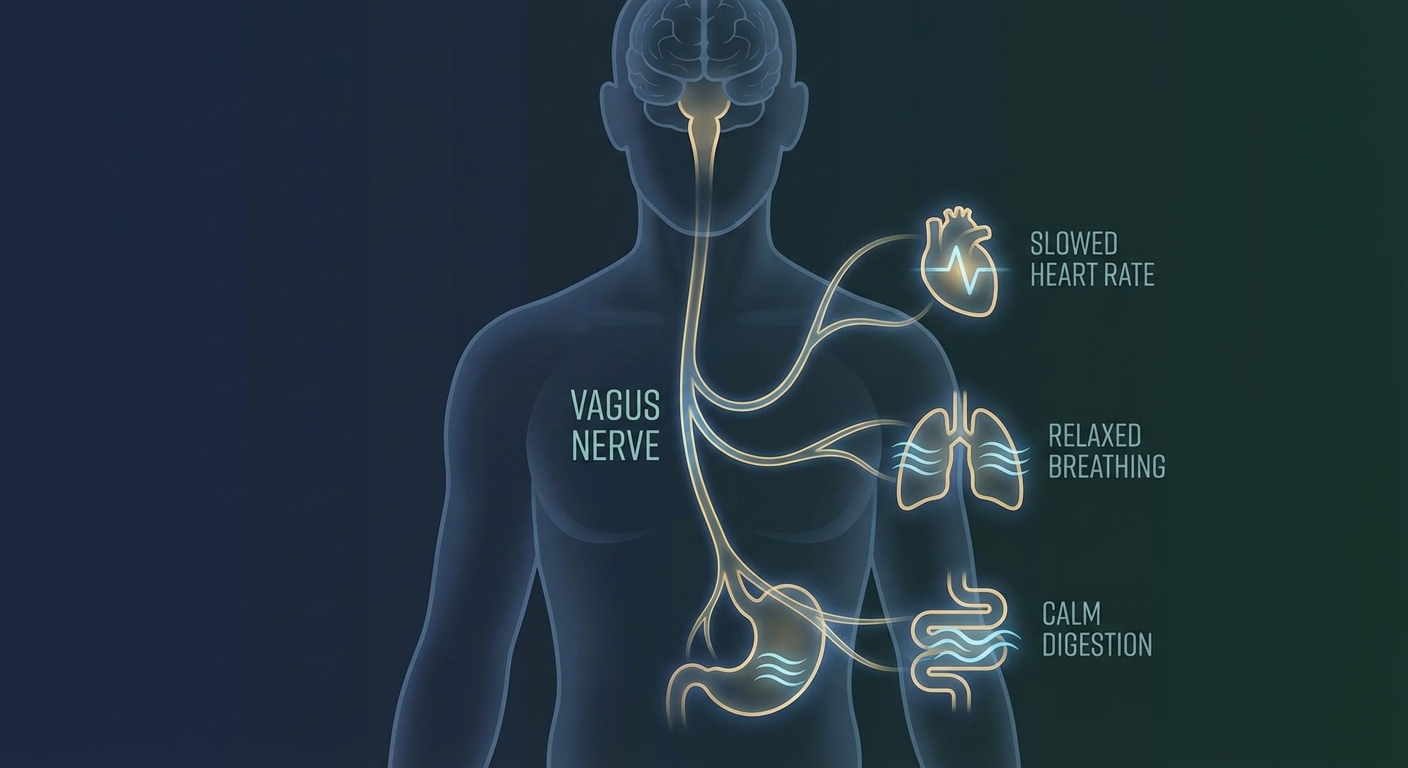
A 2025 narrative review of the A52 Breath Method, published in Stress and Health, examined how deliberate pauses on exhale increase end-tidal CO2, activating central chemoreceptors. This triggers a parasympathetic response and supports what researchers call “chemoreflex resetting,” a realignment that favors slower breathing and improved sympathovagal balance. The result is a nervous system that doesn’t trigger panic at normal CO2 levels.
The neurological effects are measurable. EEG studies of slow breathing practices found increases in delta, theta, alpha, and beta power, suggesting what researchers describe as a “globally integrative dual brain state that is both calm but awake.” This implies decreased stress activation, calm focus, relaxation, and enhanced parasympathetic tone, all from breathing at a slower rate with extended exhales and breath holds.
Slow breathing also enhances emotional regulation at the neural level. Research shows improved connectivity between the amygdala (the fear and reactivity center) and the medial prefrontal cortex (the regulatory center) with consistent slow breathing practice. The prefrontal cortex is the brain region responsible for modulating emotional responses, and stronger connections between it and the amygdala mean better top-down control of anxiety reactions.
Understanding Your Current CO2 Tolerance
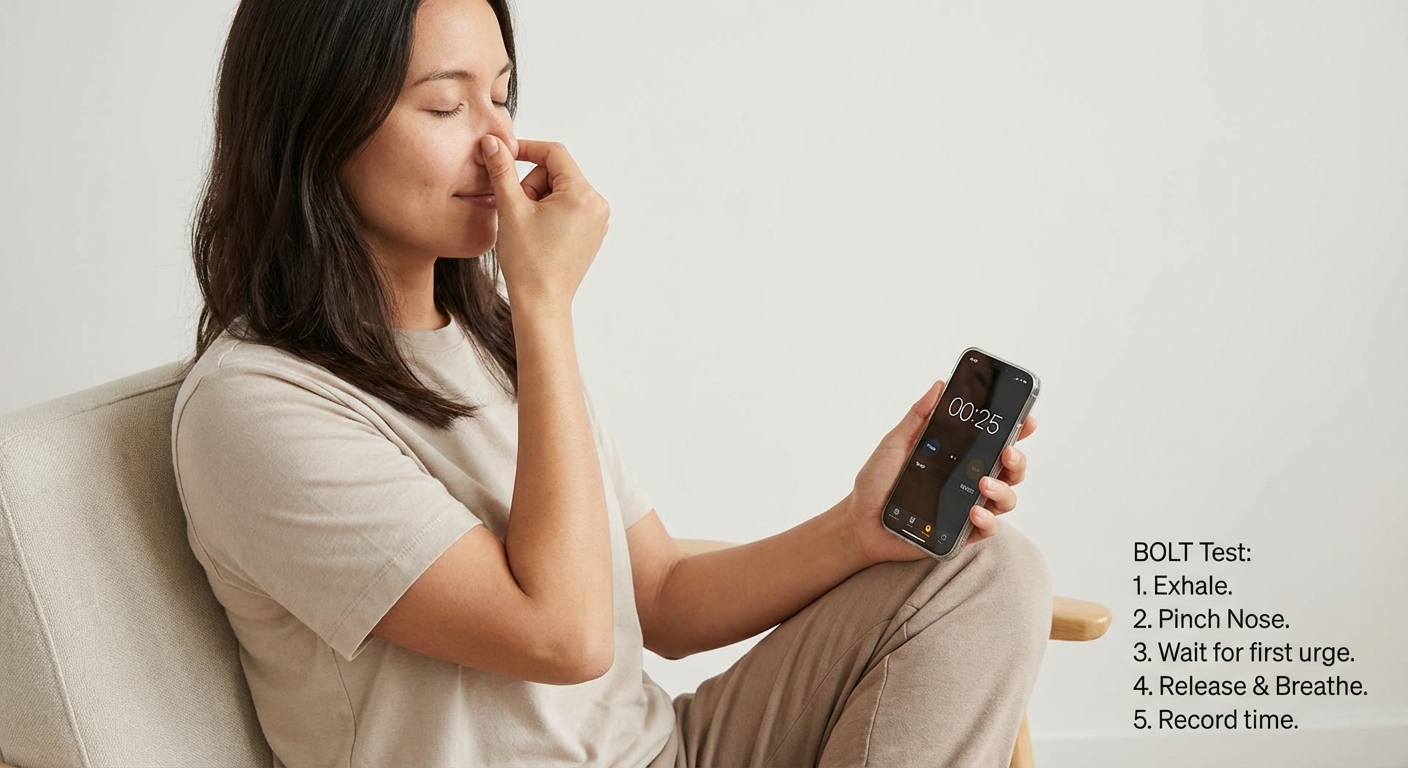
Before beginning CO2 tolerance training, it’s helpful to assess your baseline. The most common assessment is the BOLT score (Body Oxygen Level Test), which measures how long you can comfortably hold your breath after a normal exhale. This isn’t a test of willpower or maximum breath-holding capacity. It’s a measure of when your chemoreceptors first signal the urge to breathe.
To measure your BOLT score:
- Sit comfortably and breathe normally for a minute
- Take a normal breath in and a normal breath out (not a deep breath)
- At the end of the exhale, pinch your nose closed and start a timer
- Stop the timer at the first clear signal that you need to breathe (not when it becomes unbearable)
- The number of seconds is your BOLT score
A BOLT score below 20 seconds typically indicates low CO2 tolerance and is associated with chronic overbreathing, higher stress reactivity, and increased anxiety vulnerability. Scores of 25-40 seconds suggest healthy CO2 tolerance. Elite athletes and experienced breath practitioners often score above 40 seconds.
Research on distress tolerance has validated breath-hold duration as a measure of stress resilience more broadly, finding correlations between breath-holding capacity and executive control, the cognitive ability to regulate attention and behavior in stressful situations.
The CO2 Tolerance Training Protocol
CO2 tolerance training involves practices that deliberately allow CO2 to rise moderately, exposing your chemoreceptors to higher levels and allowing them to recalibrate. This should feel mildly uncomfortable but not distressing. The key is working at the edge of your tolerance without overwhelming your system.
Foundation Practice: Extended Exhale Breathing (10 minutes daily)
This practice lengthens the exhale relative to the inhale, which naturally raises CO2 levels while activating the parasympathetic nervous system.
- Sit comfortably with good posture, breathing through your nose
- Inhale for 4 counts
- Exhale for 6-8 counts (as long as you can make it comfortable)
- No pause between breaths initially
- Continue for 10 minutes
As this becomes comfortable over 1-2 weeks, extend to inhale for 4, exhale for 8-10. The extended exhale allows more CO2 to accumulate before the next inhale, gently challenging your tolerance.
Intermediate Practice: Breath Holds After Exhale (5-10 minutes daily)
Once extended exhale breathing is comfortable, add breath holds after the exhale, which further elevates CO2.
- Inhale for 4 counts
- Exhale for 6 counts
- Hold after exhale for 4-6 counts (stop before discomfort becomes strong)
- Resume inhale and repeat
Research on the A52 Breath Method specifically highlights exhale holds as effective for chemoreflex resetting. The pause after exhale allows CO2 to rise to levels that trigger adaptation without the stress of fighting a strong urge to breathe.
Advanced Practice: Progressive Breath Holds
After 2-4 weeks of intermediate practice, you can work on extending breath-hold duration more deliberately.
- Take a normal breath in and out (not deep)
- Hold after exhale until you feel the first clear urge to breathe
- Resume with slow nasal breathing, allowing at least 3-4 breaths before the next hold
- Repeat 3-5 times per session
The goal is to gradually extend the time before the urge appears, which indicates your chemoreceptors are becoming less sensitive to moderate CO2 elevation.
Integrating CO2 Training with Other Practices
CO2 tolerance training works synergistically with other stress-management interventions. HRV biofeedback research has found that breathing at about 6 breaths per minute (10-second breath cycles) produces optimal heart rate variability patterns and is associated with decreased panic symptoms, reduced anxiety, and improved stress resilience. This rate naturally involves extended exhales that challenge CO2 tolerance.
Cold exposure, discussed in our companion article, also involves CO2 tolerance components. The stress of cold triggers faster breathing, and the ability to maintain slow, controlled breathing in cold water depends partly on CO2 tolerance. Practicing breathing control in cold water can accelerate CO2 tolerance adaptations because the stakes are higher and the feedback is immediate.
Physical exercise naturally involves CO2 elevation during and after effort. Research on nasal breathing during exercise suggests that maintaining nasal breathing at moderate intensities (even when mouth breathing would be easier) trains CO2 tolerance under dynamic conditions. This may explain why some athletes report improved anxiety regulation from their training, independent of the psychological benefits.

Expected Timeline and Outcomes
CO2 tolerance is trainable, but adaptation takes time. Most practitioners report noticeable changes in their baseline breathing rate and stress response within 2-4 weeks of daily practice. BOLT scores typically improve by 5-10 seconds in the first month, with continued gains over 2-3 months of consistent practice.
The subjective experience often precedes measurable changes. Many people report feeling calmer and less reactive to stressors within the first week, even before their breath-hold tolerance has meaningfully changed. This may reflect the immediate parasympathetic activation from slow breathing practice rather than chemoreceptor resetting, but both effects contribute to improved stress regulation.
Long-term practitioners report sustained changes in their baseline anxiety levels, improved sleep quality, and better performance under stress. The research suggests these effects are not just practice effects but reflect genuine neurophysiological adaptation, including changes in brain connectivity patterns and nervous system calibration.
Realistic expectations:
- Week 1-2: Familiarity with practice, possible immediate calming effects
- Week 3-4: Noticeable reduction in baseline breathing rate, initial BOLT improvement
- Month 2-3: Meaningful BOLT score increases (5-15 seconds), reduced stress reactivity
- Month 3+: Sustained changes in anxiety baseline, integration into daily stress response
The Bottom Line
CO2 tolerance is an underappreciated component of anxiety and stress resilience. The research shows that people with anxiety tend to have lower CO2 tolerance, which creates a self-reinforcing cycle of overbreathing and heightened chemoreceptor sensitivity. Training CO2 tolerance through specific breathing practices can reset this calibration, leading to slower baseline breathing, reduced stress reactivity, and improved emotional regulation.
The interventions are simple, free, and carry minimal risk. Daily practice of 10-15 minutes, focusing on extended exhales and gradually introducing breath holds, can produce measurable improvements within weeks. For anyone dealing with chronic stress or anxiety, CO2 tolerance training offers a physiological intervention that complements psychological approaches.
Next Steps:
- Measure your current BOLT score to establish baseline
- Begin with extended exhale breathing: inhale 4, exhale 6-8 for 10 minutes daily
- After 1-2 weeks, add breath holds after exhale: 4-6 count holds
- Track BOLT score weekly to monitor progress
- Aim for total practice time of 10-15 minutes daily
If you’re experiencing persistent anxiety or panic symptoms, consult a mental health professional. CO2 tolerance training is a supportive practice, not a replacement for professional treatment of clinical anxiety disorders.
Sources: Human Health Performance Foundation pilot study (2024), A52 Breath Method narrative review (Stress and Health, 2025), PMC systematic review on breathing practices for stress reduction, Psychology Today performance breathing research, Journal of Experimental Psychology breath-hold and distress tolerance study.