You’re in a meeting when your boss asks a pointed question. Your heart rate jumps. Your palms get damp. Your thoughts scatter. Two minutes later, the moment passes, but that jittery feeling lingers for an hour. Later that evening, scrolling through news headlines, you notice your jaw is clenched, your shoulders are tight, and you can’t seem to take a satisfying deep breath. Welcome to life with a dysregulated nervous system.
If there’s one body part defining the wellness conversation in 2026, it’s the vagus nerve, the wandering communication highway between brain and body that largely determines whether you feel calm or constantly on edge. According to the American Psychiatric Association’s recent Healthy Minds Poll, 38% of Americans are making mental health their New Year’s resolution, up 5% from last year. Much of the conversation has shifted from treating mental health conditions to preventing them through daily practices that support nervous system regulation.
This isn’t just another wellness trend destined to fade. The science behind vagus nerve function and polyvagal theory has matured significantly over the past decade. We now understand that a regulated nervous system isn’t just about feeling calm. It influences cognitive function, emotional stability, immune health, and even digestion. Here’s what you need to know about why regulation matters and how to actually achieve it.
Understanding Your Autonomic Operating System
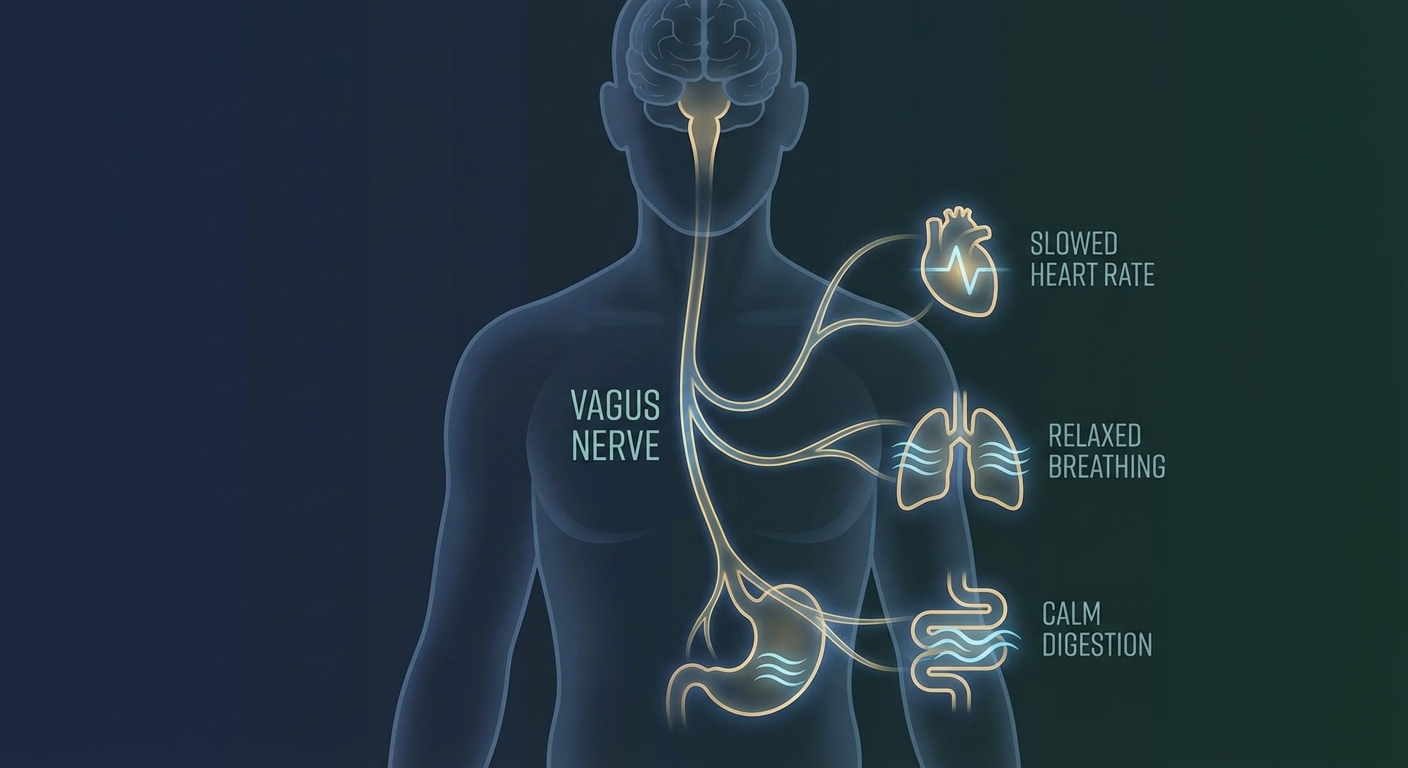
Your autonomic nervous system runs continuously in the background, managing functions you don’t consciously control: heart rate, breathing, digestion, immune responses, and stress hormones. It operates through two main branches. The sympathetic branch accelerates things when you need to respond to threats, increasing heart rate, sharpening focus, and mobilizing energy. The parasympathetic branch, primarily mediated by the vagus nerve, slows things down for rest, recovery, and social connection.
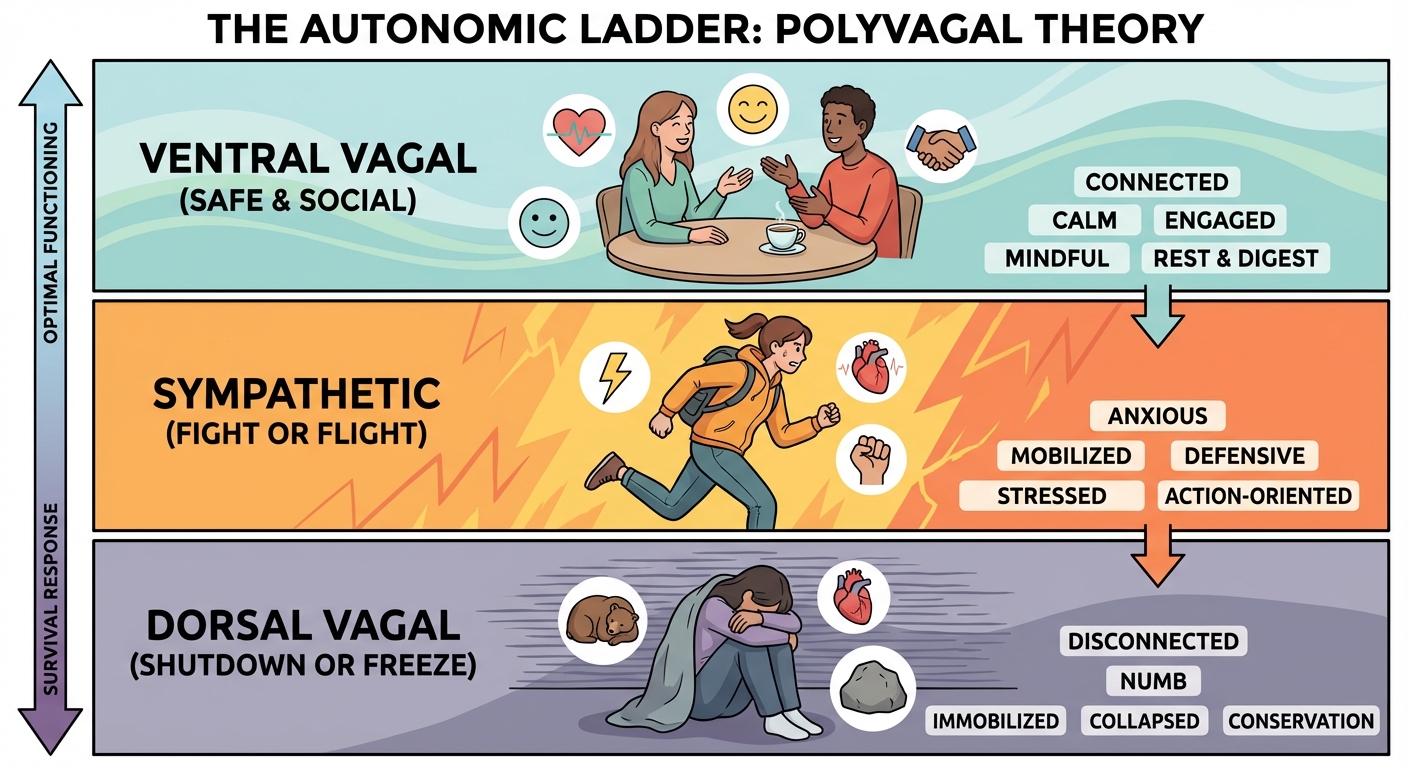
The key insight from polyvagal theory, developed by Dr. Stephen Porges, is that these systems aren’t simple on-off switches. The vagus nerve itself has two distinct pathways with different functions. The ventral vagal complex, evolutionarily newer, supports social engagement, calm alertness, and flexible responses. The dorsal vagal pathway, older and more primitive, triggers shutdown or freeze responses when threats feel overwhelming.
Healthy nervous system function means having flexibility, the ability to ramp up sympathetic activation when needed, then return to ventral vagal calm when the challenge passes. Problems arise when this flexibility is lost. Someone stuck in chronic sympathetic activation experiences persistent anxiety, hypervigilance, and difficulty relaxing. Someone who defaults to dorsal vagal shutdown might feel numb, disconnected, or perpetually exhausted. Neither state allows for optimal cognitive or emotional function.
The Vagal Tone Connection
Vagal tone refers to the baseline activity level of your vagus nerve, essentially how strong your parasympathetic brake is. Higher vagal tone is associated with better emotional regulation, faster recovery from stress, improved heart rate variability, and reduced inflammation. Lower vagal tone correlates with anxiety, depression, cardiovascular risk, and chronic inflammatory conditions.
The encouraging news is that vagal tone isn’t fixed. Unlike many physiological parameters, it responds significantly to training. Practices that engage the vagus nerve, including specific breathing techniques, cold exposure, and somatic movements, can measurably increase vagal tone over weeks to months. Heart rate variability (HRV), a proxy measure for vagal tone, shows reliable improvement with consistent practice.
Research published in Frontiers in Psychology examined the vagus nerve’s role in mental health and performance optimization. The findings emphasize that interoceptive practices, those that engage awareness of internal body sensations, reliably activate vagal pathways and improve self-regulation capacity. This isn’t about relaxation as a vague concept. It’s about measurably shifting autonomic function toward greater flexibility.
Understanding your heart rate variability patterns can provide objective feedback on your nervous system state and help track progress as you implement regulation practices.
Practical Techniques That Actually Work
The wellness world is flooded with nervous system hacks of varying legitimacy. Here’s what the research actually supports, ranked by evidence strength and accessibility.
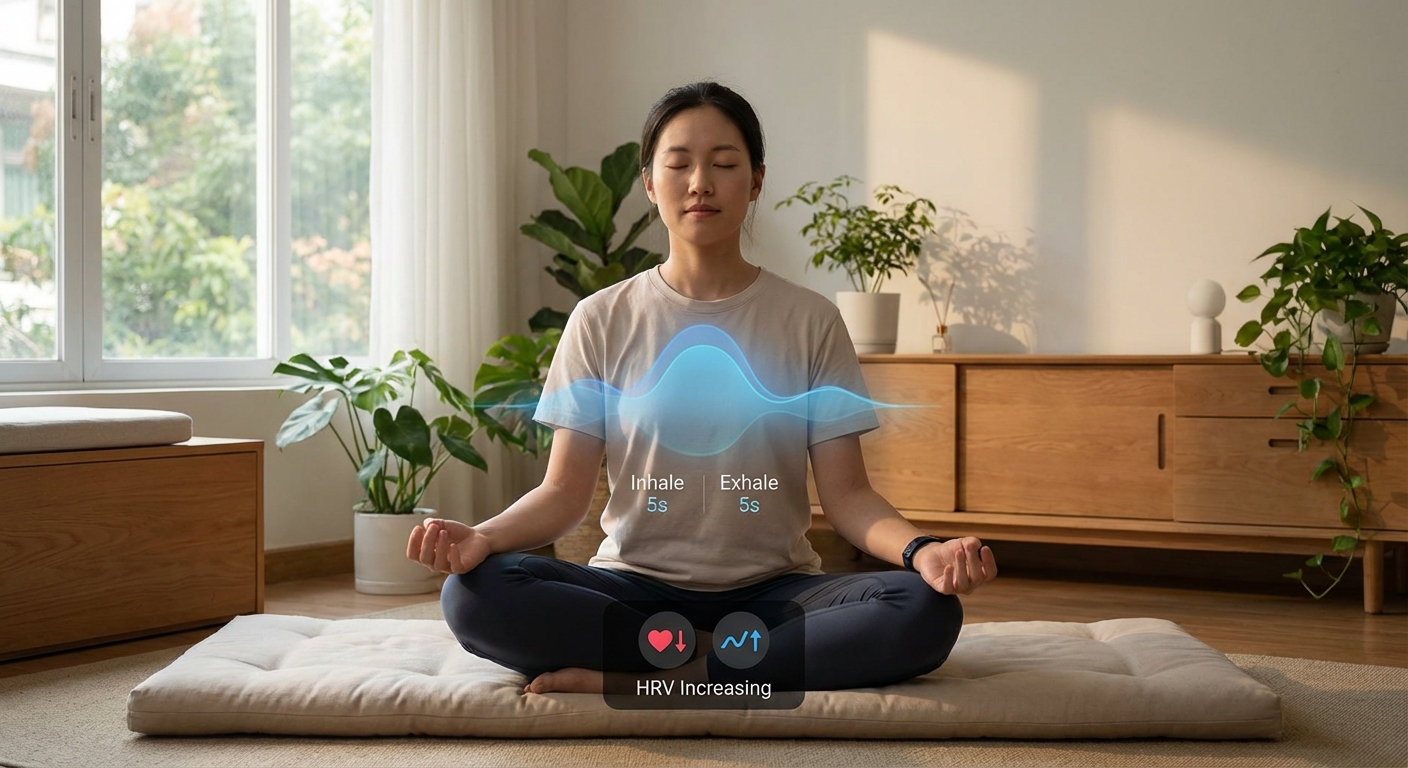
Coherent breathing involves breathing at a specific rate, typically around 5-6 breaths per minute, that maximizes heart rate variability and vagal engagement. The mechanism is direct: slow exhalation activates parasympathetic pathways through baroreceptor reflexes. Studies show that even a few minutes of coherent breathing can shift autonomic state, with weeks of regular practice producing lasting improvements in resting vagal tone.
The protocol is simple. Inhale for 5-6 seconds, exhale for 5-6 seconds, maintaining this rhythm for 5-20 minutes daily. No special equipment required. The key is the extended exhalation, which triggers the vagal brake more effectively than regular breathing.
Cold exposure stimulates the vagus nerve through temperature receptors, producing a parasympathetic response after an initial sympathetic spike. Research shows that regular cold water immersion or even cold water face immersion activates the dive reflex, a vagally-mediated response that slows heart rate and reduces blood pressure. Cold plunge protocols have become popular precisely because they produce noticeable shifts in nervous system state.
Vagal maneuvers include techniques like gargling, singing, and humming that mechanically stimulate the vagus nerve through its branches in the throat. These practices engage the muscles innervated by the vagus and can be used as quick regulation tools during moments of stress.
The Somatic Revolution
Beyond specific techniques, a broader shift is underway toward somatic approaches to mental health. Traditional talk therapy works from the top down, using cognitive understanding to influence emotional states. Somatic practices work from the bottom up, using body-based interventions to shift autonomic state, which then influences thoughts and emotions.
This isn’t about choosing one approach over another. The integration of cognitive and somatic methods appears most effective. But for people whose nervous systems are chronically dysregulated, often due to trauma, chronic stress, or simply modern life’s constant demands, bottom-up interventions may need to come first. You can’t think your way out of a physiological state. You have to shift the physiology, then cognitive work becomes more accessible.
Polyvagal-informed therapy has emerged as a specific modality that helps clients recognize their autonomic states and develop practices for returning to ventral vagal regulation. The emphasis is on building what researchers call “neuroception,” the implicit sense of safety or threat that operates below conscious awareness. When neuroception signals safety, social engagement and calm become possible. When it signals danger, even when there’s no actual threat, the sympathetic or dorsal vagal responses take over.
For many people, the practical application involves building awareness of their physiological state throughout the day. Notice when your breathing has become shallow. Notice when your shoulders have crept toward your ears. Notice when you’re holding tension in your jaw. These physical cues indicate autonomic state and provide opportunities for intervention before stress accumulates.
Why This Matters Beyond Feeling Calm
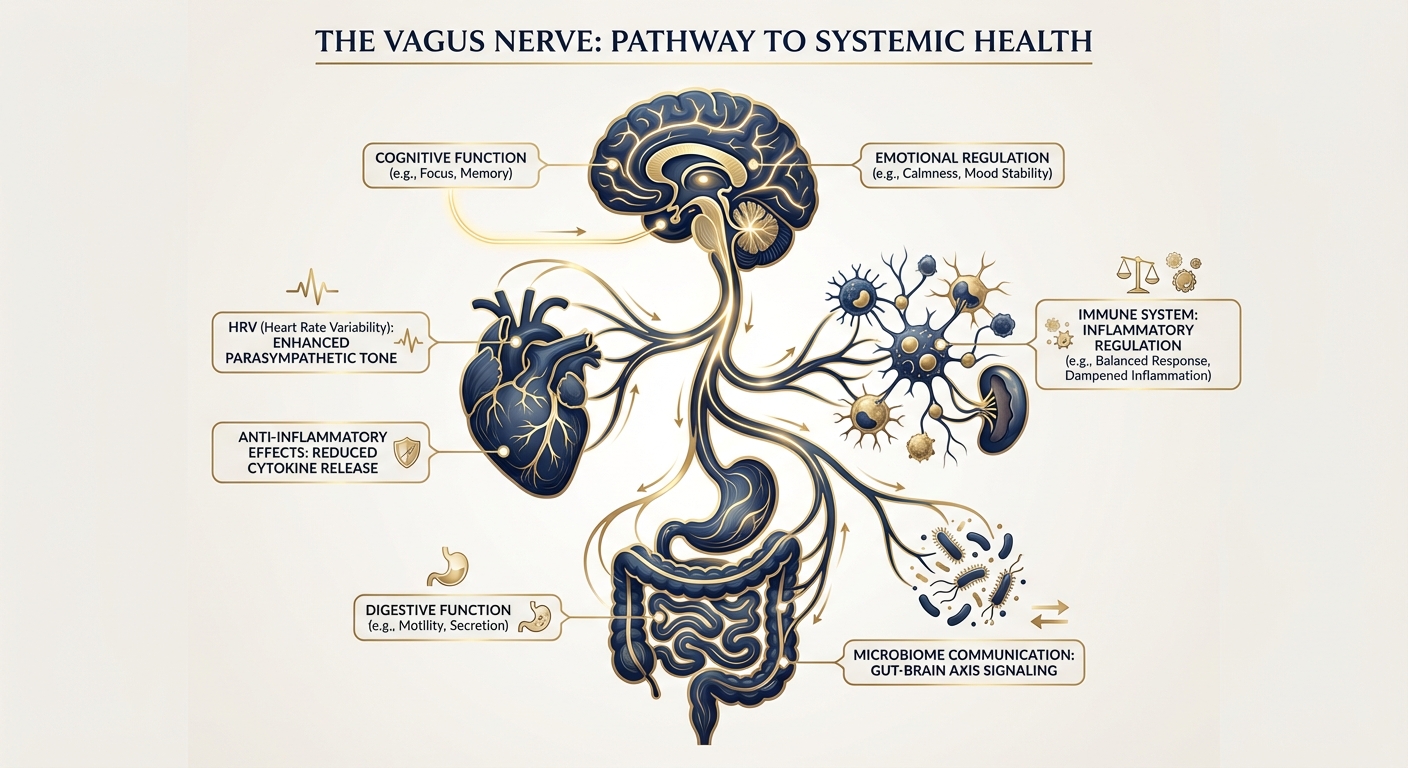
The implications of nervous system regulation extend far beyond subjective feelings of calm or stress. A growing body of research links chronic autonomic dysregulation to conditions including irritable bowel syndrome, fibromyalgia, chronic fatigue syndrome, and functional neurological disorders. These aren’t imaginary conditions. They’re manifestations of persistent autonomic imbalance affecting multiple body systems.
Inflammation provides one connecting mechanism. Chronic sympathetic activation promotes inflammatory signaling, while vagal activity has direct anti-inflammatory effects through the cholinergic anti-inflammatory pathway. People with higher vagal tone show lower levels of inflammatory markers like CRP and IL-6. Managing holiday stress through vagal techniques isn’t just about feeling better in the moment. It’s about reducing the inflammatory burden that accumulates with chronic stress.
Immune function also connects to autonomic state. The vagus nerve communicates bidirectionally with the immune system, and emerging research suggests that vagal stimulation may have therapeutic potential for autoimmune and inflammatory conditions. While this research is still developing, it reinforces the importance of nervous system regulation as a health fundamental, not merely a wellness nice-to-have.
Cognitive performance represents another domain affected by autonomic state. The ventral vagal state supports the prefrontal cortex function needed for complex thinking, creativity, and social cognition. Chronic sympathetic activation or dorsal vagal shutdown both impair cognitive flexibility. If you’ve ever tried to think clearly while anxious or depressed, you’ve experienced this directly.
Building a Daily Regulation Practice
The most effective nervous system support comes from consistent daily practice rather than crisis intervention. Think of it like physical fitness: you don’t get strong by lifting weights only when you’re weak. You build capacity through regular training that then serves you when challenges arise.
A practical daily protocol might include morning breathwork (5-10 minutes of coherent breathing to set autonomic tone for the day), brief regulation moments throughout the day (a few slow breaths before meetings, noticing and releasing tension during transitions), and evening downregulation (avoiding screens, engaging in calming activities, perhaps cold exposure or gentle movement).
The specific techniques matter less than consistency and awareness. Some people respond best to breathwork. Others find movement practices like yoga or tai chi more effective. Cold exposure works well for some but feels too activating for others. Experiment to find what shifts your state most reliably, then build that into a sustainable routine.
One practical consideration: if you have a history of trauma, intense nervous system activation practices should be approached carefully, ideally with professional guidance. For some people, practices like intense breathwork or cold exposure can trigger rather than resolve dysregulation. Start gently and pay attention to how your system responds.
The Bottom Line
Nervous system regulation isn’t just about stress management. It’s about building the physiological foundation for mental health, cognitive performance, and whole-body wellness. The vagus nerve, connecting brain to heart, lungs, gut, and immune system, serves as the primary pathway for this regulation. Practices that improve vagal tone, including coherent breathing, cold exposure, and somatic awareness, produce measurable improvements in autonomic flexibility.
With 38% of Americans making mental health a 2026 resolution, the timing is right for preventive approaches that support regulation before problems develop. The science supports what practitioners have long observed: a regulated nervous system isn’t a luxury. It’s the platform from which all other health efforts build.
Next Steps:
- Start with coherent breathing: 5-6 seconds inhale, 5-6 seconds exhale, for 5 minutes daily
- Build state awareness by checking in with your body several times daily
- Notice your stress triggers and implement brief regulation practices before meetings or challenging situations
- Consider tracking HRV as an objective measure of your progress
- If you have trauma history, work with a trauma-informed professional when exploring intense activation practices
Sources: American Psychiatric Association Healthy Minds Poll (2026), Polyvagal Theory (Dr. Stephen Porges), Frontiers in Psychology vagus nerve research, HRV and vagal tone studies, somatic therapy research.