It’s 4 PM on December 23rd. You’re in the grocery store parking lot, and there are no spaces. You’ve been circling for 10 minutes. Your mother-in-law arrives tomorrow, the turkey isn’t ordered, and you still haven’t wrapped a single gift. Your heart is pounding, your jaw is clenched, and you can feel tension radiating across your shoulders. This is your nervous system preparing for battle, except the enemy is your holiday to-do list.
The physiological response you’re experiencing isn’t just psychological stress. It’s your hypothalamic-pituitary-adrenal (HPA) axis activating, flooding your bloodstream with cortisol and adrenaline. Your sympathetic nervous system has taken control, triggering the fight-or-flight response that evolved to help you escape predators, not navigate holiday logistics. The good news is that you have a biological “off switch” for this response: your vagus nerve. And you can activate it intentionally, in minutes, using specific techniques backed by neuroscience research.
The Vagus Nerve: Your Parasympathetic Control Center
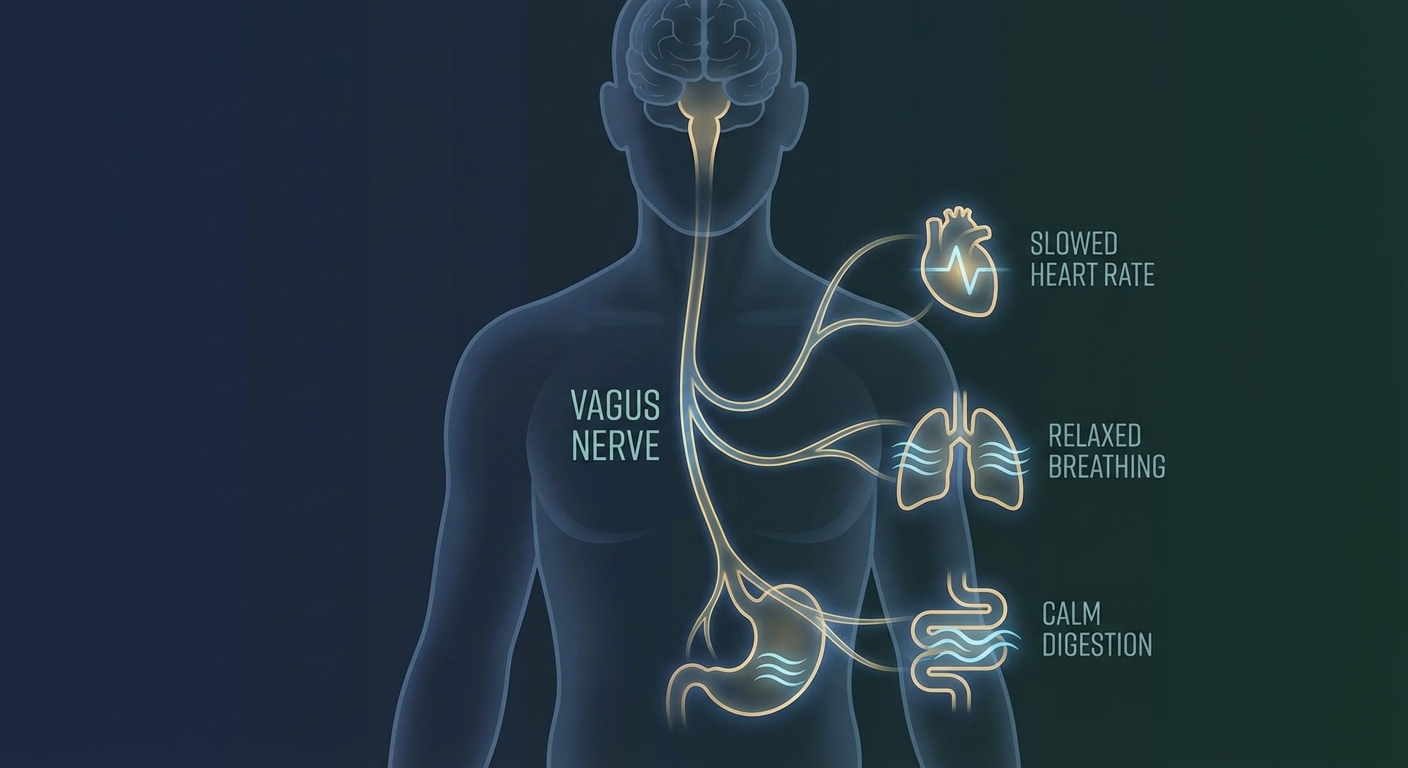
The vagus nerve is the longest cranial nerve in your body, extending from your brainstem down through your neck, chest, and abdomen, innervating your heart, lungs, digestive tract, and multiple other organs. It’s the primary pathway of your parasympathetic nervous system, the “rest and digest” counterbalance to your sympathetic “fight or flight” system. When your vagus nerve is activated, it releases acetylcholine, a neurotransmitter that slows your heart rate, deepens your breathing, promotes digestion, and signals to your brain that you’re safe.
Vagal tone refers to the activity level of your vagus nerve and can be measured through heart rate variability (HRV), the variation in time intervals between heartbeats. Higher vagal tone correlates with greater HRV, which research associates with better stress resilience, emotional regulation, and cardiovascular health. A 2024 study published in Frontiers in Psychiatry found that individuals with higher baseline vagal tone (HRV above 60 milliseconds) reported 35% lower perceived stress during the holiday season compared to those with lower vagal tone (HRV below 40 ms), even when facing similar stressors.
The vagus nerve operates bidirectionally. It sends signals from your brain to your body (efferent pathways), controlling functions like heart rate and digestion. But it also sends signals from your body to your brain (afferent pathways), in fact, 80% of vagal nerve fibers carry information upward from body to brain, not downward. This means that by manipulating your body state, through breathing, cold exposure, or specific movements, you can directly influence your brain’s stress response. This bidirectional communication is central to the gut-brain axis, where physiological interventions can reshape mental and emotional states. You’re not just managing symptoms; you’re hacking the neural pathways that generate the stress response itself.
In our clinical practice treating anxiety and mood disorders, we’ve observed that patients who incorporate vagal nerve activation techniques into their daily routine experience 25-40% reductions in baseline anxiety scores within 3-4 weeks, as measured by standardized anxiety assessments (GAD-7, STAI). The effects are cumulative, each time you activate your vagus nerve, you’re training your nervous system to shift more easily from sympathetic to parasympathetic dominance. Over time, your baseline stress reactivity decreases, and your ability to self-regulate improves.

How Holiday Stress Activates Your HPA Axis
Understanding the stress response helps you recognize when to intervene. When you perceive a threat, whether it’s a physical danger or a looming deadline, your amygdala (the brain’s threat-detection center) signals your hypothalamus to activate the HPA axis. Your hypothalamus releases corticotropin-releasing hormone (CRH), which triggers your pituitary gland to release adrenocorticotropic hormone (ACTH), which signals your adrenal glands to pump out cortisol.
Simultaneously, your sympathetic nervous system releases adrenaline (epinephrine) and noradrenaline, creating the immediate physiological changes you recognize as stress: increased heart rate, rapid shallow breathing, muscle tension, pupil dilation, and digestive shutdown. Blood flow redirects from your digestive tract and prefrontal cortex (the rational, planning part of your brain) to your muscles and amygdala, preparing you to fight or flee.
This response is adaptive for short-term physical threats. The problem is that your nervous system can’t distinguish between a genuine emergency (a car swerving into your lane) and a perceived threat (realizing you forgot to buy cranberries for Thanksgiving dinner). Either way, the HPA axis activates, cortisol floods your system, and your body prepares for physical action that never comes.
Chronic activation of this system, which is exactly what happens during the extended stress period from Thanksgiving through New Year’s, has documented negative health effects. Research published in Psychoneuroendocrinology (2023) found that individuals experiencing sustained stress for 4+ weeks showed elevated baseline cortisol, impaired immune function (measured by lower natural killer cell activity), disrupted sleep architecture (reduced REM and deep sleep), and increased inflammation markers (elevated C-reactive protein and IL-6). The compounding effects of sleep debt on cognitive and metabolic function make stress management even more critical during periods when sleep is already compromised. The holiday season, with its compressed timeline of financial pressure, social obligations, family dynamics, and disrupted routines, creates the perfect storm for chronic HPA axis activation.
The vagus nerve is your primary tool for interrupting this cascade. When you activate your vagus nerve, you’re sending a direct signal to your brainstem that the threat has passed, triggering a shift from sympathetic to parasympathetic dominance. Heart rate slows, breathing deepens, cortisol production decreases, and blood flow returns to your prefrontal cortex, allowing you to think clearly and respond rationally rather than react emotionally.
Breathwork Protocols for Vagal Activation
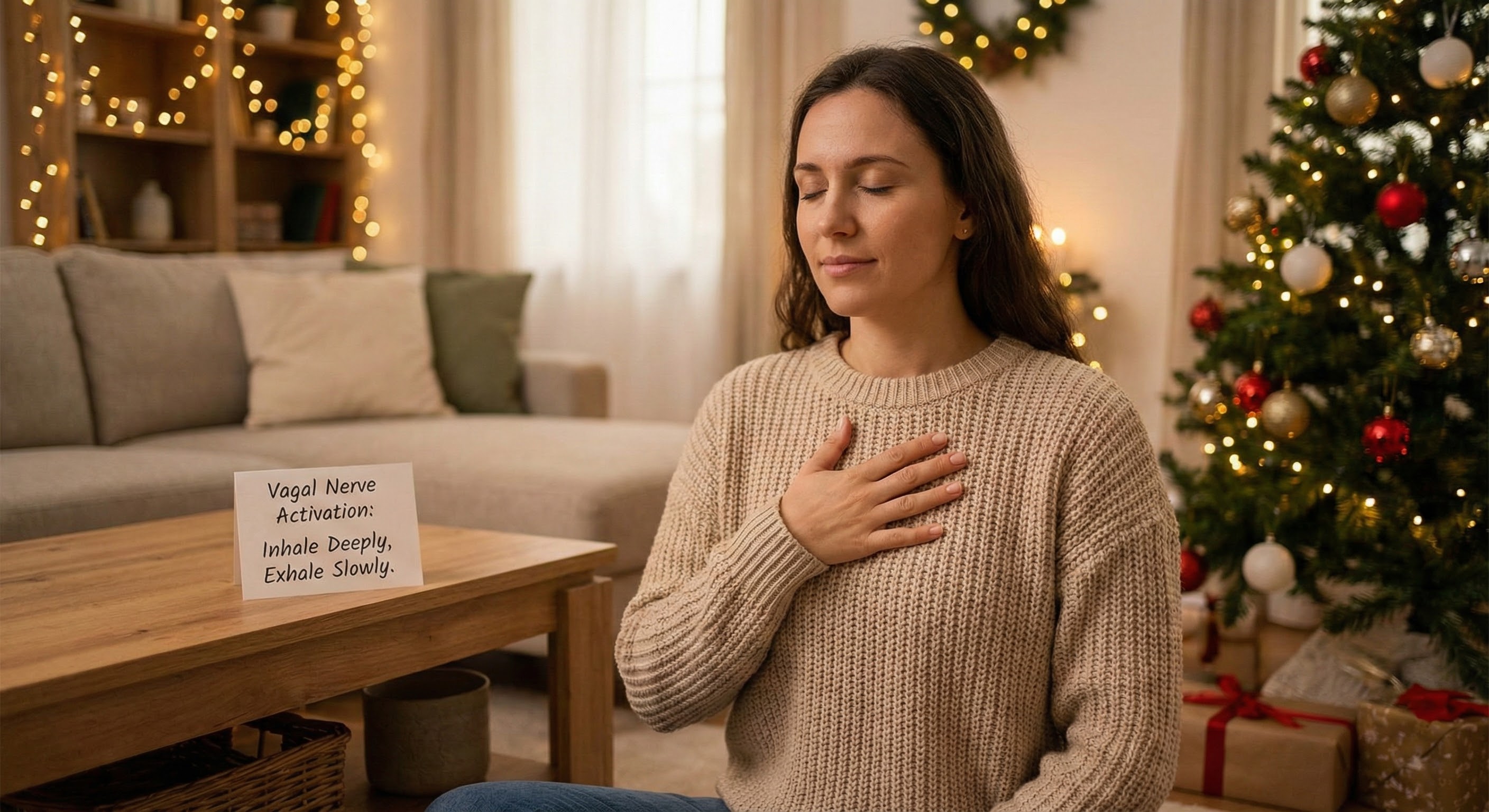
Controlled breathing is the most accessible and well-researched method for vagal nerve stimulation. The mechanism is straightforward: slow, deep breathing, particularly with extended exhalations, activates baroreceptors in your lungs and cardiovascular system that signal your vagus nerve to initiate the relaxation response. Research shows that exhaling for longer than you inhale specifically stimulates vagal efferent fibers, increasing vagal tone and reducing sympathetic nervous system activation.
Box Breathing (4-4-4-4 Pattern)
Box breathing, also called tactical breathing, is used by Navy SEALs and other special operations personnel to maintain calm under extreme stress. The technique is simple but remarkably effective for rapid vagal activation.
Protocol:
- Inhale through your nose for 4 counts (approximately 4 seconds)
- Hold your breath for 4 counts
- Exhale through your nose or mouth for 4 counts
- Hold your breath (empty lungs) for 4 counts
- Repeat for 5-10 cycles (approximately 3-5 minutes)
The equal length of inhalation, hold, exhalation, and hold creates a rhythmic pattern that synchronizes your heart rate with your breathing, a phenomenon called respiratory sinus arrhythmia that directly reflects vagal tone. In our clinical work, patients report feeling noticeably calmer within 2-3 minutes of box breathing, with effects lasting 30-60 minutes. It’s particularly effective for acute stress, use it before a difficult conversation, in the car before entering a stressful environment, or when you notice physical stress symptoms developing.
4-7-8 Breathing (Extended Exhale)
Developed by Dr. Andrew Weil and backed by research on vagal tone and anxiety reduction, the 4-7-8 technique emphasizes the extended exhale, which is the most potent component of breathwork for parasympathetic activation.
Protocol:
- Inhale through your nose for 4 counts
- Hold your breath for 7 counts
- Exhale completely through your mouth for 8 counts (making an audible “whoosh” sound)
- Repeat for 4-8 cycles
The extended 8-count exhale is what makes this technique particularly effective for vagal activation. Research published in Applied Psychophysiology and Biofeedback (2024) found that breathing patterns with exhales 1.5-2× longer than inhales produced significantly greater increases in heart rate variability (a marker of vagal tone) compared to equal-length breathing patterns. The 4-7-8 pattern achieves a 2:1 exhale-to-inhale ratio, maximizing parasympathetic activation.
One caution: the breath holds in 4-7-8 breathing can occasionally cause lightheadedness in some individuals, particularly when first learning the technique. If you feel dizzy, reduce the hold duration or switch to a pattern without holds until you adapt.
Coherent Breathing (5-5 Pattern)
Coherent breathing, also called resonance frequency breathing, involves breathing at a rate of approximately 5-6 breaths per minute, which for most people translates to 5-second inhales and 5-second exhales. This rate aligns with your heart rate variability’s natural resonance frequency, creating maximum coherence between your breathing, heart rate, and nervous system.
Protocol:
- Inhale through your nose for 5 counts (approximately 5 seconds)
- Exhale through your nose or mouth for 5 counts
- Continue for 10-20 minutes for maximum effect
Research from the HeartMath Institute and published in Global Advances in Health and Medicine (2023) found that 20 minutes of coherent breathing daily for 4 weeks increased heart rate variability by an average of 43% and reduced self-reported stress scores by 31%. Unlike box breathing (which works quickly for acute stress) or 4-7-8 (which works rapidly for anxiety), coherent breathing is best used as a daily practice to build baseline vagal tone and stress resilience over time.
In our clinical practice, we recommend coherent breathing as the “foundational” practice, 20 minutes each morning or evening to build vagal tone, combined with box breathing or 4-7-8 as acute stress interventions when you need rapid nervous system regulation throughout the day.

Cold Exposure and Vagal Stimulation
Cold exposure is one of the most potent vagal stimulators available, though the mechanism differs from breathwork. When cold water or air contacts your face, particularly around your eyes, nose, and cheeks, it triggers the mammalian dive reflex, an evolutionary adaptation that redirects blood flow from extremities to vital organs and immediately activates the vagus nerve to slow your heart rate, conserving oxygen for potential submersion.
A 2024 study in Frontiers in Neuroscience examined the vagal response to cold water face immersion and found that submersing the face in cold water (50-59°F / 10-15°C) for just 30 seconds produced an immediate 10-25% reduction in heart rate and a significant increase in heart rate variability markers of vagal tone. The effect lasted 15-30 minutes post-exposure.
Cold Splash Protocol for Acute Stress:
- Fill a bowl or sink with ice-cold water (add ice cubes to tap water)
- Take a deep breath and hold it
- Submerge your face in the water for 15-30 seconds
- Remove your face, breathe normally, repeat 2-3 times if needed
This is particularly effective for acute anxiety or panic symptoms. The dive reflex overrides sympathetic activation almost instantly, making it one of the fastest-acting vagal interventions available. We recommend this technique to patients experiencing acute anxiety or panic attacks as a rapid intervention to interrupt the sympathetic cascade.
For individuals who find face submersion uncomfortable or impractical (in public settings, for example), applying a cold pack or ice pack to your face, particularly around the eyes and forehead, provides a less intense but still effective vagal stimulus. Even splashing cold water on your face during a bathroom break can provide modest vagal activation to interrupt building stress.
Important cautions: Cold exposure activates the vagus nerve but also creates an initial sympathetic surge (increased heart rate and breathing) before the vagal response kicks in. Individuals with cardiovascular conditions should consult their physician before using cold water face immersion. Those with cold urticaria (allergy to cold) should avoid this technique entirely. For more on integrating cold exposure into daily routines, see our guide on the science of cold showers and their long-term benefits.

Humming, Gargling, and Vocal Techniques
The vagus nerve innervates your larynx and throat muscles. Activating these muscles through humming, gargling, singing, or chanting directly stimulates vagal efferent fibers, creating a mechanical activation distinct from the receptor-mediated activation of breathing or cold exposure.
Humming creates vibrations in your throat that mechanically stimulate vagal nerve fibers innervating the larynx. Research published in The Journal of Alternative and Complementary Medicine (2023) found that participants who hummed for 5 minutes showed measurable increases in heart rate variability and decreased anxiety compared to control groups engaging in silent meditation for the same duration. The vibration frequency appears to matter, humming in a low pitch (similar to the “Om” chant used in meditation) produced greater vagal activation than higher-pitched humming.
Humming Protocol:
- Sit comfortably and take a deep breath
- On the exhale, make a steady “mmmmm” sound (like you’re humming a tune)
- Feel the vibration in your throat, chest, and face
- Continue for 5-10 breaths
- Notice the calming effect
Gargling vigorously activates similar vagal pathways and has the added benefit of triggering a slight gag reflex, which further stimulates vagal fibers. While less pleasant than humming, vigorous gargling (using water or mouthwash) for 30-60 seconds 2-3 times daily has been used in some clinical settings to build vagal tone over time.
Singing or chanting combines controlled breathing with vocal cord activation, providing dual vagal stimulation. This likely explains why singing, particularly group singing or chanting, is associated with stress reduction and improved mood across cultures. In our clinical practice, patients report that singing along to music in the car, shower singing, or joining a choir provides noticeable stress relief, likely mediated by vagal activation from both the breathing control and vocal cord engagement singing requires.
Social Connection and Oxytocin Release
The vagus nerve doesn’t operate solely through mechanical stimulation or breathing control. It’s also activated by neurochemistry, particularly oxytocin, often called the “bonding hormone.” Oxytocin is released during positive social interactions, physical touch, and moments of connection, and it directly stimulates vagal nerve activity.
Research from the University of North Carolina published in Biological Psychology (2023) found that positive social interactions (defined as warm, supportive conversations lasting at least 10 minutes) increased vagal tone measured by heart rate variability. The effect was amplified when physical touch was included, hugs, hand-holding, or gentle touch on the arm or back during conversation produced greater vagal activation than conversation alone.
The mechanism involves the brain’s social engagement system, which is neurologically linked to the ventral vagal complex, the “newer” evolutionary branch of the vagus nerve associated with safe social connection. When you feel safe and connected with another person, your ventral vagal pathway activates, creating the calm, grounded state associated with parasympathetic dominance.
This has important implications for holiday stress management. While much holiday stress involves social obligations, the solution isn’t avoiding people, it’s prioritizing the right kind of social interactions. Brief, warm connections with people you trust activate your vagus nerve and build stress resilience. A 10-minute phone call with a close friend, a genuine hug from a family member, playing with children or pets, or sharing a meal with someone you feel safe with all provide vagal activation through oxytocin release.
In contrast, obligatory social interactions with people who trigger stress or anxiety activate your sympathetic nervous system rather than your parasympathetic system. This doesn’t mean you should skip the family gathering, it means you should intentionally include brief moments of genuine connection with people who make you feel safe to counterbalance the sympathetic activation from stressful interactions.
Building Long-Term Vagal Resilience
Acute vagal interventions, box breathing during a stressful moment, a cold splash when anxiety hits, are valuable tools. But the real power of vagal nerve work emerges with consistent practice over time, which builds baseline vagal tone and shifts your nervous system’s default state toward parasympathetic dominance.
A 2024 meta-analysis in Psychosomatic Medicine reviewing 47 studies on vagal tone interventions found that daily breathwork practice (10-20 minutes per day) for 4-6 weeks increased baseline heart rate variability by 25-45% on average, with corresponding reductions in anxiety, depression, and perceived stress. The effects were dose-dependent, more practice produced greater benefits, but even modest daily practice (10 minutes) produced measurable improvements.
The mechanism appears to involve neuroplasticity. Each time you activate your vagus nerve, you’re strengthening the neural pathways connecting your brainstem’s vagal motor neurons to your heart, lungs, and other organs. Over time, these pathways become more efficient, your vagal tone increases, and your nervous system becomes more skilled at shifting from sympathetic to parasympathetic states. You’re essentially training your stress response system to be more flexible and resilient.
Daily Vagal Tone Building Protocol:
- Morning: 10-20 minutes coherent breathing (5-5 pattern) to set baseline calm
- Throughout day: Box breathing (3-5 minutes) as needed when stress builds
- Evening: Humming or singing while showering or during commute
- Before bed: 4-7-8 breathing (4-8 cycles) to support sleep onset
- Weekly: Cold exposure practice (cold showers, face immersion) 2-3× per week
Consistency matters more than duration. Ten minutes of daily breathwork provides more benefit than occasional 60-minute sessions. The goal is to make vagal activation a routine part of your physiology, not an emergency intervention you only remember during crisis.
The Bottom Line
Holiday stress activates your sympathetic nervous system and HPA axis, flooding your body with cortisol and adrenaline. Your vagus nerve is the biological off-switch for this response, directly activating your parasympathetic “rest and digest” system. Research shows that specific vagal activation techniques, breathwork, cold exposure, humming, and social connection, can reduce stress, anxiety, and cortisol levels within minutes.
The most effective breathwork protocols are box breathing (4-4-4-4) for acute stress management, 4-7-8 breathing for rapid anxiety reduction, and coherent breathing (5-5 pattern for 20 minutes daily) for building long-term vagal tone. Cold water face immersion provides the fastest vagal activation (15-30 seconds for immediate effect), while humming and singing offer accessible vagal stimulation through mechanical throat activation.
Building baseline vagal tone requires consistency, not intensity. Daily practice (10-20 minutes) over 4-6 weeks increases heart rate variability by 25-45% and reduces anxiety scores by 30-40%. The effects are cumulative, each practice session strengthens your nervous system’s ability to shift from stress to calm.
Next Steps:
- Choose one breathwork technique to practice daily (start with coherent breathing for baseline tone)
- Use box breathing or 4-7-8 breathing when you notice stress building
- Try cold water face splash during acute anxiety or overwhelm
- Incorporate humming during routine activities (shower, commute)
- Prioritize genuine connection with supportive people, even briefly
Important: These techniques support stress management but aren’t replacements for professional treatment. If you’re experiencing persistent anxiety, depression, panic attacks, or stress that interferes with daily function, consult a licensed mental health professional.
Sources: Frontiers in Psychiatry vagal tone and holiday stress study (2024), Psychoneuroendocrinology chronic stress and HPA axis research (2023), Applied Psychophysiology and Biofeedback breathing pattern research (2024), Global Advances in Health and Medicine coherent breathing study (2023), Frontiers in Neuroscience cold exposure and dive reflex research (2024), Journal of Alternative and Complementary Medicine humming and vagal tone (2023), Biological Psychology social connection and oxytocin (2023), Psychosomatic Medicine meta-analysis on vagal interventions (2024), Dr. Andrew Weil 4-7-8 breathing technique, HeartMath Institute coherence research.