You’ve been getting six hours of sleep most nights for the past month. Not ideal, you know, but you’re functioning. You’ve adapted. You’ve got coffee. You barely notice the deficit anymore.
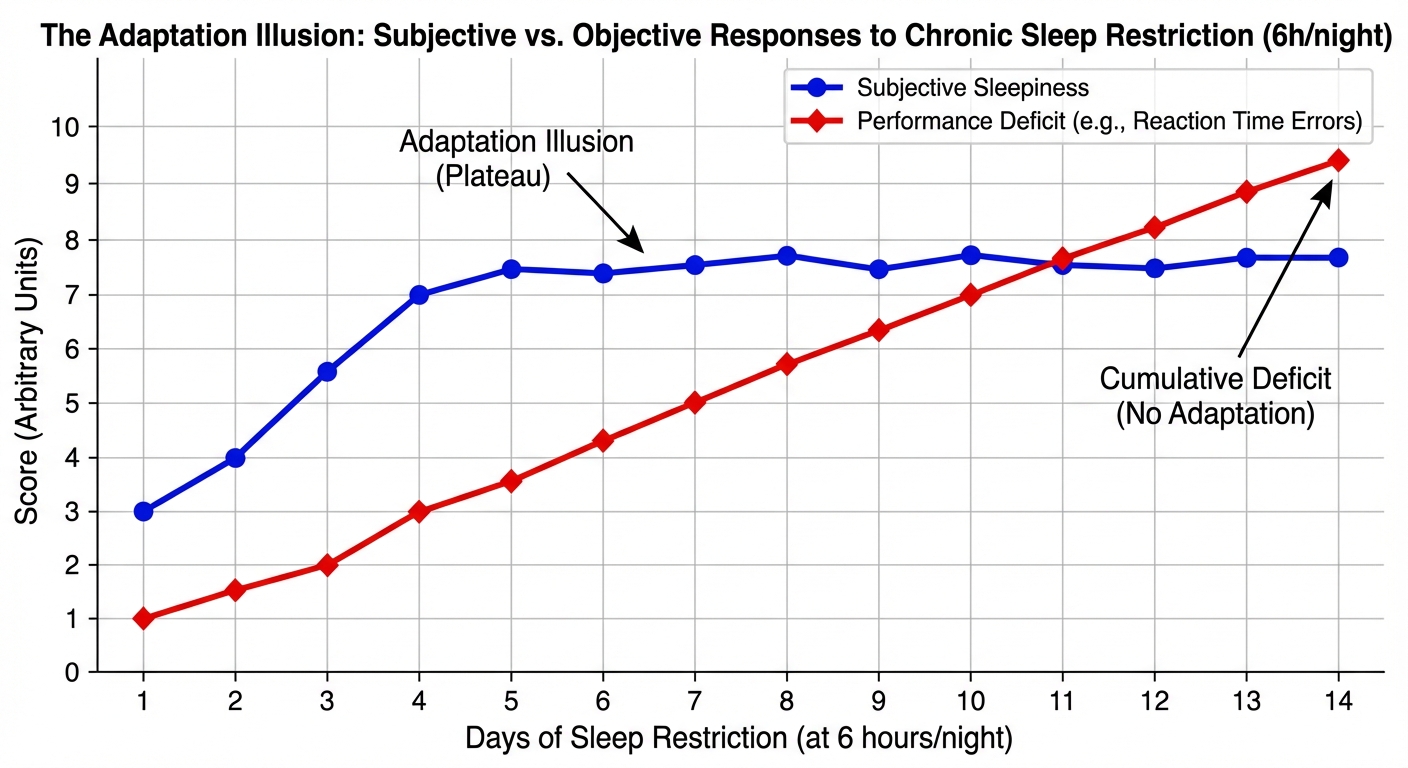
Except your body and brain are keeping precise score. Every hour of sleep you miss accumulates as sleep debt, and the consequences compound in ways that most people don’t recognize until the damage becomes impossible to ignore. The insidious part is that after several days of restriction, your subjective sense of sleepiness plateaus, you don’t feel much worse on day seven than day three, but objective cognitive and metabolic measures continue their downward trajectory. You think you’ve adapted. You’re actually just losing awareness of how impaired you’ve become.
One week of sleeping six hours per night impairs cognitive performance equivalent to having a blood alcohol content of 0.1%, which is above the legal limit for driving in all fifty states. You’re functionally drunk from sleep deprivation but going to work, making consequential decisions, and operating machinery without realizing the extent of your impairment. Research from the University of Pennsylvania found that participants sleeping six hours nightly showed cognitive deficits that kept worsening through the entire two-week study period, even as their self-reported sleepiness stopped increasing after day three.
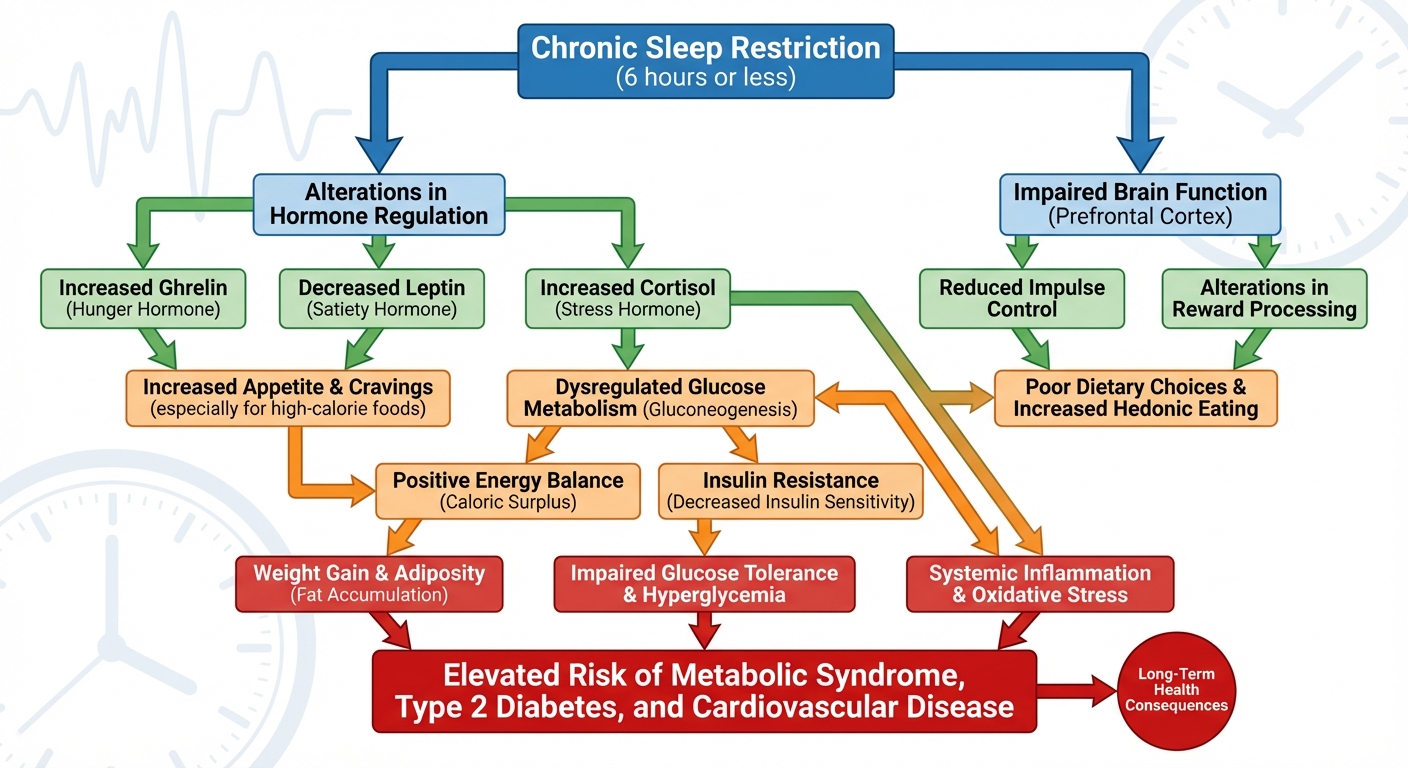
The metabolic effects compound the cognitive damage. Chronic sleep restriction increases diabetes risk by 30-40%, promotes weight gain through hormone disruption, elevates cardiovascular disease markers, and increases all-cause mortality. Sleep isn’t optional recovery time you can cut when schedules get tight. It’s fundamental biological necessity, as essential as food and water, and most Americans are chronically deficient.
What Sleep Debt Actually Means
Sleep debt is the cumulative difference between the sleep you need and the sleep you’re getting. Most adults require 7-9 hours per night for optimal function. If you need 8 hours but consistently get 6, that’s a 2-hour deficit per night. Over a week, you’ve accumulated 14 hours of sleep debt. Over a month, 60 hours.
Your body doesn’t simply forget about the missing sleep. It tracks the deficit, and the consequences manifest in progressively declining function even when you feel like you’ve adjusted. The human sleep system has a homeostatic drive that accumulates pressure to sleep based on time awake and previous sleep duration. When you consistently underpay this biological debt, interest compounds.
The adaptation you perceive is actually a cruel trick of neurobiology. After several days of restricted sleep, your brain stops sending signals of severe sleepiness because constantly feeling exhausted would be unsustainable. This is protective in the short term but dangerous because you lose the feedback that would normally alert you to impairment. Studies consistently show a dramatic disconnect between subjective sleepiness (which plateaus) and objective performance measures (which keep declining).
This explains why chronically sleep-deprived people genuinely believe they’re fine. They point to their ability to get through the day as evidence of adaptation. But getting through the day on caffeine and adrenaline isn’t the same as functioning optimally. When these same individuals are tested on reaction time, attention, memory, or decision-making tasks, their performance tells a very different story than their self-assessment.
The Cognitive Toll
Sleep deprivation systematically degrades cognitive function across multiple domains, with attention being the first and most severe casualty.
Even mild sleep restriction, six hours instead of eight, significantly impairs sustained attention. You might be able to focus briefly on demand, but you can’t maintain concentration over time. Studies using continuous performance tasks, which require participants to respond to targets over extended periods, show that people with sleep debt make two to three times more attention errors than well-rested controls. Every activity requiring sustained focus suffers: reading comprehension, driving, complex work tasks, following lengthy conversations.
Memory and learning depend critically on sleep. Information learned during the day gets transferred from short-term to long-term storage during sleep, particularly during deep sleep and REM stages. Cut sleep short and you impair this consolidation process. Students who cram all night before exams consistently perform worse than those who study less but sleep adequately, because the sleep was necessary for the information to actually stick. Chronic sleep debt also impairs working memory, your ability to hold and manipulate information in your mind while using it, which affects everything from mental arithmetic to following multi-step instructions.
Decision-making quality declines as the prefrontal cortex, the brain region responsible for executive function, planning, and impulse control, reduces activity under sleep deprivation. The result is poor judgment, increased risk-taking, impaired ability to weigh consequences, and preference for immediate gratification over long-term benefit. Sleep-deprived people make more financial mistakes, have more car accidents, escalate conflicts they would normally de-escalate, and choose the candy bar over the apple.
Emotional regulation suffers as the amygdala, your brain’s emotional response center, becomes hyperactive with sleep loss while the prefrontal cortex’s ability to regulate it decreases. You become more emotionally reactive, quicker to anger or anxiety, less able to moderate your responses to provocations. Things that wouldn’t bother you when well-rested feel overwhelming. Interpersonal conflicts become more likely and harder to resolve. The irritable, short-tempered version of yourself that emerges after several bad nights isn’t a character flaw; it’s a predictable neurological consequence of insufficient sleep.
The Metabolic Consequences
Sleep debt restructures your metabolism in ways that promote weight gain, insulin resistance, and cardiovascular disease, independent of other lifestyle factors.
Insulin sensitivity crashes with even short-term sleep restriction. A landmark study at the University of Chicago found that just one week of sleeping 5-6 hours nightly reduced insulin sensitivity by 20-30% in healthy young adults. Their cells became less responsive to insulin, causing glucose to remain elevated in the bloodstream instead of being properly stored. This creates a direct pathway to type 2 diabetes: chronic sleep restriction over years produces a pre-diabetic metabolic state in otherwise healthy people. Large-scale epidemiological studies confirm this relationship, finding that people sleeping less than six hours nightly have 30-40% higher diabetes risk compared to those getting 7-8 hours, even after controlling for weight, diet, and exercise.
Hunger hormones dysregulate in patterns that promote overeating. Sleep deprivation raises ghrelin (the hunger hormone) and lowers leptin (the satiety hormone). You feel hungrier, less satisfied by food you eat, and specifically crave high-calorie, high-carbohydrate foods, exactly the foods most likely to worsen metabolic dysfunction. Research quantifies this effect: sleep-deprived participants consume an average of 300-550 more calories daily than when well-rested, with most excess calories coming from snacks and desserts rather than meals. Over time, this pattern drives weight gain and metabolic syndrome.
Cortisol and stress hormones rise with sleep restriction, particularly in the evening when they should be declining to prepare for sleep. Chronically elevated cortisol promotes abdominal fat storage, suppresses immune function, degrades muscle mass, and increases systemic inflammation. The HPA axis (stress response system) becomes dysregulated, meaning you’re more reactive to stressors and slower to return to baseline after stress passes.
Cardiovascular stress accumulates through multiple mechanisms. Short sleep is associated with elevated blood pressure, increased resting heart rate, and endothelial dysfunction (blood vessels losing their ability to dilate properly). Meta-analyses pooling data from hundreds of thousands of participants find that sleeping less than six hours nightly increases heart attack risk by approximately 20% and stroke risk by 15% compared to 7-8 hours. The inflammation, autonomic nervous system dysfunction, and metabolic dysregulation all converge on the cardiovascular system.
Can You Recover Sleep Debt?
The concept of catching up on sleep is appealing but scientifically complicated. While you can recover from acute sleep loss relatively quickly, chronic sleep debt creates biological deficits that are much harder to erase.
Think of sleep debt like financial debt with compound interest. If you miss one payment, you can make it up next month with a small penalty. If you miss payments for a year, the interest compounds, your credit score takes a hit, and the consequences persist long after you resume payment. Sleep biology works similarly.
Short-term debt from one or two nights of poor sleep is recoverable. If you sleep poorly one night, sleeping longer the next night or two restores most cognitive function. Your brain can clear the adenosine backlog and catch up on the sleep stages it missed. This is normal sleep variability, not a problem.
Chronic debt accumulated over weeks to months can’t be fully recovered with occasional catch-up sleep. Research shows that while weekend recovery sleep helps, and is certainly better than nothing, it doesn’t completely reverse the metabolic and cognitive effects of weekday restriction. A study published in Current Biology found that recovery sleep after a week of restriction improved some metabolic markers but didn’t return them to baseline, and participants quickly re-accumulated debt when they resumed their restricted sleep schedules. The underlying dysfunction had set in.
Some effects of chronic restriction may be difficult to fully reverse even with later improved sleep. Brain structure changes, including reduced gray matter in regions associated with attention and emotional regulation, have been observed in chronically sleep-deprived individuals. Whether these changes fully normalize with sustained sleep improvement remains unclear. Metabolic alterations and cardiovascular damage may similarly persist beyond the period of restriction.
The practical message: occasional sleep debt is manageable; your body can handle the variability of real life. But treating weekdays as a time to run up debt that you’ll repay on weekends is a strategy with diminishing returns and accumulating costs. The interest rate on chronic sleep debt is higher than most people realize.
How Much Sleep Do You Actually Need?
The 7-9 hour recommendation for adults is a population average, with individual needs varying based on genetics, age, activity level, and health status. But the variation is probably smaller than you’d like to believe.
True short sleepers, people who genuinely function optimally on six hours or less without any debt accumulation, represent approximately 1% of the population. They carry a genetic variant (DEC2 or ADRB1 mutations) that allows their brains to accomplish sleep’s restorative functions in less time. You almost certainly don’t have this mutation. If you did, you wouldn’t be powering through afternoons on caffeine or struggling to stay alert in meetings.
Most people insisting they only need six hours are actually carrying chronic debt and have lost awareness of their impairment. They’ve confused tolerance with adaptation, the ability to get through the day with optimal function.
To discover your actual sleep need, you need extended opportunities for unrestricted sleep, ideally during a vacation when you can go to bed when tired and wake naturally without alarms for one to two weeks. Your body will initially oversleep to pay off accumulated debt, then settle into its natural rhythm. Most people discover they need more than they’ve been getting. The amount you sleep during week two of unrestricted sleep is probably close to your true biological need.
Improving Sleep Quality and Protecting Sleep Time
If adding hours isn’t immediately possible, optimizing the quality of available sleep provides partial compensation. But optimization shouldn’t become an excuse for continued restriction; it’s a bridge while you work on protecting more time.
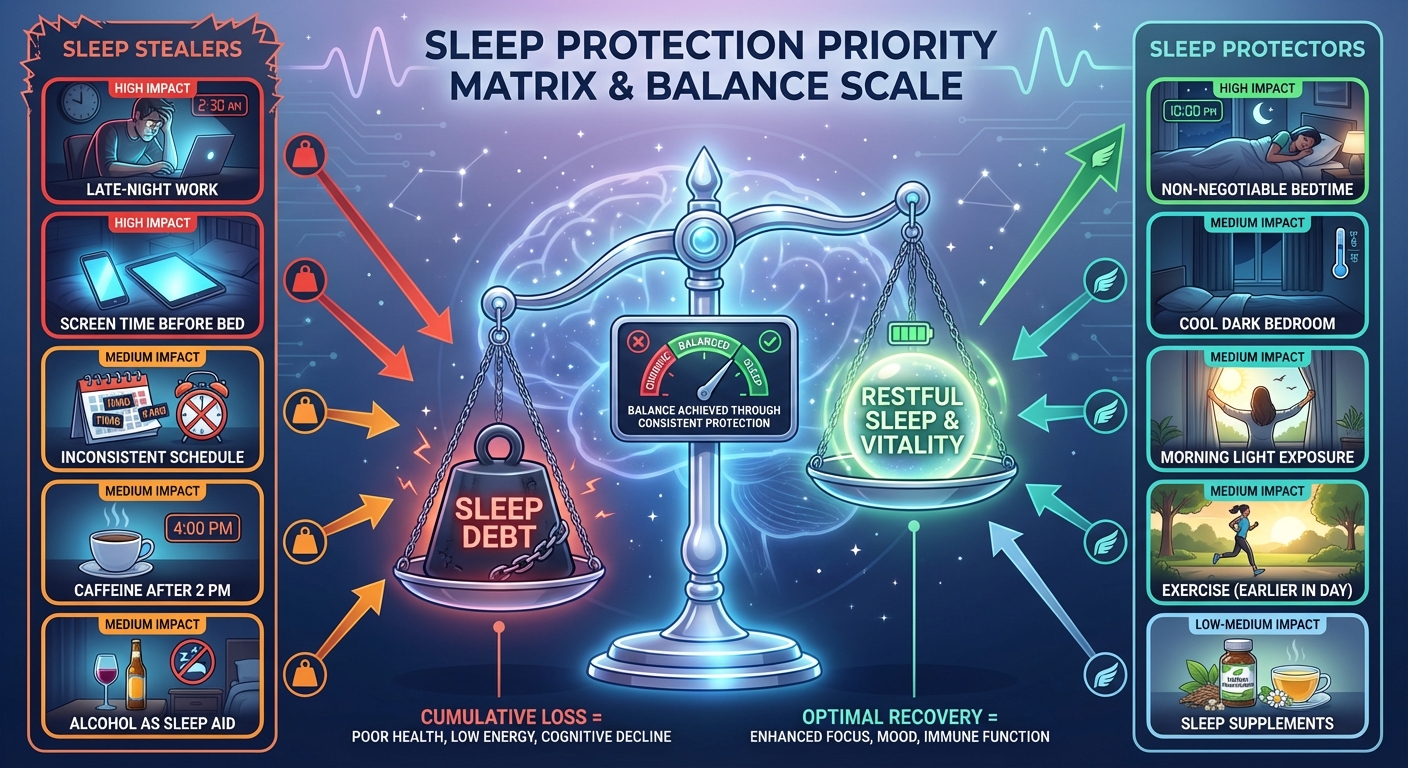
Environment matters considerably. Temperature should be cool (65-68°F for most people), as core body temperature needs to drop for quality sleep. Darkness should be complete, since even small light exposure through closed eyelids disrupts melatonin and sleep architecture. Noise should be minimal or masked with consistent white noise. Your mattress and pillows should support comfortable sleep positioning. For a complete guide to optimizing your sleep environment and timing, see our biohacking sleep guide.
Sleep hygiene practices, while sometimes dismissed as obvious, genuinely matter. Consistent bedtime and wake time, even on weekends, reinforces circadian rhythm and improves sleep quality. Screens should be eliminated 30-60 minutes before bed, both for their blue light and their stimulating content. Caffeine has a half-life of 5-6 hours, meaning afternoon coffee still affects nighttime sleep; for most people, a 2 PM cutoff is appropriate. Alcohol may help initiate sleep but degrades sleep architecture and causes middle-of-the-night waking.
Supplements with reasonable evidence for sleep support include magnesium glycinate (200-400mg), which calms the nervous system and is deficient in most diets; glycine (3g), which lowers core body temperature; and L-theanine (200-400mg), which promotes relaxation without sedation. For a detailed breakdown of magnesium types and their effects, see our magnesium guide. Melatonin is useful for circadian rhythm issues but less effective for chronic insomnia, and lower doses (0.3-1mg) work better than the high doses commonly sold.
The Bottom Line
Sleep debt is a biological reality with documented cognitive, metabolic, and cardiovascular consequences. You cannot outrun, out-supplement, or out-discipline your way around the need for adequate sleep.
The cognitive effects are immediate: attention, memory, decision-making, and emotional regulation all degrade with insufficient sleep. The metabolic effects compound over time: insulin resistance, weight gain, hormonal disruption, and cardiovascular stress accumulate with chronic restriction. The adaptation you perceive is largely an illusion; you’ve lost awareness of impairment, not escaped it.
Addressing sleep debt requires:
- Honest assessment of your current sleep duration versus your likely biological need
- Protecting 7-9 hours of sleep opportunity, not just time in bed
- Consistent sleep schedule, even on weekends
- Optimizing sleep environment and eliminating sleep-disrupting substances and behaviors
- Treating sleep as the non-negotiable biological requirement it actually is
The shift is philosophical as much as practical. When pressed for time, sleep is typically what gets sacrificed: stay up late to finish work, wake early for exercise, squeeze entertainment into late-night hours. But sleep is when your brain clears metabolic waste, consolidates memories, regulates hormones, and repairs tissues. Cutting it short compromises all of these processes, and the bill eventually comes due.
Eight hours of sleep and six hours of productive, mentally sharp work almost certainly beats six hours of sleep and eight hours of impaired, caffeine-fueled work. Your future self, hoping to stay sharp, healthy, and independent into old age, needs you to pay the sleep debt now rather than continuing to borrow against a future that gets shorter with every deficit night.
Sources: University of Pennsylvania sleep restriction studies, University of Chicago metabolic research, Matthew Walker sleep research, Current Biology sleep recovery studies, National Sleep Foundation guidelines, cardiovascular and mortality meta-analyses on sleep duration.