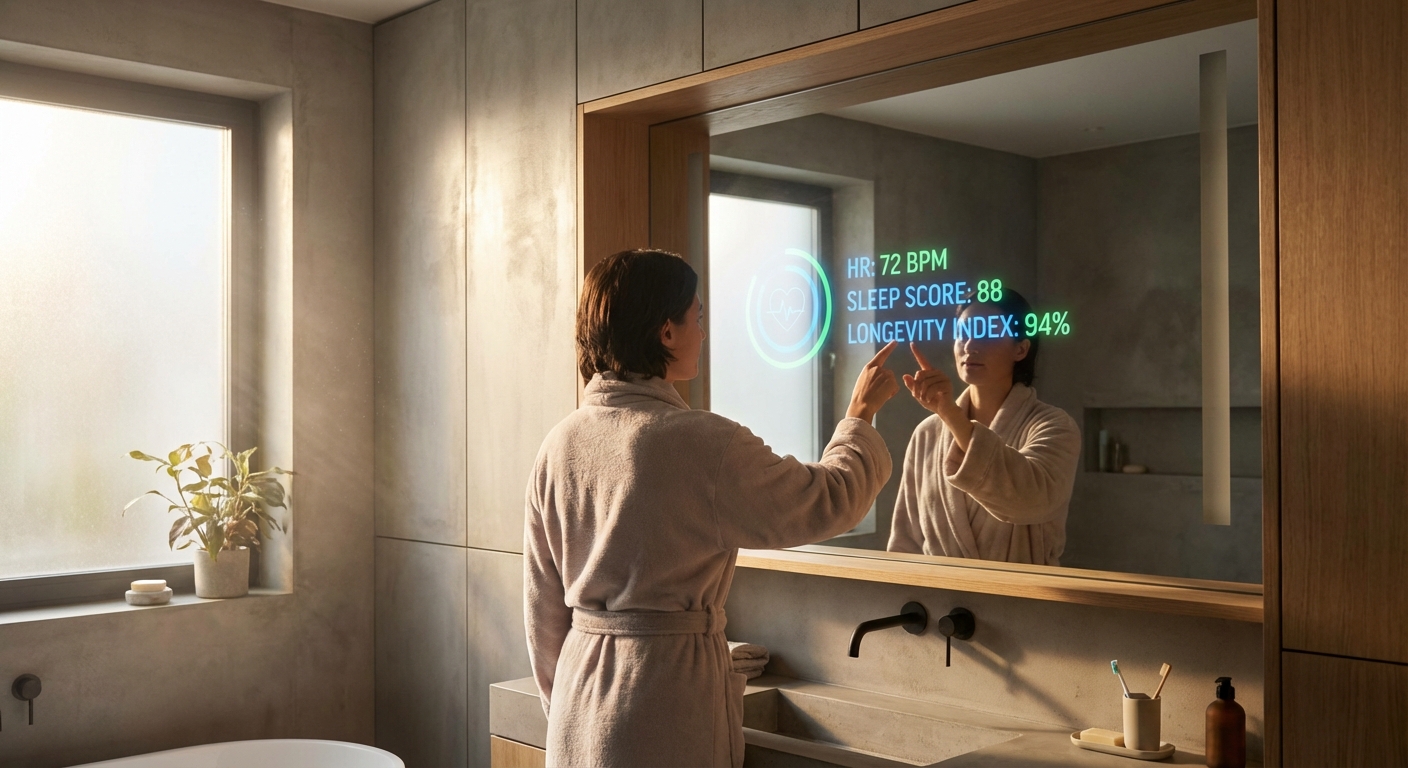
At 3:47 AM, James was awake again. Not because of noise or discomfort, but because his brain simply refused to stay asleep through the night. He’d been exhausted when he went to bed at 11, fell asleep easily enough, but here he was, staring at the ceiling for the third night in a row. His Fitbit showed he was getting seven hours of sleep, but he woke feeling unrested. His afternoon coffee habit had crept from one cup to three. Something was broken, and counting sheep wasn’t fixing it.
Sleep is when your body repairs tissue, consolidates memories, clears metabolic waste from your brain, and resets hormonal systems for the next day. Yet most people treat it as a passive state requiring no active optimization, something that should just happen if you close your eyes long enough. The biohacking approach differs: it treats sleep as a complex physiological process with multiple optimization points, each of which can be deliberately tuned to improve outcomes.
Research demonstrates that multiple factors affect sleep architecture: the stages and cycles you move through each night and how much time you spend in each. Temperature, light exposure, caffeine timing, supplement interventions, evening routines, and bedroom environment all influence whether you get shallow, fragmented rest or deep, restorative sleep. The goal isn’t necessarily sleeping longer; it’s making the sleep you get as restorative as possible, maximizing the percentage of time spent in the stages where repair and recovery actually happen.
James eventually solved his problem through systematic experimentation: a cooling mattress pad, amber glasses after 8 PM, magnesium and glycine before bed, and a caffeine cutoff at noon. Within three weeks, he was sleeping through the night and waking before his alarm. The fix wasn’t one thing; it was optimizing multiple factors that were each contributing to his poor sleep.
Understanding Sleep Architecture
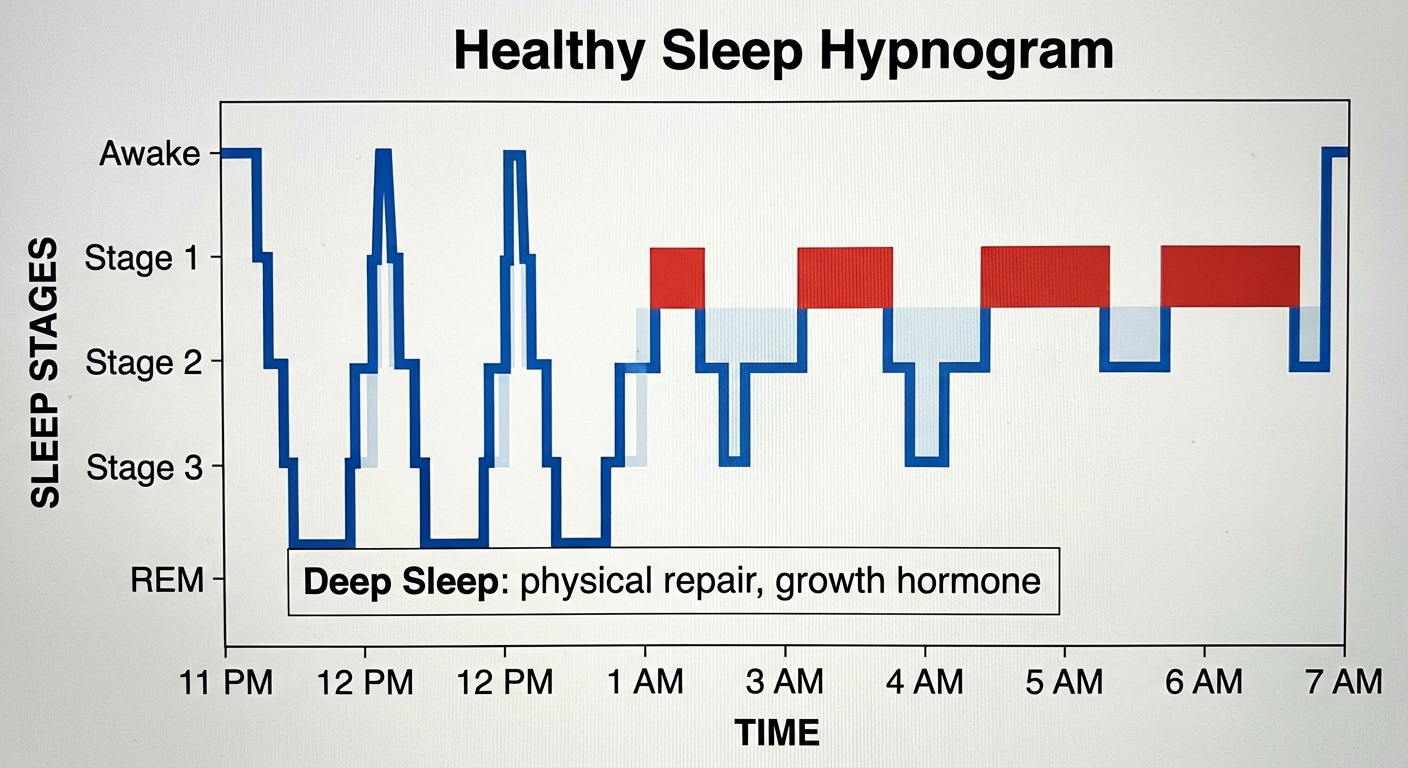
Sleep isn’t a uniform state of unconsciousness. Each night, you cycle through distinct stages multiple times, with each stage serving different restorative functions. Understanding this architecture helps you appreciate what you’re trying to optimize and why certain interventions target specific aspects of sleep.
Stage 1 is light transitional sleep, the drowsy period between wakefulness and true sleep. It typically occupies only 5-10% of the night and serves mainly as a gateway to deeper stages. Stage 2 represents the first true sleep stage, where memory consolidation begins and the brain produces sleep spindles, bursts of neural activity that help filter external stimuli and prevent awakening. This stage comprises the largest chunk of sleep at 45-50% of total time.
Stage 3, also called deep sleep or slow-wave sleep, is when physical restoration happens. Growth hormone releases during this stage, tissue repair accelerates, the immune system strengthens, and the glymphatic system clears metabolic waste from the brain, including beta-amyloid proteins associated with Alzheimer’s disease. Deep sleep comprises 15-25% of healthy sleep, with most occurring in the first half of the night. This is the stage most disrupted by alcohol, caffeine, and temperature problems.
REM (rapid eye movement) sleep is when most vivid dreaming occurs, along with emotional processing and memory integration. Your brain is nearly as active as when awake, but your voluntary muscles are temporarily paralyzed to prevent you from acting out dreams. REM comprises 20-25% of sleep, with most occurring in the second half of the night. This stage is particularly important for cognitive function, creativity, and emotional regulation.
Each complete cycle through these stages lasts 90-120 minutes, and you typically complete 4-6 cycles per night. The optimization goal is maximizing deep sleep and REM while minimizing time stuck in light Stage 1 sleep or frequent awakenings that fragment your cycles and prevent proper progression through stages.
Temperature: The Foundation of Sleep Optimization
Before modern climate control, humans slept in environments that naturally cooled after sunset. This temperature drop served as a powerful biological cue, signaling to the suprachiasmatic nucleus that nighttime had arrived. Our core body temperature follows a circadian rhythm, rising during the day to support alertness and dropping 2-3 degrees Fahrenheit at night to facilitate sleep onset and maintenance.
Modern homes override this natural cooling with central heating and climate control, maintaining constant 70-72 degree temperatures that feel comfortable but work against sleep physiology. Research consistently shows that a cool environment is essential for deep sleep. A 2019 study in the journal Sleep found that participants in 68°F rooms spent 25% more time in deep sleep compared to those in 75°F rooms, despite subjective comfort ratings being similar.
The mechanism involves thermoregulation’s connection to sleep stages. To initiate and maintain deep sleep, your core temperature must drop. A cool room facilitates this by allowing heat to dissipate from your body. Conversely, a warm room traps heat, preventing the core temperature drop needed for Stage 3 sleep. This explains why many people sleep poorly in summer heat or with heavy blankets: their bodies can’t cool down enough to access deep sleep stages.
The optimal bedroom temperature for most people falls between 65-68°F (18-20°C). Going below 60°F can be too cold for comfort, causing vasoconstriction and preventing sleep onset. But anywhere in the mid-60s typically works well. For those who sleep with partners who prefer different temperatures, or who want more precise control, cooling mattress systems like Eight Sleep, ChiliSleep, or BedJet can regulate bed surface temperature independently of room temperature. These devices are expensive ($2,000-3,000) but represent one of the most effective single interventions for people with temperature-related sleep problems.
A simple hack that costs nothing: take a hot bath or shower 90 minutes before bed. This temporarily raises core temperature, and when you exit, rapid cooling triggers the same physiological cascade that signals sleep onset. The drop in temperature mimics what your body is trying to accomplish naturally, accelerating sleep drive. Combine this with the “sock trick”: warm feet (which cause peripheral vasodilation, pulling heat from your core) in a cool room creates optimal conditions for falling asleep quickly.
Light Exposure and Circadian Rhythm
For millions of years, the only source of bright blue light was the sun. When it set, the world went dark or was lit only by the warm, dim glow of fire. Our biology evolved to use this light/dark cycle as the primary regulator of circadian rhythm, the internal clock governing hormone release, body temperature, and sleep-wake cycles.
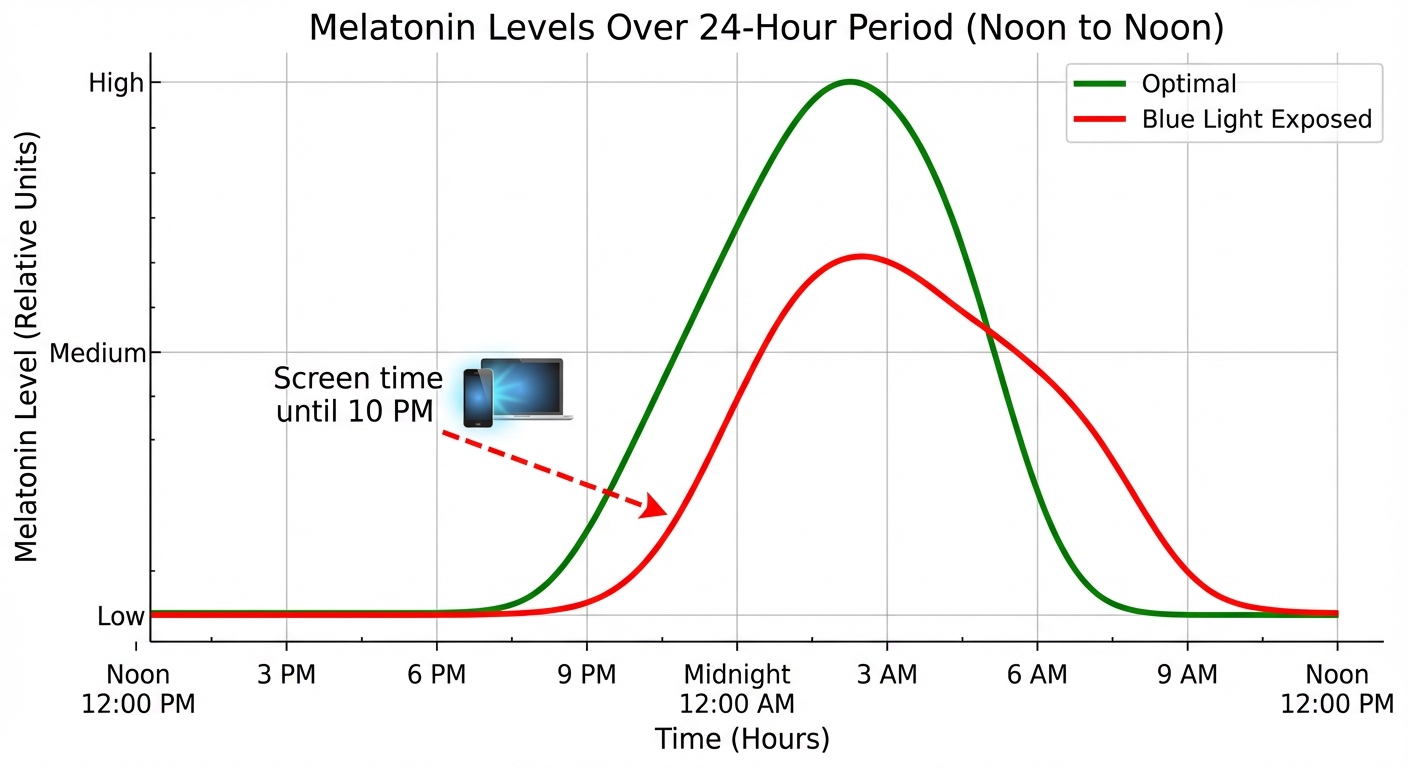
Today, we bathe ourselves in artificial blue light from LEDs, smartphones, and laptops long after sunset. This evolutionary mismatch confuses the brain’s circadian pacemaker, suppressing melatonin production and shifting circadian rhythm later. Blue light at 460-480nm wavelengths is particularly potent at suppressing melatonin, with studies showing that two hours of tablet use before bed can suppress melatonin by more than 50%, the equivalent of telling your brain it’s still afternoon.
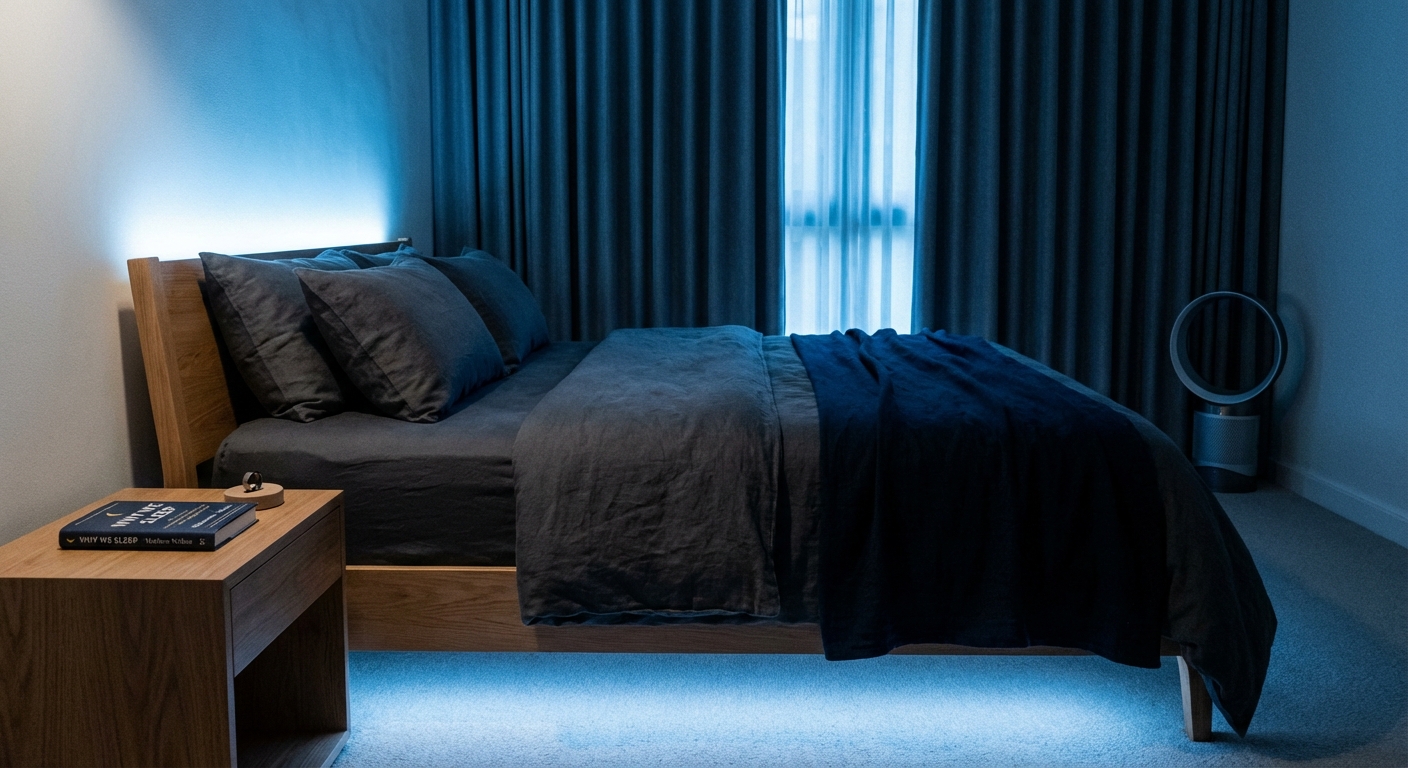
The evening protocol is straightforward: reduce blue light exposure in the 2-3 hours before sleep. Switch household lighting to warm-toned, dim bulbs (2700K color temperature or lower). Amber-tinted blue-blocking glasses filter problematic wavelengths and are more effective than software solutions like f.lux or Night Shift, which reduce but don’t eliminate blue light. For the bedroom itself, complete darkness is ideal: blackout curtains, covered LED lights on devices, and an eye mask if needed. Even small light sources can disrupt sleep through closed eyelids.
Morning light exposure is equally important but often overlooked. Bright light within 30-60 minutes of waking advances your circadian rhythm, making evening sleep onset easier. This is particularly crucial in winter when natural morning light is limited or arrives late. Getting outside for 10-30 minutes of sunlight exposure shortly after waking, or using a 10,000 lux light therapy lamp, can shift circadian timing forward by 30-60 minutes. For those struggling with seasonal affective disorder or winter circadian disruption, morning light exposure is often the most effective single intervention.
The Sleep Supplement Stack
While environment and behavior form the foundation of sleep optimization, targeted supplementation can enhance results for many people. Unlike prescription sleep aids, which often work by sedating the brain at the cost of natural sleep architecture, biohacking supplements aim to support the body’s own relaxation pathways by providing raw materials for neurotransmitter production or facilitating the physiological changes that enable sleep.
Magnesium glycinate stands out as the most evidence-based sleep supplement. Magnesium modulates GABA receptors (the brain’s primary inhibitory system), helps muscles relax, and is involved in melatonin production. Studies show that magnesium supplementation improves sleep quality, reduces nighttime awakenings, and increases time spent in deep sleep. The glycinate form is preferred because glycine itself has sleep-promoting properties and this form doesn’t cause the digestive issues associated with other magnesium forms like oxide or citrate. A typical dose is 200-400mg taken 60-90 minutes before bed. For a complete guide to magnesium forms and their different applications, see our detailed breakdown.
Glycine, taken separately or as part of magnesium glycinate, lowers core body temperature, facilitating the drop needed for deep sleep. A 3g dose before bed has been shown to improve subjective sleep quality and reduce daytime fatigue in multiple studies. The mechanism involves glycine’s action at NMDA receptors and its role in temperature regulation.
L-theanine, an amino acid found in tea, promotes relaxation without sedation by increasing alpha brain wave activity, the same brain state associated with calm focus and meditation. At 200-400mg, it creates mental calmness without drowsiness, making it useful for people whose racing thoughts prevent sleep onset. It works well combined with magnesium.
Apigenin, a flavonoid found in chamomile, binds to benzodiazepine sites on GABA receptors, creating mild sedative effects without the side effects of prescription benzodiazepines. A 50mg dose 30 minutes before bed provides gentle relaxation that enhances sleep onset.
Melatonin is widely used but widely misunderstood. It’s a timing signal, not a sedative; it tells your brain darkness has arrived rather than forcing sleep. For circadian issues (jet lag, shift work, delayed sleep phase), melatonin can be valuable. For general insomnia, it’s less effective. Crucially, lower doses (0.3-0.5mg) work better than the high doses (5-10mg) commonly sold, which can cause grogginess, paradoxically disrupt sleep architecture, and suppress natural melatonin production.
Caffeine, Alcohol, and Timing
Caffeine is the world’s most popular psychoactive drug, effective at masking fatigue because it blocks adenosine receptors in the brain. Adenosine is a byproduct of cellular activity that accumulates throughout the day, creating “sleep pressure,” the drive to sleep. Caffeine occupies these receptors, preventing adenosine from binding. You don’t actually have more energy; you just can’t feel how tired you are.
The problem is caffeine’s surprisingly long half-life: 5-6 hours for most people, meaning half the caffeine from that 2 PM espresso is still active at 8 PM. A quarter remains in your system 10-12 hours later. Research shows that caffeine consumed 6 hours before bed significantly reduces deep sleep even when people report falling asleep normally. The subjective experience of being able to sleep doesn’t match the objective degradation of sleep quality.
The practical recommendation: no caffeine after early afternoon if your bedtime is around 10 PM. Adjust the cutoff based on your personal sensitivity and genetics (CYP1A2 gene variants affect caffeine metabolism speed). Some people can drink coffee at dinner and sleep fine; most cannot.
Alcohol presents a different problem. The “nightcap” is culturally entrenched as a sleep aid, and it does help people fall asleep faster due to its sedative effects. But sedation isn’t sleep. Alcohol fragments sleep architecture, particularly devastating REM sleep: moderate drinking can reduce REM by 20-30%. It also causes more awakenings in the second half of the night as the body metabolizes alcohol and blood sugar fluctuates. A night of drinking produces sleep that is objectively worse despite the faster onset.
The recommendation isn’t total abstinence but awareness of tradeoffs. If you drink, stop 3-4 hours before bed to minimize sleep disruption. Social drinking is fine; using alcohol as a sleep aid is counterproductive and creates a cycle of poor sleep, daytime fatigue, and increased reliance on stimulants and sedatives.
Building an Evening Routine
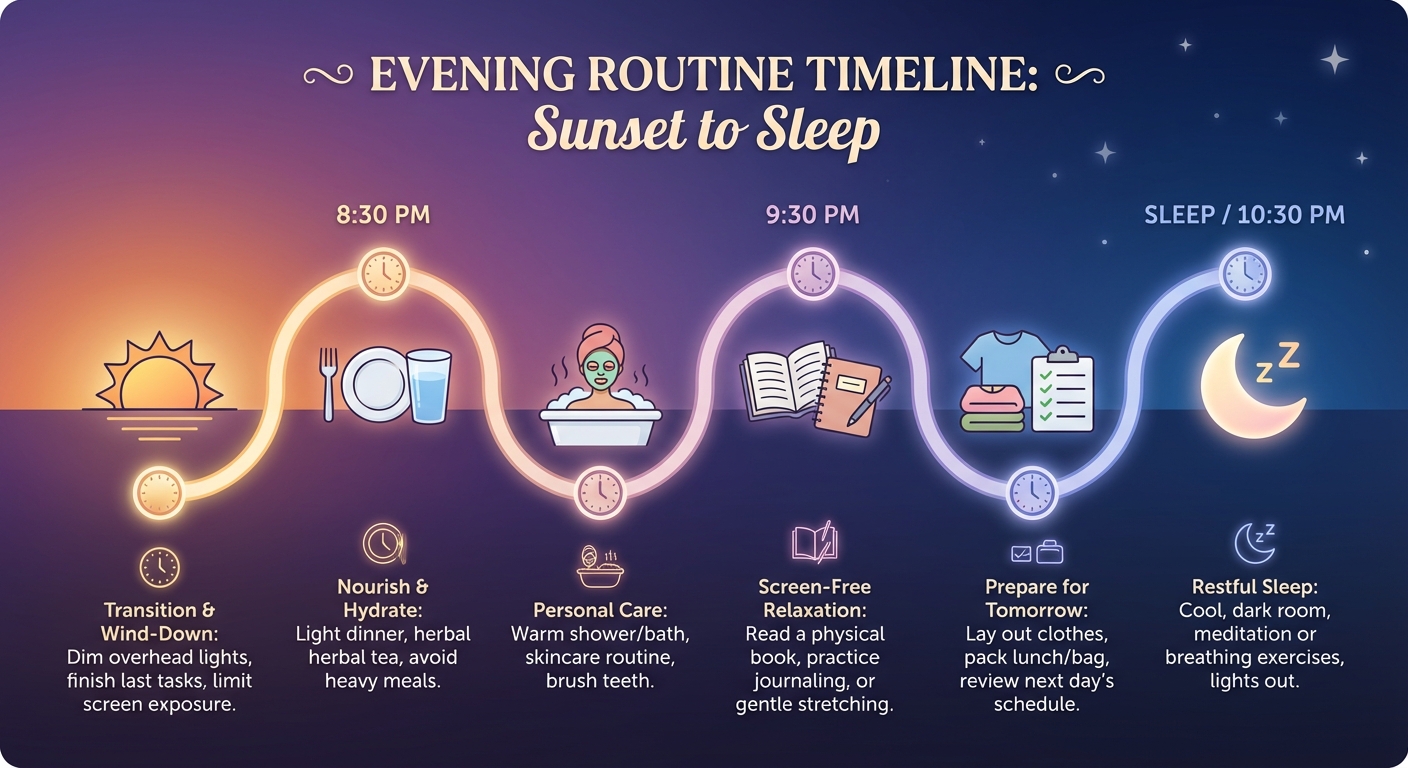
You cannot sprint at full speed into a brick wall and expect to stop instantly. Similarly, you cannot transition from a high-stress, high-stimulation day directly into deep sleep without a buffer zone. The brain requires time to shift from beta waves (alert, active) to alpha and theta waves (relaxed, drowsy). An evening routine creates this transition deliberately.
The routine itself matters less than consistency. By performing the same sequence of low-stress activities every night, you create a Pavlovian response: the routine triggers relaxation hormones because your brain has learned that these cues precede sleep. This is the same principle behind bedtime routines for children, and it works for adults too.
The 90-120 minute pre-sleep window should involve dim lighting, no intense physical or mental activity, and ideally no screens or at least screens with aggressive blue light filtering. Light reading, gentle stretching, conversation, journaling, or meditation all work well. This is when you’d take sleep supplements if using them. The thermostat should drop to sleep temperature.
The final 30-60 minutes should involve preparing the bedroom (dark, cool, quiet), completing any pre-sleep activities like teeth brushing, and transitioning to bed. Physical books or audiobooks work for the final wind-down; screens don’t, even with blue light filtering, because the content itself can be stimulating.
The key is consistency. The same routine at the same time each night, including weekends, reinforces circadian rhythm and creates powerful sleep-promoting associations. Irregular sleep schedules, especially large weekend shifts, produce the equivalent of constant jet lag.
The Bottom Line
Sleep is optimizable through systematic attention to the factors that affect sleep architecture. You don’t need perfect optimization across every variable, but addressing the biggest factors provides the majority of potential benefit.
Priority interventions (address these first):
- Room temperature: 65-68°F, cool enough to facilitate core temperature drop
- Light management: dim lighting and blue light reduction 2 hours before bed, complete darkness for sleep
- Consistent schedule: same bed and wake times daily, including weekends
- Caffeine cutoff: no caffeine after early afternoon (adjust based on your sensitivity)
- Magnesium supplementation: 200-400mg magnesium glycinate 60-90 minutes before bed
Secondary optimizations (after fundamentals are solid):
- Sleep tracking for trend data and pattern identification
- Evening hot bath/shower 90 minutes before bed
- Glycine (3g) and/or L-theanine (200-400mg) before bed
- Morning light exposure within 30-60 minutes of waking
- Cooling mattress systems if temperature remains problematic
The payoff is substantial. Well-optimized sleep improves cognitive function, physical recovery, emotional regulation, immune function, and reduces risk of chronic diseases. It’s not just about feeling less tired; it’s about building the foundation that every other aspect of health depends upon.
If you’ve tried these interventions and still struggle with sleep, or if you experience symptoms like severe snoring, gasping during sleep, extreme daytime sleepiness despite adequate duration, or unusual sleep behaviors, consult a sleep specialist. Sleep disorders like apnea require professional treatment that optimization alone cannot address.
Sources: Sleep journal (temperature and sleep quality research), circadian rhythm and blue light studies, magnesium and sleep meta-analyses, caffeine half-life and sleep impact studies, Journal of Clinical Sleep Medicine, Matthew Walker sleep research.