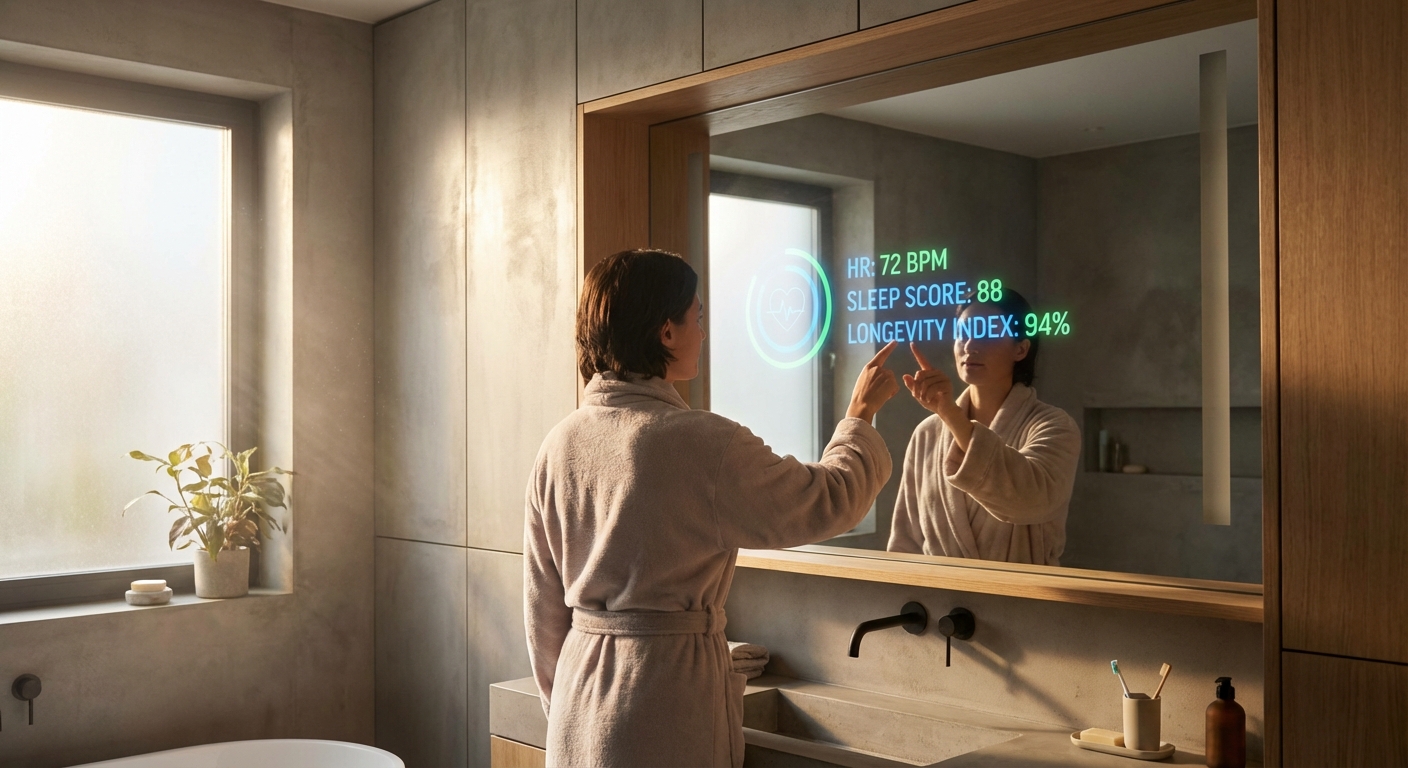
The smart mirror that greeted CES 2026 attendees could assess your biological age by analyzing blood flow patterns in your face. It displayed a “Longevity Index” from 0 to 100, quantifying something that once required expensive laboratory testing. This product, NuraLogix’s Longevity Mirror, represents a broader trend: technologies that once existed only in research labs or executive health clinics are becoming consumer products.
Longevity has become a marketing category. The term appears on wearables, supplements, and now home devices promising to help you live not just longer but healthier. Some of this is hype; not every product with “longevity” in its name will extend your life. But beneath the marketing, real technological advances are making meaningful health monitoring possible at home.
The American College of Sports Medicine named wearable technology the number one fitness trend for 2026, for the twentieth consecutive year. But the wearables of 2026 bear little resemblance to the step counters of 2016. Today’s devices monitor heart rhythm, skin temperature, blood pressure, sleep architecture, blood oxygen, and recovery status. Combined with AI analysis, they can detect patterns invisible to conscious awareness.
What Home Monitoring Can Actually Measure
The expansion of measurable health metrics has been dramatic. Understanding what these measurements actually represent helps evaluate which devices provide genuine value versus impressive-sounding data of questionable utility.
Heart rate variability (HRV) has become the most widely tracked recovery and stress metric. Measured through optical sensors in wearables, HRV reflects autonomic nervous system balance. Higher variability generally indicates parasympathetic dominance and recovered status; lower variability suggests stress or incomplete recovery. Devices like WHOOP, Oura Ring, and Apple Watch provide HRV trends that can inform training decisions and stress management.
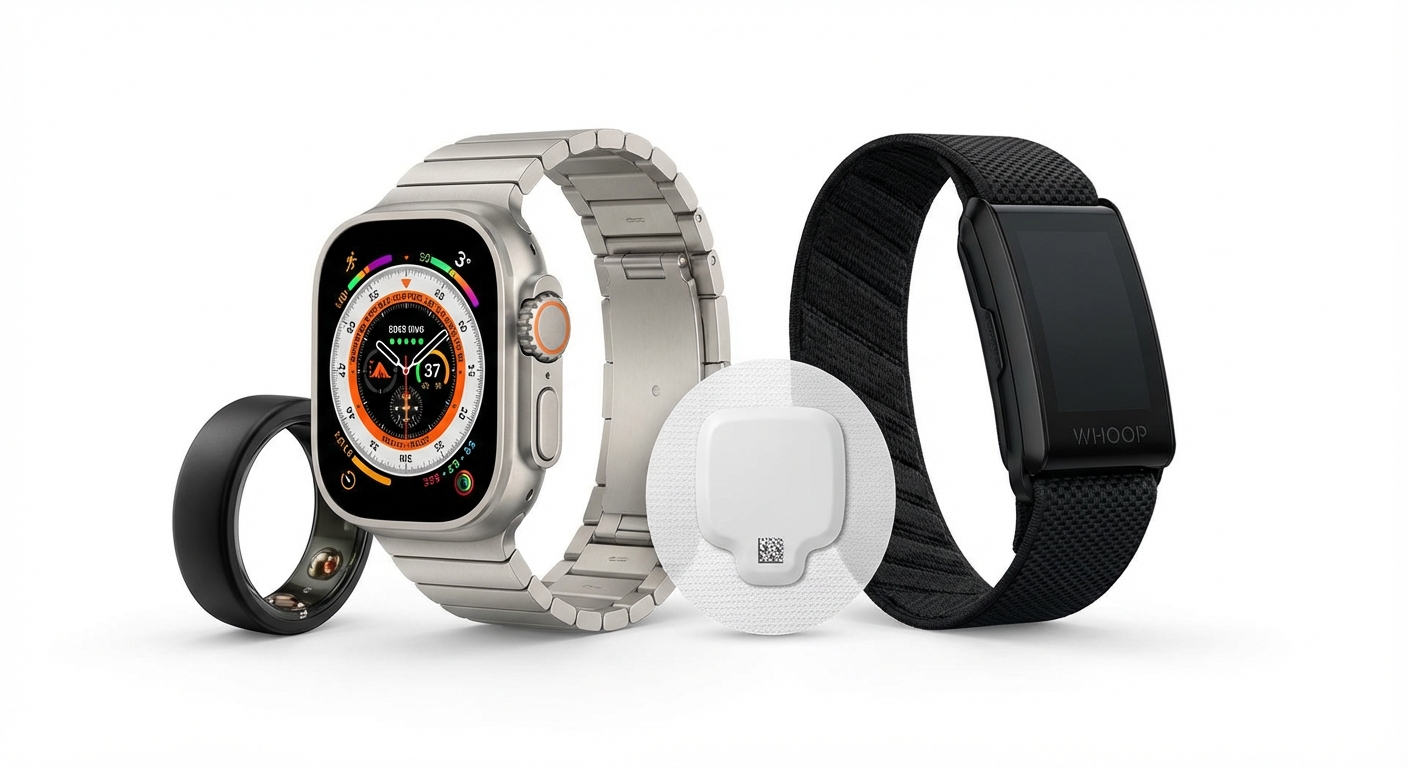
Sleep monitoring has advanced from simple duration tracking to sleep stage analysis. Modern devices estimate time in light, deep, and REM sleep using movement patterns and heart rate data. While not as accurate as clinical polysomnography, consumer sleep tracking provides useful trend data. Knowing you’re consistently getting less deep sleep than optimal can prompt interventions before problems become severe.
Continuous glucose monitoring (CGM), once exclusively for diabetics, has expanded to the general population seeking metabolic insights. Companies like Levels and Signos pair CGM sensors with apps that explain glucose responses to food, exercise, and stress. The technology reveals individual glycemic responses that differ significantly from population averages, enabling personalized nutrition adjustments.
Blood oxygen monitoring, accelerated by COVID-19 concerns, now appears in most wearables. While healthy individuals rarely need moment-to-moment oxygen tracking, the technology can detect sleep apnea (which causes repeated oxygen drops) and altitude-related issues. The clinical value for generally healthy people remains limited, but the capability exists if needed.
Temperature monitoring has become increasingly sophisticated. The Oura Ring, for example, tracks overnight skin temperature trends, which can detect oncoming illness, track menstrual cycle phases, and potentially identify other physiological changes. Temperature disruption often precedes conscious awareness of illness, potentially providing early warning.
AI Integration: Pattern Recognition at Scale
The AI integration that the ACSM survey identified as a top 2026 trend transforms raw biometric data into actionable insights. The shift is from displaying numbers to interpreting what those numbers mean and recommending responses.
The data collected by wearables exceeds human cognitive capacity for analysis. Sleep data alone involves hundreds of data points nightly. Add heart rate variability, activity patterns, temperature trends, and any other tracked metrics, and the data volume becomes overwhelming. AI excels at finding patterns in this complexity.
Stanford’s recent research demonstrated that AI analyzing a single night’s sleep data could predict future disease risk. The system detected subtle patterns across brain activity, heart function, and breathing that indicated disease trajectories years before symptoms would appear. This represents a fundamental shift: from reactive medicine that waits for problems to predictive analysis that anticipates them.
Consumer applications of AI analysis typically provide readiness scores, recovery recommendations, and trend alerts. A device might warn that your HRV has been declining for five days, suggesting accumulated stress or incomplete recovery. Or it might notice that your sleep quality degrades following certain behaviors. These personalized insights require pattern recognition across thousands of data points.
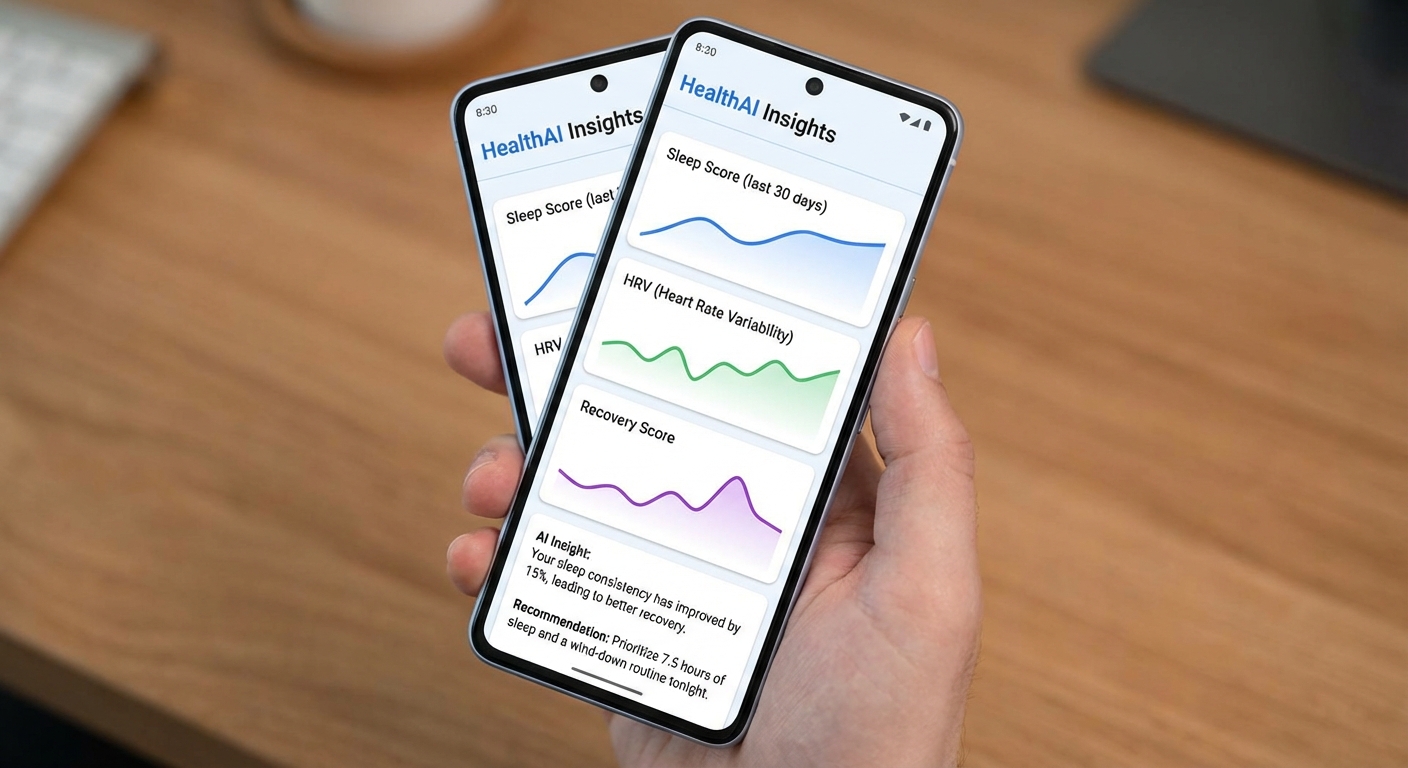
The risk is over-reliance on algorithmic recommendations. AI models are trained on population data and may not capture individual variation. A recommendation to rest may be appropriate for most people with your HRV pattern but wrong for you. The technology works best as an input to personal decision-making rather than an authority to follow unquestioningly.
The GLP-1 Monitoring Ecosystem
The explosion of GLP-1 medications for weight management has created demand for monitoring their effects. These medications work, but optimizing their use requires understanding how individual bodies respond, which home monitoring can provide.
Weight tracking has evolved beyond simple scales. Smart scales now estimate body composition, separating fat mass from lean mass. For GLP-1 users, this matters enormously. The concern with rapid weight loss is losing muscle along with fat. Monitoring body composition, rather than just total weight, reveals whether the weight loss is healthy or problematic.
Continuous glucose monitoring becomes particularly relevant for GLP-1 users. These medications affect glucose regulation directly, and individual responses vary. Tracking glucose patterns helps optimize timing, dosing, and dietary choices. Some users find that CGM data helps them work more effectively with their prescribers to adjust treatment.
Protein intake tracking, through nutrition apps, takes on special importance given muscle preservation concerns. The combination of reduced appetite from GLP-1 medications and lower overall calorie intake creates risk of inadequate protein consumption. App-based tracking helps ensure protein targets are met despite reduced eating.
The integration of these monitoring approaches, body composition, glucose, and nutrition, creates a more complete picture of GLP-1 treatment response than any single metric would provide. Users can correlate dietary choices with glucose responses and track body composition changes over time, optimizing their approach based on personal data.
What Smart Mirrors and Advanced Devices Promise
The emerging category of smart health mirrors represents the next frontier of home monitoring, moving beyond wearables to passive ambient sensing. These devices promise health data from everyday activities like looking in the mirror.
NuraLogix’s Longevity Mirror, showcased at CES 2026, uses Transdermal Optical Imaging to analyze blood flow patterns in facial skin. By detecting subtle color changes that reflect hemodynamic patterns, it estimates metrics including blood pressure, heart rate variability, and stress levels. The “Longevity Index” synthesizes these measurements into a single score intended to track biological aging.
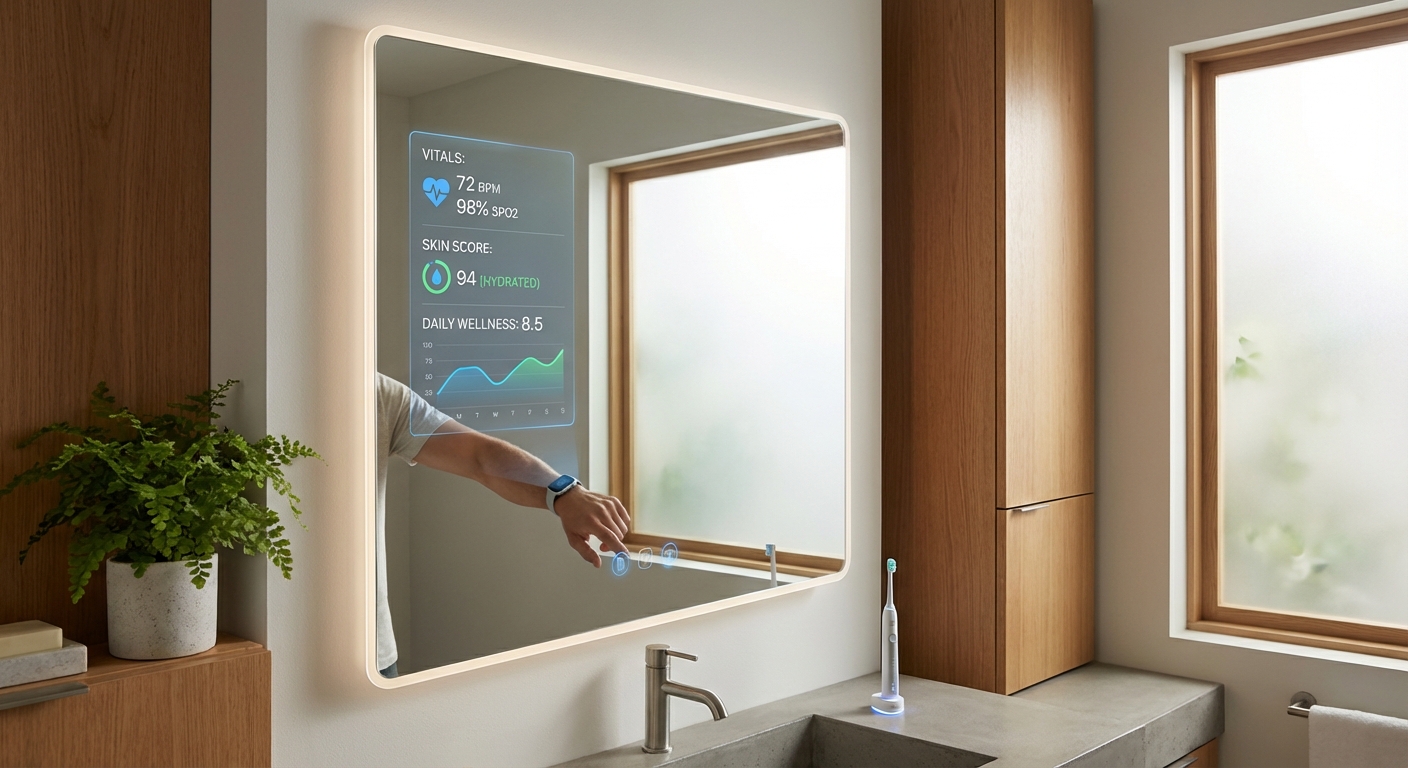
The appeal is frictionless monitoring. Wearables require wearing, charging, and syncing. A smart mirror provides data during an activity you’re already doing. The integration into routine removes the effort barrier that causes many people to abandon health tracking.
Other companies are developing similar passive sensing technologies. Cameras that monitor respiration and heart rate from across a room. Toilet seats with metabolic sensors. Mattresses that track sleep and recovery. The trend is toward ambient health monitoring that requires no conscious effort or device attachment.
The accuracy and utility of these emerging technologies remain to be established. Early products often overpromise and underdeliver. But the direction is clear: health monitoring is becoming invisible, continuous, and automatic.
Evaluating What Matters
Not all tracked metrics deserve equal attention. Some measurements provide actionable information that can guide behavior changes; others generate data that feels scientific but offers no path to improvement.
Prioritize metrics with clear intervention pathways. HRV is useful because you can respond to low readings by adjusting training intensity or stress exposure. Sleep stage data matters if it prompts you to address sleep hygiene factors that reduce deep sleep. Glucose monitoring helps if you’re willing to modify diet based on what you learn. Metrics that inform action provide value; metrics that just generate numbers don’t.
Consider the accuracy and reliability of consumer devices versus clinical equipment. Consumer HRV tracking correlates reasonably well with clinical measures but isn’t equivalent. Sleep stage estimation is approximate, not precise. Continuous glucose monitors are quite accurate but still less so than laboratory glucose testing. Understanding these limitations prevents over-interpreting small variations.
Avoid the optimization trap. The purpose of health monitoring is to support wellbeing, not to maximize metrics for their own sake. Obsessive tracking can create stress that undermines the health outcomes you’re trying to achieve. If monitoring your recovery score makes you anxious about recovery, the monitoring is counterproductive. Technology should serve health goals, not become an end in itself.
Getting Started With Home Health Monitoring
For those interested in incorporating longevity technology, a staged approach prevents overwhelm and allows evaluation of what actually proves useful.
Start with a single high-value device. For most people, a good smartwatch or smart ring provides enough data to inform meaningful decisions. Sleep tracking, activity monitoring, and HRV provide a foundation. Adding more devices before fully utilizing one creates data overload without proportional benefit.
Establish baselines before interpreting variations. Your first month of data collection isn’t for making decisions but for understanding your normal patterns. HRV, sleep quality, and other metrics vary considerably between individuals. Knowing your personal baseline makes subsequent deviations meaningful.
Focus on trends rather than daily fluctuations. A single bad night’s sleep or a one-day HRV dip doesn’t warrant lifestyle changes. Consistent trends across days or weeks indicate something worth investigating. The value of continuous monitoring is precisely the ability to distinguish meaningful patterns from noise.
Consult healthcare providers when monitoring reveals concerning patterns. Consumer devices can detect anomalies but can’t diagnose conditions. An irregular heart rhythm alert should prompt medical evaluation, not self-diagnosis. The appropriate response to unexpected data is professional consultation, not internet research.
The Bottom Line
Longevity technology is democratizing health monitoring that was once available only in clinical settings. The data these devices provide can inform meaningful health decisions, from training loads to sleep optimization to metabolic management. But technology is a tool, not a solution. The devices that work best are those integrated into broader health practices rather than treated as magic answers.
Recommended First Steps:
- Choose one high-quality wearable: a smart ring or watch with sleep and HRV tracking
- Establish 4-6 weeks of baseline data before drawing conclusions
- Identify 2-3 metrics most relevant to your health goals
- Create simple intervention rules: if HRV is suppressed for three consecutive days, reduce training intensity
Emerging Technologies to Watch:
- Smart mirrors with contactless vital sign monitoring
- Advanced CGM platforms for non-diabetics
- AI health coaching based on integrated device data
- Ambient home sensors for passive health tracking
The promise of longevity tech is knowing more about your health than any previous generation could. Realizing that promise requires using the technology thoughtfully rather than accumulating devices and data without purpose.
Sources: CES 2026 health technology coverage, American College of Sports Medicine 2026 fitness trends survey, Stanford AI sleep analysis research, continuous glucose monitoring studies, NuraLogix Transdermal Optical Imaging research.