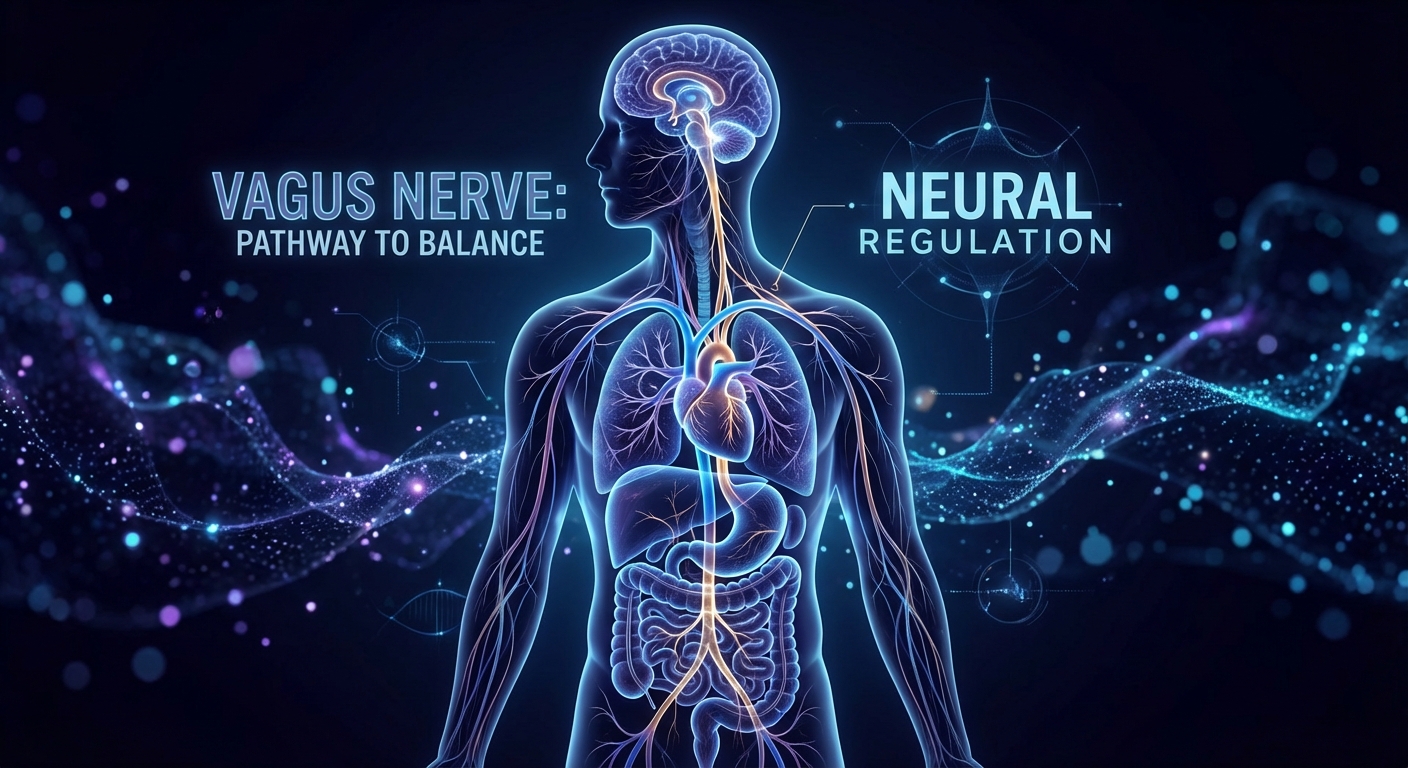
You’ve probably heard that aging is gradual, a slow accumulation of changes that eventually become noticeable. New research suggests that picture is incomplete. A landmark study by Dr. Michael Snyder at Stanford University published in Cell analyzed molecular changes across human tissues and identified a specific window, roughly ages 45-55, where aging doesn’t just continue; it accelerates dramatically. During this decade, multiple organ systems undergo substantial “proteomic remodeling,” with the most pronounced changes occurring in the cardiovascular system. The findings have profound implications for when and how aggressively to intervene with lifestyle modifications and preventive health strategies.
The research doesn’t mean that nothing happens before or after this window. Aging begins at the cellular level decades earlier, and decline continues throughout life. But the discovery of a critical period where multiple systems change simultaneously suggests that midlife may represent the highest-leverage intervention point. What you do, or don’t do, between 45 and 55 might disproportionately influence your health trajectory for the next several decades.
What the Research Actually Found
The Cell study analyzed proteomic data, meaning the full complement of proteins expressed in various tissues, across thousands of participants spanning multiple age groups. Unlike genetic analysis, which shows what your body could produce, proteomic analysis reveals what your body is actually producing at any given time. This provides a functional snapshot of biological aging.
The researchers found that while some age-related changes occur gradually, the most dramatic molecular shifts clustered between ages 45-55. The aorta, the body’s main artery, showed the most marked changes. This makes physiological sense: the cardiovascular system bears continuous mechanical stress, and accumulated damage eventually triggers compensatory responses that alter the molecular composition of vascular tissue. The spleen and pancreas also showed sustained remodeling during this window.
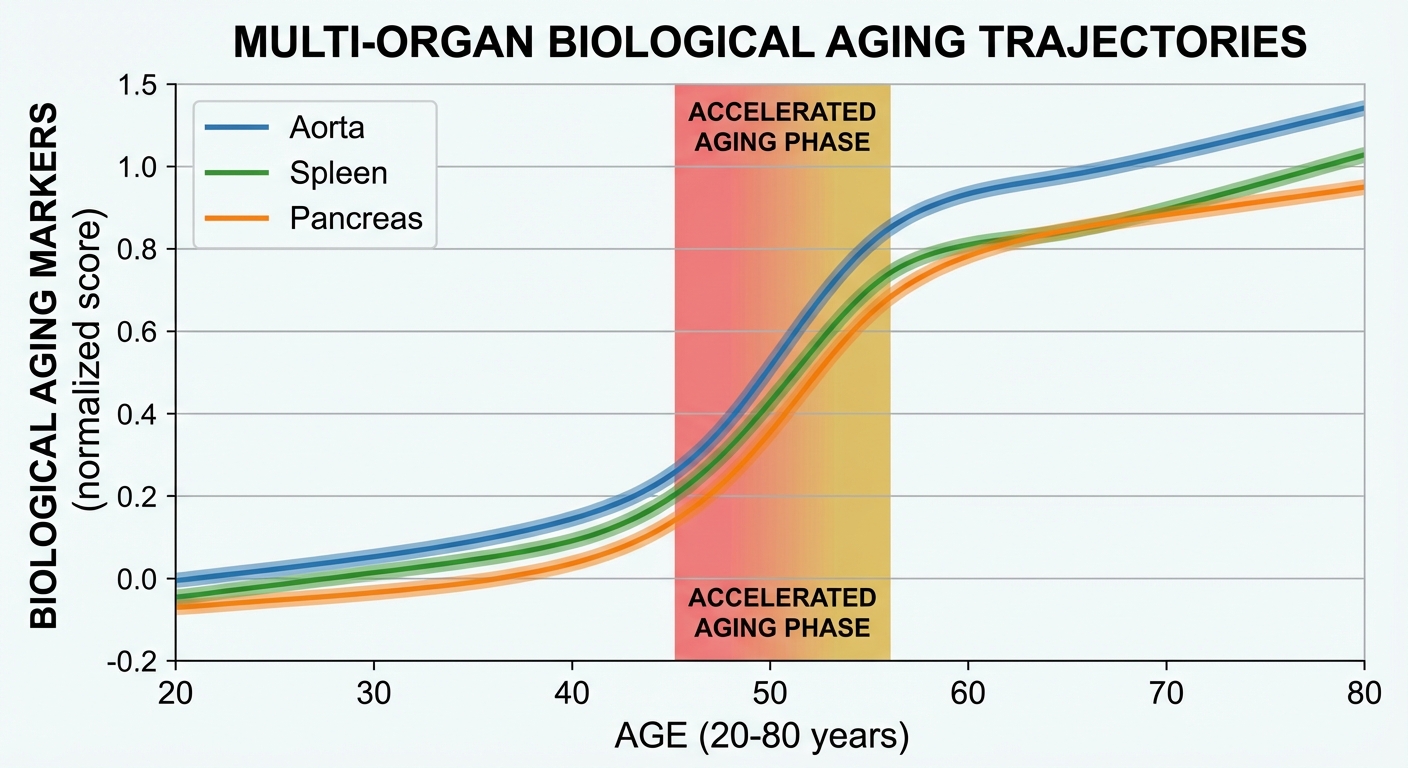
The protein changes observed weren’t random. They clustered around specific biological pathways: inflammation, immune function, metabolic regulation, and tissue repair. This suggests that the 45-55 window represents a coordinated biological transition, not merely accumulated damage crossing a threshold. Your body appears to fundamentally recalibrate during this decade in ways that influence how you age for the rest of your life.
The study builds on earlier research showing that biological age, measured through various molecular markers, can diverge significantly from chronological age. Two 50-year-olds might have biological ages of 42 and 58 respectively, with dramatically different health trajectories. The new findings suggest that the divergence between biological and chronological age may accelerate during the 45-55 window, making interventions during this period potentially more impactful. In practical terms, the health choices you make during this decade may have a disproportionately large influence on whether you spend your later years active and independent or managing chronic disease.
Why This Window Matters for Your Health Strategy
If aging accelerates during midlife, the logical response is to intensify preventive efforts before and during this window rather than waiting for problems to manifest. This represents a shift from the traditional medical approach, which typically intervenes after disease develops, to a proactive strategy that aims to influence the trajectory of aging itself.
Cardiovascular health deserves particular attention given the aorta’s prominence in the findings. The standard recommendations, maintain healthy blood pressure, manage cholesterol, exercise regularly, don’t smoke, take on heightened urgency before and during midlife. Arterial stiffness, which accelerates during this window, is both a consequence and cause of cardiovascular aging. Once arteries stiffen significantly, the heart must work harder with each beat, accelerating cardiac aging in a vicious cycle.
The metabolic changes observed during this window align with clinical observations about weight gain and insulin resistance in midlife. Many people find that dietary approaches that worked in their 30s become less effective in their late 40s. This isn’t just perception; the underlying biology has genuinely shifted. More aggressive attention to metabolic health, including maintaining muscle mass (which protects insulin sensitivity), becomes increasingly important.

Immune function also undergoes significant remodeling during this period. Research from Dr. Shai Shen-Orr at Ben-Gurion University found that T helper lymphocytes shift in function as people age, with these shifts reflecting biological age. Intriguingly, a subset of T helper cells that becomes more common with age was found abundantly in supercentenarians, suggesting that some immune changes may actually be adaptive. The implication is that supporting immune function through sleep, stress management, and appropriate nutrition may help guide these transitions toward favorable outcomes.
Actionable Strategies for the Midlife Window
The goal isn’t to prevent aging, which remains biologically impossible, but to meaningfully influence the trajectory. Research on longevity interventions consistently points to several modifiable factors that appear to slow biological aging.
Exercise, particularly resistance training, preserves muscle mass and metabolic function. Muscle is metabolically active tissue that improves insulin sensitivity and glucose disposal. Studies show that maintaining muscle mass is associated with younger biological brain age and reduced mortality risk. The recommendation for adults over 40 is at least two resistance training sessions weekly, targeting all major muscle groups, with progressive overload to maintain or build strength.
Cardiovascular exercise maintains arterial flexibility and cardiac function. Zone 2 training, sustained moderate-intensity exercise where you can still hold a conversation, appears particularly beneficial for mitochondrial health and metabolic flexibility. The American Heart Association recommends at least 150 minutes of moderate-intensity aerobic activity weekly, but emerging research suggests that more may be better, particularly during the midlife window.
Metabolic health markers deserve aggressive monitoring and management. This includes fasting glucose, hemoglobin A1c, lipid panel, blood pressure, and waist circumference. Waiting until markers cross disease thresholds misses the opportunity to intervene during the prodromal period when reversal is more achievable. Consider tracking these markers annually starting at age 40, or earlier if family history suggests elevated risk.
Sleep quality directly influences biological aging. Research consistently shows that sleep disruption accelerates multiple aging pathways, including inflammation, immune dysfunction, and metabolic derangement. Prioritize 7-8 hours of sleep, and address sleep disorders like apnea aggressively. A recent Harvard study found that nighttime light exposure increased cardiovascular risk by up to 50%, underscoring that sleep environment optimization matters as much as duration.
Chronic stress accelerates biological aging through multiple mechanisms. Cortisol dysregulation, inflammatory activation, and telomere shortening all correlate with chronic stress exposure. Research from the University of California has shown that individuals reporting high chronic stress had telomeres equivalent to approximately ten additional years of aging compared to low-stress counterparts. Stress management practices, whether meditation, therapy, social connection, or simply adequate leisure time, should be considered health interventions rather than luxuries during the midlife window.
Emerging Longevity Interventions
Beyond lifestyle factors, the longevity research field is advancing rapidly. Several interventions have shown promise in animal studies and early human trials.
IL-11 blocking therapy has emerged as a particularly promising avenue. Researchers found that IL-11 levels increase in aging organs and contribute to multiple aging processes. In mice, antibodies that block IL-11 extended lifespan by up to 25%. Clinical trials of IL-11 inhibitors have begun, with Calico Life Sciences licensing an IL-11 blocker in June 2025. While human data remains preliminary, the magnitude of effect in animal studies has generated significant scientific interest.
AI-assisted drug discovery is accelerating the identification of potential longevity compounds. A study published in Aging Cell found that more than 70% of anti-aging drugs identified by an AI tool extended lifespan in C. elegans worms. One novel compound increased worm lifespan by 74%. While worm studies don’t directly translate to humans, they provide efficient screening for compounds that affect conserved aging pathways.
Rapamycin and metformin, drugs with decades of human safety data for other indications, continue to be studied for longevity effects. Both target conserved aging pathways identified in model organism research. However, neither is currently approved for longevity indications, and taking medications for unapproved uses carries risks that must be weighed against uncertain benefits.
The Bottom Line
The discovery of a critical aging window between 45-55 reframes how we should think about midlife health. This decade isn’t just another interval on the aging continuum; it appears to be a period of accelerated biological transition that disproportionately influences subsequent health trajectory.
The practical implication is clear: health investments made before and during this window may have outsized returns compared to the same interventions made later. Establishing excellent exercise habits, optimizing sleep, managing stress, and monitoring metabolic markers take on heightened importance during this period. Our guide on strength training after 50 provides specific protocols for resistance training during this critical period. The goal isn’t to prevent aging but to influence its trajectory toward healthier outcomes.
Next Steps:
- If you’re approaching or in the 45-55 window, consider comprehensive baseline testing (metabolic panel, inflammatory markers, cardiovascular assessment)
- Establish or intensify a resistance training practice (2+ sessions weekly)
- Prioritize Zone 2 cardiovascular exercise (150+ minutes weekly)
- Optimize sleep environment and duration (7-8 hours in complete darkness)
- Address chronic stress through whatever practices resonate with you
Sources: Cell research on proteomic aging changes, Ben-Gurion University T helper cell studies, supercentenarian immune research, Aging Cell AI drug discovery study, IL-11 blocking research and Calico licensing announcement.