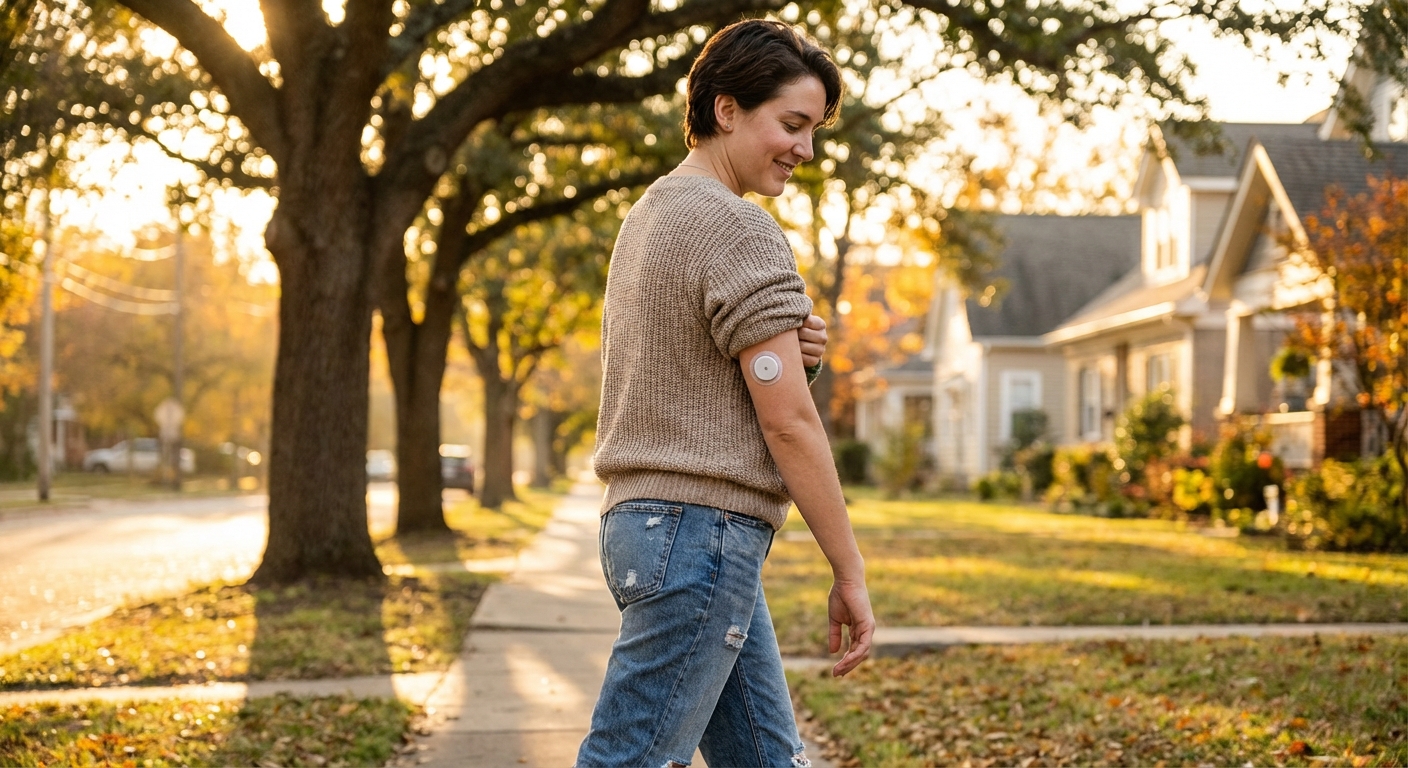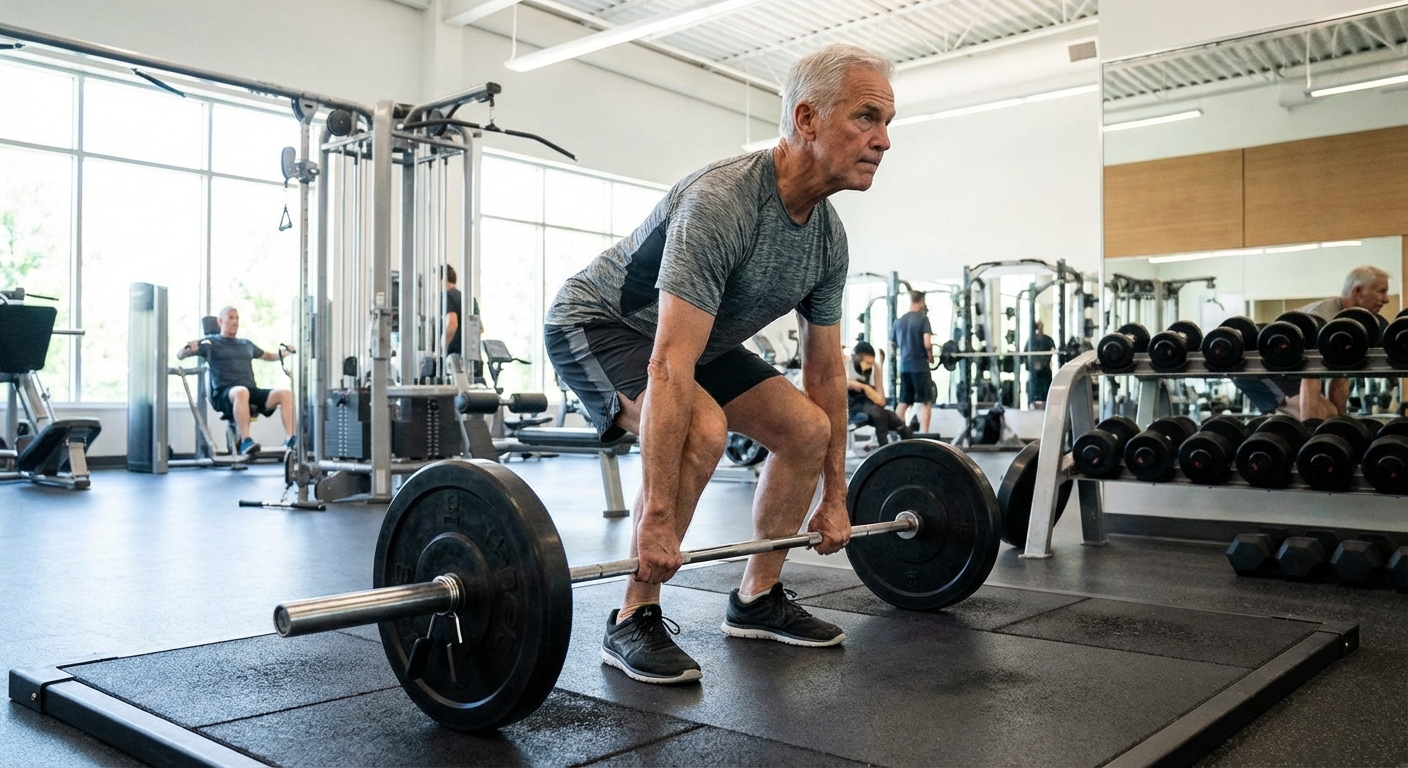
At 68, Joan deadlifts twice her body weight. She started strength training at 52, after her doctor first mentioned the word “osteopenia” during a routine bone density scan. Sixteen years later, her scans show the skeleton of someone decades younger, she takes no daily medications, and she can still carry all her groceries up three flights of stairs in one trip. That last feat might sound trivial until the day you can’t do it anymore. Joan isn’t exceptional; she’s simply what the new strength training guidelines say we all could become.
The 2025 strength training recommendations from the American College of Sports Medicine represent a seismic shift from the cautious, machine-based approach that dominated programming for older adults over the past three decades. These updated guidelines, informed by a decade of research including the landmark LIFTMOR trial and multiple meta-analyses involving thousands of participants, deliver a message that upends conventional wisdom: you’re not fragile, you’re untrained. That distinction changes everything about how people over 50 should approach the weight room.
For decades, well-meaning fitness professionals steered older adults toward pink dumbbells, leg extension machines, and endless repetitions with minimal resistance. The new research demonstrates that this conservative approach didn’t protect older adults from injury; it protected them from the adaptations that could have transformed their health outcomes. The updated guidelines make clear that age-appropriate training doesn’t mean easy training. It means intelligent training.
The Sarcopenia Crisis Nobody Is Talking About
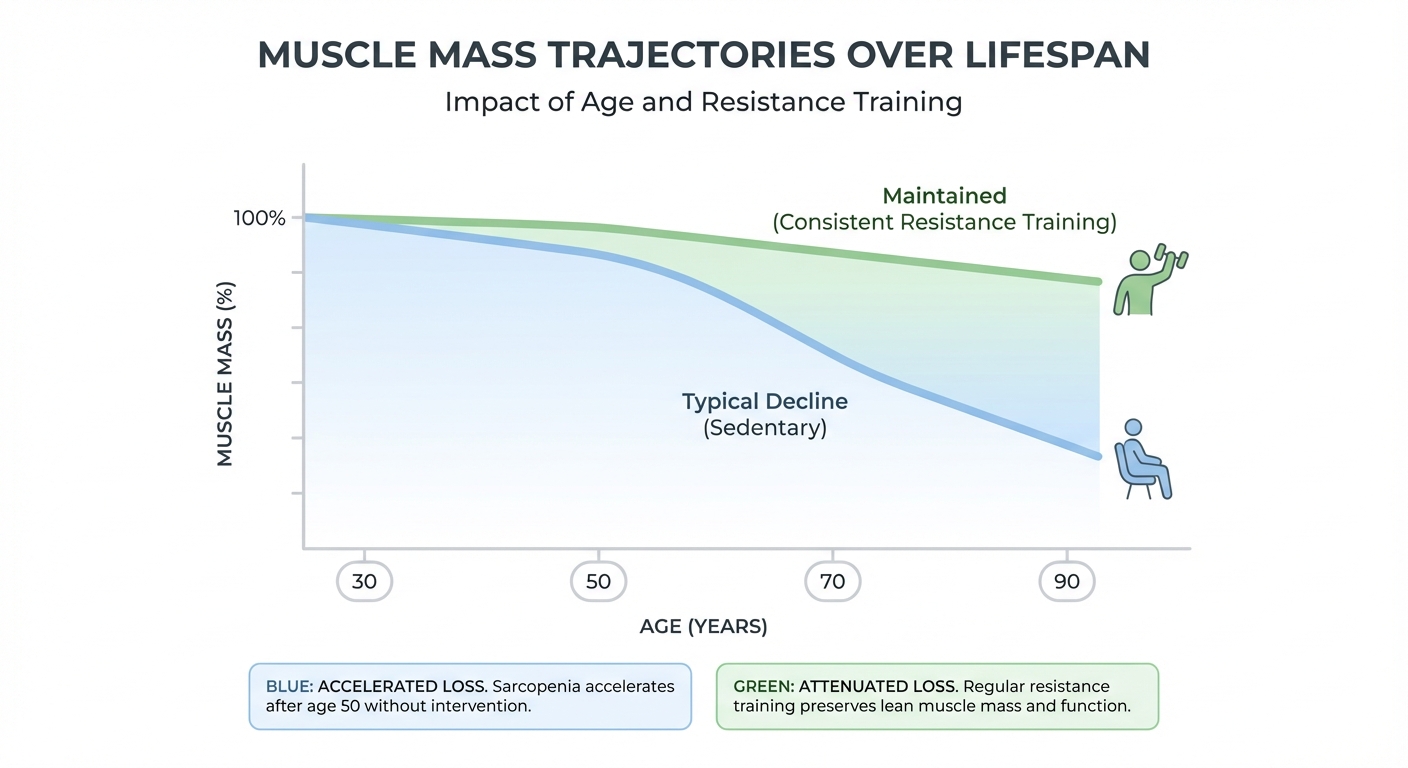
After age 30, you lose approximately 3-8% of your muscle mass per decade, with the decline accelerating significantly after 50. By age 80, most people have lost 40% of their peak muscle mass, a condition called sarcopenia that affects roughly 30% of adults over 60 and 50% of those over 80. But here’s what makes researchers frustrated: sarcopenia is almost entirely preventable and largely reversible, yet it remains undiagnosed and untreated in millions of older adults who don’t know their muscle mass is quietly disappearing.
The consequences extend far beyond struggling with jar lids or carrying luggage. Sarcopenia doubles your risk of falls, the leading cause of injury death in adults over 65. It triples the likelihood of bone fractures when falls do occur. Low muscle mass increases all-cause mortality by approximately 50%, making it a stronger predictor of early death than many conditions that receive far more medical attention. Sarcopenia drives insulin resistance, contributing directly to type 2 diabetes development. It slows resting metabolism, accelerating fat gain even when eating habits don’t change. It compromises immune function, increasing vulnerability to infections. Perhaps most significantly, muscle mass correlates more strongly with longevity than BMI, blood pressure, or cholesterol levels, yet doctors rarely measure it.
Dr. Stuart Phillips from McMaster University, who led several pivotal studies that informed the new ACSM guidelines, frames the situation starkly: “We have an intervention that prevents falls, manages blood sugar, strengthens bones, improves cognition, and extends healthy lifespan. If this intervention came in a pill, it would be worth billions and every doctor would prescribe it. Instead, it’s strength training, and most older adults avoid it based on outdated fears that have no basis in current research.”
What Actually Changed in the 2025 Guidelines
The old approach treated everyone over 50 as though they were made of glass. The standard prescription called for light weights, high repetitions, machine-based exercises, avoidance of free weights, and instructions to never lift heavy. This overcautious methodology stemmed primarily from liability concerns and institutional risk aversion rather than scientific evidence, and it consistently failed to provide sufficient stimulus for meaningful adaptation. The result was that older adults following these guidelines often got weaker despite exercising regularly.
The new guidelines acknowledge what research has repeatedly proven: older adults need and can handle the same fundamental training principles as younger people, just applied with smarter programming and appropriate progression. The muscular system doesn’t become fundamentally different at 50. It becomes deconditioned from disuse.
Progressive overload is now mandatory. The updated guidelines emphasize that strength gains require progressively increasing demands over time. This means adding weight, repetitions, or sets as the body adapts, not performing identical workouts for months on end. Studies consistently show that older adults can increase strength by 25-35% within just 12 weeks of properly programmed resistance training, with some participants achieving 100% strength gains in their first year of serious training.
Heavy loads are not just safe but necessary for optimal results. The guidelines now recommend working up to 70-85% of one-rep maximum for developing meaningful strength, abandoning the old “light weights only” dogma. The LIFTMOR trial had postmenopausal women with diagnosed osteoporosis performing deadlifts and other compound movements at 85% intensity. The results? Zero injuries and significant improvements in bone mineral density that exceeded pharmaceutical interventions.
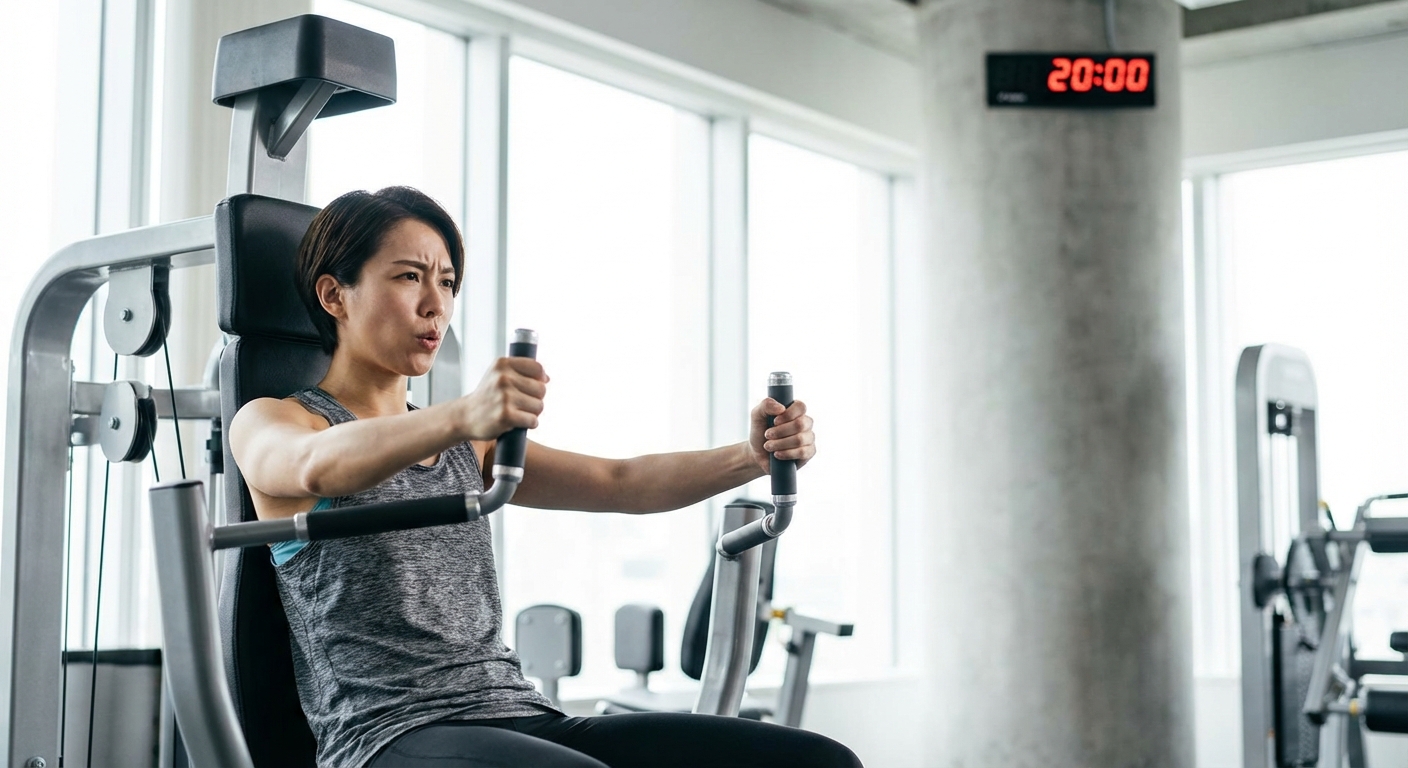
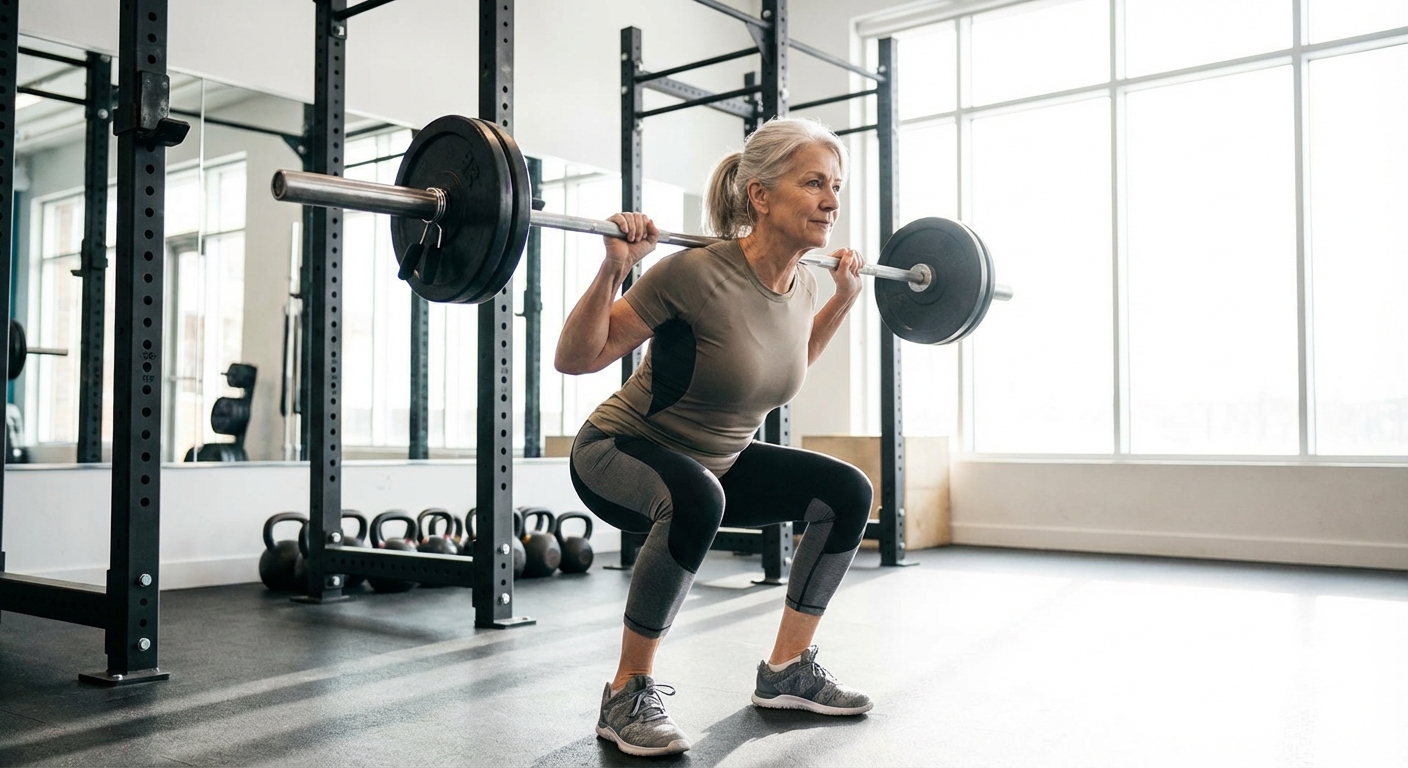
Free weights and compound movements take priority over machines. While machines have their place for isolation work and learning movement patterns, barbells, dumbbells, and bodyweight exercises that challenge balance and coordination provide superior functional benefits for daily life. The updated recommendations specifically highlight squats, deadlifts, presses, and rows as foundational movements that should form the core of any serious program.
Power training is essential, not optional. The ability to generate force quickly, what exercise scientists call power, declines faster than strength with age and proves more predictive of fall risk. The guidelines now include explosive movements like medicine ball throws, box step-ups performed with quick knee drive, and even modified Olympic lifts for those ready for the complexity.
The Science of Getting Stronger After 50
Your muscles don’t know how old you are; they only know whether they’re being challenged sufficiently to trigger adaptation. The cellular mechanisms of muscle growth, including mechanical tension, metabolic stress, and controlled muscle damage, operate the same way at 70 as they do at 25. What changes is recovery time between sessions, starting baseline fitness, and the need for more thoughtful programming. But the fundamental biology remains intact.
Muscle protein synthesis, the process by which your body builds new muscle tissue, remains robust in older adults when properly stimulated through resistance training and adequate nutrition. Research demonstrates that older muscles respond equally well to training stimuli as younger muscles; they simply require slightly different conditions to optimize the response. Protein intake becomes more critical, with older adults needing approximately 1.2-1.6 grams per kilogram of body weight daily compared to 0.8-1.0 grams for younger adults. The post-workout window for nutrition might be slightly longer, making exact timing less critical, but total daily protein intake remains crucial.
Fascinating research from the University of Birmingham compared muscle tissue from master athletes in their 70s and 80s with sedentary young adults in their 20s. The findings surprised even the researchers: the athletes’ muscle quality, fiber composition, mitochondrial density, and satellite cell populations more closely resembled the muscles of young people than those of their sedentary age-matched peers. These aren’t genetic anomalies or former Olympic competitors. They’re ordinary people who simply maintained consistent training throughout life. Their muscles provide living proof that “aging” muscles often reflect accumulated disuse rather than inevitable biological decline.
The hormone discussion is more nuanced than supplement advertisements suggest. Yes, testosterone and growth hormone decline with age in most people. But strength training triggers local production of growth factors that matter more than systemic hormone levels for muscle adaptation. IGF-1, mechano-growth factor, and various myokines produced during resistance training create an anabolic environment within muscle tissue regardless of age or baseline hormone status. Women, who maintain lower testosterone levels throughout life than men, demonstrate this principle clearly: they gain strength and build muscle effectively despite minimal testosterone, proving that local tissue factors drive adaptation more than circulating hormones.
Your 12-Week Foundation Program
This program follows the new ACSM guidelines while respecting the realities of adults who may have been sedentary for years or decades. It assumes no significant recent training background and progresses conservatively but consistently toward meaningful loads. Always obtain medical clearance before beginning any resistance program, particularly if you have cardiovascular disease, orthopedic limitations, or other health conditions.
The structure emphasizes movement quality over weight lifted during the initial phase. You’ll master fundamental movement patterns that form the foundation of all effective strength training: squat, hinge, push, pull, and carry. These patterns translate directly to essential daily activities: getting up from chairs without assistance, picking objects up safely from the ground, reaching overhead without shoulder pain, and carrying groceries or grandchildren without strain.
Weeks 1-4: Movement Mastery Phase
Frequency: 2-3 days per week, non-consecutive days
Focus: Learn proper movement patterns with light loads while building work capacity and exercise tolerance.
Workout A:
- Goblet squat: 3 sets of 8-12 reps (dumbbell held at chest)
- Push-ups from incline if needed: 3 sets of 5-10 reps
- Romanian deadlift with dumbbells: 3 sets of 8-10 reps
- Seated cable row or resistance band pull: 3 sets of 10-15 reps
- Front plank: 3 sets of 15-30 seconds
Workout B:
- Step-ups to bench or box: 3 sets of 8-10 per leg
- Dumbbell chest press: 3 sets of 8-12 reps
- Glute bridges: 3 sets of 12-15 reps
- Lat pulldown or assisted pull-up: 3 sets of 8-12 reps
- Side plank: 3 sets of 10-20 seconds per side
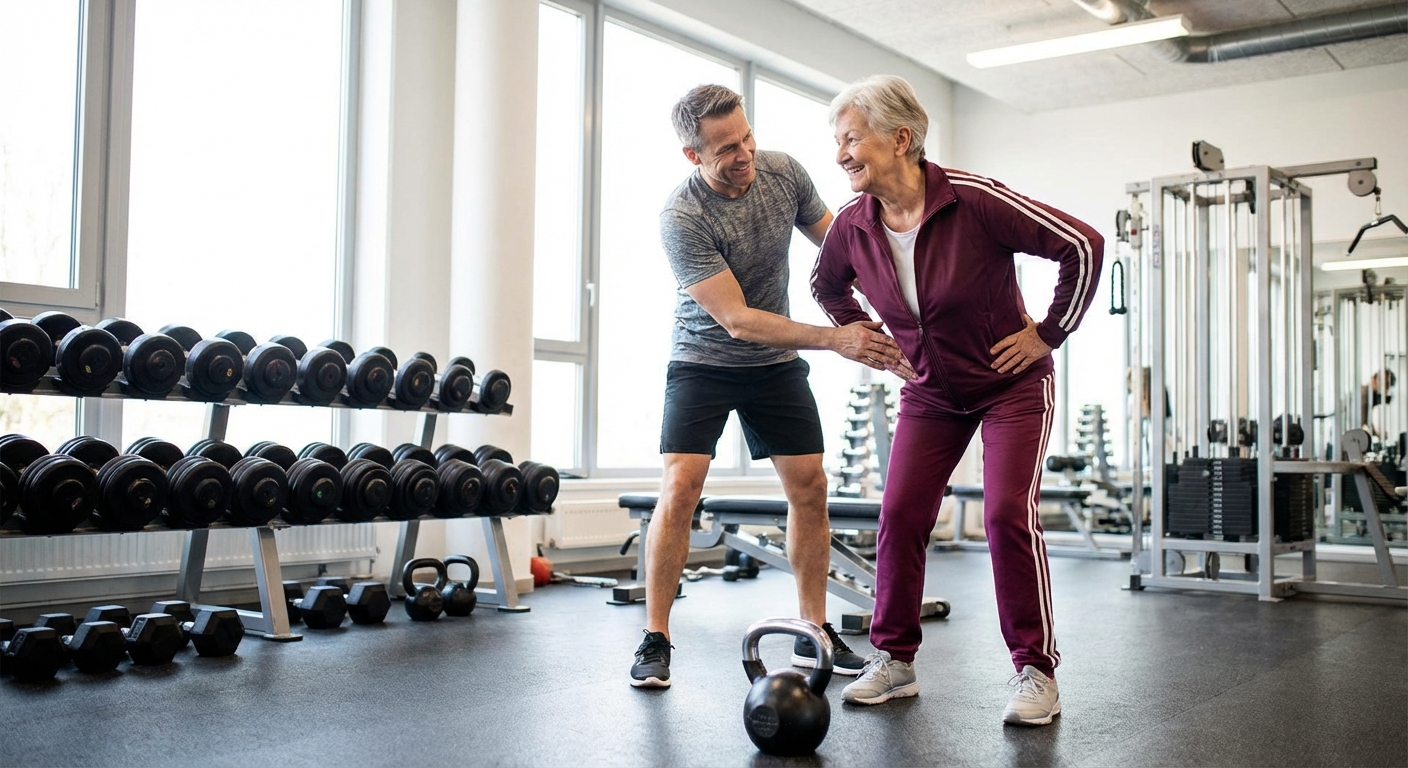
Start with weights that feel almost too easy for the first week. This isn’t weakness; it’s strategic patience. Add 2.5-5 pounds when you can complete all prescribed sets with good form and two reps in reserve. Focus obsessively on technique during this phase: film yourself from multiple angles or work with a qualified trainer initially to establish correct movement patterns.
Weeks 5-8: Building Strength Phase
Frequency: 3 days per week
Focus: Increase loads progressively while maintaining perfect form.
If comfortable with movement patterns, progress to barbell variations. Replace goblet squats with barbell back squats or front squats. Introduce trap bar or conventional deadlifts. Add barbell or dumbbell bench press. Include barbell or dumbbell bent-over rows. Reduce rep ranges to 6-8 for primary compound movements, allowing heavier loads. Add a fourth set to compound exercises. Introduce power elements: medicine ball slams against the floor, box step-ups performed explosively, or kettlebell swings if hip hinge pattern is solid.
Weeks 9-12: Intelligent Intensity Phase
Frequency: 3-4 days per week
Focus: Push training intensity while carefully monitoring recovery.
Implement basic periodization within the four-week block. Week 9 uses moderate loads at approximately 70-75% perceived maximum. Week 10 increases to 75-80%. Week 11 pushes to 80-85% for the heaviest work. Week 12 serves as a deload week at 60-70% to allow accumulated fatigue to dissipate.
Add accessory exercises for common weak points: face pulls for shoulder health and posture, calf raises for lower leg strength, farmer’s walks for grip strength and core stability. Consider working with a qualified trainer to test actual one-rep maxes safely and establish precise training percentages moving forward.
Navigating Common Concerns and Obstacles
“I have arthritis” or “I have bad knees” or “I have a bad back” represents the most common objection to strength training in older populations, but research consistently demonstrates that properly programmed resistance training improves rather than worsens these conditions. The Framingham Osteoarthritis Study found that stronger quadriceps muscles reduce knee osteoarthritis progression by approximately 30%. The cartilage in your joints doesn’t have its own blood supply; it receives nutrients through compression and decompression during movement. Appropriate strength training acts like WD-40 for joints, improving synovial fluid production and cartilage nutrition while strengthening the muscles that support and protect joint structures.
Distinguishing joint pain during exercise from normal muscle discomfort requires attention. Sharp, stabbing, or pinching sensations mean stop immediately and reassess. Dull, achy sensations often improve with continued movement and proper warm-up protocols. The “two-hour rule” provides a practical guideline: if pain intensity is worse two hours after exercise than it was before starting, you’ve done too much or something wrong. The solution is modifying load, range of motion, or exercise selection rather than stopping strength training entirely. Almost any limitation can be trained around with appropriate modifications.
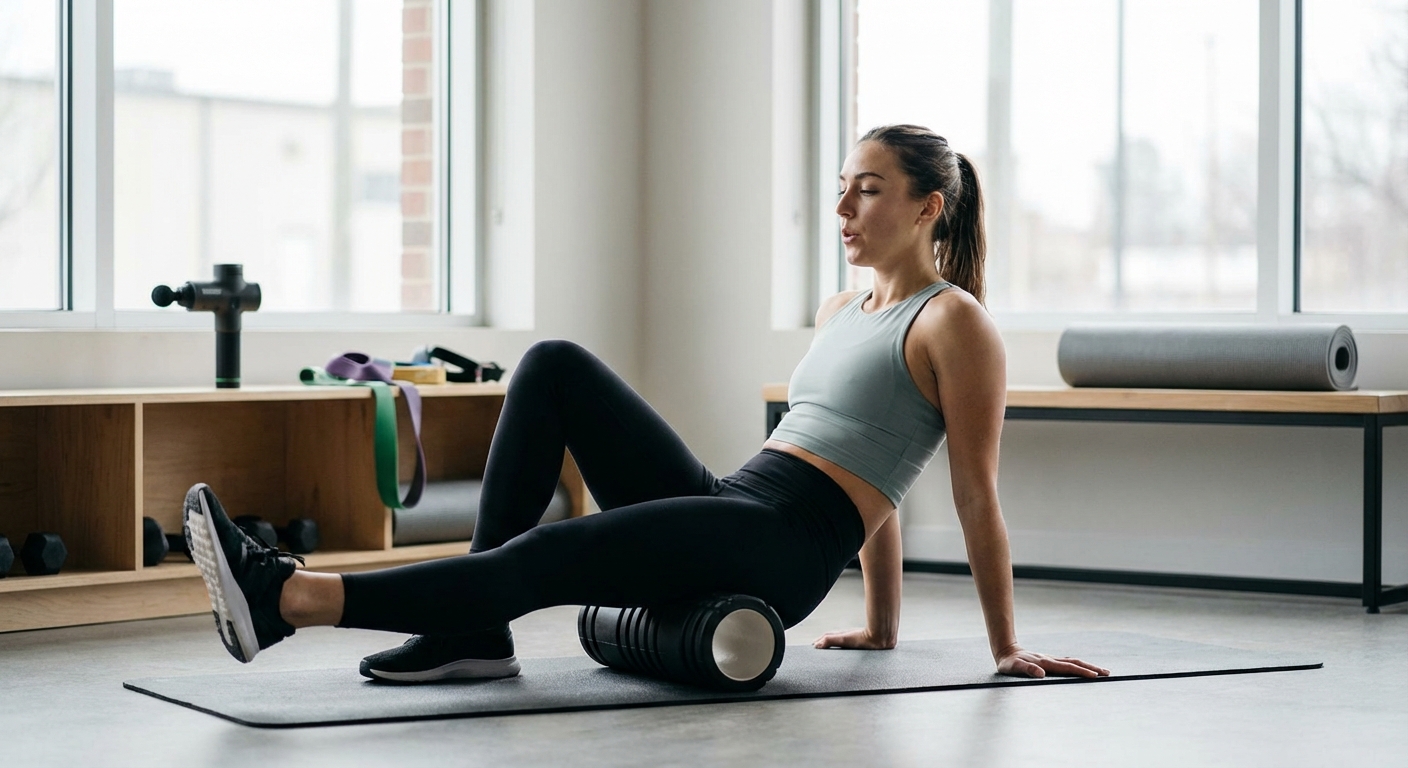
Recovery does take longer after 50, but not as much longer as people commonly assume. While an 18-year-old might recover fully from intense training in 24 hours, a 60-year-old might need 48-72 hours between sessions targeting the same muscle groups. This reality doesn’t mean training less frequently overall; it means programming more intelligently. Alternate upper and lower body emphases, vary intensity throughout the training week, and prioritize sleep as the most powerful recovery tool available at any age. Some athletes also incorporate cold exposure protocols to accelerate recovery between sessions. Many masters athletes train four or more days weekly with excellent results by managing training stress across sessions.
Beyond Muscle: The Cascade of Health Benefits
Strength training after 50 delivers health benefits that no other intervention can match, affecting virtually every system in the body. Bone density improvements from high-intensity resistance training exceed those from any osteoporosis medication currently available. The LIFTMOR trial documented 13% improvements in lumbar spine bone mineral density among participants, effectively reversing nearly a decade of age-related bone loss. Hip fractures, which carry an approximately 30% mortality rate within one year, become largely preventable with adequate bone and muscle mass.
Metabolic improvements from resistance training rival diabetes medications for effectiveness. Strength training increases insulin sensitivity for up to 48 hours following each session. Adding 10 pounds of functional muscle mass raises resting metabolic rate by 100-140 calories daily, equivalent to a brisk 15-minute jog you don’t have to take. The GLUT4 glucose transporters increased through resistance training improve blood sugar uptake independent of insulin, providing substantial protection against type 2 diabetes development or progression. Combined with an anti-inflammatory lifestyle approach, resistance training creates a powerful metabolic foundation for healthy aging.
Cognitive benefits from strength training surprise even researchers who study them. A meta-analysis published in the Journal of the American Geriatrics Society found that resistance training reduces dementia risk by approximately 30% and improves executive function more effectively than aerobic exercise alone. The mechanisms likely involve increased BDNF (brain-derived neurotrophic factor) production, improved cerebral blood flow, reduced systemic inflammation, and maintained structural connections between brain and body. Some neuroscientists now describe resistance training as “neuromuscular education” that preserves brain-body integration throughout aging.
The psychological transformation often exceeds physical improvements for older adults beginning strength training. Surveys of adults over 60 who begin serious resistance training consistently report improved confidence, reduced anxiety, enhanced sense of control over their bodies, and greater optimism about aging. The ability to perform daily tasks without asking for help, what researchers call “functional independence,” correlates strongly with quality of life, life satisfaction, and mental health in aging populations. Strength training doesn’t just extend lifespan; it extends the quality of those years.
The Bottom Line
The new strength training guidelines for adults over 50 demolish the fragility myth that has kept millions unnecessarily weak and vulnerable. You’re not too old to lift heavy weights; you’re too old not to lift them. The same training principles that build strength at 25 work at 75, just with more attention to recovery periods and intelligent progression. The research is unequivocal: strength training is the closest thing we have to a fountain of youth, and it’s never too late to drink from it.
Every day you wait represents muscle mass you’ll have to work harder to regain. But here’s the empowering counterpoint: your muscles retain remarkable capacity for growth and strengthening throughout the entire lifespan. People in their 90s can double their functional strength with proper training. Osteoporotic bones can become measurably denser. The trajectory of physical aging is not fixed by genetics or time; it’s shaped by choices you make every time you decide whether to challenge your body or let another day pass without stimulus.
Next Steps:
- Schedule a medical clearance appointment this week if you have health conditions
- Begin with Workout A from the 12-week program, using weights that feel too light initially
- Document your starting point: take photos, measure arms, waist, and thighs, note how many chair stands you can do without arm assistance
- Commit to three 45-minute sessions for the next four weeks before evaluating progress
The weights are waiting. Despite what you’ve been told for decades, you’re strong enough to lift them. Start this week.
Sources: American College of Sports Medicine 2025 Position Stand on Resistance Training for Older Adults, LIFTMOR Trial (Journal of Bone and Mineral Research 2018), McMaster University Muscle Physiology Research, Journal of the American Geriatrics Society, Framingham Osteoarthritis Study, University of Birmingham Master Athlete Research Program.