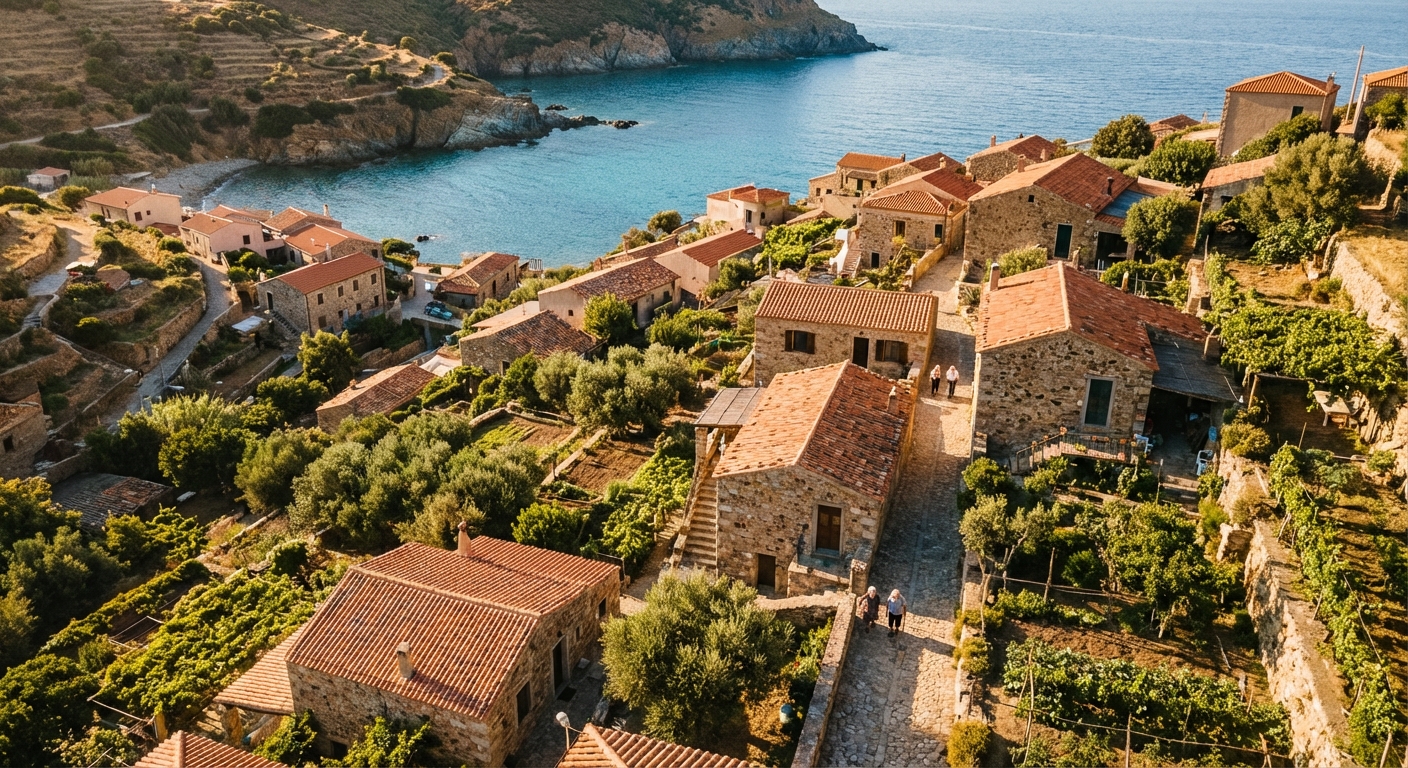
Your skeptical colleague at work has probably mentioned it by now: “Blue zones are debunked. It’s all bad record-keeping and pension fraud.” The narrative gained traction in 2023 and 2024, with viral articles suggesting that regions famous for exceptional longevity were actually just places with poor birth documentation. The implication was clear: all those centenarians in Sardinia and Okinawa might not be as old as they claimed.
New research published in The Gerontologist in late 2025 puts that skepticism to rest. A rigorous validation by some of the world’s leading longevity researchers confirms that blue zones are exactly what they appear to be: legitimate natural laboratories for studying healthy aging, where lifestyle factors drive exceptional lifespans in ways we can learn from and apply to our own lives.
The findings matter because they restore credibility to decades of observational research on what actually helps humans live longer, healthier lives. And the answer isn’t a supplement, a biohack, or a genetic lottery. It’s the way people in these regions eat, move, connect, and find purpose in daily life.
The Validation Problem
To understand why this research matters, you need to understand the criticism it addresses. The skeptics weren’t entirely wrong to raise questions. Exceptional longevity claims do require exceptional evidence, and history is littered with examples of fraudulent or mistaken age documentation.
Steven N. Austad, Scientific Director of the American Federation for Aging Research and Distinguished Professor at the University of Alabama at Birmingham, acknowledged this reality directly in the new research. “Extraordinary claims about longevity demand extraordinary evidence,” he stated. The question was whether blue zones could meet that standard.
The criticism centered on the fact that some regions with high rates of centenarians also had weak civil registration systems, particularly in earlier decades. If you can’t verify when someone was born, you can’t verify how old they actually are. Critics pointed to studies showing that reported longevity sometimes declined dramatically when countries implemented better identity verification systems, suggesting that some supercentenarians were actually younger people who had assumed the identities of deceased relatives, often to claim pensions.

How Researchers Validated Blue Zone Ages
The new research, co-authored by Austad and Giovanni M. Pes (the professor of medicine at the University of Sassari who discovered the original Sardinian blue zone), explains exactly how blue zone ages are validated. And it’s far more rigorous than critics assumed.
The validation methodology draws on demographic techniques developed over more than 150 years. Rather than relying on any single document, researchers cross-reference multiple independent sources: civil birth and death records, church archives (baptismal records often predate civil registration), genealogical reconstruction, military and electoral registries, and in-person interviews with family members and neighbors.
“Blue zones are not based on self-report,” Austad emphasized. “They are based on painstaking cross-checking of records.” Any case that cannot be verified through multiple independent sources is systematically excluded from longevity calculations.
This matters because it addresses the core criticism directly. Yes, some regions have unreliable civil records. But blue zone researchers don’t take those records at face value. They require corroboration from church records, family histories, military documents, and other independent sources before accepting any exceptional age claim.
The research validated four specific blue zones using this methodology: Sardinia, Italy; Okinawa, Japan; Ikaria, Greece; and the Nicoya Peninsula in Costa Rica. Each region demonstrated unusually high survival probability to age 90 and beyond through independent demographic systems and archival records. The ages, the researchers concluded, “meet, and often exceed, the strict validation criteria” for confirming exceptional human longevity.
What Blue Zones Actually Teach Us
With the validation question settled, the more important question emerges: what are these regions doing differently, and what can we learn from them?
The research confirms that while genetics may play a role, evidence increasingly points toward lifestyle, diet, physical activity, and social connection as central contributors to long life with low rates of chronic disease. This aligns with decades of observational research and distinguishes blue zones from mere genetic lottery winners.
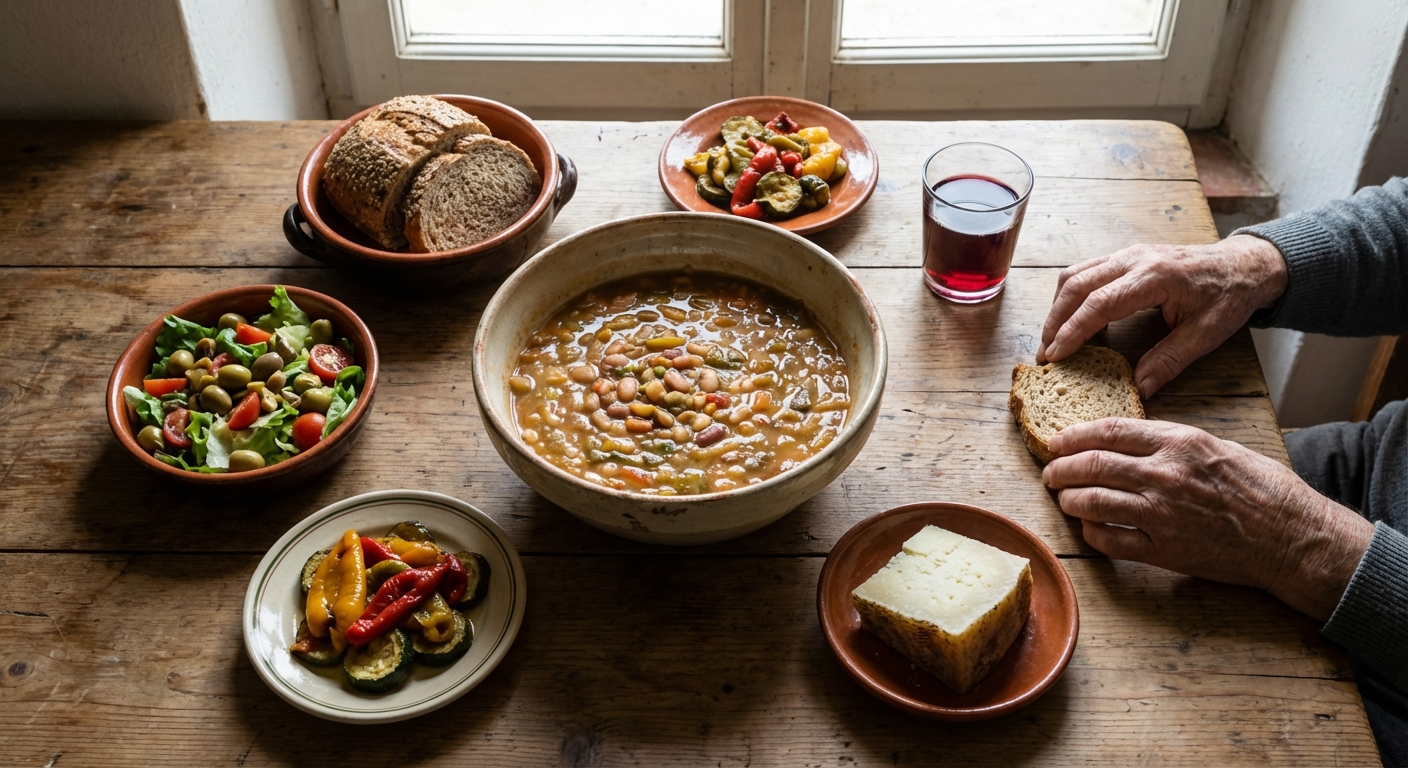
Diet patterns across blue zones share common features despite regional variation. Plant-forward eating dominates, with meat serving as a small side dish rather than the centerpiece of meals. Legumes appear prominently in all blue zone diets, from Sardinian minestrone to Okinawan tofu to Costa Rican black beans. Whole grains, vegetables, and local produce form the foundation. Processed foods are largely absent, not through conscious avoidance but because traditional food systems never incorporated them.
Physical activity in blue zones looks nothing like a gym membership. It’s woven into daily life through walking, gardening, manual labor, and household tasks. Sardinian shepherds walk miles across mountainous terrain daily. Okinawan elders maintain gardens well into their 90s. This constant low-intensity movement differs fundamentally from the sedentary lifestyle punctuated by occasional intense exercise that characterizes modern developed nations.
Social connection emerges as perhaps the most underrated longevity factor. Blue zone residents maintain strong family bonds, often with multiple generations living together or nearby. They belong to faith communities, social clubs, or other groups that provide regular face-to-face interaction. Loneliness, now recognized as a mortality risk comparable to smoking, is essentially absent from traditional blue zone communities.
Purpose, or what Okinawans call “ikigai,” provides a reason to get up every morning. Blue zone elders remain engaged with their communities, contribute to family life, and maintain roles that matter. Retirement as Americans understand it, a complete withdrawal from productive activity, doesn’t really exist in traditional blue zone culture.
Blue Zones Are Not Permanent
One of the most important findings in the new research is that blue zones can fade. They’re not fixed geographic features but cultural phenomena that can diminish when traditional lifestyles change.
Okinawa provides a cautionary example. The island that once had the highest concentration of centenarians in the world has seen its longevity advantage erode as younger generations adopted more Westernized diets and lifestyles. Fast food arrived, traditional foods became less common, and obesity rates climbed. The centenarians are still there, but they may be the last generation to achieve such exceptional lifespans in large numbers.
This finding reinforces that blue zone longevity isn’t genetic destiny. It’s the product of environmental and behavioral factors that can be adopted or abandoned. The critical aging window between 45 and 55 may be particularly important for establishing the habits that protect long-term health.

Applying Blue Zone Principles
The research suggests that blue zone lifestyle factors are both modifiable and powerful. You don’t need to move to Sardinia to benefit from what researchers have learned there. The principles translate to any environment.
Movement integration means finding ways to incorporate physical activity into daily routines rather than treating exercise as a separate task. Walk or bike for transportation when possible. Garden, cook from scratch, and take the stairs. The goal is to make sedentary behavior the exception rather than the norm, similar to the approach behind interval walking techniques.
Dietary shifts don’t require perfection. Increasing plant foods, especially legumes, while reducing processed foods and excessive meat consumption moves your eating pattern toward blue zone norms. The Mediterranean diet, which closely resembles blue zone eating patterns, has been extensively validated for health benefits.
Social prioritization may be the hardest adjustment in modern life but potentially the most impactful. Regular face-to-face interaction with family and friends, involvement in community groups, and maintaining a sense of purpose all contribute to the social fabric that characterizes blue zone communities. Research on loneliness and mortality consistently shows that social isolation carries health risks comparable to smoking fifteen cigarettes per day, making community connection not merely pleasant but medically significant.
The Bottom Line
Blue zones are real. The exceptional longevity observed in Sardinia, Okinawa, Ikaria, and Nicoya has been rigorously validated using multiple independent documentary sources and demographic techniques developed over 150 years. The skeptics raised legitimate questions, and the research community answered them definitively.
More importantly, blue zone longevity isn’t genetic magic. It’s the product of lifestyle factors we can adopt: plant-forward diets rich in legumes and whole foods, physical activity woven into daily life, strong social connections, and sustained sense of purpose. These factors work together to produce not just longer lives but healthier ones, with lower rates of the chronic diseases that plague modern developed nations.
Next Steps:
- Audit your weekly meals and identify opportunities to add legumes and reduce processed foods
- Find daily movement opportunities beyond structured exercise, such as walking, gardening, or active hobbies
- Prioritize face-to-face social connection with at least one meaningful interaction weekly
- Identify a purpose or project that gives you a reason to engage actively with life
The centenarians in blue zones didn’t follow a longevity protocol. They simply lived in ways that humans evolved to thrive. The validation of their exceptional ages validates the lifestyle patterns that got them there, and it offers a powerful counterargument to the idea that longevity requires expensive interventions or cutting-edge technology.
Sources: Austad and Pes validation research published in The Gerontologist (December 2025), blue zones demographic methodology, Dan Buettner’s original blue zones research, Giovanni M. Pes discovery of Sardinian blue zone.