You’ve been told to walk 10,000 steps a day, and you’ve dutifully logged your miles at a comfortable, steady pace. Perhaps you’ve even invested in a treadmill desk or made walking meetings a regular habit. But what if the way you’re walking matters as much as how much you walk? Research from Japan, now replicated across multiple countries and populations, reveals that a simple modification to your walking routine, alternating between fast and slow intervals every three minutes, delivers fitness benefits that steady-pace walking simply cannot match.
The method is called interval walking training, or IWT, and according to a comprehensive review published in Applied Physiology, Nutrition, and Metabolism, its health benefits are “well established both in middle- and older-aged but otherwise healthy individuals and in individuals with metabolic diseases.” The original Japanese research found that interval walkers achieved a 14% increase in VO2 peak and significantly better outcomes for lifestyle-related diseases compared to those walking at a steady moderate pace. According to PureGym’s 2026 Fitness Report, interval walking is now the fastest-growing fitness trend of the year, and the science backing it explains why.
The beauty of interval walking lies in its accessibility. You don’t need special equipment, gym memberships, or athletic ability. You need only a pair of comfortable shoes and the willingness to push yourself a bit harder for three minutes at a time. For millions of people who find traditional high-intensity exercise intimidating or unsustainable, interval walking offers a middle path: genuinely effective cardiovascular training disguised as the world’s most basic physical activity.
The Science Behind Interval Walking
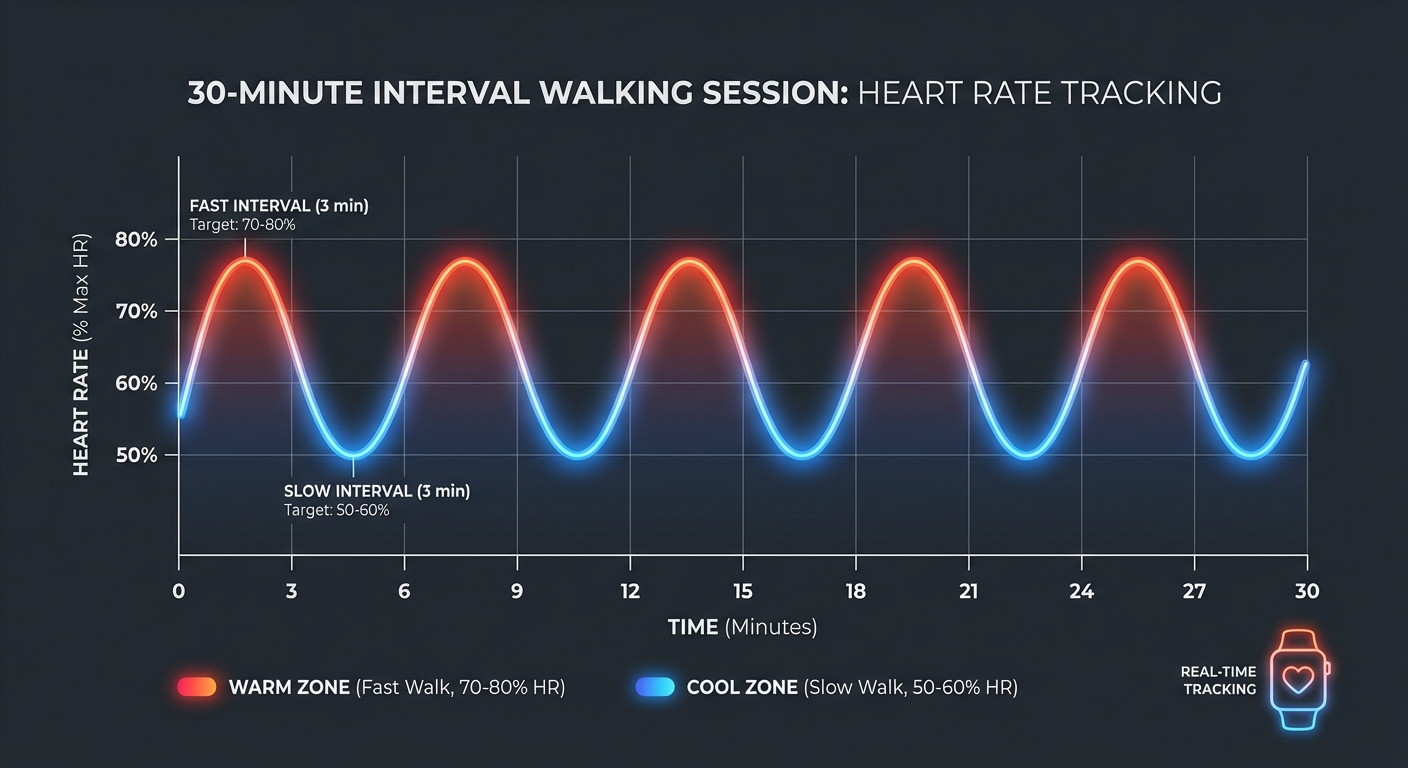
Interval walking training follows a deceptively simple protocol: walk at approximately 70% of your maximum capacity for three minutes, then slow to about 40% of your capacity for the next three minutes. Repeat this cycle for five or more sets, totaling 30 minutes or longer. The alternation between challenging and recovery phases creates physiological stress that steady-pace walking cannot achieve, triggering adaptations that improve fitness more efficiently.
The key lies in how your cardiovascular system responds to brief periods of higher intensity. When you walk fast enough to elevate your heart rate significantly, you stress your heart muscle, blood vessels, and metabolic systems in ways that promote adaptation. The recovery intervals allow partial restoration before the next challenge, enabling you to accumulate more total time at higher intensities than you could sustain continuously. This pattern mirrors the principles of high-intensity interval training, or HIIT, but at intensities appropriate for walking rather than sprinting or cycling.
Research from Japan comparing interval walkers to steady-pace walkers found striking differences in outcomes. Both groups walked for the same total time and covered similar distances. Yet the interval walkers showed significantly greater improvements in aerobic capacity, leg strength, and blood pressure. The initial study found that interval walkers had better knee extension and flexion as well as better aerobic capacity compared to both non-walkers and moderate steady-pace walkers. These differences emerged despite equivalent time investment, suggesting that the interval structure itself drives superior results.
Cardiovascular and Metabolic Benefits
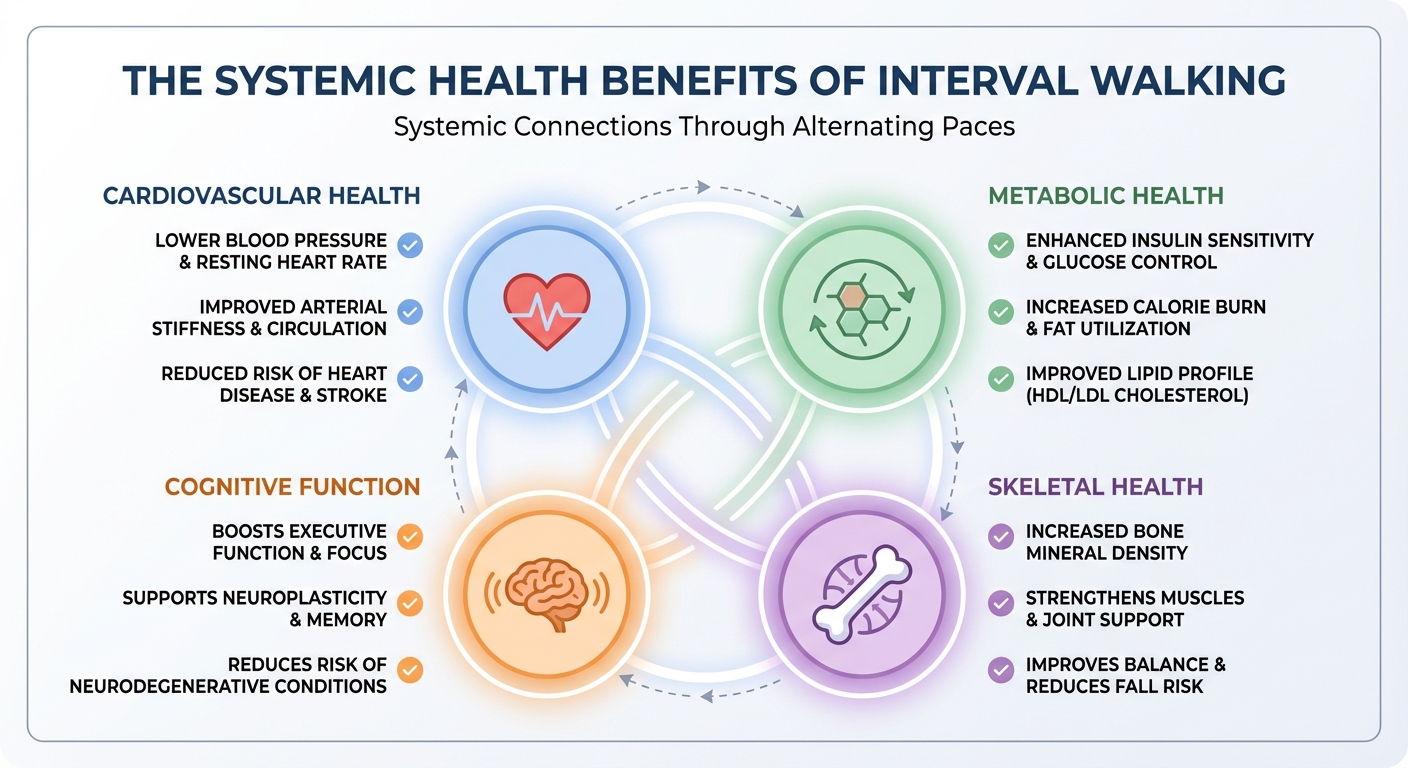
The cardiovascular improvements from interval walking are substantial and well-documented. A study of high-intensity interval walking found that this approach may protect against age-associated increases in blood pressure while simultaneously preventing decreases in thigh muscle strength and peak aerobic capacity. These are precisely the declines that compromise independence and quality of life as we age, making interval walking particularly valuable for older adults.
Blood pressure benefits deserve special attention. The fast intervals trigger temporary spikes in blood pressure, which might seem concerning but actually stimulate beneficial adaptations in blood vessel function. Over time, the endothelium, the inner lining of blood vessels, becomes more responsive, producing more nitric oxide and relaxing more readily. Resting blood pressure decreases as the cardiovascular system becomes more efficient. Multiple studies have documented meaningful reductions in both systolic and diastolic blood pressure following interval walking programs.
For individuals with type 2 diabetes, the benefits extend to glycemic control. Research has shown that interval walking improves blood sugar regulation directly through enhanced glucose effectiveness, meaning the body becomes better at clearing glucose from the bloodstream independent of insulin. Compared to energy-expenditure and time-duration matched continuous walking training, interval walking proved superior for improving physical fitness, body composition, and glycemic control in individuals with type 2 diabetes. This makes it a particularly valuable intervention for the hundreds of millions of people worldwide managing metabolic disease.
Body composition changes accompany these metabolic improvements. Post hoc analyses exploring the relationship between interval walking duration and waist circumference found that each additional 10 minutes of interval walking correlated with a reduction of 0.6 cm in waist circumference. While this may sound modest, accumulated over weeks and months of regular practice, these changes become clinically meaningful. Visceral fat, the metabolically active fat surrounding internal organs, appears particularly responsive to interval training approaches.
Protecting Your Brain and Bones
The benefits of interval walking extend beyond cardiovascular and metabolic health to include the brain and skeletal system. Research with more than 700 participants found that interval walking improves symptoms of lifestyle-related and age-related diseases, including changes in cognitive function, depression, and sleep quality. The mechanism likely involves both direct effects of exercise on brain-derived neurotrophic factor, a protein that supports neuron growth and survival, and indirect effects through improved cardiovascular health and sleep.
Cognitive benefits from interval walking may exceed those from steady-pace walking for the same reason cardiovascular benefits are superior: the brief high-intensity periods trigger adaptations that moderate exercise does not. Exercise intensity is a key driver of BDNF release, and the fast intervals of interval walking push into intensity zones that comfortable walking rarely reaches. Over time, these repeated challenges may support better memory, attention, and processing speed, outcomes of obvious value for older adults concerned about cognitive decline.
Bone health benefits complete the picture. The higher ground-reaction forces during fast walking intervals create mechanical loading that signals bones to maintain or increase density. Osteoporosis prevention requires not just calcium and vitamin D but also weight-bearing exercise with sufficient intensity. Steady moderate walking provides some bone-protective benefit, but interval walking’s fast phases amplify the mechanical stimulus while remaining joint-friendly compared to running or jumping.
How to Start Interval Walking
Beginning an interval walking program requires no special equipment or preparation, just a willingness to push your pace periodically. The original Japanese protocol involves walking at 70% of maximum capacity for three minutes, then at 40% for three minutes, repeated for five or more sets. In practical terms, your fast intervals should feel challenging, you should be breathing hard and finding conversation difficult, while your slow intervals should feel like a genuine recovery, comfortable enough to catch your breath fully.
The Rating of Perceived Exertion scale offers a helpful framework. On a 1-10 scale where 1 is sitting still and 10 is maximum effort, your fast intervals should feel like a 6-7: definitively hard but sustainable for three minutes. Your slow intervals should feel like a 3-4: noticeably easier, allowing recovery without completely stopping. If you have a heart rate monitor or fitness watch, you can aim for 70-80% of your maximum heart rate during fast intervals and 50-60% during recovery.
Start conservatively. If you’re new to exercise or returning after a long break, begin with two or three fast-slow cycles rather than five. Gradually extend your session as fitness improves. Most research protocols use 30-60 minute sessions, three to five times per week, but even shorter sessions provide benefit. The adherence data is encouraging: in one study, 783 out of 826 subjects were able to follow the interval walking protocol for the study duration, a 95% adherence rate. This high compliance reflects the accessibility and tolerability of the approach.
Terrain matters less than effort. You can practice interval walking on a treadmill, around your neighborhood, or on hiking trails. Hills naturally create interval-like patterns, with ascents serving as fast intervals and descents as recovery. If you prefer structured guidance, several smartphone apps now offer audio cues for interval walking, chiming to signal transitions between fast and slow phases.
Comparing Interval Walking to Other Exercise
How does interval walking stack up against other forms of exercise? The comparison to steady-pace walking is clear: interval walking is superior for improving physical fitness, body composition, and disease markers, even when total time and distance are matched. You get more benefit per minute invested by structuring your walk into intervals.
Compared to running or high-intensity interval training on a bike, interval walking is gentler on joints while still providing meaningful cardiovascular challenge. For older adults, those with excess weight, or anyone with joint issues, this represents an important advantage. The impact forces during brisk walking are a fraction of those during running, reducing injury risk while still loading bones enough to maintain density. Research has specifically documented that regular high-intensity interval walking has positive effects on physical functions such as cardiorespiratory endurance and flexibility in older adults.
The mental health comparison is also favorable. While all exercise improves mood and reduces depression and anxiety symptoms, a large review of studies suggests that exercise can ease depression about as effectively as psychological therapy. Interval walking combines these mood benefits with outdoor exposure, which independently supports mental health through sunlight, nature contact, and the rhythmic, meditative quality of walking. For many people, a walk in a park is more appealing and sustainable than time on a gym machine.
Troubleshooting Common Challenges
Several challenges commonly arise when people begin interval walking. Understanding these obstacles and their solutions helps maintain consistency and progress.
Finding the right “fast” pace takes practice. Many beginners either push too hard, exhausting themselves within minutes, or don’t push hard enough to trigger meaningful adaptation. The three-minute duration is your guide: if you can’t complete three minutes at your fast pace without stopping, you’re going too hard. If you finish the three minutes feeling like you could easily continue at that pace indefinitely, you’re not pushing enough. The ideal intensity should feel sustainable but definitely challenging.
Boredom can undermine adherence, especially for people accustomed to steady-pace walks accompanied by podcasts or audiobooks. The mental engagement required to track intervals and manage pace can make it harder to zone out. Some people find this heightened attention welcome, appreciating the meditative quality of focused physical effort. Others prefer audio cues from apps, allowing them to trust the technology to signal transitions while their minds wander elsewhere. Experiment to find what works for your attention style.
Weather and environment present practical obstacles. While adherence to interval walking in short-term studies is high, ensuring long-term adherence remains a challenge, particularly in populations with chronic diseases and/or overweight/obesity. Having indoor alternatives, whether a treadmill, shopping mall, or large indoor space, helps maintain consistency through seasonal changes. The protocol works identically indoors; only the scenery changes.
Joint discomfort during fast intervals may indicate pushing too hard or using improper footwear. Quality walking shoes with adequate cushioning and support make a substantial difference. If discomfort persists despite appropriate footwear and moderate intensity, consult a healthcare provider to rule out underlying issues before continuing.
The Bottom Line
Interval walking represents one of the most evidence-backed, accessible fitness interventions available. By simply alternating between three minutes of brisk walking and three minutes of easier walking, you can achieve cardiovascular improvements, metabolic benefits, and fitness gains that steady-pace walking cannot match. The research is clear and replicated across multiple populations: the structure of your walk matters as much as the duration.
The method works for nearly everyone. Older adults, those with metabolic diseases, people new to exercise, and experienced fitness enthusiasts can all benefit from incorporating interval walking into their routines. The 95% adherence rate in research studies reflects the approachability of the method, and the growing popularity as 2026’s top fitness trend suggests that many people are discovering what the research already demonstrates.
Next Steps:
- Start with three cycles of 3-minute fast / 3-minute slow walking (18 minutes total)
- Use a timer app or smartwatch to track intervals
- Target an exertion level of 6-7 out of 10 during fast intervals
- Gradually extend to five or more cycles as fitness improves
- Aim for three to five sessions per week for optimal benefits
Sources: Applied Physiology, Nutrition, and Metabolism 2024, Journal of Applied Physiology 2007, Brown University Health, Ohio State Health & Discovery, TIME Health, ScienceDaily research summaries, PureGym 2026 Fitness Report.