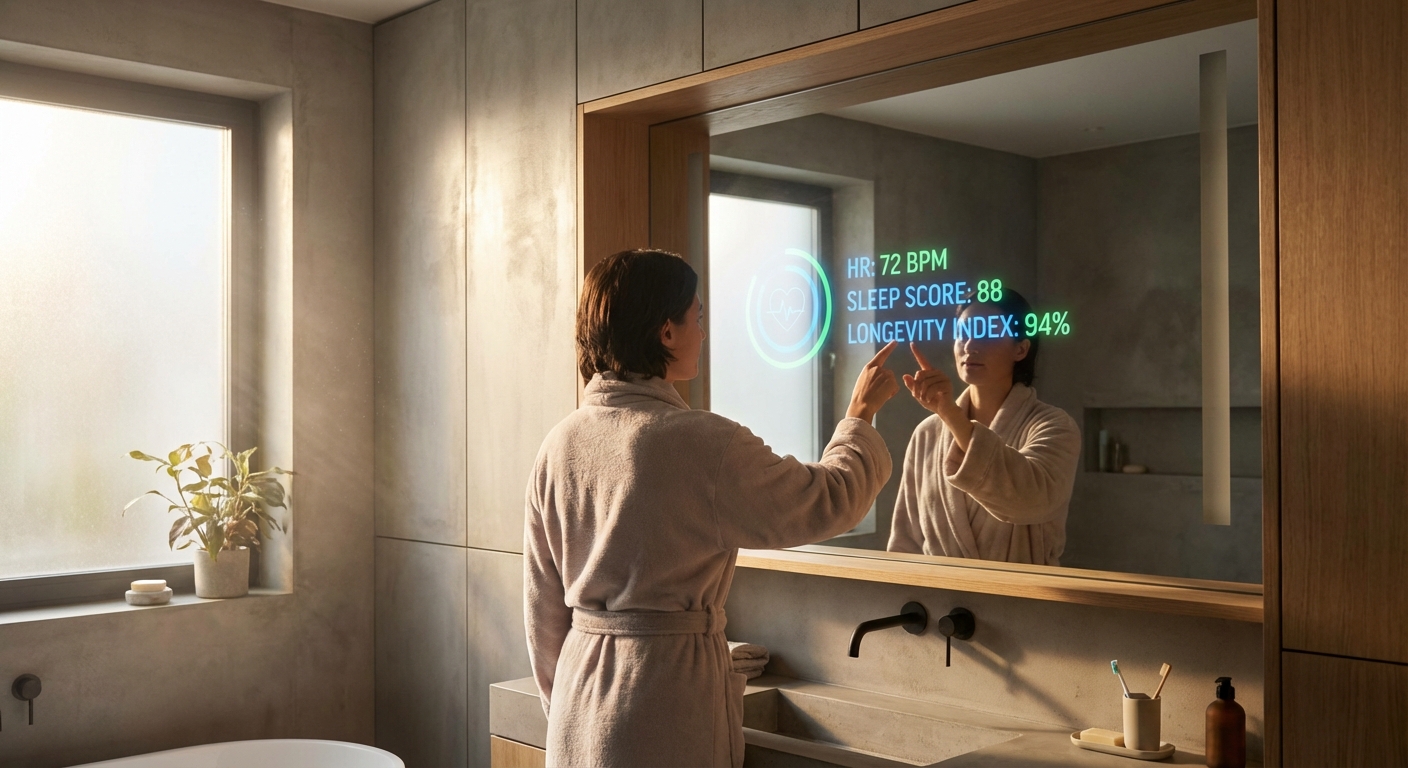
Your bedtime has drifted two hours later than usual. You’ve been eating dinner at 10 PM, skipping morning light exposure, and getting alcohol-disrupted sleep for the past two weeks. Now, as the new year begins, your internal clock is out of sync with your external life. You’re waking groggy, struggling to focus, and feeling vaguely unwell in ways that are hard to articulate. This isn’t just holiday fatigue. It’s circadian misalignment, and the research shows it has measurable health consequences.
A massive 2025 global study of over 88,000 adults published in Nature Communications found that poor sleep regularity, including inconsistent bedtimes and disrupted circadian rhythms, is tied to dramatically higher risks for dozens of diseases. The researchers concluded that sleep regularity, not just duration, should be considered a critical health metric. Ninety-two diseases showed over 20% of their risk attributable to poor sleep behavior. The good news is that your circadian system is designed to be reset, and with the right inputs, you can recalibrate within days.
Understanding how circadian rhythms work, what disrupts them, and how to reset them isn’t just about feeling better in January. It’s about leveraging one of the most powerful and underutilized levers for long-term health optimization. Your body’s internal clock influences everything from hormone production to immune function to cognitive performance. Getting it right matters more than most people realize.
How Your Internal Clock Actually Works
Your circadian rhythm is controlled by a master clock in the brain called the suprachiasmatic nucleus (SCN), located in the hypothalamus directly above where the optic nerves cross. This cluster of about 20,000 neurons receives direct input from specialized light-sensing cells in your eyes and uses that information to coordinate timing signals throughout your body. Every organ, every tissue, has its own peripheral clock that takes cues from this central conductor.
The system runs on a roughly 24-hour cycle, but “roughly” is the key word. Without external cues, most people’s internal clocks run slightly longer than 24 hours, which means we need daily resetting to stay synchronized with the actual day-night cycle. This resetting happens through environmental signals called zeitgebers, German for “time-givers.” Light is the most powerful zeitgeber, but meal timing, physical activity, temperature, and social cues also play roles.
Research from Northwestern University’s circadian biology lab led by Dr. Phyllis Zee emphasizes that all these zeitgebers work together. “The timing of feeding, the time that you exercise, the physical activity, all of these help entrain the clocks in your body so that they’re in sync,” she explains. When these signals become inconsistent or misaligned with each other, as happens during holiday schedule disruption, the system falls out of coordination.
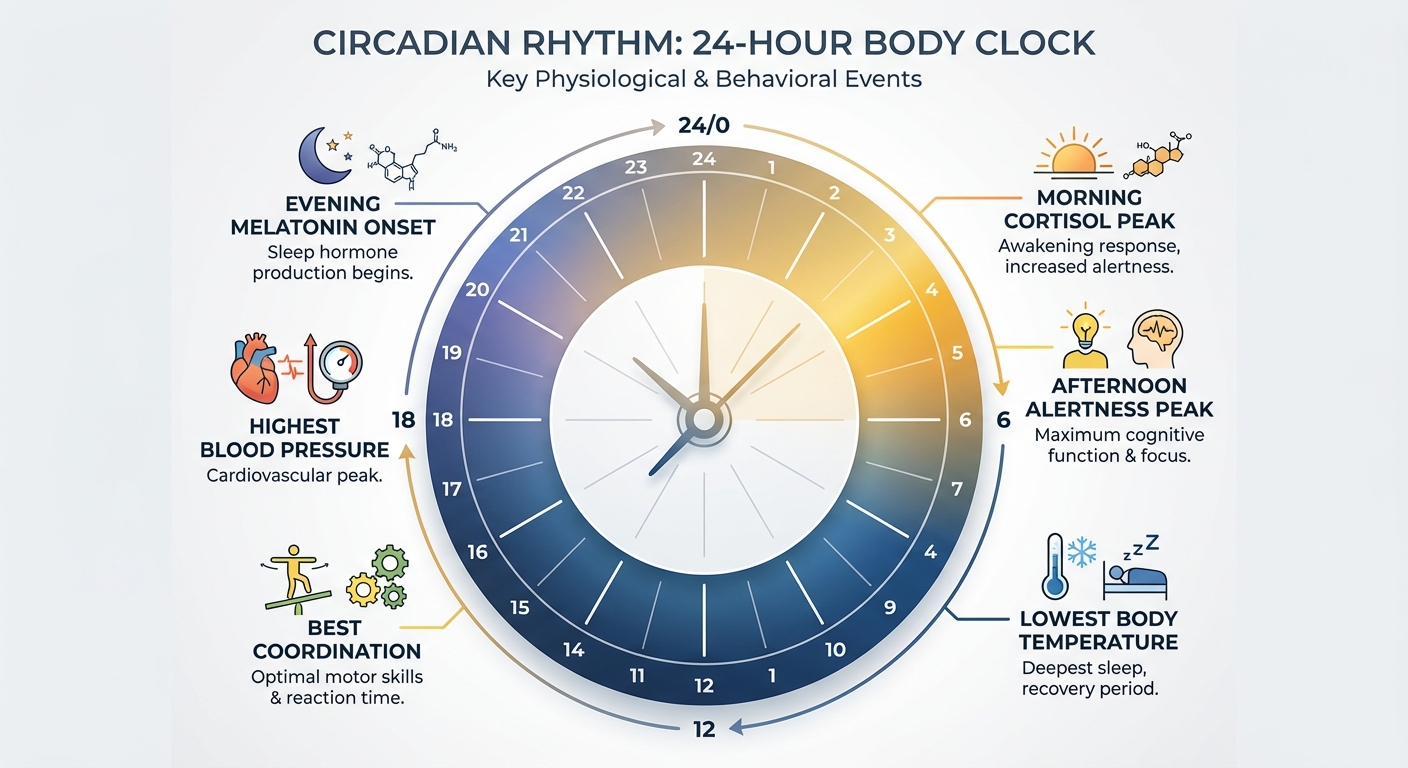
The consequences of circadian misalignment extend far beyond feeling tired. Your body releases hormones, regulates blood sugar, activates immune responses, and consolidates memories according to circadian timing. When the clock is off, these processes happen at suboptimal times, reducing their effectiveness and sometimes creating direct harm.
The Damage Holiday Schedules Do
Holiday circadian disruption typically involves multiple simultaneous insults. Late-night socializing shifts bedtime later. Alcohol consumption, even moderate amounts, suppresses REM sleep and fragments sleep architecture. Irregular meal timing sends conflicting signals to peripheral clocks in the liver and gut. Reduced morning light exposure, especially if you’re sleeping in or staying indoors, weakens the resetting signal your master clock needs. Travel across time zones adds jet lag to the mix.
A comprehensive review published in the Journal of Clinical Medicine details how these disruptions cascade through the body. Alcohol interferes with the normal cycling of growth hormone and prolactin during sleep. Late eating shifts the liver’s metabolic clock out of sync with the brain’s master clock. Reduced light exposure weakens melatonin’s normal suppression in the morning, leading to daytime drowsiness and evening alertness, exactly opposite to what you need.
The research distinguishes between “social jet lag,” the chronic misalignment between social schedules and biological rhythms, and acute disruption like holiday schedule chaos. Both have health consequences, but the good news about acute disruption is that the system can be recalibrated relatively quickly with the right interventions. The bad news is that most people don’t intervene deliberately, they just wait for things to normalize, which can take weeks of suboptimal function.
What you’re likely experiencing if you’ve had typical holiday schedule disruption includes difficulty falling asleep at your desired bedtime, trouble waking at your desired time, daytime fatigue that doesn’t fully resolve with caffeine, reduced cognitive performance especially in the afternoon, digestive discomfort even with normal eating, and mood instability. These aren’t separate problems requiring separate solutions. They’re symptoms of a single underlying issue: your circadian system is miscalibrated.
Light: The Master Reset Button
Light exposure is the most powerful tool for circadian resetting because it’s the primary signal your master clock evolved to track. But the details matter enormously: the timing, intensity, duration, and spectrum of light all influence how effectively it resets your clock.
Morning light exposure is critical because it suppresses melatonin, triggers cortisol release, and advances your clock, making you sleepy earlier that evening and more alert earlier the next morning. The intensity threshold for circadian effects is about 1,000 lux, which is roughly equivalent to outdoor light on an overcast day. Indoor lighting, even in well-lit rooms, typically provides only 100-500 lux, which is insufficient for strong circadian signaling.
Research on light therapy and circadian resetting indicates that 20-30 minutes of bright light exposure within an hour of waking provides the strongest resetting signal. Actual outdoor sunlight is ideal, delivering 10,000-100,000 lux depending on conditions. If outdoor exposure isn’t practical, a 10,000 lux light therapy box positioned about 12-18 inches from your face can substitute. Blue-enriched light is most effective for circadian resetting, which is why standard daylight or blue-enhanced light boxes work better than red or warm-spectrum alternatives.
Evening light management is equally important. Light exposure after sunset, especially blue-enriched light from screens and LED lighting, suppresses melatonin production and delays sleep onset. This is particularly problematic during holiday recovery because your clock is already shifted late. Dimming lights in the evening, using warm-spectrum bulbs, and wearing blue-light blocking glasses in the two hours before bed can help accelerate the resetting process.

The Meal Timing Reset Protocol
Your peripheral clocks, the ones in your liver, gut, pancreas, and other organs, are strongly influenced by when you eat. Eating late at night shifts these clocks later, creating internal desynchrony even if your light exposure is correct. Conversely, consistent meal timing can reinforce the resetting signal from light exposure.
Time-restricted eating research has shown that confining food intake to a 10-hour window aligned with daylight hours improves metabolic markers independent of calorie changes. A study of 108 adults found that time-restricted eating significantly reduced hemoglobin A1c compared to unrestricted eating patterns. For circadian resetting specifically, the timing of your first and last meals matters more than the duration of your eating window.
For the reset protocol, aim to eat breakfast within an hour of waking and finish your last meal at least three hours before bed. This front-loads caloric intake toward the metabolically optimal earlier hours while giving your digestive system time to complete processing before sleep. Avoid eating anything after dinner, including small snacks, as even minor food intake can send timing signals to peripheral clocks.
The composition of meals matters secondarily to timing, but some research suggests that protein-rich breakfasts provide stronger metabolic timing signals than carbohydrate-heavy alternatives. This may be because protein requires more digestive processing, generating stronger thermic and hormonal responses that reinforce the “daytime” signal to your body’s clocks.
Movement and Temperature as Zeitgebers
Exercise provides circadian timing signals through multiple pathways: body temperature elevation, hormonal responses, and direct effects on clock gene expression in muscle tissue. The timing of exercise matters for resetting. Morning exercise reinforces the wake signal and can help advance a delayed clock, while evening exercise, especially within three hours of bed, can delay sleep onset.
For the reset protocol, aim for at least 20-30 minutes of moderate activity in the morning, ideally outdoors to combine exercise with light exposure. This could be walking, jogging, cycling, or any activity that elevates heart rate and body temperature. The combination of morning light plus morning movement provides a stronger resetting signal than either alone.
Research on exercise and circadian rhythms from Frontiers in Neuroscience details how physical activity activates clock genes in skeletal muscle and influences systemic circadian coordination. The researchers found that exercise timing affects not just sleep quality but also muscle regeneration, metabolic function, and healthy aging trajectories.
Body temperature follows a circadian pattern, rising during the day and falling at night to promote sleep. You can reinforce this pattern by taking a warm shower or bath in the evening, about 90 minutes before bed. The subsequent cooling as you emerge helps trigger the temperature drop that facilitates sleep onset. Morning cold exposure, even briefly, can have the opposite effect, promoting alertness through the arousal of temperature regulatory responses.

The 7-Day Reset Protocol
Putting these principles together, here’s a structured protocol for recalibrating your circadian rhythm after holiday disruption:
Days 1-3: Aggressive Light Shifting
- Wake at your target time regardless of sleep quality (use an alarm)
- Get outside or use a 10,000 lux light box within 30 minutes of waking for 20-30 minutes
- Eat breakfast within an hour of waking (protein-focused)
- Exercise in the morning, outdoors if possible
- Dim lights and avoid screens starting 2 hours before target bedtime
- No food within 3 hours of bed
- Warm bath or shower 90 minutes before bed
Days 4-7: Reinforcement and Fine-Tuning
- Continue morning light exposure (can reduce to 15-20 minutes if feeling reset)
- Maintain consistent meal timing (within 30-minute windows each day)
- Add afternoon light exposure if energy dips (10-15 minutes outdoors)
- Continue evening light restriction
- Avoid alcohol completely during this phase (it fragments sleep architecture)
- Avoid caffeine after 2 PM (it blocks adenosine, which helps signal sleep pressure)
Metrics to Track:
- Sleep onset latency (how long it takes to fall asleep, target under 20 minutes)
- Wake time (you should start waking naturally near your alarm time by day 4-5)
- Daytime energy (subjective rating, should improve progressively)
- Evening sleepiness (you should feel genuinely tired at your target bedtime)
Most people notice significant improvement by day 3-4 and full reset by day 7. If you’re not seeing progress, the most common issues are insufficient morning light intensity, evening light exposure creeping in, or inconsistent timing of the interventions.
The Bottom Line
Your circadian system is remarkably responsive to the right inputs, but it requires consistency and the correct timing of zeitgebers to reset effectively. Light is your most powerful tool, with morning exposure advancing your clock and evening darkness allowing it to prepare for sleep. Meal timing, exercise, and temperature all reinforce these primary signals.
The research is clear that circadian health isn’t just about feeling better, though you will feel better. It’s about reducing disease risk, optimizing metabolic function, and supporting cognitive performance. The investment of a week of deliberate attention to circadian reset pays dividends that extend far beyond January.
Next Steps:
- Set a consistent wake time and protect it with an alarm for the next 7 days
- Get 20-30 minutes of bright light exposure within an hour of waking (outdoors or light box)
- Eat breakfast within an hour of waking and dinner at least 3 hours before bed
- Dim lights and eliminate screens 2 hours before your target bedtime
- Track your sleep onset time and morning alertness to monitor progress
Sources: Nature Communications 88,000-person sleep study (2025), Journal of Clinical Medicine circadian review, Northwestern University circadian research (Dr. Phyllis Zee), Frontiers in Neuroscience exercise-circadian research, time-restricted eating clinical trials.