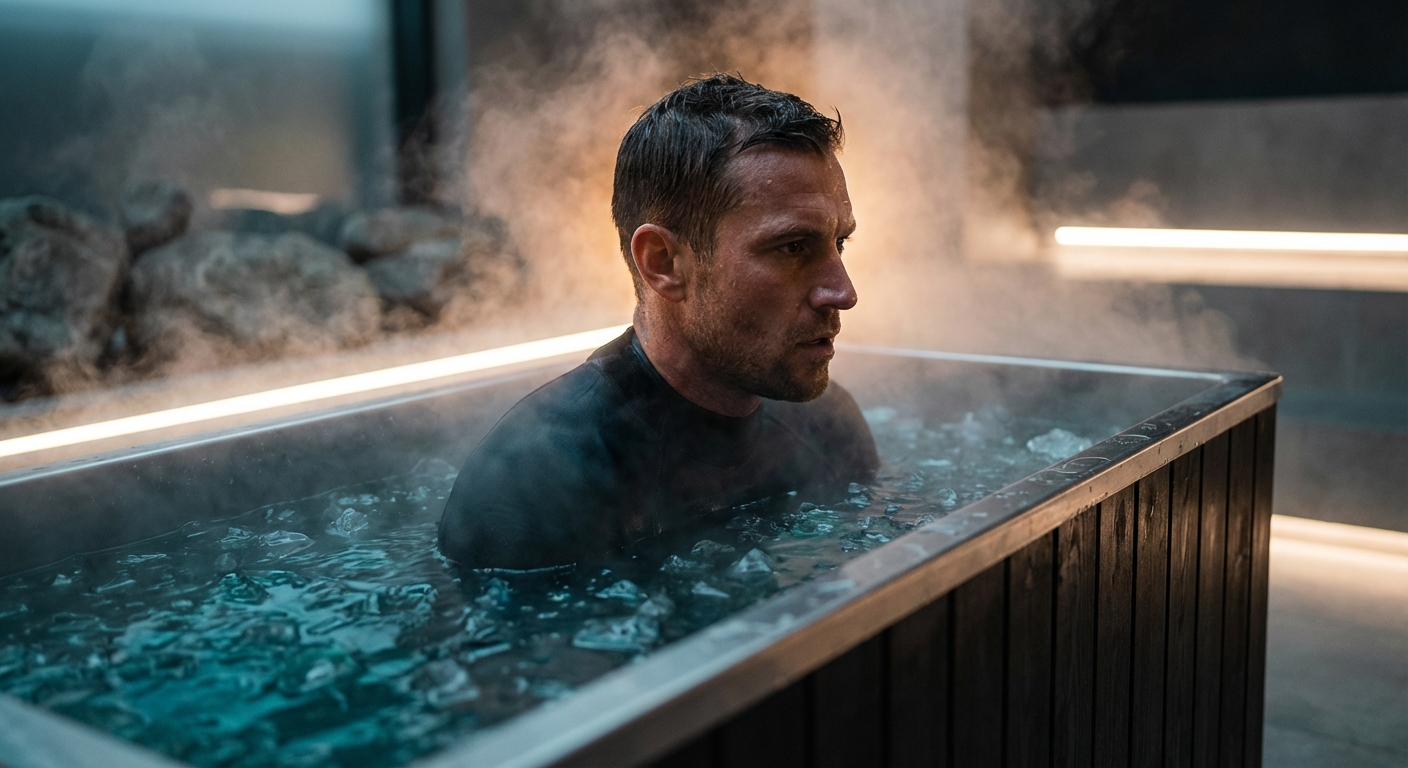
You’ve seen the videos: tech executives and elite athletes plunging into ice-filled tubs, emerging gasping but euphoric, crediting the practice for everything from mental clarity to improved immunity. Cold water immersion has become one of the most popular wellness interventions of the past few years, with dedicated cold plunge companies raising millions in funding and home ice baths becoming status symbols in certain circles. But beneath the hype and the impressive before-and-after testimonials, what does the research actually show?
The answer is more nuanced than the influencer content suggests, but also more interesting. Cold water immersion produces measurable, significant physiological changes that aren’t placebo effects. The dopamine increase is real and substantial. The anti-inflammatory effects have clinical evidence. The mental health applications are being studied seriously by academic researchers. At the same time, the optimal protocols are still being refined, the mechanisms aren’t fully understood, and some popular claims outpace the evidence.
Understanding what cold exposure actually does, what it doesn’t do, and how to apply it effectively requires looking past both the hype and the dismissive skepticism. The science of deliberate cold exposure is genuinely fascinating, and when applied correctly, the practice offers benefits that few other interventions can match.
The Dopamine Data: Why Cold Feels So Good Afterward
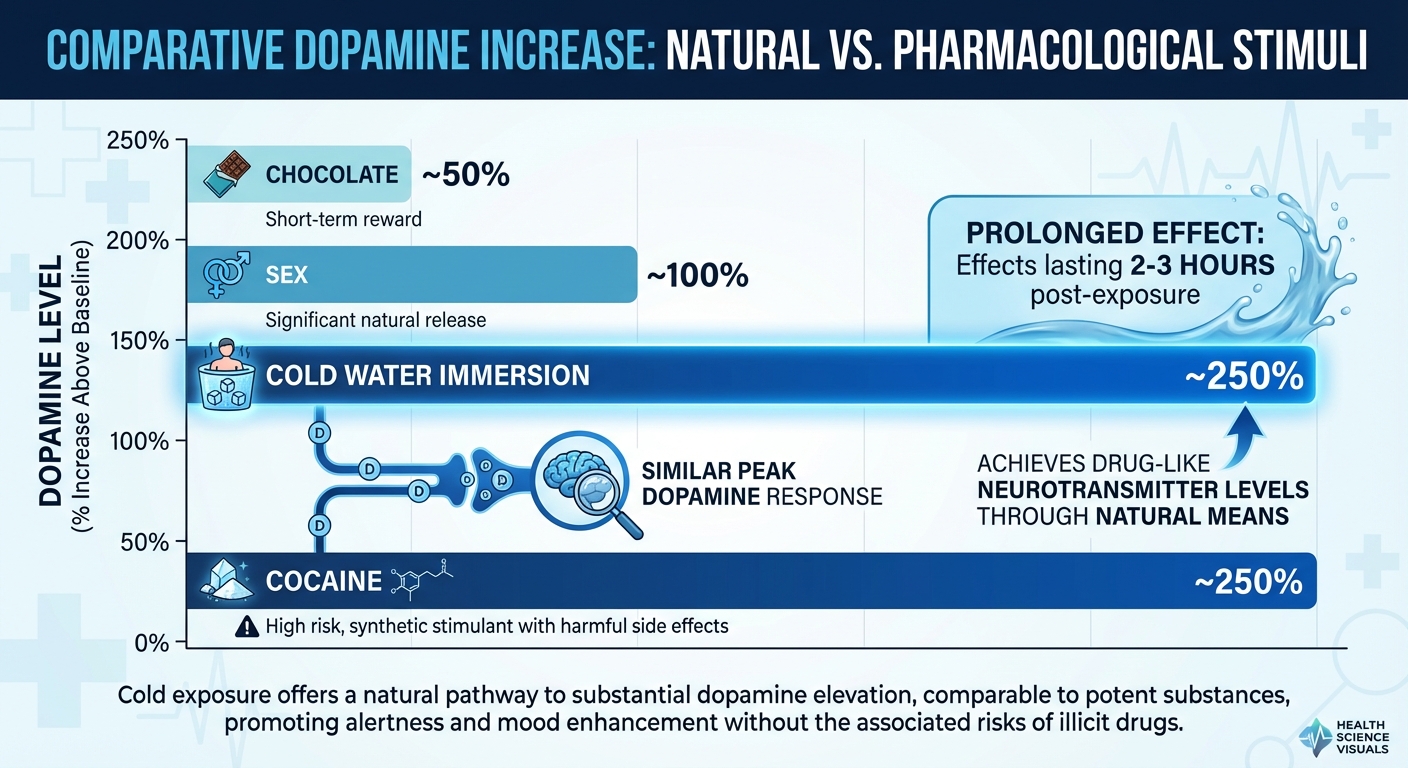
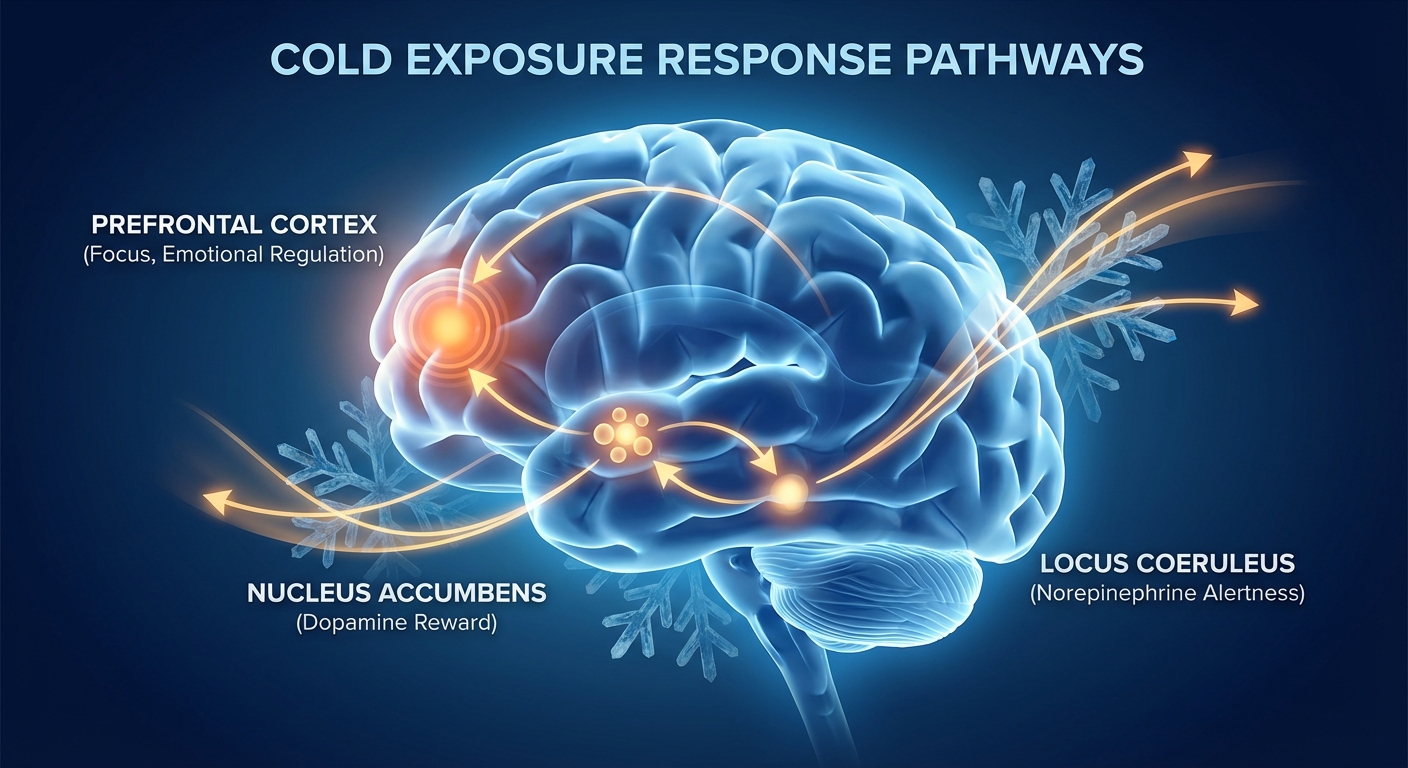
The most striking research finding on cold water immersion involves dopamine, the neurotransmitter associated with motivation, reward, and mood. Studies measuring blood dopamine levels after cold water immersion have found increases of approximately 250%, with effects lasting up to two to three hours after the exposure ends. Norepinephrine, which increases alertness and focus, shows even more dramatic increases of around 530%.
To put the dopamine increase in context: cocaine produces dopamine spikes of about 250%, chocolate around 50%, and sex approximately 100%. Cold water immersion produces a dopamine increase comparable to recreational drugs but through a natural mechanism that doesn’t lead to tolerance or addiction. This is why people who practice cold exposure consistently report sustained improvements in mood and energy rather than diminishing returns.
The mechanism involves the cold activating the body’s stress response in a controlled way. When you enter cold water, the shock triggers release of catecholamines including norepinephrine and dopamine from the adrenal glands and sympathetic nervous system. Unlike chronic stress, which depletes these neurotransmitter systems, the brief, controlled stress of cold exposure appears to upregulate them. Dr. Andrew Huberman, a neuroscientist at Stanford, describes this as “deliberate cold exposure” training the brain to release dopamine more effectively.
The subjective experience matches the biochemistry. People consistently report feeling more alert, focused, and positive after cold exposure, with effects lasting well beyond the immediate recovery period. This isn’t just “feeling tough” after doing something hard. The neurotransmitter changes are measurable and the duration of effect is consistent across studies.
Cellular and Metabolic Benefits: The 2024 Research
Beyond the immediate neurotransmitter effects, cold exposure triggers cellular adaptations that may have longer-term health implications. A 2024 study published in Advanced Biology demonstrated that brief cold water immersion initiates cellular changes supporting metabolic health and immune function.
The key mechanism involves cold-shock proteins, particularly RNA-binding motif protein 3 (RBM3). When exposed to cold, cells increase production of these protective proteins, which enhance cellular resilience and may have anti-aging effects. The stress of cold triggers hormetic adaptation, the biological principle that moderate stressors can trigger beneficial adaptations that exceed the damage caused by the stressor itself.
Cold exposure also increases mitochondrial biogenesis, the process by which cells create new mitochondria. Mitochondria are the cellular powerhouses that produce ATP, and their number and efficiency decline with age. Brown adipose tissue, which is metabolically active fat that burns calories to generate heat, is also activated and potentially increased by regular cold exposure. This has implications for metabolic health and weight management, though the magnitude of these effects in humans is still being quantified.
The immune system shows complex responses to cold exposure. Acute cold exposure temporarily suppresses some immune markers while enhancing others. Regular practice appears to shift toward enhanced immune vigilance over time, though this area needs more longitudinal research. Research on inflammation shows that cold exposure can reduce inflammatory markers, which has implications for both physical recovery and mental health, given the links between chronic inflammation and depression.
Mental Health Applications: The Emerging Evidence
The mental health applications of cold exposure are receiving serious academic attention. Dr. Mark Harper, an anesthesiologist who has studied cold water swimming extensively, has documented significant improvements in depression and anxiety among regular cold water immersion practitioners. His research suggests the optimal temperature range is 10-15°C (50-59°F), with no additional benefit from going colder.
The mechanisms for mental health benefits appear to work through multiple pathways. The dopamine and norepinephrine increases directly counter the neurotransmitter deficits associated with depression. The anti-inflammatory effects may address the inflammatory component of depression that increasingly appears in research. And the practice of voluntarily entering a cold, uncomfortable state and tolerating it may build a form of psychological resilience that transfers to other challenging situations.
Dr. Anna Lembke, director of Stanford’s Addiction Medicine Clinic, suggests that ice baths may help with chronic pain and mental health conditions through graded exposure. The principle is similar to exposure therapy: by voluntarily experiencing discomfort in a controlled way, you train your nervous system to handle stress more effectively. “Many patients with chronic pain and mental health conditions feel better after graded exposure to ice baths,” she notes.
The research on cold exposure and neurohormesis, the concept that brief neural stressors can enhance brain resilience, adds another dimension. A 2024 study explored how short-term cold exposure may train the nervous system to handle stress more effectively, essentially building a more robust stress response that isn’t easily overwhelmed.
Optimal Protocols: What the Research Suggests
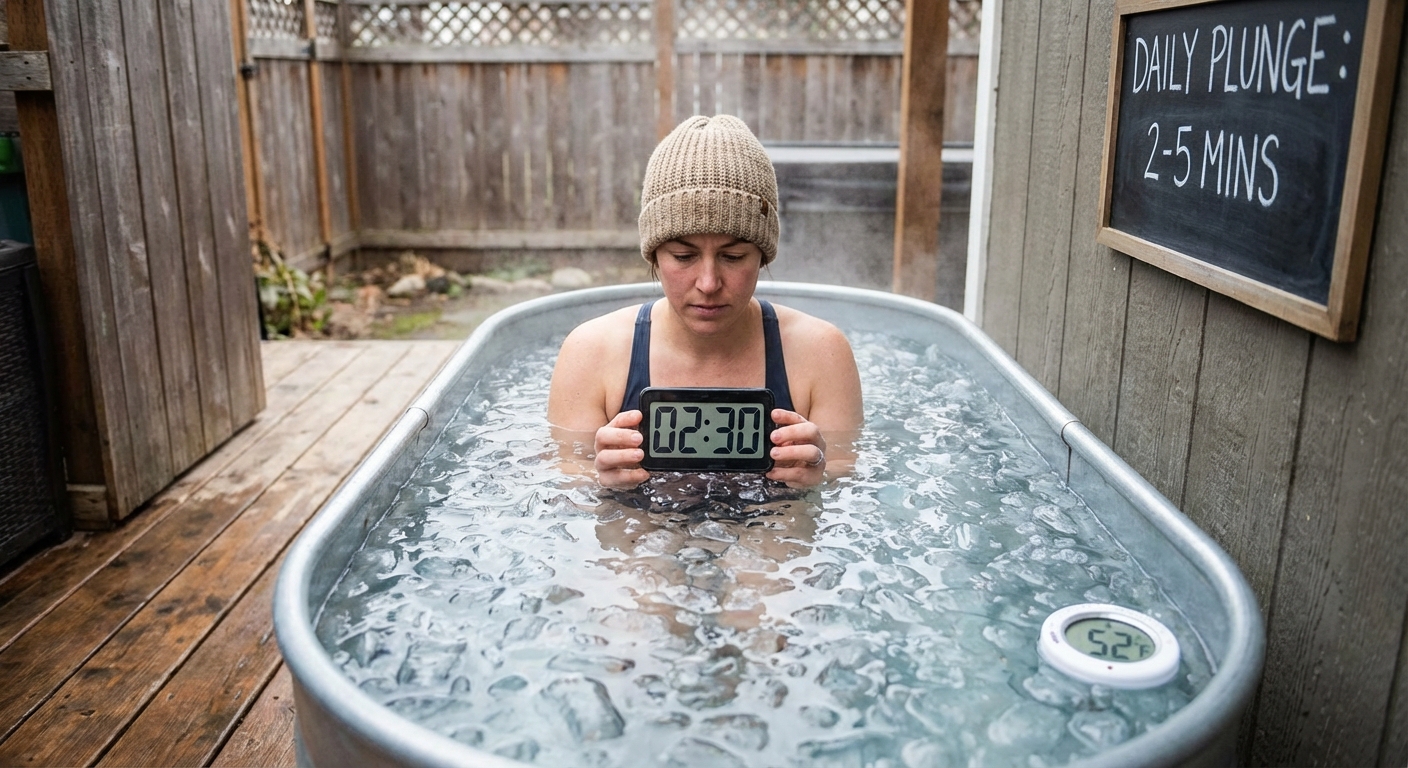
The most commonly cited recommendation comes from Dr. Andrew Huberman’s synthesis of the research: aim for a total of 11 minutes of deliberate cold exposure per week, divided across 2-4 sessions of 1-5 minutes each. This appears to be the minimum effective dose for achieving the neurochemical and metabolic benefits without excessive stress or impractical time investment.
Temperature matters, but colder isn’t necessarily better. The research suggests that the 10-15°C (50-59°F) range produces the physiological benefits without the added risks of extremely cold water. Dr. Harper’s research found no additional therapeutic benefit from temperatures below 10°C, and the risks of cold-related injuries increase as temperature drops further.
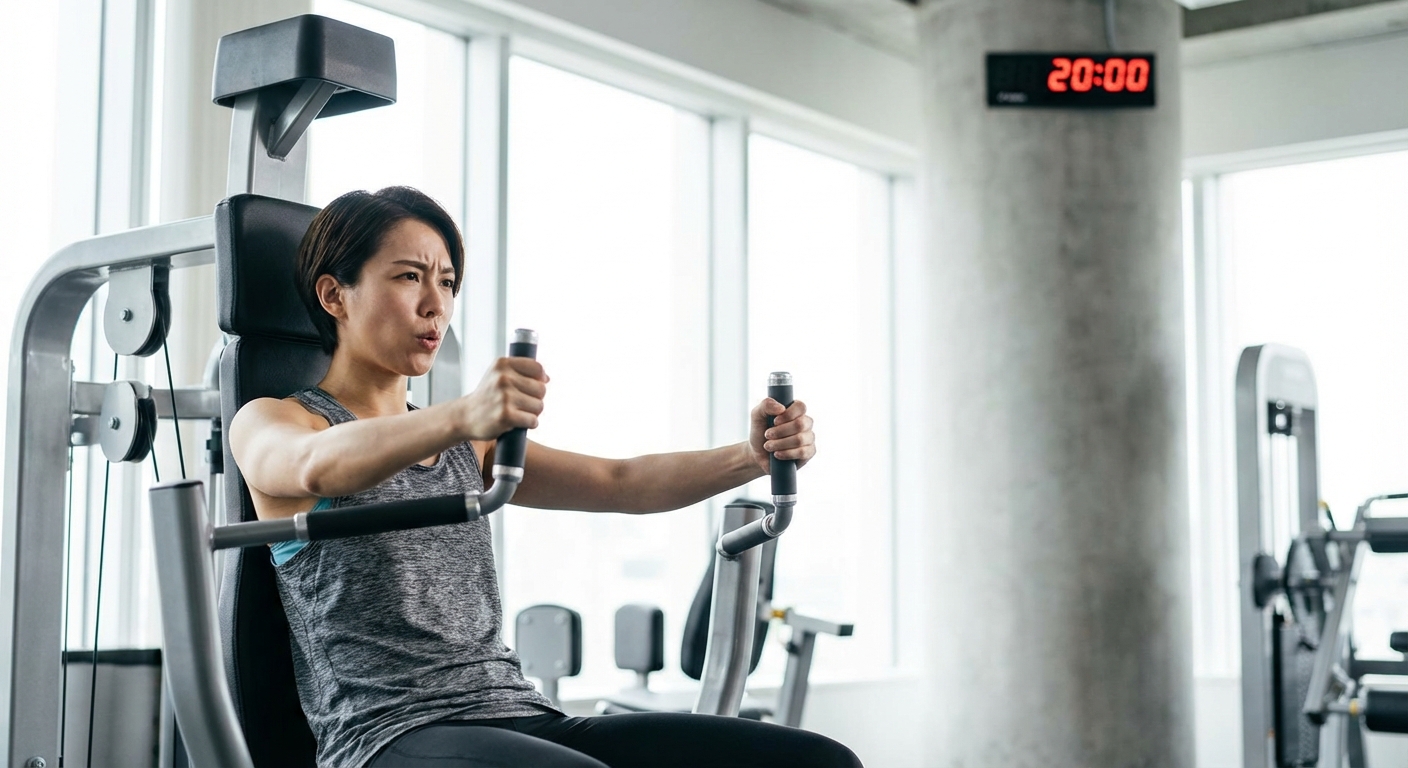
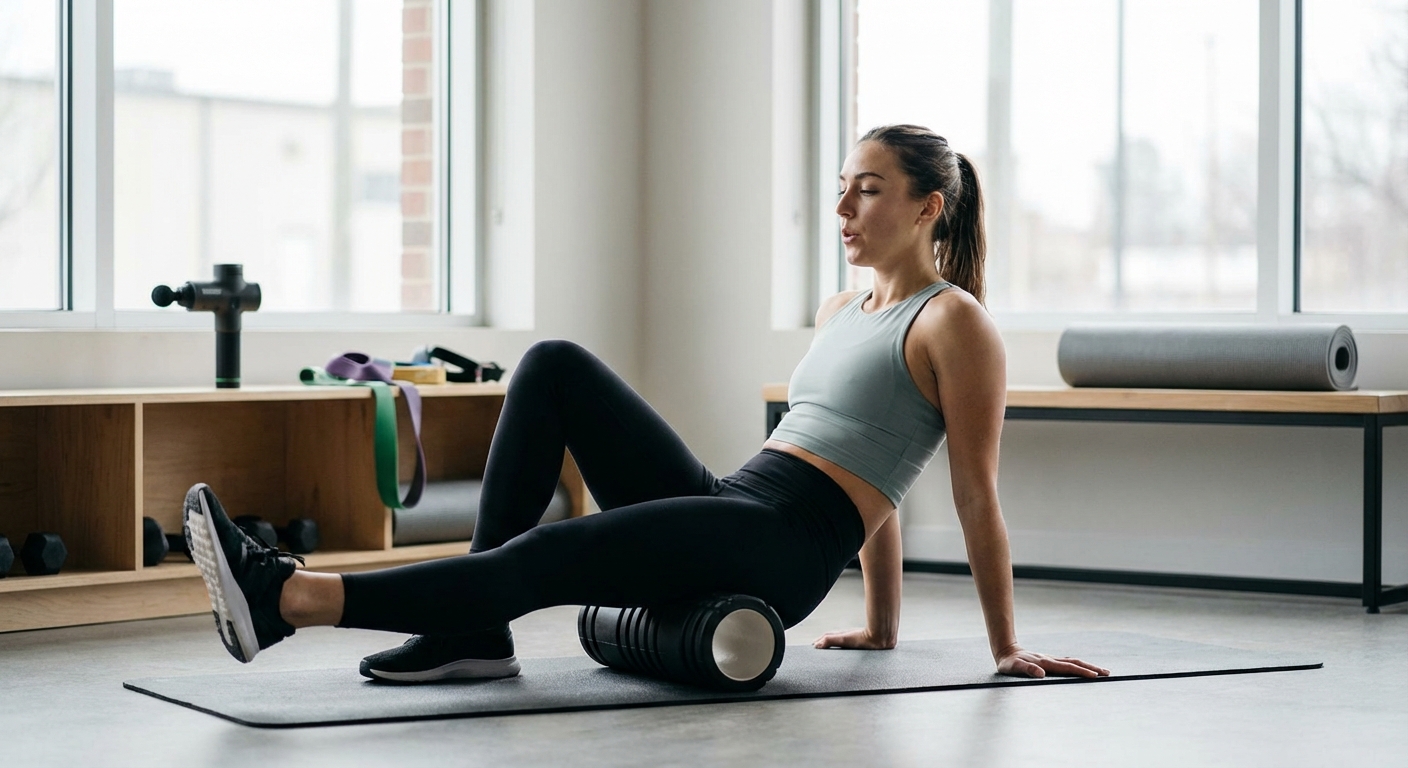
The timing of cold exposure relative to other activities matters for specific goals. For pure mental health and energy benefits, morning cold exposure capitalizes on the natural cortisol peak and sets a positive neurochemical tone for the day. For athletic recovery, the picture is more complicated. While cold exposure does reduce inflammation and perceived muscle soreness, research suggests that applying it immediately after strength training may blunt the adaptive response you’re trying to create. The inflammation from training is partly how muscles signal the need for repair and growth. Cold exposure several hours after training, or on rest days, may be more strategic.
The method of entry also affects outcomes. Gradual entry, lowering yourself slowly into cold water, produces less dramatic stress response than sudden immersion. For those new to cold exposure, gradual entry allows adaptation without overwhelming the system. For experienced practitioners seeking maximum effect, full and rapid immersion produces stronger neurochemical response.
What Cold Exposure Doesn’t Do
It’s important to be clear about the limits of the evidence. Cold exposure is not a cure for serious mental illness, and claims that it can replace medication or therapy for clinical depression or anxiety disorders outpace the research. The studies showing mental health benefits are encouraging but mostly involve subclinical populations or mild-to-moderate symptoms. Anyone with significant mental health concerns should view cold exposure as a potential adjunct to, not replacement for, professional treatment.
The fat-burning claims are often overstated. While cold exposure does activate brown adipose tissue and increase metabolic rate temporarily, the magnitude of additional calorie burn is modest, perhaps 100-200 additional calories per session at most, and probably less with repeated exposure as the body adapts. Cold plunges are not a meaningful weight loss strategy on their own.
The immune boosting claims are similarly nuanced. While some research shows enhanced immune markers with regular cold exposure, others show temporary immunosuppression. The net effect on actual illness resistance is unclear, and the studies that exist are mostly observational, not controlled trials. Cold exposure probably isn’t making you sick, but the evidence that it’s preventing illness is not yet strong.
Athletic performance benefits are also context-dependent. Cold exposure can reduce perceived soreness and may speed some aspects of recovery, but if applied at the wrong time relative to training, it can interfere with the adaptations you’re trying to develop. The optimal recovery protocol likely involves strategic timing rather than routine post-workout cold plunges.
Getting Started: A Practical Protocol
If you’re new to cold exposure, gradual progression is key. The stress response is real, and overwhelming your nervous system doesn’t produce better results, just more misery.
Week 1-2: Cold Shower Introduction
- End your regular shower with 30 seconds of the coldest water available
- Focus on controlled breathing: slow exhale through the stress
- Gradually extend to 60 seconds by end of week 2
Week 3-4: Extended Cold Exposure
- Increase cold shower duration to 2-3 minutes
- If you have access to a cold plunge or natural cold water, try 1-minute immersions
- Target 3-4 sessions per week
Week 5+: Maintenance Protocol
- 2-4 sessions per week of 2-5 minutes each
- Total weekly cold exposure: 11+ minutes
- Temperature: 50-59°F (10-15°C) is optimal for most benefits
Breathing technique: Before entering cold water, take 3-4 deep breaths. Upon entry, resist the urge to gasp and instead focus on a slow, controlled exhale. This activates the parasympathetic nervous system and helps manage the stress response. Continue slow, deep breathing throughout the exposure.
Safety considerations: Don’t practice cold immersion alone, especially when starting. Avoid cold exposure if you have cardiovascular conditions, Raynaud’s disease, or are pregnant without medical clearance. Never combine cold water immersion with alcohol or substances that impair judgment. Exit immediately if you experience numbness in extremities, confusion, or extreme shivering.
The Bottom Line
Cold water immersion produces real, measurable physiological effects that go beyond placebo. The dopamine and norepinephrine increases are significant and sustained. The cellular and metabolic benefits are supported by emerging research. The mental health applications are promising enough to warrant serious academic attention.
At the same time, cold exposure isn’t a panacea, and many of the most dramatic claims aren’t yet supported by rigorous research. The optimal protocols are still being refined, timing matters for different goals, and individual responses vary significantly. Approaching cold exposure as one tool among many, rather than a magical cure-all, allows you to capture the genuine benefits while maintaining appropriate expectations.
Next Steps:
- Start with cold showers: 30 seconds of cold at the end of your regular shower
- Focus on breath control: slow exhale through the cold stress
- Build gradually over 2-4 weeks to 2-3 minute cold exposures
- Target 11 minutes of total cold exposure per week across 2-4 sessions
- Avoid cold plunges immediately after strength training; time them for rest days or later in the day
Sources: Huberman Lab newsletter on cold exposure, UF Health Jacksonville 2024 cold water immersion research, Psychology Today cold therapy mental health review, Advanced Biology cellular response study (2024), Dr. Mark Harper cold water research, Stanford Addiction Medicine (Dr. Anna Lembke).