Writing down three things you’re grateful for takes two minutes. The practice seems impossibly simple to matter. You feel a bit foolish the first time, scribbling “good coffee” and “sunny weather” into a notebook, wondering how this could possibly change anything meaningful about your mental state or your life.
Then you do it for three weeks. And something shifts. You find yourself noticing the good moments as they happen, not just when you’re prompted to recall them. The rumination loop that usually plays during your commute gets interrupted by a genuine appreciation for the podcast you’re listening to. A colleague’s small kindness registers instead of sliding past unnoticed. You sleep slightly better. Your partner mentions you seem less stressed.
This isn’t placebo or wishful thinking. Gratitude practice creates measurable changes in brain structure and function, documented through functional MRI studies and validated across dozens of randomized controlled trials. The neuroscience is compelling: gratitude activates reward pathways, triggers serotonin and dopamine release, and through neuroplasticity, literally rewires how your brain processes emotional information over time.
How Gratitude Changes Your Brain
The brain regions activated by gratitude overlap significantly with those involved in moral cognition, reward processing, and social bonding. When you experience or express gratitude, you’re not just thinking pleasant thoughts; you’re triggering a cascade of neural and hormonal events that have measurable effects on physiology and behavior.
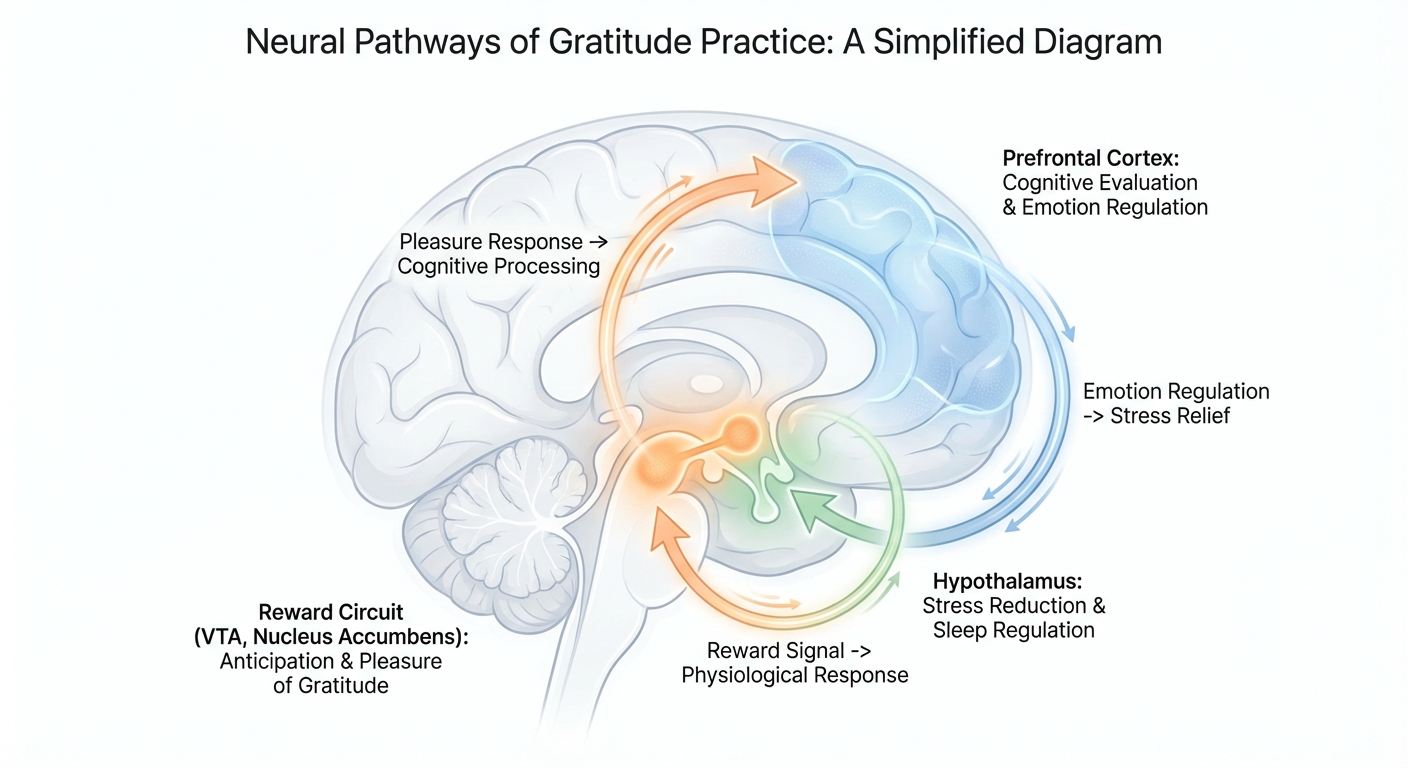
Gratitude activates the ventral tegmental area and nucleus accumbens, the same reward circuit regions activated by food, physical intimacy, and other primary rewards. Dopamine floods these areas, creating the warm positive feeling associated with genuine appreciation. Simultaneously, prefrontal cortex activity increases when you recall grateful experiences, triggering serotonin production and improving mood regulation capacity. These aren’t just temporary spikes that fade immediately; regular practice creates baseline changes in how your brain operates day to day.
Research from the National Institutes of Health using fMRI imaging showed that subjects who regularly practiced gratitude had more activity in the hypothalamus, which controls critical bodily functions including sleep, eating, and stress response. This helps explain why gratitude practice improves such seemingly unrelated outcomes as sleep quality and stress resilience; the effects cascade through fundamental regulatory systems.
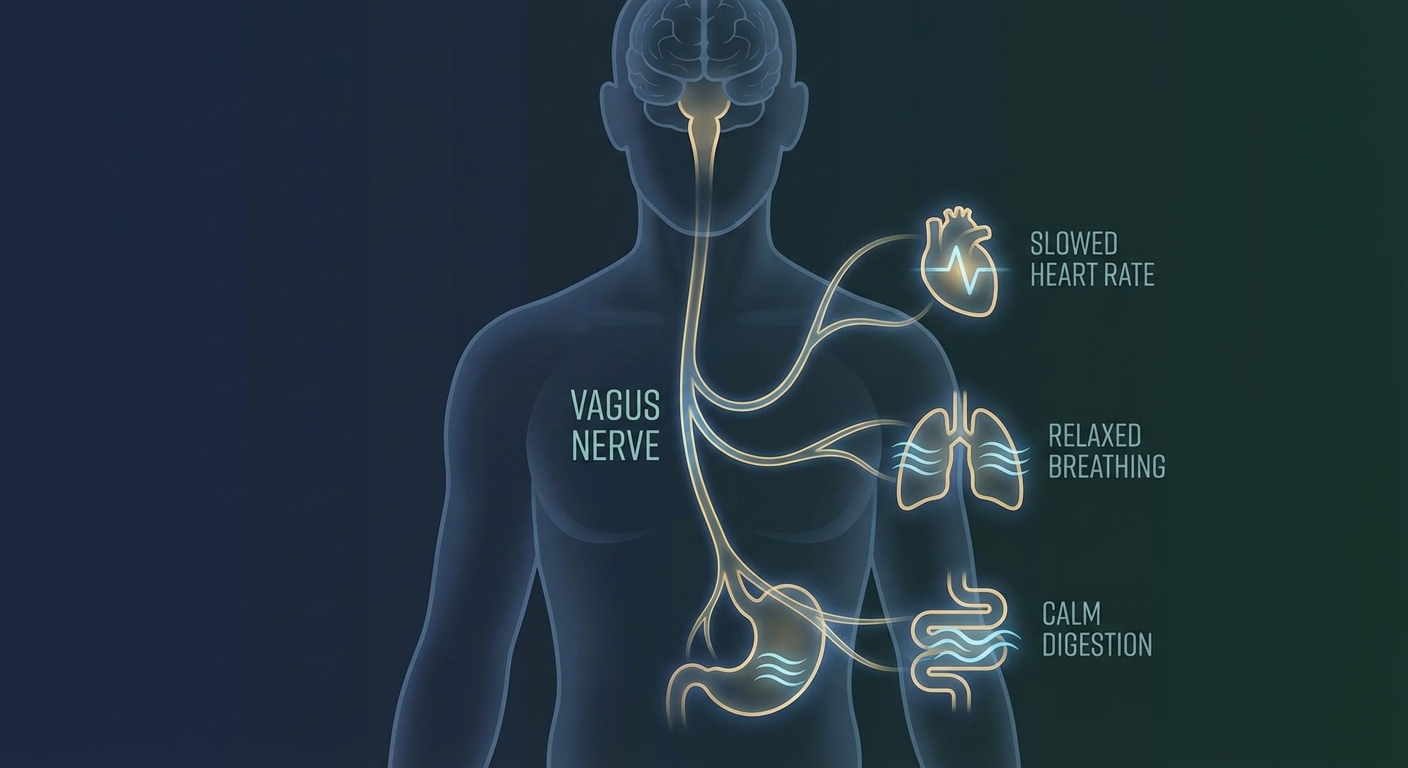
The stress response system also adapts with practice. A 2008 study published in Psychophysiology found that gratitude was associated with improved heart rate variability (HRV), a marker of stress resilience and autonomic nervous system balance. Higher HRV indicates greater flexibility in responding to stress, the ability to activate when needed and calm down when the threat passes. People who practice gratitude regularly show reduced amygdala reactivity to negative stimuli, faster stress recovery, and improved emotional regulation.
The Research Foundation: What Studies Actually Show
For centuries, gratitude belonged to theologians and philosophers, treated as a moral virtue or spiritual practice rather than a subject for empirical investigation. The scientific study of gratitude began in earnest only in the early 2000s, led by researchers like Robert Emmons at UC Davis and Michael McCullough at the University of Miami. Their foundational studies established that gratitude isn’t just a pleasant feeling; it’s a trainable skill with documented benefits.
In Emmons and McCullough’s landmark 2003 study published in the Journal of Personality and Social Psychology, participants were divided into three groups for 10 weeks. The gratitude group wrote five things they were grateful for each week. The hassles group wrote about irritations and annoyances. A neutral control group simply listed events. The results were striking: the gratitude group reported 25% higher wellbeing scores, more optimism about the coming week, fewer physical symptoms like headaches and pain, and 1.5 more hours of exercise weekly than the other groups. They even slept better, averaging 30 additional minutes per night.
Subsequent research has replicated and extended these findings. A 2020 meta-analysis in Psychological Bulletin examined 38 randomized controlled trials involving over 6,500 participants and found that gratitude interventions produced significant improvements in subjective wellbeing, with effect sizes comparable to other established psychological interventions. The benefits persisted for months after the intervention ended when participants continued the practice.
The effects extend into clinical populations. Research on gratitude and depression shows moderate to large effect sizes in reducing depressive symptoms. A study of cardiac patients found that those who kept gratitude journals showed lower inflammatory biomarkers and better sleep quality than control groups. In couples research, partners who regularly expressed gratitude to each other reported higher relationship satisfaction, navigated conflicts more constructively, and showed lower likelihood of breakup over follow-up periods.
Why Your Brain Responds to Gratitude
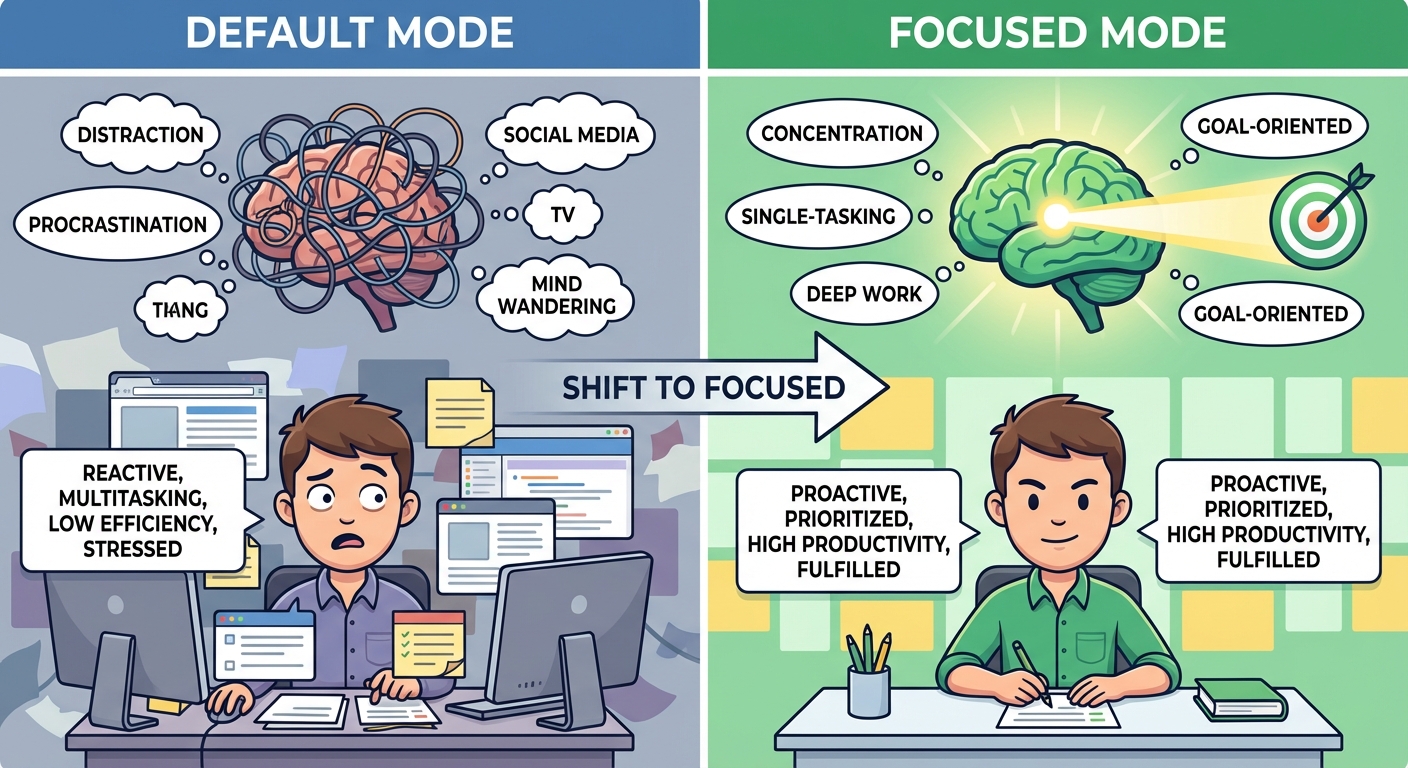
Understanding why gratitude works requires understanding the brain’s default operating system. Humans evolved with a negativity bias, a survival mechanism that prioritizes threats and problems over safety and pleasure. In the ancestral environment, missing a beautiful sunset was merely unfortunate, but missing a predator was fatal. Consequently, our brains are wired like Velcro for negative experiences and Teflon for positive ones. We naturally dwell on insults, mistakes, and dangers while letting compliments and pleasant moments slip past with minimal processing.
This negativity bias served survival in environments where genuine threats were common. In the modern world, where most of us face ambient safety most of the time, the same bias creates chronic stress and dissatisfaction even when life is objectively good. We catastrophize minor setbacks, ruminate on perceived slights, and take genuine blessings for granted. The evening news exploits this bias; the beautiful ordinary day doesn’t feel newsworthy because our brains don’t flag it as important.
Gratitude practice acts as a manual override for this outdated software. By deliberately directing attention toward positive aspects of experience, you’re engaging in what researchers call “cognitive bias modification.” You’re retraining your brain’s filter to notice and encode positive information alongside threats and problems. This doesn’t mean ignoring genuine difficulties or pretending everything is perfect. It means developing more complete, accurate perception instead of the skewed negative filter most people operate through unconsciously.
The practice also strengthens cognitive reappraisal, the ability to reframe how you interpret situations. The shift from “I have to go to the gym” to “I get to move my body” isn’t linguistic gymnastics; it reflects genuine reframing from burden to privilege. Your commute becomes time with your audiobook. The colleague who talks excessively becomes someone who trusts you enough to share their thoughts. This isn’t toxic positivity that denies real problems. It’s finding genuine positives that coexist with difficulties, creating more nuanced and ultimately more accurate interpretation of experience.
Evidence-Based Gratitude Protocols
One barrier to gratitude practice is the misconception that it requires deep insight or poetic ability. In reality, effectiveness is driven by concrete mechanics, not abstract feelings. Research provides surprisingly specific guidance on what works best.
Gratitude journaling, the classic intervention, has been studied more extensively than any other gratitude practice. The research-supported protocol is counterintuitive: 2-3 times weekly works better than daily practice. Studies show that daily gratitude journaling can become rote and automatic, losing the genuine reflection and emotional engagement that create benefits. When you write gratitude entries only a few times per week, each session feels fresher, you engage more authentically, and the practice maintains its emotional impact rather than degrading into mechanical list-making.
The format is straightforward: write 3-5 specific things you’re grateful for during each session. This takes only 2-5 minutes, making it sustainable for busy schedules. Brief entries are perfectly fine and often more genuine than lengthy philosophical reflections. The key word is “specific.” Generic gratitude (“I’m grateful for my family”) produces minimal benefit because it’s abstract and vague, creating little emotional resonance. Specific gratitude (“I’m grateful my daughter called just to check in yesterday, even though she’s busy with finals”) generates real emotion and vivid mental imagery. Research shows specific gratitude produces effect sizes 2-3 times larger than vague expressions.
The gratitude letter, developed by positive psychology researcher Martin Seligman, produces some of the strongest and most lasting effects in the literature. The protocol involves writing a detailed letter to someone who made a positive difference in your life, being specific about what they did and how it affected you. Ideally, you deliver the letter in person and read it aloud to them. Studies show immediate happiness boosts lasting several weeks, and many participants describe the experience as transformative. If in-person delivery isn’t possible, sending the letter still produces significant benefits.
Mental noting offers a less formal approach for building gratitude awareness throughout the day. The practice involves pausing periodically to mentally register things you appreciate: physical sensations (warm sun, comfortable chair), kind actions from others, natural beauty, your body functioning as it should. This trains your brain to notice positives in real-time rather than only during dedicated reflection periods. Combined with tactical breathing exercises during stressful moments, mental noting can significantly shift how you experience daily life.
Making Gratitude Practice Sustainable
Like any habit, gratitude practice faces the headwind of inertia. Initial enthusiasm fades, life gets busy, and the journal gathers dust. This adherence gap is where most people fail, not because the practice isn’t working, but because it hasn’t been integrated into existing routines.
Habit stacking is the most reliable strategy for sustainability. Link gratitude practice to something you already do consistently: after brushing teeth at night, while drinking morning coffee, during your commute, or while waiting for your computer to boot up. The existing habit becomes the trigger for the new one, eliminating the need to remember or find time.
Addressing common obstacles: If the practice feels forced or fake, write only things you genuinely feel grateful for. Authenticity matters more than consistency; one genuine entry beats three forced ones. If entries become repetitive, challenge yourself to notice new things. What are you grateful for today specifically, not just generally? Look in different domains on different days: physical health, relationships, opportunities, simple pleasures. If it feels like toxic positivity, remember that gratitude doesn’t mean ignoring problems. You can acknowledge difficulty while also noting what’s going well. “This situation is hard, AND I’m grateful for the support I’m receiving.” Both can be true simultaneously.
The timeline for benefits is reasonably predictable. Weeks 1-2 involve establishing the habit; it feels effortful, and benefits aren’t yet obvious. By weeks 3-4, the habit becomes easier, and you start noticing positive experiences more naturally during the day. Subtle mood improvements emerge. By months 2-3, clear benefits appear: better mood, improved sleep, stronger relationships. The practice feels natural rather than effortful. After 6+ months of consistent practice, benefits compound: sustained wellbeing improvements, increased baseline happiness, automatic gratitude noticing, and notably improved resilience during difficult periods.
The Connection Between Gratitude and Physical Health
The effects of gratitude practice extend beyond psychological wellbeing into measurable physical health improvements, though the mechanisms are indirect. Gratitude doesn’t cure disease, but it appears to influence health through stress reduction, sleep improvement, and social connection strengthening.
Studies on gratitude and cardiovascular health document blood pressure reductions of 3-4 mmHg, modest but clinically meaningful, similar to dietary interventions like reducing sodium. Inflammation markers, measured through C-reactive protein and other biomarkers, decrease in regular gratitude practitioners. This likely occurs through stress reduction; chronic stress elevates inflammation, and gratitude practice reliably reduces perceived stress. Sleep quality and duration both improve with gratitude practice, and since sleep affects virtually every health system, this improvement cascades into broader benefits. Research on heart rate variability shows that gratitude practice improves this key marker of stress resilience and autonomic balance.
The social connection benefits may be equally important for long-term health. Expressing gratitude strengthens relationships through multiple mechanisms: the recipient feels valued, positive associations with the relationship increase, reciprocal positive behaviors become more likely, and focus shifts toward what’s working rather than problems. Social connection is among the strongest predictors of longevity in epidemiological research, more predictive than smoking, obesity, or exercise. Gratitude practice is a simple, free intervention that reliably strengthens social bonds.
The Bottom Line
Gratitude practice provides measurable, reproducible benefits across multiple domains: 25% increase in wellbeing scores, better sleep quality, reduced depression and anxiety symptoms, improved relationships, enhanced resilience, and better physical health markers. The mechanism is neuroplasticity; regular gratitude practice strengthens positive emotion pathways, increases dopamine and serotonin, and reduces stress reactivity through documented changes in brain structure and function.
The effective dose is surprisingly modest: 2-3 times weekly, 3-5 specific items, 2-5 minutes per session. Specificity matters more than quantity. Authenticity matters more than consistency. The practice works best when linked to existing routines and maintained long enough for neuroplastic changes to consolidate, typically 8-12 weeks for significant effects.
This isn’t toxic positivity or denial of real problems. Healthy gratitude enhances perspective while allowing all emotions, acknowledging difficulty while also noticing what’s going well. It’s a simple practice with profound effects, backed by decades of research. Two minutes that gradually rewire your brain toward wellbeing.
Next Steps:
- Choose a trigger for habit stacking (after morning coffee, before bed, during commute)
- Start with 3 specific things, 2-3 times per week
- Emphasize specificity over generality (“my partner made coffee this morning” not “my relationship”)
- Track for 4 weeks before evaluating whether it’s working
- Consider writing a gratitude letter to someone who made a difference in your life
Sources: Journal of Personality and Social Psychology 2003 (Emmons & McCullough), Psychological Bulletin 2020 meta-analysis, NIH fMRI gratitude studies, Psychophysiology 2008 HRV study, Martin Seligman positive psychology interventions, gratitude and cardiovascular health studies, UC Davis gratitude research lab.