You feel it before you even unlock your phone. A tightness gathers in your chest, your breathing becomes shallow, and there’s a background hum of unease that wasn’t there when you woke up. You haven’t read the news yet, but your body already anticipates what’s coming. By the time you open the first headline, your nervous system has shifted into a state it was never designed to sustain for weeks or months at a time.
Election cycles have evolved from periodic civic events into around-the-clock physiological stressors. The American Psychological Association reports that nearly 70 percent of American adults identify the political climate as a significant source of stress, a number that climbs even higher during peak election seasons. This isn’t a new phenomenon, but the 24/7 news cycle, social media algorithms optimized for outrage, and the increasingly high-stakes nature of political discourse have intensified the load on our stress response systems.
What you’re experiencing isn’t weakness or excessive worry. It’s a biological response to perceived threat, one that evolved to protect you from immediate physical danger but now gets triggered by abstract uncertainties about the future. Understanding the physiology of political stress is the first step toward managing it, because you can’t think your way out of a cortisol spike. You have to work with your body’s stress response system rather than against it.
The Biology of Political Anxiety
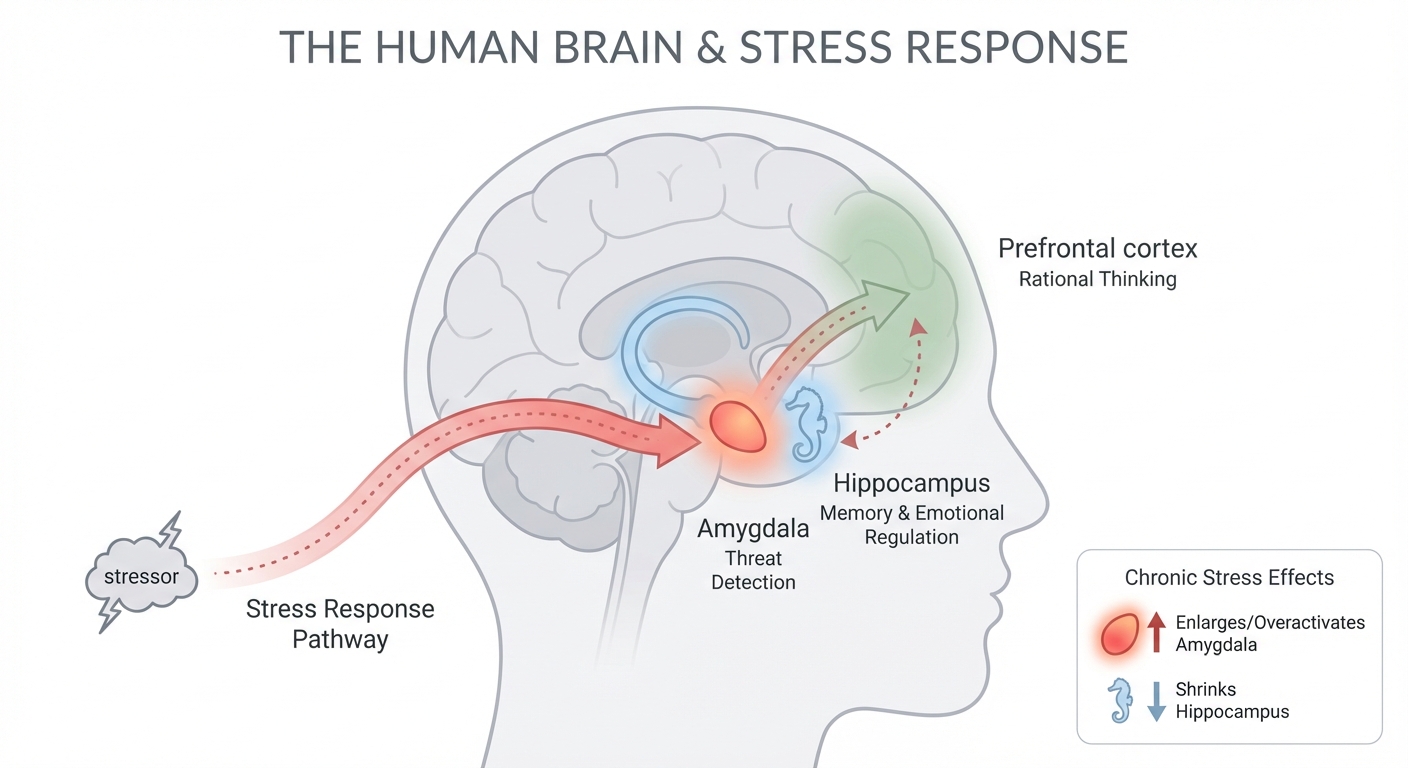
When you consume high-stakes political content, your brain doesn’t distinguish between a threatening news headline and a physical predator approaching through tall grass. The amygdala, your brain’s threat detection center, activates the moment it perceives potential danger. The hormonal cascade that follows is identical regardless of whether the threat is immediate and physical or abstract and uncertain: adrenaline floods your system for quick action, cortisol rises to mobilize energy resources, heart rate increases, digestion slows, and your attention narrows to focus on the source of threat.
This fight-or-flight response is brilliantly adapted for short-term survival challenges. Your ancestors who could rapidly mobilize physical resources when a predator appeared survived to pass on their genes. The problem is that our threat detection systems evolved in an environment where stressors were acute and time-limited: you either escaped the danger or you didn’t, and either way, the stress response resolved. Political uncertainty operates on a completely different timescale. Elections take months to unfold. Policy consequences play out over years. The uncertainty never fully resolves, which means the stress response never fully switches off.
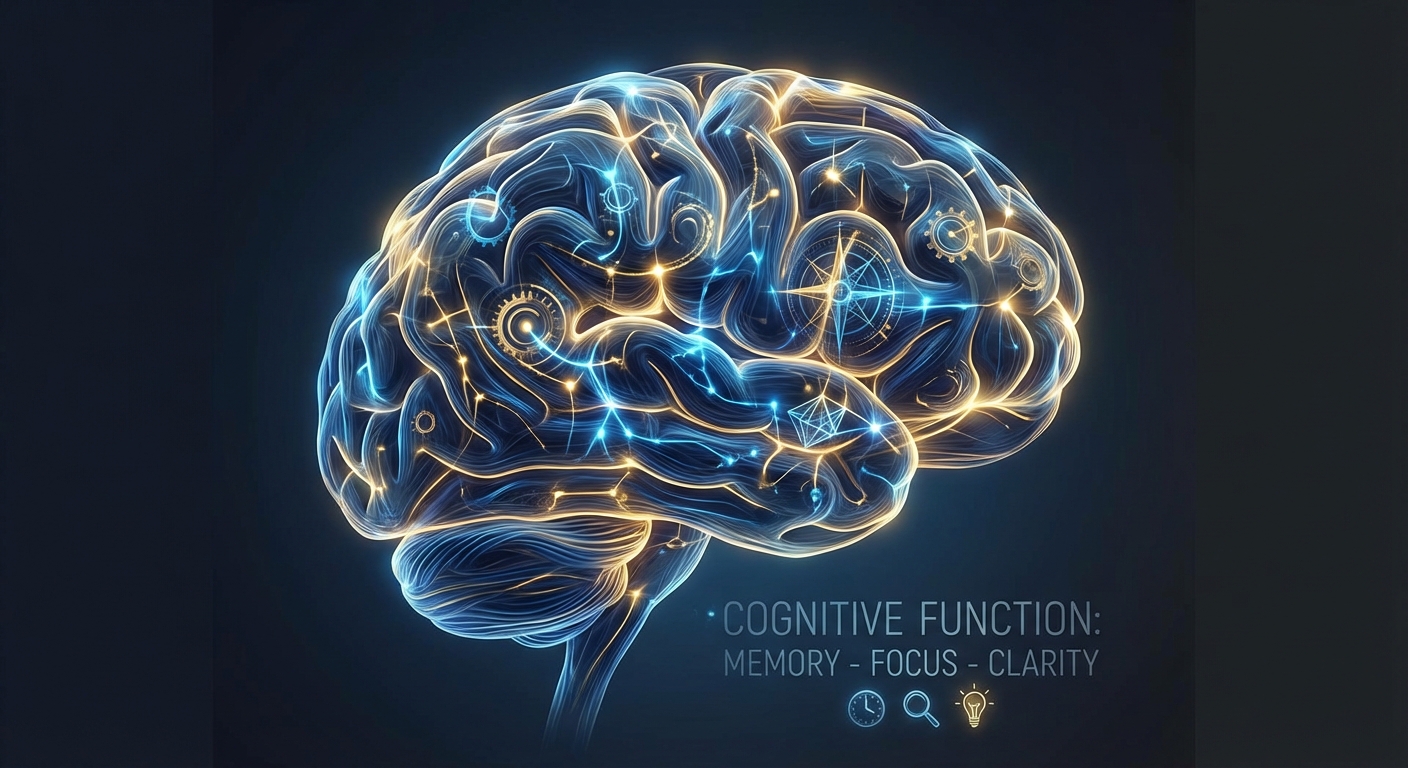
Chronic activation of your stress response produces measurable damage to brain structure and function. Sustained cortisol exposure shrinks the hippocampus, the brain region responsible for memory consolidation and emotional regulation. This isn’t metaphor; it’s observable on brain scans. The shrinkage makes you progressively less resilient to the next piece of stressful news, creating a feedback loop where stress exposure actually increases your sensitivity to future stress. Meanwhile, chronic cortisol suppresses the prefrontal cortex, weakening your capacity for the kind of nuanced, long-term thinking that complex political questions actually require.
Your heart rate variability, a measure of your nervous system’s flexibility and resilience, drops when you’re chronically stressed. HRV measures the subtle variation in time between heartbeats, and higher variability indicates a nervous system that can readily shift between sympathetic activation and parasympathetic recovery. Low HRV correlates with anxiety, depression, and reduced capacity to handle additional stressors. Political news consumption, particularly when unstructured and continuous, drives HRV downward.
The compulsion to check news constantly isn’t purely psychological; it has physiological roots. Uncertainty is uniquely stressful to the human brain, sometimes even more so than certain bad news. Your nervous system craves resolution, and news checking offers the illusion of control or resolution even when it provides neither. Each check delivers a small hit of dopamine regardless of whether the news is good or bad, simply because the uncertainty momentarily decreases. Then the uncertainty returns, and you feel compelled to check again. This creates a behavioral loop remarkably similar to how social media addiction operates.
Strategic Information Architecture
The most effective intervention isn’t complete abstinence from news but rather rigid structuring of when and how you consume information. This approach, sometimes called “stimulus control,” prevents stressful information from bleeding into periods when your nervous system needs recovery. Your goal is to remain an informed citizen while protecting the biological systems that allow you to function well.
The container method treats news consumption like a specific appointment rather than a continuous background activity. Designate two 15-minute windows each day for checking political news and updates. Research suggests mid-morning and early evening work well for most people’s circadian rhythms. Crucially, avoid news consumption during the first hour after waking, when your cortisol naturally peaks and additional stress activation is particularly disruptive, and during the two hours before sleep, when cortisol should be declining to enable healthy sleep architecture.
During your designated news windows, you have full permission to read, watch, and engage with whatever political content you choose. When the timer ends, the container closes. This isn’t about being uninformed; it’s about being intentionally informed during structured periods rather than reactively informed at random moments throughout the day. You’ll likely find that two focused 15-minute sessions provide all the information you actually need while dramatically reducing the physiological toll of continuous exposure.
Adding friction to the process of accessing news can help enforce these boundaries. Social media algorithms are explicitly designed to maximize emotional engagement, which often means prioritizing content that triggers outrage, fear, or moral indignation. You can counter this by removing news apps from your phone’s home screen, turning off all push notifications for news applications, logging out of news sites so accessing them requires an additional step, and considering a grayscale display filter during evening hours. These small barriers add just enough delay for your prefrontal cortex to engage before the impulsive, dopamine-driven desire to check news takes over.
For deeper exploration of digital boundaries and their mental health benefits, our digital detox guide covers comprehensive strategies for restructuring your relationship with screens.
Physiological Interventions
Since the stress response is fundamentally physical, your interventions must be physical as well. Telling yourself to calm down doesn’t work because the cortisol is already circulating, the adrenaline has already been released, and your nervous system has already shifted into threat-response mode. You need to signal safety to your body through physiological actions that directly influence your autonomic nervous system.
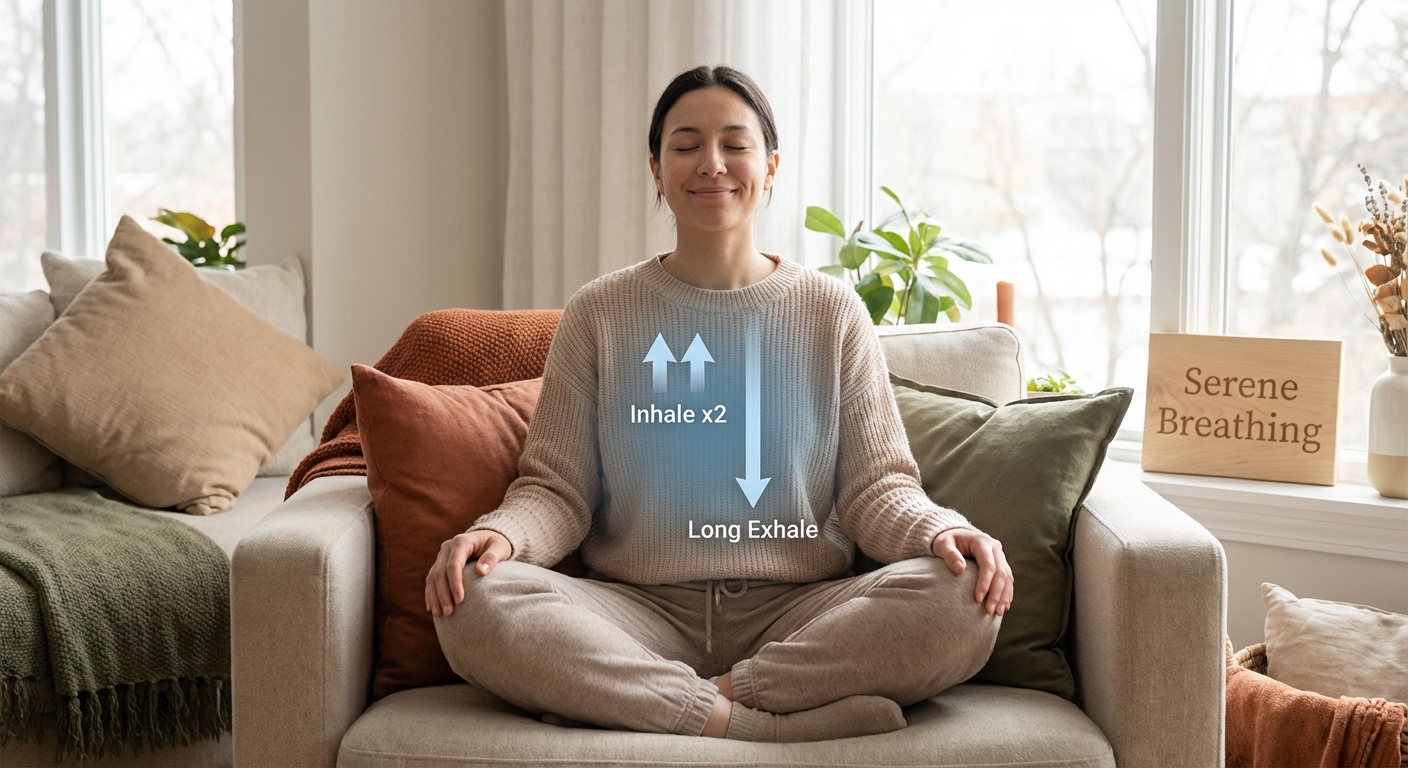
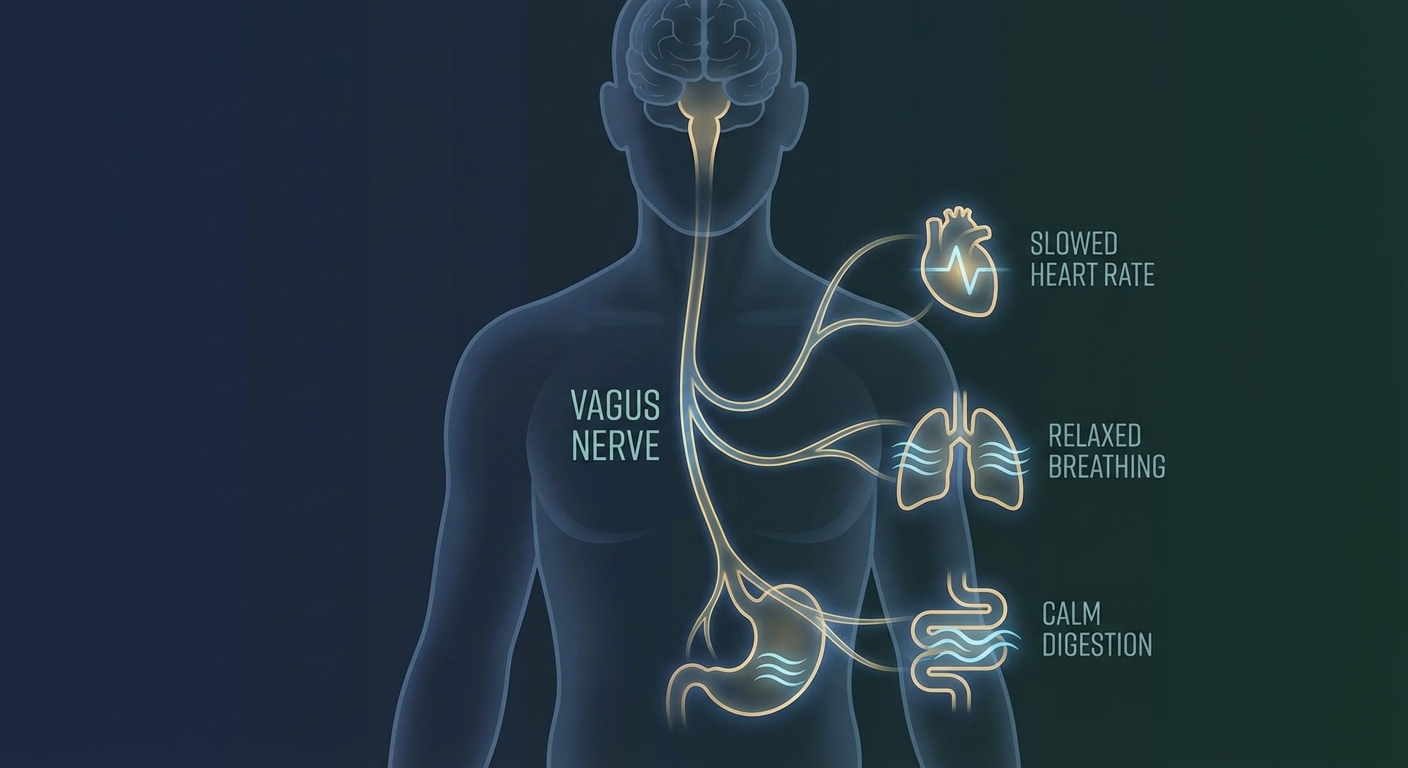
The physiological sigh, highlighted by Stanford neuroscientist Dr. Andrew Huberman’s research, is one of the fastest evidence-based methods for reducing autonomic arousal. This breathing pattern involves two sharp inhales through the nose followed by one long, extended exhale through the mouth. The double inhale maximally reinflates the small air sacs in your lungs (alveoli) that tend to collapse when you’re stressed, which optimizes carbon dioxide offloading during the extended exhale. The long exhale activates the vagus nerve and shifts your nervous system toward parasympathetic dominance.
The mechanism works like this: exhalation is linked to parasympathetic activation. When you breathe out, your heart rate naturally slows slightly due to vagal influence. By extending your exhale significantly longer than your inhale, you spend more of each breath cycle in parasympathetic territory. A single 60 to 90-second session of physiological sighs can measurably reduce heart rate and subjective anxiety in real time. Keep this technique accessible for moments when you feel stress rising after news exposure.
For a comprehensive look at breathing techniques and their physiological mechanisms, our breathwork for anxiety guide covers multiple protocols for different situations.
When you find yourself stuck in ruminating thoughts about political outcomes, high-intensity movement can serve as a powerful circuit breaker. This works because of the stress cycle completion principle: when your body mobilizes glucose and adrenaline for a threat response, those resources need to be utilized for the response to complete and reset. If you sit still while stressed, the mobilized energy has nowhere to go, and the stress response lingers.
A brief burst of intense movement, perhaps 30 seconds to 2 minutes of burpees, sprinting, stair climbing, or even vigorous dancing, uses the mobilized glucose and adrenaline. It completes the stress cycle that your nervous system initiated, allowing your body to return to baseline much faster than if you remained sedentary. This isn’t about exercise for fitness; it’s about giving your stress response a physical outlet that allows it to resolve.
Progressive muscle relaxation offers another pathway when stress has translated into physical tension. Starting at your toes and moving systematically upward through your body, tense each muscle group as hard as you can for five seconds, then release suddenly. Work through your calves, thighs, glutes, abdomen, hands, arms, shoulders, and face. The sequential tension and release forces your muscles to let go of the subconscious holding patterns that accumulate when you spend hours reading anxiety-provoking content. PMR is particularly effective before sleep when residual tension might otherwise interfere with sleep onset.
The Agency Antidote
Much of election stress stems from a feeling of helplessness regarding outcomes that feel enormously consequential yet entirely outside your individual control. The abstract nature of national political processes makes them psychologically distinct from problems you can directly solve. This gap between perceived importance and perceived control is a recipe for anxiety.
The psychological literature on resilience and coping consistently shows that taking tangible action, even small action, buffers against the despair that comes from passive observation of stressful events. The key insight is that the action doesn’t need to address the specific source of stress to provide benefit. What matters is the subjective experience of agency, of being an actor in the world rather than a passive recipient of whatever happens.
Redirecting some of the energy you might otherwise spend doom-scrolling toward local community engagement serves multiple psychological functions. Volunteering at a food bank, participating in a neighborhood cleanup or community garden, helping an elderly neighbor with errands, or engaging with local civic issues where your voice has proportionally more impact all provide concrete experiences of efficacy. They remind your brain that you can take actions that produce visible results, that you’re not actually helpless even if national-level outcomes feel beyond your reach.
This shift from global worry to local work isn’t escapism or denial about larger issues. It’s strategic allocation of your limited psychological resources toward areas where you can actually make a difference while protecting yourself from the corrosive effects of chronic helplessness. The local actions also typically involve face-to-face interaction with other people, and social connection is itself one of the most powerful buffers against stress and anxiety.
Sleep Protection During High-Stress Periods
Sleep quality often becomes collateral damage during election seasons. Stress hormones interfere with sleep architecture, political thoughts intrude during the vulnerable period before sleep onset, and the temptation to check news “one more time” before bed disrupts the wind-down process your nervous system needs. Protecting sleep during these periods requires intentional structure.
Create a tech-free buffer zone for at least 60 minutes before your target bedtime. This means no phone, no computer, no television news, nothing that can deliver political content or blue light that interferes with melatonin production. Use this hour for activities that signal safety to your nervous system: reading fiction, taking a warm bath or shower, gentle stretching, conversation with household members about non-political topics, or any other activity you find genuinely relaxing.
If political thoughts arise during this buffer or while trying to fall asleep, the cognitive defusion technique from Acceptance and Commitment Therapy can help. Rather than engaging with the thoughts or trying to suppress them, simply notice and label them: “I’m having the thought that the election outcome will be disastrous.” This slight linguistic distance, naming the thought as a thought rather than treating it as reality, reduces its grip on your attention. You’re not arguing with the thought or judging yourself for having it; you’re simply noting that your mind is doing what minds do under stress.
For those experiencing persistent sleep disruption, our science of sleep hygiene guide covers evidence-based protocols for optimizing sleep quality under various conditions.
When to Seek Professional Support
The strategies in this guide are designed to help mentally healthy individuals manage the temporary stress elevation that comes with high-stakes political periods. They’re not substitutes for professional mental health treatment. If you’re experiencing persistent symptoms that significantly impair your daily functioning, professional support may be warranted.
Signs that suggest consulting a mental health professional include: anxiety or depressive symptoms that persist for more than two weeks, inability to function normally at work or in relationships, intrusive thoughts that won’t respond to the techniques described above, using substances more heavily to cope, thoughts of self-harm or suicide, or a history of trauma that current events may be reactivating.
Psychologists, psychiatrists, and other licensed mental health professionals have additional tools available, including therapy modalities specifically designed for anxiety and evidence-based medications when appropriate. There’s no weakness in recognizing that the current environment is overwhelming your usual coping capacity. These are genuinely challenging times, and seeking support is a rational response to extraordinary circumstances.
The Bottom Line
Election stress is a valid physiological response to high-stakes uncertainty, but it doesn’t have to dictate your mental or physical health. By understanding the biology of your stress response and working with it rather than against it, you can navigate politically intense periods while maintaining your wellbeing and your capacity to engage thoughtfully as a citizen.
The goal isn’t to feel nothing about important events. It’s to prevent your threat response system from running constantly in a way that damages your health and actually impairs your ability to think clearly about the issues that matter to you.
Your Election Season Protocol:
-
Structure information intake: Limit news to two 15-minute windows daily, avoiding the first hour after waking and the two hours before bed.
-
Use the physiological sigh: When you feel stress rising, perform two quick inhales through the nose followed by one long exhale through the mouth, repeated for 60-90 seconds.
-
Complete stress cycles: When ruminating, use brief high-intensity movement to utilize mobilized stress hormones and allow your nervous system to reset.
-
Practice PMR before sleep: Work through systematic muscle tension and release from toes to face to release accumulated physical stress.
-
Engage locally: Redirect some energy toward community involvement where you can experience tangible agency and connection.
-
Protect your sleep: Maintain a 60-minute tech-free buffer before bed and use cognitive defusion for intrusive political thoughts.
Sources: American Psychological Association Stress in America surveys, Stanford University Human Interoception Laboratory research on breathing and autonomic function, Acceptance and Commitment Therapy evidence base, heart rate variability research, Journal of Anxiety Disorders stress response studies.