When Dr. Mathilde Touvier and colleagues at France’s NutriNet-Santé study compiled data from over 100,000 participants tracked for more than seven years, the finding that emerged was stark: each 10% increase in ultra-processed food consumption was associated with 14% higher all-cause mortality risk. People getting more than a quarter of their calories from ultra-processed foods had significantly higher death rates than those under 10%, even after controlling for overall diet quality, smoking, exercise, BMI, education level, and existing chronic diseases.
This wasn’t a small study with questionable methodology or a correlation that disappeared when you controlled for confounders. The association persisted through rigorous statistical adjustment. It appeared in subgroup analyses. It fit a dose-response pattern where more ultra-processed food consistently predicted worse outcomes. And it aligned with findings from multiple other large cohort studies reaching similar conclusions through different populations and methodologies.
The research adds to a growing body of evidence suggesting that ultra-processed foods, independent of their nutritional composition on paper, are associated with worse health outcomes. A food engineered in a factory appears to affect the body differently than a food grown in a field or raised on a farm, even when the calorie counts and macronutrient profiles look similar. The mechanism isn’t entirely clear, but the pattern is consistent enough that ignoring it seems increasingly unjustifiable.
Understanding What Makes Food “Ultra-Processed”
Defining “processed food” is notoriously difficult because technically, chopping a carrot or cooking an egg counts as processing. To distinguish between benign culinary preparation and industrial engineering, Dr. Carlos Monteiro at the University of São Paulo developed the NOVA classification system, which categorizes foods not by what nutrients they contain but by what has been done to them during production.
Group 1 includes unprocessed or minimally processed foods: fresh fruits, vegetables, meat, fish, eggs, dried beans, whole grains, milk, and plain yogurt. These foods have been altered only to remove inedible parts, dry, freeze, pasteurize, or perform other basic preservation. They remain recognizable as foods that existed before industrial food processing.
Group 2 contains processed culinary ingredients: oils, butter, sugar, salt, flour, and other substances extracted from Group 1 foods and used in cooking. These aren’t typically eaten alone but serve as components in meal preparation.
Group 3 encompasses processed foods: canned vegetables, simple cheeses, traditionally made bread, and other items created by combining Group 1 and Group 2 foods through straightforward methods. These foods have 2-3 ingredients and remain recognizable. A jar of tomatoes preserved in olive oil with salt is processed but not ultra-processed.
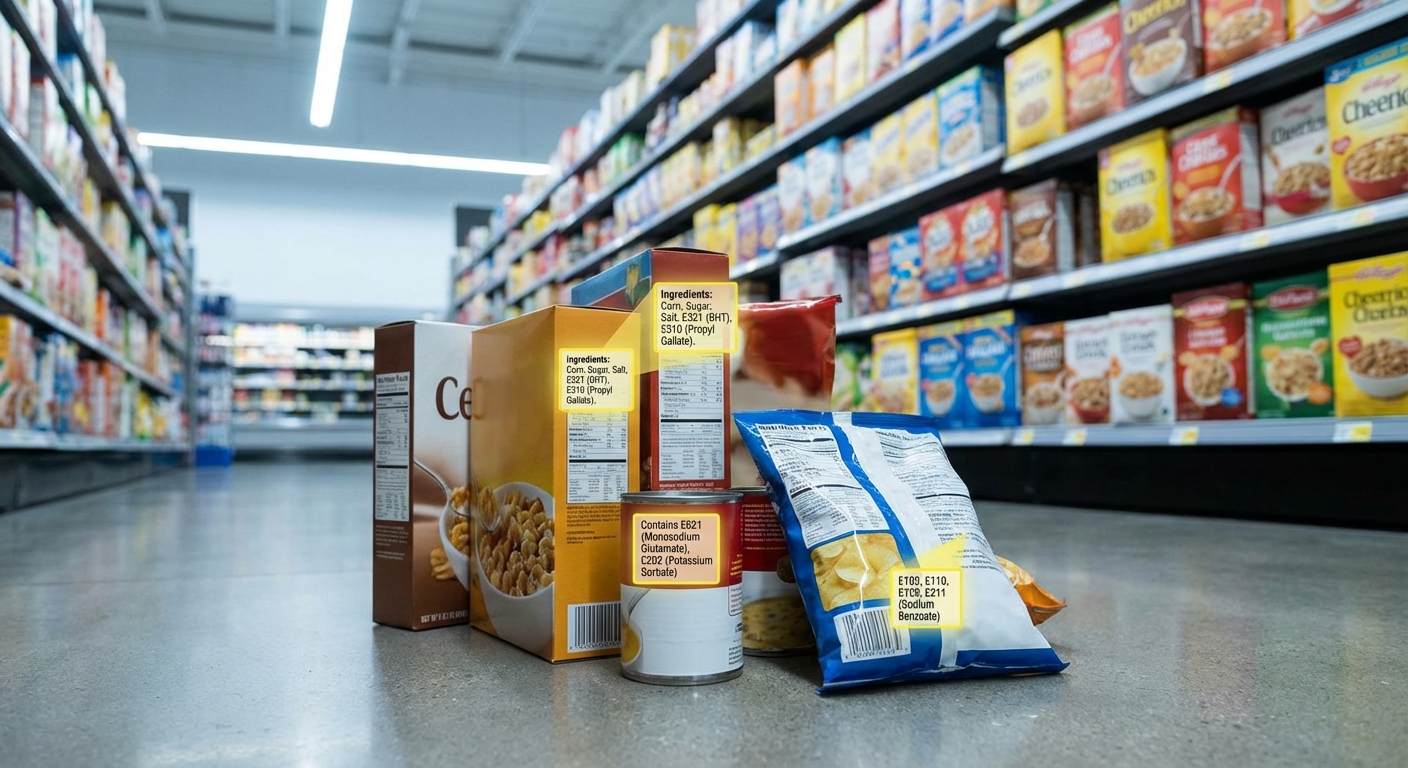
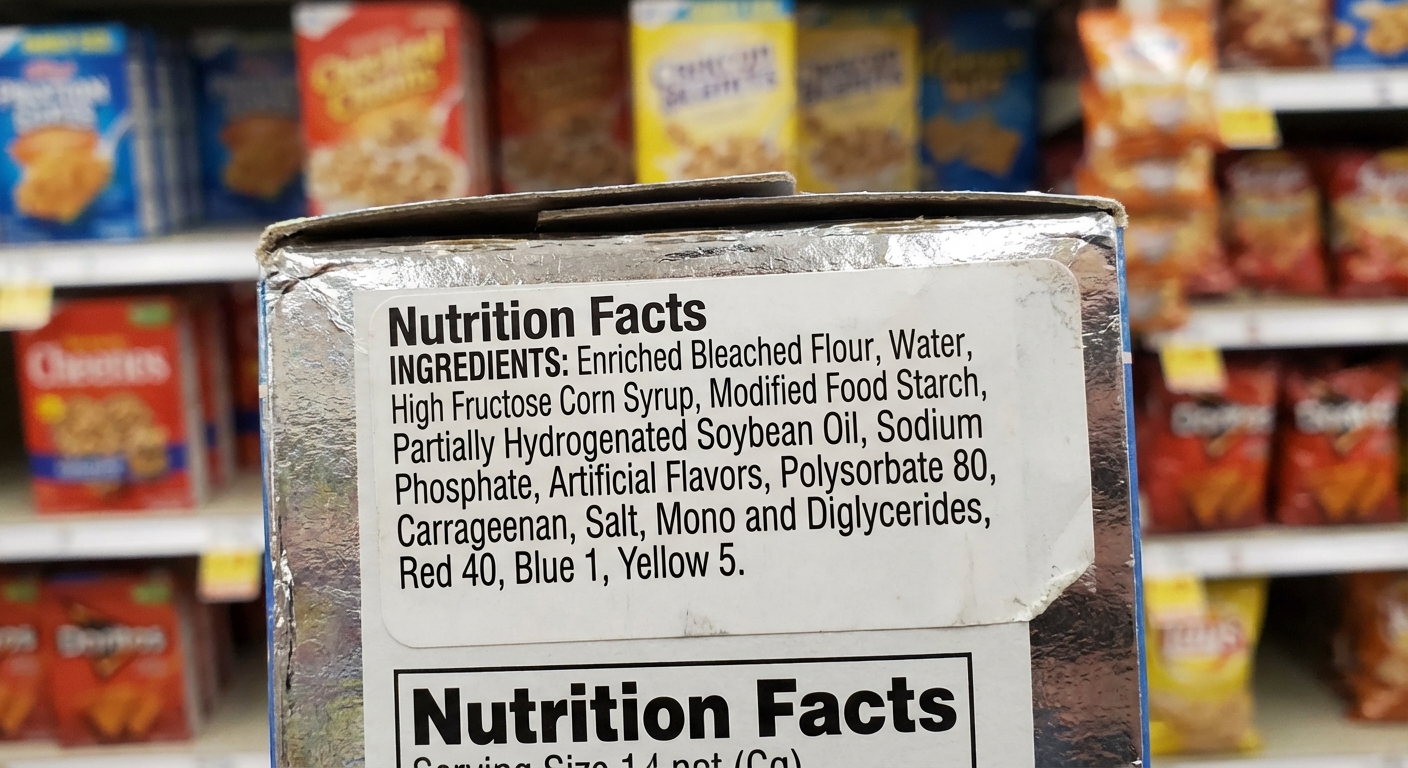
Group 4 is where the problems emerge. Ultra-processed foods (UPF) are industrially formulated products typically containing five or more ingredients, including substances not used in home cooking: emulsifiers, stabilizers, humectants, flavor enhancers, colorings, and other additives designed for shelf stability, texture, and hyper-palatability. These foods are engineered for convenience, long shelf life, and intense sensory appeal rather than nutritional value.
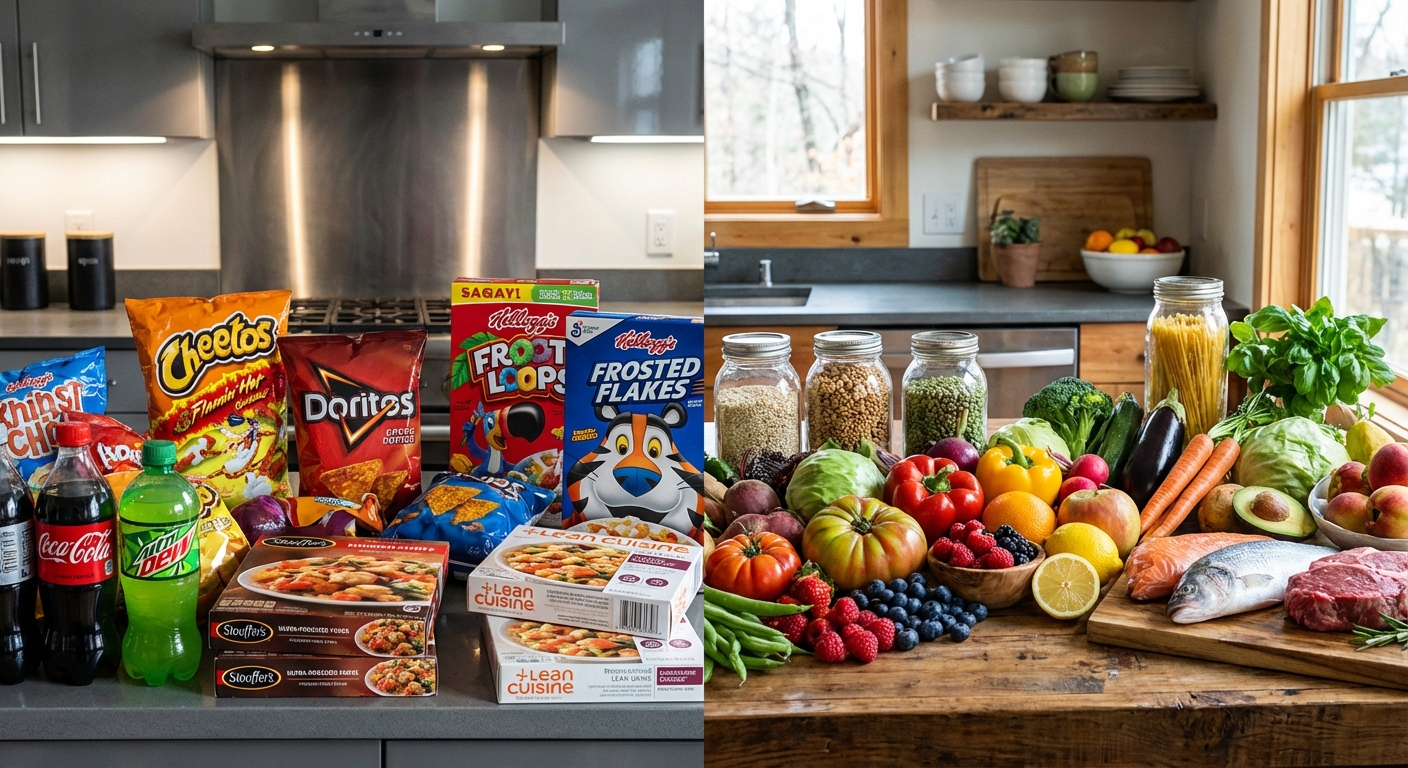
The ultra-processed category includes sodas and sweetened beverages, packaged snacks like chips and cookies, instant noodles and ready meals, reconstituted meat products like nuggets and hot dogs, mass-produced soft breads with long ingredient lists, sweetened breakfast cereals, and industrial ice cream. What distinguishes these from simpler processed foods isn’t merely that they’ve been processed, but that they’ve been formulated using industrial techniques and ingredients that don’t exist in home kitchens.
The NutriNet Study: Methodology and Findings
The NutriNet-Santé study stands out in nutritional epidemiology because of its scale, duration, and methodological rigor. Researchers didn’t simply ask participants what they ate yesterday. They collected repeated 24-hour dietary records every six months over the study period, capturing detailed information about more than 3,300 different food items. This granular data allowed precise calculation of the percentage of ultra-processed foods in each person’s diet rather than relying on rough estimates.
The cohort included 105,000 French adults with an average follow-up period exceeding seven years. When researchers correlated UPF intake with mortality records, the signal was surprisingly strong. Each 10% increase in ultra-processed food as a proportion of total diet associated with 14% higher all-cause mortality. Cardiovascular mortality showed particularly elevated risk, with 13% increase per 10% UPF increment. Cancer mortality was slightly elevated, though the association was less clear than for cardiovascular death.
Critically, the researchers controlled for factors that might confound the relationship. They adjusted for overall diet quality, smoking status, physical activity levels, BMI, education, and presence of chronic diseases. The ultra-processed food association persisted through all adjustments. People eating more UPF weren’t simply eating worse overall or engaging in other unhealthy behaviors that explained their higher mortality. Something about the ultra-processed foods themselves, or the eating patterns they created, appeared to affect health independent of these other factors.
The interpretation is that UPF appears harmful beyond just displacing healthier foods. If the problem were simply that people eating chips weren’t eating vegetables, controlling for overall diet quality should have eliminated the association. It didn’t. Something about ultra-processed foods beyond their macronutrient profiles seems to matter for health outcomes.
Why Would Processing Itself Matter?
The mechanistic question is important: why would a calorie from a factory be more harmful than a calorie from a farm if the nutritional composition is similar? Several interconnected pathways likely contribute, though researchers haven’t definitively identified which matter most.
The food matrix hypothesis focuses on physical structure. In whole foods, nutrients are embedded in fibrous cell walls and complex matrices that the body must work to break down. This slows absorption, moderates blood sugar responses, and allows satiety signals time to activate. Ultra-processing destroys this matrix, pulverizing ingredients into a pre-digested state that floods the bloodstream with glucose and fat faster than the body evolved to handle. The rapid absorption bypasses normal satiety mechanisms, promoting overconsumption and metabolic dysfunction.
Additives and processing chemicals may have biological effects independent of macronutrients. Emulsifiers commonly used in ultra-processed foods have been shown to damage gut microbiome composition in animal studies. Artificial sweeteners affect glucose metabolism in ways that seem counterproductive for metabolic health. Advanced glycation end products (AGEs) form during high-heat processing and may contribute to inflammation and aging, making an anti-inflammatory lifestyle approach even more important for those with higher UPF intake. Acrylamide and other compounds created during certain processing methods have known or suspected health effects.
Hyper-palatability engineering creates foods designed to override normal appetite regulation. Food scientists optimize combinations of sugar, fat, and salt to maximize cravings and consumption. The resulting products are literally engineered to be irresistible, bypassing the satiety signals that would normally stop eating. This promotes overconsumption, weight gain, and the metabolic dysfunction that follows chronic energy excess.
Eating patterns associated with ultra-processed foods may matter independent of the foods themselves. UPF is often consumed quickly while distracted, in large portions, as frequent snacks throughout the day. These eating behaviors, whether caused by the foods or merely correlated with them, affect metabolic health through mechanisms distinct from the food’s composition.
Gut microbiome effects represent another plausible pathway. Ultra-processed foods are typically low in fiber, which feeds beneficial gut bacteria. The additives may directly harm microbiome composition. Changed bacterial populations affect inflammation, metabolism, immune function, and even mood through the gut-brain axis. For more on how gut health affects overall health, see our coverage of gut-brain connections and gut health protocols.
The honest answer is that researchers don’t know which mechanisms matter most, and the answer is probably “all of them to varying degrees.” The consistency of the epidemiological findings across multiple studies suggests something real is happening, even if the precise causal pathways remain under investigation.

The Dose-Response Relationship
The relationship between ultra-processed food consumption and health risk follows a clear dose-response pattern, with higher intake producing progressively worse outcomes. This gradient provides important practical guidance for how much UPF matters at different consumption levels.
Under 10% of calories from UPF represents minimal intake and associates with the best health outcomes in population studies. Achieving this requires eating almost entirely whole foods with very occasional processed items. It’s the traditional eating pattern of cultures with excellent health outcomes and the target that produces lowest disease and mortality risk. However, it’s also challenging to maintain in modern food environments where convenience options are ubiquitous.
Between 10-25% UPF represents moderate consumption with some increased risk that’s probably manageable for most people. This allows some convenience foods, occasional treats, and realistic modern eating while maintaining a predominantly whole-food diet. Most people trying to eat healthily without being extreme will end up in this range, and the evidence suggests that’s probably fine.
From 25-50% UPF, risk becomes clearly elevated. This level of consumption is common in Western diets where breakfast might be sweetened cereal, lunch is fast food, snacks come from vending machines, and even home-cooked dinners rely heavily on processed ingredients and packaged sauces. At this intake level, mortality risk increases measurably and disease incidence rises across multiple conditions.
Above 50% UPF, the typical Western diet for many people, produces maximum measured risk. When more than half your calories come from industrially formulated foods, you’re essentially conducting a long-term experiment on whether your body can maintain health while fueled primarily by foods that didn’t exist until recent decades. The NutriNet data and other studies suggest the answer is “not as well as it would with whole foods.”
The encouraging implication is that you don’t need to achieve perfection. Moving from 50% UPF to 25% UPF, or from 25% to 15%, provides meaningful risk reduction even without eliminating ultra-processed foods entirely. The goal is improvement, not purity.
What This Research Doesn’t Mean
Headlines about “killer foods” often create binary thinking where everything is either superfood or poison. The UPF research doesn’t support that framing, and some important nuances deserve attention.
Not all processed food is ultra-processed. Bread, cheese, canned vegetables, tofu, and frozen fruits are all processed. They’re not all ultra-processed. Simple processing with minimal ingredients differs fundamentally from industrial formulation with dozens of additives. A can of chickpeas preserved in water and salt is processed but not ultra-processed. A chickpea-based snack puff with modified starches, flavor enhancers, and emulsifiers is ultra-processed.
Ultra-processed foods aren’t equally harmful. The NOVA system groups all UPF together, but a whole grain bread containing some emulsifiers for texture probably differs in health effects from a bag of neon-colored corn puffs engineered for maximum palatability. The research captures average effects across the category, not the specific harm from each UPF type. Some ultra-processed foods are likely worse than others, even if the research doesn’t yet distinguish them well.
Convenience foods aren’t inherently evil. Modern life requires some convenience. Not everyone has time to cook every meal from scratch, and expecting that is unrealistic for many people. The goal is limiting UPF, not perfectly eliminating it. A diet that’s 15% ultra-processed food from practical convenience items is probably fine. A diet that’s 60% ultra-processed because that’s all someone has access to or time for is concerning.
Some UPF is probably fine. The dose-response data suggests that low to moderate UPF consumption doesn’t produce dramatic health effects. The human body is resilient and can handle occasional processed foods without catastrophic consequences. The problem is when UPF becomes the dietary foundation rather than the occasional exception.
Practical Strategies for Reduction
Reducing ultra-processed food intake doesn’t require monastic dedication or eliminating all convenience. The goal is shifting dietary balance back toward whole foods while maintaining realistic sustainability in your actual life.
The crowding out strategy works better than restriction-focused approaches. Instead of obsessing over what to avoid, focus on adding more unprocessed foods to your meals. When you fill up on fiber-rich vegetables, adequate protein, and whole grains, there’s less room and less desire for hyper-palatable processed options. Most people aren’t getting enough fiber, as we’ve covered in our article on the fiber gap in modern diets. Addition rather than subtraction tends to be psychologically easier and more sustainable.
Simple swaps reduce UPF burden without requiring dramatic lifestyle changes. Plain oatmeal instead of sweetened cereal. Whole grain bread with short ingredient lists instead of soft white bread with long ones. Plain yogurt with fresh fruit instead of flavored yogurt. Sparkling water instead of soda. Nuts and fruit instead of chips and cookies. Each swap is minor individually but compounds over time.
Cooking more automatically reduces UPF since home-cooked meals from whole ingredients can’t be ultra-processed by definition. You don’t need to become a gourmet chef. Simple meals based on vegetables, proteins, and whole grains take 20-30 minutes and dramatically reduce UPF intake compared to relying on ready meals and packaged options.
Reading ingredient lists provides quick assessment. More than five ingredients, especially if you don’t recognize them or wouldn’t use them in home cooking, indicates ultra-processing. Simpler alternatives usually exist. Two brands of bread might look similar, but one has five ingredients and the other has twenty-five.
The 80/20 rule provides realistic target. If 80% of your food is whole or minimally processed, the 20% that’s ultra-processed probably won’t meaningfully harm your health. This allows flexibility, social eating, occasional treats, and practical convenience while maintaining the dietary foundation that matters.
The Socioeconomic Context
Discussing ultra-processed food without acknowledging economic reality would be incomplete and potentially harmful. UPF isn’t just popular because it tastes good. It’s popular because it’s cheap, shelf-stable, requires no preparation, and is available everywhere including food deserts where fresh options don’t exist.
For a family working multiple jobs with limited time and budget, a frozen pizza represents a rational economic choice. It provides reliable calories for a fraction of the cost and time required to prepare a meal from scratch. High UPF consumption often reflects structural constraints rather than individual ignorance or lack of willpower.
The data shows higher UPF consumption in lower-income populations, in areas with limited fresh food access, and among people with severe time constraints. Telling people to “just eat whole foods” without addressing cost, access, and time barriers misses the reality of the food environment and risks becoming classist finger-wagging rather than helpful guidance.
Public health approaches need to address structural barriers through policy interventions: subsidizing fresh food, improving food access in underserved areas, regulating food marketing, and creating conditions where healthy choices become the easy default rather than requiring privilege and effort to achieve.
The Weight of Evidence
NutriNet-Santé isn’t an isolated finding. The EPIC study following 450,000 Europeans found similar associations between UPF consumption and mortality. American cohorts including nurses and health professionals show the same patterns. Latin American research documents rapidly rising UPF consumption correlating with worsening health outcomes. Every large, well-conducted cohort study examining this question finds the same basic relationship: more ultra-processed food, worse health outcomes.
This consistency across diverse populations, methodologies, and research teams strengthens confidence that the association reflects something real rather than artifact of any single study’s limitations. Food industry objections that “correlation isn’t causation” are technically correct but increasingly weak when the same correlation appears repeatedly in studies designed to control for confounders and when biological mechanisms plausibly explain the relationship.
The precautionary principle applies. Even without perfect mechanistic understanding or randomized controlled trials proving causation, the evidence is strong enough to justify limiting UPF where practical. We don’t need to wait for absolute certainty when the intervention, eating more whole foods, has no downsides and the potential harm from inaction accumulates with each passing year.
The Bottom Line
Multiple large cohort studies consistently show higher ultra-processed food intake associates with increased mortality risk. The NutriNet-Santé finding of 14% higher mortality per 10% increase in UPF consumption represents a meaningful health signal that appears across populations and persists through statistical adjustment for confounders.
The mechanism isn’t fully understood, but the pattern is clear enough to guide practical action. Ultra-processed foods appear harmful beyond just displacing healthier options. Something about industrial food formulation, whether the additives, the destroyed food matrix, the engineered palatability, the eating patterns, or combinations of these factors, seems to affect health independent of basic nutritional composition.
Next Steps:
- Assess your current UPF intake by reviewing what you ate in the last few days
- Target keeping UPF under 20-25% of total calories as a realistic, sustainable goal
- Base your diet on whole foods: vegetables, fruits, legumes, whole grains, minimally processed proteins
- Limit packaged foods with long ingredient lists full of unrecognizable substances
- Cook more meals from basic ingredients when practical
- Don’t obsess over perfection; some UPF is fine and probably unavoidable
Ultra-processed food probably won’t kill you in moderation. But basing your diet on it appears genuinely risky based on current evidence. The same advice nutritionists have given for decades, eat real food, not too much, mostly plants, now has substantial epidemiological data supporting it.
Sources: NutriNet-Santé study (JAMA Internal Medicine), NOVA classification system (Monteiro et al.), UPF and mortality meta-analyses (BMJ), mechanisms research on additives and processing (Cell Metabolism), EPIC cohort studies (European Journal of Clinical Nutrition).