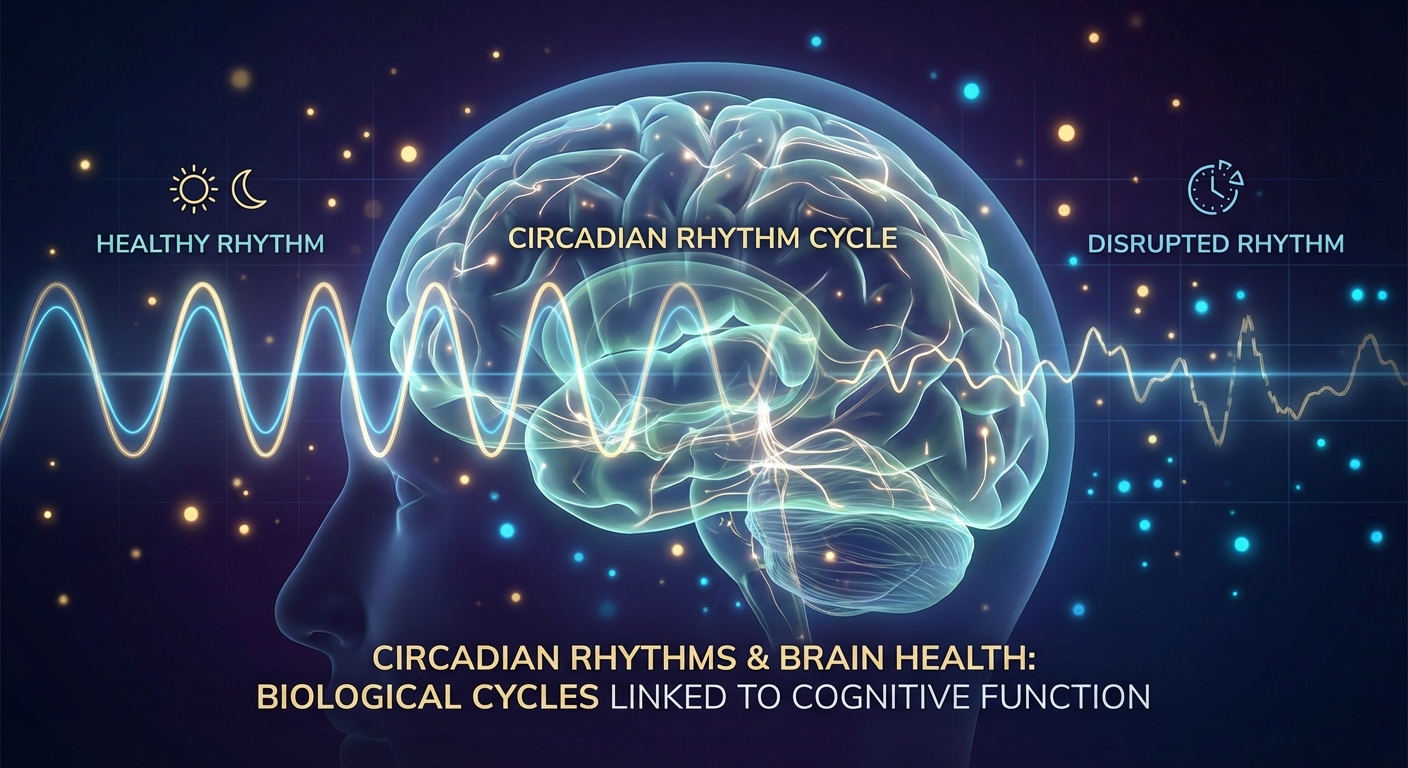
Your grandmother goes to bed at 9 PM and wakes at 5 AM like clockwork. She eats lunch at noon, takes her walk at 3 PM, and has dinner by 6 PM every single day. You’ve teased her about being rigid, set in her ways. But new research suggests her predictable patterns might be protecting something far more valuable than her schedule: her brain.
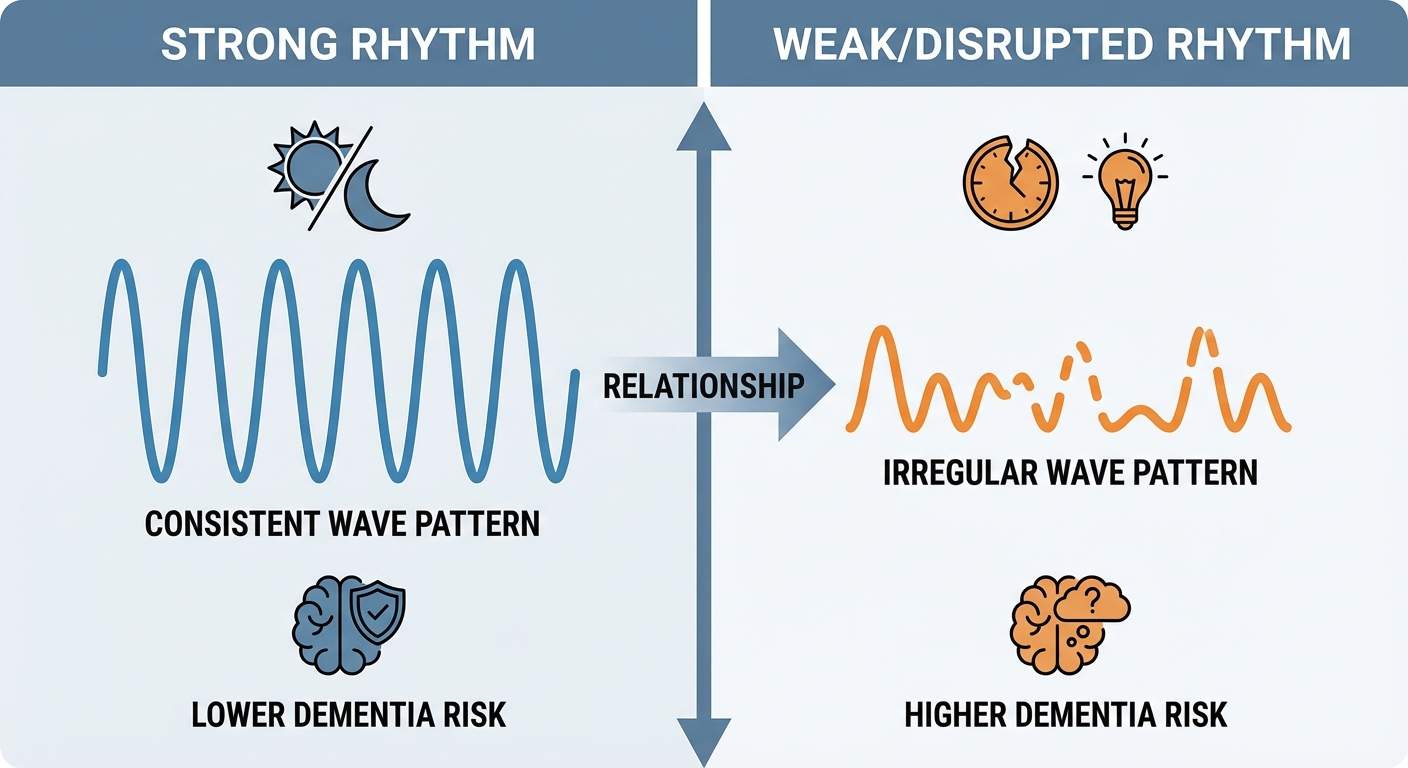
A study published in January 2026 tracked 2,183 older adults for approximately three years and found that those with weaker, more fragmented circadian rhythms faced dramatically higher dementia risk. People in the lowest rhythm strength group had nearly two and a half times the risk of developing dementia compared to those with the most robust daily patterns. Even more striking, each standard deviation decline in rhythm strength corresponded to a 54% increased risk of cognitive decline.
The findings add to a growing body of evidence suggesting that your biological clock does far more than regulate when you feel sleepy. It orchestrates inflammatory processes, immune function, cellular repair, and waste clearance in the brain. When that rhythm weakens or shifts out of alignment, the downstream effects may accelerate neurodegeneration in ways researchers are only beginning to understand.
What the Research Actually Found
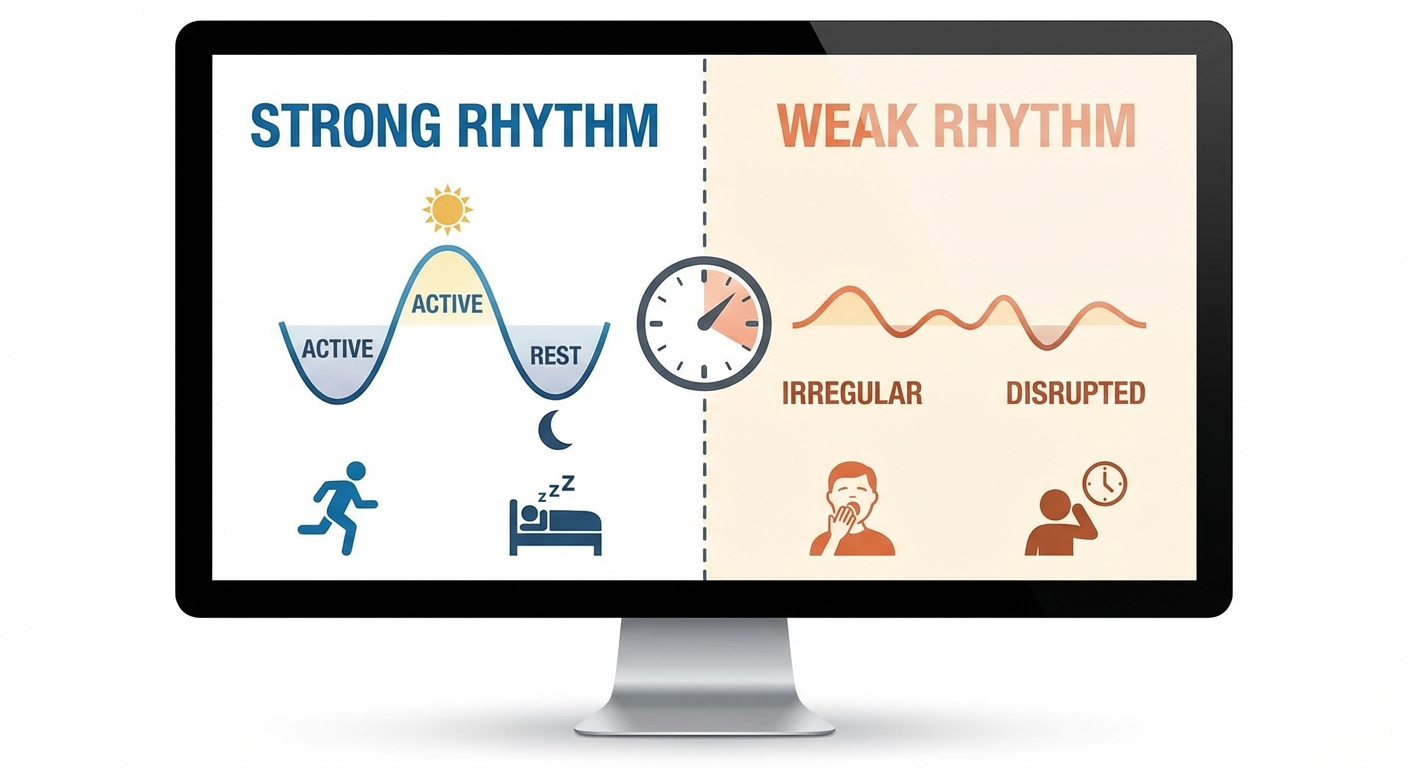
The study used chest-worn heart monitors to track participants’ daily activity patterns for approximately 12 days. Researchers measured something called relative amplitude, which captures the difference between your most active and least active periods. A strong circadian rhythm shows clear peaks and valleys throughout the day; you’re consistently active during waking hours and consistently still during sleep. A weak rhythm looks more fragmented, with activity scattered unpredictably and less contrast between day and night.
During the follow-up period, 176 participants developed dementia. When researchers analyzed the relationship between rhythm characteristics and cognitive outcomes, the pattern was unmistakable. Weaker rhythms predicted higher dementia risk even after accounting for age, sex, education, and other known risk factors. The association held whether researchers looked at rhythm strength as a continuous variable or compared groups at the extremes of the distribution.
Perhaps most intriguing was the finding about activity timing. Participants whose daily activity peaked at 2:15 PM or later showed a 45% higher dementia risk than those whose activity peaked between 1:11 and 2:14 PM. The mechanism isn’t entirely clear, but later activity peaks may indicate a circadian system that’s drifting out of sync with the natural light-dark cycle, potentially disrupting the timing of critical brain maintenance processes that occur during specific phases of the circadian cycle.
The researchers were careful to note that the study shows correlation, not causation. It’s possible that early, preclinical dementia causes circadian disruption rather than the other way around. Neurodegenerative changes in brain regions that regulate circadian function could weaken rhythms before clinical symptoms appear. But even if rhythm disruption is partly a consequence rather than a cause of neurodegeneration, the finding has practical value: circadian rhythm assessment could serve as an early warning system, flagging people for closer monitoring or preventive interventions before cognitive decline becomes apparent.
The Biology Behind the Connection
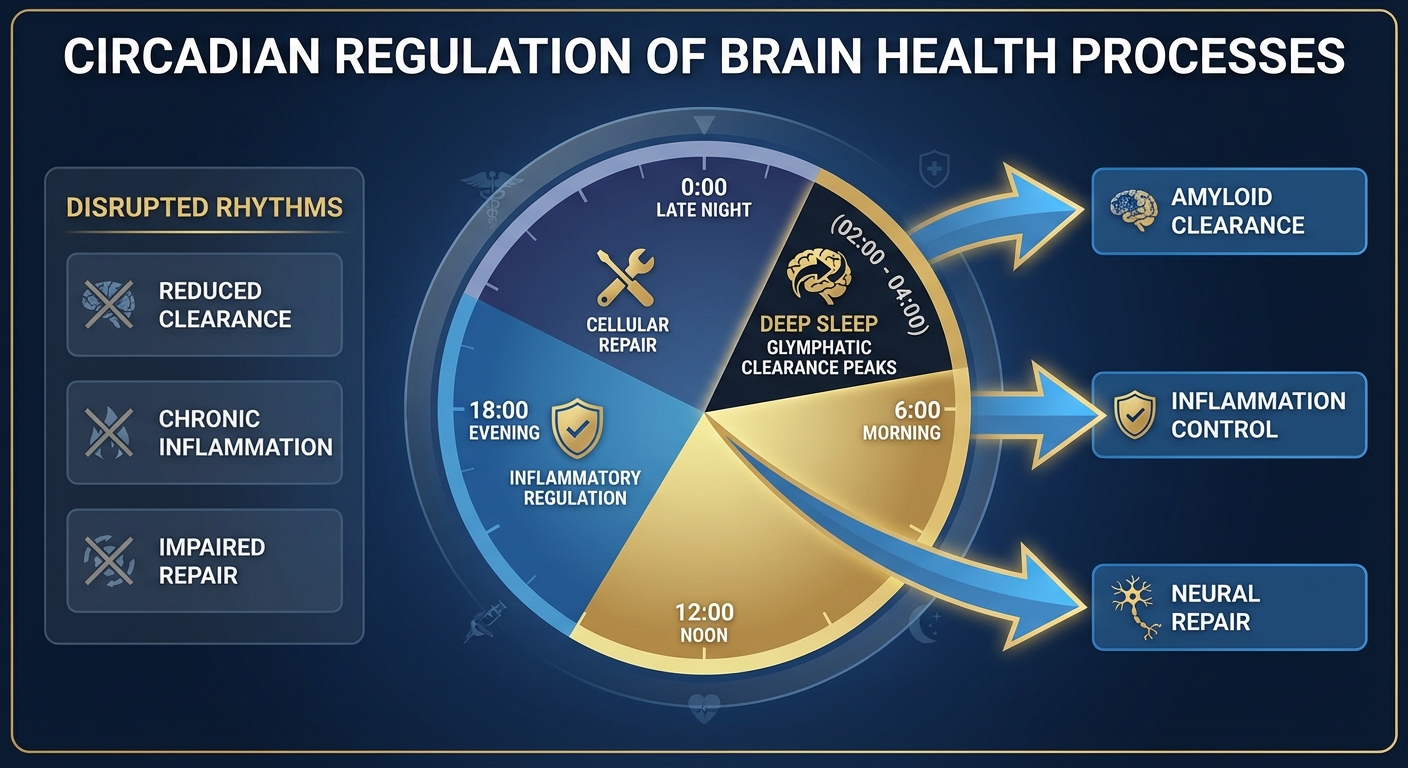
Your circadian rhythm isn’t just about sleep timing. It’s a master regulatory system that coordinates gene expression, hormone release, metabolism, immune function, and cellular repair across virtually every organ in your body. The suprachiasmatic nucleus, a cluster of approximately 20,000 neurons in your hypothalamus, serves as the conductor of this biological orchestra, keeping all these processes synchronized with each other and with the external environment.
The brain, in particular, relies heavily on circadian timing for essential maintenance. During certain phases of the sleep-wake cycle, the glymphatic system, your brain’s waste clearance network, ramps up activity and flushes metabolic debris from neural tissue. This includes amyloid-beta, the protein that accumulates into plaques characteristic of Alzheimer’s disease. Disrupt the circadian signal, and this cleanup process may become less efficient, allowing toxic proteins to accumulate faster than they can be cleared.
Inflammation follows circadian patterns as well. Your immune system is more active at certain times of day, with inflammatory cytokines peaking in the evening and anti-inflammatory signals dominating during sleep. Chronic circadian disruption can flatten these rhythms, leading to a state of persistent low-grade inflammation that has been linked to accelerated brain aging and neurodegeneration. According to the researchers, “Disruptions in circadian rhythms may alter body processes like inflammation, and may interfere with sleep, possibly increasing amyloid plaques linked to dementia.”
The connection extends to vascular health. Your blood pressure, heart rate, and blood vessel function all follow circadian patterns. When these rhythms weaken or shift, cardiovascular regulation becomes less efficient. Given that vascular problems contribute to many cases of dementia, whether through small strokes, reduced blood flow, or damage to the blood-brain barrier, maintaining strong cardiovascular rhythms may be protective for cognition. Previous research has shown that circadian disruption following daylight saving time temporarily increases heart attack and stroke risk, suggesting that even brief rhythm disturbances affect vascular function.
Why Some Rhythms Weaken With Age
Circadian rhythm strength naturally declines as we age, but the decline varies dramatically between individuals. Some 80-year-olds maintain robust day-night patterns, while some 60-year-olds show significantly fragmented rhythms. Understanding what drives this variation could help identify modifiable risk factors.
Light exposure plays a central role in circadian regulation. Your suprachiasmatic nucleus receives direct input from specialized photoreceptors in your eyes, using light information to calibrate your internal clock to the external world. Older adults often receive less bright light exposure than younger people, spending more time indoors and having age-related changes in lens transparency that reduce the amount of light reaching the retina. This reduced light input may contribute to weaker circadian signals.
Physical activity also influences rhythm strength. Regular exercise, particularly when performed consistently at similar times each day, provides a powerful time-keeping signal that reinforces circadian organization. Sedentary behavior, conversely, deprives the system of this entraining cue. The study’s finding about activity timing, that later peaks correlate with higher dementia risk, may partly reflect reduced overall activity levels. People who are less active during traditional waking hours may be getting insufficient movement to maintain robust rhythms.
Sleep disorders common in older adults can fragment circadian patterns. Sleep apnea causes repeated nighttime arousals that blur the distinction between sleep and wake states. Chronic insomnia may lead to inconsistent sleep timing as people attempt to compensate by napping or spending extra time in bed. Restless leg syndrome and other conditions that disrupt sleep consolidation also contribute to rhythm fragmentation. For many older adults, addressing underlying sleep disorders could be a route to strengthening circadian function.
What You Can Do to Strengthen Your Rhythm
The research suggests that maintaining strong circadian rhythms may be protective for brain health, and unlike many dementia risk factors, circadian function is modifiable. While you can’t change your age or genetic predisposition, you can strengthen the daily patterns that keep your biological clock robust.
Morning light exposure is the most powerful circadian anchor. Getting bright light, ideally from the sun, within an hour of waking sends a strong signal to your SCN that resets the clock and initiates the hormonal cascades appropriate for daytime function. Even on cloudy days, outdoor light is dramatically brighter than indoor lighting. Aim for 10 to 30 minutes of outdoor exposure shortly after waking. If outdoor time isn’t feasible, light therapy devices can provide similar benefits when used correctly.
Meal timing matters more than most people realize. Your peripheral clocks, located in organs throughout your body, respond to feeding signals as a time-keeping cue. Eating at consistent times, particularly front-loading calories earlier in the day when your metabolism is most efficient, reinforces circadian organization. Late-night eating, conversely, sends conflicting signals that can fragment rhythms. Try to finish your last meal at least three hours before bed and keep meal times consistent from day to day.
Physical activity provides another entraining signal, particularly when performed at consistent times. The timing may matter less than the consistency, though some evidence suggests morning or early afternoon exercise supports stronger rhythms compared to late-night workouts. What seems most important is establishing a regular pattern your body can anticipate and prepare for.
Evening light management deserves equal attention. Bright light exposure after sunset, particularly the blue-enriched light from screens and LED bulbs, suppresses melatonin release and delays circadian phase. Dimming lights in the evening, using warmer-toned bulbs, and limiting screen time in the hours before bed helps maintain the natural progression from daytime alertness to nighttime rest.
The Bigger Picture for Dementia Prevention
This study adds circadian rhythm strength to a growing list of modifiable factors associated with dementia risk. It joins established risks like hearing loss, depression, social isolation, physical inactivity, and cardiovascular disease, all of which can be addressed through lifestyle interventions. The emerging picture suggests that dementia prevention isn’t about finding a single magic bullet but about maintaining multiple systems that collectively support brain health over decades.
The researchers suggest that future studies should examine “circadian rhythm interventions, such as light therapy or lifestyle changes” to determine whether strengthening rhythms can actually reduce dementia incidence. Until such trials are completed, we can’t be certain that improving circadian function will prevent cognitive decline. But given that the interventions involved, more light exposure, consistent schedules, regular activity, and better sleep, carry virtually no risk and substantial other health benefits, there’s little downside to implementing them.
Perhaps most valuable is the potential for circadian assessment as an early warning system. Changes in sleep-wake patterns and daily activity rhythms might be detectable years before cognitive symptoms appear, providing a window for intervention when the brain is more amenable to protective strategies. Wearable devices that continuously track activity patterns could theoretically identify concerning rhythm changes before they become clinically significant.
The Bottom Line
Your daily patterns may be protecting your brain in ways you’ve never considered. This new research linking weak circadian rhythms to dramatically elevated dementia risk adds urgency to something health experts have long recommended: maintain consistent schedules for sleep, meals, activity, and light exposure.
Next Steps:
- Prioritize morning light exposure within an hour of waking, ideally 15 to 30 minutes outdoors
- Keep meal times consistent, with larger meals earlier in the day
- Establish a regular physical activity schedule, ideally at the same time daily
- Dim lights and limit screens in the two to three hours before bed
- Address any underlying sleep disorders that fragment your nighttime rest
The grandmother with her rigid schedule may have been onto something. Predictable patterns aren’t just a sign of age; they may be keeping her brain young.
Sources: January 2026 circadian-dementia study (2,183 participants, 3-year follow-up), research on activity peak timing and dementia risk, glymphatic system and amyloid clearance research, circadian inflammation regulation studies.