You go in for what you think is a routine sleep study. You’re snoring, your partner complains, and your doctor wants to rule out sleep apnea. You spend one night wired to sensors, fall asleep surprisingly easily, and go home the next morning expecting a simple yes-or-no answer about whether you need a CPAP machine.
What you don’t expect is a call from your doctor three weeks later saying the AI found early signs of Parkinson’s disease. You have no tremor, no stiffness, no symptoms at all. But hidden in the patterns of your brain waves, heart rhythms, and breathing during that single night of sleep were signals that your nervous system is already changing in ways that will become apparent years from now, when it might be too late for effective intervention.
This scenario isn’t science fiction. Researchers at Stanford Medicine have developed an artificial intelligence system called SleepFM that can predict risk for over 100 diseases using data from a single night of sleep. The system analyzed 585,000 hours of sleep recordings from 65,000 individuals and demonstrated remarkable accuracy in identifying people who would later develop conditions ranging from Parkinson’s disease and dementia to breast cancer and heart attacks, years before any clinical symptoms emerged.
How AI Reads Your Sleep Like a Book
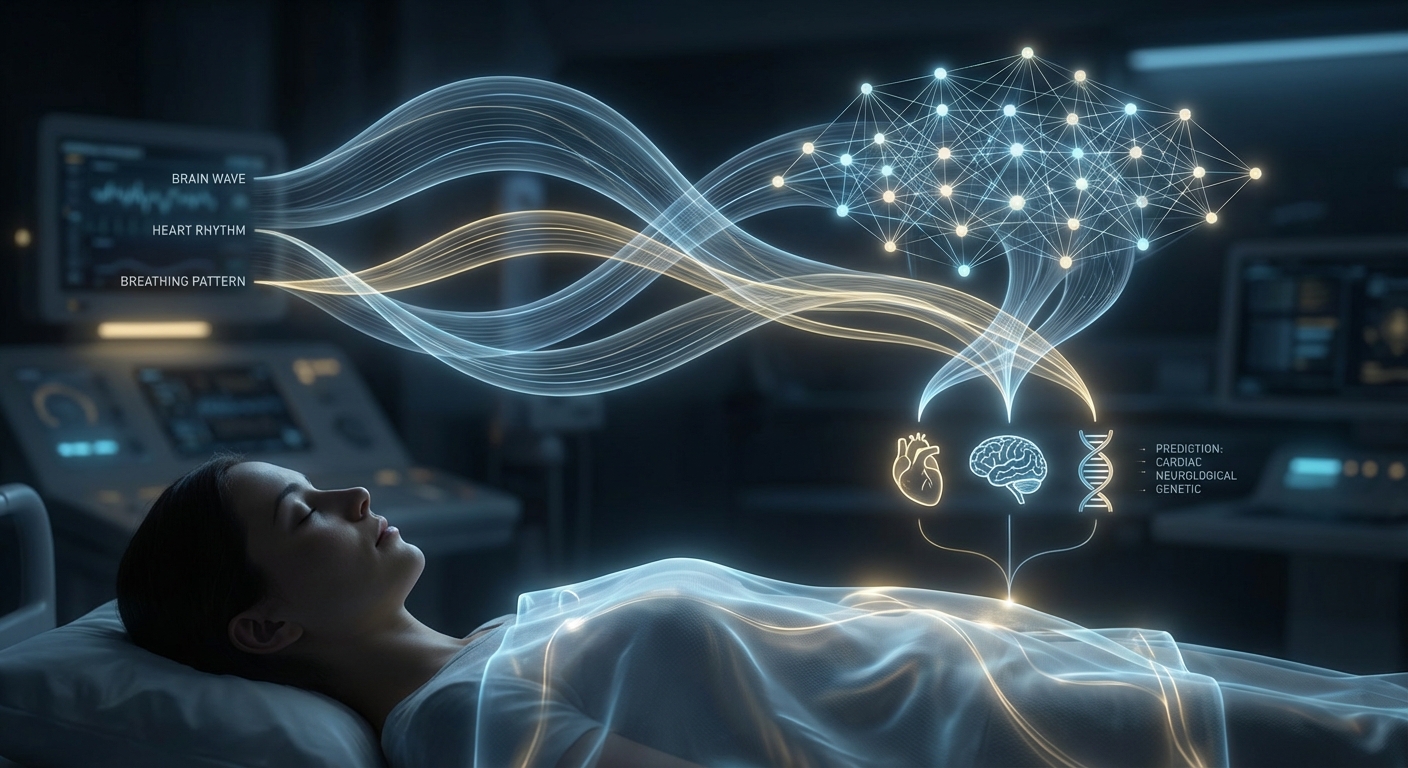
The insight driving SleepFM is that sleep studies contain vastly more diagnostic information than clinicians currently extract. A standard polysomnography records brain waves, eye movements, muscle activity, heart rhythms, breathing patterns, and blood oxygen levels throughout the night. Sleep specialists typically analyze this data to diagnose sleep disorders like apnea, narcolepsy, or REM behavior disorder. But the AI discovered that these same signals contain subtle fingerprints of diseases affecting almost every organ system.
The technical approach borrows from the same foundation that powers large language models like ChatGPT. Just as language models learn the structure of text by predicting which words are likely to follow other words, SleepFM learns the structure of sleep by dividing recordings into five-second segments and analyzing how different physiological signals relate to each other. Each segment becomes like a word, and the night’s recording becomes a document the AI can read for meaning.
What makes SleepFM particularly powerful is its focus on mismatches. In a healthy sleeper, your brain waves, heart rhythm, and breathing patterns move together in coordinated ways. Your heart rate slows when you enter deep sleep. Your breathing becomes regular during certain sleep stages and more variable during others. These signals are supposed to be synchronized, like instruments in an orchestra playing the same symphony. When they fall out of sync, playing different tempos or missing their cues, something may be wrong that goes beyond sleep itself.
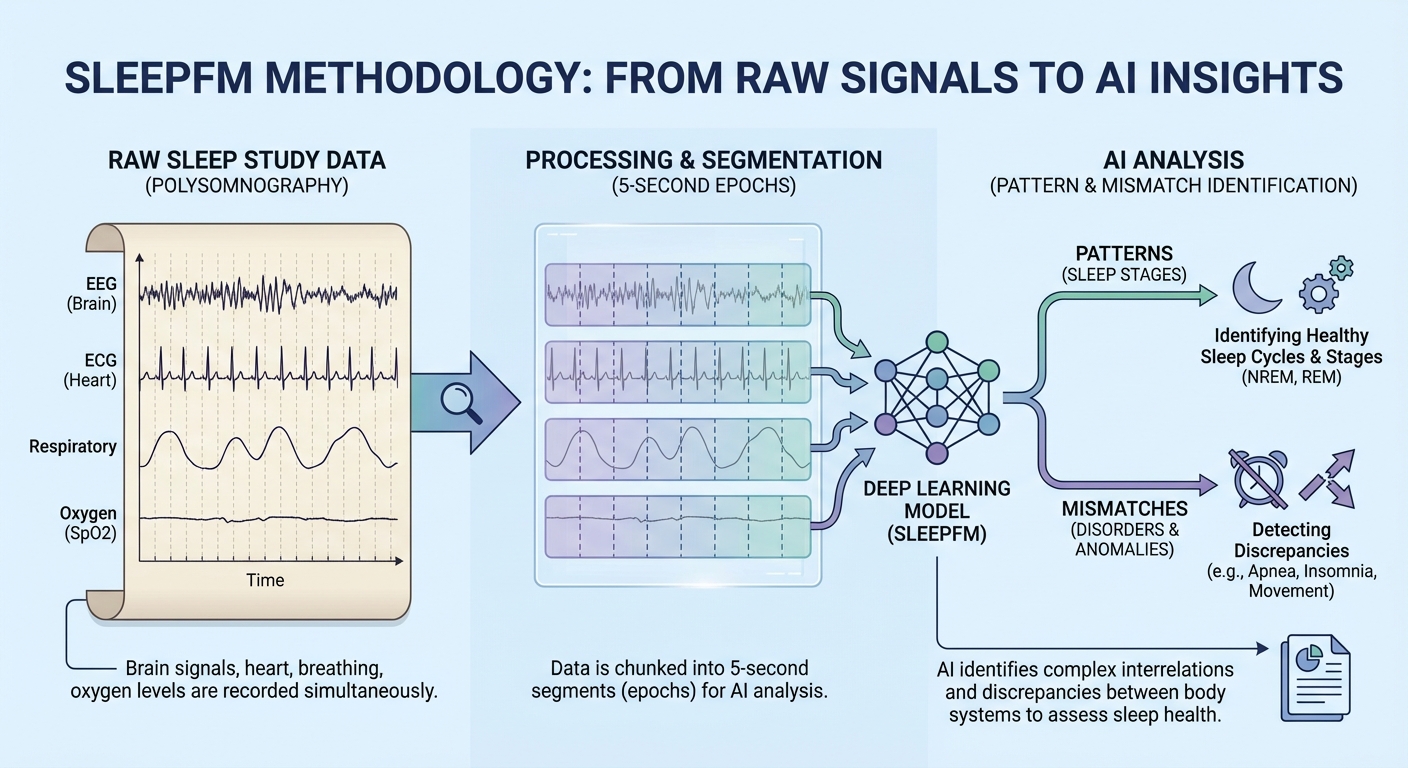
The researchers used a technique called “leave-one-out contrastive learning” to train the AI. Essentially, the system learns to recognize when signals that should go together actually do go together, and when they’re subtly misaligned in ways that might indicate underlying pathology. A person whose breathing pattern doesn’t quite match what their brain waves would predict, or whose heart rate variability is slightly off from normal sleep architecture, may be showing early signs of neurological or cardiovascular problems that won’t manifest clinically for years.
Predicting Disease Years in Advance
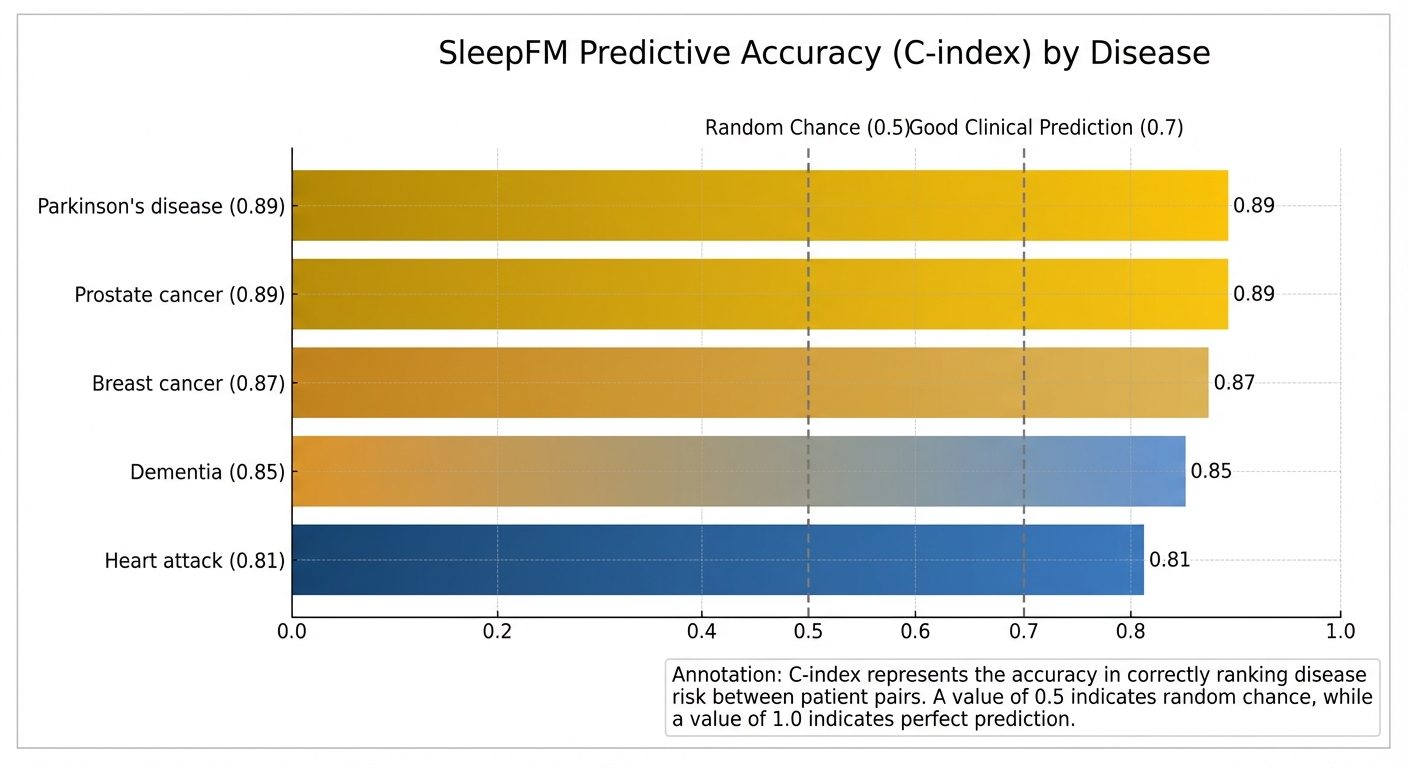
The accuracy numbers are striking. SleepFM achieved a C-index of 0.89 for predicting Parkinson’s disease, meaning it correctly ranked risk between pairs of patients 89% of the time. For prostate cancer, the accuracy was also 0.89. Breast cancer prediction hit 0.87. Dementia reached 0.85. Heart attack prediction achieved 0.81. These are remarkable figures for a screening tool using data from a single night that was collected for an entirely different purpose.
To understand what these numbers mean practically, consider that a C-index of 0.5 represents random chance, no better than flipping a coin to decide who will get sick. A perfect predictor would score 1.0. Most clinical prediction tools fall somewhere between 0.6 and 0.8. SleepFM’s scores place it among the most accurate predictive tools in medicine, despite using only passive, non-invasive sleep recordings rather than blood tests, genetic analysis, or imaging studies.
The training dataset was enormous by medical AI standards. The researchers analyzed sleep studies from the Stanford Sleep Medicine Center collected between 1999 and 2024, then linked these recordings to 25 years of follow-up medical records. This allowed them to see not just who had sleep problems, but who went on to develop any of hundreds of diseases in the years after their sleep study. The AI learned from patterns that human analysts could never identify, correlations across multiple signal types and millions of data points that only emerge through computational analysis.
Perhaps most remarkable is the range of conditions the AI can identify. Sleep studies were never designed to screen for cancer or predict heart attacks. Yet somehow, the patterns of neural and autonomic function during sleep contain information about the state of distant organs. This makes biological sense when you consider that sleep is when the body performs much of its maintenance and repair work. How well these processes function, as reflected in the coordination of sleep physiology, may reveal the health status of the systems being maintained.
What This Means for Preventive Medicine
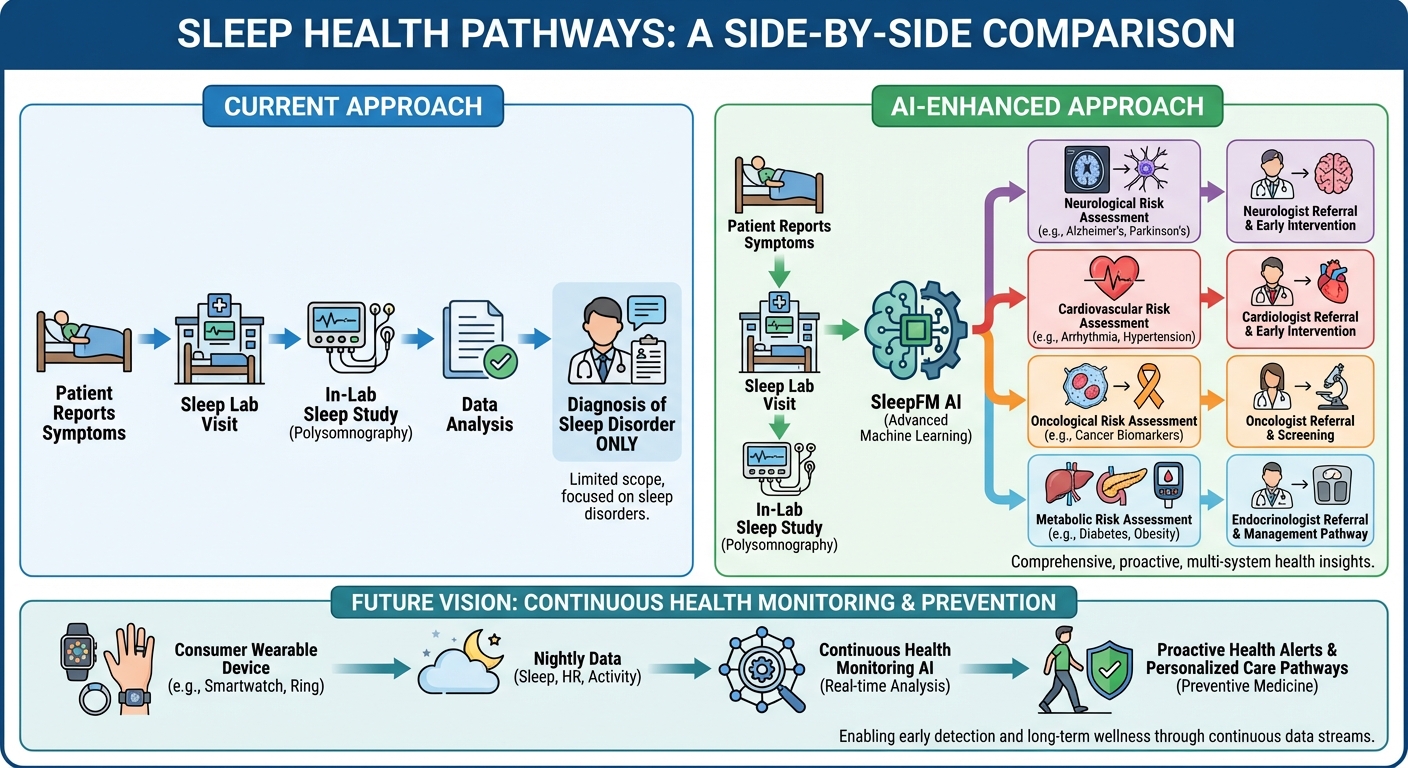
The implications for clinical practice are substantial. Sleep studies are already performed millions of times annually worldwide, primarily to diagnose sleep apnea and other sleep disorders. If SleepFM or similar systems become integrated into clinical workflows, every sleep study could double as a comprehensive health screening. A patient coming in for snoring could leave with actionable information about their Parkinson’s risk, prompting early neurological evaluation and potentially enrollment in neuroprotective trials.
Early detection matters enormously for many of the diseases SleepFM can identify. Parkinson’s disease, for instance, progresses silently for years before the characteristic tremor and movement problems become apparent. By the time patients receive a clinical diagnosis, they’ve typically lost 60-80% of the dopamine-producing neurons in a critical brain region. Interventions that might slow progression, whether pharmaceutical or lifestyle-based, would be far more effective if started earlier. Similar logic applies to dementia, where emerging preventive strategies show more promise when implemented before significant neuronal loss.
The researchers envision future versions of SleepFM that could work with data from consumer wearable devices rather than requiring formal sleep studies. Smartwatches and fitness trackers already collect heart rate, heart rate variability, respiratory rate, and movement data during sleep. While this information is less comprehensive than clinical polysomnography, it might be sufficient for basic screening. A watch that monitors you every night for years could potentially detect concerning changes earlier than occasional clinical assessments.
However, the technology raises important questions about information overload and psychological burden. Not everyone wants to know they’re at elevated risk for dementia or cancer, particularly when the prediction is probabilistic rather than certain. Someone identified as high-risk might never develop the disease, while someone flagged as low-risk isn’t guaranteed protection. Integrating AI-based disease prediction into clinical practice will require careful attention to how results are communicated, what follow-up is recommended, and how to avoid unnecessary anxiety in people who may ultimately be fine.
The Science of Sleep as a Diagnostic Window
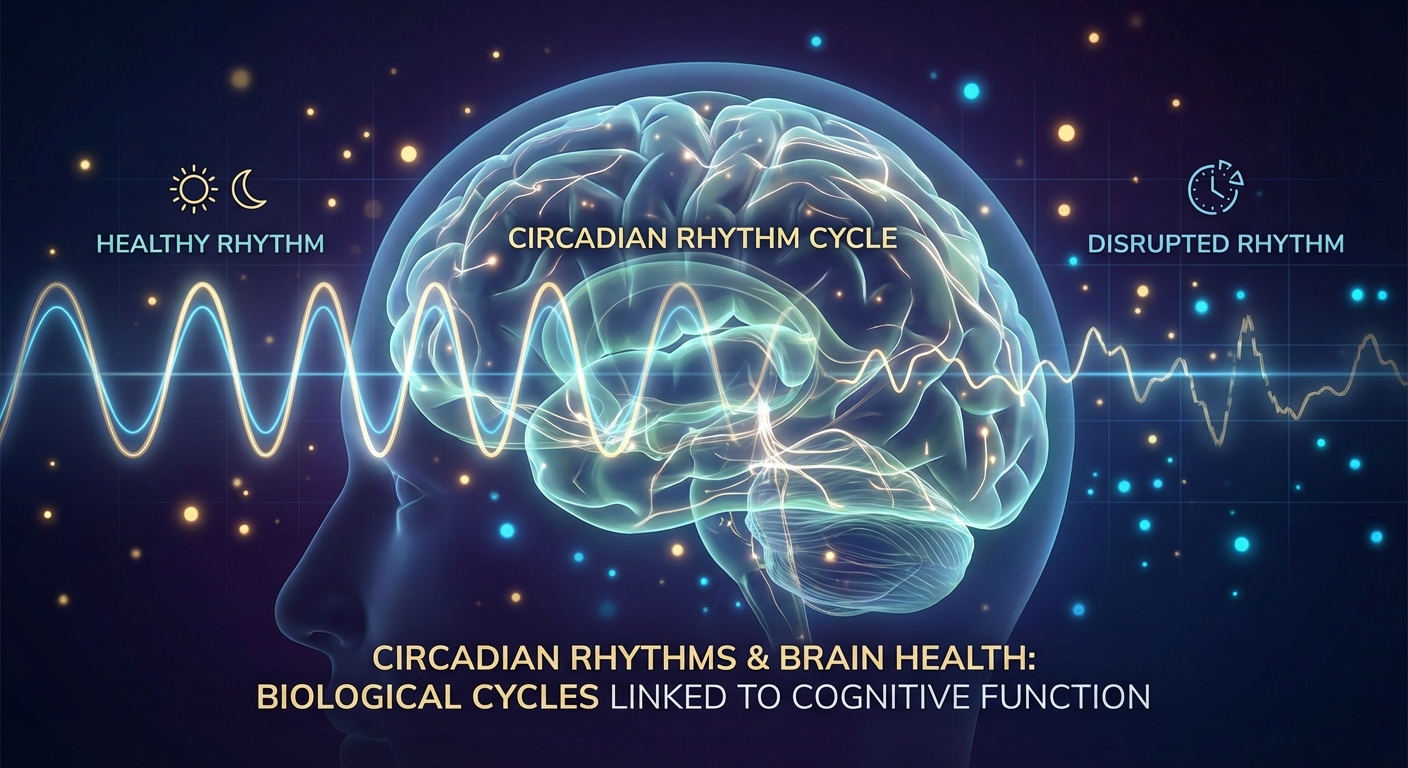
Why does sleep reveal so much about overall health? The answer lies in what happens during those hours when consciousness retreats. Sleep isn’t passive rest; it’s active maintenance. Your brain consolidates memories, clears metabolic waste, and repairs cellular damage. Your immune system coordinates inflammatory responses. Your cardiovascular system calibrates blood pressure and vascular function. Your endocrine system rebalances hormones. Virtually every organ system performs essential housekeeping that can’t occur efficiently during waking hours.
When any of these systems begins to dysfunction, even subtly, the signature may appear in sleep before it shows up elsewhere. A person developing early Parkinson’s disease might show changes in the brain wave patterns associated with REM sleep years before any motor symptoms emerge. Someone heading toward heart failure might display altered heart rate variability patterns that reflect changing autonomic regulation. Cancer might affect sleep architecture through inflammatory signals or metabolic changes that precede detectable tumors.
This perspective reframes sleep studies from narrow diagnostic tools into windows on whole-body health. The accumulated cost of poor sleep extends beyond daytime fatigue; it reflects and potentially accelerates dysfunction across multiple systems. Conversely, the quality and architecture of your sleep may be the most sensitive indicator available of how well your body is maintaining itself. When sleep optimization improves these metrics, it may indicate improvements in underlying physiological function that reduce disease risk.
The Stanford team’s work builds on earlier research showing specific sleep abnormalities associated with individual diseases. REM sleep behavior disorder, where people physically act out their dreams, has long been recognized as a strong predictor of Parkinson’s and related conditions. Certain breathing patterns during sleep predict cardiovascular events. Sleep fragmentation correlates with cognitive decline. SleepFM’s innovation is synthesizing all these signals together, finding patterns across the full complexity of sleep physiology that no human analyst could detect.
Limitations and Cautions
For all its promise, SleepFM isn’t ready for clinical use. The research demonstrates proof of concept, showing that sleep data contains predictive information, but translating this into reliable clinical tools requires additional validation. The training data came from a single center and may not generalize perfectly to other populations. The AI needs testing in prospective trials where predictions are made before outcomes are known. Regulatory approval for medical AI involves extensive documentation of safety and effectiveness.
There’s also the question of what to do with the predictions. Identifying someone at high risk for Parkinson’s disease is only valuable if that information leads to better outcomes. Currently, no proven interventions can prevent Parkinson’s in people identified as high-risk before symptoms appear. The most ethical use of such predictions might be enrollment in prevention trials rather than causing years of anticipatory anxiety about a disease that may never arrive. The medical system needs to develop appropriate clinical pathways before widespread screening makes sense.
False positives pose another concern. Even with 89% accuracy, a screening tool will misidentify some healthy people as high-risk and miss some people who will develop disease. The psychological and financial costs of false alarms need weighing against the benefits of true early detection. Optimal use of AI-based prediction likely involves combining multiple data sources rather than relying on any single indicator.
The Bottom Line
Your sleep may be telling doctors things about your health that you don’t know yet. Stanford’s SleepFM demonstrates that a single night of sleep recording contains enough information to predict risk for over 100 diseases, from Parkinson’s to cancer, years before symptoms appear. While this technology isn’t yet available in clinical practice, it signals a future where passive, non-invasive monitoring during sleep becomes a powerful tool for early disease detection.
What This Means for You:
- Sleep studies may become valuable for more than just diagnosing sleep apnea
- The quality and architecture of your sleep reflects your overall health status
- Wearable sleep tracking may eventually provide meaningful health insights
- Prioritize sleep quality as foundational to health maintenance
- Stay informed about AI-based health screening as these tools reach clinical practice
The night reveals what the day conceals. Paying attention to your sleep, and eventually analyzing it with AI, may become one of medicine’s most powerful preventive strategies.
Sources: Stanford Medicine SleepFM research (585,000 hours of sleep data, 65,000 individuals, 25-year follow-up), Stanford Sleep Medicine Center data 1999-2024, disease prediction accuracy metrics (C-index values for Parkinson’s, cancer, dementia, cardiovascular disease).