
She finished the hour-long ride feeling like she hadn’t worked hard enough. Her heart rate stayed around 130 beats per minute the entire time, she could have easily held a conversation, and she didn’t feel the satisfying exhaustion that usually signaled a good workout. “Am I wasting my time?” she asked her coach. “This feels too easy to be doing anything.”
High-intensity interval training dominates fitness culture’s attention. HIIT workouts, CrossFit, pushing yourself until you can barely breathe, that’s what gets celebrated and shared. Work harder, faster, more intensely. The message is relentless: if you’re not suffering, you’re not improving.
But some of the most valuable training you can do is the opposite: slow, steady, almost boring cardiovascular exercise in what’s called Zone 2. It feels easy while you’re doing it, perhaps disappointingly easy, yet produces profound metabolic and longevity benefits that intense exercise simply cannot match. Elite endurance athletes have known this for decades, spending 80% of their training time in Zone 2 and only 20% going hard. The research explaining why is now filtering into mainstream fitness, and it’s changing how informed people think about cardio.
Understanding Zone 2: The Metabolic Sweet Spot
Zone 2 occupies a specific and often misunderstood position on the intensity spectrum. It’s not recovery pace, where you’re barely elevating heart rate above resting. But it’s also not the moderate intensity most people default to when they think they’re doing “cardio,” which is actually Zone 3 or higher. Zone 2 is a narrow band where your mitochondria are working at their maximum sustainable capacity to oxidize fat for fuel, the highest intensity you can maintain while still relying primarily on aerobic metabolism.
Push any harder and you cross a threshold where the body starts relying more heavily on glucose for fuel, producing lactate faster than it can be cleared. Zone 2 sits just below that threshold, at the edge of the cliff but not over it. This metabolic sweet spot creates specific adaptations that don’t occur with higher-intensity training.
In practical terms, Zone 2 corresponds to approximately 60-70% of your maximum heart rate, typically 120-150 beats per minute depending on age and fitness level. The talk test provides intuitive guidance: you can carry on a conversation while training but you’re breathing noticeably. You could speak in complete sentences but wouldn’t want to deliver a speech. For those with access to lactate testing, Zone 2 stays below 2 mmol/L blood lactate. On a perceived exertion scale of 1-10, it’s about 5-6, working steadily but sustainably for long periods.
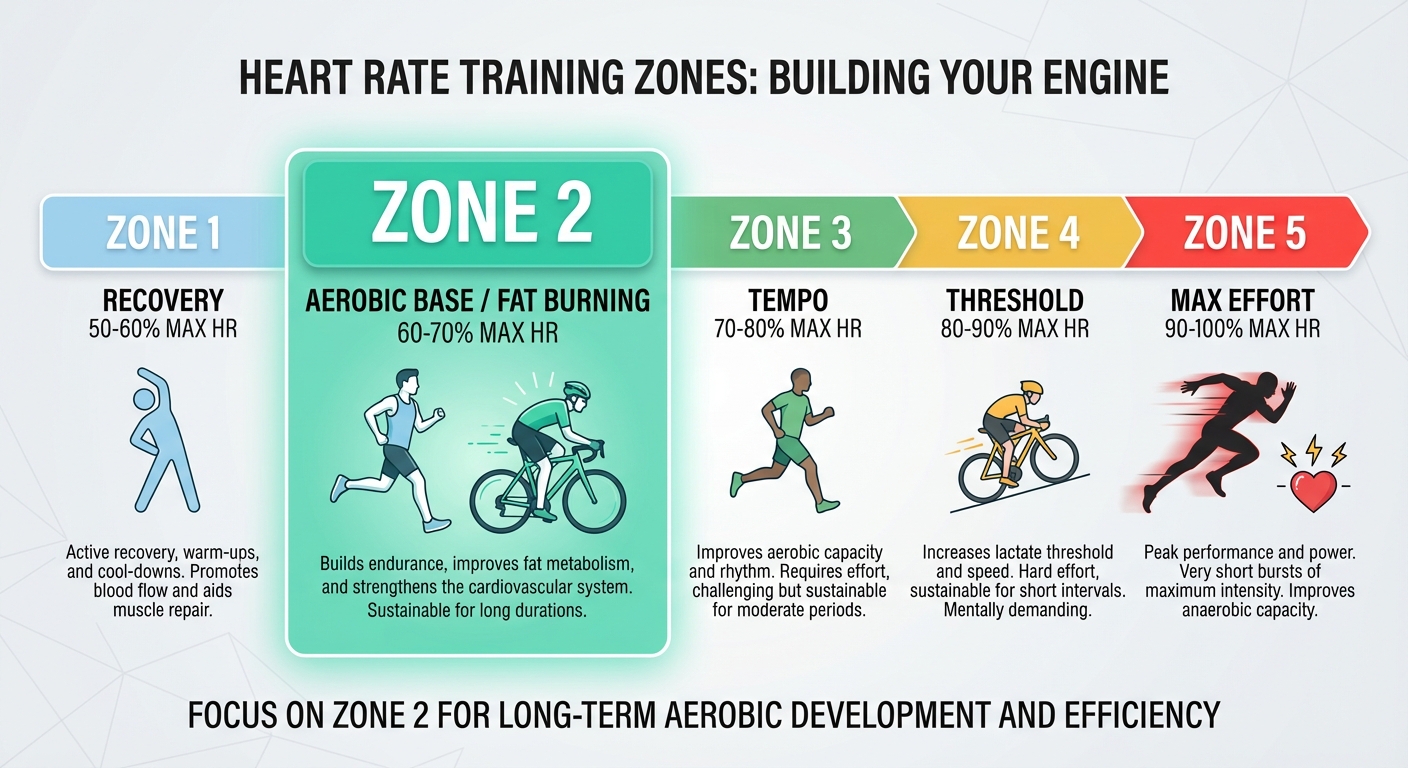
It feels slow, almost too easy, like you’re not working hard enough to create change. But that’s exactly the point. The sensation of insufficient effort is a feature, not a bug. The adaptations Zone 2 creates require sustained time at this specific intensity without the metabolic stress that higher intensity creates.
The Physiological Magic: Why Easy Training Works
When you train in Zone 2, specific adaptations occur that don’t happen with high-intensity work. Understanding the mechanisms explains why this seemingly gentle approach produces such powerful results.
Mitochondrial biogenesis, the creation of new mitochondria and improvement of existing ones, is perhaps Zone 2’s most important benefit. Your mitochondria are your cells’ energy factories, and the more you have and the better they function, the more energy you produce and the more efficiently your metabolism operates. Zone 2 training is the most effective stimulus for mitochondrial development. Studies show that consistent Zone 2 training can increase mitochondrial density by 30-50% over 8-12 weeks, a remarkable adaptation that touches virtually every aspect of health.
Better mitochondria means better energy production, better endurance, better metabolic health, and potentially better longevity. Some researchers, including longevity-focused physicians like Dr. Peter Attia, believe mitochondrial health is one of the key factors in aging. Mitochondrial dysfunction is implicated in virtually every chronic disease, diabetes, cardiovascular disease, neurodegenerative conditions, even cancer. Zone 2 training directly improves mitochondrial function in ways few other interventions can match. This connects to broader longevity and healthspan research showing how lifestyle factors affect aging trajectories.
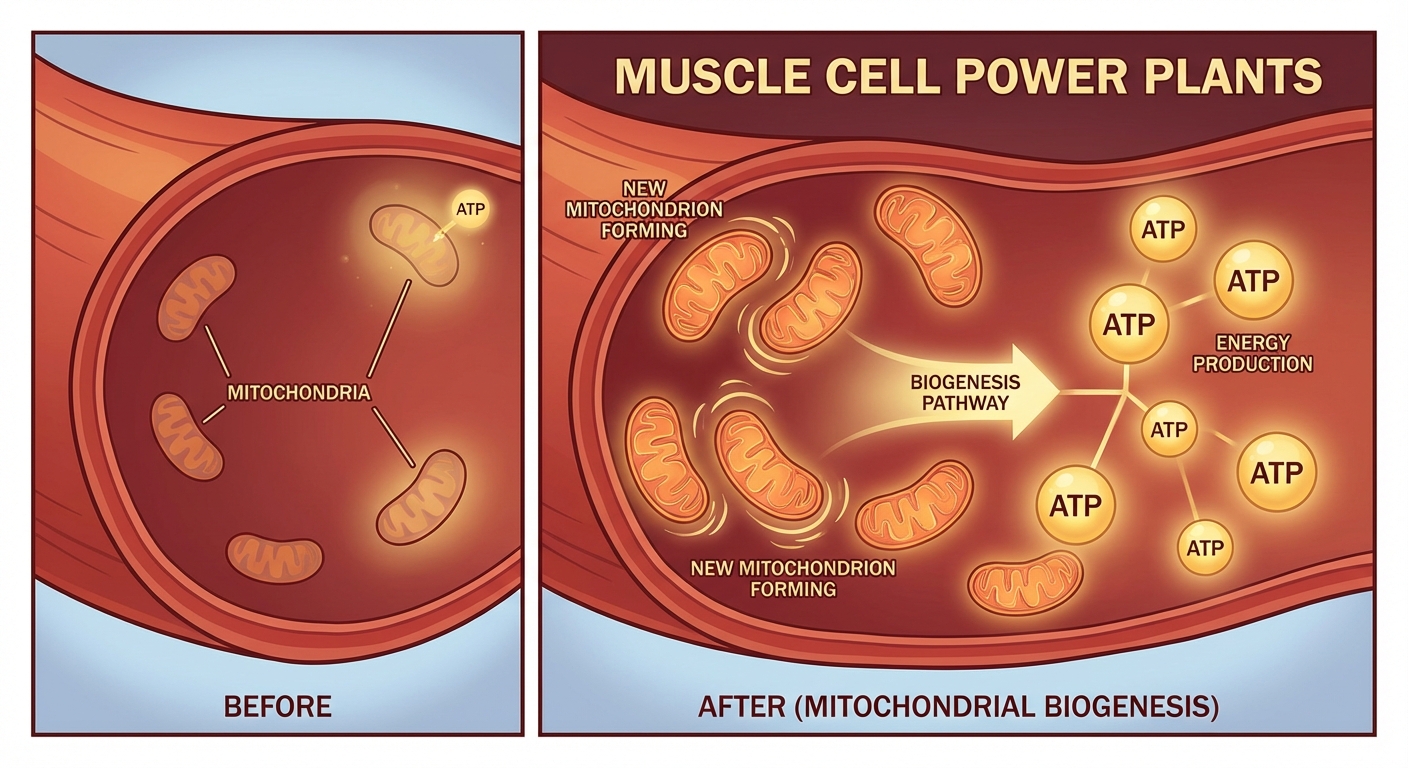
Fat oxidation capacity improves dramatically with Zone 2 work. At this intensity, your body primarily burns fat for fuel, approximately 60-70% fat and 30-40% carbohydrate. This trains your metabolism to become “fat-adapted,” better at accessing and utilizing stored body fat for energy. The implications extend beyond body composition to endurance performance, where fat adaptation allows you to go longer without bonking when glycogen stores deplete, and to metabolic health, where improved fat metabolism enhances insulin sensitivity and reduces metabolic disease risk.
Cardiovascular adaptations from Zone 2 training build the foundation for heart health and endurance capacity. Stroke volume, how much blood your heart pumps per beat, increases. Capillary density improves, meaning more blood vessels deliver oxygen to working muscles. Left ventricular capacity expands, allowing the heart to pump more blood with less effort. These are fundamental cardiovascular adaptations that improve heart health and endurance without the stress and recovery demands that high-intensity work creates.
The Research on Longevity and Healthspan
Several prominent longevity researchers, including Dr. Peter Attia and Dr. Iñigo San-Millán, argue that Zone 2 training is one of the most important interventions available for extending healthspan, the years of healthy, functional life. Their position isn’t based on speculation but on mechanistic understanding of how Zone 2 addresses fundamental aspects of aging.
Dr. San-Millán’s research at the University of Colorado demonstrates that mitochondrial dysfunction underlies virtually every chronic disease we associate with aging. Diabetes involves mitochondrial dysfunction in pancreatic cells and muscle tissue. Cardiovascular disease involves mitochondrial dysfunction in cardiac cells. Neurodegenerative diseases involve mitochondrial dysfunction in neurons. Even cancer involves mitochondrial dysfunction in how cells produce energy. Zone 2 training directly improves mitochondrial function, potentially addressing root causes of age-related decline rather than just symptoms.
Population studies show strong correlations between cardiovascular fitness and longevity that persist after controlling for other health factors. People with good Zone 2 capacity, measured by lactate clearance or VO2 at lactate threshold, live longer and maintain higher quality of life in their later years than people with poor Zone 2 fitness. Moving from the lowest fitness quartile to even moderate fitness reduces all-cause mortality risk more than stopping smoking. The benefits compound over decades, making Zone 2 training particularly valuable when started in middle age and maintained through later life.
This doesn’t prove causation definitively, but the biological mechanisms make sense. Better mitochondria, better metabolism, better cardiovascular function, better insulin sensitivity, these adaptations all support healthspan through pathways researchers understand increasingly well. Combined with strength training for longevity, Zone 2 cardio forms a comprehensive exercise approach for healthy aging.
How Much Zone 2 Do You Need?
The research-backed recommendation for significant metabolic and cardiovascular benefit is approximately 3-4 hours of Zone 2 training weekly. This volume creates the sustained stimulus necessary for mitochondrial biogenesis and fat metabolism adaptation. Less can still help, but the full adaptation requires substantial time in the zone.
The time can be distributed however fits your schedule. Four sessions of 45-60 minutes each work well for many people. Three sessions of 60-80 minutes provide similar benefit with fewer training days. Two sessions of 90-120 minutes accomplish the goal if your schedule only allows two dedicated cardio days. Some people prefer one long 3-4 hour session weekly, which research suggests provides comparable adaptation to more frequent shorter sessions.

The minimum effective dose is probably around 90-120 minutes weekly. You’ll get some benefit at this volume, but the full adaptation requires more time in the zone. For athletes targeting maximum performance or people prioritizing longevity, 4-6 hours weekly is common. Professional endurance athletes spend 10-15 hours weekly in Zone 2 as the foundation of their training, saving high-intensity work for much smaller portions of their total volume.
Activity selection matters less than hitting the right intensity for adequate duration. Cycling works exceptionally well because you can precisely control intensity and sustain it for long periods with less joint impact than running. Walking uphill or with a weighted vest works for beginners or people with joint issues, though you need significant incline or load to reach Zone 2. Jogging at a truly easy pace, slower than most people’s default running speed, keeps many people in Zone 2. Rowing machines, swimming, ellipticals, and stair climbers all work if you’re disciplined about maintaining appropriate intensity.
Many people use Zone 2 sessions for multitasking, listening to podcasts, audiobooks, or educational content. The relatively low cognitive demand of steady-state exercise allows productive use of time that might otherwise feel tedious. This reframing transforms Zone 2 from boring obligation into valuable learning time.
Common Mistakes That Undermine Adaptation
Zone 2 training is conceptually simple but practically challenging. Most people make predictable errors that prevent the specific adaptations this training creates.
Going too hard is the most common mistake. People intellectually understand they should be training at low intensity, but once they start moving, they drift into Zone 3 or higher because it feels more like “exercise” and matches their internal concept of working out. The ego resists going slow. Cultural messaging that harder is always better interferes with the discipline of staying easy. Check your heart rate regularly throughout sessions. If you’re creeping above 70% of maximum, consciously slow down. It should feel almost too easy, like you’re not working hard enough. That discomfort with the ease is actually a sign you’re probably doing it right.
Not going long enough defeats the purpose. Twenty to thirty minutes of Zone 2 doesn’t create the mitochondrial and metabolic adaptations that make this training valuable. You need sustained effort of 45+ minutes minimum, ideally 60-90 minutes, to accumulate sufficient training stimulus. The adaptations happen from volume, time spent in the zone, not from briefly touching the right intensity and moving on. Short Zone 2 sessions are better than nothing but won’t deliver the full benefits that longer sessions provide.
Mixing Zone 2 with high-intensity work in the same session undermines both. Some people try to make training more “efficient” by doing Zone 2 then finishing with intervals or sprints. This defeats the purpose. Zone 2 training should be pure Zone 2, allowing your body to adapt specifically to sustained aerobic effort without the metabolic stress that high-intensity creates. Save hard work for completely separate sessions, ideally on different days. The polarized training approach, mostly easy with occasional hard, works better than mixing intensities within sessions.
Boredom and quitting is the final common pitfall. Zone 2 lacks the endorphin rush, the sense of accomplishment, and the immediate gratification that intense workouts provide. It’s steady, controlled, and can feel tedious. Find strategies to make it engaging: dedicated podcasts or audiobooks you only allow during Zone 2, outdoor routes where changing scenery provides mental stimulation, training partners for conversational pace, or shows watched on tablets mounted to indoor equipment. The mental challenge isn’t physical effort but maintaining discipline when fitness culture insists that harder is always better.
The Bottom Line
Zone 2 training represents one of the most evidence-based interventions available for longevity, metabolic health, and cardiovascular fitness. The training feels easy, perhaps disappointingly easy, but produces profound adaptations that high-intensity work cannot match: mitochondrial biogenesis, fat oxidation capacity, and fundamental cardiovascular development.
Key principles for effective Zone 2 training:
- Target 60-70% of maximum heart rate, roughly 120-150 bpm for most people
- Use the talk test: conversational but noticeably breathing
- Aim for 3-4 hours weekly minimum for full adaptation
- Sessions should be 45-90 minutes, not shorter efforts
- Keep Zone 2 sessions pure, don’t mix with high-intensity work
Balancing Zone 2 with other training:
For most people pursuing health and longevity, an effective weekly distribution looks like 50-60% Zone 2 cardio, 25-30% strength training, 10-15% high-intensity work, and 5-10% flexibility and mobility. This is the inverse of what most people do, lots of intense training with minimal easy cardio, but it’s what the research supports for long-term health.
Sample weekly structure:
- Monday: 60 min Zone 2 cycling + 15 min stretching
- Tuesday: 45 min strength training
- Wednesday: 75 min Zone 2 walking, jogging, or hiking
- Thursday: 30 min strength training
- Friday: Rest or light yoga
- Saturday: 90 min Zone 2 cycling or jogging
- Sunday: 30 min higher-intensity activity + stretching
Zone 2 won’t give you a six-pack in 30 days or the endorphin rush of pushing your limits. But it will improve your mitochondrial function, metabolic health, and cardiovascular capacity in ways that compound over years and decades. The most effective training is often the least dramatic. Zone 2 is slow, steady, and sustainable, the foundation that everything else builds on.
Sources: Dr. Iñigo San-Millán’s Zone 2 research at University of Colorado, Dr. Peter Attia’s longevity research, studies on mitochondrial adaptation to exercise, cardiovascular physiology research, endurance athlete training analysis.