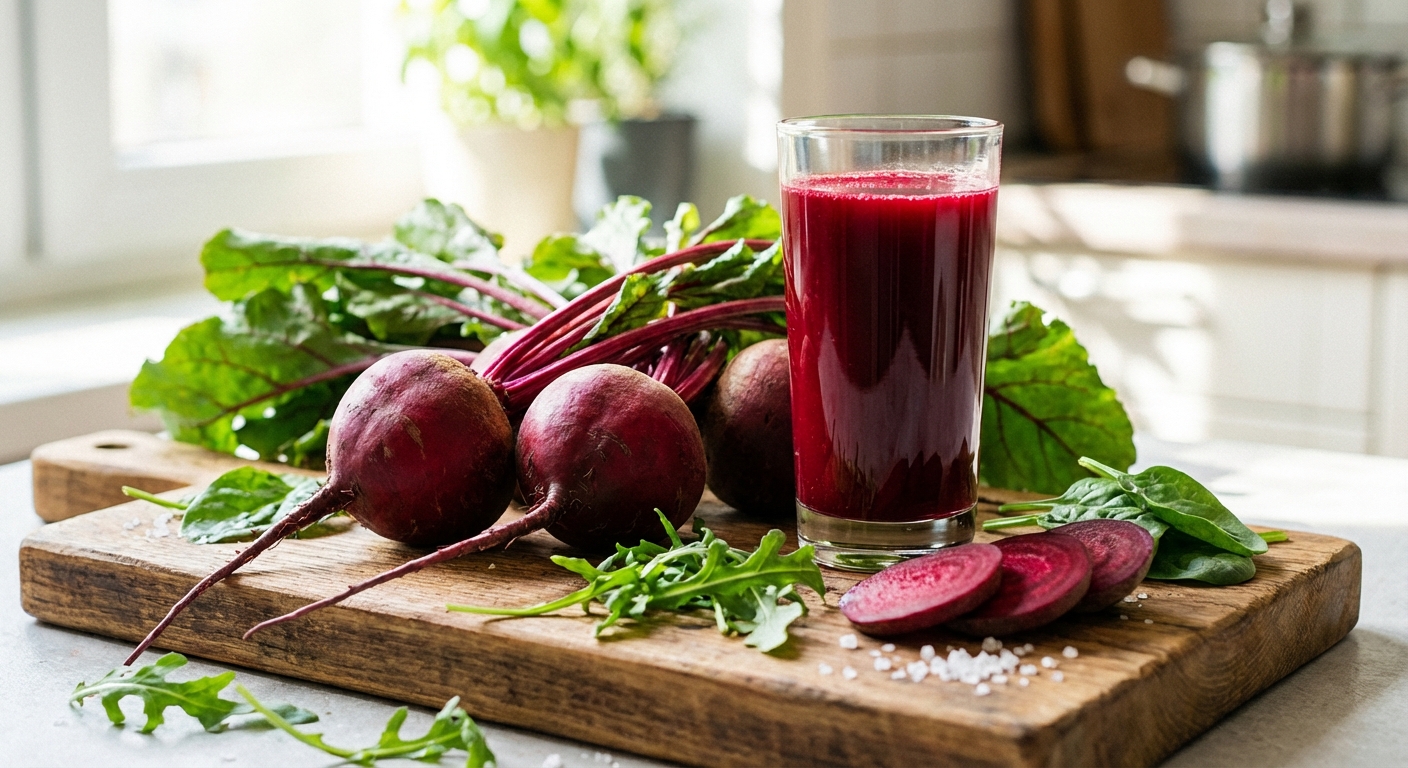
In the world of sports nutrition, most supplements fail to live up to their marketing claims. Athletes spend millions on products promising marginal gains that evaporate under controlled testing. But dietary nitrates, found abundantly in beetroot juice and leafy greens, represent one of the few natural substances that consistently delivers measurable performance benefits in rigorous scientific studies.
The mechanisms are well-understood: dietary nitrates convert to nitric oxide in your body, which dilates blood vessels, improves blood flow, enhances oxygen delivery to working muscles, and reduces the oxygen cost of exercise. Multiple studies show beetroot juice consumed before exercise improves endurance performance by 2-4%, lowers blood pressure by 4-10 mmHg, and might enhance cognitive function through increased brain blood flow. These effects rival some medications and established ergogenic aids, all from vegetables you can buy at any grocery store.
The research is particularly compelling because the benefits extend well beyond athletic performance. The blood pressure reduction from dietary nitrates is clinically significant, matching or exceeding what some first-line hypertension medications achieve. Emerging evidence suggests cognitive benefits, particularly for older adults with vascular issues. This is a case where the same intervention that helps elite cyclists finish races faster also helps elderly patients manage cardiovascular risk.
How Nitrates Become Nitric Oxide
Understanding how dietary nitrates create health benefits requires following the conversion pathway from vegetable to active compound. The process is surprisingly dependent on bacteria living in your mouth, which creates both opportunities and vulnerabilities in the system.
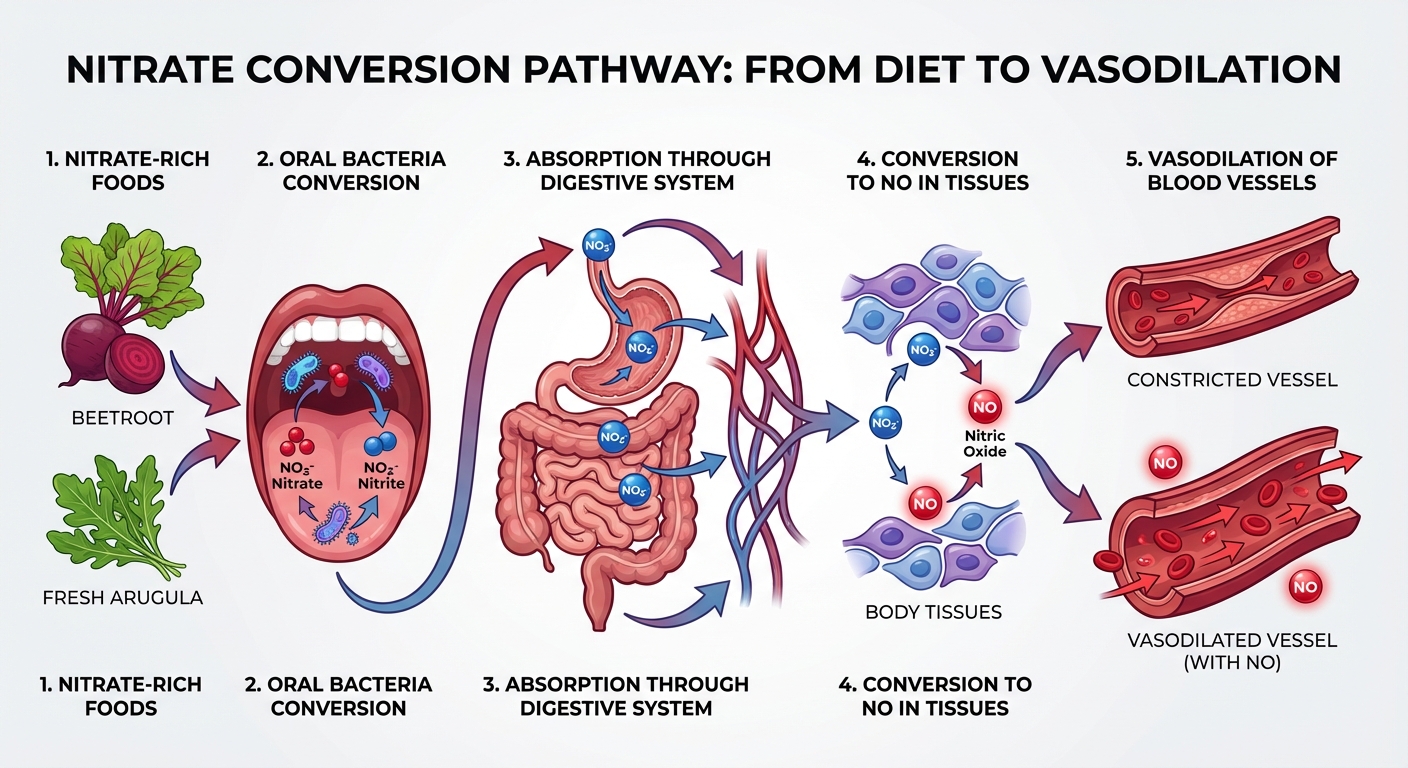
When you consume nitrate-rich vegetables like beetroot, arugula, or spinach, you’re ingesting nitrate (NO3-) in its inactive form. This nitrate is absorbed through your digestive system and enters circulation, but it cannot directly produce the cardiovascular benefits. Instead, your salivary glands concentrate nitrate from your blood and secrete it into your mouth. There, bacteria living on your tongue and oral surfaces reduce nitrate to nitrite (NO2-) through enzymatic action. This bacterial conversion is the critical first step, and it’s why antibacterial mouthwash can completely abolish nitrate’s benefits by killing the necessary bacteria.
Once nitrite forms in your mouth, you swallow it and it enters your stomach and bloodstream. In various tissues throughout your body, particularly during low-oxygen conditions like exercise, nitrite converts to nitric oxide (NO). This final conversion is enhanced when oxygen levels are low, which is precisely when you need vasodilation most, during physical exertion when muscles are demanding oxygen.
Nitric oxide triggers vasodilation, the relaxation and widening of blood vessels that improves blood flow and oxygen delivery throughout your body. The result is better circulation, lower blood pressure, and enhanced exercise capacity. The entire process from consuming beetroot to experiencing peak vasodilation takes approximately 2-3 hours, which explains the timing protocols athletes use for performance benefits.
Blood Pressure Effects: Medication-Level Results
Research consistently demonstrates that dietary nitrates lower blood pressure through vasodilation, with effects large enough to be clinically meaningful for people with hypertension or elevated-normal blood pressure.
The acute effect appears within 2-3 hours of consuming nitrate-rich foods. A single effective dose lowers systolic blood pressure by 4-10 mmHg, with the effect lasting 6-8 hours before gradually diminishing. This magnitude of reduction is comparable to what many first-line blood pressure medications achieve, making dietary nitrates a legitimate therapeutic intervention rather than merely a health food claim.
The chronic effect from daily nitrate intake maintains blood pressure reduction as long as consumption continues. This isn’t just a temporary physiological response; it’s a sustainable intervention that could reduce or eliminate medication needs for some people with mild to moderate hypertension. Studies tracking participants over weeks and months show sustained benefits with consistent consumption.
People with hypertension show larger blood pressure reductions than those with already-normal blood pressure, suggesting that nitric oxide pathways are more compromised in hypertensives and respond more dramatically to supplementation. If your blood pressure is optimal, dietary nitrates will have less dramatic effects because there’s less room for improvement. If you have elevated blood pressure, the intervention is more powerful precisely because your vascular function has more to gain.
The effective dose for blood pressure benefits appears to be 300-500mg of dietary nitrate, which translates to roughly 500ml (about 17 ounces) of beetroot juice or a large serving of high-nitrate leafy greens like arugula. Consuming this amount daily provides medication-level blood pressure reduction for many people with hypertension without the side effects some blood pressure drugs produce.
This is not a replacement for prescribed medication in people with uncontrolled or severe hypertension. Don’t stop taking blood pressure medication without medical supervision. But dietary nitrates represent a legitimate adjunct therapy that may reduce medication needs or prevent progression to medication requirement in people with elevated-normal blood pressure who are trying to avoid pharmacological intervention.
Exercise Performance: One of Few Legal Aids That Works
For endurance athletes, dietary nitrates represent one of the most reliable legal ergogenic aids available, with performance improvements that have been replicated across numerous controlled studies in laboratories and real-world competitions.
The primary mechanism is improved efficiency. Normally, running faster or cycling harder requires consuming more oxygen in a relatively fixed relationship between effort and oxygen demand. Nitric oxide appears to alter this equation, allowing mitochondria to generate more ATP (cellular energy) for the same oxygen cost. This “fuel efficiency” effect means you can maintain a given pace with less physiological strain, or maintain a higher pace with the same effort level.
Time to exhaustion increases 10-15% in most studies, meaning athletes can exercise longer before fatigue forces them to stop. Time trial performance improves 1-3%, meaning athletes finish races faster even at maximal effort. The oxygen cost of exercise decreases by 5-7%, meaning the same work requires less oxygen consumption. These might sound like modest numbers, but in competitive endurance sports, 2-3% improvement is often the difference between winning and losing, between qualifying for finals and going home.
The effects are more pronounced for recreational athletes than elite athletes. Highly trained individuals have already optimized their vascular function and mitochondrial efficiency through years of training, leaving less room for nutritional enhancement. Recreational athletes with more “headroom” for improvement see larger benefits from nitrate supplementation. This doesn’t mean elite athletes shouldn’t bother, just that their improvements tend toward the lower end of the range.
For short-duration maximal efforts like sprinting or single-repetition strength work, nitrates provide less benefit. The oxygen delivery improvements matter most for sustained aerobic efforts where oxygen supply limits performance. A 100-meter dash is essentially anaerobic, while a marathon is predominantly aerobic. Nitrates help the marathon far more than the sprint.
Optimal Protocols for Different Goals
Because dietary nitrates work through a specific physiological pathway with predictable timing, protocols matter. You cannot simply drink beetroot juice whenever convenient and expect optimal benefits. The conversion from nitrate to nitrite to nitric oxide follows a curve that peaks 2-3 hours after consumption and diminishes over 6-8 hours.
For acute athletic performance, consume 500-750ml of beetroot juice or a concentrated beetroot shot delivering equivalent nitrate content 2-3 hours before your event or training session. This timing ensures peak nitric oxide availability during your effort. The effects last long enough to cover most endurance events, but for very long efforts like ultramarathons, consider additional doses during the event.
For chronic performance enhancement, consume 300-500ml of beetroot juice daily for 3-7 days before a major competition. This builds up nitrate and nitrite pools in your body, potentially providing more robust benefits than single-dose acute loading. Many athletes combine both approaches: chronic loading in the week before competition plus acute dosing on race day.
For blood pressure management, consistency matters more than timing. Consume 300-500ml of beetroot juice daily or equivalent nitrate from vegetables, maintaining the habit long-term. Effects appear within 3-4 hours of each dose but diminish by 24 hours, hence the need for daily consumption to maintain sustained blood pressure reduction.
The vegetable alternative to beetroot juice involves consuming large servings of high-nitrate greens daily. Arugula is the champion, containing roughly 480mg of nitrate per 100g. A large arugula salad with some spinach and butter lettuce can easily deliver 300-400mg of nitrate, matching a serving of beetroot juice without the distinctive earthy taste some find objectionable.

Cognitive Benefits: Emerging Research
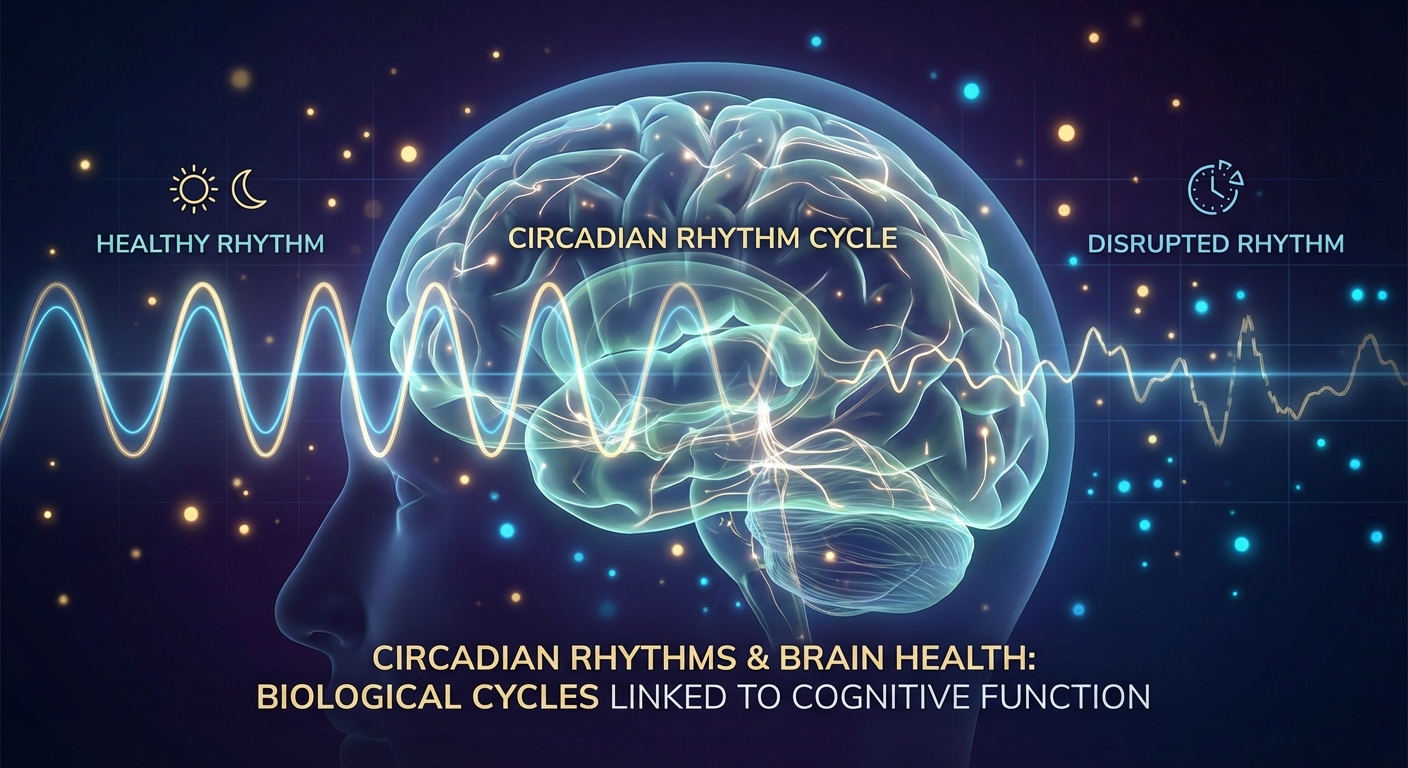
The brain consumes roughly 20% of the body’s oxygen despite representing only 2% of body mass. To function optimally, it requires constant, robust blood supply delivering glucose and oxygen to neurons. As we age, the microvasculature in the brain can become stiff or constricted, reducing perfusion and potentially impairing cognitive function.
Nitric oxide’s ability to dilate blood vessels extends to cerebral vasculature. By improving blood flow to the brain, dietary nitrates may help maintain the oxygen and nutrient delivery necessary for cognitive function, reaction time, and memory. The research is younger than the exercise and blood pressure data, but early findings suggest meaningful effects.
Studies show nitrate consumption increases blood flow to brain regions involved in cognition, with measurable changes visible on functional imaging. Some research demonstrates improved reaction time, decision-making speed, and processing efficiency after nitrate supplementation, particularly in older adults whose baseline vascular function is compromised.
Population studies show higher vegetable nitrate intake associates with lower dementia risk, though this correlation doesn’t prove causation. People who eat more arugula and beets might simply have healthier overall lifestyles. However, the biological plausibility is strong: improved brain blood flow would logically support cognitive function, especially in populations with vascular compromise.
The potential for nitrates as cognitive support in aging populations is generating significant research interest. If dietary interventions can maintain brain blood flow and delay cognitive decline, the public health implications are enormous. The evidence isn’t conclusive yet, but it’s promising enough to justify ongoing investigation and potentially to justify increasing vegetable nitrate intake as a low-risk intervention with possible cognitive benefits.
Best Dietary Sources
If you want to increase nitrate intake through food rather than supplements, the grocery store produce aisle becomes your pharmacy. Nitrate concentration in plants varies dramatically depending on the species, soil conditions, growing methods, and harvest timing, but certain vegetables consistently deliver high amounts.
Arugula leads the pack at approximately 480mg of nitrate per 100g, making it the most concentrated common vegetable source. A generous arugula salad as your daily greens can easily deliver the therapeutic 300mg dose. The peppery flavor works well in salads, on sandwiches, or as a pizza topping.
Beets and beetroot contain 110-250mg per 100g depending on growing conditions, with the juice concentrating nitrates further. Beetroot juice is the most studied form in research, but roasted beets, pickled beets, and beet salads all provide meaningful nitrate intake.
Other high-nitrate vegetables include rhubarb (450mg/100g), cilantro (247mg/100g), butter leaf lettuce (200mg/100g), spring greens (188mg/100g), and basil (183mg/100g). Spinach and bok choy contain lower but still meaningful amounts.
To reach the therapeutic dose used in studies, roughly 300-500mg, you need strategic selection. A casual side salad with iceberg lettuce won’t cut it. You need arugula-based salads, substantial beet servings, or dedicated beetroot juice consumption. The volume of vegetables required to match a concentrated beetroot shot is substantial, which is why many people opt for juice or supplements despite the less pleasant taste.
The Mouthwash Problem
One of the most fascinating aspects of nitrate physiology is the complete dependence on oral bacteria for the first conversion step. Humans lack the enzymes required to convert nitrate directly to nitrite. We rely entirely on bacteria living in our mouths to perform this critical transformation.
This creates a bizarre vulnerability: oral hygiene habits can inadvertently deactivate the cardiovascular benefits of dietary nitrates. Antiseptic mouthwashes designed to kill bacteria that cause plaque and bad breath don’t discriminate between harmful and beneficial bacteria. They wipe out the nitrate-reducing bacteria just as effectively as pathogens.
Studies demonstrate that using antibacterial mouthwash completely abolishes the blood pressure-lowering and performance-enhancing effects of beetroot juice. The nitrate is consumed and absorbed, but without oral bacteria to convert it to nitrite, the pathway dead-ends before reaching nitric oxide production.
The practical implication: if you’re consuming dietary nitrates for health or performance benefits, avoid antibacterial mouthwash. Mechanical tooth cleaning through brushing and flossing is sufficient for oral hygiene without destroying the bacteria necessary for nitrate conversion. Some researchers suggest this finding has implications for cardiovascular health beyond nitrate supplementation, since oral bacteria may contribute to cardiovascular function more broadly.
Safety and Contraindications
Dietary nitrates at levels achievable through food and reasonable supplementation are generally safe for most people. The theoretical concern about nitrates converting to nitrosamines (potential carcinogens) applies primarily to processed meats, which contain nitrites as preservatives and are consumed with protein in conditions that favor nitrosamine formation. Vegetable nitrates consumed with the antioxidants naturally present in plants don’t show the same cancer associations.
Medication interactions require attention. People taking medications for erectile dysfunction (sildenafil, tadalafil) should not take high-dose nitrate supplements, as both work through nitric oxide pathways and the combination can cause dangerous blood pressure drops. The interaction with phosphodiesterase inhibitors is well-documented and potentially life-threatening.
Blood pressure medications combined with high-dose dietary nitrates could theoretically produce excessive blood pressure reduction. If you’re already on antihypertensives and want to add significant dietary nitrate intake, discuss with your physician and potentially adjust medication doses based on monitored blood pressure response.
People with certain heart conditions should consult their doctors before high-dose nitrate supplementation. While nitric oxide generally benefits cardiovascular function, specific conditions might respond unpredictably.
For most healthy people and even most people with mild hypertension, dietary nitrates from vegetables and reasonable beetroot juice consumption are safe and beneficial interventions.
The Bottom Line
Dietary nitrates from vegetables, particularly beetroot and leafy greens like arugula, provide legitimate cardiovascular and performance benefits supported by substantial research. The blood pressure reduction is clinically meaningful. The exercise performance improvement is measurable and reliable. The emerging cognitive benefits suggest additional value, particularly for aging populations.
The mechanisms are well-understood. The safety profile is excellent for most people. The cost is reasonable, especially compared to prescription medications or exotic supplements. This is one of the clearest cases in nutrition where the evidence strongly supports a specific dietary intervention.
Next Steps:
- For blood pressure benefits, consume 300-500mg dietary nitrate daily (500ml beetroot juice or large arugula-based salad)
- For athletic performance, use 500-750ml beetroot juice 2-3 hours before events
- Avoid antibacterial mouthwash if using nitrates therapeutically
- Check for medication interactions, particularly with erectile dysfunction drugs
- Consider chronic loading (daily consumption for 3-7 days) before major athletic events
Whether you juice beets, eat arugula salads, or use concentrated beetroot supplements, increasing dietary nitrate intake is one of the few nutrition interventions with clear, measurable effects on blood pressure, exercise capacity, and potentially cognitive function. Your cardiovascular system will respond.
For related information on cardiovascular and exercise benefits, see our coverage of strength training as you age and recovery methods like cold exposure therapy.
Sources: Dietary nitrate research reviews (British Journal of Sports Medicine), beetroot juice and exercise performance meta-analyses (Sports Medicine), blood pressure intervention trials (Hypertension journal), nitric oxide physiology (Circulation Research), cognitive effects research (Nitric Oxide journal).