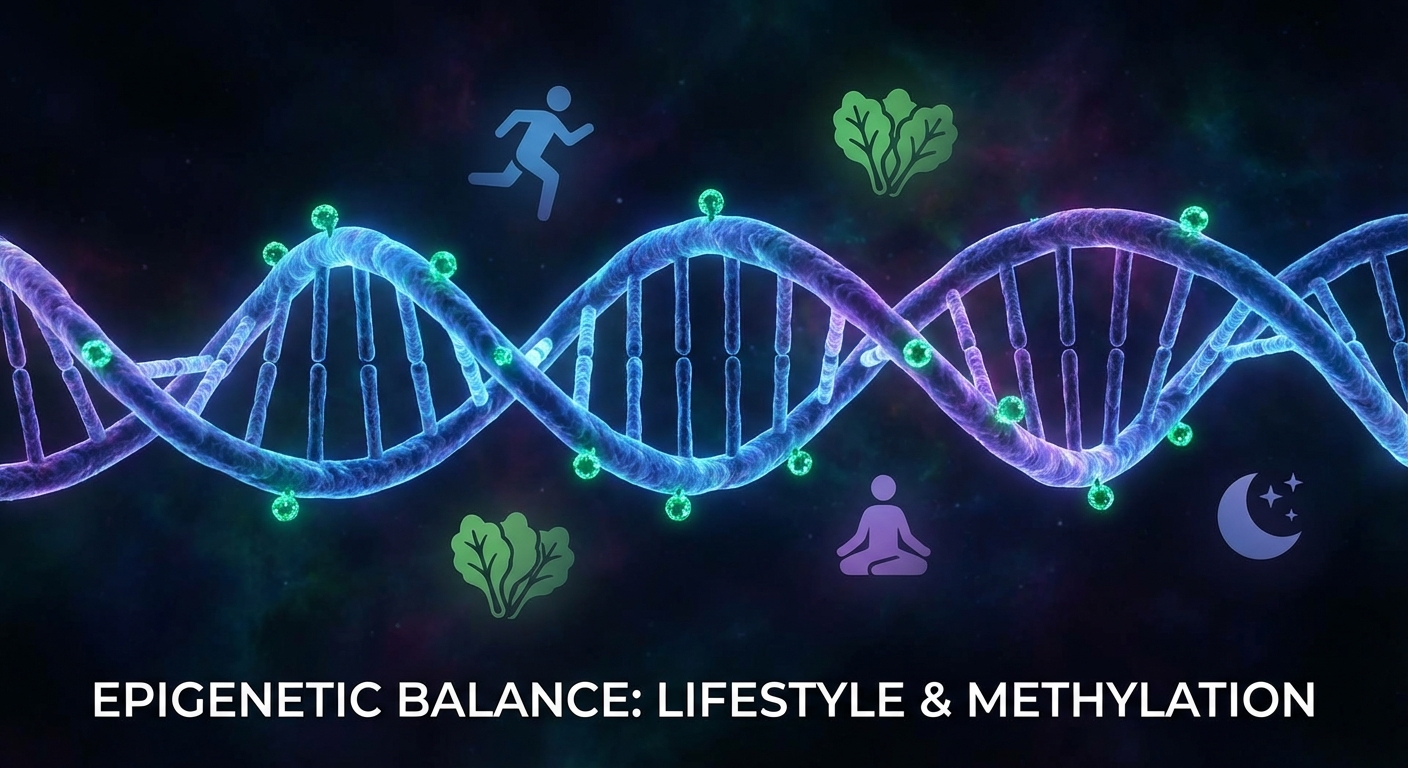
Your twin sister eats the same foods you do, grew up in the same house, shares 100% of your DNA, yet her health trajectory looks completely different from yours. She developed type 2 diabetes at 45; you’re 52 with perfect blood sugar. She struggles with anxiety and depression; you feel emotionally resilient. The identical genetic code you both inherited doesn’t explain these divergent outcomes. Something else is controlling which genetic instructions your bodies actually follow.
That something is epigenetics: a layer of molecular control sitting atop your DNA that determines which genes get expressed and how strongly. Your DNA sequence is essentially fixed at conception, a blueprint you cannot rewrite. But epigenetics is the construction crew that decides which parts of the blueprint to build, which to ignore, and which to modify along the way. This biological reality transforms everything we thought we knew about genetic destiny and the power of lifestyle choices.
The implications are profound. Having a gene associated with heart disease, cancer, or Alzheimer’s doesn’t guarantee you’ll develop that condition. Whether those genes activate depends substantially on epigenetic regulation, which responds to factors within your control: what you eat, how you move, how you manage stress, how well you sleep, and what environmental toxins you encounter. Your genes may load the gun, but your lifestyle pulls the trigger, or keeps the safety engaged.
How Epigenetic Control Actually Works
Epigenetic regulation operates through several molecular mechanisms that control gene expression without altering the underlying DNA sequence. Think of your genome as a vast library containing every book ever written. Epigenetics determines which books stay locked in the archive versus which sit displayed on the reading table. The text of the books doesn’t change, but their accessibility, and therefore their influence on your life, shifts dramatically.
DNA methylation involves attaching small chemical tags called methyl groups to specific locations on DNA strands. When methylation occurs in gene regulatory regions, it typically silences those genes, essentially placing a “do not read” sticker on particular genetic instructions. Your cells still contain the gene, but they can no longer access or act upon it. This mechanism explains how cells with identical DNA can become radically different: a liver cell and a brain cell contain the same genetic code, but methylation patterns determine which genes each cell type actually uses.
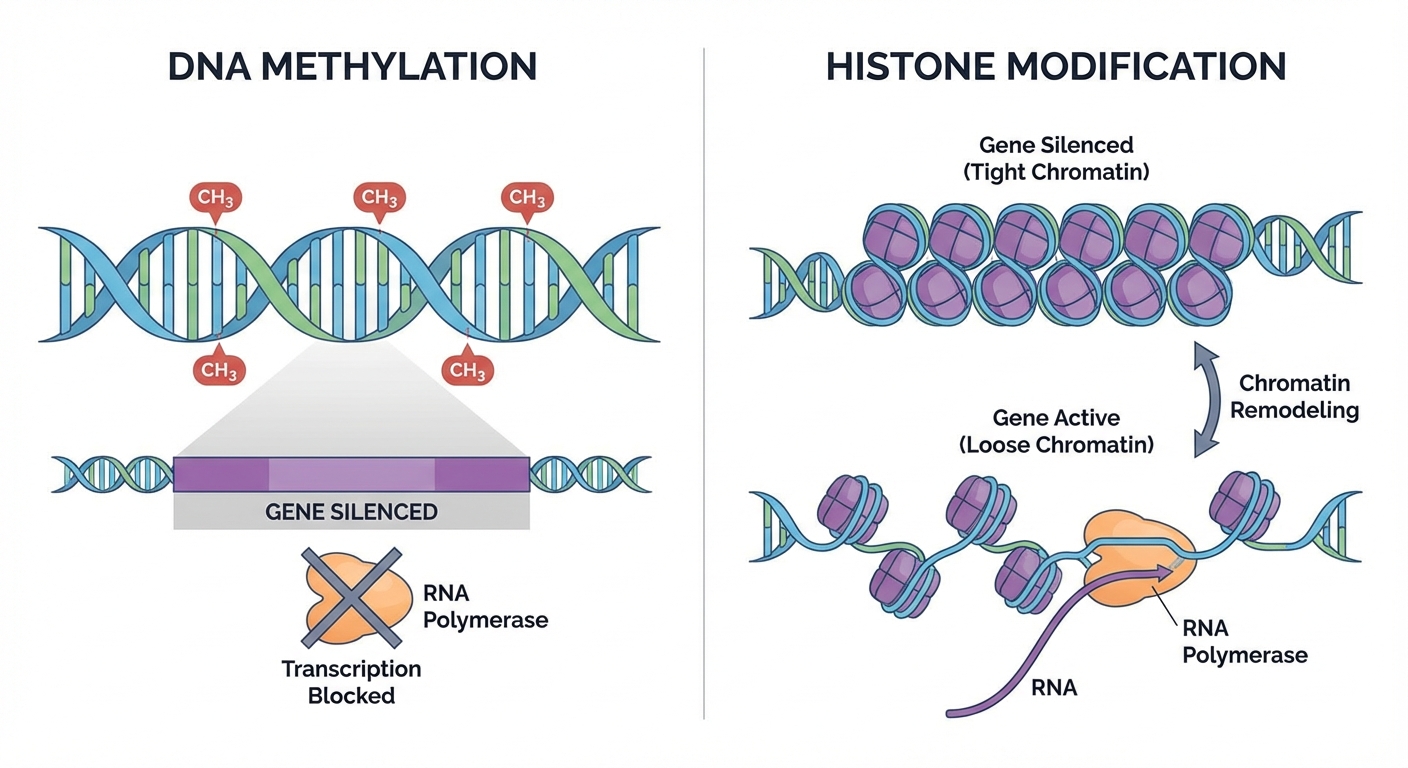
Histone modification works differently. DNA wraps around protein spools called histones, and chemical modifications to these proteins affect how tightly the DNA coils. Tight coiling hides genes from the cellular machinery that reads them; loose coiling exposes genes for active expression. Various chemical tags, including acetyl and phosphate groups, dynamically adjust this wrapping tension throughout your life based on signals from your environment and behavior.
Non-coding RNA molecules represent a third layer of epigenetic control. These small RNA sequences don’t encode proteins themselves but regulate the expression of other genes by interfering with or enhancing their reading. They act like volume knobs, turning gene expression up or down without changing the underlying genetic sequence.
The significance for your health cannot be overstated. Carrying a gene associated with type 2 diabetes doesn’t sentence you to the disease. Whether that gene actually activates and produces metabolic dysfunction depends partly on epigenetic regulation, which responds directly to lifestyle inputs. Someone with strong genetic predisposition might never develop diabetes if their lifestyle keeps the relevant genes appropriately silenced. Conversely, someone with favorable genetics might express disease-related genes through accumulated poor choices that shift their epigenetic patterns toward dysfunction.
How Your Diet Reprograms Your Genes
What you eat doesn’t simply provide energy and building materials for your body. Food carries molecular signals that directly affect gene expression through epigenetic pathways. Every meal you consume contains compounds that either support healthy gene regulation or push your epigenetic patterns toward disease-associated configurations. This isn’t metaphor or speculation; it’s measurable molecular biology.
Specific nutrients directly participate in methylation reactions that control gene silencing. Folate, vitamin B12, choline, and methionine provide the methyl groups necessary for DNA methylation. Without adequate intake of these nutrients, your body cannot properly regulate gene expression, potentially activating genes that should remain silent or silencing protective genes that should stay active. This mechanism explains why folate deficiency during pregnancy causes neural tube defects: improper methylation disrupts the gene expression patterns required for normal fetal development.
Polyphenols from vegetables, fruits, tea, coffee, and dark chocolate affect histone modification and gene expression, particularly genes controlling inflammation and metabolism. Sulforaphane, abundant in broccoli, cauliflower, and other cruciferous vegetables, activates genes involved in detoxification and antioxidant production through epigenetic mechanisms. When you eat broccoli, you’re literally programming your cells to better protect themselves from oxidative damage and environmental toxins. Research on polyphenols and longevity demonstrates these compounds affect gene expression patterns associated with healthy aging.
Research by Dr. Jose Ordovas at Tufts University examining Mediterranean dietary patterns reveals consistent epigenetic signatures in adherents: modified methylation patterns in genes associated with inflammation, cardiovascular function, and metabolic regulation. People who maintain Mediterranean eating patterns don’t just get more nutrients; they systematically shift their gene expression toward healthier configurations over time. What you eat today programs which genes will be active tomorrow, next month, and potentially for years.
Exercise as Gene Therapy
Physical activity creates extensive epigenetic modifications affecting genes involved in metabolism, mitochondrial function, muscle development, and inflammation control. A single exercise session triggers temporary epigenetic changes that fade within hours or days. But regular training over weeks and months creates sustained modifications that persist as long as you maintain the exercise habit, essentially rewriting your baseline gene expression profile.
Research examining both human subjects and animal models reveals that exercise training changes methylation patterns in fat tissue, skeletal muscle, heart muscle, and even brain tissue. The functional effect is straightforward: exercise turns on genes that support metabolic health, energy production, and tissue maintenance while turning off or down-regulating genes associated with inflammation, fat storage, and accelerated aging. This epigenetic reprogramming helps explain why exercise produces benefits that persist between workouts and accumulate over time.

The evidence on strength training and aging demonstrates particularly compelling epigenetic effects. Resistance exercise activates genes controlling muscle protein synthesis and growth while suppressing genes associated with muscle wasting. For older adults, these epigenetic shifts can partially reverse the gene expression patterns typical of sarcopenia and frailty, essentially making their muscle tissue behave more like younger tissue at the molecular level.
Interestingly, the epigenetic benefits of exercise appear dose-dependent but not linear. Moderate, consistent exercise produces robust epigenetic improvements. Extreme exercise volumes can shift patterns toward inflammation and overtraining signatures. The sweet spot involves regular physical activity with adequate recovery, allowing positive epigenetic adaptations to consolidate rather than accumulate stress-related modifications.
Stress: The Epigenetic Saboteur
Chronic stress creates harmful epigenetic modifications that increase disease risk across virtually every organ system. Genes involved in stress response, immune function, and inflammation regulation show altered methylation patterns in people experiencing sustained stress, post-traumatic stress disorder, or persistent adversity. These molecular changes help explain why chronic stress doesn’t just feel bad; it fundamentally alters your biology in ways that promote disease.
The timing of stress exposure matters profoundly for epigenetic impact. Early life stress, particularly during childhood when epigenetic programming is most plastic, creates modifications that can persist throughout adulthood. These early patterns affect stress reactivity, inflammatory tendency, and disease vulnerability for decades. The research on adverse childhood experiences demonstrates that traumatic early environments literally get under the skin through epigenetic mechanisms, shaping biology long after the stressful circumstances have passed.
The more encouraging finding is that stress-induced epigenetic changes aren’t necessarily permanent. Interventions that reduce stress exposure or improve stress management, including meditation, cognitive behavioral therapy, social support, and lifestyle modifications, can partially reverse harmful epigenetic patterns. Your current stress management practices are actively influencing your gene expression. Developing better coping strategies isn’t just psychological self-improvement; it’s molecular medicine.
Sleep: The Nightly Reset Button
Sleep quality affects gene expression far more extensively than most people realize. Sleep deprivation alters the expression of hundreds of genes involved in immunity, metabolism, and stress response within just days. Research demonstrates that one week of inadequate sleep, averaging less than six hours nightly, changes expression patterns in over 700 genes compared to well-rested baseline. Many of these shifts move toward configurations associated with chronic inflammation and metabolic dysfunction.
Sleep debt accumulates epigenetic consequences alongside its cognitive and metabolic effects. Chronic sleep restriction creates sustained epigenetic modifications that don’t reverse with a single good night’s rest. The inflammatory gene expression patterns, immune suppression signatures, and metabolic dysfunction markers require consistent adequate sleep over weeks to normalize.
The encouraging aspect is reversibility. Returning to sufficient sleep quantity and quality, generally seven to nine hours for most adults, reverses many of the harmful gene expression changes within two to three weeks. Your body actively responds to improved sleep by reprogramming toward healthier epigenetic patterns. This isn’t merely feeling more rested; it’s measurable molecular normalization occurring in cells throughout your body every night you sleep well.
The Multigenerational Inheritance Question
Perhaps the most startling discovery in epigenetics research involves the possibility that lifestyle choices may echo through generations. For decades, biology operated under the assumption that the epigenetic slate is wiped essentially clean at conception. We believed only the hard-coded DNA sequence passed from parent to child, while acquired epigenetic modifications died with the individual.
New research challenges this assumption in specific contexts. Some epigenetic markers appear to escape the normal “reset” process during fertilization, potentially transmitting environmental information from parent to child. This phenomenon, called transgenerational epigenetic inheritance, suggests that extreme conditions experienced by parents or grandparents might create biological echoes in subsequent generations.

The Dutch Hunger Winter provides the most-studied example. People conceived during the severe famine in Netherlands during 1944-1945 showed lifelong epigenetic modifications affecting metabolism, even though they experienced normal nutrition after birth. More remarkably, their children, who were never exposed to famine, also displayed some metabolic epigenetic signatures. The grandparental starvation appeared to create biological patterns that persisted across two generations.
However, researchers urge caution about overstating these findings. The transgenerational effects observed in human studies are subtle and context-dependent. Most epigenetic modifications clearly do not pass to offspring. The extreme conditions studied, severe famine, major trauma, may represent edge cases rather than typical inheritance patterns. Your daily dietary choices probably won’t meaningfully affect your grandchildren’s gene expression. But the research does suggest that extreme environmental exposures, particularly during pregnancy and early development, may have longer-lasting biological consequences than previously assumed.
Epigenetic Aging: Your Biological Clock
We all know people who look and function decades younger than their chronological age, alongside others who seem to age prematurely. Until recently, we attributed these differences primarily to “good genes” without understanding the mechanisms. Thanks to researchers like Dr. Steve Horvath, we now have tools to measure these differences objectively through epigenetic aging clocks.
The epigenetic clock concept rests on the observation that methylation patterns change predictably throughout life. By analyzing methylation at specific genomic sites, researchers can calculate a person’s biological age with remarkable accuracy, often within two to three years of chronological age in healthy individuals. More importantly, the discrepancy between biological and chronological age predicts health outcomes. When biological age exceeds chronological age, risks of mortality, cardiovascular disease, cancer, and cognitive decline all increase substantially.
This metric provides a tangible scoreboard for evaluating longevity interventions. Instead of waiting decades to see whether a lifestyle change extends lifespan, researchers can measure whether it slows the ticking of the epigenetic clock within months. Studies using these markers show that exercise training, Mediterranean dietary patterns, adequate sleep, and effective stress management all associate with younger biological age. Conversely, smoking, chronic stress, obesity, and sedentary behavior accelerate epigenetic aging.
The research on longevity biomarkers increasingly incorporates epigenetic age as a key outcome measure. Some preliminary interventions appear to actually reverse epigenetic age, suggesting that aspects of biological aging might be malleable rather than fixed. We’re still early in understanding how to reliably slow or reverse the epigenetic clock, but the measurement tools now exist to evaluate interventions objectively.
The Reversibility Principle
The most empowering aspect of epigenetics is its fundamental plasticity. Unlike genetic mutations, which are essentially permanent alterations to DNA sequence, epigenetic modifications function more like bookmarks than permanent ink. They can be placed, but they can also be removed. Your genome is the hardware; your epigenome is the software, and software can be updated throughout life.
This plasticity explains why lifestyle changes can produce dramatic health improvements even after years or decades of poor habits. When you quit smoking, start exercising, improve your diet, or reduce chronic stress, you send signals that update your cellular programming. The epigenetic patterns associated with disease risk begin shifting toward healthier configurations. You’re not stuck with the gene expression profile created by past behaviors.
Smoking cessation provides compelling evidence for reversibility. Within weeks of quitting, methylation patterns at multiple sites begin reverting toward never-smoker configurations. Some modifications normalize within months; others take years. The important point is that change occurs. Similarly, weight loss reverses some obesity-associated epigenetic modifications, exercise training creates beneficial patterns within months, and stress reduction interventions can normalize stress-related methylation changes.
You are not imprisoned by your current epigenetic state. The modifications created by past lifestyle choices can be partially or completely reversed through sustained behavioral changes. This represents genuine biological second chance, available at any age to anyone willing to make consistent different choices.
Practical Implications for Your Health
Understanding epigenetics transforms how we should view health recommendations. It moves us from passive acceptance of “genetic destiny” toward active management of gene expression. Every major lifestyle factor produces measurable epigenetic effects.
Your diet provides the raw materials for methylation reactions and contains compounds that directly modify gene expression. Prioritize folate-rich vegetables, adequate B-vitamins, diverse plant polyphenols, and anti-inflammatory whole foods. Minimize ultra-processed foods, which contain additives that may create unfavorable epigenetic patterns. What you eat literally programs your cells.
Your physical activity directly reprograms gene expression toward metabolic health and away from disease patterns. Both aerobic exercise and resistance training produce epigenetic benefits through partially distinct mechanisms. Consistency matters more than intensity for sustained epigenetic improvement. The goal is regular movement that you can maintain for years, not occasional extreme efforts.
Your stress exposure and management skills modify gene expression patterns controlling inflammation, immune function, and stress reactivity. Chronic unmanaged stress creates harmful modifications; effective stress management practices can reverse them. Meditation, social connection, therapy, and other evidence-based approaches aren’t just psychological interventions; they’re influencing your gene expression.
Your sleep quality affects expression of hundreds of genes simultaneously. Prioritize seven to nine hours of quality sleep consistently, not just occasionally. Sleep optimization strategies produce measurable epigenetic benefits beyond simply feeling more rested.
The Bottom Line
The science of epigenetics has fundamentally dismantled the old idea that biology equals destiny. While you cannot change the DNA sequence you inherited from your parents, you have far more control over how that genetic code gets expressed than any previous generation understood. Your genes provide a range of possibilities; your lifestyle determines which possibilities become reality.
This knowledge carries both profound hope and serious responsibility. Every day, your choices leave molecular footprints, shaping your disease resilience, your aging trajectory, and potentially influencing future generations. We are active participants in our own biological unfolding, not passive recipients of genetic fate.
Next Steps:
- Audit your current lifestyle through an epigenetic lens: diet quality, exercise consistency, stress management, sleep adequacy
- Prioritize folate-rich foods (leafy greens, legumes) and diverse plant polyphenols (colorful vegetables, berries, tea)
- Establish consistent exercise habits that you can realistically maintain for years
- Address chronic stress through evidence-based approaches rather than ignoring it
- Protect your sleep as the nightly opportunity to reset gene expression toward health
Your lifestyle today is programming your gene expression tomorrow. The science is clear; the choices are yours.
Sources: Epigenetics research reviews (Nature Reviews Genetics), dietary epigenetics studies (American Journal of Clinical Nutrition), exercise and gene expression research (Cell Metabolism), stress epigenetics (Biological Psychiatry), Dutch Hunger Winter studies, Horvath epigenetic clock research (Genome Biology), cancer epigenetics literature (Cancer Research).