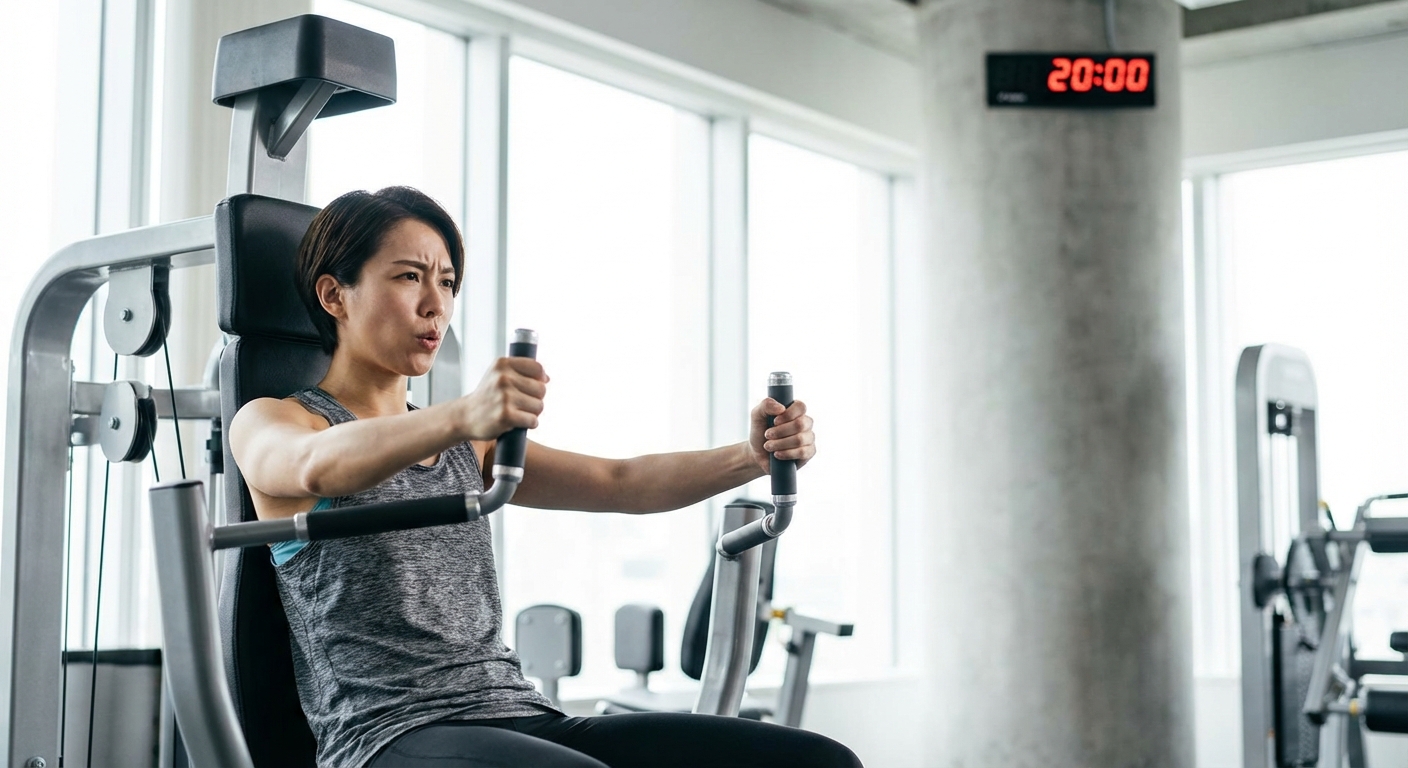
Most strength training involves movement: lifting weights up and down, pulling and pushing, dynamic motion through range of motion. We’ve been conditioned to equate exercise with action, with the satisfaction of completing repetitions and watching weights go up over time. Isometric training inverts this paradigm entirely. Instead of moving, you hold positions against resistance. Planks, wall sits, dead hangs, pushing against immovable objects. Your muscles contract intensely, but nothing moves. It looks passive, almost lazy, compared to the grunt-and-strain theater of conventional lifting.
But the research tells a different story. Isometric exercises build meaningful strength, particularly at the held angles. They improve tendon health more effectively than dynamic training alone. They reduce injury risk by strengthening the stabilizing structures around joints. And perhaps most surprisingly, they lower blood pressure more effectively than any other form of exercise, including aerobic training. A 2023 meta-analysis published in the British Journal of Sports Medicine found isometric training superior to all other exercise modalities for reducing blood pressure in hypertensive individuals, a finding that upends decades of cardiovascular exercise recommendations.
Isometrics deserve more attention than they receive. For people with joint issues, blood pressure concerns, time constraints, or those looking to add a dimension to their training that dynamic lifting doesn’t provide, isometric holds offer an evidence-based approach with unique benefits. The stillness isn’t weakness; it’s a different kind of strength that translates to real-world function and health.
Understanding Isometric Contraction
In an isometric contraction, your muscle generates force without changing length. You’re pushing, pulling, or holding against resistance that doesn’t move. The joint angle stays fixed, but the muscle fibers are working hard, generating tension that stresses both the contractile elements (the muscle fibers themselves) and the connective tissue structures (tendons and fascia) that transmit force to bone.
This contrasts with the two other types of muscle contraction that occur during dynamic movement. Concentric contraction happens when the muscle shortens under load, like the bicep shortening as you curl a weight up. Eccentric contraction happens when the muscle lengthens under load, like the bicep lengthening as you lower that weight back down. Most exercises include all three contraction types at different phases of the movement: isometric at the top or bottom when you pause, concentric on the way up, eccentric on the way down.
Isometric training isolates and emphasizes the hold component. By removing movement, you eliminate the “sticking point” problem that limits dynamic lifting. When you squat with a barbell, your strength is limited by the weakest angle in the movement, usually the bottom portion. You can’t load the top of the squat heavily because you have to be able to get through the bottom. Isometrics bypass this limitation. Because the load doesn’t move, you can exert maximal force against an immovable object, recruiting nearly 100% of available motor units, something that’s difficult or impossible to achieve in dynamic lifting.
This neural recruitment is one of isometric training’s primary benefits. The intense neural drive teaches your nervous system how to activate high-threshold motor units, the powerful fibers that generate maximum force. It’s pure strength training stripped of the mechanical wear and tear of repetitions. The strength gains are highly specific to the angle trained (plus or minus about 15 degrees), but this specificity is a feature, not a bug. It allows you to target and strengthen specific weak points with precision that dynamic training can’t match.
The Blood Pressure Revolution
Perhaps the most surprising and clinically significant finding about isometric training is its remarkable effect on blood pressure. While all exercise benefits cardiovascular health, isometric holds appear to have a unique and potent impact on hypertension that has caught the attention of cardiologists and exercise physiologists worldwide.
The landmark 2023 meta-analysis in the British Journal of Sports Medicine, led by researchers at Canterbury Christ Church University, analyzed 270 randomized controlled trials involving 15,827 participants to compare different exercise types for blood pressure reduction. The findings were striking: isometric exercise reduced systolic blood pressure by an average of 8.24 mmHg and diastolic pressure by 4 mmHg, outperforming aerobic exercise, dynamic resistance training, and even combined training approaches. This effect size approaches what’s achievable with first-line blood pressure medications, a remarkable finding for a completely drug-free intervention.
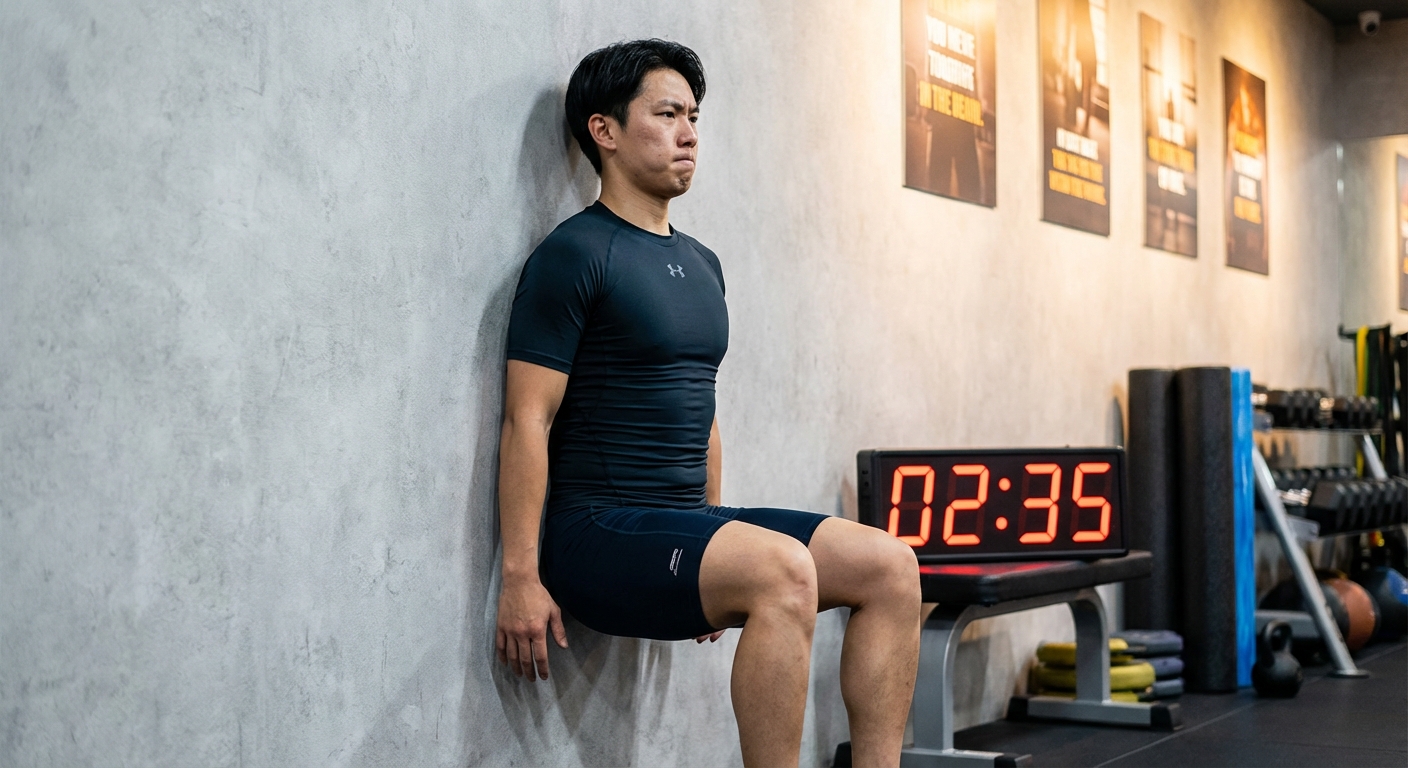
The protocol used in most successful studies is surprisingly simple: wall sits or leg extension holds performed 4 times for 2 minutes each, at approximately 30-40% of maximum voluntary contraction intensity, with 2-minute rest periods between holds. Three sessions per week for 8-12 weeks produces significant, lasting reductions. The mechanism appears to involve improved endothelial function (the blood vessels become better at dilating and constricting appropriately), reduced arterial stiffness, and favorable shifts in autonomic nervous system balance toward parasympathetic dominance.
The physiological explanation involves a phenomenon called reactive hyperemia. During an isometric hold, the contracting muscles compress blood vessels, temporarily restricting blood flow and causing a localized pressure increase. When you release the hold, blood rushes back into the previously compressed vessels, triggering a massive release of nitric oxide. This vasodilator signal tells blood vessels throughout the body to relax and dilate. Repeated exposure to this pressure-and-release cycle appears to “reset” the baroreceptors (pressure sensors) and improve the baseline function of the vascular system.
For the 116 million American adults with hypertension, this finding is potentially transformative. Isometric training can be done at home with no equipment, takes less than 20 minutes per session, causes minimal joint stress, and produces blood pressure reductions comparable to medication. It’s not a replacement for medical management in severe cases, but for borderline or stage 1 hypertension, it represents a powerful first-line intervention.
Strength Gains and Neural Adaptations
Beyond cardiovascular benefits, isometric training builds strength through mechanisms that complement and enhance dynamic training. The gains are angle-specific, occurring primarily at the trained position plus approximately 15 degrees on either side, but within that range, they’re substantial and develop quickly.
Research shows isometric training can produce 20-30% strength increases in 8-12 weeks, comparable to or faster than dynamic training for the specific angles trained. The improvement is primarily neural rather than hypertrophic, meaning you’re teaching your nervous system to recruit more motor units and coordinate them more effectively, rather than building larger muscles. This makes isometric training particularly valuable for strength plateaus, where the limiting factor isn’t muscle size but neural recruitment efficiency.
Tendon health is another distinct benefit. Tendons respond to loading differently than muscles, requiring prolonged tension rather than repetitive movement to stimulate collagen synthesis and structural adaptation. Isometric holds load tendons heavily and continuously, providing exactly the stimulus they need to grow stronger and more resilient. This is why isometric exercises have become a cornerstone of tendinopathy rehabilitation; they reduce pain while promoting healing in ways that dynamic exercises can’t match. The protocol typically involves 45-60 second holds at moderate intensity, performed daily.
For joint-specific strengthening, particularly around the knee, shoulder, and ankle, isometrics are unmatched. They build strength in specific positions relevant to the joint’s vulnerable angles without the repetitive stress that can aggravate existing issues. Physical therapists use isometrics extensively because they’re effective, safe, and controllable in ways that dynamic exercises aren’t.
Programming Isometric Training
Isometric training generates remarkably little systemic fatigue compared to dynamic lifting. A heavy deadlift session might leave you drained for days, requiring careful recovery management. Isometric sessions tax the muscles and nervous system without causing significant muscle damage or metabolic waste accumulation. This means isometrics can be performed frequently, even daily, without interfering with other training. They fit naturally as a warm-up to activate muscles before lifting, as a finisher to exhaust specific muscle groups, or as standalone sessions on recovery days.
For blood pressure reduction, the evidence-based protocol is straightforward: 4 sets of 2-minute holds using leg exercises (wall sit or isometric leg extension), performed at 30-40% of maximum effort, with 2-minute rest between sets. Do this 3 times weekly for at least 8 weeks. The intensity should feel moderate, not maximal; you’re seeking sustained tension, not an all-out effort. Breathe continuously throughout, never holding your breath, as this can spike blood pressure dangerously during the hold.
For strength development, use higher intensities and shorter durations: 3-5 sets of 10-45 second holds at 70-80% maximum effort. Train multiple angles throughout the range of motion if you’re trying to build strength across the entire movement. For example, to strengthen the squat, hold at the bottom (90-degree knee angle), at the sticking point (typically around 120 degrees), and at the top (nearly full extension). Combine with dynamic training for comprehensive strength development; isometrics supplement but don’t replace movement-based work for most goals.
For rehabilitation and injury prevention, program moderate intensity (50-60% max) with longer holds (20-30 seconds) in pain-free positions. Frequency can be high, 5-6 times weekly or even daily, because recovery demands are minimal. Focus on the specific joint or muscle group that needs attention, and progress gradually by increasing hold duration before increasing intensity.
For tendon health, use long holds (45-60 seconds) at moderate load, 2-3 times weekly. This is particularly valuable for treating tendinopathy in the Achilles, patellar tendon, rotator cuff, or elbow tendons. Research shows isometric loading reduces tendon pain immediately (an analgesic effect that lasts 30-45 minutes) while also promoting structural healing over weeks.
Essential Isometric Exercises
Core isometrics build the trunk stability that supports all other movement. The plank, in its front and side variations, is the foundational core isometric, scalable from beginner knee planks to advanced single-arm or weighted progressions. Hold times of 30-60 seconds with perfect form are more valuable than longer holds with degraded positioning. The hollow body hold, borrowed from gymnastics, creates intense abdominal engagement while teaching proper pelvic position. Dead bug holds challenge anti-rotation stability, training your core to resist unwanted movement.
Lower body isometrics target legs and glutes through sustained holds. The wall sit, back against wall with thighs parallel to the floor, builds quad endurance and mental toughness that transfers to everything from cycling to skiing. Split squat holds in a lunge position develop single-leg strength and balance. Single-leg balance exercises, while simple, build the ankle and hip stability that prevents injury. Calf raise holds at the top position strengthen the often-neglected calf muscles and Achilles tendons.
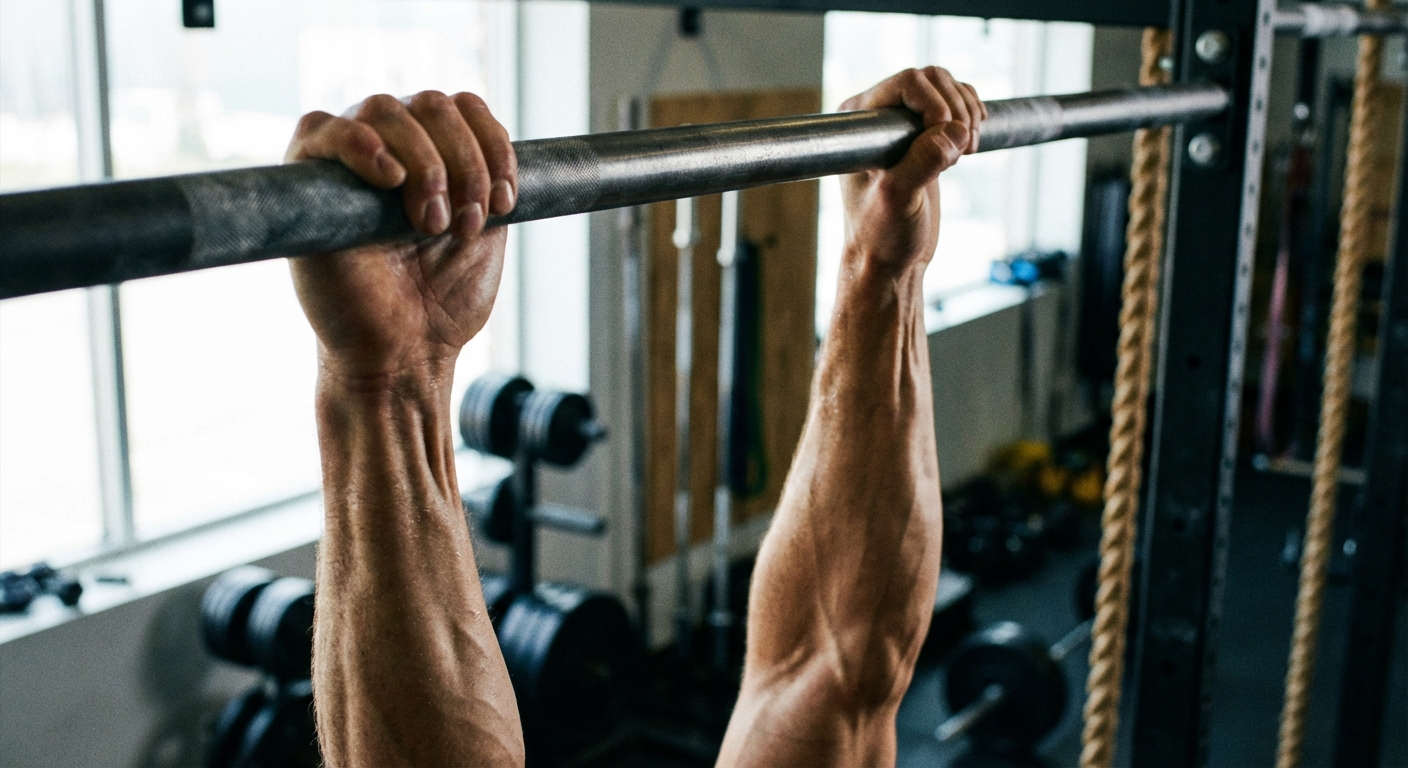
Upper body isometrics build pushing and pulling strength without movement. Push-up holds at top, middle, or bottom positions each emphasize different muscle activation patterns and joint angles. Pull-up holds at various heights throughout the range build grip, back, and bicep strength isometrically. Dead hangs from a pull-up bar develop grip endurance, decompress the spine, and build shoulder resilience. Pushing against a wall or doorframe allows maximum effort without equipment.
Loaded carries like farmer’s walks technically involve walking, but the core and grip work is primarily isometric: you’re holding heavy weights stable while moving. These bridge the gap between pure isometric training and functional strength, building the total-body tension that transfers to real-world tasks.
The Mental Dimension
Holding a position for 30-120 seconds is psychologically demanding in ways that differ from dynamic exercise. The discomfort builds progressively rather than arriving in waves between reps. Your muscles begin to burn. Your mind searches for reasons to quit. The clock seems to slow down as you approach your target time.
But your body is almost always capable of holding longer than your mind initially believes. This gap between perceived limits and actual capacity makes isometric training a form of mental strength development. Learning to continue through discomfort, to breathe steadily when everything screams to stop, builds a psychological resilience that transfers beyond the gym. Endurance athletes, martial artists, and military personnel have long recognized the mental toughness that static holds develop.
Some practitioners describe isometrics as “meditation under load,” a practice of remaining present with discomfort rather than escaping it. The hold forces you into the moment; there’s nowhere else to go, nothing else to do but endure. This enforced presence, combined with the physical stress, creates a training effect that encompasses both body and mind.
Common Programming Mistakes
Holding breath is the most dangerous mistake. The Valsalva maneuver (breath-holding during exertion) can spike blood pressure to dangerous levels during isometric holds. This is particularly concerning given that many people interested in isometrics have blood pressure issues. Breathe continuously throughout every hold, even if it reduces the intensity you can sustain.
Going too hard too soon leads to excessive soreness and potential injury. Start with shorter holds (15-20 seconds) and build duration gradually over weeks. The tendons and connective tissues adapt more slowly than muscles, so patience prevents overuse injuries.
Form deterioration undermines the exercise’s benefits. A sagging plank with hips dropped or raised doesn’t train the core effectively. Maintain position quality throughout the hold; when form breaks down, the set is over regardless of the clock.
Neglecting progression is as problematic with isometrics as with any training. Progressive overload applies here too: increase hold duration, move to harder positions, or add external load over time. Static training shouldn’t mean static progress.
Only doing isometrics limits overall development. For most people, isometric training supplements rather than replaces dynamic strength training. You need movement through range of motion for comprehensive strength, muscle growth, and functional capacity. Isometrics fill gaps that dynamic training misses, but they don’t cover everything.
The Bottom Line
Isometric training deserves more attention than it receives in the fitness world. The evidence supports significant benefits for strength, tendon health, blood pressure reduction, and injury prevention through mechanisms that dynamic training doesn’t fully address. The blood pressure findings alone are potentially transformative for the millions of people managing hypertension.
Next Steps:
- Add daily planks (3 sets of 30-60 seconds) for core strength and stability
- If blood pressure is a concern, start the evidence-based wall sit protocol: 4 x 2-minute holds, 3x weekly
- Include dead hangs (30-60 seconds) for grip strength and shoulder health
- Use isometric holds at sticking points in your main lifts to break plateaus
- For any tendon pain, try long isometric holds (45-60 seconds) at moderate load daily
For related training approaches, see our articles on strength training after 50 and recovery methods like cold water immersion. Isometrics integrate well with these approaches, adding a dimension that pure dynamic training lacks.
Sources: British Journal of Sports Medicine (2023 meta-analysis on isometric training and blood pressure), Journal of Strength and Conditioning Research (isometric strength development studies), British Journal of Sports Medicine (tendinopathy rehabilitation protocols), Mayo Clinic blood pressure guidelines, physical therapy rehabilitation research.