You’re three weeks into a new job, sleeping poorly, and your mind won’t stop racing about tomorrow’s presentation. Your doctor isn’t going to prescribe anything for this, it’s not a disorder, just life being stressful. But the constant hum of cortisol is wearing you down. You wonder if there’s something, anything, that could take the edge off without side effects or dependency.
This is where adaptogens enter the conversation. These herbs, with names like ashwagandha, rhodiola, and holy basil, have been used in traditional medicine systems for centuries to help the body handle stress. The concept emerged from Soviet research in the 1940s-1960s, when scientists sought substances that could help soldiers, athletes, and cosmonauts perform better under extreme conditions without the side effects of stimulants or sedatives.
Modern clinical research has revisited these herbs with randomized controlled trials, and the results are genuinely interesting. Ashwagandha reliably reduces cortisol and anxiety scores. Rhodiola improves mental fatigue and cognitive performance under stress. Holy basil shows calming effects in stressed populations. These aren’t placebo effects; they’re measurable changes in stress biomarkers and validated psychological assessments.
But the term “adaptogen” itself is more marketing category than precise scientific classification. The evidence varies dramatically between herbs. Even the well-studied ones produce modest effects, not dramatic transformations. Understanding what these herbs can and cannot do helps you decide whether they belong in your stress management toolkit.
What Defines an Adaptogen
The adaptogen concept emerged from Soviet pharmacology, specifically the work of Nikolai Lazarev and Israel Brekhman in the mid-20th century. They proposed three defining criteria that distinguish adaptogens from stimulants, sedatives, or general tonics.
Non-specific resistance enhancement means adaptogens should help the body resist various types of stressors, physical, chemical, biological, and psychological, rather than targeting one specific pathway. A stimulant like caffeine boosts alertness specifically; an adaptogen theoretically helps across multiple stress dimensions.
Normalizing effect describes how adaptogens should help bring physiological function back toward homeostasis regardless of the direction of dysfunction. If your cortisol is too high, the adaptogen helps lower it. If it’s too low, the adaptogen helps raise it. This bidirectional effect distinguishes adaptogens from drugs that push function in one direction only.
Non-toxicity requires that true adaptogens should be essentially harmless with minimal side effects even during prolonged use. They should support normal function without creating new problems.
Few substances truly meet all three criteria rigorously when subjected to modern scientific scrutiny. The term has been applied somewhat loosely to herbs showing any degree of stress-modulating effects, creating confusion about which “adaptogens” actually have evidence behind them. The three herbs with the strongest clinical research are ashwagandha, rhodiola, and holy basil. Everything else marketed as adaptogenic has substantially weaker evidence.
Ashwagandha: The Most-Studied Adaptogen
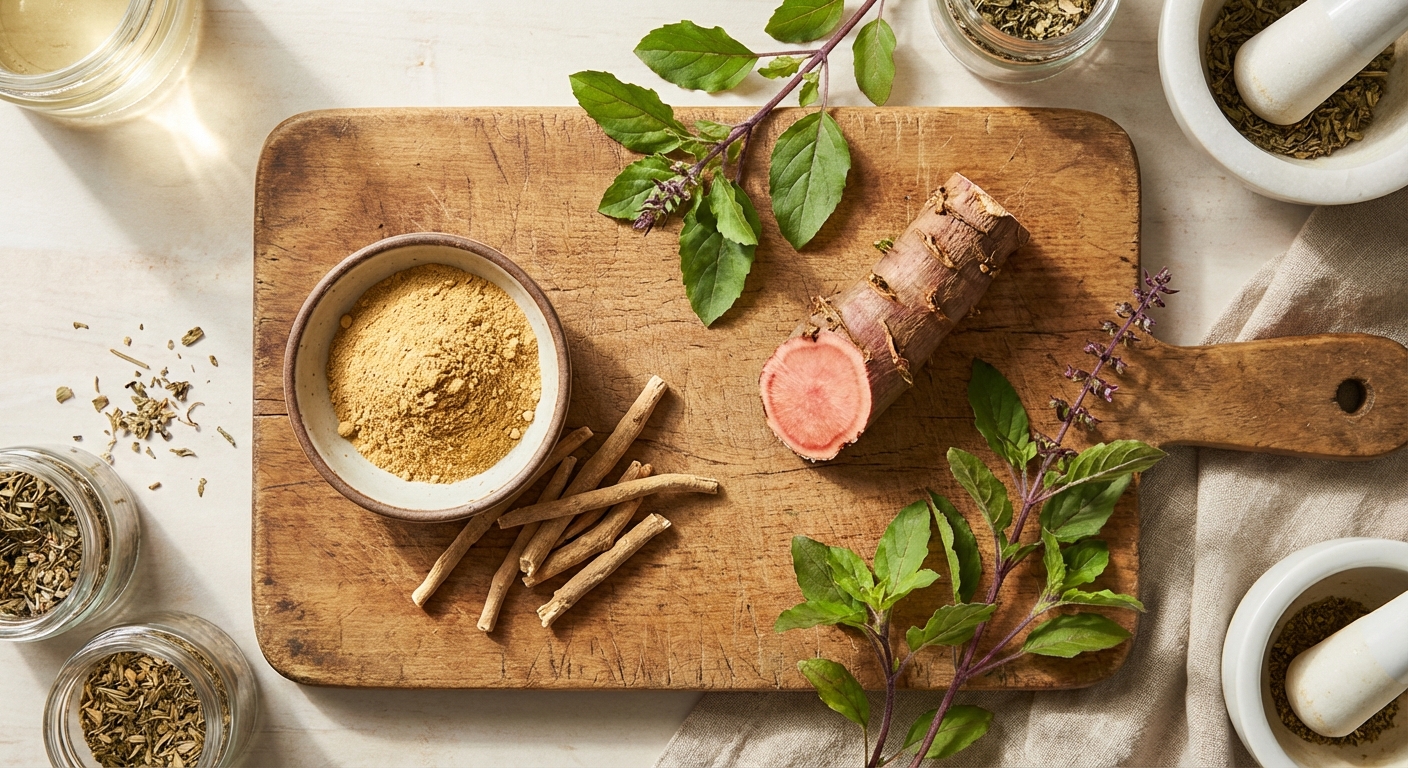
Ashwagandha (Withania somnifera) stands as the adaptogen with the strongest clinical evidence base. Used in Ayurvedic medicine for over 3,000 years under the name “Indian ginseng,” this root has been subjected to numerous randomized controlled trials that validate many of its traditional applications.
The active compounds responsible for ashwagandha’s effects are withanolides, steroidal lactones that appear to modulate stress hormones and neurotransmitter systems. Quality supplements are standardized to contain 5-10% withanolides, ensuring consistent potency across batches. Two branded extracts, KSM-66 and Sensoril, appear frequently in research and have the most clinical validation.
Anxiety reduction represents ashwagandha’s most reliably demonstrated benefit. A 2014 systematic review in the Journal of Alternative and Complementary Medicine analyzed five randomized controlled trials and found consistent anxiety reduction across studies. Effect sizes ranged from 20-40% improvement in anxiety scores compared to placebo over 8-12 week periods. A 2019 study published in Medicine (Baltimore) found that 240mg of ashwagandha extract daily reduced anxiety scores by 41% compared to 24% in the placebo group, a statistically significant difference.
Cortisol reduction is perhaps ashwagandha’s most measurable effect. Studies measuring cortisol through blood or saliva samples consistently show 15-30% reductions with 300-600mg daily supplementation over eight weeks or longer. A 2012 study in the Indian Journal of Psychological Medicine found a 27.9% decrease in serum cortisol among participants taking ashwagandha compared to a 7.9% decrease in the placebo group. This matters because chronically elevated cortisol contributes to anxiety, poor sleep, weight gain, immune suppression, and cognitive impairment.
Sleep quality improvements appear in several trials, likely resulting from reduced anxiety and nighttime cortisol rather than direct sedative effects. A 2019 study in Cureus found significant improvements in sleep quality scores among participants taking 300mg twice daily for 8 weeks. Ashwagandha doesn’t cause daytime drowsiness, making it different from sedative sleep aids.
Standard dosing is 300-600mg daily of standardized extract containing 5-10% withanolides, typically taken consistently for 8-12 weeks to achieve full benefits. Important cautions include potential interactions with thyroid medications (ashwagandha may affect thyroid function) and immunosuppressants. Pregnant women should avoid it due to insufficient safety data. Some people experience mild GI upset initially.
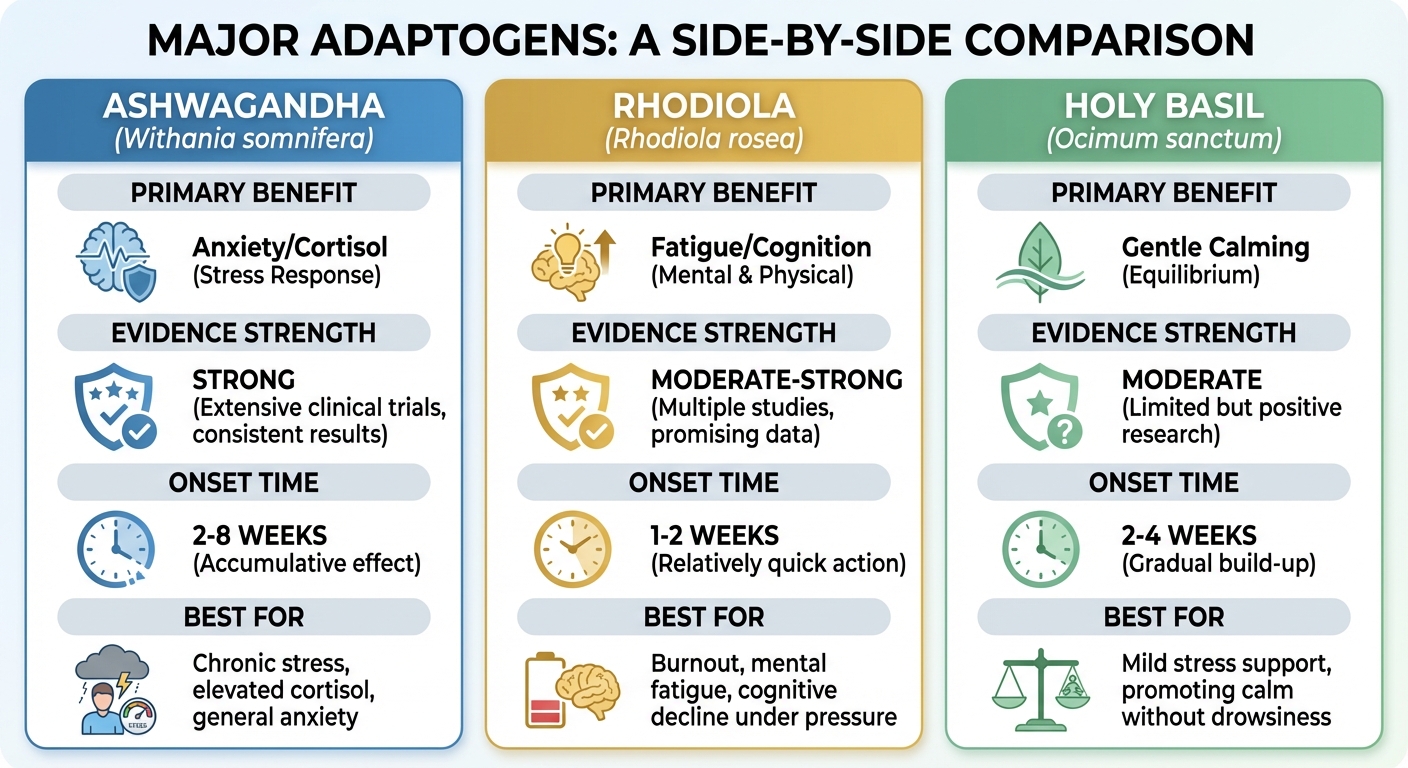
Among adaptogens, ashwagandha has the strongest evidence base, making it the logical first choice for evidence-based adaptogenic support.
Rhodiola Rosea: For Fatigue and Mental Performance
Rhodiola rosea, derived from the “golden root” plant used in traditional Russian and Scandinavian medicine, has been studied extensively for fatigue and cognitive performance under stress. The active compounds include rosavins and salidroside, and quality supplements are standardized to contain approximately 3% rosavins and 1% salidroside.
Fatigue reduction represents rhodiola’s most consistently demonstrated benefit and its primary differentiator from ashwagandha. A 2012 systematic review in BMC Complementary and Alternative Medicine analyzed 11 randomized controlled trials and found significant fatigue reduction in stressed populations. Participants reported feeling less exhausted and more energized during demanding periods. This makes rhodiola particularly appealing for burnout, chronic stress-induced exhaustion, or the mental fog that accompanies prolonged high stress.
Cognitive performance under stress improves with rhodiola supplementation. A 2000 study published in Phytomedicine found that rhodiola improved mental work capacity during fatigue-inducing conditions. Participants showed enhanced attention, mental processing speed, and accuracy on cognitive tasks during stressful periods. The effect appears specific to stressed states rather than boosting baseline cognition in well-rested individuals, suggesting rhodiola helps maintain normal function under stress rather than enhancing performance beyond baseline.
Mood benefits, particularly for mild to moderate depression, appear in several trials. A 2015 study in Phytomedicine compared rhodiola to sertraline (Zoloft) in patients with mild to moderate depression and found rhodiola produced fewer side effects with similar, though somewhat smaller, effects on depression scores. This doesn’t mean rhodiola replaces antidepressants for clinical depression, but it suggests the herb may help with the mood component of chronic stress.
Onset is relatively quick compared to other adaptogens. Effects often appear within days to 1-2 weeks rather than requiring months. This faster onset may reflect rhodiola’s different mechanism of action, potentially involving more direct neurotransmitter effects rather than slow adaptations in the HPA axis.
Standard dosing is 200-600mg daily of standardized extract, typically taken in the morning or early afternoon. The main consideration is a mild stimulating effect that can interfere with sleep if taken too late in the day. Rhodiola is generally well-tolerated with minimal side effects in most people.
Rhodiola works best for people dealing specifically with stress-induced fatigue and cognitive impairment. It’s less studied than ashwagandha for anxiety specifically but shows stronger evidence for combating the exhaustion and mental fog that chronic stress creates. For someone whose primary symptom is feeling burnt out and mentally depleted, rhodiola may be the better first choice.
Holy Basil: The Gentler Option
Holy basil (Ocimum tenuiflorum or Ocimum sanctum), known as tulsi in Ayurvedic tradition, is considered sacred in Hinduism and has been used medicinally for thousands of years. The active compounds include eugenol, ursolic acid, and rosmarinic acid, which collectively produce stress-reducing and anti-inflammatory effects.
Stress reduction represents the primary supported use. A 2017 systematic review in the Journal of Ayurveda and Integrative Medicine analyzed 24 studies and found evidence for stress-relieving effects, though noted that many studies had methodological limitations. Effect sizes are generally smaller than ashwagandha’s in comparable populations, but statistically significant stress reduction compared to placebo appears consistently. Some people report finding holy basil’s effects gentler and more subtle than ashwagandha, which may suit those seeking mild support rather than maximal intervention.
Blood sugar effects show preliminary promise. Several studies suggest improved glucose regulation with holy basil supplementation, potentially through improved insulin sensitivity. A study in the Journal of Ethnopharmacology found modest blood sugar improvements in type 2 diabetics taking holy basil. This application is less established than stress effects but represents an area of ongoing research.
Anti-inflammatory properties demonstrated in laboratory and animal studies suggest holy basil may reduce systemic inflammation, though human confirmation is limited. If these effects translate to humans, they could contribute to stress-reducing benefits since chronic stress and inflammation are interconnected.
Standard dosing is 300-600mg of extract daily or 2-3 cups of tulsi tea for those preferring traditional consumption. The tea provides lower doses of active compounds than concentrated extracts, but some people find the ritual of tea-drinking itself stress-reducing, potentially adding to the herb’s subjective benefits.
Safety is generally good, with the main consideration being potential effects on blood sugar that warrant monitoring in people using glucose-lowering medications. Holy basil may also have mild blood-thinning effects, so caution is warranted before surgery or for people on anticoagulant medications.
Holy basil’s evidence base is weaker than ashwagandha and rhodiola, but it shows real stress-modulating effects and represents a gentler option for people seeking mild adaptogenic support rather than maximal intervention. It’s a reasonable choice for someone who wants to try adaptogens but prefers to start with something subtle.
Other “Adaptogens” With Less Evidence
Beyond the big three, several other herbs carry the adaptogen label with substantially weaker supporting research. Understanding the evidence gap helps you avoid wasting money on unproven options.
Maca (Lepidium meyenii), a Peruvian root vegetable, has some evidence for improving energy and libido, particularly in postmenopausal women. However, research is limited in both quantity and quality. While maca appears safe, calling it a proven adaptogen overstates the current evidence.
Eleuthero (Eleutherococcus senticosus), marketed as “Siberian ginseng” despite not being true ginseng, was one of the original adaptogens identified in Soviet research. Some studies show fatigue reduction, but many are low quality by modern standards. The herb might work, but the evidence doesn’t inspire strong confidence.
Cordyceps, a medicinal mushroom, has some evidence for athletic performance and energy, but most research comes from China with quality concerns, and many studies use cordyceps combined with other substances.
Reishi mushroom has been studied for immune function and stress effects with mixed results. Schisandra berry shows preliminary evidence for stress reduction and liver support, but rigorous clinical trials are scarce.
If you’re going to invest in adaptogens, start with ashwagandha, rhodiola, or holy basil, the ones with actual clinical evidence, rather than those marketed primarily on traditional use.
How Adaptogens Work: Proposed Mechanisms
The mechanisms through which adaptogens exert their effects aren’t fully understood, but several pathways appear involved based on current research.
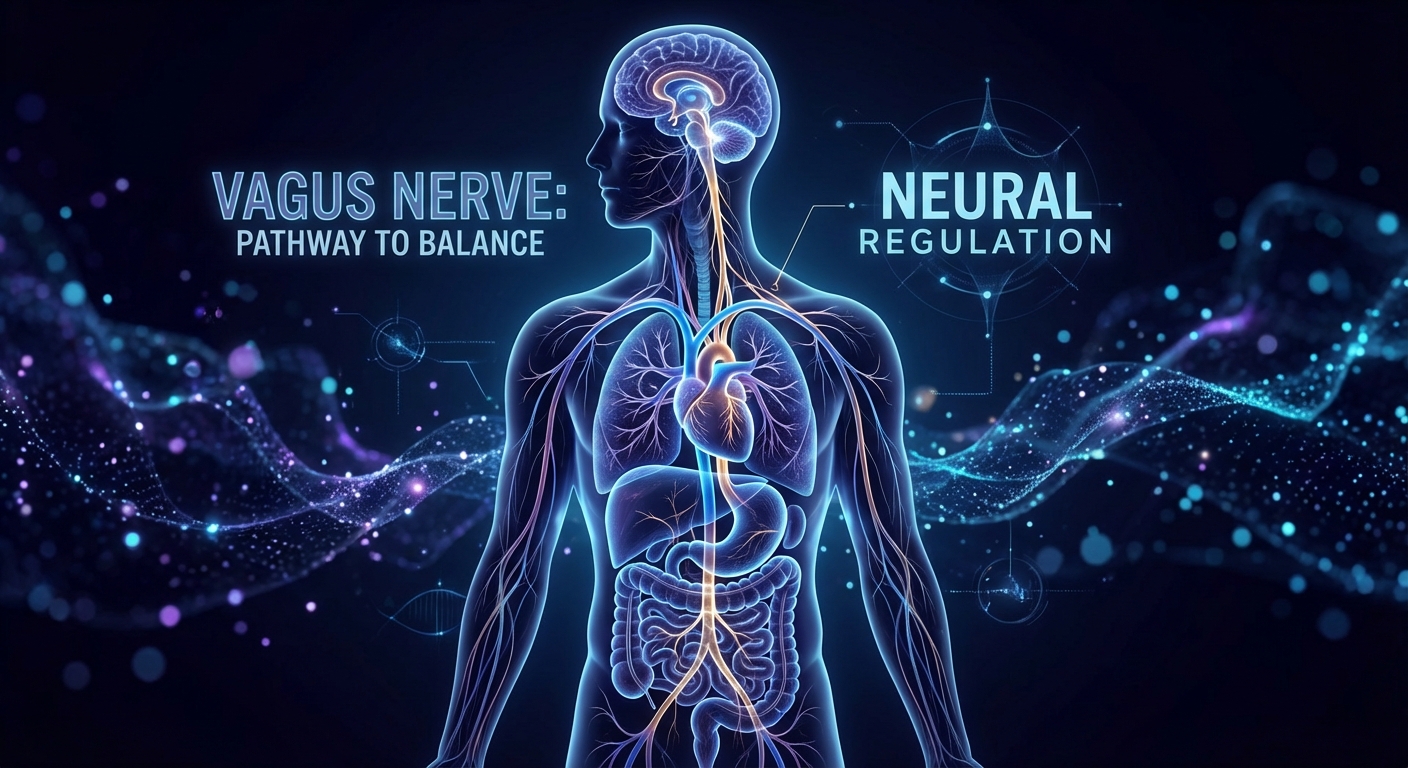
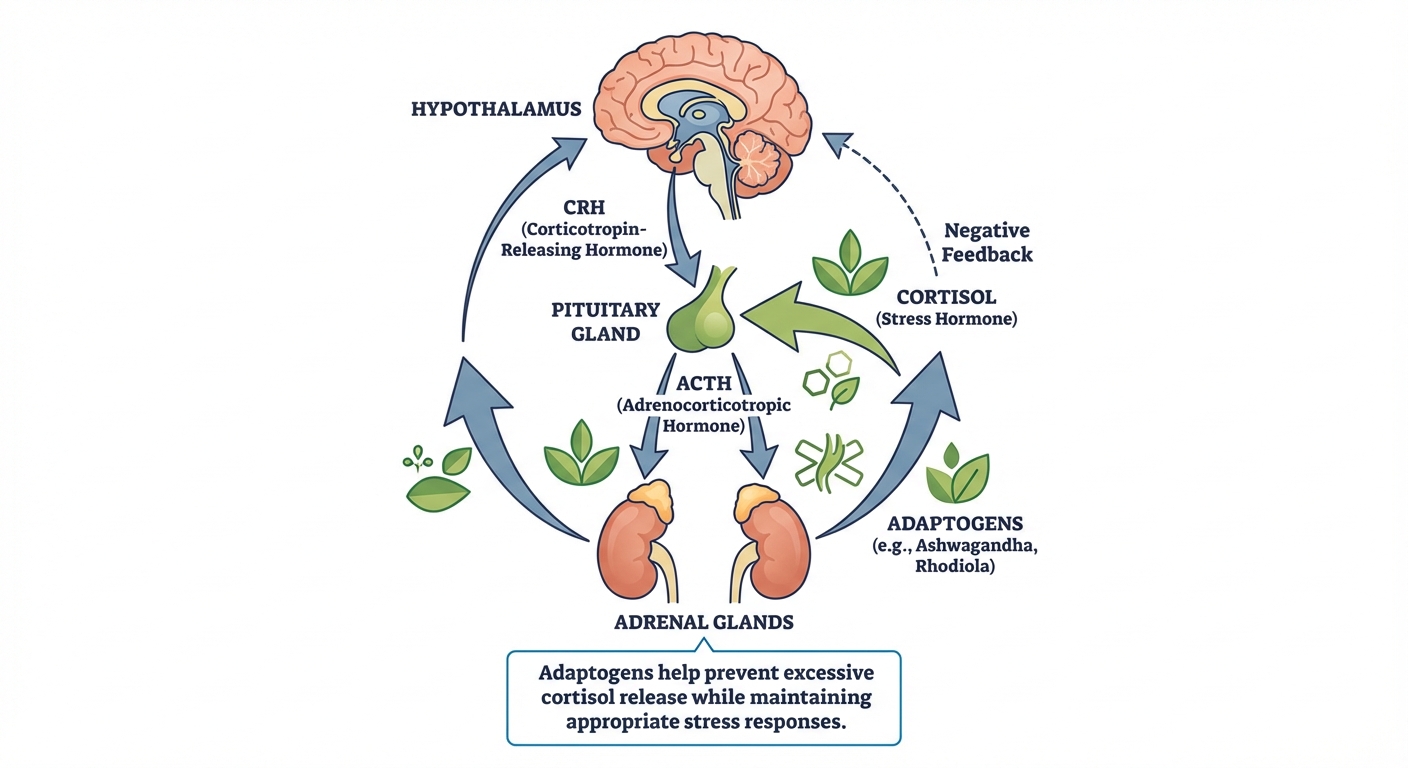
HPA axis modulation represents the primary proposed mechanism. The hypothalamic-pituitary-adrenal axis is your body’s central stress response system, determining how much cortisol gets released and how quickly levels return to baseline. Adaptogens appear to make this system more efficient, preventing excessive cortisol release while maintaining appropriate responses to genuine threats. Research on heart rate variability suggests adaptogens may also influence autonomic nervous system balance.
Neuroprotection through antioxidant and anti-inflammatory effects in the brain may protect neurons from stress-induced damage. Chronic stress creates oxidative stress and inflammation that impair neuronal function. By reducing these processes, adaptogens may preserve cognitive function under stressful conditions.
Neurotransmitter modulation, particularly GABA and serotonin systems, appears involved in ashwagandha’s anxiety-reducing effects. Rather than directly providing neurotransmitters like pharmaceutical drugs do, adaptogens may support the body’s natural production and regulation of these compounds.
Mitochondrial function improvements demonstrated for some adaptogens may explain fatigue-reducing effects. By enhancing cellular energy production, adaptogens could address the exhaustion that chronic stress creates.
The effects are subtle regulation and optimization rather than dramatic intervention, which explains both why adaptogens work differently than pharmaceutical anxiolytics and why their benefits are modest rather than transformative.
Who Benefits Most From Adaptogens
Certain populations are most likely to benefit from adaptogenic supplementation based on current evidence:
People with chronic stress from work, life circumstances, or personality traits like perfectionism or high anxiety may benefit meaningfully from cortisol-lowering and stress resilience effects. If you’re chronically stressed rather than acutely stressed by temporary situations, adaptogens’ sustained effects over weeks become relevant.
Those with stress-related fatigue, burnout, constant exhaustion, or mental fog might see substantial improvement, particularly from rhodiola or ashwagandha’s combined stress and energy effects.
People with mild anxiety where pharmaceutical intervention isn’t warranted but baseline anxiety is uncomfortable may find adaptogens’ modest anxiety reduction sufficient. Practices like breathwork can complement adaptogen use.
High performers managing training stress, demanding careers, or intensive physical and mental demands might benefit from adaptogens’ effects on stress hormones and recovery.
Those who can’t tolerate standard medications due to side effects might find adaptogens helpful alternatives that provide benefit without problems they experience with pharmaceuticals.
Who should avoid or approach cautiously: People on anxiety or depression medications should consult their doctor before adding adaptogens due to potential interactions. Pregnant or nursing women should avoid most adaptogens since safety isn’t established. People with autoimmune conditions should approach cautiously since some adaptogens affect immune function.
Setting Realistic Expectations
Adaptogens can realistically reduce cortisol by 15-30% in people with elevated levels, decrease subjective stress and anxiety modestly but measurably, improve stress-related fatigue particularly with rhodiola, and support resilience during demanding periods.
Adaptogens cannot replace therapy or medication for moderate to severe mental health conditions, eliminate stress entirely (they help you handle existing stress better but don’t remove stressors), work effectively without other stress management strategies, or produce dramatic immediate effects.
They’re helpful tools in a comprehensive stress management approach that includes addressing root causes, practices like gratitude journaling, adequate sleep, and exercise. They’re not magic bullets that bypass the hard work of lifestyle change.
The Bottom Line
Adaptogens, particularly ashwagandha and rhodiola, have legitimate clinical evidence for reducing stress, anxiety, and fatigue. The effects are modest, typically 15-30% improvements in measured outcomes, not dramatic transformations. But for people managing chronic stress, modest improvement represents meaningful quality of life enhancement.
Choose based on your primary symptom: ashwagandha for anxiety and cortisol, rhodiola for fatigue and cognitive performance, holy basil for gentle general support. Use quality products standardized to active compound content and verified by third-party testing. Give a fair trial of 8-12 weeks before evaluating effectiveness.
Next Steps:
- Identify your primary stress symptom (anxiety vs. fatigue vs. general tension)
- Choose ashwagandha for anxiety, rhodiola for fatigue, or holy basil for mild support
- Select a quality product with standardized extract and third-party testing
- Take consistently for 8-12 weeks at recommended dosing
- Track subjective stress, energy, and anxiety levels to evaluate whether the supplement helps
Sources: Journal of Alternative and Complementary Medicine 2014 ashwagandha systematic review, Indian Journal of Psychological Medicine 2012 cortisol study, BMC Complementary and Alternative Medicine 2012 rhodiola review, Phytomedicine 2015 rhodiola vs. sertraline study, Journal of Ayurveda and Integrative Medicine 2017 holy basil review, Medicine (Baltimore) 2019 ashwagandha anxiety study.