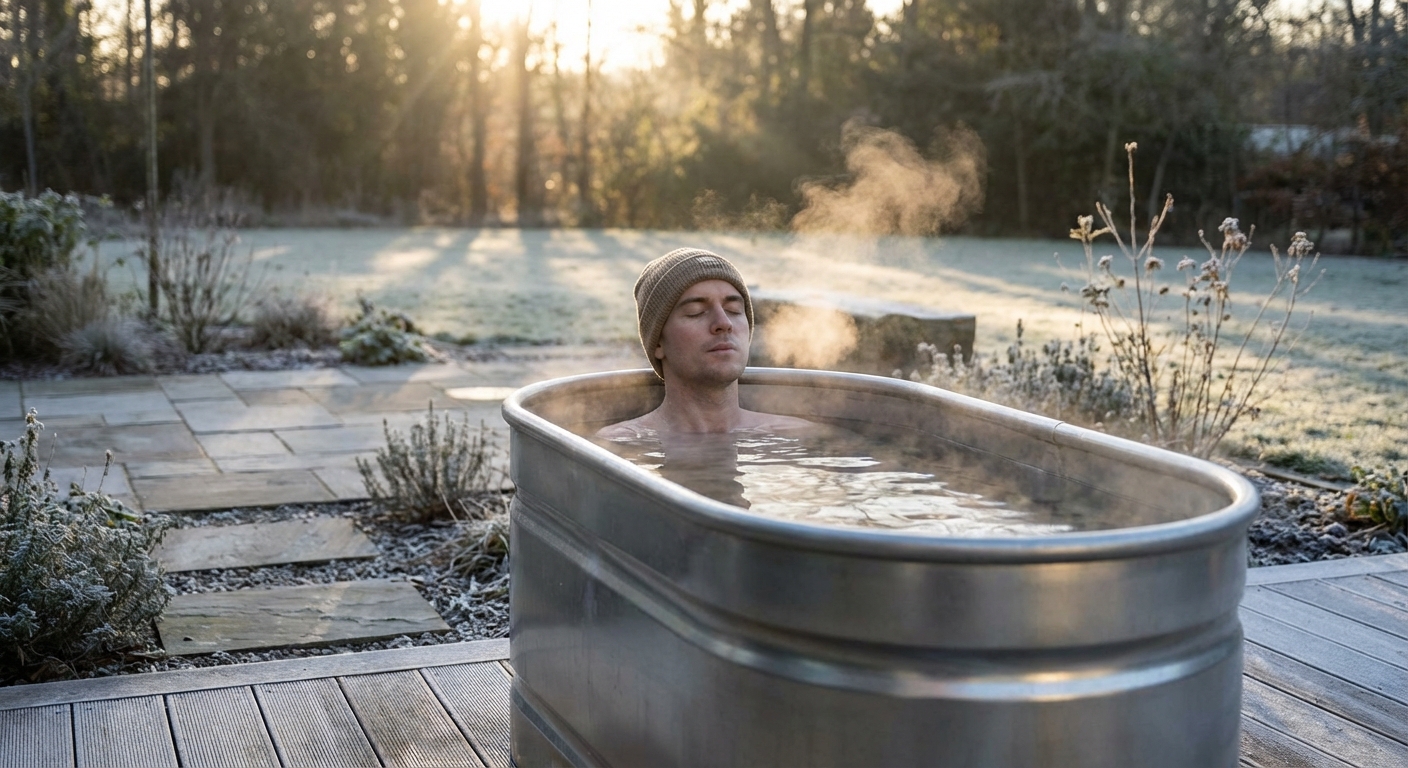
The trend of people voluntarily plunging into ice-filled tubs, ending showers with freezing water, or swimming in winter lakes seems masochistic on its surface. Why would anyone choose to be painfully cold when the entire project of human civilization has been about avoiding discomfort?
The answer, supported by growing research and practiced by millions worldwide, is that brief, controlled cold exposure triggers biological adaptations that outlast the cold itself. Your body responds to acute cold stress by activating systems that improve mood, increase focus, build stress resilience, boost metabolism, and enhance immune function. The discomfort is temporary; many of the benefits persist for hours or days.
Cold exposure represents hormetic stress, beneficial stress that makes you stronger. It’s the same principle behind exercise (controlled muscle damage that leads to adaptation), fasting (temporary nutrient stress that triggers cellular cleanup), and vaccination (controlled pathogen exposure that builds immunity). The practice has moved from fringe biohacking to mainstream wellness, with research from Scandinavian universities, metabolic researchers, and neuroscientists providing increasingly compelling evidence for its effects.
This isn’t about forcing yourself to suffer. It’s about using acute controlled stress to build adaptive capacity, then harvesting the benefits.
What Cold Exposure Does to Your Body
When you enter cold water, your body initiates an emergency response system that evolved to preserve core temperature and survive environmental threats. Understanding these mechanisms helps explain both the immediate sensations and the lasting benefits.
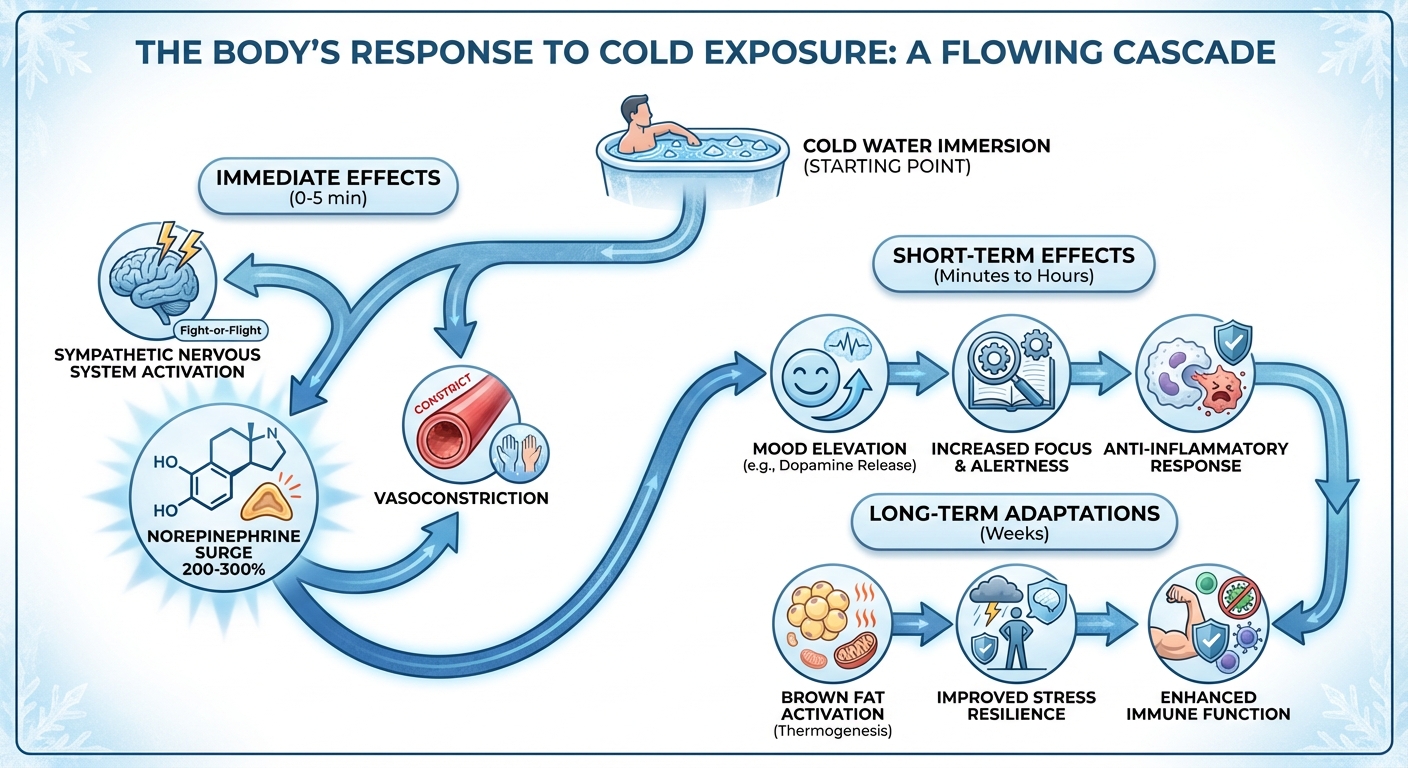
Norepinephrine surge is the most dramatic acute response. Cold water immersion causes a 200-300% increase in norepinephrine (noradrenaline), a neurotransmitter and hormone with effects throughout your body and brain. This isn’t a gradual increase; it’s a flood that begins within seconds of cold exposure and peaks within minutes.
Norepinephrine profoundly affects mood and attention. It’s involved in alertness, focus, and mood regulation. The surge from cold exposure creates what practitioners describe as a natural high, a sense of euphoria and heightened awareness that can persist for several hours after warming up. This explains why cold showers often feel more effective than coffee for morning alertness, and why cold plunge enthusiasts describe an almost addictive positive feeling afterward.
The norepinephrine response is dose-dependent: colder water and longer duration produce larger increases, up to a point where stress becomes excessive. Research from Dr. Susanna Søberg at the University of Copenhagen found that the metabolic and mood effects plateau around specific exposure thresholds, which we’ll discuss in the protocol section.
Brown fat activation represents another significant metabolic effect. Most body fat is white adipose tissue, which stores energy. Brown adipose tissue (brown fat) burns energy to generate heat through a process called thermogenesis. Infants have substantial brown fat to maintain temperature; adults have less, mostly dormant in areas around the neck, shoulders, and spine.
Cold exposure activates existing brown fat and, with repeated exposure, may increase brown fat quantity over time. When brown fat activates, it burns glucose and fatty acids for fuel. A 2014 study in Cell Metabolism found that cold exposure increased brown fat activity and improved insulin sensitivity. The metabolic effect is modest, perhaps 50-100 additional calories burned daily with regular cold exposure, but combined with improved glucose regulation and insulin sensitivity, it’s metabolically meaningful.
Vasoconstriction and vasodilation cycling, sometimes called “vascular gymnastics,” provides cardiovascular benefits. When you enter cold water, peripheral blood vessels clamp down (vasoconstriction) to preserve core temperature, forcing blood into vital organs. When you warm up, vessels dilate rapidly, flushing oxygenated blood back into tissues. This cycling keeps the circulatory system elastic and responsive, similar to how stretching maintains muscle flexibility.
The Mental Health Evidence
Perhaps the most compelling case for cold exposure comes from mental health research. The mood and resilience effects are both subjectively strong (practitioners report them consistently) and increasingly supported by clinical evidence.
Depression effects have been documented in several studies. A 2008 case report published in BMJ Case Reports described a 24-year-old woman with treatment-resistant major depression who achieved remission through regular cold water swimming, eventually discontinuing antidepressant medication with her psychiatrist’s supervision. While a single case report doesn’t prove efficacy, it prompted larger investigations.
A 2020 study published in British Journal of Sports Medicine surveyed 722 regular cold water swimmers and found that 61% reported mental health improvements, with anxiety and depression reductions the most commonly reported benefits. Proposed mechanisms include norepinephrine’s natural antidepressant effects, increased beta-endorphins (feel-good hormones), and the psychological effects of repeatedly overcoming resistance and building self-efficacy.
Anxiety and stress resilience improvements appear consistently in research on regular cold exposure practitioners. Studies on cold-water swimmers show lower self-reported anxiety levels, better stress hormone regulation, and increased parasympathetic nervous system activity at rest. The mechanism likely involves training the fight-or-flight response: you voluntarily activate it through cold, then practice calming yourself while maintaining control. This builds regulation capacity that generalizes to other stressful situations.
Subjective wellbeing effects are strong and consistent. Practitioners report increased energy and alertness lasting several hours after exposure, a sense of accomplishment and control, mood lift comparable to exercise-induced endorphin release, and improved sleep quality (possibly through metabolic effects or evening cortisol reduction). The subjective benefits are compelling enough that many people continue the practice long-term despite the physical discomfort.
Important caveats: Cold exposure is not a replacement for therapy or medication for clinical depression or anxiety disorders. It’s a potential adjunct practice, not monotherapy. Anyone with serious mental health conditions should work with their healthcare provider rather than attempting to treat themselves with cold exposure alone.
The Stress Resilience Mechanism
The fundamental benefit underlying many of cold exposure’s effects is hormesis, building resilience through controlled stress.
Cold is an acute stressor. Your body responds with stress hormones, sympathetic nervous system activation, and a powerful urge to escape. Then you recover. With repeated exposure, your stress response system becomes more efficient: stronger activation when genuinely needed, faster return to baseline afterward.
This adaptation generalizes beyond temperature regulation. People who practice regular cold exposure often report feeling calmer in other stressful situations, business presentations, difficult conversations, unexpected challenges. The cold trains your nervous system to handle stress generally, not just temperature stress specifically.
The psychological component matters equally. Every cold plunge requires overcoming powerful resistance. Every fiber of your being says “no,” and you do it anyway. This builds what psychologists call self-efficacy, confidence in your ability to handle difficult things. The practice becomes evidence you present to yourself: “I can do hard things. I’ve proven it.”
Box breathing and other controlled breathing techniques pair naturally with cold exposure, providing tools to manage the stress response in real-time and building breath control capacity that transfers to other challenging situations.
The Research-Backed Protocol
How much cold, how often, and at what temperature produces benefits? Research, particularly from Dr. Susanna Søberg’s lab in Copenhagen, provides specific guidance.
The minimum effective dose appears to be approximately 11 minutes of total cold exposure per week, divided across multiple sessions, at temperatures cold enough to cause shivering and discomfort but not dangerous.
Example distribution:
- 3-4 sessions per week
- 2-4 minutes per session
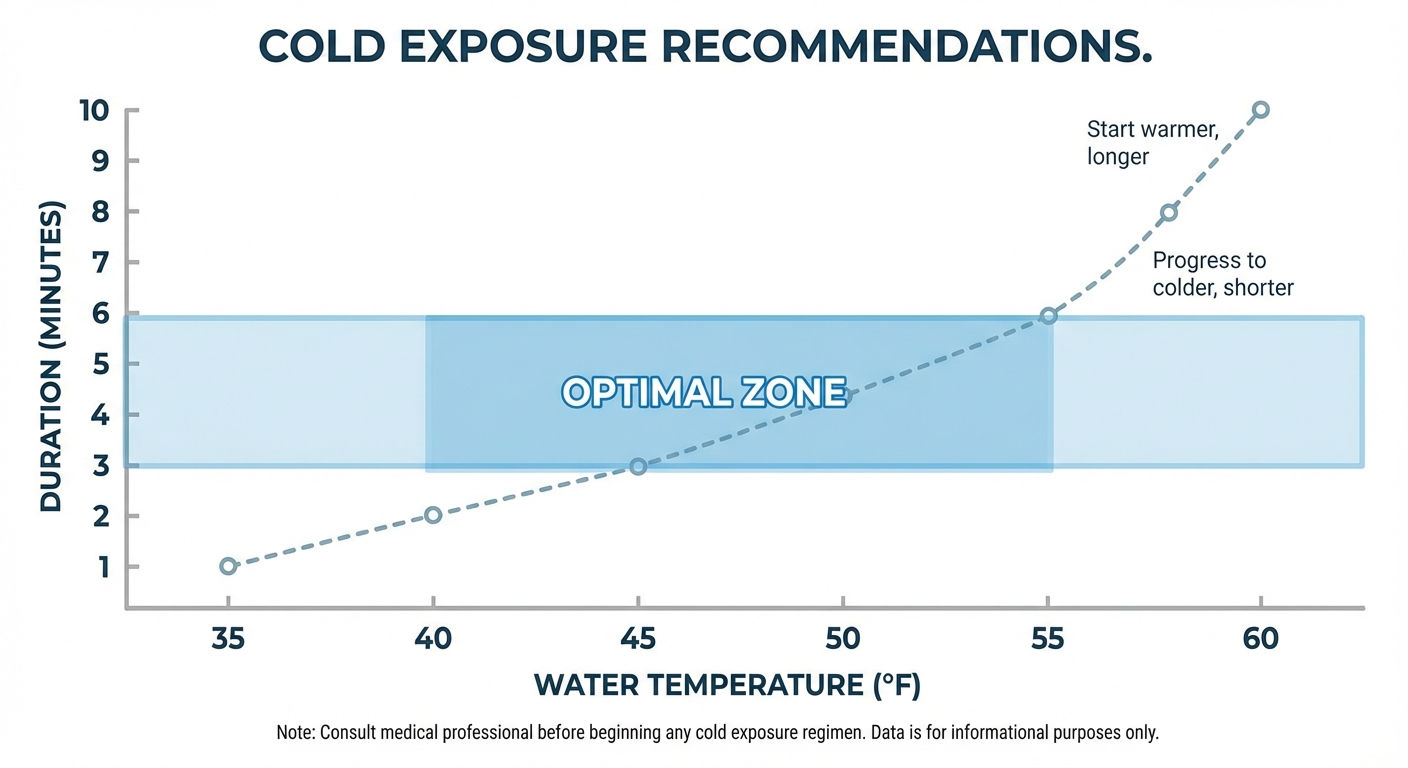
- Water temperature: 50-59°F (10-15°C)
This creates measurable metabolic and mood effects. More may provide additional benefits, but 11 minutes weekly appears to be the threshold for clear effects. For detailed temperature and timing guidance, see our comprehensive ice bath protocol guide.
Temperature matters more than duration for triggering responses. Research suggests that at temperatures below 59°F (15°C), clear physiological responses occur. The optimal range for most benefits appears to be 50-55°F (10-13°C). Below 45°F (7°C), intensity increases substantially but additional benefits plateau while risks increase.
Duration sweet spots:
- Under 1 minute: Minimal physiological effect
- 1-3 minutes: Moderate effect
- 3-6 minutes: Strong effect
- Over 10 minutes: Increased risk without proportional additional benefit
Colder temperatures allow shorter durations for equivalent effect. If water is 39°F, 90 seconds might produce similar effects to 4 minutes at 55°F.
Building Your Cold Exposure Practice
Starting cold exposure requires gradual progression. Jumping into 40°F water for 5 minutes on your first attempt is dangerous and counterproductive. Build tolerance systematically.
Cold Shower Protocol (Beginner)
The easiest entry point for most people:
Week 1-2: End your normal warm shower with 30-60 seconds of cold water. Focus on controlling your breath rather than the temperature.
Week 3-4: Increase cold duration to 1-2 minutes. Start practicing calm, controlled breathing during the cold portion.
Week 5-8: Extend to 2-3 minutes. You may begin skipping the warm portion entirely or minimizing it to brief initial warm-up.
Ongoing: 2-4 minutes of cold shower, 3-5 times weekly, water as cold as your tap provides.
Ice Bath Protocol (Intermediate/Advanced)
More intense than showers, with potentially greater benefits:
Setup: Large tub, livestock tank, or purpose-built cold plunge. Add ice to bring water temperature to 50-59°F. Use a thermometer to monitor temperature.
Progression: Start with 1-2 minutes at the warmer end of the range (55-59°F). Over 4-8 weeks, gradually increase to 3-6 minutes and/or decrease temperature toward 50°F.
Frequency: 2-3 sessions weekly is sufficient for most benefits. More isn’t necessarily better.
Safety Protocols
- Never submerge your head (increases hypothermia and drowning risk)
- Exit if shivering becomes uncontrollable or you feel confused
- Warm up gradually afterward; avoid jumping immediately into a hot shower
- Never do cold water swimming alone in natural bodies of water
- Skip cold exposure when already ill, as it’s additional stress your body doesn’t need
Breathing During Cold Exposure
Your breath will want to hyperventilate when you first enter cold water. This is the cold shock response, an involuntary gasping reaction. Controlling your breath is crucial for both safety and effectiveness.
Box breathing while cold:
- Inhale for 4 counts
- Hold for 4 counts
- Exhale for 4 counts
- Hold for 4 counts
- Repeat throughout exposure
This pattern activates the parasympathetic nervous system, helping you stay calm and in control despite the stress response. It also prevents hyperventilation, which can cause dizziness and panic.
As you adapt over weeks of practice, the initial shock response diminishes. Breathing normalizes more quickly, and you spend less mental energy fighting the urge to gasp.
Who Should Avoid Cold Exposure
Cold exposure is a significant physiological stressor. Certain populations should avoid it or proceed only with medical clearance:
Cardiovascular conditions: Cold causes immediate blood pressure spikes and heart rate increases. People with uncontrolled hypertension, coronary artery disease, or history of heart attack should consult their cardiologist before starting cold exposure.
Heart arrhythmias: The cold shock response can trigger irregular heart rhythms in susceptible individuals.
Raynaud’s disease or cold urticaria: These conditions make cold exposure medically inappropriate.
Pregnancy: Safety during pregnancy is not established; most practitioners recommend avoiding.
Recent surgery or serious illness: The additional physiological stress may impair recovery.
For healthy people, cold exposure is generally safe when approached gradually and practiced with awareness of individual limits. But respect the physiological seriousness of intense cold.
The Adaptation Timeline
Week 1-2: Cold feels brutally uncomfortable. You’re building mental resilience more than physical adaptation. The primary benefit is proving to yourself you can do it.
Week 3-4: Initial shock response lessens. You can breathe more normally. Duration tolerance increases. Some mood and energy benefits become noticeable.
Month 2-3: Cold becomes manageable. Mental benefits become clear and consistent. You might start looking forward to (or at least not dreading) the practice.
Month 6+: Well-adapted. Cold feels intense but familiar. Mood and energy effects are reliable and obvious. The practice has become integrated into your routine.
The practice never becomes comfortable, exactly. But it becomes familiar. You know you can handle it. That confidence extends beyond the ice bath into the rest of life.
The Bottom Line
Cold exposure isn’t magic. It won’t cure serious mental illness, replace medication or therapy, or make you superhuman. But it offers measurable benefits for mood, stress resilience, immune function, and metabolism through a simple, essentially free practice.
The barrier isn’t cost or access. It’s willingness to be uncomfortable for a few minutes. If you’re struggling with low mood, chronic stress, or want to build mental toughness, cold exposure is worth trying.
The physiological benefits, the norepinephrine surge, brown fat activation, immune stimulation, are documented in research. The psychological benefits, the self-efficacy, stress resilience, and present-moment awareness, are reported consistently by practitioners. And the practice itself is simple: get cold, breathe through it, warm up, repeat.
Next Steps:
- Start with 30-60 seconds of cold water at the end of your normal shower tomorrow
- Focus on controlling your breath rather than fighting the cold
- Gradually extend duration over 2-4 weeks to 2-3 minutes
- Track mood and energy for 4 weeks to evaluate whether the practice helps
- Consider progressing to ice baths if you want more intense effects
Sources: Dr. Susanna Søberg cold exposure research (University of Copenhagen), Cell Metabolism 2014 brown fat study, norepinephrine response data from clinical cold exposure studies, BMJ Case Reports depression case study, British Journal of Sports Medicine 2020 cold water swimming survey, immune function and cold adaptation research.