Loneliness kills. That statement isn’t metaphor or exaggeration. Meta-analyses of dozens of studies involving hundreds of thousands of participants show that chronic loneliness and social isolation increase all-cause mortality risk by 26-32%, comparable to smoking 15 cigarettes daily. Social connection isn’t a luxury or a nice-to-have. It’s a biological necessity affecting immune function, cardiovascular health, stress hormones, inflammation levels, and longevity in ways that rival the health impacts of diet and exercise.
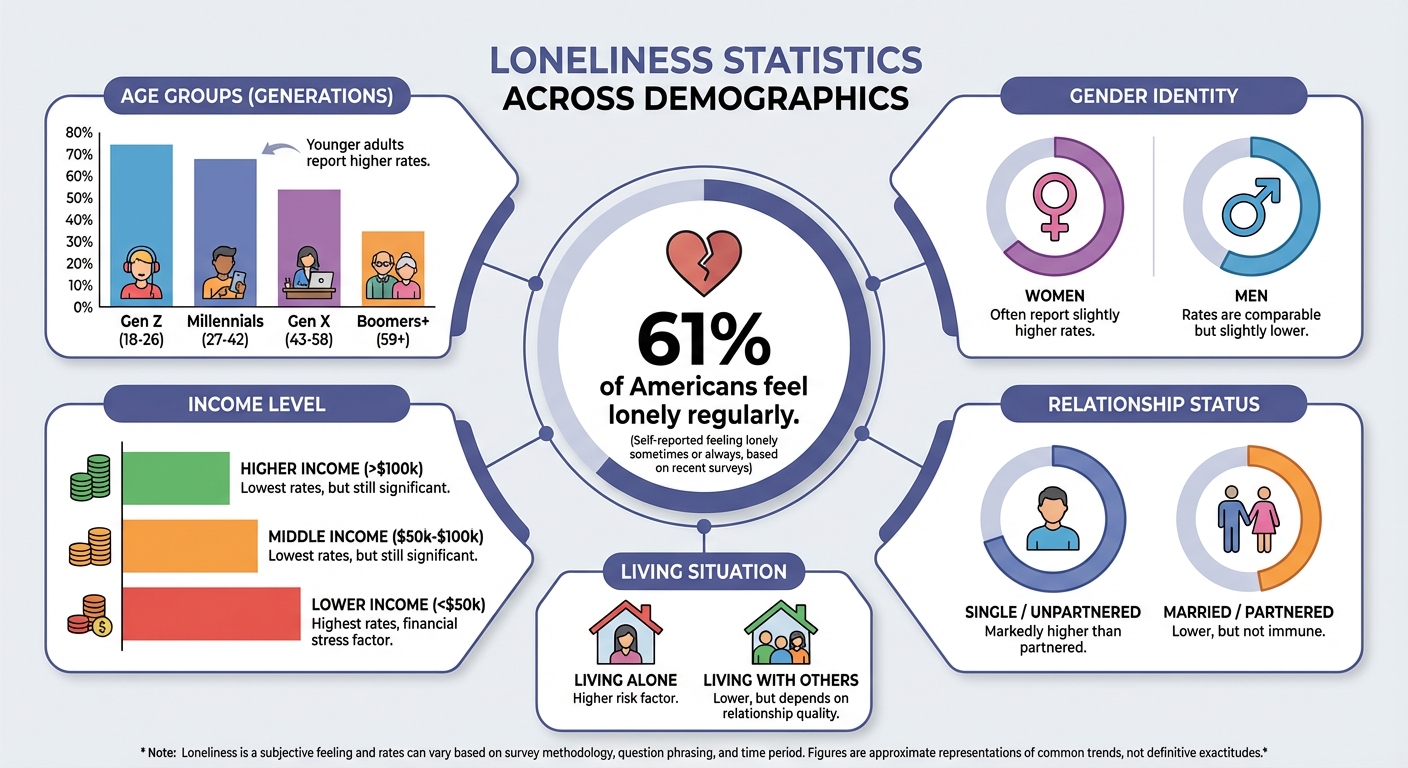
America is experiencing what public health officials now call a loneliness epidemic. Survey data shows 61% of Americans report feeling lonely regularly, up from 46% just five years ago. Young adults ages 18-25 report the highest loneliness rates at 79%, a finding that seems paradoxical given that this generation is the most digitally connected in human history. We’re more “connected” through technology than ever before while being more socially isolated than any previous generation. The distinction between digital connection and genuine human connection has become a critical public health issue.
The US Surgeon General’s 2023 advisory declared loneliness a public health crisis, elevating social isolation to the same level of concern as smoking, obesity, and substance abuse. This designation reflects growing recognition that individual wellness tips can’t solve a fundamentally structural problem. Understanding social connection as a public health issue, not just a personal problem, is essential for addressing an epidemic that affects physical health as profoundly as any lifestyle factor.
The Scope of the Crisis: Loneliness by the Numbers
The data supporting the Surgeon General’s designation is sobering. Sixty-one percent of US adults report feeling lonely, with 36% experiencing serious loneliness that affects daily functioning. Young adults are most affected despite being the most digitally connected generation in history, with 79% reporting regular loneliness. Seniors face distinct challenges: 1 in 4 people over 65 is socially isolated, often due to spouse loss, retirement, mobility limitations, and the death of peers.
The trends show alarming acceleration. Loneliness rates have doubled from 2010 to 2024 across all demographics. The COVID-19 pandemic accelerated existing trends between 2020-2024, but the isolation crisis predated COVID-19 by years. The pandemic merely unmasked and intensified patterns that had been building for decades.
Multiple structural factors drive the epidemic. Community participation has declined precipitously over the past 50 years, with membership in clubs, churches, civic organizations, and social groups dropping dramatically. Researcher Robert Putnam documented this decline in “Bowling Alone,” noting that Americans are increasingly disconnected from family, friends, neighbors, and democratic structures. Geographic mobility has increased, meaning people live far from family and childhood friends, lacking the embedded social networks previous generations maintained.
Digital connection has largely replaced in-person interaction, providing the illusion of connection while failing to satisfy deep human needs for physical presence, touch, and face-to-face communication. Remote work, accelerated by the pandemic, has reduced workplace social connection that once provided daily human contact for most adults. Third places, the cafes, libraries, barbershops, and community centers where people historically gathered informally, have either disappeared or become monetized environments that discourage lingering. And more people are aging alone: single-person households have increased dramatically, removing the built-in daily human contact that living with others provides.
The Biological Reality: How Loneliness Damages Health
Chronic loneliness affects virtually every physiological system. The mortality data alone is striking: a meta-analysis of 148 studies involving over 300,000 participants found that strong social relationships reduce mortality risk by 50%, while social isolation increases it by 26-32%. To put this in perspective, loneliness carries mortality risk equivalent to smoking 15 cigarettes daily. The effect is stronger than obesity, which increases mortality risk by approximately 23%, and comparable to physical inactivity. Social connection is literally life-extending; isolation is literally life-shortening.
The cardiovascular effects are particularly well-documented. Loneliness increases heart attack risk by 29%, stroke risk by 32%, and coronary heart disease risk by 29%. The mechanisms involve chronic stress response: loneliness keeps the hypothalamic-pituitary-adrenal (HPA) axis activated, elevating cortisol levels chronically rather than in healthy acute bursts. This sustained stress increases systemic inflammation, damages blood vessel walls, elevates blood pressure, and promotes the development of atherosclerosis. Lonely individuals also tend toward worse health behaviors, including higher rates of smoking, poor diet, and sedentary lifestyle, compounding the direct physiological effects.
Mental health effects create bidirectional relationships. Lonely individuals have 2-3 times higher depression rates and 3 times higher anxiety rates than those with strong social connections. Suicide risk increases substantially with social isolation. Cognitive function declines faster in lonely individuals, with socially isolated seniors showing 50% increased dementia risk and greater brain atrophy in memory centers. The relationship is bidirectional: loneliness contributes to mental illness, and mental illness increases loneliness through withdrawal and difficulty connecting, creating a self-reinforcing cycle that requires deliberate intervention to break.
The immune system responds to loneliness as a physiological threat. Lonely individuals show increased inflammatory markers (IL-6, CRP), reduced cellular immunity, slower wound healing, and higher susceptibility to infections. Dr. Steve Cole at UCLA has identified specific patterns of gene expression, the “conserved transcriptional response to adversity,” that show upregulation of inflammatory genes and downregulation of antiviral genes in chronically lonely individuals. The body is essentially mounting a chronic inflammatory response to the perceived threat of isolation.
Quality Over Quantity: What Actually Protects Health
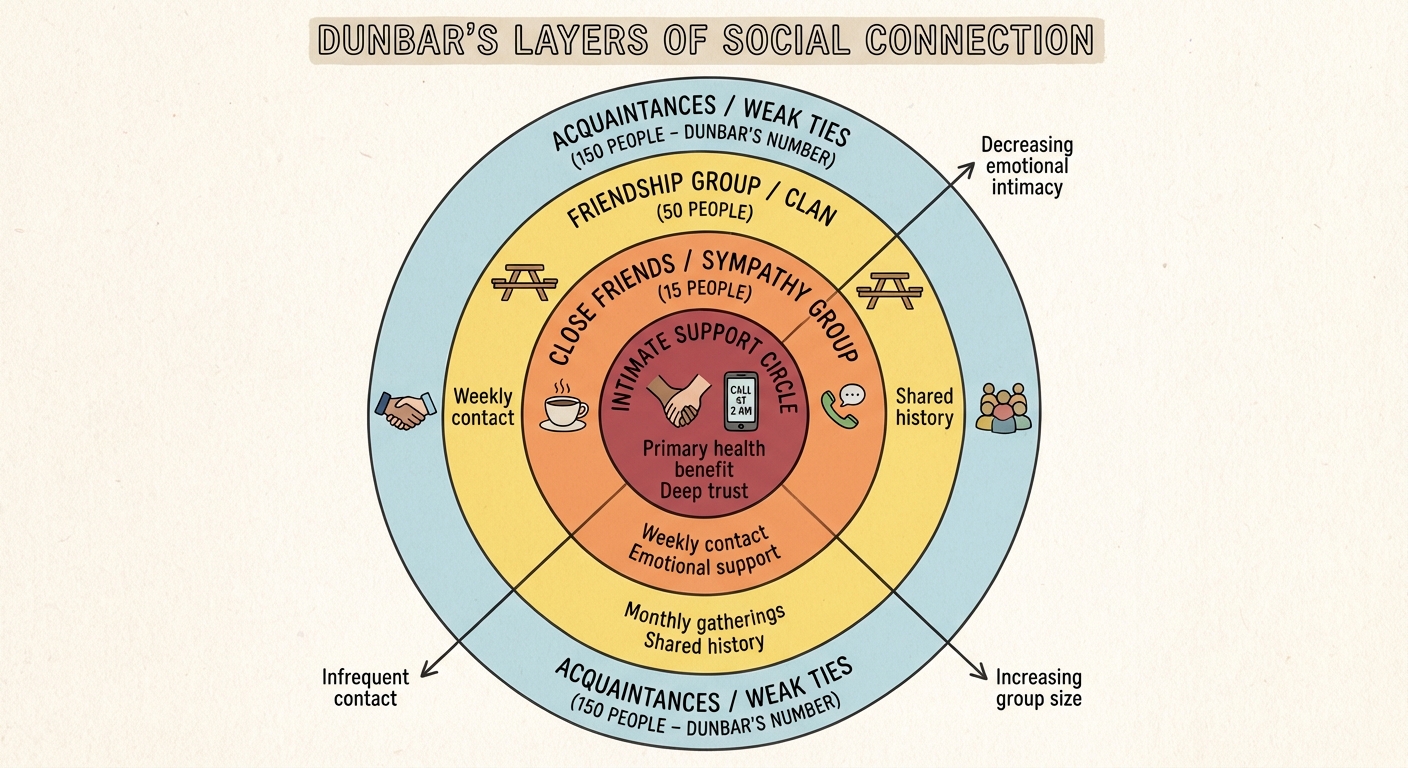
In the age of social media, we often confuse network size with social support. Having 500 Facebook friends provides no mortality benefit if you lack people you could call at 2 AM in a crisis. Anthropologist Robin Dunbar proposed that humans have a cognitive limit to stable social relationships, roughly 150 people. Within that 150, concentric circles of intimacy exist, and the innermost circle of 3-5 close relationships provides most of the health benefits.
Research consistently shows that quality of relationships matters far more than quantity. The protective factors include depth, trust, and reciprocity in relationships; feeling understood and valued by others; having people you can rely on during difficulty; and engaging in meaningful conversation and interaction. What matters less is total number of friends or contacts, frequency of interaction (quality beats quantity), and digital connection through likes, comments, and superficial online engagement.
You can be surrounded by people and profoundly lonely if connections remain superficial. You can have few relationships and not be lonely at all if those relationships are deep and meaningful. The research shows that 3-5 genuinely close relationships provide most of the health benefits that social connection offers. Having 50 acquaintances without those close connections does not.
This understanding has practical implications. Rather than trying to maximize social contact, focus on deepening existing relationships that have potential for genuine connection. Prioritize time with people who make you feel understood and valued. Invest in relationships that offer reciprocity rather than one-sided dynamics. Quality connection is the medicine; superficial contact is not a substitute.
Building Connection: Evidence-Based Strategies
We often treat making friends as a magical, serendipitous event that just “happens.” In reality, friendship formation follows predictable patterns that can be deliberately cultivated. Sociologists have identified three key ingredients for friendship development: proximity (being physically near people regularly), repeated unplanned interactions (seeing the same people multiple times), and settings that encourage vulnerability (contexts where deeper sharing feels natural).
In school and university, these conditions are built into the environment. Students see the same classmates repeatedly, share experiences, and have natural opportunities for connection. In adult life, these conditions must be deliberately engineered. We have to actively place ourselves in situations where we encounter the same faces repeatedly over time.
The “mere exposure effect,” a robust psychological phenomenon, explains why repeated contact builds affinity. Simply seeing the same people regularly increases liking and trust, even without deliberate interaction. This means that showing up consistently matters enormously. You don’t need to be charismatic or exceptionally social; you need to be present. Joining a weekly group, attending regularly, and letting familiarity build over months creates the conditions for friendship that no single social event can match.
Structured social activities provide the most reliable pathway to connection. Joining groups with regular meetings, whether sports leagues, fitness classes, book clubs, hobby groups, volunteer organizations, religious communities, or classes in cooking, art, or language, creates the repeated exposure that friendship requires. The structure removes the awkwardness of deliberately trying to make friends; the activity provides natural conversational topics and shared experiences.
Meaningful conversation accelerates connection. Studies show that engaging in substantive conversation about ideas, feelings, and experiences reduces loneliness more effectively than small talk about weather and logistics. This doesn’t require immediate deep disclosure; it means asking questions that go slightly beyond surface level and sharing more of your own perspective and experience. Moving conversations from “what do you do?” to “what matters to you?” shifts the quality of interaction meaningfully.
Volunteering shows particularly strong effects on reducing loneliness because it combines multiple protective factors: regular scheduled contact, shared purpose, contribution to something beyond yourself, and natural opportunities for meaningful interaction. The sense of mattering to others, of being useful and valued, addresses loneliness at a level that purely recreational social activity sometimes doesn’t reach.
The Role of Technology: Tool or Trap?
Technology occupies a complicated position in the loneliness epidemic. Social media and digital communication can maintain connections across distances, facilitate in-person meetups, and provide sense of community around shared interests that might not exist locally. For people with mobility limitations or in rural areas with few in-person options, digital connection offers genuine value.
However, technology also contributes to the problem in several ways. It can replace in-person connection with shallow digital interaction that doesn’t satisfy deep human needs. It creates comparison and feelings of inadequacy when curated highlight reels make others’ lives seem better connected than one’s own. It consumes hours that could otherwise go to real-world connection. And it provides an illusion of connection that reduces motivation to seek the genuine article.
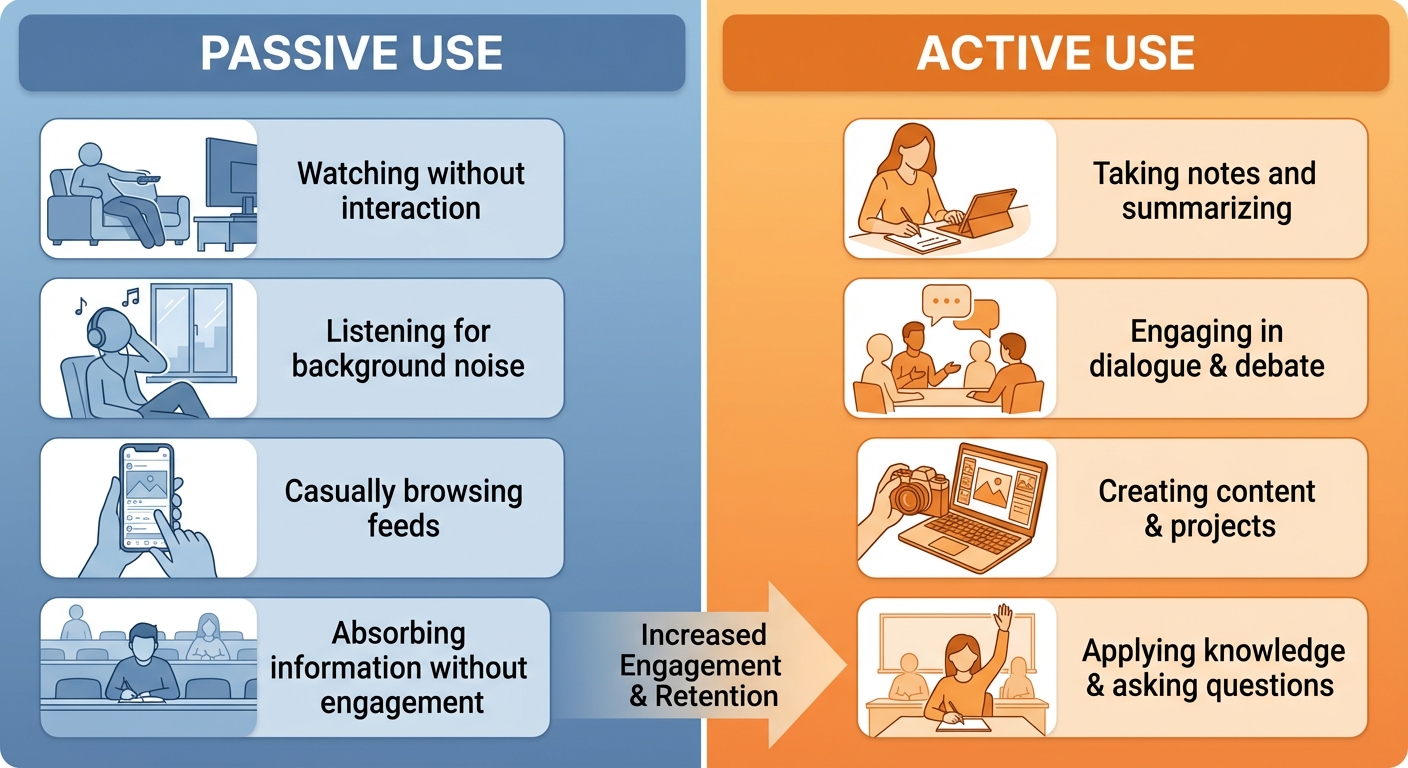
Research on social media use reveals an important distinction: passive use (scrolling, observing, consuming without interaction) increases loneliness, while active use (messaging, commenting meaningfully, planning in-person meetings) can reduce it. The tool isn’t inherently good or bad; how you use it determines its effects on your social wellbeing.
The practical implication is intentional technology use. Use digital tools to maintain relationships and coordinate in-person gatherings. Reduce passive scrolling that substitutes for genuine engagement. Recognize when digital connection feels hollow and prioritize face-to-face contact. Don’t let the convenience of texting replace the deeper satisfaction of actual conversation.
Moving Forward: Individual and Structural Solutions
Treating loneliness as individual failing hasn’t worked. The epidemic’s scope and acceleration suggest structural factors that require systemic responses alongside individual action. Some cities and countries are beginning to treat loneliness as a public health issue. The UK appointed a Minister for Loneliness in 2018 and created a national strategy. Japan launched programs targeting isolated seniors. Some US cities are implementing community programs, senior social services, and public space redesign to encourage interaction.
Public health approaches include funding community centers and programs that create gathering spaces, designing neighborhoods to encourage casual interaction rather than isolation, supporting volunteer organizations that provide structured social engagement, public awareness campaigns that reduce stigma around loneliness, and medical screening for social isolation. Some physicians now ask about loneliness as routinely as they ask about smoking, recognizing it as an equivalent health risk factor.
For individuals, addressing loneliness requires deliberate action rather than passive hope. Prioritize in-person connection over digital interaction when possible. Invest time in relationships as you would invest in exercise or nutrition, recognizing social connection as equally important to health. Join groups and communities that meet regularly, allowing the mere exposure effect to build familiarity and trust. Reduce passive digital consumption that substitutes for genuine engagement. Reach out actively to people you want to know better, even when it feels awkward or risky.
Social connection takes effort in the modern world in ways it didn’t for previous generations who lived in more embedded communities. But it’s effort that directly affects how long and how well you live. Reducing passive digital consumption through a structured digital detox can free up time and mental energy for genuine connection, while optimizing sleep through evidence-based biohacking provides the restoration needed to show up fully in your relationships.
The Bottom Line
Social connection isn’t optional for health. It’s necessary. Chronic loneliness has health consequences comparable to major risk factors like smoking and obesity, affecting mortality, cardiovascular health, immune function, mental health, and cognitive decline. The loneliness epidemic is real, measurable, and accelerating, requiring both individual and societal responses.
For individuals, the path forward involves treating relationships as health behaviors worthy of the same attention given to diet and exercise. This means prioritizing in-person connection, investing time in deepening existing relationships, joining communities that meet regularly, reducing passive digital consumption, and reaching out even when it feels difficult. The research on friendship formation suggests that showing up consistently matters more than social skill or charisma.
Your relationships are medicine. They affect inflammation, immune function, stress hormones, cardiovascular health, and longevity in measurable ways. In a culture that celebrates independence and individual achievement, recognizing interdependence as biological reality rather than weakness may be the most important mindset shift for addressing the loneliness epidemic at both individual and societal levels.
Building Connection: Your Action Plan
- Identify your inner circle: Who are the 3-5 people you can call in crisis? Invest there first.
- Join one recurring group activity that meets weekly (class, club, volunteer organization)
- Convert one regular acquaintanceship to deeper friendship through meaningful conversation
- Audit technology use: reduce passive scrolling, increase active coordination of real-world connection
- Reach out to one person you’ve lost touch with this week
- Treat social time as non-negotiable health behavior, like exercise or sleep
Sources: US Surgeon General 2023 Loneliness Advisory, meta-analyses on social isolation and mortality (Holt-Lunstad et al.), cardiovascular disease and loneliness research, UCLA gene expression studies (Dr. Steve Cole), Dunbar’s Number research, intervention effectiveness reviews, Robert Putnam “Bowling Alone.”.