You finish your last set, rack the weights, and immediately check your watch. Sixteen minutes since your workout started. How long until that crucial post-workout protein becomes urgent? The classic bodybuilding wisdom said you needed to consume protein within 30-60 minutes or miss the “anabolic window” for muscle growth. Gym culture treated this as near-religious doctrine. Miss the window, miss your gains.
Recent systematic reviews and meta-analyses have complicated this picture considerably. When researchers controlled for total daily protein intake, the timing effect largely disappeared. The narrow post-workout window might be less critical than generations of lifters have believed. But protein timing isn’t completely irrelevant either. Per-meal protein thresholds, distribution across the day, and pre-sleep protein all affect muscle protein synthesis through well-documented mechanisms.
The current evidence supports a nuanced position: total daily protein intake is the primary driver of muscle adaptation, but timing provides marginal optimization that may matter for serious athletes and people trying to maximize hypertrophy. Understanding what the research actually shows, including its limitations, helps you make informed decisions about nutrition strategy rather than following outdated dogma or dismissing timing entirely.
The Original Anabolic Window Theory
The traditional claim was straightforward and intuitively appealing. Exercise damages muscle fibers and creates an anabolic environment where growth and repair are prioritized. Protein provides the amino acid building blocks necessary for this adaptation. Therefore, timing protein delivery to coincide with peak muscle receptivity should maximize results. Consume 20-40 grams of high-quality protein within 30-60 minutes after training, or lose the muscle-building opportunity.
Early research supported this concept. Studies showed enhanced muscle protein synthesis rates when protein was consumed immediately post-workout compared to consuming the same amount several hours later. The effect seemed substantial. Protein synthesis peaked in the hour or two following exercise, then declined. If you weren’t providing amino acids during that peak, you were missing the window.
The problem was methodological. Many early studies examined fasted training in isolation, where participants hadn’t eaten for 8-12 hours before exercising and were compared against conditions where post-workout feeding was delayed further still. This created conditions where timing effects would appear most dramatic. Real-world eating patterns, where people typically consume protein throughout the day including meals before training, weren’t well represented in the research.
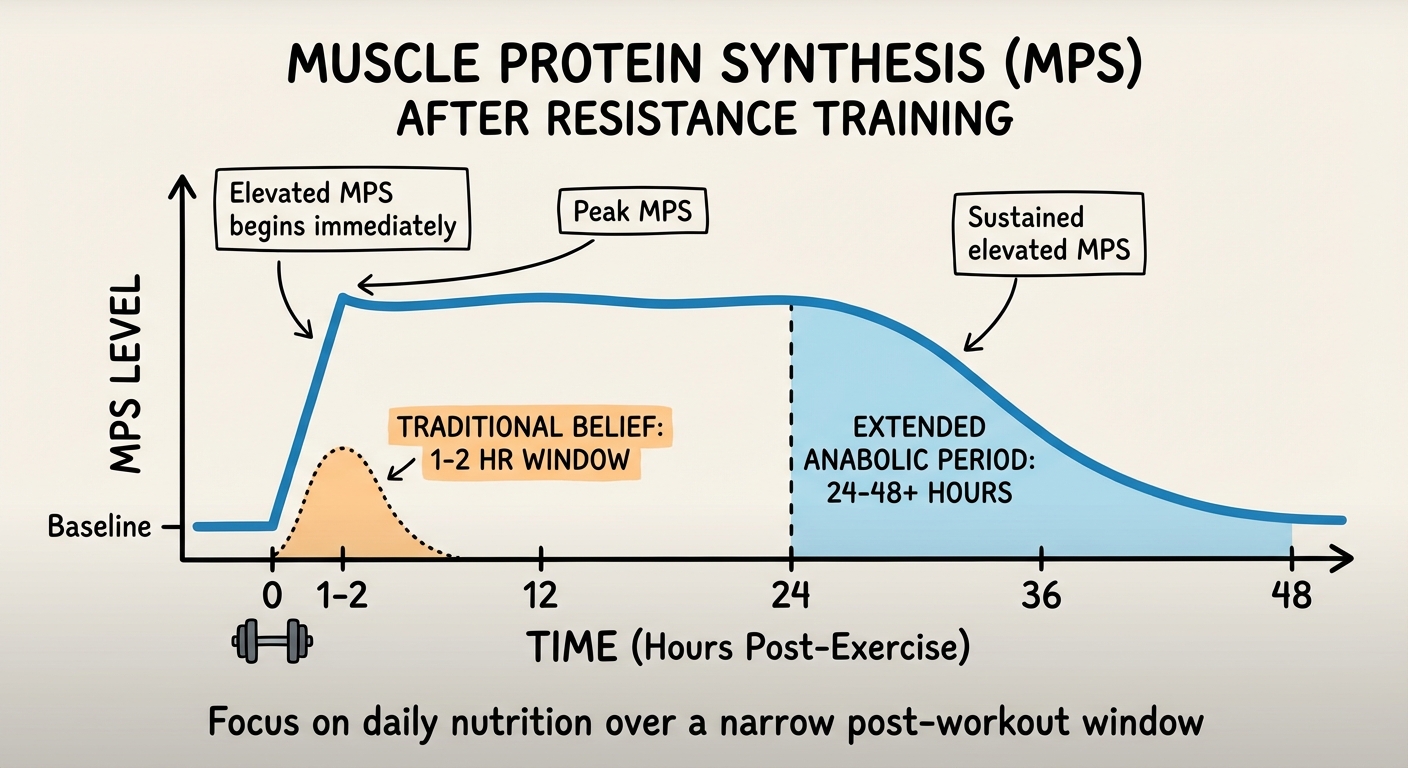
More comprehensive research painted a forgiving picture. The “window” is more like a garage door than a peephole. Muscle protein synthesis remains elevated for at least 24-48 hours after rigorous resistance training, meaning your body is primed to build muscle far longer than the original 30-60 minute claim suggested. A 2013 meta-analysis in the Journal of the International Society of Sports Nutrition, examining 23 studies with 525 participants, found that when total daily protein was equated, timing effects on muscle hypertrophy became statistically non-significant.
This finding liberated lifters from the tyranny of the shaker bottle. You don’t need to panic if you can’t eat immediately after training. But it didn’t mean timing is entirely irrelevant. The meta-analysis controlled for total protein. It didn’t examine optimal distribution patterns or the specific context of fasted versus fed training.
Per-Meal Protein Thresholds Matter More Than Post-Workout Urgency
While timing relative to your workout appears flexible, the amount of protein consumed in a single sitting is not. Muscle protein synthesis is triggered by amino acid availability in the blood, specifically by reaching a threshold concentration of the amino acid leucine. This threshold, approximately 2-3 grams of leucine per meal, translates to roughly 20-40 grams of high-quality protein for most people depending on protein source and body size.
Eating a meal with only 10 grams of protein might provide some building blocks, but it likely won’t cross the leucine threshold required to maximally stimulate the anabolic machinery. The muscle protein synthesis “switch” doesn’t fully activate. Conversely, eating 100 grams of protein in one sitting doesn’t give five times the benefit of 20 grams. Your body can only utilize so much for muscle building at once. Excess amino acids beyond what stimulates synthesis are oxidized for energy rather than deposited as muscle.
This “muscle full” effect suggests an optimal per-meal dose exists somewhere between too little and excessive. Research by Dr. Brad Schoenfeld and others indicates the optimal range is 20-40 grams of high-quality protein per meal for most people, with larger individuals and those training at high volumes potentially benefiting from the higher end. This is why understanding protein requirements for your specific goals provides more practical value than obsessing over post-workout timing.
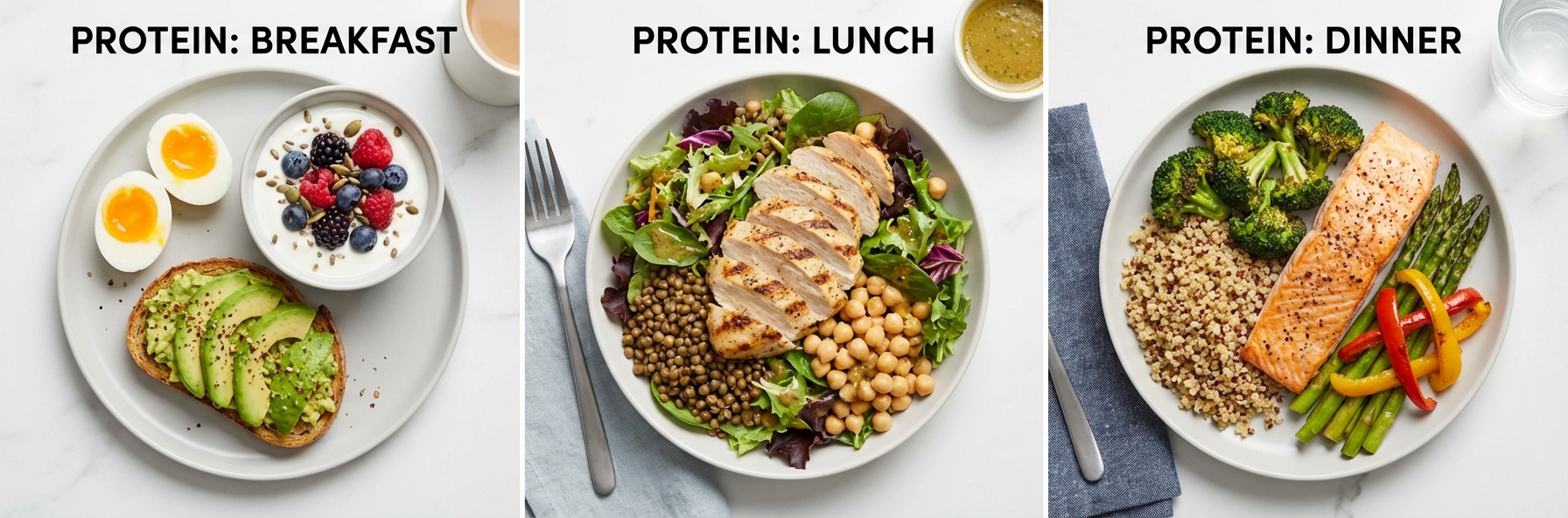
The implication for meal distribution is significant. Spreading protein across 3-4 meals works better for muscle building than consuming it all at dinner, which is the typical Western pattern. Three meals of 30-40 grams each likely stimulate more total muscle protein synthesis over 24 hours than one massive 100-gram dinner and two low-protein meals, even though total daily intake is similar. Each feeding event that crosses the leucine threshold triggers a new wave of synthesis. More threshold-crossing meals means more accumulated synthesis.
Pre-Sleep Protein Shows Clear Benefit
One timing intervention with consistent research support is consuming protein before sleep. We spend roughly a third of our lives sleeping, and from a metabolic perspective, this represents an extended fast during which amino acid availability in the blood drops and muscle protein synthesis rates decline. The overnight period represents missed opportunity for recovery and adaptation.
Research led by Dr. Luc van Loon at Maastricht University has repeatedly demonstrated that consuming 30-40 grams of slow-digesting protein like casein before bed increases overnight muscle protein synthesis rates and improves muscle mass and strength gains over time. A 2017 study in the British Journal of Sports Medicine found that pre-sleep protein supplementation augmented muscle mass gains by approximately 0.35 kg and strength gains by 15% over 10-12 weeks in resistance-trained individuals.
The mechanism makes physiological sense. Casein, the primary protein in milk and cottage cheese, forms a gel in the stomach that slows digestion and provides a sustained release of amino acids throughout the night. Rather than experiencing an extended period without amino acid availability, you effectively trickle-feed building blocks into your bloodstream while you sleep, keeping the body in a more anabolic state.

Who benefits most? Athletes in heavy training phases, older adults fighting age-related muscle loss (sarcopenia), and anyone intentionally trying to build or maintain muscle. The evidence is consistent enough that major sports nutrition organizations now include pre-sleep protein in their position stands. The one caveat: if eating before bed disrupts your sleep or conflicts with time-restricted eating protocols ending early evening, the timing may not be worth implementing. Understanding how meal timing interacts with circadian rhythms helps navigate these decisions.
The Fasted Training Exception
The general rule that total protein trumps timing has one significant exception: training in a truly fasted state. If you wake up and head straight to the gym without eating, your body is running on depleted amino acid availability. Liver glycogen is low, and circulating amino acids from your last meal have long since been absorbed.
In this specific context, the post-workout meal takes on more importance. Your body has been in a catabolic state during sleep and has been pushed further into catabolism by exercise that creates demand for amino acids that aren’t readily available. Delaying protein for several additional hours prolongs this state. The urgency of post-workout nutrition depends heavily on pre-workout nutrition.
Research by Dr. Layne Norton and others suggests that if you’ve consumed protein within 3-4 hours before training, amino acids are still circulating from that meal. The “anabolic window” effectively started before your workout ended. Post-workout timing becomes less critical because your body already has building blocks available. But if you trained truly fasted, with no protein for 8+ hours, consuming protein within 1-2 hours post-exercise probably does matter.
The practical guidance is straightforward: if you train fasted, prioritize post-workout protein. If you’ve eaten within a few hours before training, timing is flexible. You can eat when convenient without losing meaningful muscle-building potential. The anxiety many lifters feel about immediate post-workout nutrition is often unnecessary given typical eating patterns that include pre-workout meals or snacks. But for those who train first thing in the morning without eating, the earlier research on post-workout timing becomes more applicable to their specific situation.
Individual Factors That Modify Timing Importance
Nutritional science often suffers from “average person” syndrome, where recommendations based on mean study data might not apply well to individuals at either extreme. When it comes to protein timing, biological context matters significantly.
Age is perhaps the most important modifier. Older adults experience “anabolic resistance,” where muscles become less sensitive to the protein signal that triggers synthesis. This means older individuals may benefit more from consistent protein distribution throughout the day rather than eating patterns with long gaps between protein-containing meals. The threshold for triggering muscle protein synthesis appears higher in aging muscle, making it more important to hit that threshold consistently across multiple meals.
Training status matters as well. Novice lifters making “newbie gains” are relatively insensitive to nutritional optimization. Their bodies are so primed for adaptation that suboptimal nutrition still produces significant results. Advanced athletes operating closer to their genetic potential may extract more benefit from timing optimization because they’ve already captured the larger gains available from basic training and nutrition.
Total daily protein intake also modifies timing importance. If you’re consuming 2.0 grams of protein per kilogram of body weight, with amino acids consistently available throughout the day, timing optimization provides minimal additional benefit. You’ve already created a robustly anabolic environment. But if you’re barely hitting 1.2 grams per kilogram with poor distribution, timing interventions might help squeeze more adaptation from an already suboptimal intake. Getting protein distribution right for GLP-1 users becomes especially important when appetite suppression makes hitting targets challenging.
What This Means for Your Training
The practical implications depend on your goals and circumstances. For general fitness enthusiasts primarily interested in health and moderate muscle development, obsessing over post-workout protein windows is unnecessary. Focus on total daily protein (1.6-2.2 grams per kilogram of body weight), distribute it reasonably across 3-4 meals, and don’t stress about eating immediately after training. This approach captures the vast majority of available muscle-building benefit.
For serious athletes and competitive lifters, minor optimizations become worth considering. Meet higher total daily targets (1.8-2.4 grams per kilogram), distribute intake across 4 meals with 20-40 grams each, include post-workout protein within 3-4 hours if not already fed, and add pre-sleep casein for overnight anabolic support. These refinements might provide 5-10% additional benefit over basic adequate intake, meaningful for those pursuing maximum development.
Older adults fighting sarcopenia should prioritize consistent protein distribution with adequate per-meal doses. Research suggests older individuals may need 30-40 grams per meal rather than the 20-30 that works for younger people. Even distribution becomes more important as anabolic resistance makes each feeding event more critical for maintaining muscle mass. Pre-sleep protein becomes particularly valuable for overnight muscle preservation.
For everyone, the hierarchy of priorities is clear. Total daily protein comes first. Per-meal protein thresholds matter second. Pre-sleep protein provides additional benefit third. Post-workout timing comes fourth, and only matters meaningfully if you train fasted and delay eating substantially afterward.
Research Limitations and Why Debate Continues
Understanding why protein timing remains debated requires acknowledging the limitations of existing research. Much of what we know comes from acute studies measuring muscle protein synthesis over a few hours. While these markers are useful, they’re proxies rather than endpoints. A transient spike in synthesis doesn’t always translate to measurable muscle growth over months.
Long-term studies examining actual muscle gain are harder to control. Participants might not adhere perfectly to dietary protocols, training programs vary in quality and intensity, genetic potential for muscle growth differs dramatically between individuals, and the noise in measurement makes it difficult to detect small effects of timing against the larger effects of total intake and training quality.
Meta-analyses attempt to overcome these limitations by pooling data across multiple studies, but they introduce their own issues. Studies vary in training status of participants, total protein amounts, definitions of “immediate” versus “delayed” timing, measurement methods, and duration. Pooling heterogeneous studies can obscure effects that matter in specific contexts.
The current scientific consensus, reflected in position stands from the International Society of Sports Nutrition and Academy of Nutrition and Dietetics, is that total daily protein intake is the primary nutritional factor affecting muscle adaptation, with timing providing secondary optimization. But “secondary” doesn’t mean “irrelevant.” For populations where every percentage of improvement matters, whether athletes, older adults fighting muscle loss, or those with limited protein intake, timing strategies are worth implementing.
The Bottom Line
The anabolic window exists but is far wider and less critical than traditional bodybuilding wisdom suggested. The research has moved from “30-60 minutes or you lose your gains” to “total daily protein with reasonable distribution is what matters most.”
Priority hierarchy for muscle-building nutrition:
- Total daily protein (1.6-2.2g/kg body weight): The foundation that determines most of your results
- Per-meal protein (20-40g, 3-4 times daily): Ensures consistent threshold-crossing for muscle protein synthesis
- Pre-sleep protein (30-40g casein): Supported by consistent research for improved overnight anabolism
- Post-workout protein (within 4-6 hours): Probably useful but not critical if fed pre-workout or total intake is adequate
If you get priorities one and two right, priorities three and four are refinements that might provide 5-10% additional benefit. Worth implementing for serious athletes pursuing maximal adaptation. Probably unnecessary for recreational exercisers who would benefit more from focusing on fundamentals.
Practical takeaways:
- Eat 20-40g protein at each of 3-4 daily meals rather than backloading to dinner
- If you train fasted, eat protein within 1-2 hours post-workout
- If you ate within 3-4 hours before training, post-workout timing is flexible
- Consider pre-sleep casein or Greek yogurt if building muscle is a priority
- Don’t stress about exact timing if total daily intake and distribution are reasonable
The research supports relaxing about post-workout windows while paying more attention to consistent protein distribution throughout the day. That’s a more sustainable and evidence-based approach than shaker-bottle panic after every training session.
Sources: Journal of the International Society of Sports Nutrition meta-analyses, British Journal of Sports Medicine pre-sleep protein studies, muscle protein synthesis research by Schoenfeld, Norton, and van Loon, International Society of Sports Nutrition position stands on protein and nutrient timing.