It’s 11:47 PM and you’re still scrolling. Your eyes burn. Your brain won’t quiet down. You know you need to sleep, but your body feels wired even though you’re exhausted. You check the time again, calculate how many hours until your alarm, and feel the familiar anxiety of knowing tomorrow will be a slog. You finally put down the phone at midnight, but sleep doesn’t come for another 45 minutes.
This scenario plays out in millions of bedrooms every night, and it reveals a fundamental misunderstanding about how sleep works. We treat sleep like a light switch, expecting to go from 100 mph of daily stress to complete unconsciousness the moment our head hits the pillow. Biologically, this is impossible. Sleep is not a switch; it’s a landing sequence that requires preparation, timing, and respect for the physiological processes that govern our transition from waking to rest.
The 3-2-1 Rule provides a structured countdown to help your body downregulate. Backed by circadian biology research and sleep medicine literature, this protocol addresses the three biggest disruptors of sleep quality: late digestion, mental activation from work, and blue light exposure from screens. By sequencing these behaviors with specific timing, you create a physiological runway that allows your brain to transition naturally into rest.
Why Your Body Needs a Landing Sequence
Your transition from wakefulness to sleep involves a complex cascade of hormonal and neurological changes that cannot be rushed. The suprachiasmatic nucleus (SCN), your brain’s master clock located in the hypothalamus, orchestrates this process by coordinating the release of melatonin from the pineal gland while simultaneously suppressing cortisol production. This hormonal handoff takes time, and disrupting it at any stage delays sleep onset and compromises sleep architecture.
Research published in the Journal of Clinical Sleep Medicine demonstrates that the average time for healthy adults to fall asleep (sleep latency) ranges from 10-20 minutes under optimal conditions. When that number exceeds 30 minutes consistently, sleep specialists classify it as sleep-onset insomnia. The 3-2-1 protocol specifically targets the modifiable factors that extend sleep latency, giving your body the runway it needs to execute the landing sequence smoothly.
The importance of this transition period becomes clearer when you understand what happens during sleep itself. Sleep is not a passive state but an active process of restoration. During slow-wave sleep (stages 3 and 4), your body releases growth hormone, repairs tissue, and consolidates memories from the hippocampus to the neocortex. During REM sleep, your brain processes emotional experiences and prunes unnecessary neural connections. Disrupting the transition into sleep doesn’t just delay rest; it fragments the architecture of sleep itself, reducing the time spent in these critical restorative stages.
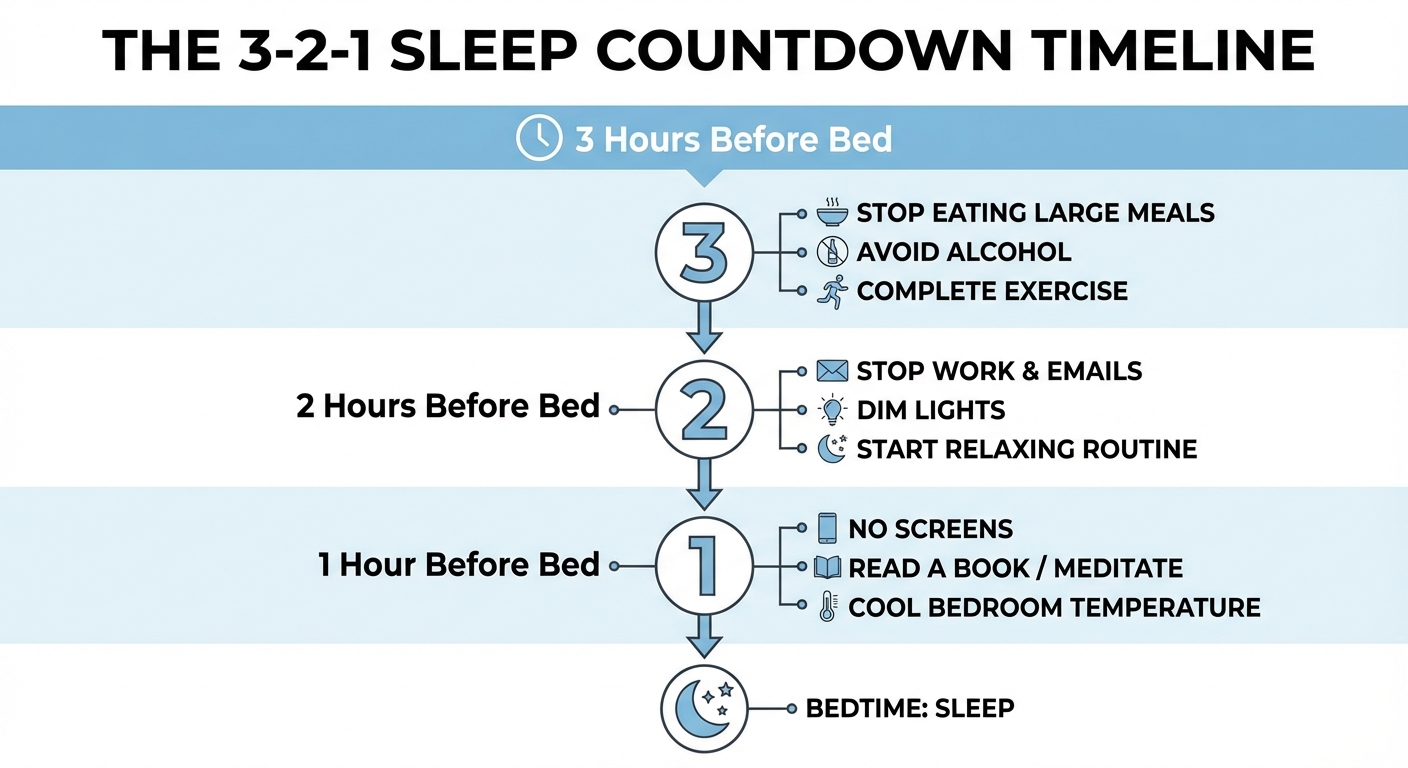
3 Hours Before Bed: Close the Kitchen
The first rule is often the hardest for late-night snackers, but it may also be the most impactful. Closing the kitchen three hours before your intended sleep time allows your digestive system to complete its active phase before you ask your body to power down for restoration.
Digestion is metabolically demanding work that generates heat as a byproduct. Your core body temperature must drop by approximately 2-3°F (1-1.5°C) to initiate sleep onset, a process that begins about two hours before your natural sleep time and continues throughout the night. When your body is busy processing a late dinner, this thermoregulatory process is delayed. A 2020 study in the British Journal of Nutrition found that eating within three hours of bedtime was associated with a 40% increase in nighttime awakenings and reduced time in slow-wave sleep.
The hormonal implications are equally significant. Eating elevates insulin levels, which suppresses the release of growth hormone that typically spikes during the first half of the night. This hormonal interference reduces the physical repair processes that occur during deep sleep. Meanwhile, elevated blood glucose keeps your sympathetic nervous system engaged when it should be yielding to parasympathetic dominance.
The practical exception: If genuine hunger pangs are keeping you awake (not cravings, but actual physiological hunger), a small snack under 150 calories is better than lying in bed stressed about hunger. Opt for protein or fat rather than carbohydrates. A tablespoon of almond butter or a small handful of nuts won’t spike insulin the way crackers or fruit would. However, if you’re consistently hungry at bedtime, this signals a need to adjust your daytime eating patterns rather than adding a regular bedtime snack.
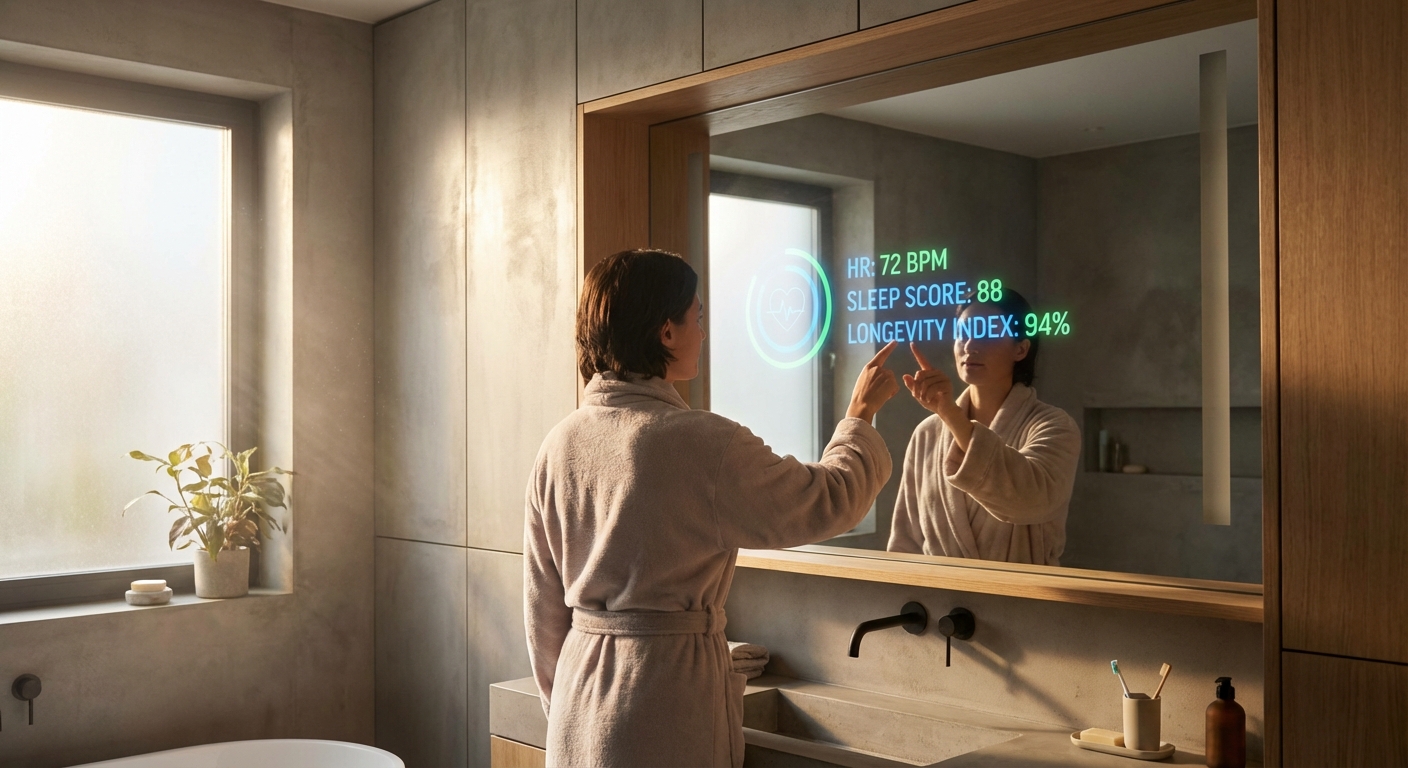
For most people, closing the kitchen three hours before bed produces measurable improvements in sleep data within the first week. Users of sleep tracking devices like Oura rings and WHOOP bands consistently report higher HRV scores and increased deep sleep percentages after implementing this single change.
2 Hours Before Bed: End Work Mode
Two hours before lights out, the laptop closes, Slack gets muted, and you create a firm boundary between productive time and rest time. This isn’t about work-life balance philosophies; it’s about cortisol management and nervous system regulation.
Checking email, reviewing spreadsheets, or responding to work messages triggers cortisol release. Cortisol is your alertness hormone, the chemical messenger that says “stay vigilant” to every cell in your body. It exists on a seesaw relationship with melatonin. You cannot have high cortisol and high melatonin simultaneously; they operate as biological antagonists. Every time you engage with work content in the evening, you’re spiking cortisol at precisely the time your body is trying to suppress it.
This two-hour window also represents the ideal time to cap significant fluid intake. Hydration matters enormously for health, but drinking large volumes close to bedtime guarantees fragmented sleep. The condition known as nocturia, waking to urinate during the night, affects sleep architecture more severely than most people realize. Each bathroom trip requires you to restart the sleep cycle from stage 1, which means less total time in the deep and REM stages that provide actual restoration. A 2019 study in the International Urology and Nephrology Journal found that reducing evening fluid intake by 40% decreased nighttime awakenings by an average of 1.3 episodes per night.
What should fill this two-hour window? Activities that signal safety to your nervous system. Light conversation, gentle stretching or yoga, meal preparation for the next day, or non-demanding entertainment. The goal is parasympathetic activation, the “rest and digest” branch of your autonomic nervous system that enables the transition to sleep. Tactical breathing exercises can accelerate this shift if you’re coming off a particularly stressful day.

1 Hour Before Bed: Power Down Screens
The final hour is the power-down hour. This means no phones, no tablets, no laptops, and ideally no television. This requirement isn’t arbitrary wellness advice; it’s based on solid photobiology research about how light affects your circadian system.
Screens emit blue light frequencies in the 450-495 nanometer range that your retinal ganglion cells interpret as daylight. These specialized cells don’t contribute to vision; their sole purpose is communicating light information to the suprachiasmatic nucleus. When they detect blue light, they send a signal that it’s still daytime, which suppresses melatonin production by up to 50% according to research from Harvard Medical School. This shifts your circadian phase later, making you feel alert when you should feel drowsy.
The “Night Shift” modes and blue-blocking glasses offer partial mitigation, but they don’t solve the underlying problem. Even with reduced blue light, the content itself matters. Social media platforms are explicitly designed to trigger dopamine loops that keep your brain seeking novelty and engagement. Scrolling activates the same neural reward circuits as gambling, keeping your prefrontal cortex engaged in assessment and decision-making when it should be quieting down. A 2021 study published in Sleep Medicine Reviews found that the psychological stimulation from social media use was more disruptive to sleep than the blue light exposure itself.
Replace screen time with analog activities: Read a physical book, preferably fiction, as non-fiction business or self-help books can trigger planning and problem-solving modes that maintain alertness. Stretch, journal, talk to your partner, or practice meditation. Light therapy earlier in the day can help reinforce your circadian rhythm, but the evening hour should be dark and calm.
If you absolutely must use a screen during this hour (an edge case, not a loophole), enable every possible light-reduction feature, dim brightness to minimum, and keep usage under 15 minutes for passive content only.
Amplifying the Protocol: Thermal Manipulation
You can significantly enhance the 3-2-1 protocol by adding deliberate thermal manipulation. Taking a hot bath or shower 60-90 minutes before bed exploits a physiological mechanism called the “warm bath effect” that sleep researchers have documented extensively.
When you immerse your body in hot water (104-109°F), your peripheral blood vessels dilate in a process called vasodilation. This brings warm blood to the surface of your skin. When you exit the bath into cooler air, heat dumps rapidly from your core to your extremities and dissipates into the environment. This accelerated cooling mimics and amplifies the natural circadian temperature drop that signals sleep onset to your brain.
A 2019 systematic review in Sleep Medicine Reviews analyzed 5,322 studies and found that warm bathing 1-2 hours before bed improved sleep onset latency by an average of 10 minutes and increased sleep efficiency (time asleep versus time in bed) by 2-3%. The optimal water temperature was 104-109°F (40-43°C) for 10-20 minutes. Combined with a cool bedroom environment (65-68°F is ideal for most adults), this thermal trigger reinforces the hormonal signals for sleep and can help override some residual alertness from an imperfect wind-down.
Morning Anchoring: Sleep Starts When You Wake
Your evening sleep routine actually begins 14-16 hours earlier, with morning light exposure. Viewing bright light (ideally direct sunlight) within 30-60 minutes of waking sets the timer for melatonin release roughly 16 hours later. This light signal enters through your eyes and tells your suprachiasmatic nucleus to start the circadian countdown.
If you miss consistent morning light exposure, your evening landing sequence becomes harder to initiate because your circadian clock hasn’t been properly anchored. This is why people who work from home in dim environments often report increasing difficulty falling asleep over time, even with perfect evening routines. The system requires both a strong “start” signal in the morning and a protected “stop” signal in the evening.
Practical implementation: Aim for 10-30 minutes of outdoor light exposure within an hour of waking. On overcast days, you still receive significant circadian-relevant light outdoors (roughly 10,000 lux) compared to indoor lighting (typically 100-500 lux). If outdoor exposure is impossible, consider a light therapy device rated at 10,000 lux for 20-30 minutes in the morning.
Implementation Strategy
Starting the full 3-2-1 protocol immediately can feel overwhelming, especially if your current habits are far from this structure. A phased approach tends to produce better long-term adherence than an all-at-once overhaul.
Week 1: Focus solely on the 1-hour screen cutoff. This is often the most impactful single change and establishes the rhythm of an intentional wind-down period.
Week 2: Add the 2-hour work boundary. This requires more planning, especially if you’re accustomed to evening productivity. Front-load your important work earlier in the day.
Week 3: Implement the 3-hour food cutoff. This may require adjusting your dinner timing, which ripples into meal prep and family schedules. Give yourself grace during the transition.
Week 4: Add the thermal protocol. Once the core 3-2-1 is established, layer in the warm bath or shower 60-90 minutes before bed.
Track your sleep quality during this period if possible. Wearable devices provide objective data, but even a simple sleep diary noting sleep latency (how long it takes to fall asleep), nighttime awakenings, and morning alertness can reveal patterns.
The Bottom Line
Sleep is not something you do; it’s something you allow to happen by creating the conditions for your biology to execute a complex transition from waking to rest. The 3-2-1 protocol costs nothing, requires no supplements, and simply asks you to respect the timing your body needs to downregulate.
The three cutoffs address the primary disruptors that prevent smooth sleep transitions: late eating keeps your metabolism elevated and core temperature high; work engagement spikes cortisol when melatonin should be rising; and screen light directly suppresses the hormonal cascade that initiates sleep. By creating boundaries around each of these factors at specific time intervals, you build a runway that allows your brain to land smoothly into restorative sleep.
Next Steps:
- Calculate your bedtime backward from your wake time (aim for 7-9 hours of opportunity)
- Set three phone alarms: one at 3 hours before bed (kitchen closes), one at 2 hours (work ends), one at 1 hour (screens off)
- Start with the 1-hour screen cutoff this week and add each layer progressively
- Track sleep quality using a wearable device or sleep diary to measure improvement
Sources: Journal of Clinical Sleep Medicine, British Journal of Nutrition 2020, Harvard Medical School light research, Sleep Medicine Reviews 2019 thermal bathing meta-analysis, Sleep Medicine Reviews 2021 social media and sleep study, International Urology and Nephrology Journal 2019.