You know creatine as the white powder bodybuilders mix into their protein shakes. For decades, it’s been the most researched sports supplement on the planet, with overwhelming evidence supporting its ability to increase muscle mass, boost strength, and enhance high-intensity exercise performance. But a growing body of research suggests creatine’s benefits extend far beyond the gym, reaching into the three-pound organ that consumes more energy per gram than any other tissue in your body: your brain.
A 2024 meta-analysis published in Frontiers in Nutrition analyzing data from multiple randomized controlled trials found that creatine supplementation significantly improved memory, attention time, and information processing speed in healthy adults. More remarkably, a pilot study from the University of Kansas Medical Center showed moderate improvements in working memory and executive function in patients with Alzheimer’s disease, the first clinical trial to investigate creatine in people with dementia. These findings are reshaping how researchers think about this humble supplement and opening new possibilities for cognitive enhancement and neuroprotection.
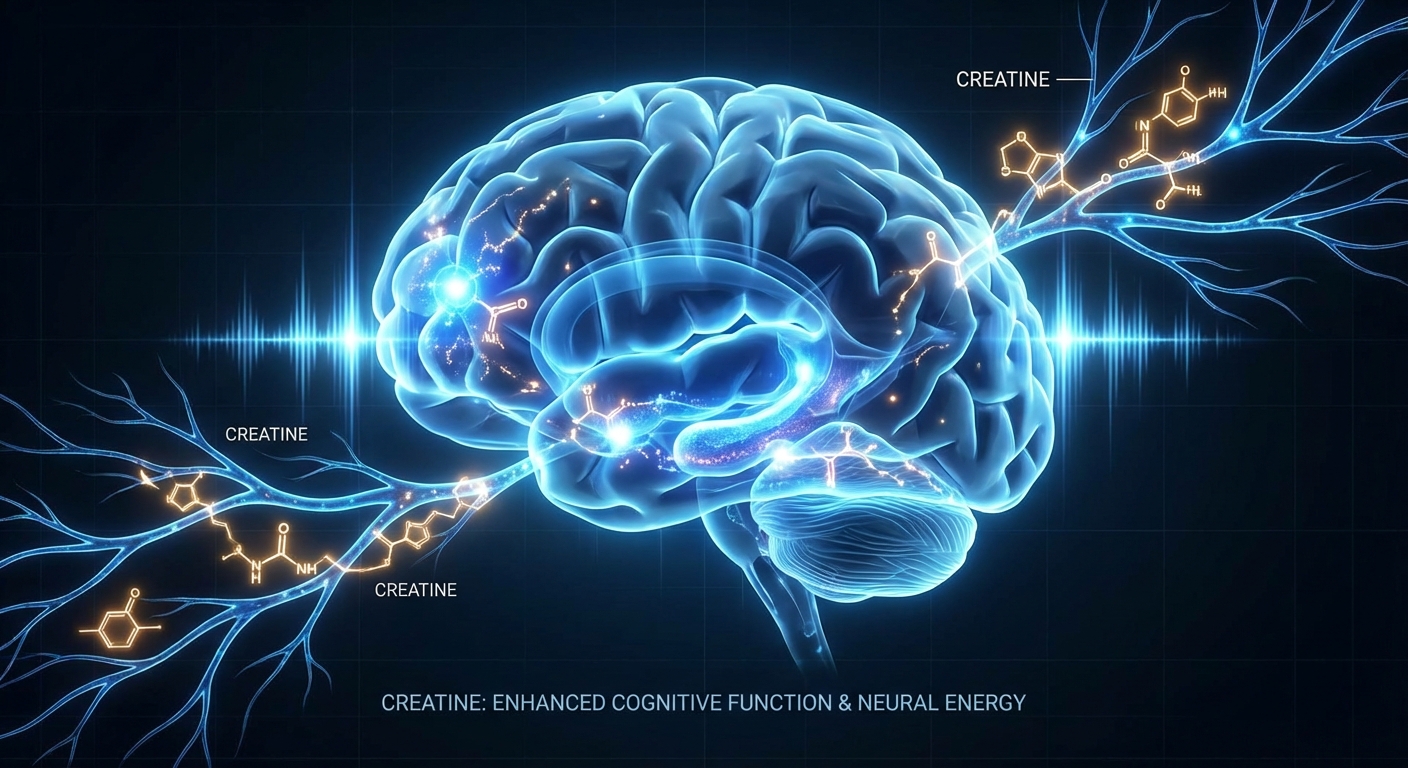
The logic is straightforward. Your brain accounts for roughly 2% of your body weight but consumes approximately 20% of your resting energy. Every thought, memory, and decision requires ATP, the cellular energy currency that creatine helps regenerate. When brain creatine levels increase, cognitive performance may follow. The question is no longer whether creatine affects the brain, but how much, for whom, and under what circumstances.
How Creatine Powers Your Brain
Your brain is an energy-hungry organ that never truly rests. Even during sleep, it maintains baseline metabolic activity that would exhaust most other tissues. The neurons responsible for your thoughts fire electrical signals that require constant ATP replenishment, and the synaptic connections that form memories demand continuous energy input. This is where creatine enters the picture.
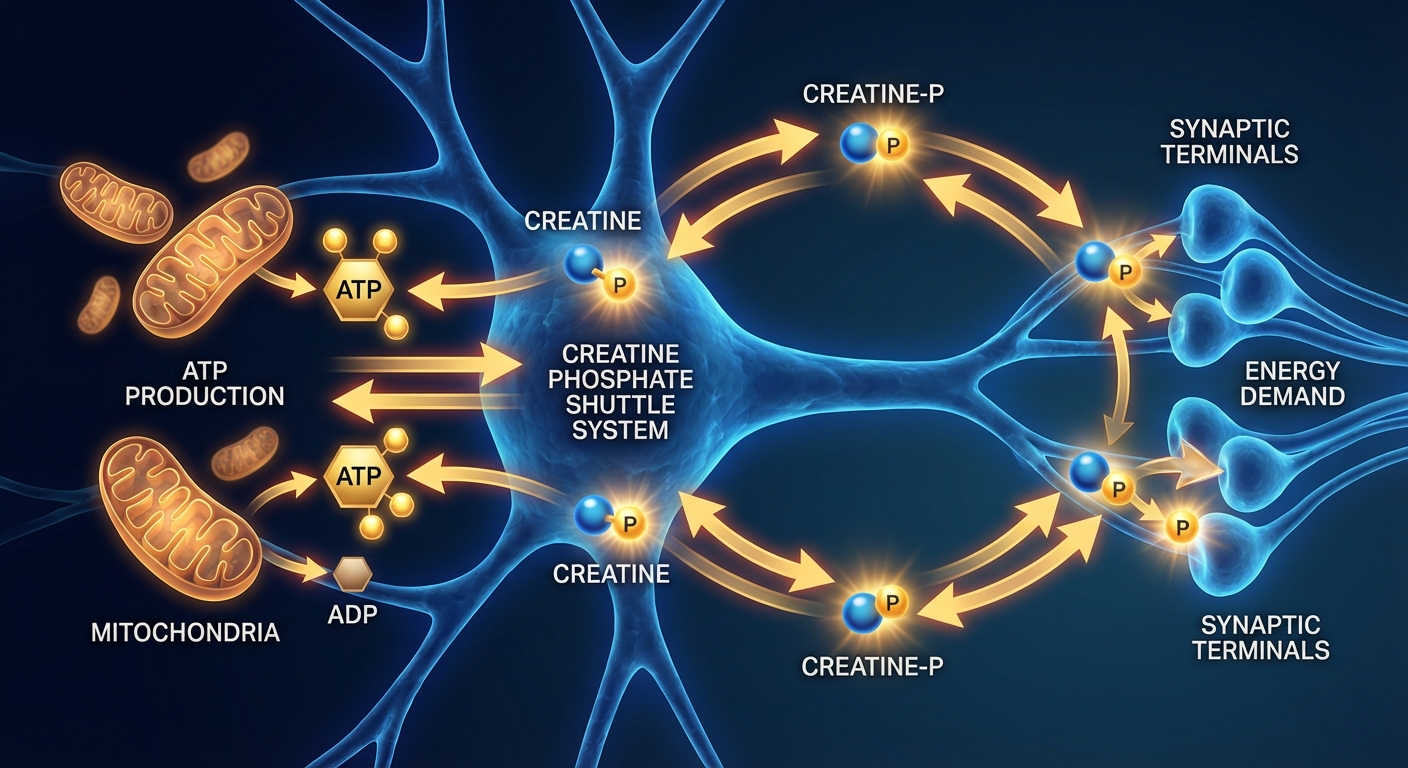
Creatine functions as both a spatial and temporal energy buffer. In practical terms, it shuttles high-energy phosphate groups from the mitochondria, where ATP is produced, to the locations where energy is needed. It also serves as a reservoir, storing phosphate groups that can instantly regenerate ATP during periods of high demand. When you’re concentrating intensely, solving a complex problem, or retrieving a difficult memory, your neurons consume ATP faster than mitochondria can produce it. Creatine bridges this gap, maintaining the energy supply that keeps neurons firing efficiently.
The mechanism extends beyond simple energy provision. Research published in Frontiers in Nutrition suggests creatine may function as a neuromodulator, potentially affecting synaptic efficacy and plasticity. These processes are vital for learning and memory, raising the possibility that creatine doesn’t just provide fuel for cognition but actively enhances the neural processes underlying it. Additionally, creatine exhibits neuroprotective properties by mitigating oxidative stress damage to brain cells, a factor increasingly linked to age-related cognitive decline.
What the Research Actually Shows
The most comprehensive analysis to date, a systematic review and meta-analysis published in 2024, synthesized findings from multiple randomized controlled trials examining creatine’s effects on cognitive function in adults. The results were encouraging but nuanced. Creatine supplementation showed significant benefits in specific cognitive domains, particularly memory, attention time, and information processing speed. However, improvements in overall cognitive function and executive function did not reach statistical significance across all studies.
Subgroup analyses revealed important patterns. Creatine supplementation appeared more beneficial in individuals with existing diseases, those aged 18-60 years, and females. This last finding is particularly intriguing given that women typically have lower baseline creatine stores than men, both in muscle and brain tissue. The greater benefit in diseased populations suggests creatine may be most helpful when the brain is already under metabolic stress or operating with depleted energy reserves.
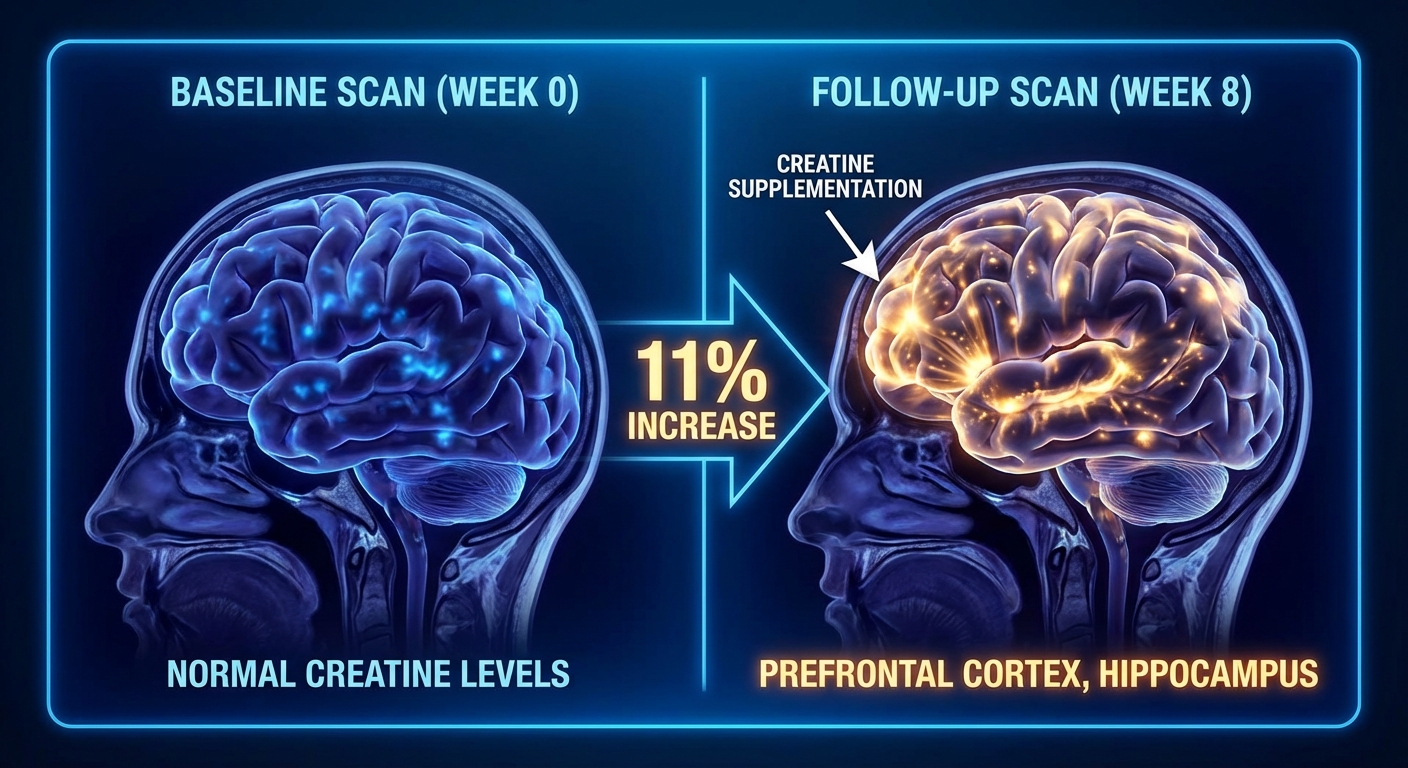
The Alzheimer’s research deserves special attention. In the pilot study from KU Medical Center, researchers gave 20 patients with Alzheimer’s disease 20 grams of creatine monohydrate daily for 8 weeks. Brain imaging revealed an 11% increase in brain creatine levels, described as “significant” by the research team. More importantly, participants demonstrated moderate improvements in working memory and executive functioning, cognitive domains severely affected by Alzheimer’s disease. While preliminary, these findings represent the first evidence that creatine supplementation may offer therapeutic benefit in dementia.
The Blood-Brain Barrier Challenge
One critical question has long complicated creatine brain research: does supplemental creatine actually reach the brain? Unlike muscle tissue, which readily absorbs creatine from the bloodstream, the brain is protected by the blood-brain barrier, a selective membrane that carefully controls which substances can enter neural tissue.
Early skepticism focused on this barrier. The brain synthesizes its own creatine locally, leading some researchers to question whether oral supplementation could meaningfully increase brain levels. However, recent imaging studies have largely resolved this debate. The KU Alzheimer’s trial used magnetic resonance spectroscopy to directly measure brain creatine before and after supplementation, confirming an 11% increase. Other studies using similar imaging techniques have also documented measurable increases in brain creatine following supplementation, though the magnitude of increase varies between individuals and may depend on factors like baseline creatine status and supplementation protocol.
One commentary published in SAGE Journals noted that while creatine supplementation has been widely studied for muscle health and aging, its effects on brain function in older adults still lack consistent clinical evidence. The blood-brain barrier presents a notable challenge, and individual variation in creatine transport may explain why some studies show robust cognitive benefits while others show minimal effects. This variability underscores the importance of measuring actual brain creatine levels rather than simply assuming supplementation translates to increased neural concentrations.
Who Benefits Most from Creatine Supplementation
The evidence suggests creatine’s cognitive benefits are not uniform across all populations. Several groups appear to derive greater advantage from supplementation, and understanding these patterns can help individuals make informed decisions about whether creatine might benefit them.
Vegetarians and vegans consistently show larger cognitive improvements from creatine supplementation compared to omnivores. This makes biological sense: creatine is found primarily in animal products, particularly red meat and fish. Those who avoid these foods have lower baseline creatine stores, creating more room for supplementation to make a measurable difference. Studies specifically examining vegetarians have found more pronounced effects on memory and cognitive processing compared to meat-eaters taking the same doses.
Older adults represent another population of interest. Age-related decline in mitochondrial function reduces the brain’s capacity to produce ATP, potentially increasing reliance on the creatine phosphate system. The meta-analysis findings showing greater benefits in individuals with diseases may partially reflect this pattern, as many disease states involve compromised energy metabolism. For older adults concerned about cognitive decline, creatine offers a well-researched, safe intervention that may support brain energy metabolism.
Sleep-deprived individuals also show interesting responses. Several studies have found that creatine supplementation partially mitigates the cognitive impairments caused by sleep deprivation, likely by maintaining ATP availability when the brain’s normal restorative processes are disrupted. For shift workers, new parents, or anyone regularly experiencing inadequate sleep, creatine may offer a buffer against some of the cognitive consequences.
Women may benefit more than men, possibly due to lower baseline creatine stores. A 2025 randomized controlled trial specifically examined creatine supplementation in perimenopausal and postmenopausal women, investigating whether low-dose formulations could address menopause-related neurocognitive changes. While research in this area is still emerging, the hormonal shifts of menopause may create conditions where creatine supplementation provides particular benefit.
Practical Supplementation Guidelines
If you’re considering creatine for cognitive benefits, the good news is that protocols are well-established and the safety profile is exceptionally strong. Creatine monohydrate has been studied extensively for over three decades, with no significant adverse effects documented in healthy individuals taking standard doses.
The most common protocol involves a loading phase of 20 grams daily, divided into four 5-gram doses, for 5-7 days, followed by a maintenance dose of 3-5 grams daily. This approach rapidly saturates muscle and brain stores. However, research suggests a simpler approach works equally well over time: taking 3-5 grams daily without loading will achieve the same tissue saturation within about four weeks. Many people prefer this gentler approach, as high loading doses can occasionally cause gastrointestinal discomfort.
Timing appears less critical than consistency. Unlike some supplements that must be taken with meals or at specific times, creatine simply needs to reach your tissues regularly. Taking it with a meal that contains carbohydrates and protein may slightly enhance absorption, but the effect is modest. The most important factor is daily adherence.
Creatine monohydrate remains the gold standard. Despite marketing claims for newer forms like creatine hydrochloride or creatine ethyl ester, these variants have not demonstrated superior effects in controlled trials. Creatine monohydrate is also the most cost-effective option, typically costing less than $0.10 per day at effective doses.

The Limitations and Caveats
Despite promising findings, important limitations temper enthusiasm for creatine as a cognitive enhancer. The most sobering counterpoint comes from two of the largest and most rigorous trials ever conducted. A multicenter randomized trial involving over 1,700 patients with Parkinson’s disease found no clinical benefit after five years of creatine supplementation and was terminated early for futility. This finding suggests that creatine may not provide meaningful benefit in all neurological conditions, even those involving energy deficits.
The research on healthy young adults with adequate sleep, diet, and no cognitive complaints shows minimal to no benefit from creatine supplementation. If your brain is already functioning optimally with sufficient energy reserves, adding more creatine may not produce noticeable improvements. The supplement appears most beneficial when baseline conditions are suboptimal, whether due to dietary restrictions, sleep deprivation, aging, or disease.
Effect sizes in cognitive research are generally modest. We’re not talking about dramatic transformations in mental performance. The improvements documented in meta-analyses represent subtle enhancements in processing speed and memory accuracy that might not be subjectively noticeable in daily life. For someone hoping creatine will dramatically boost their productivity or prevent dementia, the evidence doesn’t support such expectations.
Individual variation remains substantial and poorly understood. Some people respond robustly to creatine supplementation while others show minimal response. Genetic factors, baseline creatine status, diet, and other variables likely influence these differences, but we don’t yet have reliable ways to predict who will benefit most. This means that trying creatine involves some uncertainty about whether you’ll experience meaningful effects.
The Bottom Line
Creatine’s journey from gym supplement to potential cognitive enhancer reflects a broader pattern in nutrition research: compounds initially studied for one purpose often reveal unexpected benefits elsewhere. The science supporting creatine for brain health is genuinely promising, with meta-analyses showing significant improvements in memory, attention, and processing speed, and pilot studies suggesting potential therapeutic applications in conditions like Alzheimer’s disease.
However, context matters enormously. The individuals most likely to benefit include vegetarians and vegans, older adults, sleep-deprived individuals, and those with conditions involving compromised brain energy metabolism. Young, healthy omnivores with adequate sleep may notice little difference. The supplement is not a cognitive miracle worker, but rather a tool that may provide modest, measurable benefits under specific circumstances.
Next Steps:
- Assess whether you fall into a likely-to-benefit category (vegetarian, older adult, poor sleep, female)
- If trying creatine, use creatine monohydrate at 3-5 grams daily
- Give it at least 4 weeks to saturate tissue stores before evaluating effects
- Don’t expect dramatic changes, but watch for subtle improvements in mental clarity and memory
- Consult your physician if you have kidney disease or other health conditions
Sources: Frontiers in Nutrition meta-analysis 2024, University of Kansas Medical Center Alzheimer’s pilot study, Alzheimer’s & Dementia: Translational Research & Clinical Interventions 2025, Journal of the American Nutrition Association 2025, SAGE Journals commentary on creatine and aging.