The first time you hear about “grounding” or “earthing,” the claims sound like pure pseudoscience. Walk barefoot on grass to reduce inflammation? Stand on dirt to improve sleep? Surely this is wellness marketing without substance, another way to sell expensive mats and sheets to credulous consumers.
Except when you dig into the research, something unexpected emerges. Studies published in peer-reviewed journals like the Journal of Environmental and Public Health, Journal of Alternative and Complementary Medicine, and European Biology and Bioelectromagnetics document measurable physiological effects from direct earth contact. Blood viscosity changes. Cortisol rhythms shift. Inflammation markers decrease. Heart rate variability improves. These aren’t subjective reports from people convinced they feel better. They’re objective measurements from blinded studies.
The research is limited, mostly small trials with legitimate methodological questions. But the basic physics is plausible, the proposed mechanisms have biological grounding (pun intended), and the risk is essentially zero. Whether this represents a genuine health intervention or an elaborate placebo remains unclear. What’s clear is that dismissing it entirely without examining the evidence would be intellectually lazy.
The Science Behind the Practice
The theory behind grounding rests on established physics, evolutionary biology, and biochemistry, though each component faces legitimate scientific debate. Understanding the proposed mechanisms helps evaluate whether the claims are plausible.
Earth’s surface carries a negative electrical charge, maintained by approximately 5,000 lightning strikes occurring globally every minute, along with solar radiation and continuous atmospheric electrical activity. This negative charge means the ground contains an abundance of free electrons. Human bodies are electrically conductive, composed largely of water and dissolved ions that allow electrical current to flow readily. When bare skin contacts the earth directly, this creates a conductive pathway allowing electrons to transfer from the negatively charged earth into the body.
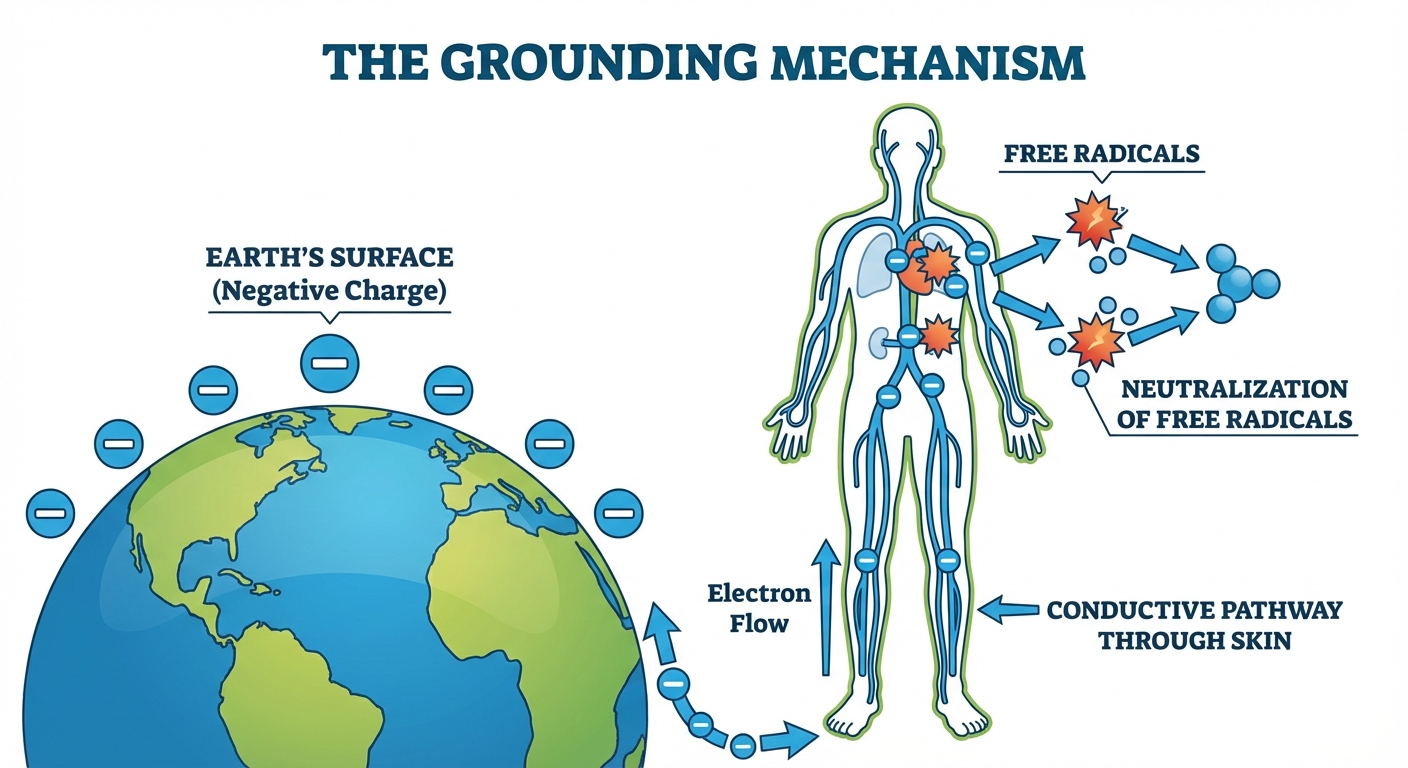
The proposed biological effect suggests that these transferred electrons neutralize free radicals, unstable molecules with unpaired electrons that cause oxidative stress and cellular damage. Free radicals are positively charged, missing an electron that makes them reactive. Providing electrons from an external source could theoretically stabilize these molecules and reduce the oxidative damage that drives inflammation, aging, and chronic disease. This mechanism parallels how antioxidant compounds work, they donate electrons to neutralize free radicals.
The evolutionary argument adds context. Humans evolved in continuous direct contact with earth, walking barefoot, sitting on ground, sleeping on soil or plant materials. Only in the past few centuries, and dramatically in the past 50-60 years, have we become electrically insulated from Earth’s surface through rubber-soled shoes, elevated beds, and buildings with non-conductive foundations. Grounding advocates suggest this disconnection has health consequences we’re only beginning to recognize, similar to how artificial light disrupts circadian rhythms or how sedentary lifestyle harms metabolic health. We’ve changed our environment faster than our biology has adapted.
Critics raise valid counterpoints. The magnitude of electron transfer is tiny. Whether those electrons actually reach sites of inflammation rather than simply equalizing charge at the skin surface is uncertain. The biological systems that regulate oxidative stress are complex, and adding electrons from an external source doesn’t necessarily mean they’ll be utilized for antioxidant purposes. These are reasonable objections that the existing research doesn’t fully address.
What the Research Actually Shows
Evaluating grounding requires navigating a landscape of small pilot studies, significant methodological limitations, and the ever-present possibility of placebo effects. However, several studies have documented physiological changes using objective measurements that are difficult to attribute entirely to expectation.
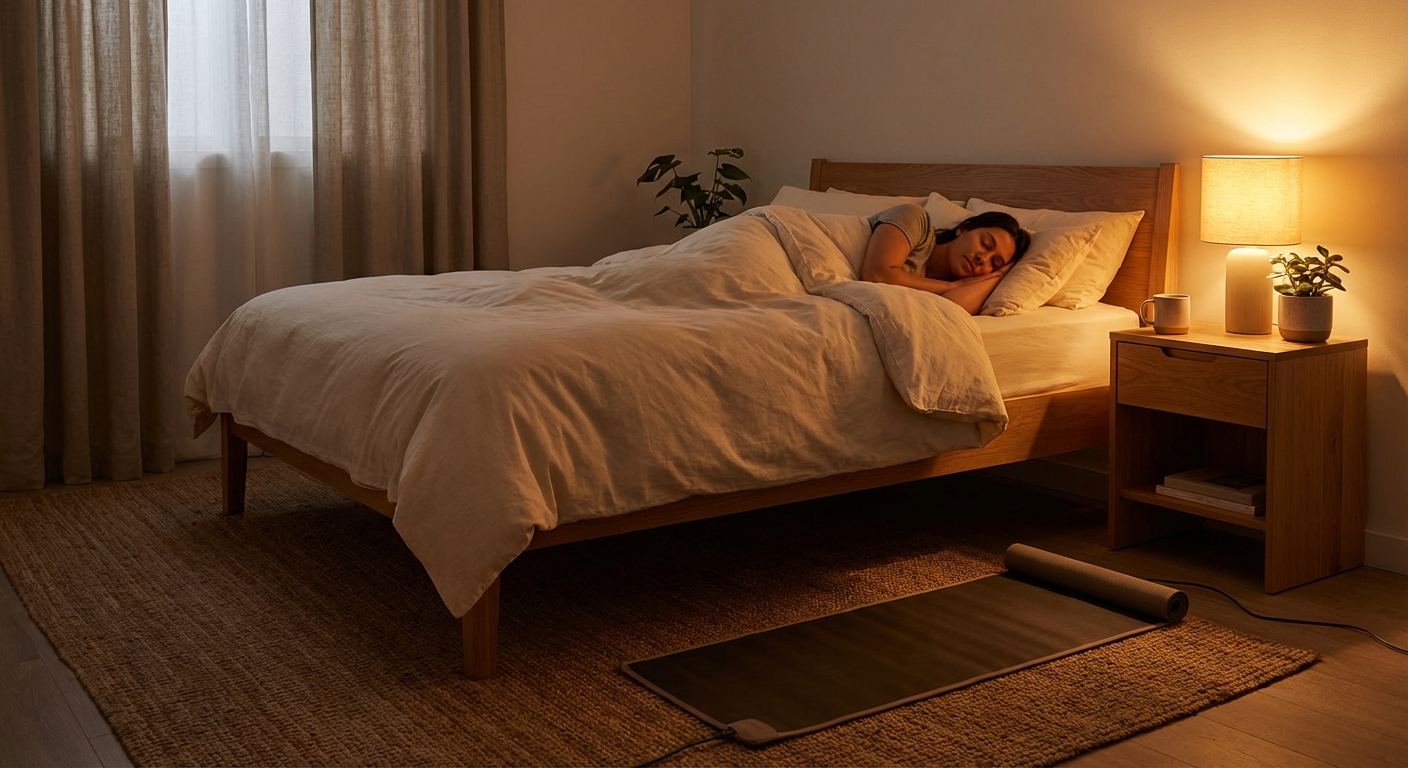
Sleep and cortisol regulation have been examined in multiple trials. A 2004 study published in the Journal of Alternative and Complementary Medicine had participants sleep on conductive sheets connected to the earth via a grounding wire for 8 weeks. Compared to baseline, grounded participants showed significant normalization of cortisol secretion patterns, with nighttime cortisol (which should be low) decreasing and cortisol rhythm becoming more synchronized with the day-night cycle. Subjective sleep quality improved, with 85% of participants reporting falling asleep faster and 93% reporting feeling more rested upon waking. The cortisol measurements provide objective evidence beyond placebo, since participants can’t consciously alter their hormone levels.
Inflammation and delayed onset muscle soreness (DOMS) were examined in a 2010 pilot study published in the Journal of Alternative and Complementary Medicine. Eight healthy subjects underwent intense exercise to induce muscle damage, then were divided into grounded and sham-grounded groups (allowing for blinding, since participants couldn’t tell whether their grounding mat was actually connected). The grounded group showed dramatically reduced inflammation, with white blood cell counts, pain measurements, and inflammatory cytokines all significantly lower than the control group. Pain and muscle damage markers recovered faster in the grounded participants.
Blood viscosity represents one of the most intriguing findings. A 2013 study in the Journal of Alternative and Complementary Medicine measured zeta potential, the electrical charge on red blood cell surfaces that causes them to repel each other and prevents clumping. Higher zeta potential means blood flows more freely (thinner blood, better circulation). After just two hours of grounding, participants showed significantly increased zeta potential, approximately 2.7 times greater than baseline. This suggests grounding might improve blood flow and oxygen delivery, though the clinical implications of this magnitude of change remain unclear.
Heart rate variability (HRV), a marker of autonomic nervous system function and stress resilience, improved in grounding studies. Higher HRV generally indicates better parasympathetic tone (“rest and digest” mode) and is associated with better health outcomes. Multiple studies document increased HRV during grounding, suggesting a shift toward parasympathetic dominance.
The skepticism is warranted despite these findings. Sample sizes are typically tiny (8-60 participants), making results vulnerable to statistical artifacts and difficult to generalize. Many studies lack rigorous double-blinding; even with sham grounding, participants might perceive differences in skin sensation or temperature. Some research is funded by companies selling grounding products, introducing potential bias. Publication bias likely means negative or null findings go unpublished. The physiological data is intriguing but falls short of the robust, replicated evidence that would make grounding a clear clinical recommendation.
How to Practice Grounding Safely
If you’re curious about grounding, the practice itself is simple, pleasant, and costs nothing. Unlike many wellness trends requiring expensive supplements or equipment, this one is accessible to anyone with access to outdoor space.
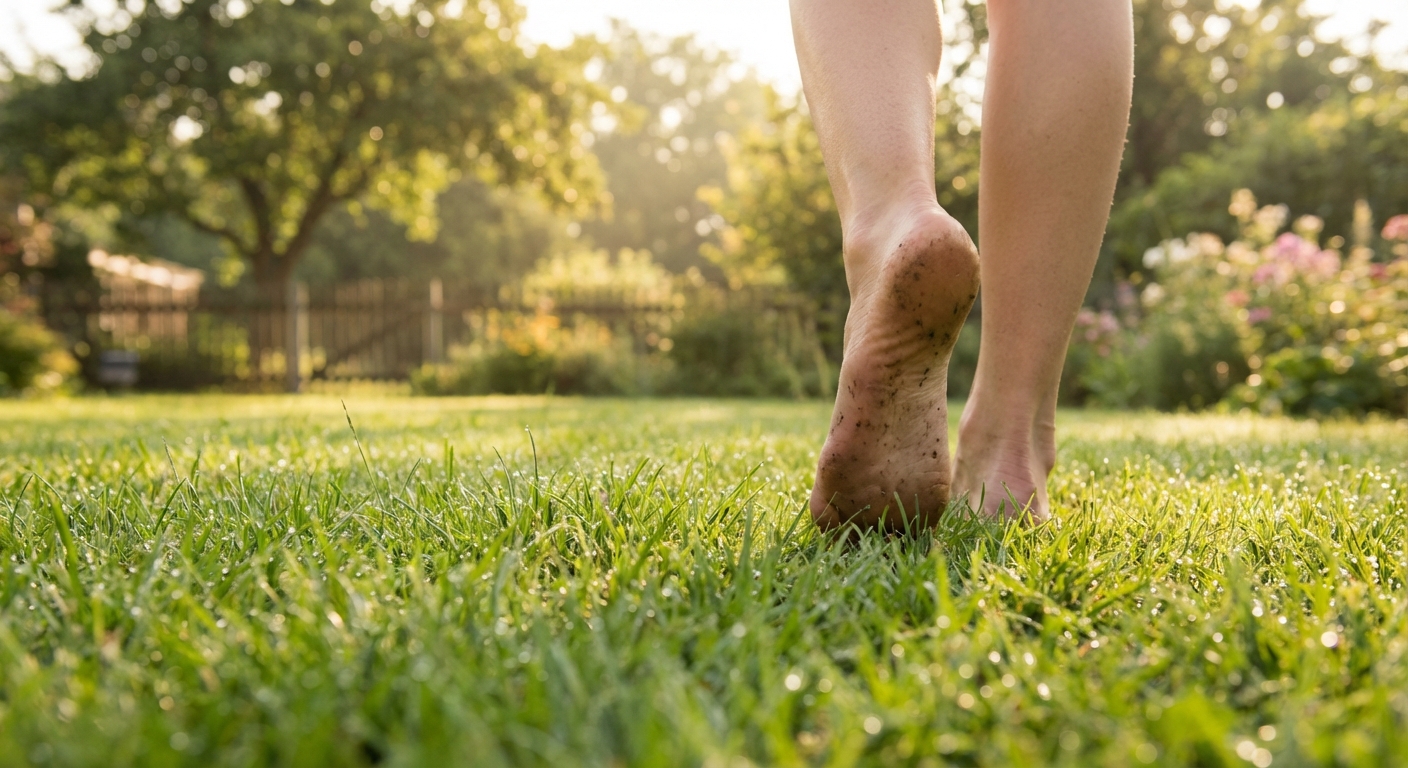
Direct earth contact is the most straightforward method. Walking barefoot on grass, sand, soil, or unsealed rock for 20-30 minutes provides the necessary grounding connection. Interestingly, unsealed concrete is conductive (it contains water and minerals) and works for grounding, while asphalt, wood, painted or sealed concrete, and plastic do not conduct electricity. Swimming in natural bodies of water, oceans, lakes, and rivers, provides full-body grounding and is particularly effective due to water’s high conductivity.

Timing and conditions affect both safety and effectiveness. Morning or evening are ideal, both to avoid UV exposure during peak sun and to prevent burning feet on hot surfaces during summer midday. Wet surfaces (dew-covered grass, damp earth, wet sand) conduct better than dry surfaces. After rain is particularly effective for grounding.
Safety considerations are minimal but real. Scan walking areas for glass, sharp objects, thorns, or insects before going barefoot. Start with clean, maintained surfaces like your backyard lawn rather than unknown areas. If you have diabetes or peripheral neuropathy affecting foot sensation, inspect feet carefully after barefoot activity since you may not feel injuries. Avoid grounding during thunderstorms, while obvious, electricity from lightning seeks the path of least resistance and you don’t want to be that path.
Commercial grounding products like mats, sheets, and patches exist and connect to the ground port of electrical outlets. They’re convenient for indoor use and nighttime grounding during sleep. However, they introduce variables: your home’s electrical grounding quality, potential electromagnetic interference from house wiring, and the integrity of the product’s connection. They also cost money. If you’re experimenting, start with free outdoor grounding to see if you notice any benefit before investing in products.
A reasonable protocol for personal experimentation: Ground barefoot outdoors for 20-30 minutes daily for 4-6 weeks. Keep a simple journal noting energy levels, sleep quality, any pain or inflammation, and general wellbeing. Look for patterns. If you notice meaningful improvements, you have reason to continue. If you notice nothing different, you’ve lost nothing but gained outdoor time.
Integrating Grounding with Overall Health
Grounding, if it works, operates through mechanisms related to inflammation, stress, and oxidative balance. These same pathways are influenced by numerous other lifestyle factors with far stronger evidence bases. Context matters: grounding might be a helpful adjunct, but it shouldn’t replace proven interventions.
Sleep hygiene has robust evidence for improving sleep quality. Consistent sleep and wake times, cool and dark sleeping environment, limited screen exposure before bed, and avoiding caffeine and alcohol near bedtime all have stronger evidence than grounding for sleep improvement. If your sleep is poor, address these fundamentals first through evidence-based sleep optimization.
Inflammation management through diet has extensive research support. Anti-inflammatory eating patterns like the Mediterranean diet, adequate omega-3 fatty acid intake, limited processed food and added sugar, and maintaining healthy body weight all reduce inflammation markers more reliably than grounding. Regular exercise creates transient inflammation that triggers anti-inflammatory adaptations over time.
Stress reduction through evidence-based practices, including regular physical activity, meditation or mindfulness, adequate sleep, social connection, and time in nature, all reliably improve stress biomarkers. Grounding might contribute to stress reduction, but it’s not a substitute for these fundamentals.
The question isn’t whether grounding can replace proven lifestyle interventions. It can’t. The question is whether it adds marginal benefit at essentially zero cost and risk. That answer seems plausibly yes, making it reasonable to incorporate for those who find it pleasant and notice subjective benefit.
The Bottom Line
Grounding might reduce inflammation and improve sleep through electron transfer from earth. Or it might work primarily through relaxation, nature exposure, and expectation effects. The preliminary research is intriguing enough not to dismiss entirely, but not strong enough to confidently recommend as a primary health intervention.
The mechanism is plausible: electron transfer from earth’s surface, neutralization of free radicals, reduced oxidative stress and inflammation. The evidence shows measurable physiological changes, including cortisol normalization, reduced inflammatory markers, improved blood viscosity, and enhanced heart rate variability. But sample sizes are small, methodology is sometimes weak, and replication is limited.
If you’re curious, the experiment is simple:
- Walk barefoot on grass, soil, or sand for 20-30 minutes daily
- Try this consistently for 4-6 weeks
- Track sleep quality, energy, pain, and general wellbeing
- Notice whether you feel meaningfully different
If improvements appear, continue. If nothing changes, you’ve spent a month getting outdoor time and movement, which themselves have well-documented benefits. The downside is essentially zero unless you step on something sharp.
Your health isn’t determined solely by electron transfer. Diet, exercise, sleep, stress management, and social connection matter far more. But standing barefoot in grass is pleasant, connects you to nature, costs nothing, and might help. Those are pretty good odds for a 20-minute daily investment.
Sources: Journal of Alternative and Complementary Medicine grounding studies (2004, 2010, 2013), Journal of Environmental and Public Health earthing review, European Biology and Bioelectromagnetics research, blood viscosity and zeta potential studies, cortisol and sleep quality trials.