
She had tried everything. After twelve years with rheumatoid arthritis, three different biologics, two rheumatologists, and an elimination diet that removed gluten, dairy, and nightshades with minimal improvement, a 48-year-old accountant from Ohio found herself reading testimonials about the carnivore diet in a Facebook support group. The stories seemed impossible: people with autoimmune conditions achieving remission on an all-meat diet. Against her doctor’s advice, she tried it for thirty days. Six weeks later, her inflammatory markers had dropped by 60%. Her morning stiffness, once lasting two hours, lasted twenty minutes.
Anecdotes like this populate carnivore diet communities. They represent genuine experiences that demand explanation, even as they fail to constitute scientific evidence. The carnivore diet, eating exclusively animal products while eliminating every plant food, sits at the extreme edge of dietary intervention. It has no long-term safety data, contradicts mainstream nutritional science on multiple fronts, and is dismissed by most registered dietitians as dangerous. Yet people keep reporting dramatic improvements in conditions that conventional medicine struggles to treat.
What’s actually happening here? The answer requires separating the hype from the mechanisms, the anecdotes from the analysis, and the potential therapeutic applications from the very real risks. Carnivore isn’t a diet most people should adopt. But understanding why it appears to work for some individuals reveals important insights about elimination diets, autoimmune conditions, and the limitations of current nutritional knowledge.
What the Carnivore Diet Actually Involves
The carnivore diet is exactly what it sounds like: consumption of animal products exclusively, with complete elimination of all plant foods. In practice, this means beef, pork, lamb, poultry, fish, eggs, and organ meats form the entire diet. Some practitioners include dairy products like butter, cheese, and heavy cream; others exclude dairy as well. Salt and water round out the intake. Everything else, every vegetable, fruit, grain, legume, nut, seed, herb, and spice, is prohibited.
The macronutrient breakdown typically falls around 70% fat and 30% protein, with carbohydrates approaching zero. This ratio makes carnivore more extreme than ketogenic diets, which permit non-starchy vegetables, and far more restrictive than paleo approaches, which emphasize whole foods across categories. The carnivore dieter eats ribeye steaks, ground beef, salmon, eggs, and perhaps liver for nutrient density. The variety comes from animal selection and preparation methods, not food categories.
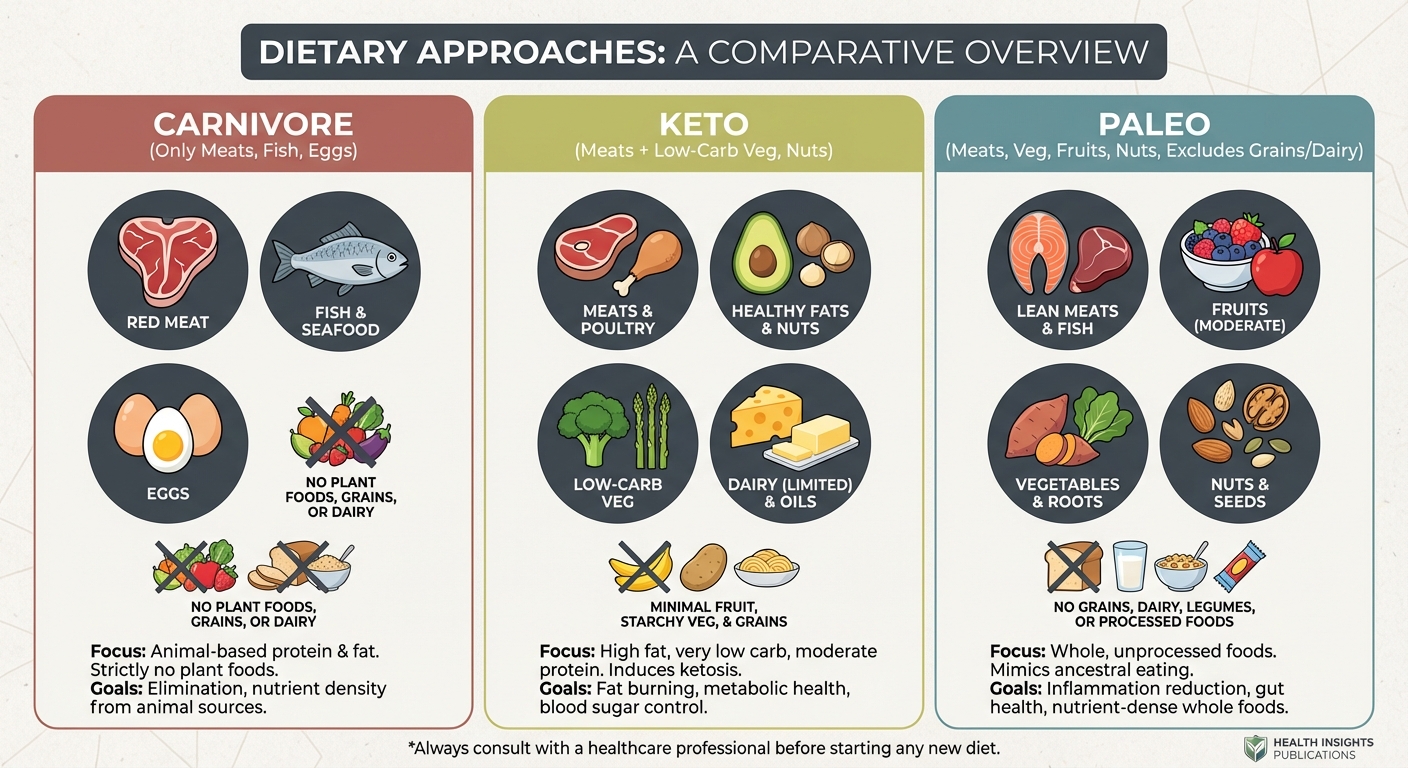
The elimination is comprehensive and uncompromising. This represents both the diet’s theoretical strength, removing every possible plant-based trigger simultaneously, and its practical weakness, eliminating entire food categories without distinguishing between problematic and beneficial foods. A carnivore dieter who improves doesn’t know whether they’re reacting to lectins, oxalates, FODMAPs, specific vegetables, or something else entirely. They’ve simply removed everything at once.
Proponents frame this as the ultimate elimination diet, a baseline of animal-only eating from which plant foods can theoretically be reintroduced to identify specific triggers. In practice, many carnivore dieters never attempt reintroduction, either because they’re satisfied with their results or because they’ve developed psychological investment in the approach.
Proposed Mechanisms: Why It Might Work for Some
Several plausible mechanisms could explain symptom improvement in certain individuals, even as the diet lacks controlled research validation. These mechanisms aren’t mutually exclusive; multiple factors likely contribute to observed benefits in people who respond positively.
Complete removal of plant antinutrients represents the most distinctive feature of carnivore eating. As nutrition researcher Dr. Paul Saladino has documented, plants produce compounds like lectins, oxalates, and phytates as defense mechanisms against consumption. Most people tolerate these compounds without issue, but individuals with compromised gut barriers, autoimmune conditions, or specific sensitivities may experience inflammation, immune activation, or digestive distress in response. By eliminating all plant foods, carnivore simultaneously removes every potential plant-based trigger, which could explain improvements in people whose symptoms stemmed from reactions to compounds conventional elimination diets don’t address.
Ketogenic metabolism likely contributes to reported cognitive and energy benefits. With near-zero carbohydrate intake, the body shifts to burning fat and producing ketones for fuel. Some individuals experience significant improvements in mental clarity, mood stability, and sustained energy when in ketosis, potentially related to more stable blood glucose levels, the brain’s efficient use of ketones as fuel, or reduced inflammation from eliminating sugars and refined carbohydrates. The Mediterranean vs. keto comparison explores these metabolic differences in depth.
Superior bioavailability of nutrients in animal products may compensate for reduced variety. While plants offer diverse nutrients, absorption is often compromised by fiber and antinutrients that inhibit mineral uptake. Animal foods provide highly bioavailable iron, zinc, B vitamins, and other nutrients in forms the body readily uses. Carnivore advocates argue that nutrient needs decrease when absorption increases, though this remains theoretical without long-term metabolic studies.
Gut rest from fiber elimination helps some individuals with severe digestive issues. While mainstream nutrition emphasizes fiber’s benefits, people with inflammatory bowel disease, severe IBS, or compromised gut function sometimes experience fiber as irritating rather than helpful. Zero-fiber eating allows complete digestive rest that might facilitate healing in damaged intestinal tissue. Whether this represents true healing or symptom suppression remains unclear.
The simplicity effect shouldn’t be underestimated. When the only decision is “eat meat or don’t eat,” the cognitive burden of food choices vanishes entirely. For individuals struggling with food anxiety, decision fatigue, or disordered eating patterns around variety, this radical simplification can be psychologically liberating. Some reported benefits may stem from reduced food-related stress rather than the diet’s specific composition.
The Anecdotal Evidence and Its Limitations
Testimonials drive the carnivore movement. People with autoimmune conditions, chronic digestive issues, treatment-resistant depression, and metabolic dysfunction report improvements ranging from modest to transformative. These reports aren’t fabrications; they represent genuine experiences of real people. The question isn’t whether individuals feel better on carnivore, but why they feel better and whether those benefits require permanent carnivore eating.
Autoimmune improvements appear most frequently in testimonials. Rheumatoid arthritis, psoriasis, lupus, Hashimoto’s thyroiditis, and inflammatory bowel diseases feature prominently in success stories. People describe pain reduction, decreased inflammation, improved mobility, reduced medication needs, and sometimes apparent remission. The mechanism would presumably involve removing plant compounds that trigger immune reactions, though identifying specific triggers requires systematic reintroduction that most carnivore dieters never complete.
Digestive normalization ranks second in frequency. Chronic diarrhea resolves, bloating disappears, abdominal pain decreases. For people who’ve suffered for years despite medical treatment and dietary modifications, these changes feel miraculous. The gut rest hypothesis explains some of this improvement, as does removal of FODMAPs and other fermentable compounds that certain individuals cannot process effectively.

Mental health benefits surprise many adopters. Depression lifts, anxiety decreases, brain fog clears. Some report feeling mentally sharp and emotionally stable for the first time in years. Whether this stems from ketogenic metabolism, elimination of inflammatory foods, stable blood glucose, or placebo effects cannot be determined from self-reports. The gut-brain connection, explored in our gut-brain axis coverage, provides theoretical mechanisms, but controlled studies don’t exist.
The fundamental problem with all testimonials is attribution. When someone changes their diet radically and simultaneously loses weight, enters ketosis, eliminates processed foods, pays careful attention to what they eat, and becomes invested in a community of supportive fellow dieters, which factor caused the improvement? Many carnivore benefits might be achievable through less extreme approaches that maintain nutritional diversity. Without controlled research comparing carnivore to alternatives like targeted elimination diets or standard ketogenic approaches, we cannot know whether the all-meat component is necessary or merely sufficient.
Nutrient Concerns: What Science Actually Says
The standard nutritional critique of carnivore eating focuses on deficiencies that should, in theory, emerge from eliminating entire food categories. These concerns are legitimate based on current nutritional science, though carnivore advocates offer counterarguments that complicate simple predictions.
Vitamin C represents the most obvious theoretical deficiency. Humans cannot synthesize this essential vitamin and historically developed scurvy when consuming only preserved meats during long sea voyages. Carnivore practitioners argue that vitamin C requirements decrease substantially in the absence of dietary carbohydrates, since glucose and vitamin C compete for the same cellular transporters. With glucose absent, cells may utilize available vitamin C more efficiently. Fresh meat and organ meats like liver do contain small amounts of vitamin C. Whether these sources suffice for long-term health remains genuinely unknown, as no controlled studies have tracked vitamin C status in carnivore dieters over years.
Fiber’s complete absence concerns mainstream nutritionists given decades of research linking high fiber intake to reduced colon cancer risk, improved metabolic markers, and beneficial gut bacteria populations. The bacteria that ferment fiber into protective short-chain fatty acids would presumably die off without their primary food source, fundamentally altering the gut ecosystem. Carnivore advocates counter that some individuals thrive without fiber, pointing to symptom resolution in people with inflammatory bowel disease. Neither position has been validated with long-term research on zero-fiber diets.
Polyphenols and phytonutrients, the plant compounds associated with reduced disease risk and potential longevity benefits, are entirely absent from carnivore eating. Research consistently links polyphenol intake with lower inflammation and better health outcomes. Carnivore proponents suggest that eliminating plant toxins reduces oxidative stress that polyphenols would otherwise need to counter, making antioxidant intake less necessary. This argument is theoretical and untested.
Magnesium and potassium occur in lower concentrations in animal foods than in vegetables and fruits. Folate varies significantly, with organ meats providing substantial amounts but muscle meat containing relatively little. Whether carnivore dieters consuming primarily steaks and ground beef get adequate micronutrients long-term is uncertain. Self-reports of feeling fine don’t equal adequate nutritional status, as many deficiencies develop slowly over years before symptoms appear.
The counterargument centers on bioavailability. If nutrients from animal products absorb more efficiently than those from plants, lower absolute intake might yield equivalent biological availability. Some carnivore practitioners undergo regular blood testing and report stable nutrient levels. However, self-selected early adopters willing to monitor bloodwork may not represent what would happen in broader populations eating this way for decades.
Cardiovascular Risk: An Uncertain Picture
Cardiovascular concerns represent the area where medical professionals express greatest alarm about carnivore eating. The diet’s extremely high saturated fat and cholesterol intake from fatty red meat directly contradicts decades of nutritional guidance linking saturated fat to cardiovascular disease.
The traditional prediction is straightforward: this dietary pattern should elevate LDL cholesterol dramatically, accelerate atherosclerosis, and increase heart disease risk substantially. Population studies linking saturated fat intake to cardiovascular events support this concern. Every major cardiology organization recommends limiting saturated fat intake for heart health.
What actually happens in carnivore dieters is more complicated and variable than simple predictions suggest. Some individuals show dramatic LDL increases that would concern any cardiologist. Others show minimal cholesterol changes despite eating pounds of fatty beef daily. Still others show elevated LDL alongside improved triglycerides, higher HDL, and reduced inflammatory markers like CRP, a profile whose net cardiovascular risk is genuinely uncertain.
Several factors may explain this variability. Genetic differences in cholesterol metabolism mean some people’s LDL responds dramatically to dietary saturated fat while others remain relatively unaffected. Weight loss, common on carnivore, independently improves multiple cardiovascular markers regardless of diet composition. Complete elimination of refined carbohydrates and sugars removes major drivers of metabolic dysfunction. Individual responses to high-fat diets vary enormously based on factors we don’t fully understand.
The fundamental uncertainty is that no multi-year controlled studies examine cardiovascular outcomes in carnivore dieters. We can measure LDL and inflammatory markers today, but whether carnivore dieters will experience more or fewer heart attacks decades from now is unknown. The thousands of people currently eating this way are conducting an uncontrolled experiment whose results won’t be clear for many years.
Who Might Reasonably Consider Carnivore
Despite significant unknowns and risks, there exists a subset of individuals for whom short-term carnivore trials might represent reasonable therapeutic experimentation. These are people whose conditions haven’t responded to conventional treatments and who have exhausted less extreme options.
Severe autoimmune conditions not responding to medication represent the clearest potential use case. When someone has tried multiple biologics, worked with rheumatologists, followed standard elimination protocols, and still experiences debilitating symptoms, a time-limited carnivore trial under medical supervision offers a different approach. If symptoms improve dramatically, systematic reintroduction of plant foods can identify specific triggers, allowing eventual transition to a less restrictive diet that maintains benefits while restoring nutritional diversity.
Extreme digestive issues where all fiber and fermentable carbohydrates cause symptoms might benefit from temporary gut rest. People with severe IBS or inflammatory bowel disease who react even to supposedly “safe” plant foods could use carnivore as a reset before carefully reintroducing foods one at a time. The goal would be identifying the minimum restriction necessary for symptom management, not permanent all-meat eating.
Complex food sensitivities that haven’t been identified through standard testing or elimination protocols might become clearer after a carnivore baseline. If someone has suspected food reactions but can’t identify triggers despite careful elimination attempts, starting from zero plant foods and methodically reintroducing them might reveal patterns that weren’t apparent with less comprehensive elimination.
In all these cases, the appropriate frame is short-term therapeutic tool, not permanent lifestyle. Carnivore serves as a diagnostic intervention that creates a symptom-free baseline from which to identify specific problematic foods through careful reintroduction. Staying carnivore forever when you might tolerate many plant foods represents unnecessary restriction with unknown long-term risks.
Who Should Definitely Avoid Carnivore
Certain populations face risks that clearly outweigh any potential benefits, regardless of what testimonials might suggest.
People with kidney disease or impaired kidney function should not attempt carnivore eating. The extremely high protein intake, often 150-250+ grams daily, places substantial metabolic load on kidneys that must process and excrete nitrogen from protein breakdown. For people with chronic kidney disease, this additional burden could accelerate decline in kidney function. Even borderline kidney issues warrant caution with sustained high protein loads.
Individuals with familial hypercholesterolemia face unacceptable cardiovascular risk from carnivore’s high saturated fat content. This genetic condition causes dramatically elevated LDL cholesterol levels that carnivore would likely worsen substantially. Managing dietary saturated fat is critical for these individuals’ cardiovascular health.
Pregnant and nursing women require nutrient diversity that carnivore cannot reliably provide. Fetal development and milk production create heightened demands for folate, vitamin C, and other nutrients that are scarce or absent in all-meat diets. No research supports carnivore as safe during these critical periods.
Children and adolescents need diverse nutrients for growth and development, and imposing an extreme experimental diet on a developing body is ethically problematic. Whatever risks adults choose to accept for themselves, subjecting children to unproven dietary extremes is a different matter entirely.
People with eating disorder history should approach carnivore with extreme caution. The diet’s rigid rules and complete food group elimination can trigger or exacerbate disordered eating patterns. For someone with a complicated relationship with food, extreme elimination rarely proves therapeutic and often worsens psychological struggles around eating.
Healthy individuals without specific medical conditions driving experimentation should question why they’re considering carnivore at all. The potential costs outweigh speculative benefits for people without pressing health issues that haven’t responded to conventional approaches.
The Long-Term Safety Question
The most critical uncertainty around carnivore eating is simple: we have no data on humans eating exclusively animal products for decades. The entire body of human research on all-meat diets spans at most several years, far too short to assess risks that take 20-30 years to manifest.
We don’t know whether complete fiber absence increases colon cancer risk over decades. Epidemiological research links fiber intake with reduced colon cancer incidence through multiple mechanisms. Does zero fiber actively increase risk, or merely fail to provide protection? The question hasn’t been answered because no populations have eaten zero-fiber diets long enough to study.
What happens to cardiovascular health over decades of high saturated fat intake remains genuinely uncertain. Heart disease takes years to develop, and short-term biomarker improvements don’t guarantee long-term outcomes. Whether carnivore dieters develop accelerated atherosclerosis or remain protected through weight loss and metabolic improvements won’t be clear for many years.
The gut microbiome question crystallizes the uncertainty. Zero fiber means a drastically altered bacterial ecosystem. The health-promoting species that ferment fiber would largely die off. What replaces them, and whether the resulting microbiome supports or undermines long-term health, is unknown. A few small studies show dramatic microbiome shifts on carnivore, but whether these changes prove harmful becomes apparent only over time.
People have followed carnivore for 5-10 years and report feeling fine. This provides some reassurance but limited certainty. Ten years isn’t a lifetime. Cancer, cardiovascular disease, and kidney decline take decades to manifest. Current carnivore dieters are conducting an experiment on themselves whose results remain unknown.
The Bottom Line
The carnivore diet exists in a space of genuine uncertainty, too poorly studied to recommend but potentially useful as a therapeutic tool for specific conditions. It is not an appropriate general recommendation for healthy individuals seeking optimal nutrition.
For people with severe autoimmune or digestive conditions that haven’t responded to conventional treatments, short-term carnivore trials under medical supervision might be worth considering. The approach functions as an extreme elimination protocol that can create a symptom-free baseline from which to systematically identify specific food triggers through careful reintroduction. Medical monitoring, baseline and follow-up bloodwork, and professional guidance are essential.
The goal should never be permanent carnivore eating but rather identifying the minimum dietary restriction necessary to maintain health improvements. Staying on an all-meat diet forever when you might tolerate many plant foods means accepting unknown long-term risks without clear benefit.
If considering carnivore:
- Work with a physician and get comprehensive bloodwork before starting
- Frame it as a 30-90 day diagnostic protocol, not a permanent lifestyle
- Monitor symptoms, energy, and any concerning changes carefully
- Plan systematic reintroduction of plant foods to identify specific triggers
- Transition to the least restrictive diet that maintains your improvements
Individual success stories don’t constitute population-level evidence of safety or efficacy. The plural of anecdote isn’t data. Carnivore might work for some people in specific contexts, but that doesn’t make it an appropriate recommendation for general health.
Sources: Elimination diet research, ketogenic metabolism studies, autoimmune disease and dietary intervention literature, cardiovascular effects of saturated fat intake, nutrient bioavailability research, gut microbiome and fiber studies.