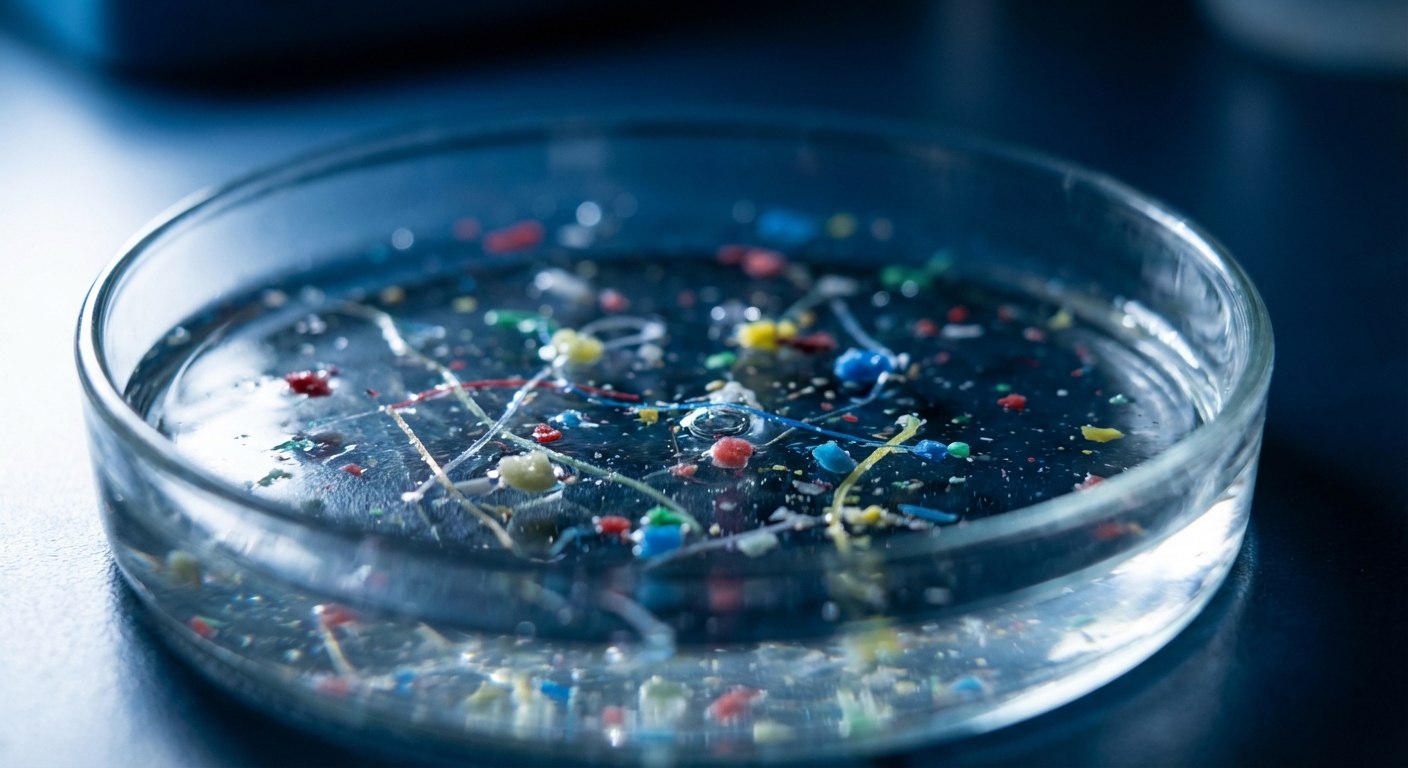
You ingest roughly five grams of plastic every week. That is the weight of a credit card, entering your body through drinking water, food packaging, seafood, and even the air in your home. A decade ago, that claim would have sounded alarmist. Today, it is a baseline finding cited by researchers at the University of Newcastle, Australia, in a commissioned analysis for the World Wildlife Fund. The question has shifted from “are microplastics in our bodies?” to “what are they doing once they get there?”
The answer is becoming clearer, and it is not reassuring. Published research from 2024 and 2025 has detected microplastics in human brain tissue, placental tissue, testicular samples, breast milk, and arterial plaque. A landmark study in the New England Journal of Medicine in March 2024 found that patients with microplastics and nanoplastics detected in their carotid artery plaque had a 4.5 times higher risk of heart attack, stroke, or death over a 34-month follow-up compared to patients whose plaque was plastic-free. That finding transformed the conversation from theoretical concern to documented clinical risk.
The science is moving fast, but the guidance for individuals has lagged behind. Here is what the current evidence actually says about where your exposure comes from, how it affects your body, and what practical steps reduce it.
How Microplastics Enter Your Body
The routes of exposure are more varied than most people realize. Ingestion through food and water accounts for the largest share, but inhalation and dermal absorption contribute as well.
Bottled water is one of the most concentrated sources. A 2024 study published in Proceedings of the National Academy of Sciences (PNAS) by researchers at Columbia University used a novel laser imaging technique to count nanoplastics (particles smaller than one micrometer) for the first time. They found an average of 240,000 detectable plastic particles per liter of bottled water, roughly 100 times more than previous estimates that only measured larger microplastics. The dominant polymers detected were polyethylene terephthalate (PET, from the bottles themselves), polyamide (from filtration systems), and polystyrene.
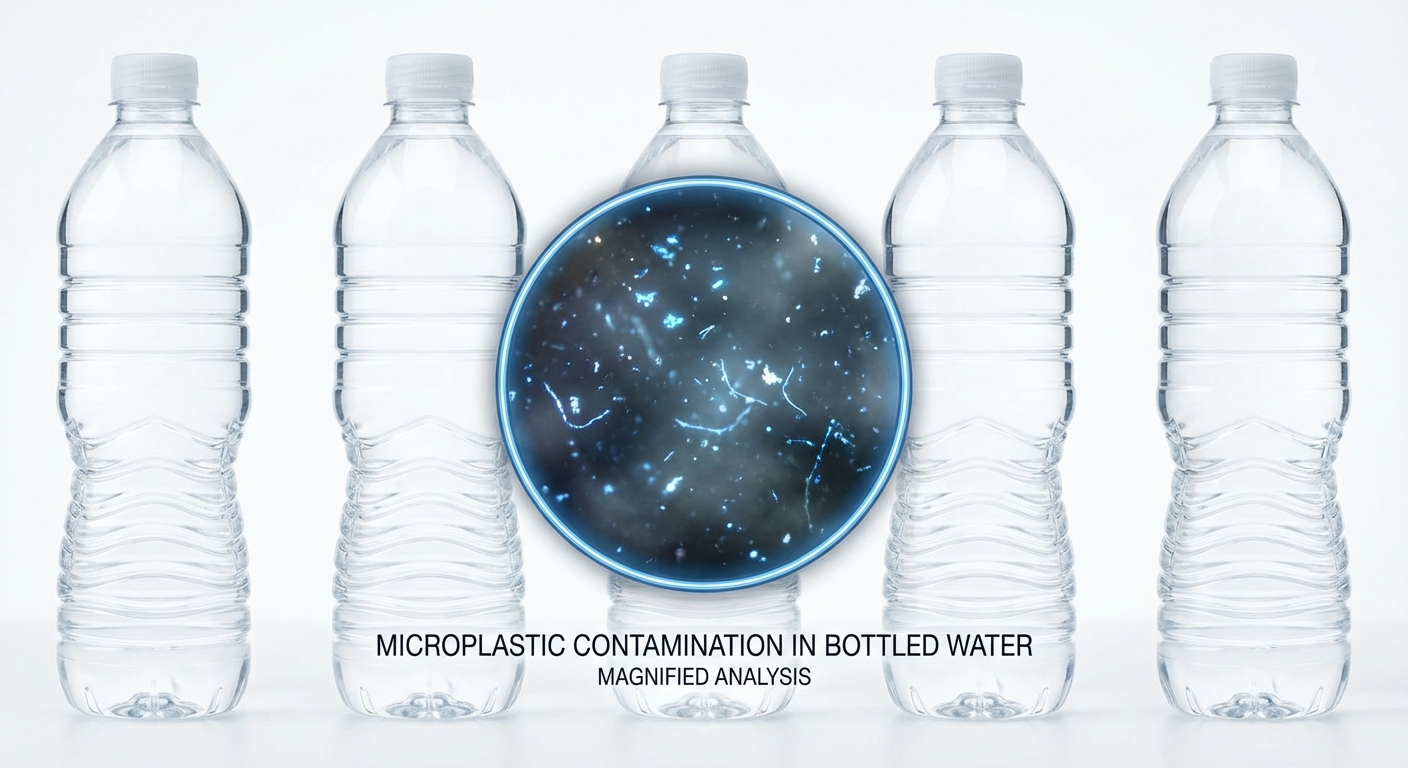
Tap water contains microplastics too, though at lower concentrations. The World Health Organization’s 2024 review found average concentrations of 5.5 particles per liter in tap water compared to 325 particles per liter in bottled water (measuring only particles larger than one micrometer). The difference stems partly from plastic packaging and partly from the bottling process itself, which introduces additional contamination.
Food sources are equally concerning. Seafood accumulates microplastics from ocean pollution, with shellfish and small fish consumed whole (sardines, anchovies) carrying the highest loads because you eat the entire digestive tract. Processed foods introduce plastics through packaging contact, conveyor belts, and plastic-lined machinery. A 2023 study in Environmental Science & Technology found that a single meal prepared with plastic cutting boards and utensils released millions of microplastic particles.
The kitchen itself generates exposure. Heating food in plastic containers, even those labeled “microwave safe,” releases microplastics at dramatically higher rates. Research from the University of Nebraska-Lincoln published in Environmental Science & Technology demonstrated that microwaving baby food containers released up to 4.22 million microplastic particles and 2.11 billion nanoplastic particles per square centimeter of container. The finding led the American Academy of Pediatrics to recommend glass or ceramic containers for heating children’s food.
Airborne exposure comes primarily from synthetic textiles. Every time you wash polyester, nylon, or acrylic clothing, the garments shed millions of microfibers. These fibers become airborne during drying and normal wear, settling as household dust. Indoor air contains significantly higher concentrations of microplastic fibers than outdoor air, making your own home a primary inhalation source.
What Microplastics Do Inside Your Body
The health effects are no longer speculative. Research has identified several pathways through which microplastics damage biological systems, and the evidence grows stronger each year.
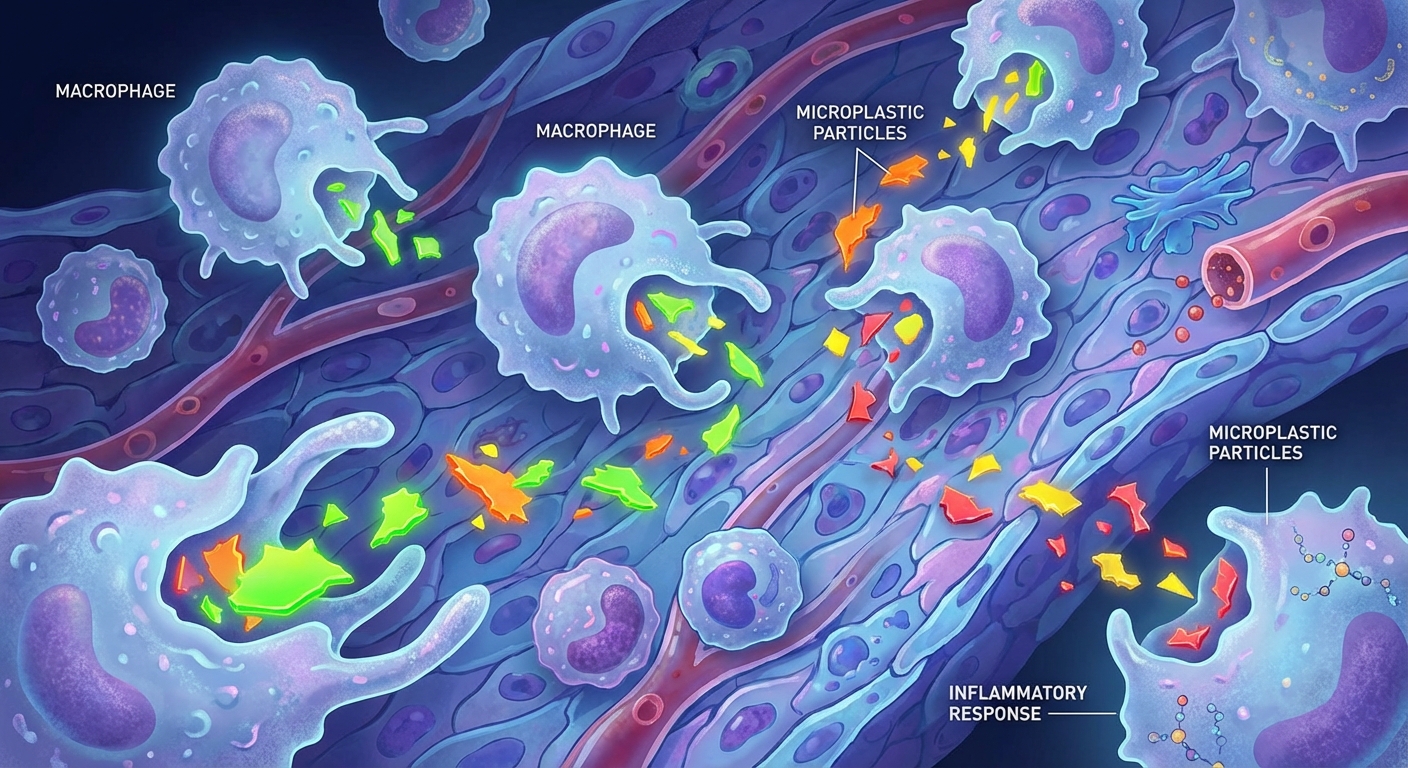
Inflammation is the central mechanism. When microplastics enter tissues, the immune system recognizes them as foreign bodies and mounts an inflammatory response. Macrophages (immune cells) attempt to engulf the particles. When the particles are too large to digest, the macrophages release pro-inflammatory cytokines, creating chronic low-grade inflammation. Dr. Philip Landrigan, director of the Program for Global Public Health and the Common Good at Boston College, has described microplastics as “a new source of chronic, low-level inflammation that we are only beginning to understand.”
The cardiovascular findings are the most alarming. The NEJM study by Dr. Raffaele Marfella and colleagues at the University of Campania in Italy analyzed carotid endarterectomy specimens from 304 patients. Using pyrolysis-gas chromatography/mass spectrometry, they detected polyethylene in 58.4% of samples and polyvinyl chloride in 12.1%. Patients with detectable plastics showed significantly higher levels of inflammatory markers (IL-18, IL-1beta, IL-6, and TNF-alpha) in plaque tissue. The 4.5-fold increase in cardiovascular events was statistically significant after adjusting for age, sex, smoking, cholesterol, diabetes, and statin use.
Reproductive health effects are documented across multiple studies. Research published in Science of the Total Environment in 2024 detected microplastics in human testicular tissue at concentrations roughly three times higher than those found in canine samples. The average concentration was 329.44 micrograms per gram of tissue. The most common polymer was polyethylene, followed by PVC. Researchers at the University of New Mexico noted a correlation between higher microplastic concentrations and lower sperm counts, though the sample size (23 specimens) limits definitive conclusions.
Endocrine disruption adds another layer. Many plastics contain additives like bisphenol A (BPA), phthalates, and flame retardants that act as endocrine disruptors. These chemicals leach from microplastic surfaces and mimic or block hormones, particularly estrogen. The concern is that microplastics serve as vehicles delivering concentrated doses of endocrine-disrupting chemicals directly into tissues, amplifying exposure beyond what dissolved chemicals alone would produce.
Gut health effects may be the most widespread. A 2024 review published in Gut Microbes by researchers at the Chinese Academy of Sciences documented that microplastic exposure in animal models consistently altered gut microbiome composition, reduced microbial diversity, and increased intestinal permeability (“leaky gut”). These changes correlated with systemic inflammation and metabolic disruption. While direct human gut microbiome studies are still limited, the connection between gut health and broader systemic health makes this pathway particularly relevant.
The Size Problem: Why Nanoplastics Matter More
Most public discussion focuses on microplastics (particles between one micrometer and five millimeters), but nanoplastics (smaller than one micrometer) likely pose greater health risks because they can cross biological barriers that block larger particles.
Nanoplastics can penetrate cell membranes directly, crossing from the gut into the bloodstream, from the bloodstream into organs, and from the placenta into fetal tissue. Their small size gives them access to compartments that microplastics cannot reach, including the brain. Research published in Science Advances in 2023 demonstrated that nanoplastics crossed the blood-brain barrier in fish models and accumulated in brain tissue, causing behavioral changes and neuroinflammation.
The Columbia University PNAS study found that nanoplastics outnumbered microplastics in bottled water by roughly 10 to 100 times. Previous studies that measured only microplastics dramatically underestimated total plastic particle exposure. As detection technology improves, the true scope of nanoplastic contamination in food, water, and human tissue will become clearer, and early indications suggest the numbers will be higher than current estimates.
Filtering and Reducing Water Exposure
Water filtration represents the highest-impact single intervention for reducing ingestion exposure. The effectiveness varies dramatically by filter type.
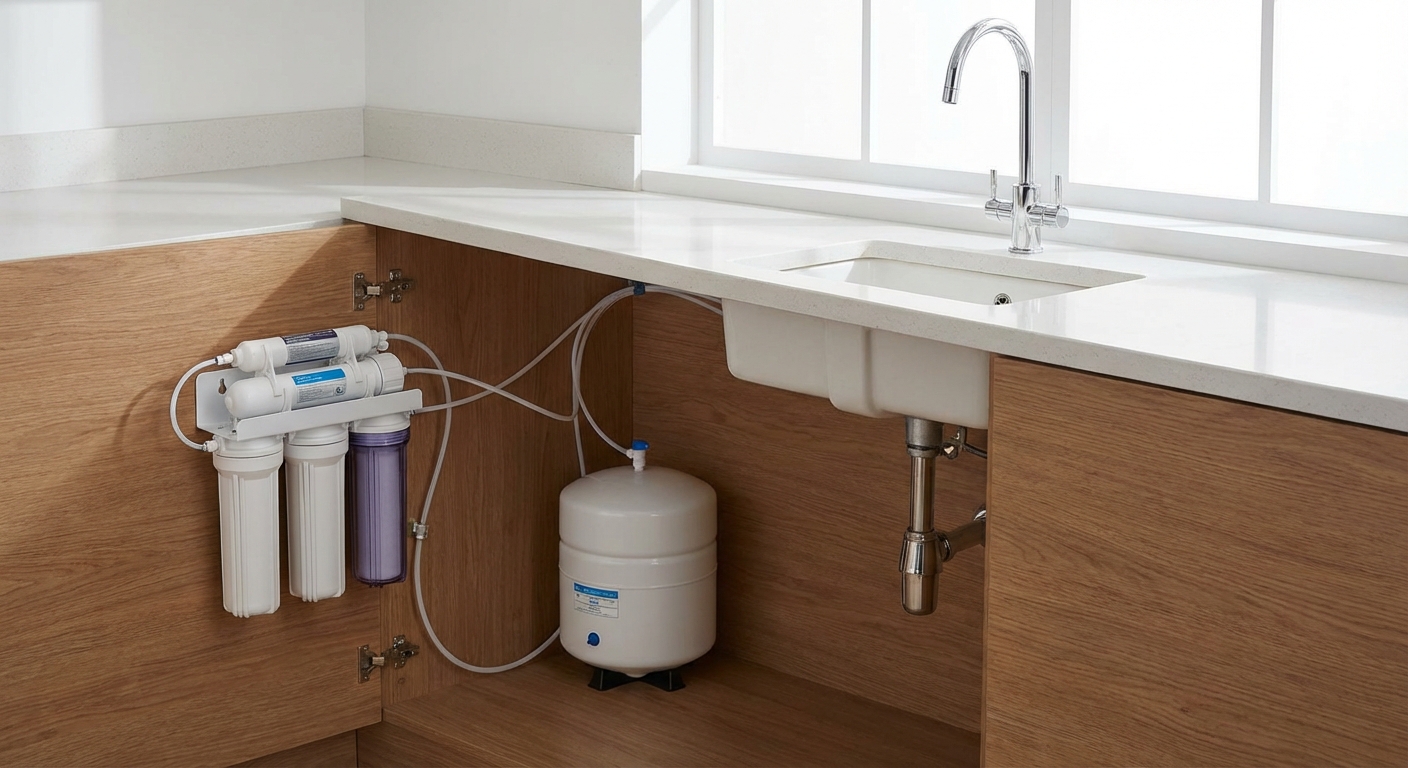
Reverse osmosis (RO) systems remove over 99% of microplastics and nanoplastics, filtering particles down to 0.0001 microns. They also effectively remove PFAS (“forever chemicals”), heavy metals, and pharmaceutical residues. An under-sink RO system costs between $150 and $500 and requires filter replacement every six to twelve months. For comprehensive water safety, RO is the gold standard.
Solid carbon block filters (NSF/ANSI 401 certified) provide effective microplastic removal at a lower price point. They cannot match RO for nanoplastic removal but significantly reduce larger particles and many chemical contaminants. These are available as countertop, under-sink, or faucet-mount configurations.
Standard pitcher filters (like basic Brita models) provide minimal microplastic removal. They are designed primarily for taste improvement and chlorine reduction, not particulate filtration. If a pitcher filter is your only option, it helps somewhat, but the improvement is modest compared to RO or carbon block systems.
Practical water steps:
- Switch from bottled water to filtered tap water using RO or carbon block filtration
- Never reuse single-use plastic water bottles (repeated use increases particle release)
- If you buy bottled water, glass bottles release no plastic particles
- Avoid leaving plastic water bottles in hot cars or direct sunlight (heat accelerates degradation)
Reducing Kitchen and Food Exposure
Your kitchen preparation methods influence microplastic exposure more than most people realize. Small changes in how you store, heat, and prepare food make meaningful differences.
Heating is the critical factor. Never microwave food in plastic containers, regardless of “microwave safe” labeling. That designation means the container will not melt or deform; it does not mean the container will not release microplastic and nanoplastic particles. Transfer food to glass, ceramic, or stainless steel before heating. This single change eliminates one of the highest-concentration exposure sources.
Replace plastic cutting boards with wood, bamboo, or composite alternatives. Each cut on a plastic board releases microplastic fragments into your food. Over months of use, the scoring accumulates and accelerates particle release. Wooden cutting boards, while requiring different maintenance, do not introduce plastic particles.
Store food in glass or stainless steel containers instead of plastic. Acidic foods (tomato sauce, citrus, vinegar-based dressings) accelerate plastic leaching, so these items particularly benefit from non-plastic storage. Silicone lids and wraps are preferable to plastic wrap for covering food.
Reduce processed food consumption when possible. Beyond the well-established nutritional reasons to prioritize whole foods, industrial food processing introduces microplastics through plastic-lined machinery, conveyor belts, and packaging. Fresh foods prepared at home with non-plastic tools carry lower microplastic loads than their packaged equivalents.
For seafood, smaller species lower on the food chain (sardines, anchovies, mackerel) carry fewer accumulated contaminants than large predators, though they still contain microplastics. Cleaning and gutting fish before cooking removes the digestive tract where microplastics concentrate. Shellfish consumed whole (mussels, oysters) provide limited opportunity for removal, but their nutritional benefits, including omega-3 fatty acids and zinc, still favor their inclusion in a balanced diet.
Managing Airborne and Household Exposure
Reducing inhalation exposure requires attention to your home environment, where you spend the majority of your breathing hours.
A HEPA-filtered vacuum removes settled microfibers from floors and furniture more effectively than standard vacuums, which can redistribute fine particles back into the air. Vacuuming twice weekly in high-traffic areas reduces accumulated fiber concentrations. Damp dusting captures fibers better than dry dusting or feather dusters, which primarily displace particles.
Air purifiers with HEPA filtration reduce airborne microplastic concentrations in enclosed spaces. Running a HEPA air purifier in your bedroom, where you spend roughly a third of your life, provides the highest-value placement for reducing inhalation exposure during sleep.
Synthetic clothing is the primary source of indoor microfibers. Washing polyester, nylon, and acrylic garments in a microfiber-catching laundry bag (like the Guppyfriend bag) reduces fiber release into both your water system and, subsequently, your home. Choosing natural fibers (cotton, wool, linen) when possible reduces shedding. Using a front-loading washer produces roughly 80% fewer microfibers per load than top-loading models, according to research from the University of Plymouth.
Your Nutrition Action Plan
The goal is not zero microplastic exposure, which is currently impossible, but meaningful reduction across the highest-impact sources. Research suggests that combining water filtration, kitchen material changes, and household air quality improvements can reduce total exposure by 50-80%.
Highest-impact changes (start here):
- Install an under-sink RO or carbon block water filter
- Stop microwaving food in plastic containers
- Replace worn plastic cutting boards with wood or bamboo
Medium-impact changes (add when ready):
- Switch food storage to glass or stainless steel
- Use a microfiber-catching laundry bag for synthetic clothing
- Run a HEPA air purifier in the bedroom
Lower-impact but still beneficial:
- Choose glass-bottled beverages when available
- Damp dust rather than dry dust
- Reduce single-use plastic packaging in food shopping
The science on microplastics will continue advancing. What will not change is the basic principle: reducing the amount of plastic that contacts your food, water, and air reduces what ends up in your body. These are straightforward engineering solutions to a materials exposure problem, and they work regardless of how the health risk research develops.
If you have concerns about microplastic exposure and existing health conditions, consult your physician. The interventions described here are preventive measures, not treatments for diagnosed conditions.
Sources
- Marfella, R. et al. “Microplastics and Nanoplastics in Atheromas and Cardiovascular Events.” New England Journal of Medicine, March 2024.
- Qian, N. et al. “Rapid single-particle chemical imaging of nanoplastics by SRS microscopy.” Proceedings of the National Academy of Sciences, January 2024.
- Stanford Medicine. “Microplastics and our health: What the science says.” January 2025.
- Duke University Research. “Microplastics Are Everywhere. Here’s What Duke Research Is Doing About Health Concerns.” June 2025.
- U.S. Environmental Protection Agency. “Microplastics Research.” 2025.