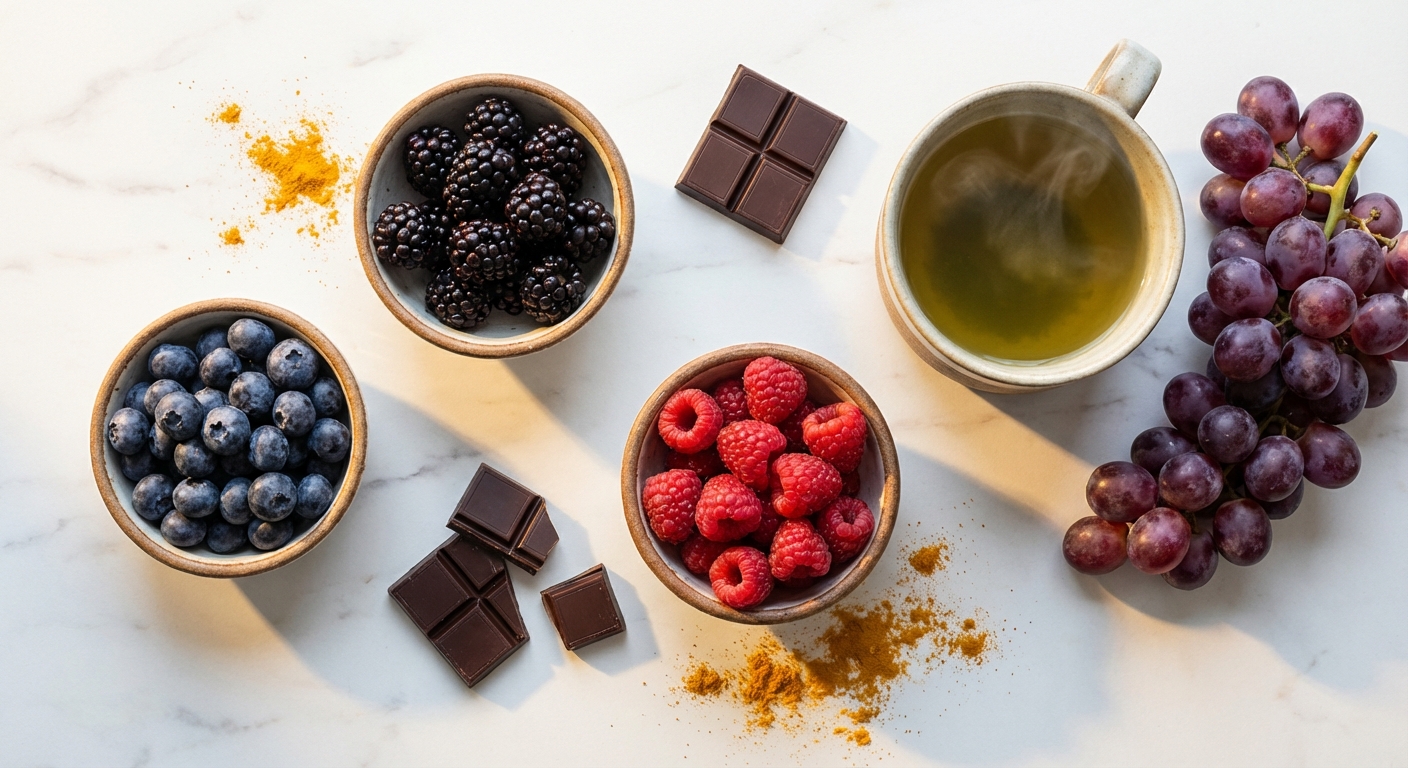
The purple in your blueberries, the bitterness in your dark chocolate, the astringency in your green tea, these aren’t just flavors. They’re polyphenols, a diverse class of plant compounds that do something remarkable: they activate the same cellular pathways triggered by caloric restriction and exercise, two of the most robust longevity interventions ever studied.
Scientists have identified over 8,000 different polyphenols in plants, and the research connecting these compounds to human healthspan has grown from intriguing correlations to increasingly solid mechanistic understanding. A 2024 meta-analysis published in The American Journal of Clinical Nutrition found that people in the highest quartile of polyphenol intake had 30% lower cardiovascular mortality and 18% lower all-cause mortality compared to those consuming the least. The Nurses’ Health Study and Health Professionals Follow-Up Study, tracking over 150,000 participants for more than two decades, found that higher flavonoid intake, a major polyphenol subclass, correlated with 20% lower mortality risk.
This isn’t about isolated supplements or expensive extracts. The most compelling evidence points to whole food sources: berries, tea, coffee, dark chocolate, colorful vegetables, herbs, and spices. These foods provide polyphenols in their natural matrix, surrounded by fiber and other compounds that enhance absorption and effectiveness. The question isn’t whether polyphenols matter for longevity, but how to optimize your intake for maximum benefit.
The Molecular Pathways That Drive Longevity
Polyphenols don’t extend lifespan by acting as simple antioxidants, mopping up free radicals like molecular sponges. That early hypothesis, while not entirely wrong, dramatically undersold what these compounds actually do. The more significant effect is their ability to activate genetic and cellular programs that promote repair, resilience, and efficient metabolism, the same pathways that explain why caloric restriction extends lifespan in virtually every organism studied.
Sirtuin activation represents perhaps the most studied mechanism. Sirtuins are a family of seven proteins that function as master regulators of cellular health, controlling DNA repair, metabolic efficiency, inflammation, and stress resistance. When sirtuins are active, cells shift from growth mode to maintenance mode, prioritizing quality over quantity. Certain polyphenols, particularly resveratrol from grapes, quercetin from onions and apples, and EGCG from green tea, bind to and activate sirtuin proteins in ways that mimic some effects of caloric restriction. A landmark 2023 study in Nature Communications demonstrated that high-dose resveratrol activated SIRT1 in human skeletal muscle, improving mitochondrial function in older adults by approximately 20%.
AMPK activation provides another critical pathway. AMPK functions as a cellular energy sensor, detecting when ATP levels drop and triggering a cascade of responses designed to restore energy balance. When AMPK is active, it promotes autophagy (the cellular cleanup process that recycles damaged components), enhances mitochondrial biogenesis (creation of new energy-producing organelles), and improves insulin sensitivity. Polyphenols activate AMPK even without actual energy depletion, essentially telling your cells to run their maintenance programs proactively. Research from the University of California, San Diego found that polyphenol-rich diets increased AMPK signaling in human adipose tissue by 35%, correlating with improved metabolic markers.
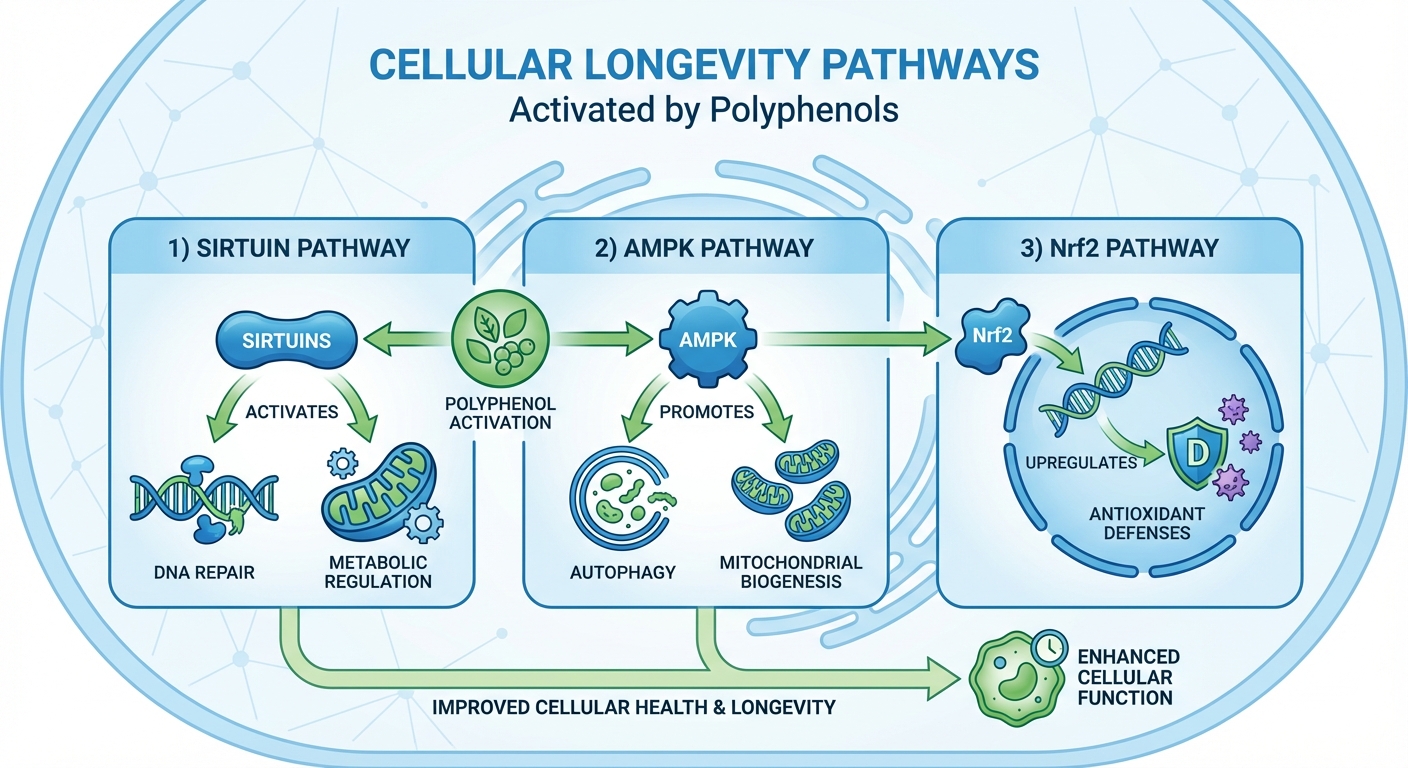
The Nrf2 pathway explains why polyphenols’ antioxidant effects go far beyond their direct free-radical scavenging capacity. When polyphenols activate Nrf2, they trigger your cells to produce their own antioxidant enzymes, including glutathione, superoxide dismutase, and catalase, which are far more effective than any exogenous antioxidant could be. This hormetic response, where a small stress triggers a larger protective adaptation, means that polyphenols essentially train your cells to protect themselves rather than providing protection from outside. Dr. Rhonda Patrick, a biochemist who specializes in nutritional research, explains it as “teaching your cells to fish rather than giving them a fish.”
The Population Evidence on Polyphenols and Mortality
While laboratory studies revealing molecular mechanisms are fascinating, the critical question is whether these cellular effects translate into longer, healthier human lives. We can’t easily run randomized controlled trials on human lifespan, so researchers rely on large prospective cohort studies that track dietary patterns and health outcomes over decades. The signal from these studies is remarkably consistent across different populations, dietary cultures, and research methodologies.
The PREDIMED trial, one of the most rigorous nutrition studies ever conducted, randomized over 7,400 Spanish adults at high cardiovascular risk to either a Mediterranean diet supplemented with extra-virgin olive oil (rich in polyphenols), a Mediterranean diet supplemented with mixed nuts (also polyphenol-rich), or a low-fat control diet. After nearly five years, the polyphenol-rich Mediterranean groups showed 30% lower cardiovascular events. A secondary analysis published in Circulation found that participants with the highest urinary polyphenol markers had 46% lower all-cause mortality compared to those with the lowest.
European cohort studies reinforce these findings. The European Prospective Investigation into Cancer and Nutrition (EPIC) followed over 500,000 participants across 10 countries. Those in the top quartile of flavonoid intake had 30% lower cardiovascular mortality and 16% lower cancer mortality. The relationship was dose-dependent: for every 200mg increase in daily flavonoid intake, all-cause mortality dropped by approximately 6%. This suggests that even modest increases in polyphenol consumption provide meaningful protection.
What’s particularly striking is the consistency of these associations across different food sources. Whether polyphenols came from berries, tea, coffee, chocolate, or wine, the protective effect remained. This suggests it’s the polyphenols themselves, not some other component of a particular food, driving the benefit. The practical implication is that you don’t need to eat any specific food, you need to eat a variety of polyphenol-rich foods that fit your preferences and culture.
Best Food Sources by Polyphenol Content
Not all polyphenol sources are created equal. Concentrations vary dramatically between foods, and understanding where the density lies helps you optimize intake without requiring massive quantities of food. Plants produce polyphenols primarily as defense mechanisms against UV radiation, pathogens, and herbivores, which means that “stressed” plants often contain higher concentrations. Wild berries typically contain more polyphenols than cultivated varieties; shade-grown coffee and tea contain more than their sun-grown counterparts.
Berries represent the single highest-density polyphenol source accessible to most people. Blueberries provide approximately 326mg per cup, primarily anthocyanins responsible for their deep blue-purple color. Blackberries offer 260mg per cup, raspberries 160mg, and strawberries 180mg. The anthocyanins in berries have been particularly well-studied for cognitive protection; a 2022 study in Neurology found that participants consuming at least one serving of berries weekly had 34% lower risk of Alzheimer’s disease over 20 years of follow-up.
Tea and coffee contribute substantial polyphenol intake for most adults. A cup of green tea delivers 200-300mg of polyphenols, primarily catechins including EGCG. Black tea provides 100-150mg per cup. Coffee delivers 200-300mg per cup as chlorogenic acid, which may explain why coffee consumption consistently associates with lower mortality in population studies despite the caffeine concerns that dominated earlier research. For many people in Western diets, coffee and tea together provide the majority of daily polyphenol intake.
Dark chocolate offers 200-300mg of flavanols per ounce at 70% cacao or higher. The flavanols in cacao have been specifically shown to improve endothelial function and blood pressure in randomized trials. However, the sugar and calories in chocolate require moderation, one to two ounces daily maximizes benefit while minimizing downsides.
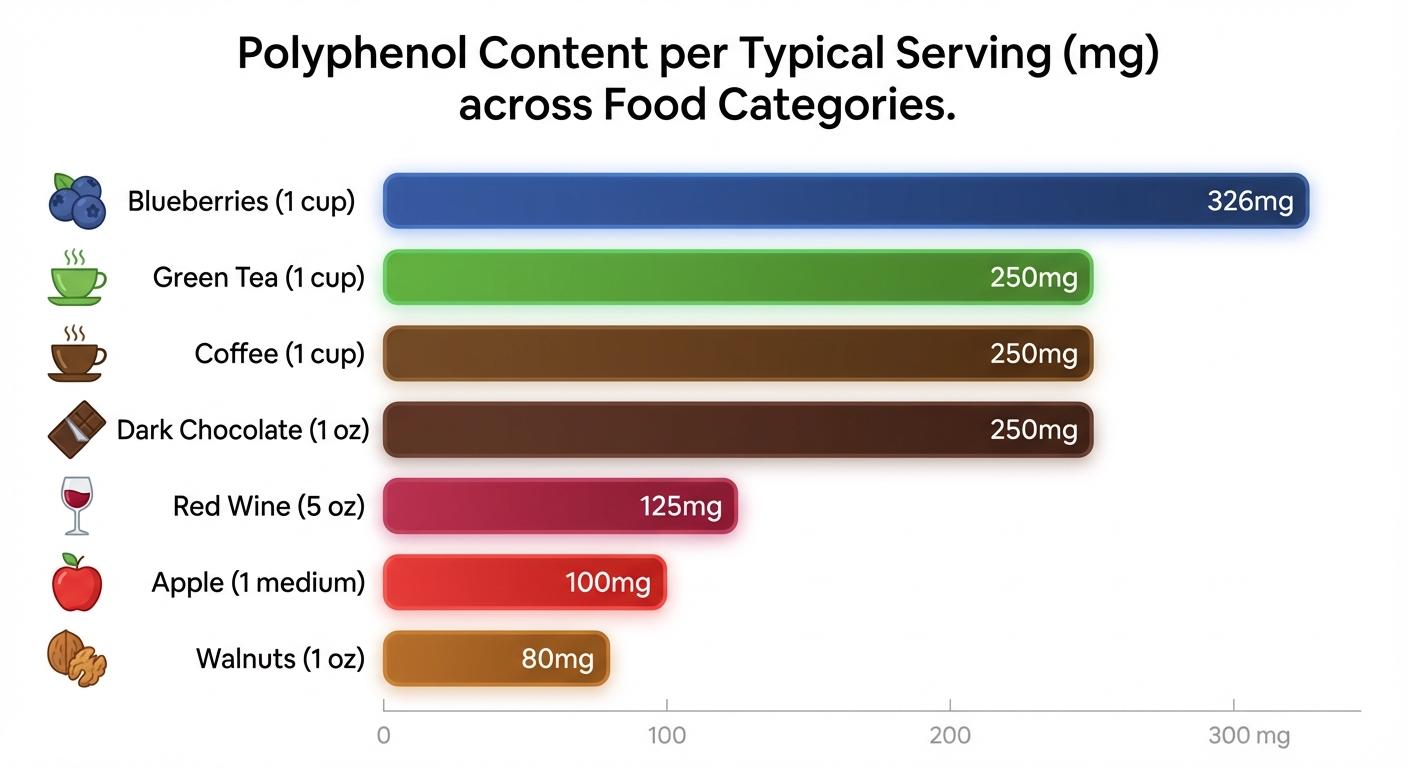
Nuts, particularly pecans, hazelnuts, and walnuts, provide 50-100mg per ounce along with healthy fats that may enhance polyphenol absorption. Red wine contains 100-150mg per five-ounce glass, though the alcohol may offset the polyphenol benefit for most people, making grapes or grape juice a potentially better source. Herbs and spices like turmeric, cloves, peppermint, and cinnamon contain extremely high concentrations but are consumed in small amounts; still, using them generously in cooking adds meaningful intake. Colorful vegetables, including red onions (quercetin), red cabbage (anthocyanins), and spinach (various flavonoids), round out a comprehensive polyphenol strategy.
The Bioavailability Question: Why Whole Foods Work Better
Eating polyphenol-rich foods is only half the equation. The other half is absorption, and this is where the biology gets complicated in ways that strongly favor whole foods over supplements. Most polyphenols are large, complex molecules that the small intestine absorbs poorly. Depending on the specific compound, only 1-10% of ingested polyphenols reach the bloodstream directly. This would seem to suggest supplements offering higher doses would be better, but the research consistently shows otherwise.
Your gut microbiome transforms the picture entirely. The polyphenols that don’t absorb in the small intestine pass to the colon, where trillions of bacteria metabolize them into smaller, often more bioactive compounds. These microbial metabolites can have effects that the parent compounds lack. The anthocyanins in berries, for example, are largely converted by gut bacteria into protocatechuic acid, which may be responsible for much of their cardiovascular benefit. This relationship is bidirectional: polyphenols act as prebiotics, feeding beneficial bacteria and improving gut microbiome composition, which in turn improves your ability to metabolize and benefit from polyphenols.
Whole foods provide a matrix that enhances this process. The fiber in berries slows gastric emptying, giving more time for absorption and delivering more polyphenols to the colon intact. The fat in dark chocolate enhances absorption of fat-soluble flavanols. The vitamin C in citrus protects co-consumed polyphenols from oxidation. When you isolate polyphenols into supplements, you lose these synergistic effects. A study comparing blueberry consumption versus equivalent-dose anthocyanin supplements found significantly higher blood levels and urinary excretion of polyphenol metabolites from the whole berries, despite the supplement containing more of the parent compound.
The practical implication is clear: get your polyphenols from food, not pills. The rare exceptions are specific compounds with documented benefits at doses difficult to achieve through diet. Curcumin supplementation shows benefits food-level turmeric can’t provide due to its uniquely poor bioavailability, which specialized formulations with piperine or phospholipids can enhance. But for most polyphenols, the data favor berries over berry extracts, tea over EGCG capsules, and chocolate over cacao supplements.
Research on Specific Polyphenol Classes
While the general advice is to consume diverse polyphenol sources, understanding the unique properties of major classes helps you target specific health goals. Different polyphenols activate different pathways and accumulate in different tissues, making variety genuinely important rather than just a hedging strategy.
Resveratrol, the stilbene found in grape skins and red wine, attracted enormous scientific attention after early studies showed it extended lifespan in yeast and worms. The human evidence is more modest but still meaningful. A 2023 meta-analysis in Nutrients found that resveratrol supplementation improved glycemic control and reduced inflammatory markers in diabetics, though effects on healthy adults were less consistent. The doses that showed benefit (150-500mg daily) far exceed what you can get from wine or grapes, making this one case where supplementation might make sense for specific populations.
EGCG (epigallocatechin gallate), the primary catechin in green tea, has been particularly well-studied for metabolic effects. It increases fat oxidation, improves insulin sensitivity, and may protect against neurodegeneration. A randomized trial published in the American Journal of Clinical Nutrition found that green tea extract increased 24-hour energy expenditure by approximately 4%. The cognitive protection data is especially interesting; several studies suggest that regular green tea consumption associates with preserved brain volume and reduced dementia risk in older adults.
Anthocyanins, the pigments giving berries their deep colors, show strongest evidence for cardiovascular and cognitive protection. Research from Harvard found that women consuming at least three servings of blueberries and strawberries weekly had 34% lower heart attack risk over 18 years. The cognitive effects may stem from anthocyanins’ ability to cross the blood-brain barrier and reduce neuroinflammation. For heart and brain health specifically, prioritizing berry consumption makes sense.
Quercetin, abundant in onions, apples, and capers, has demonstrated anti-inflammatory and senolytic (killing aged cells) properties in laboratory studies. A 2023 trial in EBioMedicine found that quercetin combined with dasatinib reduced senescent cells in diabetic kidney disease patients. While you can’t replicate clinical doses through diet, high-quercetin foods still provide meaningful amounts alongside other beneficial compounds.
A Practical High-Polyphenol Day
Translating the science into daily eating doesn’t require measuring milligrams or consuming exotic superfoods. The goal is simple: ensure every meal includes at least one polyphenol-dense component, and you’ll naturally reach the 1,000-1,500mg daily intake associated with optimal outcomes in population studies. This approach aligns closely with traditional Mediterranean eating patterns, which may explain much of that diet’s longevity benefit.
A model day might begin with coffee (250mg) alongside oatmeal topped with a cup of mixed berries (300mg). Mid-morning, an apple (100mg) provides a snack. Lunch features a large salad with red onion, spinach, and colorful vegetables (150mg), accompanied by green tea (250mg). An afternoon snack of an ounce of dark chocolate (200mg) and a small handful of walnuts (50mg) satisfies cravings while adding polyphenols. Dinner includes roasted vegetables seasoned generously with herbs and spices (150mg), perhaps with a glass of red wine if alcohol is part of your lifestyle (150mg). This totals approximately 1,600mg of polyphenols, achieved through entirely normal foods without supplementation.
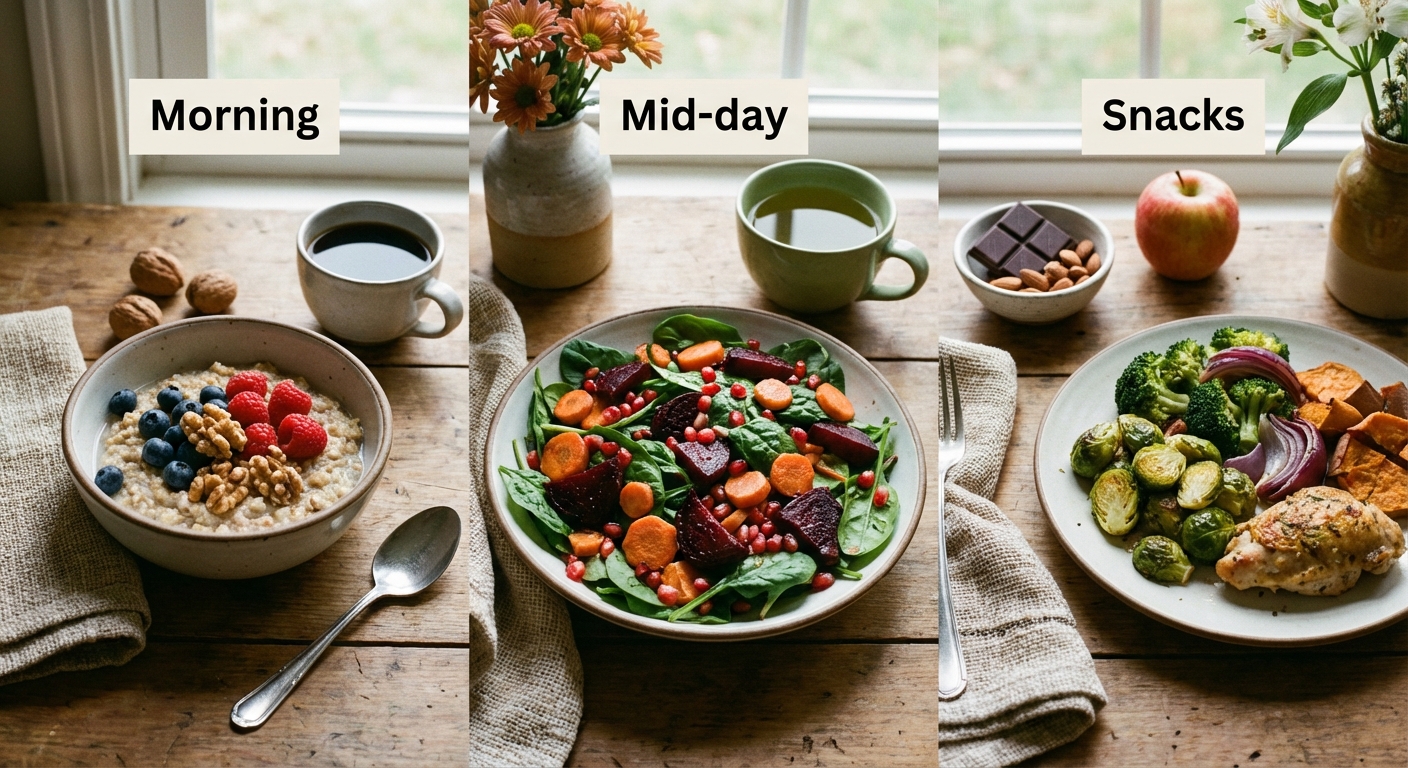
The diversity principle matters beyond just hitting a number. Different polyphenols target different tissues and pathways. Someone eating only blueberries would get plenty of anthocyanins but miss the catechins in tea, the chlorogenic acid in coffee, the flavanols in chocolate, and the quercetin in onions. An anti-inflammatory lifestyle approach naturally incorporates polyphenol diversity because the same colorful, plant-rich eating pattern that reduces inflammation also maximizes these beneficial compounds.
Cooking, Storage, and Preparation Effects
How you prepare and store polyphenol-rich foods affects how much benefit you ultimately get. The effects aren’t uniform, some processing destroys polyphenols while other methods actually increase availability, making blanket rules about “raw is best” misleading.
Heat has variable effects depending on the specific polyphenol and food matrix. Cooking tomatoes increases lycopene availability by breaking down cell walls, while boiling vegetables leaches water-soluble polyphenols into the cooking water. Steaming preserves polyphenols better than boiling. Baking berries into muffins degrades some anthocyanins but not entirely; you still get meaningful amounts. The general principle is that moderate cooking is fine, while extended high-heat processing (like deep frying or prolonged boiling) should be avoided for polyphenol-rich foods.
Storage matters more than many people realize. Fresh produce begins losing polyphenols immediately after harvest, with significant declines within days at room temperature. Refrigeration slows but doesn’t stop the loss. Freezing, surprisingly, preserves polyphenols extremely well, often better than “fresh” produce that’s traveled long distances and sat in warehouses. Frozen blueberries picked at peak ripeness and frozen within hours may contain more polyphenols than fresh berries that took two weeks to reach your grocery store.
The practical approach is to eat a variety of both raw and lightly cooked plant foods, prioritize fresh or frozen over canned or heavily processed, and don’t stress about achieving perfection. The person eating berries on their cereal and vegetables with dinner, however prepared, is doing dramatically better than the person eating neither because they’re worried about optimal preparation methods.
The Bottom Line
Polyphenols from colorful plants activate longevity pathways, reduce inflammation, improve metabolic health, and protect against the chronic diseases that typically end lives prematurely. The population data is remarkably consistent: people who eat more polyphenol-rich foods live longer and healthier than those who don’t. The mechanisms are increasingly understood, involving sirtuins, AMPK, Nrf2, and gut microbiome interactions that collectively shift cellular behavior toward maintenance and repair.
Getting optimal intake doesn’t require supplements, special products, or dramatic dietary changes. It requires eating berries regularly (daily if possible), drinking tea or coffee, enjoying dark chocolate in moderation, choosing colorful vegetables, using herbs and spices generously, and including nuts in your diet. Aiming for 1,000-1,500mg of polyphenols daily through diverse plant foods is achievable for anyone willing to add color to their plate.
Your longevity pathways are listening to what you eat. Every cup of berries, every cup of green tea, every square of dark chocolate sends signals that favor cellular maintenance over decline. For those interested in amplifying these effects, strength training activates many of the same cellular maintenance pathways that polyphenols support, making the combination particularly powerful for healthy aging. The science is clear, the foods are delicious, and the barrier to action is essentially zero. Feed your cells polyphenols, and they’ll reward you with resilience.
Sources: American Journal of Clinical Nutrition polyphenol meta-analyses, Nurses’ Health Study and Health Professionals Follow-Up Study, PREDIMED trial (NEJM and Circulation), EPIC study, Nature Communications sirtuin research, Neurology (berry consumption and dementia risk), Harvard cardiovascular studies on anthocyanins.