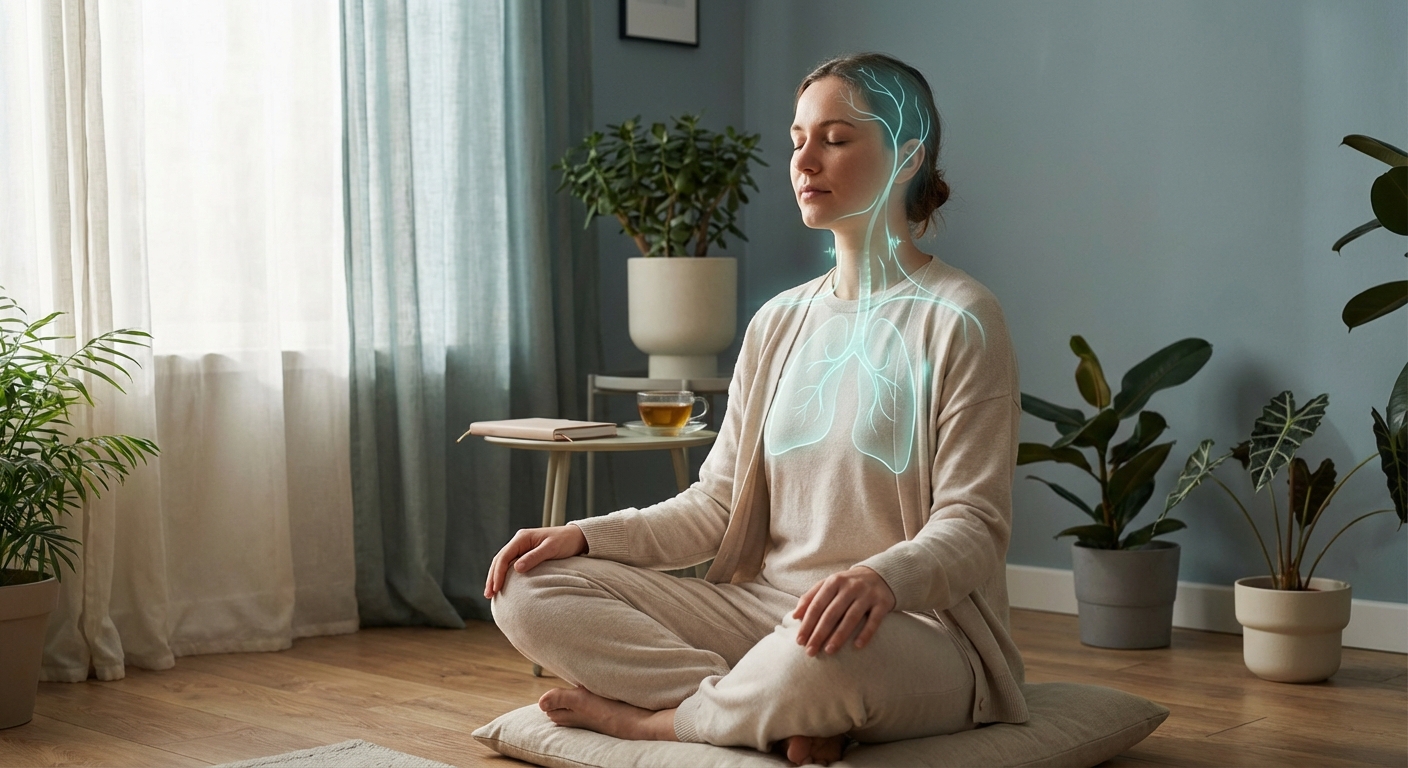
You’re sitting in your car before a job interview, heart pounding so hard you can feel it in your throat. Your hands are slightly shaky, your mouth is dry, and your mind is racing through every possible way this could go wrong. In about three minutes, you need to walk through those doors and appear calm, confident, and competent. What if there were a simple technique that could shift your nervous system from panic mode to poised readiness before you reach the door?
There is, and it’s been used for decades by Navy SEALs before combat operations, surgeons before complex procedures, and Olympic athletes before competition. The technique is controlled breathing, and the scientific evidence supporting its effectiveness for anxiety reduction is remarkably robust. This isn’t meditation mysticism or placebo effect; it’s applied physiology, directly manipulating the one autonomic function you can consciously control to influence all the others.
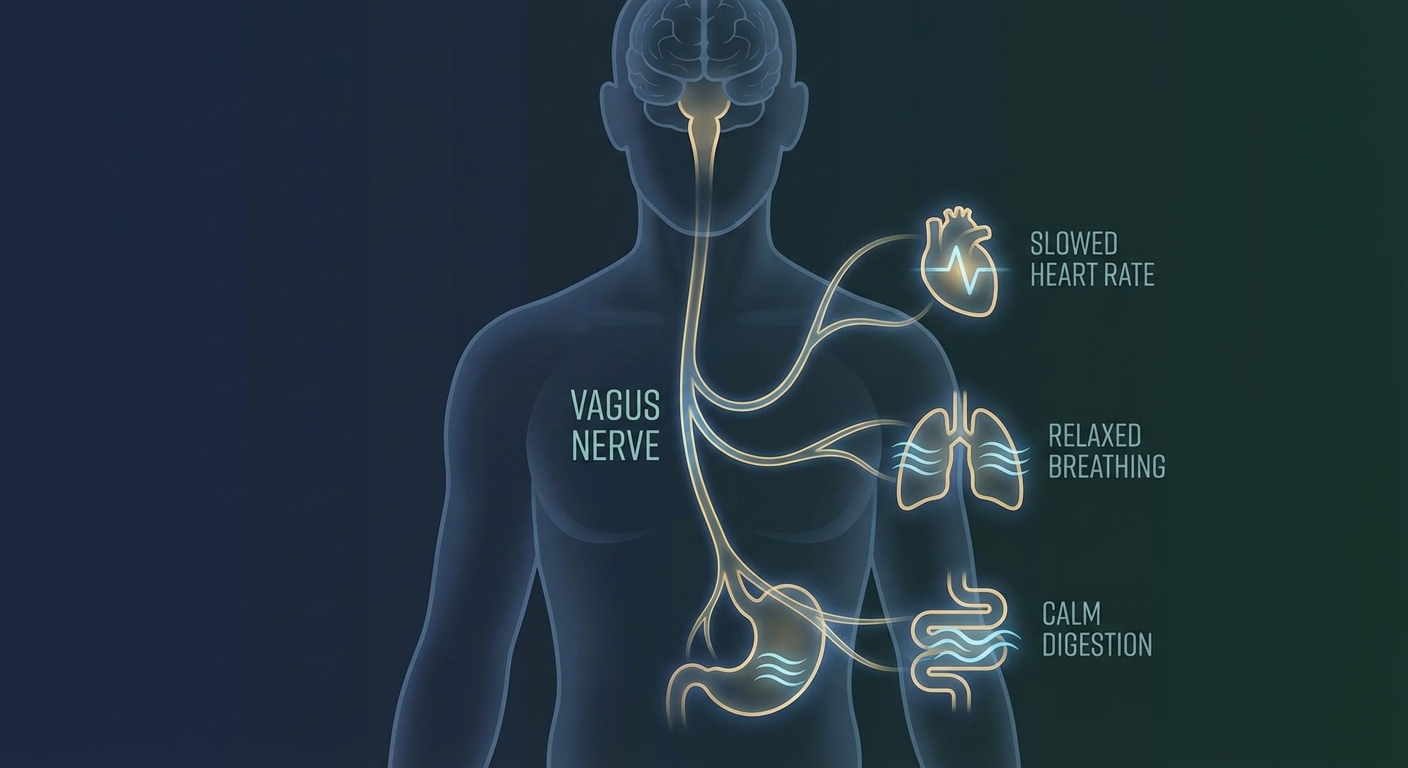
The mechanisms are well-mapped. Controlled breathing activates the vagus nerve, the primary pathway of your parasympathetic (rest-and-digest) nervous system. It modulates blood carbon dioxide levels in ways that calm the amygdala. It increases heart rate variability, a marker of nervous system flexibility and stress resilience. The effects are measurable on EEG, in blood cortisol levels, in skin conductance, and in subjective anxiety ratings. Multiple clinical trials show anxiety reductions of 20-40% from breathing interventions alone, with effect sizes comparable to anti-anxiety medications for mild-to-moderate anxiety.
The best part is that you don’t need an app, a therapist, or even a quiet room. You always have your breath with you, and learning a handful of evidence-based protocols gives you always-available anxiety management that works in minutes.
How Breathing Controls Your Nervous System
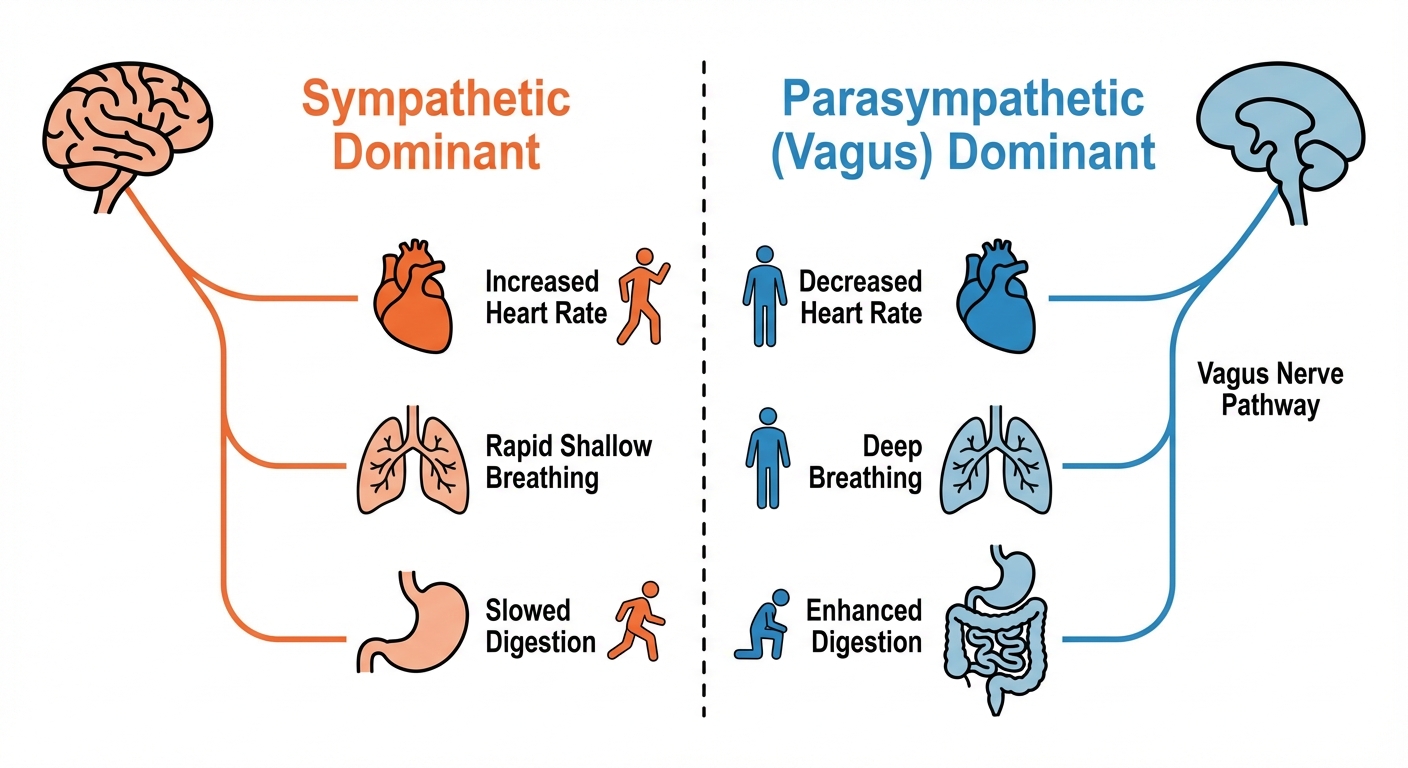
Your autonomic nervous system operates like a seesaw with two sides: the sympathetic branch (fight-or-flight) and the parasympathetic branch (rest-and-digest). When anxiety strikes, the sympathetic side is dominant, heart racing, breathing fast and shallow, muscles tense, digestion halted, pupils dilated. This is your body preparing for physical danger that, in modern life, usually isn’t coming.
The vagus nerve is the main highway of parasympathetic activity, running from your brainstem down through your chest and into your abdomen, connecting to your heart, lungs, and digestive organs along the way. When the vagus nerve is activated, it sends signals that slow heart rate, deepen breathing, relax muscles, and shift the body toward recovery and calm. This is called vagal tone, and higher vagal tone correlates strongly with better emotional regulation, lower baseline anxiety, and faster recovery from stress.
Here’s the key insight: breathing is the only autonomic function you can voluntarily control. You can’t directly tell your heart to slow down or your stress hormones to decrease. But you can tell your lungs to breathe slowly and deeply. And because breathing is bidirectionally linked to other autonomic functions through the vagus nerve, changing your breath pattern changes everything downstream. Dr. Andrew Huberman, a neuroscientist at Stanford who has extensively studied breathing and stress, describes the exhale as “the brake pedal for the nervous system.” When you extend the exhale, you increase vagal tone and activate the parasympathetic response.
There’s also a heart rhythm phenomenon called Respiratory Sinus Arrhythmia (RSA) that breathing techniques leverage. Your heart rate naturally accelerates slightly during inhalation (sympathetic activation) and decelerates during exhalation (parasympathetic activation). This rhythmic variation is healthy and indicates a flexible, responsive nervous system. Slow, controlled breathing amplifies RSA, essentially using your breath as a pendulum that swings your heart and nervous system into a calmer rhythm.
Box Breathing: The Tactical Standard
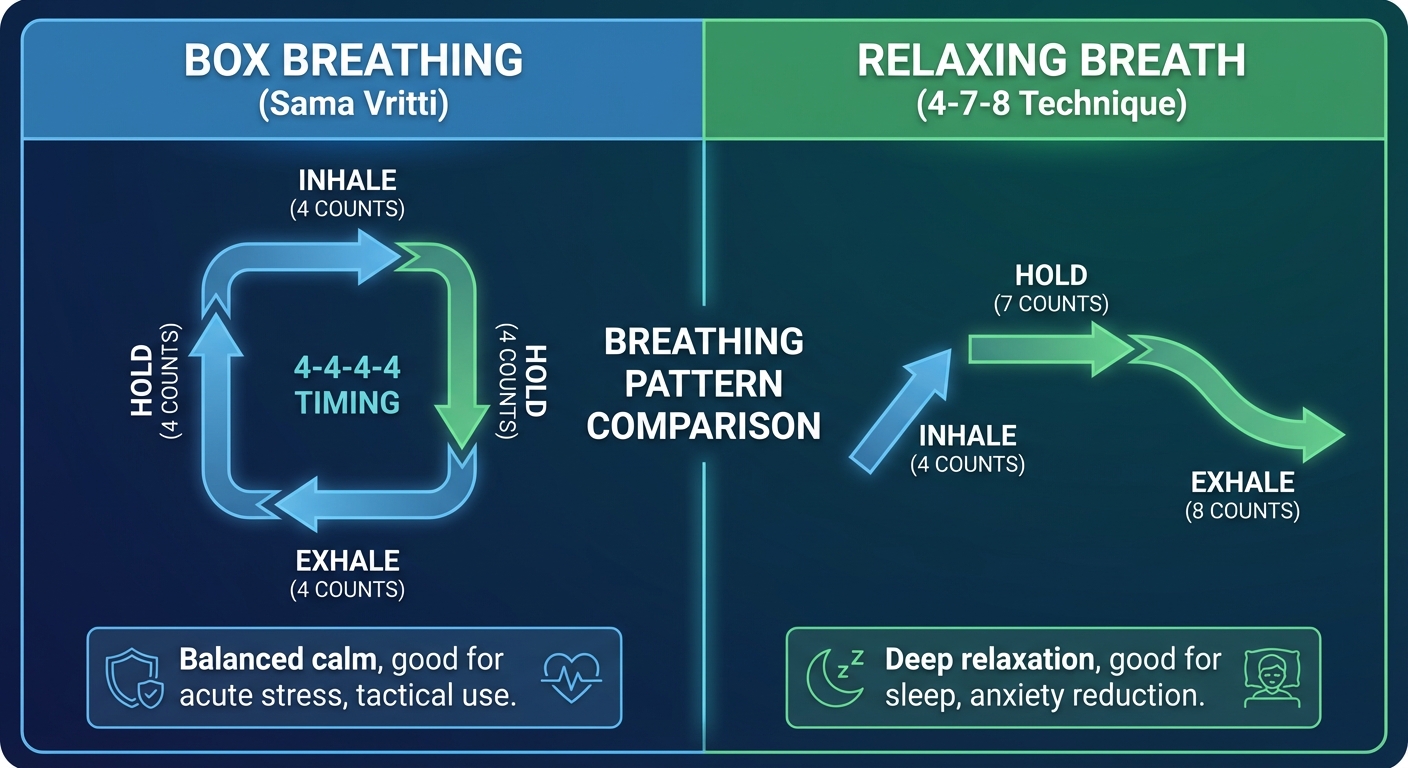
Box breathing, also called square breathing or tactical breathing, is the protocol used by Navy SEALs, first responders, and elite performers across domains. It gained military adoption because it works reliably under extreme stress conditions, can be done silently without anyone noticing, and requires no equipment or special positioning. The technique involves equal-duration phases of inhalation, holding full, exhalation, and holding empty, typically four seconds each.
The genius of box breathing lies in its structure. The equal phases create a rhythmic stabilization that’s easy to maintain even when anxious. The breath holds allow CO2 to build slightly, which has a tranquilizing effect on the amygdala. The counting provides a cognitive anchor that interrupts anxious rumination. You can’t spiral into catastrophic thinking while simultaneously counting seconds and managing your breath.
The Protocol: Inhale slowly through your nose for 4 seconds, expanding your belly first (diaphragmatic breathing). Hold your breath with lungs full for 4 seconds, keeping your shoulders and face relaxed. Exhale slowly through your mouth or nose for 4 seconds, emptying your lungs completely. Hold your breath with lungs empty for 4 seconds, accepting the mild sensation of air hunger without reacting to it. Repeat this 16-second cycle for 4-8 rounds.
The empty-lung hold is often the most challenging phase for beginners. The sensation of wanting to breathe before you inhale triggers a mild alarm response. Sitting with this sensation without reacting is powerful training for emotional regulation more broadly: you’re teaching your nervous system that mild discomfort is not danger, that you can tolerate uncomfortable sensations without panicking. This translates to better anxiety management in other contexts.
Box breathing is ideal for acute anxiety situations: before presentations, during panic onset, in overwhelming moments, or whenever you need to calm quickly and regain focus. Two to three minutes of practice (8-12 cycles) is typically sufficient for significant nervous system shift. For a deeper dive into this specific technique, including progressive training methods, see our guide to tactical breathing and the box breathing protocol.
4-7-8 Breathing: The Relaxation Accelerator
Developed and popularized by integrative medicine physician Dr. Andrew Weil, 4-7-8 breathing is specifically designed to maximize parasympathetic activation through an extended exhale phase. While box breathing uses equal phases, 4-7-8 doubles the exhale relative to the inhale, creating an asymmetry that strongly favors the “brake pedal” of the nervous system.
The math is straightforward: your heart rate naturally accelerates during inhalation and decelerates during exhalation. By making the exhale twice as long as the inhale, you’re spending proportionally more time in the decelerating phase. Add a seven-second breath hold in the middle, and you’re also building CO2, which has its own anti-anxiety effects through changes in blood pH and brain chemistry.
The Protocol: Empty your lungs completely with a full exhale. Inhale quietly through your nose for 4 counts. Hold your breath for 7 counts with lungs full. Exhale completely through your mouth, making a whooshing sound, for 8 counts. This completes one cycle. Repeat for a minimum of 4 cycles, working up to 8 cycles as you become comfortable.
The audible exhale distinguishes 4-7-8 from other techniques and serves a purpose. Making a sound requires control of the exhalation, preventing a passive release. The whoosh also provides auditory feedback that can deepen the relaxation response. Some people prefer a silent exhale through the nose for public settings; the technique works either way, though Dr. Weil recommends the mouth exhale for maximum effect.
4-7-8 is particularly effective for sleep onset difficulties and nighttime anxiety. The strong parasympathetic shift helps override the racing thoughts that often keep people awake. Many practitioners report that 4-7-8 breathing done in bed produces drowsiness within two to three cycles. It’s also useful for general stress reduction throughout the day, though the audible exhale makes it less discreet than box breathing.
Coherent Breathing: The Daily Practice
While box breathing and 4-7-8 are interventions for acute anxiety, coherent breathing is designed as a daily practice for building long-term nervous system resilience. The concept comes from heart rate variability research: at a specific breathing rate, around 5-6 breaths per minute, the heart, lungs, and brain rhythms synchronize in a way that maximizes HRV and optimizes autonomic balance.
This “resonance frequency” breathing is like tuning a radio to the clearest signal. At approximately one breath every 10-12 seconds (5-6 breaths per minute, compared to the typical 12-20), the baroreflex, which regulates blood pressure, creates maximum oscillation in heart rate. This training effect accumulates over time: regular coherent breathing practice builds a buffer of resilience that protects against stress throughout the day, even when you’re not actively breathing slowly.
The Protocol: Inhale for 5-6 seconds through your nose, then exhale for 5-6 seconds through your nose or mouth. There are no breath holds; the rhythm is continuous and wave-like. Continue for 10-20 minutes daily. Some people benefit from a guided pacer (apps like Breathwrk or Calm provide visual guides), while others prefer to count internally or use a timer with interval chimes.
Research on coherent breathing shows the strongest evidence for long-term anxiety reduction and HRV improvement. A 2019 study in Frontiers in Psychiatry found that participants who practiced resonance frequency breathing for 4 weeks showed significant reductions in anxiety and depression symptoms, along with measurable increases in HRV. The effects persisted beyond the practice sessions, suggesting genuine nervous system adaptation.
Coherent breathing requires more time commitment than acute interventions like box breathing, but provides different benefits. Think of box breathing as ibuprofen for acute pain, while coherent breathing is like daily exercise, building capacity over time. Ideally, you’d have both in your toolkit: coherent breathing as a daily practice, box breathing and physiological sighs as acute interventions when stress spikes.
The Physiological Sigh: Fastest Relief
When you need the fastest possible anxiety reduction, the physiological sigh is your tool. This pattern, highlighted by Dr. Andrew Huberman’s neuroscience research at Stanford, mimics a natural reflex that your body performs spontaneously during sleep and after crying to offload carbon dioxide and reset the nervous system.
The mechanism is elegantly simple. A double inhale, one full breath followed by a second small “sip” of air on top, maximally inflates the lungs and pops open the tiny air sacs (alveoli) that may have collapsed during shallow stress breathing. This increases the surface area available for gas exchange. The subsequent long, slow exhale then dumps a large amount of CO2 at once, producing immediate calm.
The Protocol: Take one full inhale through your nose. Then, without exhaling, take a second shorter inhale on top, like sipping additional air. Now exhale slowly and completely through your mouth. That’s one physiological sigh. Repeat 1-3 times for rapid stress reduction.
The entire process takes 10-20 seconds, making it by far the fastest breathing intervention available. Research from Stanford’s Huberman Lab found that the physiological sigh was more effective than box breathing, cyclic hyperventilation, or meditation for acute stress reduction. The mechanical lung inflation appears to bypass the need for multiple breath cycles, producing immediate parasympathetic activation.
Use the physiological sigh for acute anxiety spikes, panic attack onset, overwhelming moments, or whenever you need the quickest possible reset. It’s subtle enough to do in public, as it just looks like taking a deep breath. Keep this technique ready as your first-line intervention for sudden stress; if needed, follow with longer box breathing or 4-7-8 practice.
Building CO2 Tolerance for Lasting Resilience
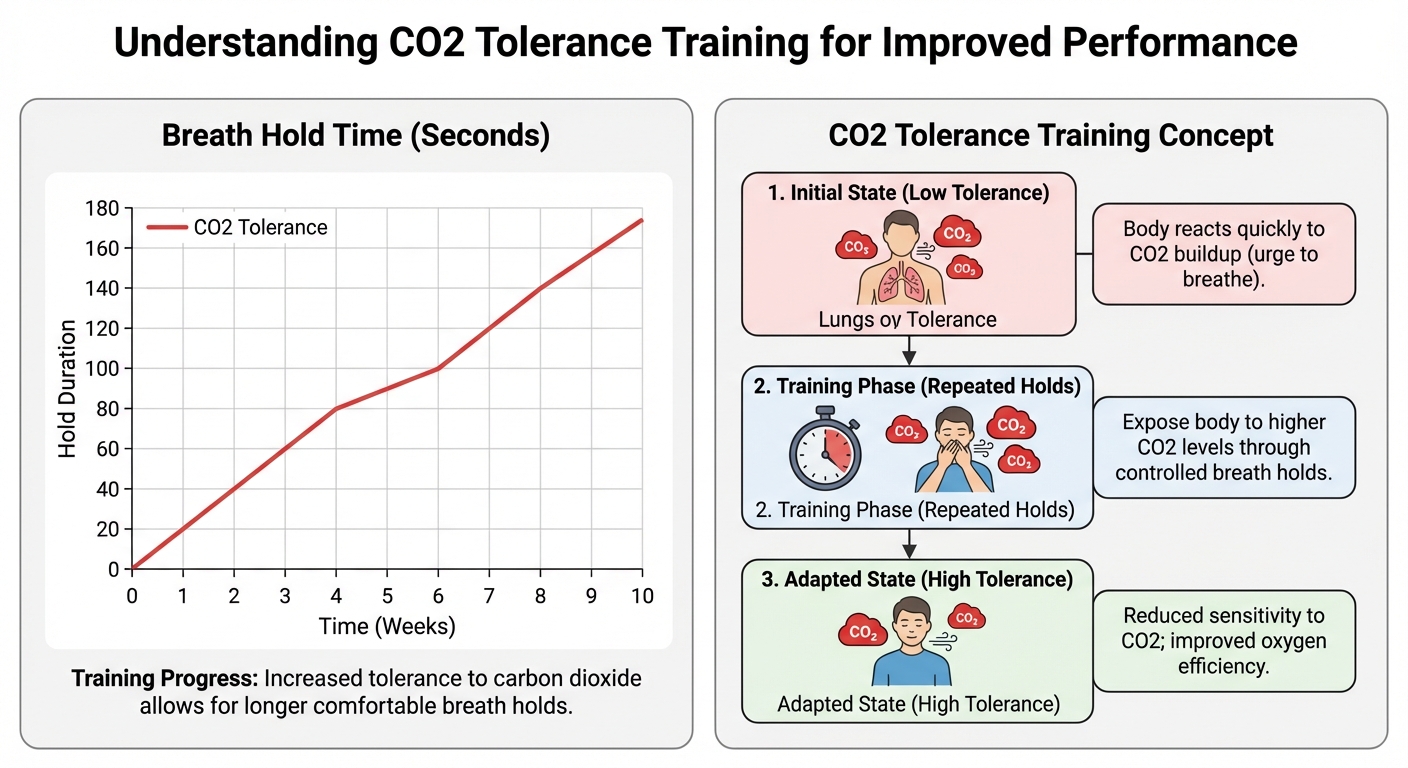
The breath holds in box breathing and 4-7-8 do more than pace the breath; they build what researchers call CO2 tolerance, and this adaptation has significant implications for anxiety resilience beyond the immediate calming effects.
When carbon dioxide levels rise in your blood, as happens during breath holds, chemoreceptors in your brainstem trigger the urge to breathe. This sensation of “air hunger” isn’t caused by lack of oxygen but by CO2 accumulation. The threshold at which this alarm triggers varies by individual, and people with anxiety disorders typically have low CO2 tolerance. They experience normal CO2 fluctuations as threatening, which triggers anxiety, which leads to hyperventilation, which lowers CO2, which then makes them even more sensitive. It’s a vicious cycle that maintains chronic anxiety.
Breath hold training gradually recalibrates these chemoreceptors. By repeatedly exposing yourself to mild CO2 elevation in controlled, safe conditions, you teach your brain that this sensation is not dangerous. Over weeks of practice, the threshold at which CO2 triggers panic rises, and the intensity of the panic response decreases. Dr. Alicia Meuret at Southern Methodist University has demonstrated that breathing retraining focused on CO2 tolerance produces clinically significant reductions in panic symptoms.
To specifically train CO2 tolerance beyond standard breathing practices: after a normal exhale, hold your breath as long as you can while remaining relaxed (not straining or gasping). Track your hold time over weeks. Improvements in this metric correlate with reduced anxiety sensitivity and better stress tolerance overall. Most people start around 20-30 seconds and can progress to 45-60 seconds with regular training.
When Breathwork Isn’t Enough
Breathwork is a powerful tool, but it’s important to understand its scope and limitations. It works through bottom-up physiology, using the body to calm the mind. For acute anxiety, performance stress, mild-to-moderate generalized anxiety, and stress-induced symptoms, breathwork can be remarkably effective as a standalone intervention.
However, breathwork addresses symptoms rather than root causes. If your anxiety stems from unresolved trauma, it can help you regulate in the moment, but won’t process the underlying experience. That requires trauma-focused therapy approaches like EMDR or somatic experiencing. If your anxiety is severe and persistent, meeting diagnostic criteria for panic disorder or generalized anxiety disorder, breathwork is an excellent adjunct to professional treatment but shouldn’t replace it. If your anxiety stems from life circumstances that need actual change, a toxic relationship, an unsustainable work situation, breathwork provides coping capacity while you address the source.
The research is clear that breathwork plus cognitive-behavioral therapy (CBT) works better than either alone for anxiety disorders. Consider breathwork as one pillar of a comprehensive mental health strategy, alongside therapy when needed, lifestyle factors like sleep optimization, exercise, and possibly medication for moderate-to-severe cases.
If you’re experiencing persistent anxiety that significantly impacts daily functioning, consult a mental health professional. Breathwork can help you regulate while you pursue treatment, and the techniques you learn will enhance whatever therapeutic approach you choose.
The Bottom Line
Your breath is the one autonomic function you can voluntarily control, making it your manual override for the stress response. Controlled breathing techniques activate the vagus nerve, increase heart rate variability, build CO2 tolerance, and shift your nervous system from fight-or-flight to rest-and-digest, often within minutes.
The evidence base is strong. Multiple clinical trials show 20-40% anxiety reduction from breathing interventions, with mechanisms that are well-understood physiologically rather than placebo effects. These techniques work for Navy SEALs in combat, surgeons in the operating room, and anxious executives before presentations. They can work for you.
Your Breathwork Toolkit:
- Physiological sigh (10-20 seconds): Fastest relief for acute stress spikes
- Box breathing 4-4-4-4 (2-3 minutes): Tactical calm for any stressful situation
- 4-7-8 breathing (2-3 minutes): Maximum relaxation, especially for sleep
- Coherent breathing 5-5 (10-20 minutes daily): Long-term resilience building
Start by learning box breathing and the physiological sigh. Practice them when you’re calm so the patterns become automatic. Then when anxiety hits, you’ll have accessible, always-available tools that don’t require an app, a prescription, or a quiet room. Just your breath, your attention, and a few minutes. For most situations in modern life, that’s enough.
Sources: Stanford neuroscience research on breathing and stress (Dr. Andrew Huberman), Southern Methodist University breathing and panic studies (Dr. Alicia Meuret), heart rate variability and coherent breathing research (Frontiers in Psychiatry 2019), vagal tone and anxiety meta-analyses, respiratory sinus arrhythmia research, Dr. Andrew Weil 4-7-8 breathing protocol.