
You check your phone 96 times per day on average. That’s once every 10 minutes of your waking life, a rhythm so constant that most of us don’t even notice when we reach for that familiar rectangle. Each glance triggers a small neurochemical cascade, a micro-dose of dopamine that keeps your brain scanning for novelty, rewards, and threats that almost never actually exist. The result isn’t just lost productivity or fragmented attention. Over time, this pattern fundamentally reshapes your baseline arousal level, leaving you in a state of low-grade hypervigilance that feels normal only because you’ve forgotten what calm actually is.
The science on this phenomenon has matured considerably since the early smartphone era. A 2024 meta-analysis published in Computers in Human Behavior analyzed 47 studies involving over 23,000 participants and found that problematic smartphone use was significantly associated with elevated cortisol levels, disrupted sleep architecture, and reduced gray matter volume in regions associated with emotional regulation. The correlation isn’t just correlational anymore. Researchers at Stanford’s Center for Technology Balance demonstrated through controlled experimental designs that even a three-day reduction in phone use produced measurable improvements in self-reported wellbeing and objective sleep quality.
A digital detox isn’t about rejecting technology or romanticizing some pre-internet pastoral ideal. It’s about resetting your neurological baseline, proving to yourself that you can exist comfortably without constant stimulation, and then rebuilding your relationship with devices from a position of choice rather than compulsion. By stepping away from the noise for just one week, you can lower your cortisol levels, improve your sleep quality, and rediscover what it feels like to be genuinely, deeply bored, a sensation that has become surprisingly rare and surprisingly valuable.
Understanding the Dopamine Loop
The urge to scroll isn’t a moral failing or a lack of willpower. It’s a carefully engineered biological response. Social media platforms and smartphone apps are explicitly designed around what behavioral psychologists call “variable reward schedules,” the same intermittent reinforcement mechanism that makes slot machines so compelling. When you pull down to refresh your feed, you might see something interesting, funny, or validating. Or you might see nothing new at all. That uncertainty is precisely the point, because dopamine is released not when you receive a reward but when you anticipate one might be coming.
Dr. Anna Lembke, a psychiatrist at Stanford and author of Dopamine Nation, describes this mechanism as a “compulsion loop” that hijacks the brain’s reward circuitry. Your prefrontal cortex, the rational planning center responsible for long-term thinking, is essentially being overridden by your limbic system’s more primitive drive toward immediate gratification. The more you engage with the loop, the more your brain adapts to expect constant stimulation, raising your hedonic set point until ordinary experiences feel dull by comparison. This is why after an hour on TikTok, reading a book can feel almost painfully slow. Your brain has been temporarily recalibrated for a dopamine intensity that reality cannot match.
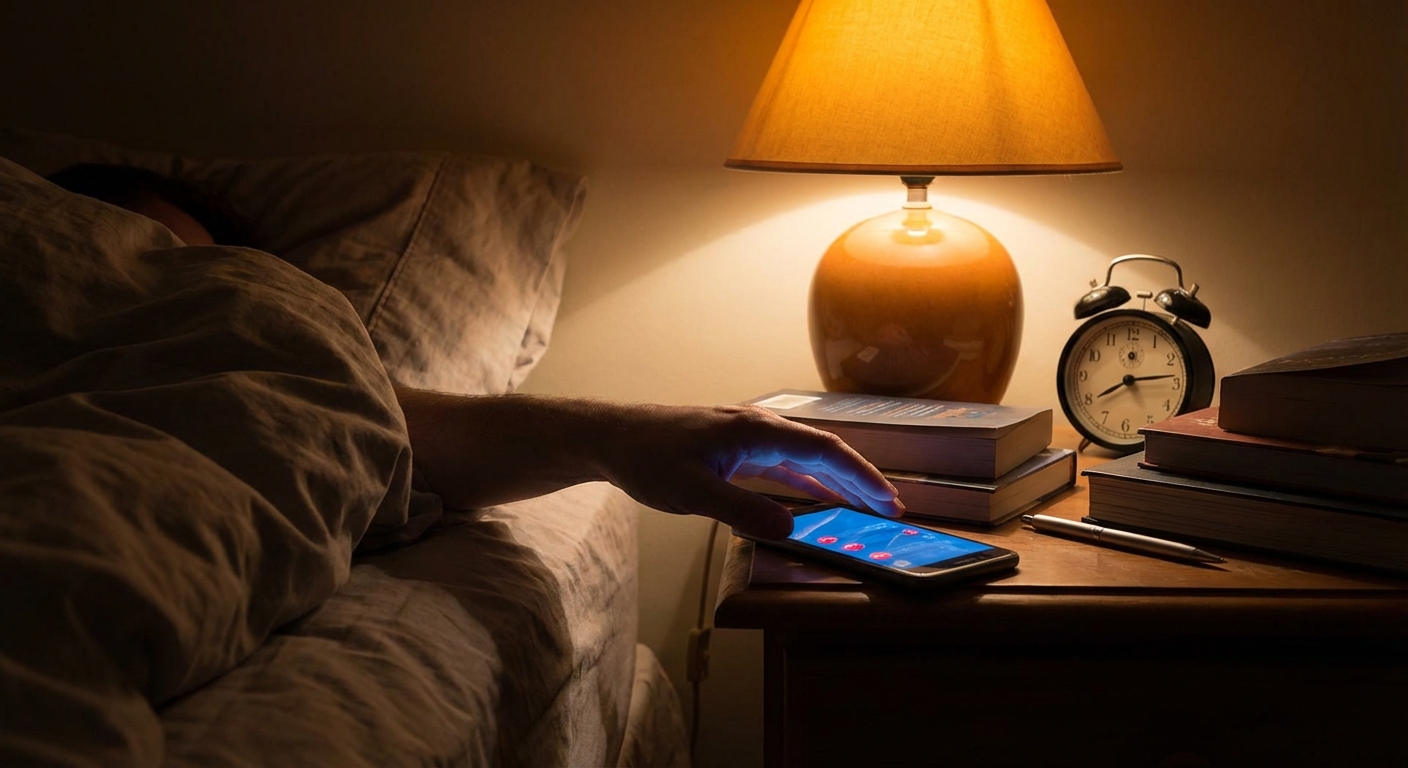
Breaking this loop requires more than intention alone. It requires environmental redesign. When your phone is within arm’s reach, checking it is an automatic reflex, a pre-conscious behavior that happens before your higher brain functions have time to intervene. Research from Duke University found that approximately 40% of daily actions are habitual rather than conscious decisions, meaning that changing behavior requires changing context. The goal of this reset isn’t to develop superhuman willpower. It’s to restructure your environment so that mindless scrolling becomes effortful rather than effortless, moving technology use from the background of automatic behavior back into the foreground of conscious choice.
The 7-Day Protocol
This protocol is designed to be progressive rather than abrupt, a gradual ramp-down that allows your brain to adjust without the backlash that often accompanies cold-turkey approaches. Sudden, complete disconnection often fails not because the concept is wrong but because the execution creates such a shock to the system that people bounce back harder than before. The neuroscience of habit change suggests that gradual environmental modification produces more durable results than dramatic interventions, particularly when the habit being changed is deeply woven into daily logistics and social expectations.
The structure moves from cleaning up your digital environment to changing your physical habits, culminating in a full 24-hour break that will feel like liberation rather than deprivation, but only if you’ve done the preparatory work. Each day builds on the previous one, creating a cascade of small wins that reinforce your sense of agency. By the time you reach the weekend, going offline will feel less like a challenge and more like a reward. Use the early days to set expectations with colleagues, family members, and anyone else who might need to reach you urgently, reducing the anxiety that comes from fears of missing something important.
Day 1: The Purge. Delete all social media applications from your phone. You can still access these platforms on a desktop or laptop if necessary for work, but mobile access, the most compulsive form, is eliminated. While you’re at it, unsubscribe from at least five email lists that no longer serve you. This single action removes dozens of daily interruptions without meaningful cost to your life.
Day 2: The Bedroom Ban. Purchase an analog alarm clock if you don’t already own one. From tonight forward, your phone charges in another room, the kitchen or hallway being ideal. No screens of any kind for 60 minutes before your target sleep time. This single change often produces dramatic improvements in sleep onset latency and subjective sleep quality within the first few nights.
Day 3: The Grayscale Shift. Navigate to your phone’s accessibility settings and enable grayscale mode. This strips away the vibrant, candy-colored visual stimulation that makes apps so visually compelling. Instagram becomes remarkably less interesting when every photo is rendered in black and white. Many people find this change alone reduces their screen time by 30-40%.
Day 4: The Notification Audit. Disable all non-human notifications. Keep calls and text messages from actual people. Disable everything else: news alerts, app updates, social media notifications, game prompts, “like” alerts, promotional messages. Your phone should only interrupt you when another human specifically wants to communicate with you, not when an algorithm has decided to bid for your attention.
Day 5: The Analog Commute. For one full day, no audio content during transit, exercise, or household chores. No podcasts, no audiobooks, no music. This may be the hardest day of the protocol for many people because it removes the constant companionship of external voices. But this is precisely the point: you need to rediscover what it feels like to be alone with your own thoughts, to let your mind wander without direction or entertainment. The mental space this creates is often where insight emerges.
Day 6: The 24-Hour Fast. From sundown on day 6 to sundown on day 7, all devices are completely off and stored in a drawer or closet, out of sight and out of easy reach. Arrange an emergency contact method in advance, perhaps telling family to call a partner’s phone or a landline if something genuinely urgent arises. Then practice existing without digital mediation for one full rotation of the earth.
Day 7: The Reintegration. Turn your phone back on. Notice, really notice, how bright, loud, and demanding it feels compared to the previous 24 hours. The flood of notifications that accumulated will feel different when you return to them after genuine absence. Decide intentionally which apps you want to reinstall, if any. Many people discover that the applications they missed most were not social media but practical tools like maps, weather, and calendars.

Managing Withdrawal and Discomfort
Be prepared: days 3 and 4 are typically the most difficult. You will experience phantom vibrations, the sensation that your phone is buzzing when it isn’t. You will reach for your pocket reflexively when you’re waiting in line, sitting alone at a restaurant, or experiencing even three seconds of idle time. You may feel genuine anxiety, boredom so intense it borders on distress, or a restless inability to settle into any activity. These sensations are not signs that you’re doing something wrong. They are signs that you’re doing something right. Your brain is searching for its accustomed dopamine hit and discovering that the supply has been interrupted.
When the urge strikes, use what therapists call the “STOP” method: Stop what you’re doing, Take three slow breaths, Observe what you’re actually feeling (boredom? loneliness? anxiety? fear of missing out?), and Proceed with intention rather than reflex. This brief pause, even 10 to 15 seconds, is often enough for the compulsion to pass. The urge to check your phone peaks quickly and dissipates if you can ride it out for even a minute or two, much like a wave cresting and breaking.
The void left by digital noise needs to be filled with something substantive, or you’ll slide back into old patterns within days. Carry a physical book everywhere you go, ideally something genuinely engaging rather than something you feel you “should” read. Keep a pocket notebook and pen for capturing thoughts, lists, and observations that would otherwise go to your phone’s notes app. Consider picking up an analog hobby for the week: sketching, crossword puzzles, knitting, whittling, anything that occupies your hands and provides the satisfaction of incremental progress. The goal is not to fill every moment with activity but to have options available when the itch for stimulation becomes overwhelming.
Research published in the Journal of Experimental Psychology found that people who replaced smartphone time with engaging analog activities reported greater satisfaction than those who simply tried to reduce phone use through restriction alone. Removal without replacement tends to create a vacuum that eventually gets refilled by the original behavior. Addition of meaningful alternatives creates a genuinely different life structure.
Rebuilding Your Digital Life After the Detox
The goal of day 8 isn’t to return to day 0. You’ve just demonstrated to yourself that you can not only survive but thrive without constant connectivity. That proof changes everything, but only if you use it to establish new patterns rather than sliding back into old ones. The week away was the intervention; what comes next is the new normal.
Most people who complete this protocol find they prefer the grayscale screen and keep it permanently enabled. Many never reinstall certain applications at all, relegating social media to desktop-only “intentional” access rather than carrying it everywhere. Consider adopting the “phone foyer” method: when you walk in the front door of your home, your phone goes into a designated bowl or charging station and stays there. It doesn’t follow you to the couch, the dinner table, or the bedroom. It has a place, and it stays in its place.
You’ll likely notice that your baseline has shifted. Conversations feel richer because you’re actually present for them rather than half-listening while mentally scanning for your next digital fix. Deep work becomes easier because your attention span has been partially restored. Reading for extended periods becomes possible again. The “brain fog” that many people accept as normal in modern life has lifted, revealing how much cognitive capacity was being consumed by the constant task-switching of digital life.
The research on attention restoration supports these subjective experiences. A 2023 study in Nature Human Behaviour found that participants who reduced smartphone use for two weeks showed improved performance on sustained attention tasks, reduced mind-wandering during demanding cognitive work, and lower self-reported stress. The effects were most pronounced in individuals who had previously exhibited the highest levels of problematic phone use, suggesting that those who feel most addicted may also have the most to gain from reduction.
Your relationship with technology doesn’t have to be one of dependency and compulsion. By proving to yourself that you can exist comfortably without constant stimulation, you’ve transformed that relationship from need to choice. The phone is a tool again, not a master. Use it when it serves your genuine purposes, and put it away when it doesn’t. The clarity you’ve found this week isn’t a vacation from normal life. It can become normal life, if you choose to maintain the boundaries you’ve established.
The Bottom Line
Digital detox isn’t about rejecting technology. It’s about restoring your neurological sovereignty, proving that you control your devices rather than the other way around. The 7-day protocol works by progressively reducing digital stimulation while simultaneously building awareness of your unconscious patterns. Most participants report improved sleep, reduced anxiety, better concentration, and a surprising sense of spaciousness in their days.
Next Steps:
- Set your start date and inform close contacts that you’ll be less responsive
- Purchase an analog alarm clock before Day 2
- Enable grayscale mode in accessibility settings (practice finding it now)
- Identify 2-3 analog activities to have ready when urges strike
- Plan your Day 6 “off-grid” logistics, including emergency contact methods
For related reading, explore our guide on digital minimalism for sustained wellbeing. If you’re interested in the sleep benefits of reduced screen time, our biohacking sleep article covers the full spectrum of evidence-based sleep optimization.
Sources: Computers in Human Behavior (2024 meta-analysis on smartphone use and cortisol), Stanford Center for Technology Balance research, Dr. Anna Lembke’s work on dopamine and addiction, Duke University habit research, Journal of Experimental Psychology (activity replacement studies), Nature Human Behaviour (2023 attention restoration study).