Every November, the post-Thanksgiving sales deluge promises to transform your garage into a boutique fitness studio for pennies on the dollar. Marketing emails flood inboxes with “lowest prices ever” on everything from connected bikes to smart jump ropes. Yet for every genuine bargain on high-quality steel or proven wearable technology, there are a dozen deals on subscription-dependent hardware that will become unsupported software within 24 months. Navigating the Black Friday fitness landscape requires a fundamental shift in mindset from “how much can I save?” to “what will I actually use for the next decade?”
The 2025 fitness equipment market has matured significantly since the pandemic-era home gym boom. We’re seeing a clear divergence between two categories: the “buy it for life” durability of well-designed analog equipment versus the rapid obsolescence cycle of subscription-heavy connected devices. The smartest shoppers this year are those who focus on foundational tools that hold their value over time, or technology that provides genuinely actionable data without locking users into digital ecosystems they cannot escape.
This guide cuts through the marketing noise to identify equipment worth your investment. We’ve consulted with strength coaches, physical therapists, and equipment reviewers who test gear under real-world conditions rather than controlled studio environments. The recommendations below prioritize durability, functionality, and long-term value over flashy features you’ll never use.
Strength Training: Iron Before Algorithms
If your budget is limited, your priority should always be gravity. Iron doesn’t require firmware updates. It doesn’t become a brick when the manufacturer pivots to a new product line. It doesn’t charge monthly fees for the privilege of counting your repetitions. A quality barbell or set of kettlebells purchased today will function identically in 2045, potentially outlasting the building in which you store them.
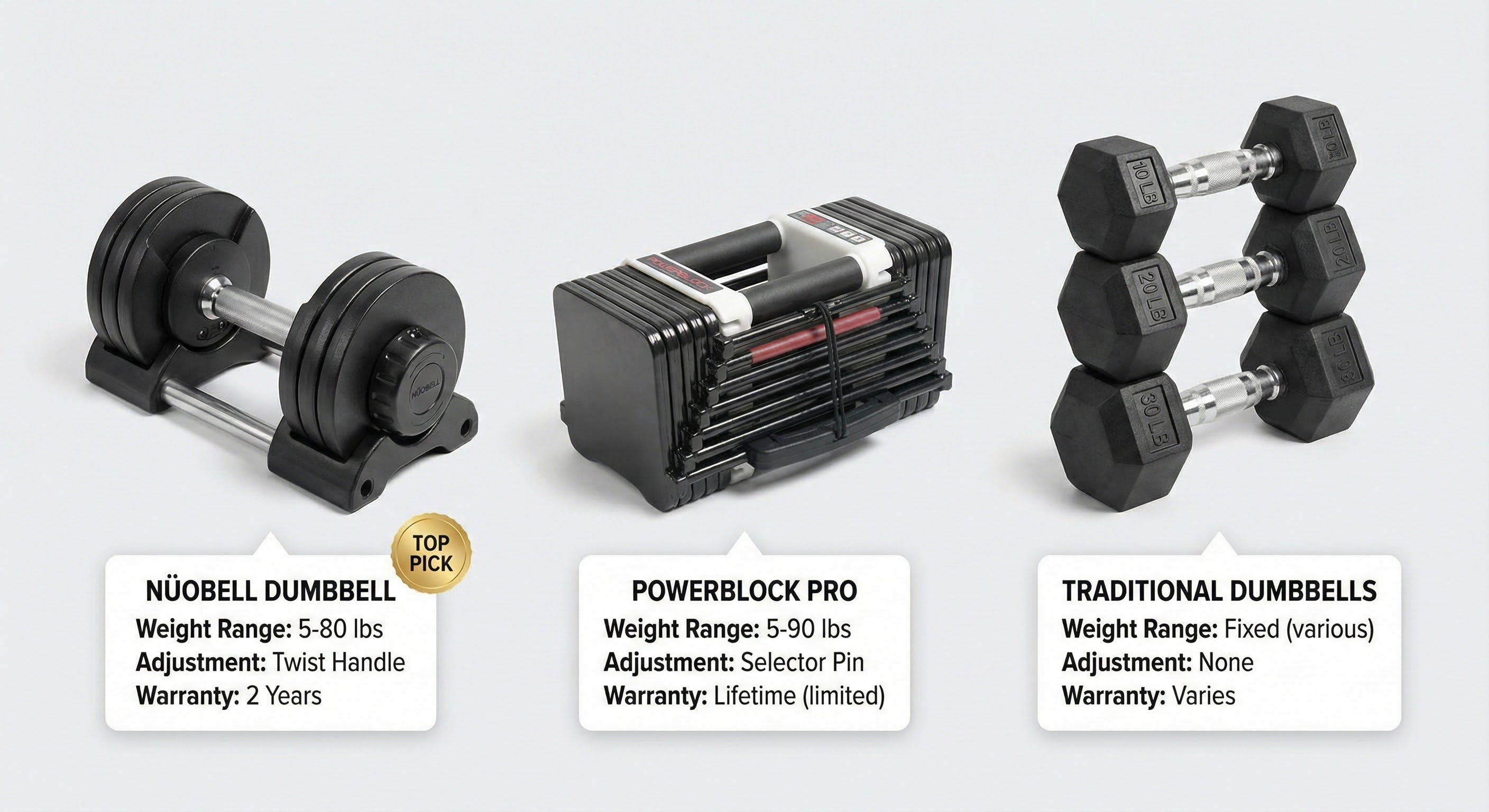
The adjustable dumbbell market has stabilized after years of supply chain disruption, but a significant development occurred this summer with the voluntary recall of the Bowflex SelectTech 552s due to impact hazards affecting the weight selection mechanism. If you own these, check the recall notice. If you’re shopping, avoid them entirely regardless of discount depth. The NÜOBELL 80lb Adjustable Set remains the gold standard for both feel and durability. The knurled steel handle provides grip security that plastic-handled competitors cannot match, and the weight change mechanism has proven reliable across thousands of user hours. Expect 25-30% discounts from the standard $745 price point.
For those prioritizing pure durability over adjustment speed, the PowerBlock Pro 100 EXP is virtually indestructible. Its urethane coating protects against garage floor impacts that would crack powder coating, and the expansion capability allows growth from 5-50 pounds to 5-100 pounds as your strength increases. The mechanism is mechanical rather than electronic, eliminating failure points that plague smart dumbbells.
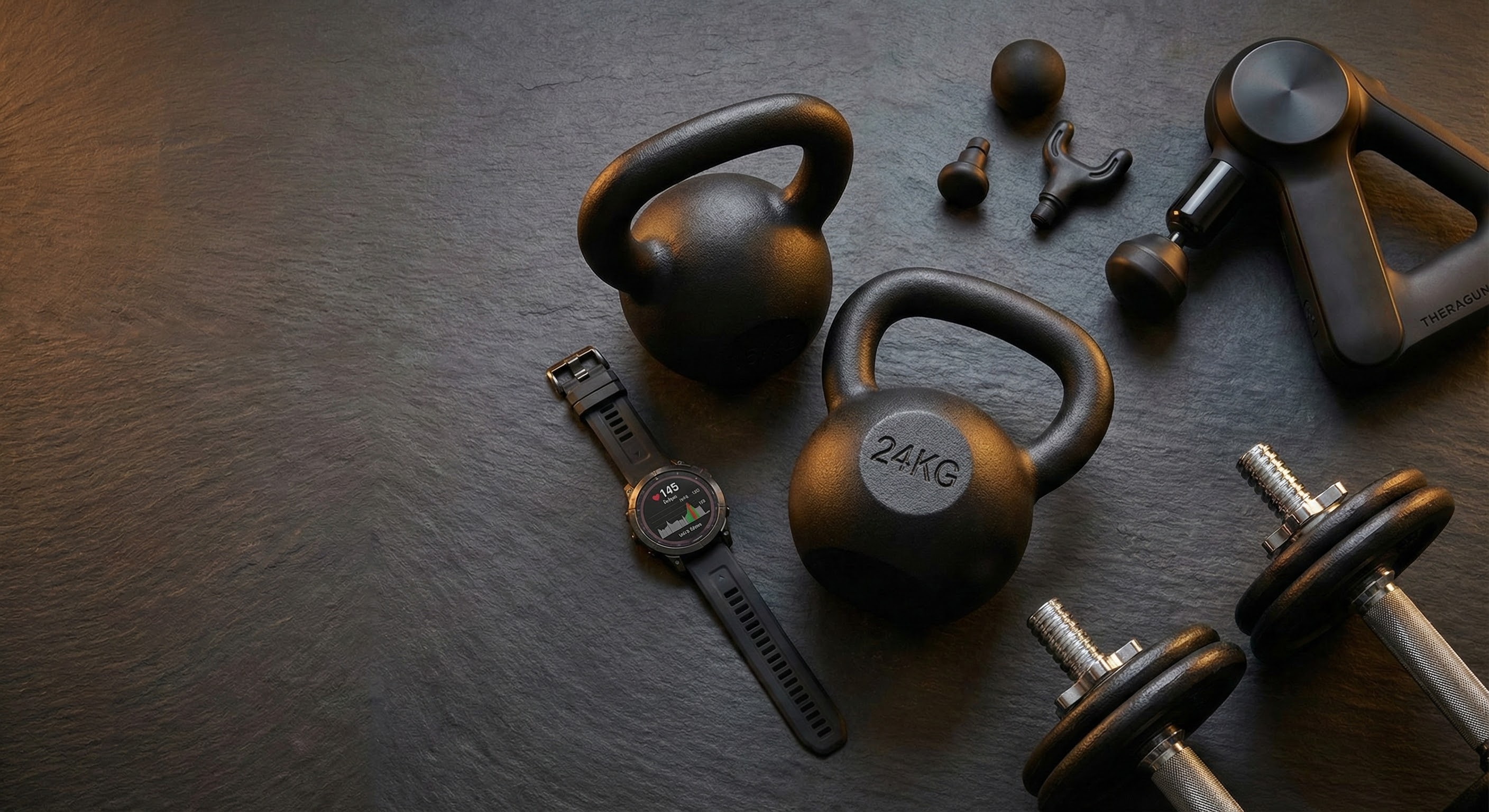
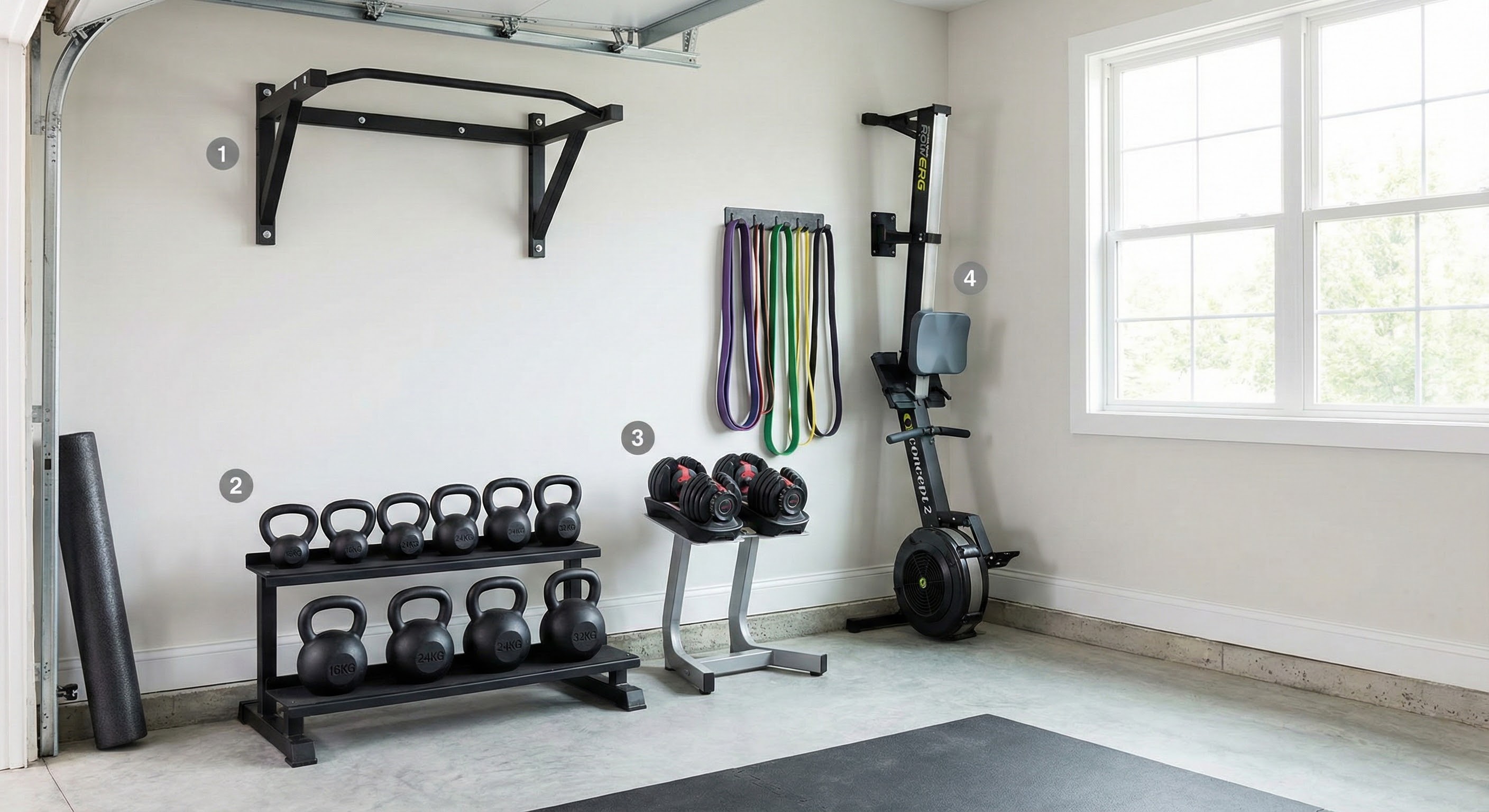
Cast iron kettlebells represent perhaps the highest value-per-dollar in fitness equipment. A quality kettlebell purchased today will be fully functional when your grandchildren use it. Look for aggressive pricing on powder-coated cast iron bells from Rogue Fitness and Kettlebell Kings. Gravity cast bells, manufactured from a single mold rather than welded from separate pieces, offer smoother finishes and better balance than cheap alternatives where handles are welded to bodies. A pair of 16kg and 24kg bells facilitates a complete strength program for roughly the cost of two months at a luxury gym.
Wearables: The Garmin vs. Coros Decision
The wearable fitness technology market in 2025 has shifted from the race to track everything toward tracking what actually matters for performance and health. The sensors in contemporary fitness watches have reached a point of diminishing returns where additional data points rarely translate to actionable insights. The genuine innovations now lie in battery life, display technology, and algorithm refinement that transforms raw data into useful guidance.
Garmin’s Fenix 8 represents the current pinnacle of outdoor sports watches, featuring a stunning AMOLED screen, dive ratings to 130 feet, and integration with every conceivable fitness modality. However, Garmin rarely discounts flagship models significantly during Black Friday. The strategic move is targeting the Garmin Fenix 7 Pro or Epix Gen 2, both of which offer approximately 95% of the Fenix 8’s functionality at discounts approaching 40% off retail. The Fenix 7 Pro provides solar charging capability that extends battery life dramatically for multi-day adventures, while the Epix Gen 2’s AMOLED screen delivers superior readability in all lighting conditions.
For pure training value without lifestyle features, the Coros Pace 4 has emerged as the undisputed champion of the sub-$250 category. It weighs almost nothing on the wrist, costs less than half of premium competitors, and delivers battery life measured in weeks rather than days. The Pace 4 lacks music storage and contactless payment, but as a dedicated training instrument that tracks runs, rides, and swims with laboratory-grade accuracy, it’s essentially unbeatable. If you don’t need your watch to replace your phone, the Coros represents remarkable value.
Heart rate variability tracking has become increasingly sophisticated across all major platforms. For those using HRV to guide training decisions, both Garmin and Coros now provide morning readiness scores that incorporate sleep quality, resting heart rate trends, and HRV patterns. Our guide on heart rate variability and recovery monitoring explores how to interpret and apply this data for optimizing training load.
Recovery Tech: Heat, Cold, and Percussion
Three years ago, percussive therapy devices were luxury items commanding $400 or more for brand-name options. The market has since experienced dramatic commoditization, with functional devices available at every price point. However, meaningful differentiation still exists at the premium tier for those with specific recovery needs.
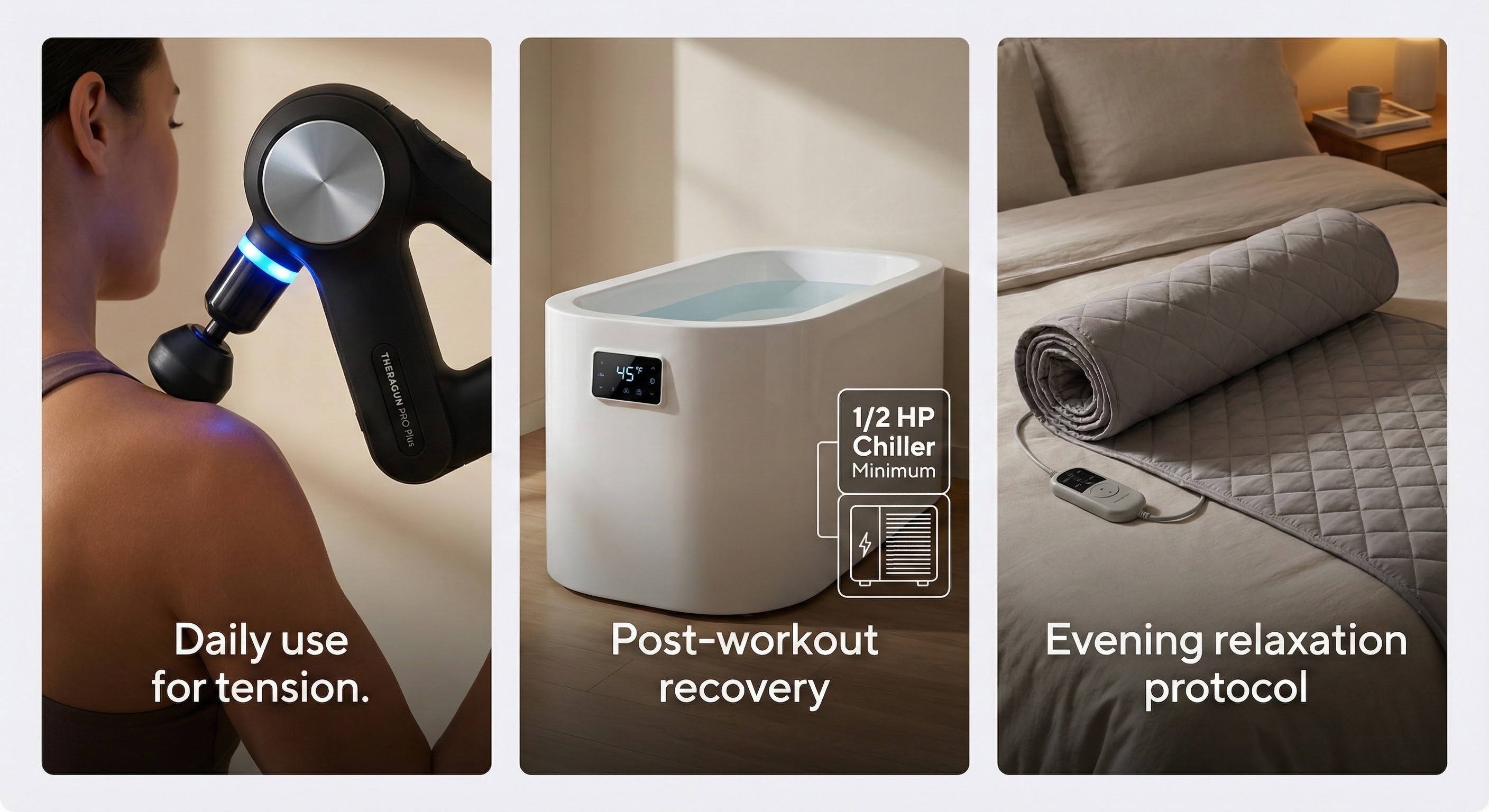
The Theragun PRO Plus represents the current state of the art, incorporating near-infrared LED therapy and vibration modalities alongside standard percussion. The LED component provides genuine therapeutic benefit for chronic pain conditions, backed by clinical research on photobiomodulation. For athletes dealing with recurring injuries or chronic tension patterns, the PRO Plus justifies its premium through versatility that cheaper devices cannot match. Expect discounts of $100-150 during Black Friday.
For value-oriented buyers, the Hyperice Hypervolt 2 Pro uses QuietGlide technology that reduces operational noise to levels suitable for use while watching television or taking calls. This practical consideration matters more than peak stall force for most home users. The ability to use the device without disrupting household members increases actual usage frequency, and frequency determines outcomes in recovery modalities.
Home cold plunge units represent the status symbol of 2025 fitness culture, and Black Friday inventory appears to be piling up across retailers. Exercise extreme caution when evaluating deals. Never purchase a cold plunge with less than a 1/2 HP chiller unit. Cheaper 1/4 HP systems cannot maintain target temperatures of 45°F or below when ambient room temperature exceeds 70°F, rendering them useless for much of the year in heated homes. The Plunge Standard and Ice Barrel 500 both meet minimum chiller specifications, but verify before purchasing any discounted unit.
Cardio Equipment: Avoiding the Subscription Trap
The most significant “trap” deals of 2025 Black Friday sales are connected cardio machines that require mandatory subscriptions to function fully. These hardware-as-a-service business models frequently sell bikes, treadmills, and rowers at or below manufacturing cost, knowing they will recoup investments through your monthly fees over the equipment’s lifespan. The economics work in their favor, not yours.
Before purchasing any connected cardio equipment, ask this question: if I cancel the subscription, does the machine still function as basic cardio equipment? Some manufacturers lock basic functionality behind subscription paywalls, transforming a $2,000 bike into an expensive clothes hanger if you stop paying $44 monthly. Others allow free riding or running without metrics but disable all workout programming. Read the fine print carefully.
The Concept2 RowErg represents the opposite philosophy. It rarely discounts because it doesn’t need to. The RowErg connects to any fitness app via Bluetooth and ANT+ protocols but requires precisely zero subscriptions to function perfectly for 20+ years. The same applies to Concept2’s BikeErg and SkiErg. These machines prioritize mechanical durability and open connectivity over proprietary ecosystems. They hold resale value better than virtually any fitness equipment because buyers know exactly what they’re getting: simple, indestructible tools that work.
For treadmill buyers, examine models from NordicTrack and ProForm carefully. Both brands offer excellent hardware, but some models lock manual mode behind iFIT subscriptions while others allow free use of the treadmill’s basic functions. The Sole F80 and F85 provide comparable build quality with no subscription requirements whatsoever, making them superior long-term values despite potentially higher upfront costs.
Building Your Home Gym Strategically
The best Black Friday deal is ultimately the one that removes friction from your fitness routine. If adjustable dumbbells mean you can complete a strength workout in 30 minutes rather than spending 20 minutes driving to and from a commercial gym, the value calculation extends far beyond dollars saved on retail price. Time is the scarce resource that equipment purchases should optimize.
For those building home gyms incrementally, prioritize purchases in this sequence. First, acquire a quality adjustable dumbbell set or kettlebell pair that enables full-body training. Second, add a pull-up bar and resistance bands for vertical pulling and accommodating resistance. Third, invest in recovery tools that address your specific limitations, whether percussion for muscle tension or cold exposure for systemic recovery. Fourth, consider cardio equipment only if weather or schedule prevents outdoor alternatives.
This prioritization reflects both cost-effectiveness and usage patterns observed in home gym owners. Strength equipment sees daily use across training programs; cardio equipment frequently becomes a towel rack after initial enthusiasm fades. The exception is the Concept2 RowErg, which provides both strength and cardio stimulus while requiring minimal floor space when stored vertically.
Evaluate deals against your actual training requirements rather than aspirational plans. The 400-pound capacity barbell set is irrelevant if your current deadlift is 185 pounds. The connected bike with live classes adds nothing if you prefer outdoor cycling nine months of the year. The most expensive equipment gathering dust delivers less value than modest tools used consistently. For time-efficient strength training approaches that maximize home gym investment, see our guide on 15-minute holiday workout routines.
The Bottom Line
The best Black Friday fitness investment is the one that removes friction from your training routine and retains value over years of consistent use. Metal outlasts plastic in both durability and resale value. Open ecosystems that connect to any app provide flexibility that walled gardens cannot match. Equipment that empowers your training without extracting monthly rent from your wallet represents genuine value; hardware designed primarily to generate recurring revenue does not.
Before clicking any checkout button this Black Friday, answer honestly: Will I use this equipment weekly for the next five years? Does it require subscriptions or proprietary accessories that increase lifetime cost? Will it function fully if the manufacturer pivots to a new product line or exits the market? Equipment that survives these questions merits serious consideration regardless of discount depth. Equipment that fails these tests remains a poor value at any price.
Your Black Friday Decision Framework:
- Prioritize gravity-based equipment (barbells, dumbbells, kettlebells) that requires no technology to function
- Verify subscription requirements for any connected equipment before purchase
- Calculate total cost of ownership including accessories, subscriptions, and potential obsolescence
- Match equipment to your current training level, not aspirational future goals
- Consider resale value: quality equipment from established brands holds value; subscription-dependent hardware depreciates rapidly
Sources: Consumer Product Safety Commission recall database, fitness equipment durability testing from Garage Gym Reviews, wearable accuracy studies from Stanford University Digital Health Lab, subscription cost analysis from consumer advocacy publications, home gym usage pattern surveys from equipment retailers.