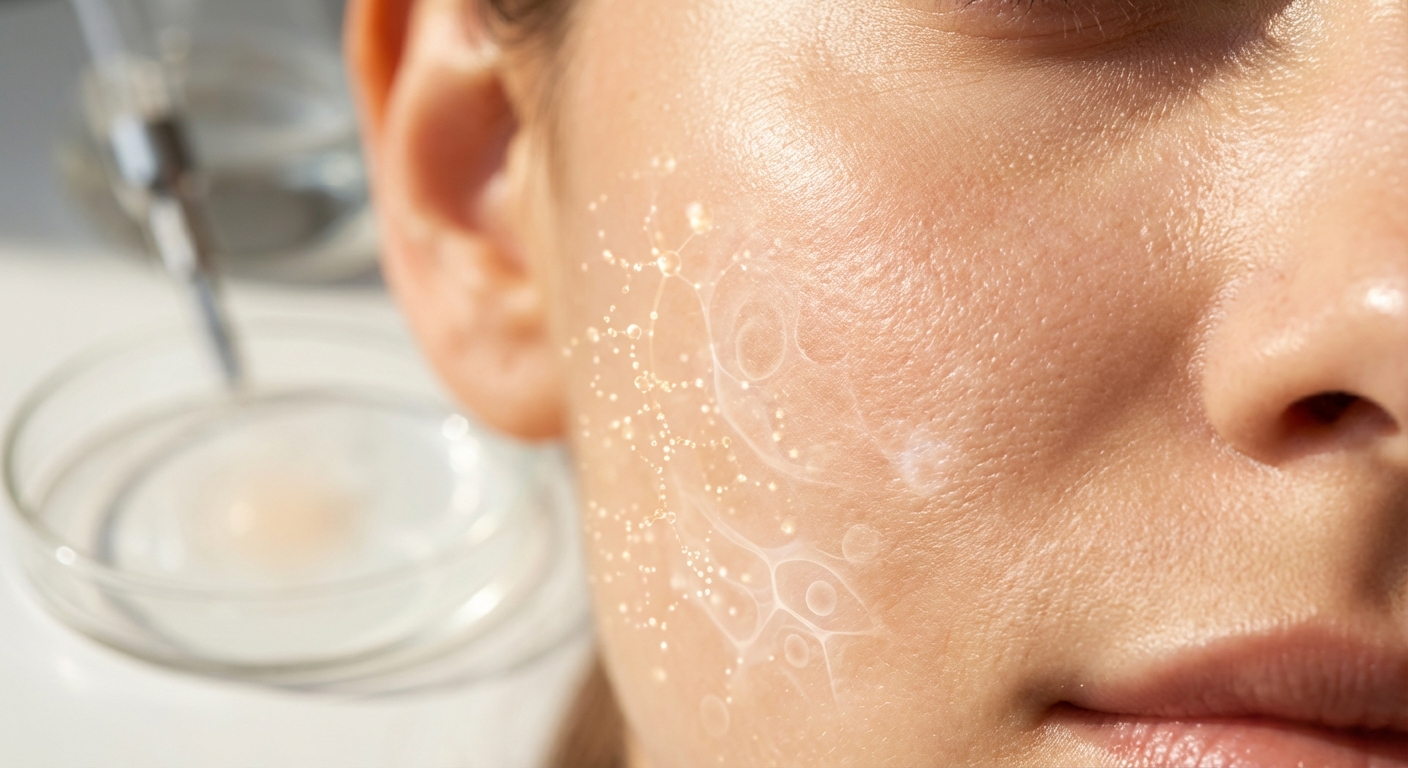
The phrase “anti-aging” is disappearing from skincare labels, replaced by language about “skin longevity,” “cellular resilience,” and “biological age.” At first glance, this looks like a rebrand: swap one marketing term for another, keep the same retinol cream inside the bottle. But beneath the label changes, a genuine scientific shift is underway. Dermatology researchers are moving beyond the surface-level approach of reducing wrinkles and spots toward understanding and influencing the biological processes that determine how skin ages at the cellular level. The distinction matters because it changes what interventions actually work and when you should start them.
Skin is the body’s largest organ, weighing roughly eight pounds in an average adult. It is also the most visible marker of biological aging, which is why it commands a skincare market projected to reach $200 billion globally by 2027. But skin aging is not cosmetic trivia. It reflects systemic processes, including inflammation, oxidative damage, hormonal decline, and mitochondrial dysfunction, that affect every organ. The condition of your skin is, in a meaningful biological sense, a window into how well the rest of your body is aging.
The skin longevity approach asks a fundamentally different question than traditional anti-aging skincare. Anti-aging asks: “How do I reverse or conceal existing damage?” Skin longevity asks: “How do I maintain the biological processes that keep skin functional and resilient across decades?” The second question leads to different answers, earlier intervention, and arguably better outcomes.
Cellular Senescence: The Engine of Skin Aging
Every discussion of skin longevity must start with cellular senescence, the process by which cells stop dividing but refuse to die. Senescent cells accumulate in tissues throughout life, and the skin is particularly vulnerable because of its constant exposure to UV radiation, pollution, and mechanical stress.
When a cell becomes senescent, it enters a permanent state of growth arrest. In small numbers, this is protective: senescence prevents damaged cells from replicating and potentially becoming cancerous. The problem emerges when senescent cells accumulate beyond the immune system’s capacity to clear them. Senescent cells secrete a cocktail of inflammatory molecules, proteases (enzymes that break down proteins), and growth factors collectively called the senescence-associated secretory phenotype (SASP). The SASP degrades the surrounding extracellular matrix (including collagen and elastin), triggers inflammation in neighboring cells, and can push neighboring healthy cells into senescence as well, creating a self-amplifying cycle of tissue degradation.
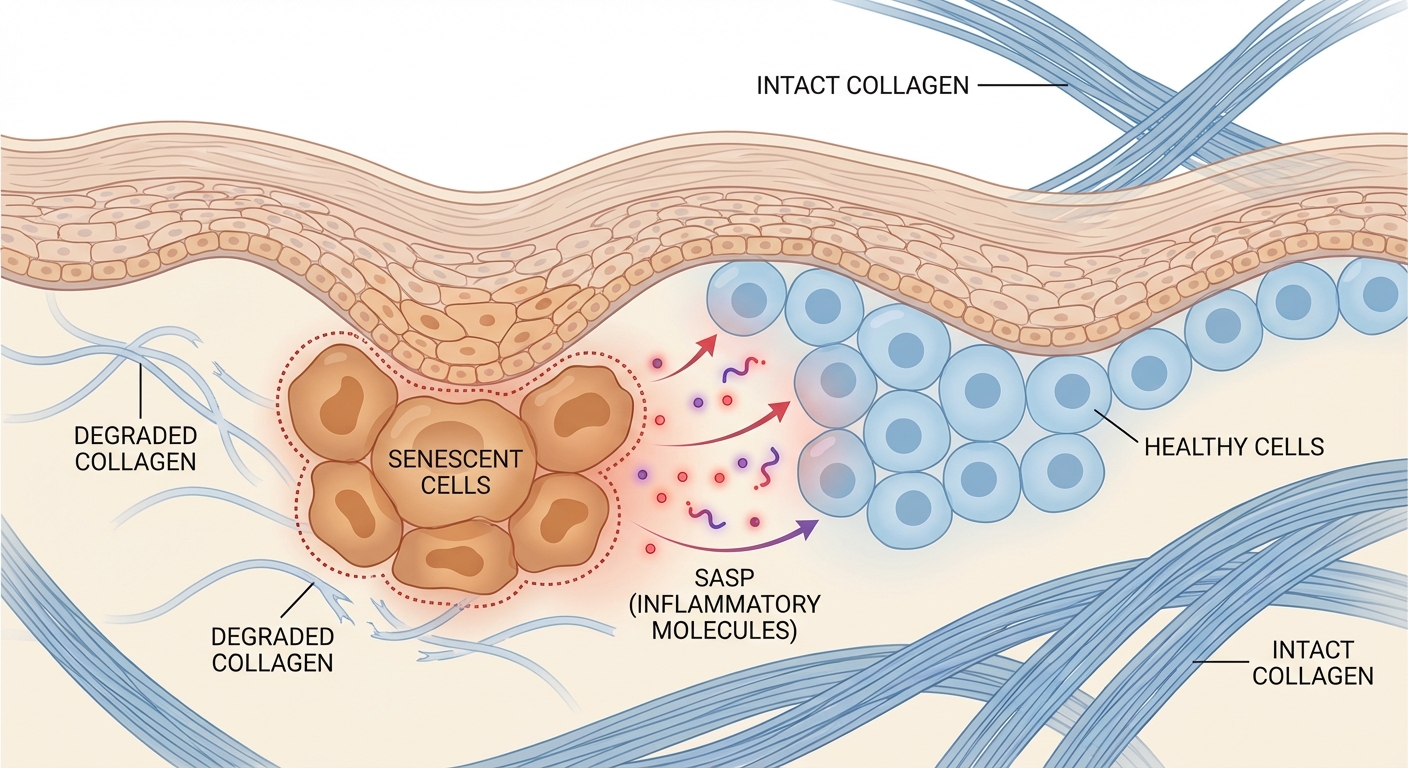
Dr. Judith Campisi, who was one of the leading researchers on cellular senescence at the Buck Institute for Research on Aging before her passing in 2024, demonstrated that selectively eliminating senescent cells in animal models reversed multiple markers of aging, including skin thinning, hair loss, and reduced wound healing. Her work established senescent cell accumulation as a cause of aging, not merely a consequence of it.
In human skin, senescent cell burden correlates with visible aging markers. A 2023 study published in Aging Cell by researchers at Newcastle University found that sun-exposed facial skin contained significantly more senescent cells than sun-protected skin on the same individuals, and that senescent cell density predicted skin elasticity and wrinkle depth more accurately than chronological age. Photoaging (UV-induced skin damage) accelerates senescence beyond the baseline rate of chronological aging, making sun protection the single most effective anti-senescence intervention.
UV Damage: The Largest Controllable Factor
Dermatologists have said for decades that sun protection is the most important skincare step. The skin longevity framework explains why at the cellular level and quantifies the magnitude of the effect.
UV radiation damages skin through two primary mechanisms. UVB rays directly damage DNA in skin cells, creating thymine dimers (structural errors in the DNA strand) that must be repaired. When repair fails, mutations accumulate, driving both cancer risk and senescence. UVA rays, which penetrate deeper into the dermis, generate reactive oxygen species (free radicals) that damage DNA, proteins, and lipid membranes indirectly. UVA is also the primary driver of collagen degradation: it activates matrix metalloproteinases (MMPs), enzymes that break down collagen and elastin fibers.
The magnitude of UV’s contribution to skin aging is striking. A landmark twin study published in Plastic and Reconstructive Surgery compared pairs of twins with different cumulative sun exposure habits. The twin with greater sun exposure consistently appeared 5-10 years older than their genetically identical sibling. Photoaging accounts for an estimated 80-90% of visible facial aging, with intrinsic (chronological) aging contributing the remaining 10-20%. This means most visible skin aging is not inevitable but is driven by a modifiable environmental exposure.
Effective sun protection for skin longevity goes beyond occasional sunscreen application:
- Daily SPF 30+ broad-spectrum sunscreen on exposed skin, regardless of season or cloud cover (UVA penetrates clouds and glass)
- Reapplication every two hours during prolonged outdoor exposure, or after sweating or swimming
- Physical barriers (hats, sunglasses, UPF-rated clothing) for sustained outdoor activity
- Window UV protection for car commuters and those who sit near windows, as UVA transmits through standard glass
A 2013 study published in Annals of Internal Medicine by researchers at the QIMR Berghofer Medical Research Institute in Australia followed 903 adults for 4.5 years and found that daily sunscreen use (versus discretionary use) slowed skin aging by 24% as measured by microtopography analysis. This is one of the few randomized trials demonstrating that a skincare intervention measurably slows biological skin aging.
The Retinoid Foundation
Retinoids (vitamin A derivatives) remain the most evidence-backed topical intervention for skin aging, and their mechanism aligns directly with the skin longevity framework. Rather than simply smoothing surface wrinkles, retinoids influence gene expression in skin cells, promoting collagen synthesis, accelerating cell turnover, and reducing the accumulation of damaged cells.
Tretinoin (prescription retinoid) has been studied in controlled trials for over 30 years. A 2019 meta-analysis in the British Journal of Dermatology confirmed that topical tretinoin improves fine lines, skin roughness, and pigmentation irregularities by stimulating collagen production in the dermis and normalizing the keratinocyte turnover rate in the epidermis. The mechanism involves binding to nuclear retinoic acid receptors (RARs) that regulate genes controlling cell differentiation, proliferation, and apoptosis.
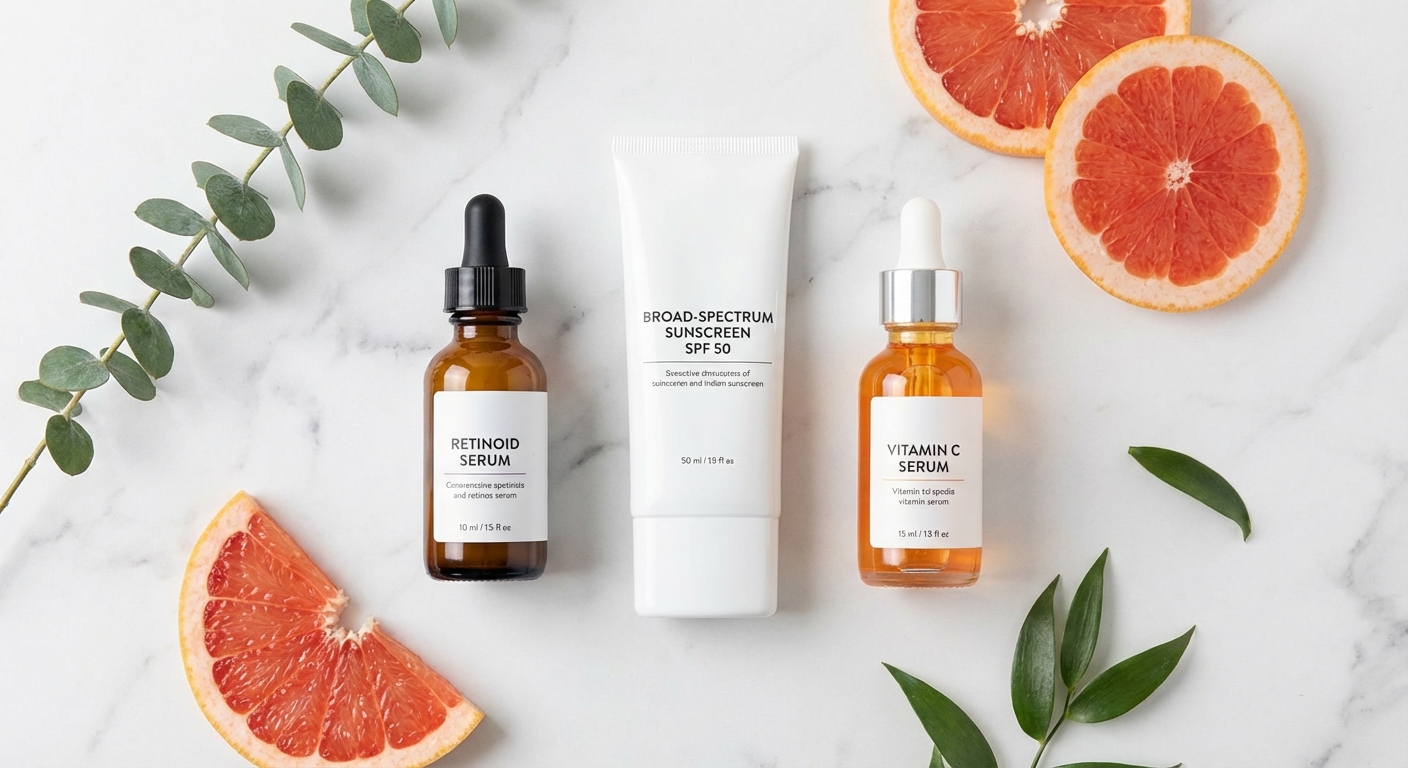
The retinoid family includes multiple compounds at different strengths. Tretinoin (0.025-0.1%) and tazarotene are prescription-strength, producing the strongest and fastest results but also the most irritation. Adapalene (0.1-0.3%) is available over-the-counter in many countries and provides moderate efficacy with better tolerability. Retinol (sold widely in cosmetic products) converts to retinoic acid in the skin but at roughly 20% the potency of tretinoin; it requires higher concentrations and longer timelines to produce comparable results.
For a skin longevity protocol, the practical approach is gradual introduction. Start with a low-concentration retinoid (0.025% tretinoin or over-the-counter retinol) applied every third night, increasing frequency as tolerance develops. Most people can reach nightly application within four to eight weeks. Apply to clean, dry skin in the evening, followed by moisturizer. Retinoid use increases photosensitivity, making daily sunscreen use non-negotiable.
The combination of daily sunscreen and nightly retinoid addresses the two largest drivers of skin aging: ongoing UV damage (prevention) and accumulated cellular dysfunction (repair stimulation). These two interventions, costing as little as $15-30 per month for generic formulations, deliver more documented skin longevity benefit than any combination of expensive serums, devices, or treatments.
Emerging Science: Peptides, Exosomes, and Senolytics
Beyond the established interventions, three categories of emerging science are drawing attention in the skin longevity space. Their evidence bases vary significantly.
Peptides have the strongest emerging evidence. These short amino acid chains signal specific cellular processes when applied topically. Copper peptides (GHK-Cu) promote collagen synthesis and wound healing. Matrixyl (palmitoyl pentapeptide-4) stimulates collagen and fibronectin production. A 2020 randomized controlled trial published in the International Journal of Cosmetic Science found that a formulation containing Matrixyl 3000 reduced wrinkle depth by 44% over 56 days compared to vehicle control. Peptides work through a different mechanism than retinoids (signaling rather than gene regulation) and can be combined with retinoid therapy for potentially additive effects.
Exosome therapy is the most hyped and least proven category. Exosomes are tiny vesicles released by cells that carry signaling molecules (mRNA, proteins, lipids) between cells. The theory is that exosomes derived from stem cells or young cells can “reprogram” aging skin cells toward a more youthful functional state. The concept is biologically plausible: exosomes do mediate intercellular communication. However, the clinical evidence for topical or injectable exosome skincare is extremely limited, and the FDA issued a warning in 2019 about unapproved exosome products making unsupported claims. This category deserves cautious monitoring rather than early adoption.
Senolytic compounds, which selectively kill senescent cells, represent the most conceptually aligned intervention with the skin longevity framework. Fisetin (a flavonoid found in strawberries) and quercetin (found in onions and apples) have demonstrated senolytic activity in laboratory studies. A 2023 pilot study by researchers at the Mayo Clinic found that oral fisetin supplementation reduced certain senescence markers in older adults, though skin-specific outcomes were not the primary endpoint. Topical senolytic formulations are in early development, and several companies have launched products containing fisetin or quercetin, though evidence for topical senolytic efficacy in humans remains preliminary.
Internal Factors: Sleep, Nutrition, and Systemic Health
Skin longevity cannot be achieved through topical products alone. The skin reflects systemic health, and internal factors powerfully influence how skin ages.
Sleep deprivation accelerates skin aging through multiple pathways. During deep sleep, growth hormone secretion peaks, stimulating collagen synthesis and tissue repair. Cortisol, the stress hormone that degrades collagen, reaches its lowest levels during adequate sleep. A 2015 study commissioned by Estee Lauder and conducted by University Hospitals Case Medical Center found that poor sleepers showed increased signs of intrinsic skin aging (fine lines, uneven pigmentation, reduced elasticity) and slower recovery from skin barrier disruption. The connection between sleep quality and recovery extends directly to skin health.
Dietary factors influence skin aging through inflammation and nutrient availability. High glycemic diets accelerate the formation of advanced glycation end products (AGEs), which cross-link collagen fibers and reduce skin elasticity. A 2007 study in the American Journal of Clinical Nutrition found that higher sugar intake correlated with increased perceived facial aging in a cohort of over 600 participants. Conversely, diets rich in antioxidants (vitamins C and E, carotenoids, polyphenols from fruits and vegetables) provide substrate for the skin’s antioxidant defense systems that neutralize UV-generated free radicals.
Vitamin C deserves special mention as both a dietary and topical intervention. Orally, vitamin C is an essential cofactor for collagen synthesis; deficiency (scurvy) causes collagen breakdown and skin deterioration. Topically, L-ascorbic acid (vitamin C) provides photoprotection (reducing UV-induced free radical damage), stimulates collagen synthesis, and inhibits melanin overproduction. A stabilized vitamin C serum (10-20% L-ascorbic acid at pH below 3.5) applied in the morning before sunscreen adds a complementary layer of protection. Skinceuticals’ CE Ferulic formulation, combining 15% L-ascorbic acid, 1% alpha-tocopherol (vitamin E), and 0.5% ferulic acid, is the most studied formulation, with published evidence in the Journal of Investigative Dermatology demonstrating enhanced photoprotection beyond sunscreen alone.
Your Skin Longevity Protocol
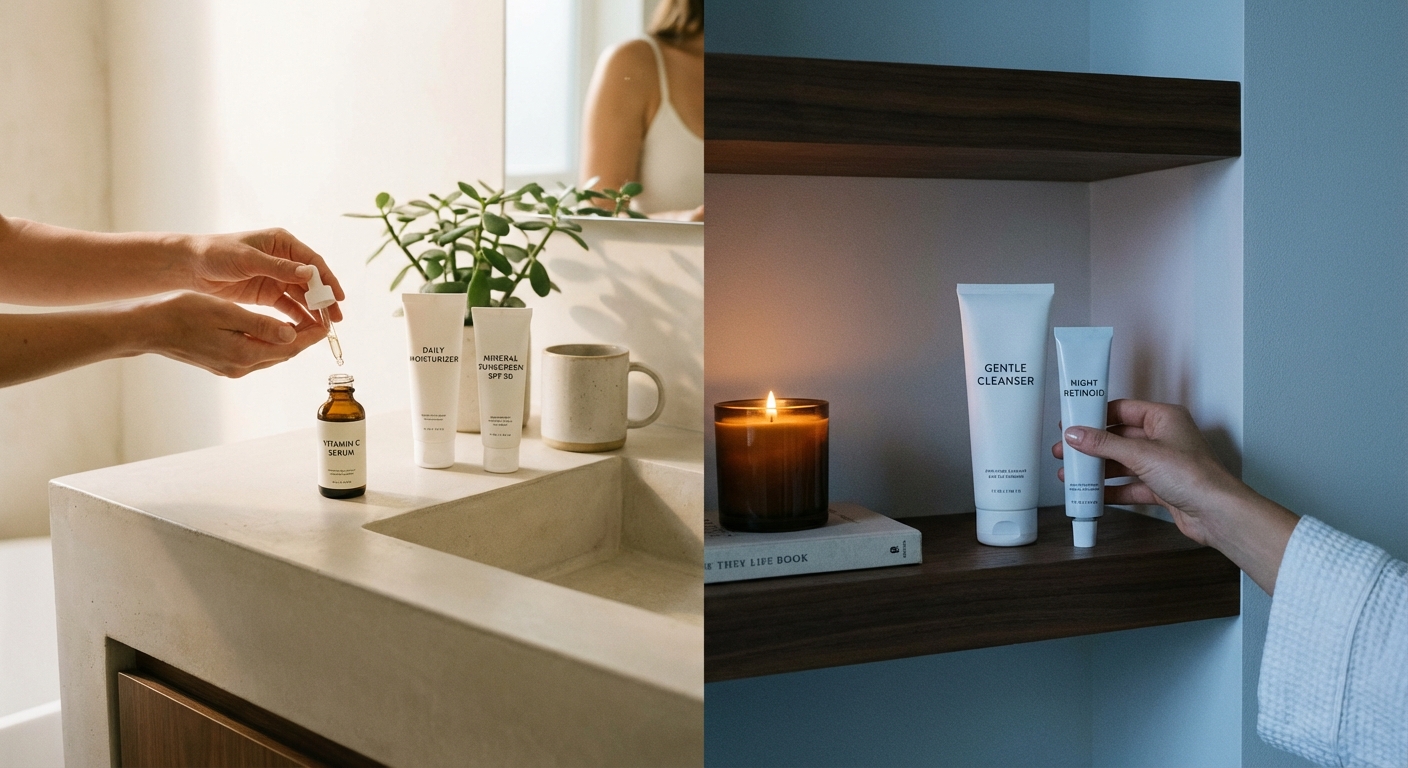
The evidence supports a surprisingly simple approach. Skin longevity does not require 10-step routines or dozens of active ingredients. It requires consistent execution of a few high-impact interventions, started early and maintained over decades.
Daily morning routine:
- Gentle cleanser (not stripping; maintains skin barrier)
- Vitamin C serum (10-20% L-ascorbic acid)
- Moisturizer (ceramide-based to support barrier function)
- Broad-spectrum SPF 30+ sunscreen (the single most important step)
Daily evening routine:
- Cleanser (double cleanse if wearing sunscreen or makeup: oil-based first, then water-based)
- Retinoid (tretinoin 0.025-0.05%, or over-the-counter retinol if prescription is not accessible)
- Moisturizer
Weekly addition (optional):
- Exfoliating acid (AHA like glycolic acid at 5-10%, or BHA like salicylic acid at 2%) one to two times per week to support cell turnover
Internal support:
- 7-9 hours of quality sleep per night
- Diet rich in antioxidants, omega-3 fatty acids, and low in refined sugars
- Adequate hydration (skin hydration reflects systemic hydration status)
- Stress management (chronic cortisol elevation degrades collagen)
When to start: The optimal time to begin a skin longevity protocol is before visible aging begins, typically in the mid-to-late 20s. Sun protection should start in childhood. Retinoid use can begin in the early 20s at low concentrations. Waiting until damage is visible means the intervention is reactive rather than protective, reducing its long-term effectiveness.
The skin longevity paradigm is not a marketing rebrand of anti-aging. It represents a genuine shift toward understanding skin as a biological system that can be maintained through targeted, evidence-based interventions. The science favors simplicity, consistency, and early adoption over complexity, expense, and late-stage correction.
Consult a dermatologist before starting prescription retinoids, especially if you have sensitive skin, rosacea, eczema, or are pregnant or planning pregnancy. Retinoids are contraindicated in pregnancy.
Sources
- Hughes, M.C. et al. “Sunscreen and Prevention of Skin Aging: A Randomized Trial.” Annals of Internal Medicine, June 2013.
- Mindbodygreen. “The Science-Backed Skin Care Trend Redefining Aging.” 2026.
- Who What Wear. “In 2026, Skin Longevity Is In: These 3 Trends Are Out.” 2026.
- Global Cosmetic Industry. “2026 Beauty Preview: From Neuro Skin Aging to Cautious Shoppers.” 2026.
- Cartessa Aesthetics. “Skin Longevity: The Top Aesthetics Trend of 2026.” 2026.