
The temperature reads 28°F on your morning run, and within the first quarter mile, your lungs burn with each breath while your legs feel heavier than usual. This isn’t poor fitness. Your cardiovascular system is executing a complex series of adaptations designed over millions of years of human evolution to protect your core temperature while still delivering oxygen to working muscles. Understanding these adaptations transforms winter running from an uncomfortable obligation into a strategic training opportunity that can actually enhance your aerobic capacity.
Research from the University of Northern British Columbia and the American College of Sports Medicine reveals that cold-weather exercise triggers physiological responses absent from temperate-condition training. Your heart works harder at the same pace, your blood vessels undergo repeated constriction and dilation cycles, and your body recruits brown adipose tissue for thermogenesis. These stressors, when properly managed, create training adaptations that carry over to performance in any weather condition.
The challenge lies in distinguishing productive cold stress from dangerous exposure. A well-designed winter running protocol capitalizes on the cardiovascular benefits while implementing safety measures that protect against hypothermia, frostbite, and respiratory distress. The December conditions across much of North America provide an ideal laboratory for developing cold-weather fitness, with temperatures challenging enough to trigger adaptation but manageable with proper preparation.
How Cold Air Affects Your Cardiovascular System
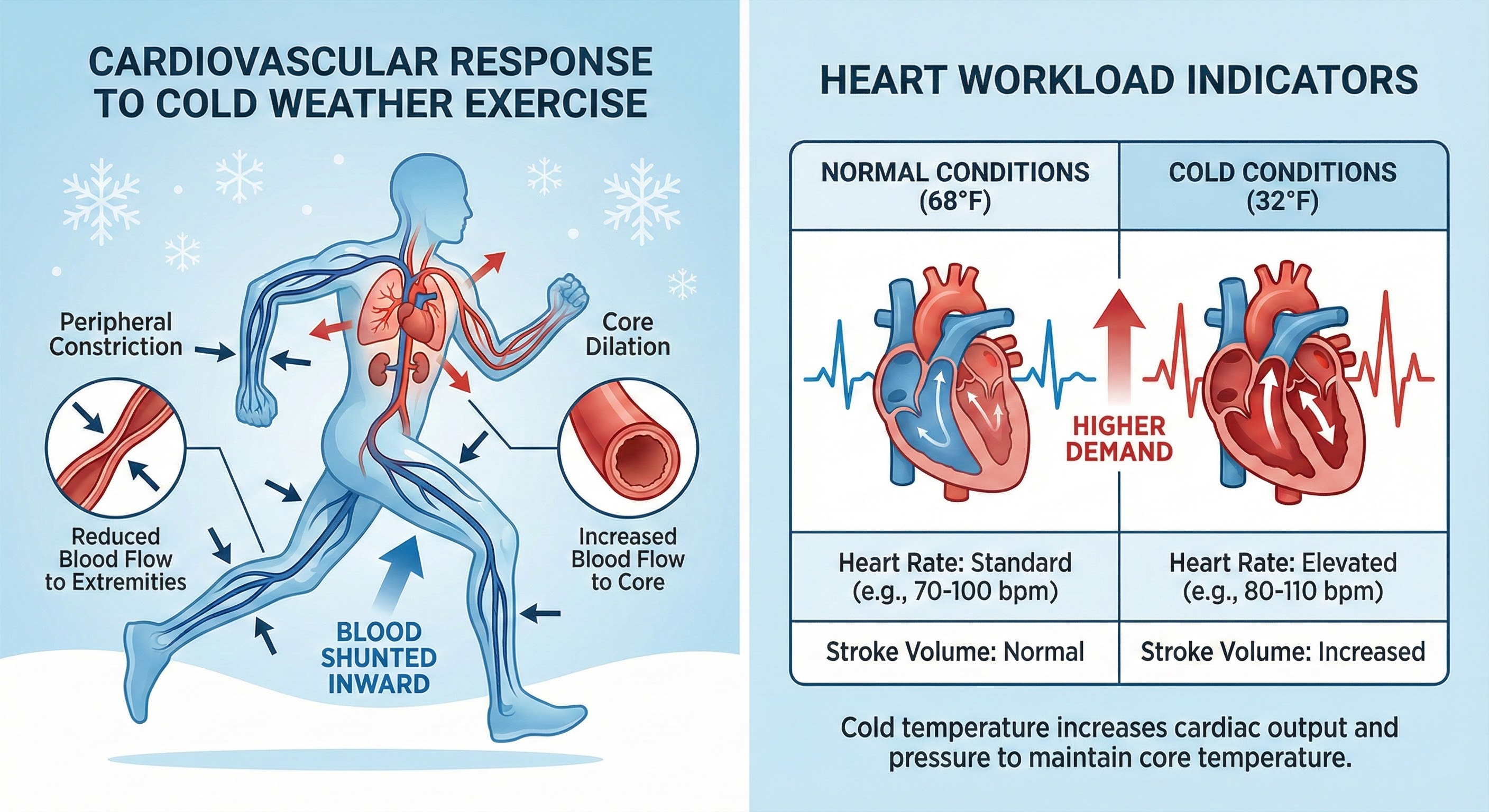
When you begin exercising in cold conditions, your body faces a physiological conflict. Muscles demand increased blood flow to support activity, but your thermoregulatory system simultaneously restricts peripheral circulation to preserve core temperature. This tug-of-war between competing demands creates unique cardiovascular stress that drives adaptation.
Peripheral vasoconstriction occurs within minutes of cold exposure. Blood vessels in your skin and extremities narrow, redirecting warm blood toward vital organs. While this protects your core, it increases systemic vascular resistance, meaning your heart must generate more pressure to push blood through a narrower circulatory network. Research published in the European Journal of Applied Physiology found that heart rate increases by approximately 5 to 10 beats per minute at the same running pace when comparing 20°F conditions to 50°F conditions, purely from this vascular resistance change.
Your heart responds to this increased workload through elevated stroke volume and cardiac output. Over repeated exposures, this cardiovascular stress triggers adaptations similar to those seen with altitude training: improved cardiac efficiency, enhanced blood vessel elasticity, and better regulation of blood pressure under varying conditions. A 2019 study in Frontiers in Physiology documented improved endothelial function in regular winter exercisers compared to those who trained only in climate-controlled environments.
The respiratory system faces its own cold-weather challenges. Inhaled cold air must be warmed and humidified before reaching the delicate alveoli in your lungs. This process draws moisture from respiratory tissues, creating the dry, burning sensation familiar to winter runners. The bronchial tubes may constrict in response to cold, dry air, a phenomenon called exercise-induced bronchoconstriction that affects up to 25% of winter athletes according to the American Academy of Allergy, Asthma, and Immunology.
Training Benefits of Cold-Weather Running
Beyond mere survival, strategic cold-weather running offers training advantages unavailable in comfortable conditions. The additional physiological stress, when properly dosed, accelerates fitness adaptations through mechanisms distinct from simply running more miles.
Increased caloric expenditure represents the most measurable benefit. Your body burns additional calories for thermogenesis, generating heat to maintain core temperature. Research from the University of Albany found that cold-weather exercise increases total energy expenditure by 10 to 15% compared to identical activity in neutral temperatures. This elevated burn continues post-exercise as your body rewarming processes extend metabolic elevation.
Enhanced fat oxidation accompanies cold exposure through activation of brown adipose tissue (BAT). Unlike white fat cells that simply store energy, brown fat cells contain mitochondria that convert calories directly into heat. A landmark study in Cell Metabolism demonstrated that repeated cold exposure increases both the amount and activity of brown adipose tissue, improving your body’s capacity for fat burning during both exercise and rest. Regular winter runners essentially train their metabolism alongside their cardiovascular system.
Improved mental resilience develops through deliberate discomfort. Sports psychology research from the University of Kent confirms that training in challenging conditions, including cold weather, builds psychological tolerance that transfers to race-day performance and other life challenges. The runner who has maintained pace through a 25°F morning run possesses mental resources unavailable to someone who only trains in perfect conditions.
For those building aerobic capacity through the winter, combining outdoor cold-weather runs with indoor VO2 max training protocols creates a comprehensive endurance development program. The complementary stressors of cold outdoor runs and high-intensity indoor intervals target different aspects of cardiovascular fitness.
Safe Temperature Guidelines
Not all cold is created equal. The relationship between ambient temperature, wind speed, and exercise safety follows predictable patterns that inform intelligent training decisions.
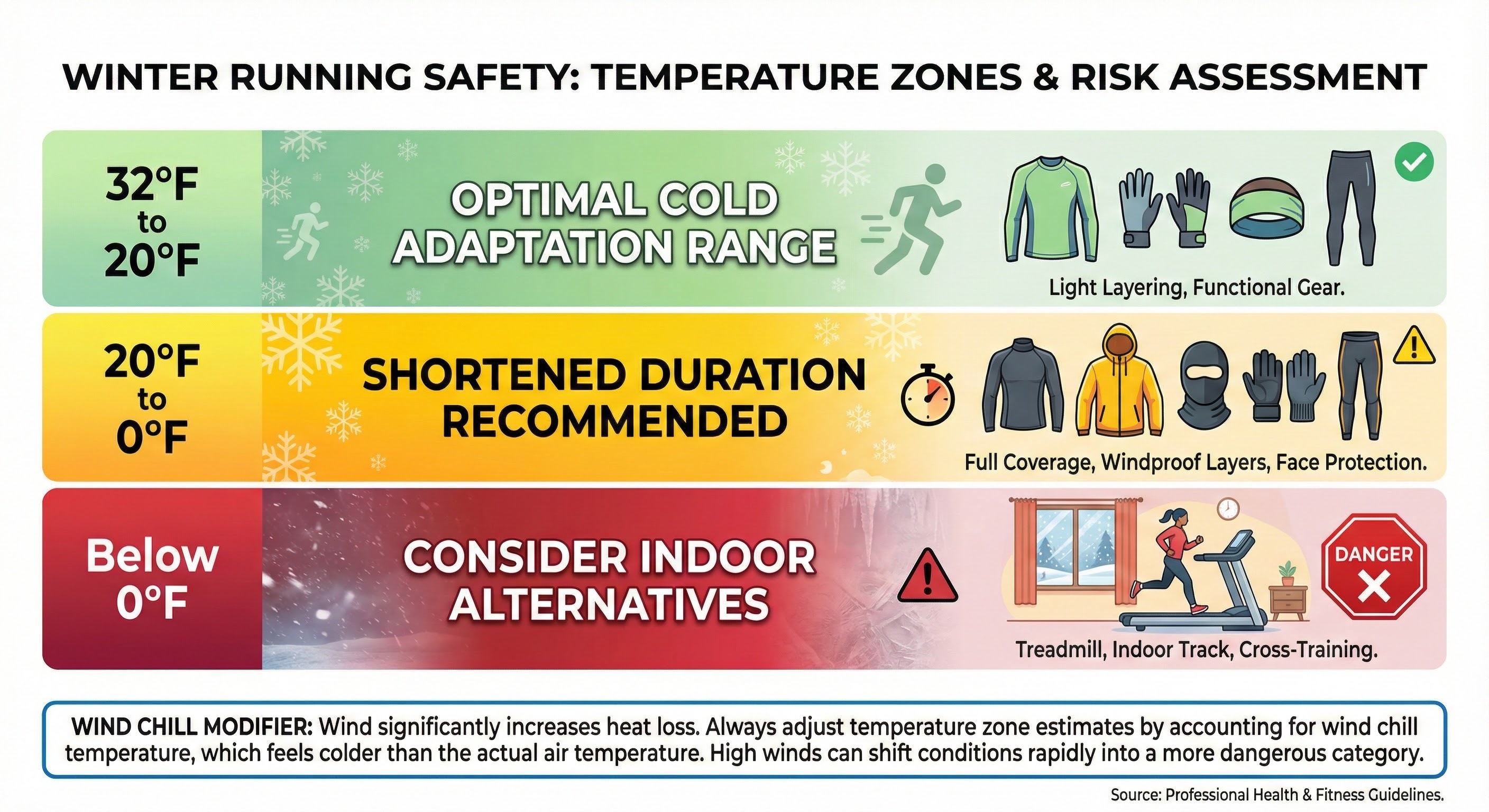
32°F to 20°F (0°C to -7°C) represents the ideal training zone for cold adaptation with minimal safety concerns. Properly dressed runners face no significant hypothermia or frostbite risk at these temperatures, even during longer runs. This range provides sufficient cold stress to trigger cardiovascular adaptations while remaining well within safe exposure limits.
20°F to 0°F (-7°C to -18°C) requires heightened awareness and potentially modified training. Exposed skin can develop frostbite in 30 minutes at 0°F with calm conditions, and much faster with wind. Limiting run duration to 45 to 60 minutes and ensuring complete coverage of extremities becomes essential. Many runners find this range optimal for shorter, more intense sessions where elevated effort generates sufficient heat.
Below 0°F (-18°C) poses genuine danger for outdoor exercise. Respiratory stress increases dramatically as the airways struggle to warm air sufficiently before it reaches the lungs. Frostbite risk escalates to mere minutes for exposed skin. The American College of Sports Medicine recommends moving training indoors when wind chill drops below -20°F, regardless of actual temperature.
Wind chill matters more than thermometer readings. A 25°F day with 20 mph winds creates equivalent heat loss to -4°F in calm conditions. Check wind chill forecasts rather than just temperature when planning winter runs, and favor routes with windbreaks during particularly blustery conditions.
Layering Systems and Gear Essentials
Proper clothing transforms winter running from survival exercise into comfortable training. The layering system used by mountaineers and winter athletes applies directly to cold-weather runners, though with modifications for the sustained effort and sweat generation specific to running.
The base layer sits against your skin with the primary job of moisture management. Merino wool or synthetic materials like polyester and polypropylene wick sweat away from your body while providing minimal insulation. Cotton, which absorbs moisture and holds it against your skin, should never serve as a running base layer in cold conditions. The wet fabric draws heat from your body 25 times faster than air alone.
The mid layer provides insulation. Fleece or lightweight synthetic insulation traps warm air while remaining breathable enough for exercise. Many runners skip this layer in temperatures above 25°F, adding it only for colder conditions or less intense efforts. The key is selecting a mid layer thin enough to move with your body during running motion.
The outer layer blocks wind and precipitation while allowing moisture vapor to escape. Running-specific wind shells designed for high-output activity provide dramatically better performance than casual outerwear. Look for pit zips or ventilation panels that prevent overheating during hard efforts.
Extremity protection requires particular attention since your body prioritizes core temperature over fingers and toes. Running gloves or mittens should be warmer than you think necessary, since you can always vent heat but cannot add insulation mid-run. Consider carrying a lightweight extra pair for longer runs. Wool or synthetic running socks slightly thicker than your warm-weather preference provide toe protection without compromising shoe fit.
Head coverage regulates overall heat loss more than any other gear choice. Your head receives continuous blood flow regardless of cold since the brain cannot tolerate temperature fluctuation. A lightweight running beanie or headband covering your ears provides substantial warmth with minimal bulk. In conditions below 15°F, a balaclava or neck gaiter pulled over your mouth and nose helps pre-warm inhaled air, reducing respiratory discomfort.
Running Technique Modifications
Cold surfaces and layered clothing demand subtle technique adjustments that protect against injury while optimizing efficiency.
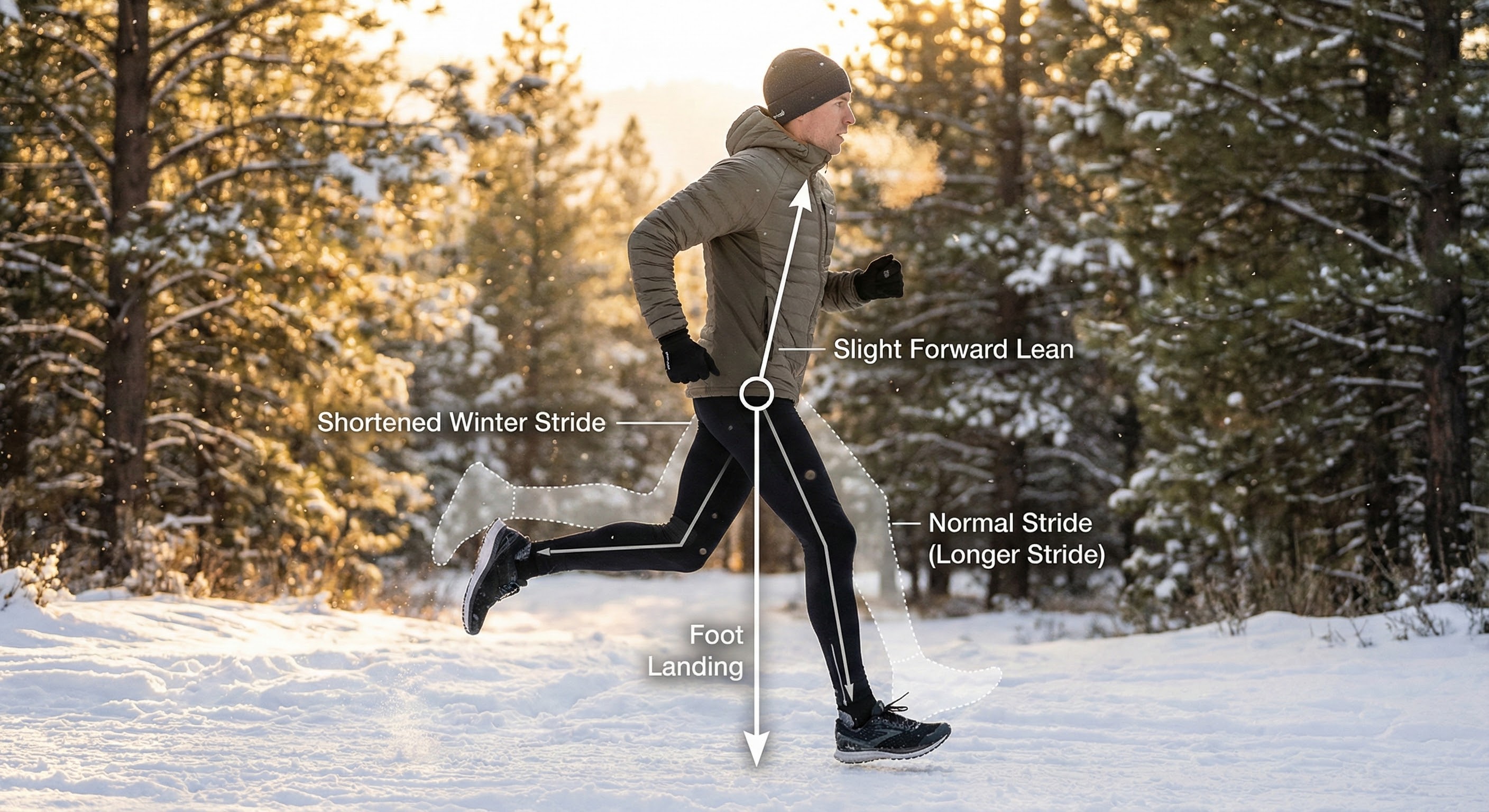
Shorten your stride when running on ice or packed snow. Smaller steps keep your center of gravity closer to your base of support, reducing the lever arm that causes slips. Research from the University of Michigan’s Human Biomechanics Laboratory found that stride length reductions of 10 to 15% dramatically decreased slip frequency on low-friction surfaces without significantly impacting pace.
Land with your foot beneath your hips rather than reaching forward. Overstriding, which places your foot ahead of your body’s center of mass, creates a braking force with each step. On slippery surfaces, this braking force can exceed traction limits, causing falls. A slight forward lean with foot placement beneath or slightly behind your hips improves both traction and efficiency.
Warm up thoroughly before increasing pace. Cold muscles and connective tissues have reduced elasticity, increasing injury risk during explosive movements. Begin every winter run with at least five minutes of easy jogging before any tempo work or faster intervals. Dynamic stretches after this initial warm-up further prepare tissues for harder efforts. When time constraints limit warm-up duration, 15-minute holiday workout protocols provide an alternative that minimizes cold exposure while maintaining fitness.
Maintain consistent effort rather than pace. Cold air, additional clothing, and modified technique all increase the energy cost of running at any given pace. Expecting to hit your usual splits in December conditions sets you up for frustration. Use heart rate or perceived exertion to guide intensity, accepting that pace may be 15 to 30 seconds per mile slower at the same effort level.
Hydration and Fueling Considerations
Cold weather masks dehydration signals while simultaneously increasing fluid needs. The combination makes winter runners particularly vulnerable to the performance decrements and health risks of inadequate hydration.
Thirst diminishes in cold conditions due to a hormonal response that reduces the sensation of thirst by up to 40% according to research from the University of New Hampshire. Your body decreases antidiuretic hormone production when blood concentrates in the core during vasoconstriction, signaling the kidneys to produce more urine despite actual fluid needs. You lose water through respiration at elevated rates in cold, dry air, yet feel less compelled to drink.
Pre-run hydration becomes essential. Consume 16 to 20 ounces of fluid in the two hours before winter runs. Include electrolytes if planning runs longer than 60 minutes, as you’ll still sweat despite cooler temperatures. The sweat just evaporates quickly in dry winter air, hiding evidence of fluid loss.
Insulated hydration systems prevent bottles and bladder hoses from freezing. Handheld bottles can be worn inside a running vest against your body. Hydration pack hoses should be routed inside your jacket and blown clear of water after each sip to prevent freezing.
Caloric needs increase during cold-weather exercise as thermogenesis demands additional energy. Runs that wouldn’t require fueling in summer may benefit from mid-run nutrition in winter. Gels and chews become firm and difficult to consume when cold, so carry them against your body or choose products designed for cold-weather use.
When to Move Indoors
Even dedicated winter runners benefit from knowing when conditions exceed reasonable risk tolerance. Indoor alternatives preserve training consistency without the dangers of extreme exposure.
Dangerous wind chill represents the clearest indicator for indoor training. When wind chill drops below -20°F, even brief skin exposure creates frostbite risk. The cardiovascular strain of exercising in these conditions may exceed productive stress levels, particularly for those with underlying heart conditions.
Ice-covered surfaces without clear traction routes make falls nearly inevitable. A single fall can sideline your training for weeks with injury. When plowing, sanding, or snow removal hasn’t created safe running routes, treadmill running or indoor track sessions preserve fitness without injury risk.
Respiratory distress that doesn’t resolve after proper warm-up suggests conditions beyond your current adaptation level. If breathing remains labored and painful after 10 minutes of easy running despite covering your mouth and nose, moving indoors prevents potential airway damage.
Early signs of hypothermia including uncontrollable shivering, confusion, or loss of coordination demand immediate cessation of outdoor activity and rewarming. These symptoms indicate your body has lost the thermoregulatory battle. Never attempt to “push through” signs of hypothermia.
The Bottom Line
Cold-weather running offers cardiovascular training benefits unavailable in climate-controlled environments. The increased cardiac workload, enhanced fat oxidation, and mental resilience developed through winter running translate directly to performance improvements that persist year-round. The physiological stress of cold adaptation, properly managed, makes you a more robust and adaptable athlete.
Success requires respecting the additional demands cold places on your body. Appropriate layering, modified technique, enhanced hydration practices, and clear safety boundaries transform winter from an obstacle into an opportunity. The runner who maintains consistent training through December conditions arrives at spring with fitness advantages over those who retreated to the couch until warmer weather returned.
Your Winter Running Protocol:
- Check wind chill, not just temperature, before heading out
- Layer with moisture-wicking base, insulation mid, and windproof outer
- Begin with 5 to 10 minutes of easy jogging before any faster work
- Shorten your stride by 10 to 15% on slippery surfaces
- Hydrate as aggressively as summer despite reduced thirst
- Move indoors when wind chill drops below -20°F or surfaces become dangerously icy
Sources: University of Northern British Columbia cold exercise research, American College of Sports Medicine exercise guidelines, European Journal of Applied Physiology cardiovascular adaptation studies (2018), Frontiers in Physiology endothelial function research (2019), Cell Metabolism brown adipose tissue activation studies, University of Michigan Human Biomechanics Laboratory slip prevention research, American Academy of Allergy, Asthma, and Immunology exercise-induced bronchoconstriction data.