You finish a 10-minute cycling sprint, legs burning, heart pounding, sweat dripping. Your body feels worked. But something far more significant is happening beneath the surface: your bloodstream has just flooded with molecular messengers capable of switching off cancer growth signals in cells thousands of miles from your muscles.
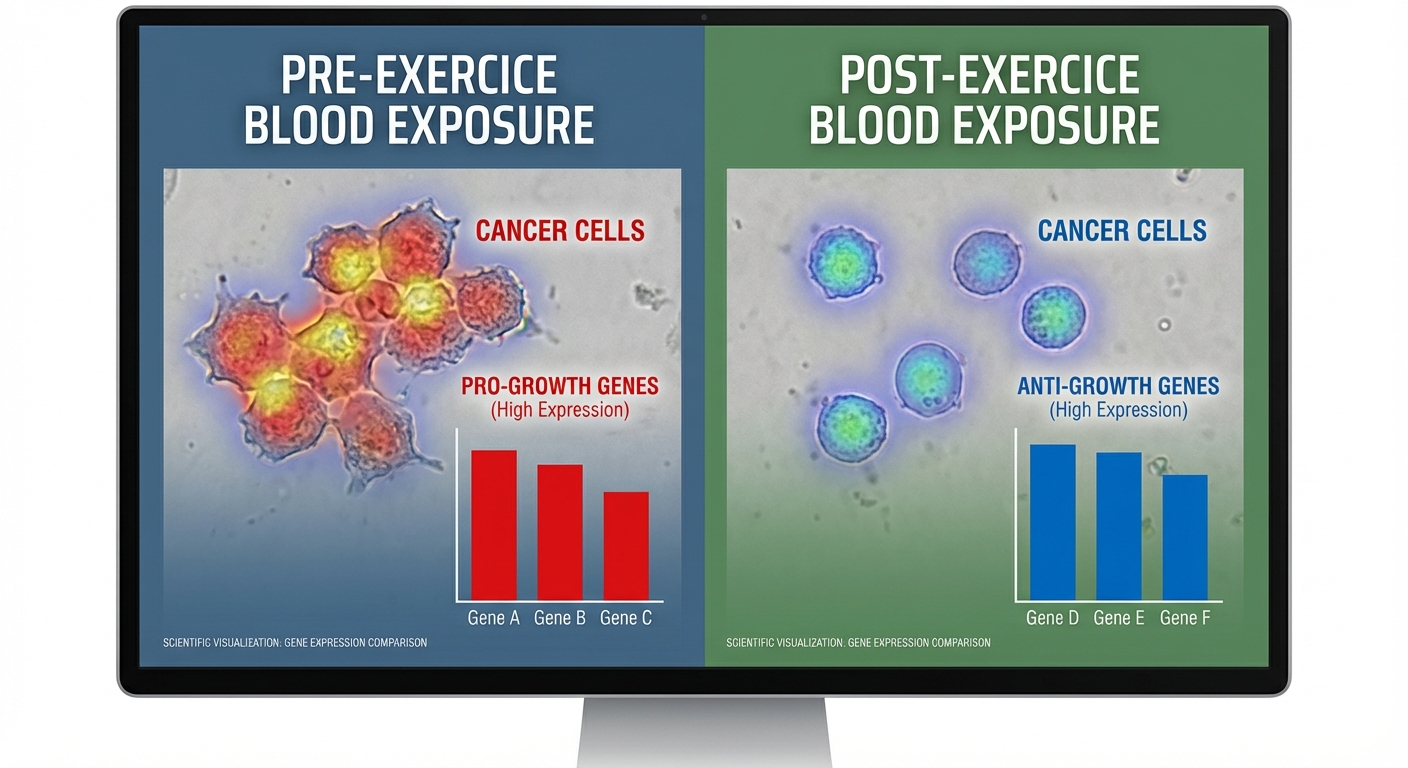
New research from Newcastle University demonstrates that brief bursts of intense exercise release a cocktail of protective molecules into the bloodstream that can directly influence over 1,300 genes in cancer cells. The finding suggests that the cancer-protective effects of exercise operate through a fascinating mechanism involving what scientists call “exerkines,” exercise-induced signaling molecules that act as chemical messengers throughout the body.
The Newcastle Discovery: Exercise as Molecular Medicine
Dr. Sam Orange, Senior Lecturer in Clinical Exercise Physiology at Newcastle University, led a research team investigating exactly how exercise might protect against colorectal cancer at the cellular level. Their findings, published in the International Journal of Cancer in January 2026, reveal a remarkably direct pathway from exercise to cancer cell behavior.
The study recruited 30 volunteers aged 50 to 78 who were overweight or obese, a population at elevated cancer risk. This demographic choice was deliberate: excess body weight is an established risk factor for colorectal cancer, and demonstrating protective exercise effects in a higher-risk population strengthens the clinical relevance of the findings. After a brief warm-up, participants completed approximately 10 minutes of high-intensity cycling. Researchers collected blood samples both before and after exercise and analyzed 249 different proteins circulating in the bloodstream.
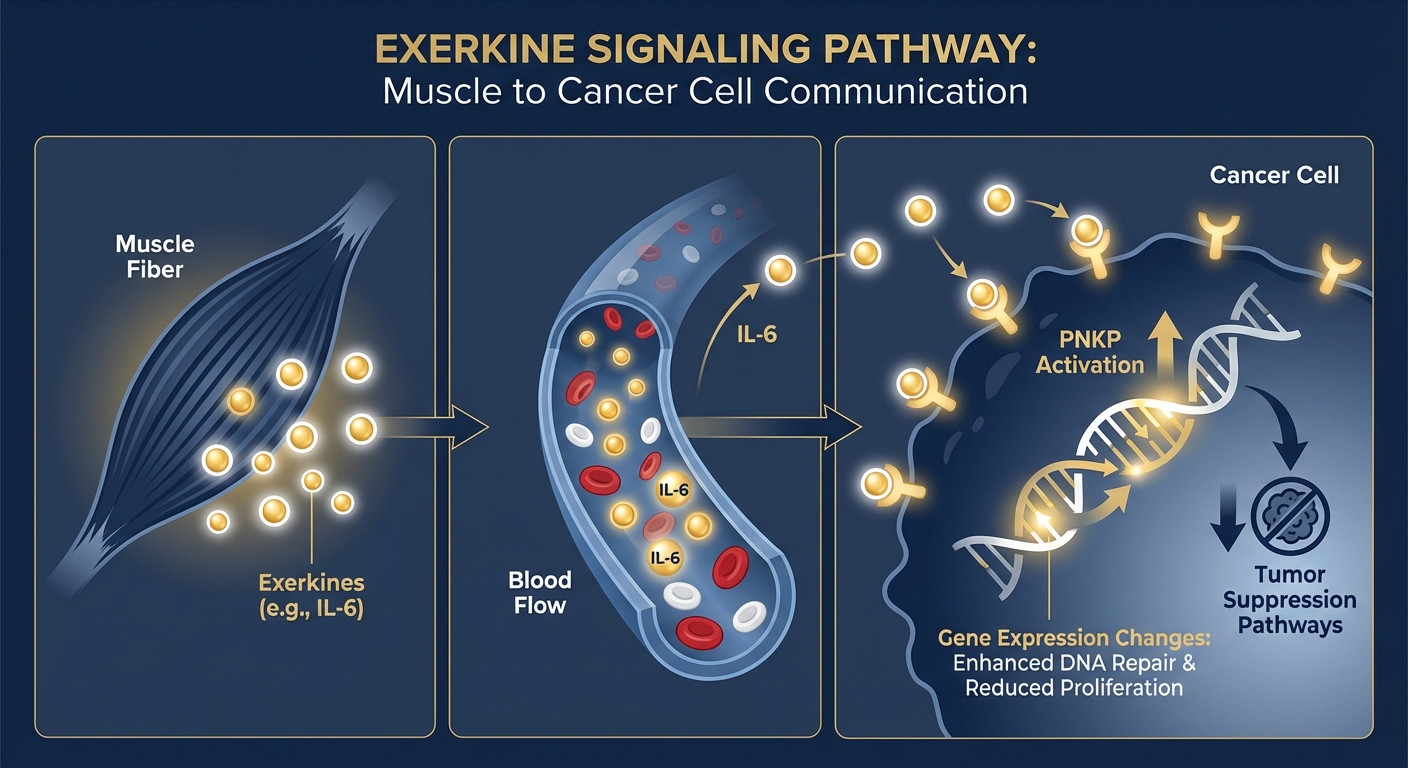
What they discovered was striking. Thirteen proteins significantly increased after the exercise bout, including interleukin-6 (IL-6), a molecule known to play a critical role in DNA repair. When the researchers exposed colorectal cancer cells in the laboratory to blood serum collected after exercise, the activity of more than 1,300 genes shifted. DNA repair mechanisms activated. Energy metabolism in the cancer cells changed. Growth-promoting pathways shut down.
“What’s remarkable is that exercise doesn’t just benefit healthy tissues,” Dr. Orange explained. “It sends powerful signals through the bloodstream that can directly influence thousands of genes in cancer cells.”
Understanding Exerkines: Your Body’s Exercise Messengers
The concept of exerkines represents a paradigm shift in how we understand exercise’s systemic benefits. Rather than exercise affecting only the tissues directly involved in movement, these molecules allow working muscles to communicate with distant organs and cells throughout the body.
The Newcastle study identified several categories of exerkines released during intense exercise. Anti-inflammatory molecules help reduce the chronic low-grade inflammation associated with cancer development. Vascular health factors improve blood vessel function and circulation. Metabolic regulators influence how cells process energy. Perhaps most importantly for cancer prevention, DNA repair activators like IL-6 help cells fix genetic damage before it can lead to malignant transformation.
The research specifically highlighted the activation of PNKP, a critical gene involved in repairing damaged DNA. When DNA repair mechanisms function properly, cells can correct genetic errors before they accumulate into the mutations that drive cancer development. Exercise-induced exerkines appear to enhance this protective surveillance system.
This mechanism helps explain decades of epidemiological research linking physical activity to reduced cancer risk. A comprehensive review of 170 studies found that regular exercise significantly reduces risk across multiple cancer types. The Newcastle research now provides a molecular explanation for these observations.
The 10-Minute Protocol: What Intensity Matters
The brevity of the exercise bout in this study carries significant implications for public health messaging. Ten minutes of intense exercise, not an hour-long gym session, was sufficient to trigger measurable changes in cancer-protective signaling.
The participants performed high-intensity cycling, pushing themselves to work hard during the brief protocol. This intensity appears to matter. The researchers noted that systemic responses to exercise are partly intensity-dependent, meaning that moderate walking might not produce the same molecular cascade as vigorous effort.
However, the findings align with growing research on exercise snacking and short burst training, which demonstrates that brief periods of intense activity can deliver substantial health benefits. For people who believe they don’t have time for exercise, this research offers compelling evidence that even 10 minutes of focused effort can trigger protective biological responses.
Why This Matters for Cancer Prevention
Colorectal cancer remains the third most common cancer worldwide and the second leading cause of cancer deaths. While screening and early detection have improved outcomes, prevention remains the most effective strategy. The Newcastle findings suggest that exercise operates as a form of molecular prevention, actively suppressing cancer-promoting signals rather than simply avoiding risk factors.
The research team chose to study participants who were overweight or obese specifically because excess body fat is associated with increased cancer risk. Obesity promotes chronic inflammation, alters hormone levels, and creates metabolic conditions that favor cancer development. The fact that even brief exercise could trigger protective responses in this high-risk population suggests that physical activity might help counteract some obesity-related cancer risk.
The study also opens intriguing therapeutic possibilities. Dr. Orange noted that understanding how exercise produces these effects “opens the door to find ways that mimic or augment the biological effects of exercise, potentially improving cancer treatment.” While no supplement or drug currently replicates the full spectrum of exercise-induced exerkines, this research provides a roadmap for future pharmaceutical development.
Practical Implementation: Building Your Cancer-Fighting Routine
The research suggests that incorporating brief high-intensity sessions into your weekly routine may enhance cancer protection. Here’s how to apply these findings:
Sample 10-Minute Protocol Based on Study Parameters:
- 2-minute warm-up at easy pace
- 8 minutes of high-intensity effort (cycling, rowing, or any cardio where you can push hard)
- Work at an intensity where conversation becomes difficult
- The goal is genuine exertion, not comfortable movement
For those new to high-intensity exercise or managing health conditions, gradual progression is essential. Start with shorter intervals of harder effort interspersed with recovery periods. Build toward sustained high-intensity bouts as fitness improves.
The 10-minute protocol shouldn’t replace other forms of exercise. Longer moderate-intensity sessions, strength training, and daily movement all contribute to overall health. However, knowing that a brief intense effort can trigger protective molecular signaling may help prioritize those days when time is limited.

Study Limitations and Future Directions
Scientific honesty requires acknowledging what this research does not prove. The cancer cells in this study were grown in laboratory conditions, not in living human bodies. The controlled environment of cell culture differs significantly from the complex ecosystem of an actual tumor, where immune cells, blood vessels, and surrounding tissues all influence cancer behavior.
The researchers also noted uncertainty about whether lower-intensity or moderate exercise would produce similar effects. The intensity-dependent nature of exerkine release suggests that a leisurely walk might not trigger the same molecular cascade as vigorous cycling. Future studies will need to establish the minimum effective dose and optimal exercise parameters for cancer protection.
Additionally, the study focused specifically on colorectal cancer cells. While the mechanisms identified, particularly DNA repair activation and growth signal suppression, likely have relevance across other cancer types given the fundamental nature of these pathways, direct research on breast, prostate, lung, and other cancers is needed to confirm transferability.
The research team has indicated that future work will explore whether different forms and intensities of physical activity can produce comparable biological responses. Understanding the specific exercise parameters that maximize cancer-protective signaling could refine public health recommendations and help individuals optimize their routines.
The Bottom Line
Ten minutes of intense exercise does something remarkable: it transforms your bloodstream into a delivery system for cancer-fighting molecules. The Newcastle University research demonstrates that brief high-intensity effort releases exerkines that can alter the behavior of over 1,300 genes in cancer cells, activating DNA repair mechanisms and suppressing tumor growth signals.
While this study was conducted in laboratory cells rather than human patients, it provides compelling molecular evidence for what epidemiological research has long suggested: regular vigorous exercise significantly reduces cancer risk. The finding that just 10 minutes can trigger these protective responses removes the time excuse that keeps many people sedentary.
Next Steps:
- Add at least one 10-minute high-intensity session to your weekly routine
- Focus on genuine effort, work hard enough that talking becomes difficult
- Use any cardio modality you enjoy: cycling, rowing, running, or stair climbing
- Track intensity with a heart rate monitor to ensure you’re working hard enough
- Combine brief intense sessions with longer moderate exercise and strength training
The research reveals exercise as molecular medicine, a way to actively send cancer-suppressing signals throughout your body with just 10 minutes of focused effort. While the full therapeutic potential of exerkines remains under investigation, the fundamental message is clear: your body possesses powerful built-in cancer-defense mechanisms that activate when you move with intensity. The ten-minute threshold makes this accessible to virtually everyone, regardless of schedule constraints. Combined with other evidence-based lifestyle factors like adequate sleep, stress management, and an anti-inflammatory diet, regular high-intensity exercise represents one of the most powerful and immediately actionable strategies for reducing cancer risk.
Sources: International Journal of Cancer (2026), Newcastle University, Dr. Sam Orange research team, colorectal cancer gene expression analysis.