Your body houses a remarkable surveillance system that constantly hunts for cells behaving badly. Natural killer cells patrol your bloodstream, T-cells stand ready to attack abnormal growths, and dozens of molecular pathways keep cell division in check. Every day, potentially cancerous cells arise and are quietly eliminated before they can establish themselves.
What most people don’t realize is that this entire system can be dramatically amplified by something as simple as moving your body regularly. The largest meta-analysis ever conducted on exercise and cancer, pooling data from 170 studies involving millions of participants, reveals that physical activity reduces cancer risk across multiple types by 20-40%. This isn’t marginal improvement or statistical noise. This is preventive medicine that genuinely works.
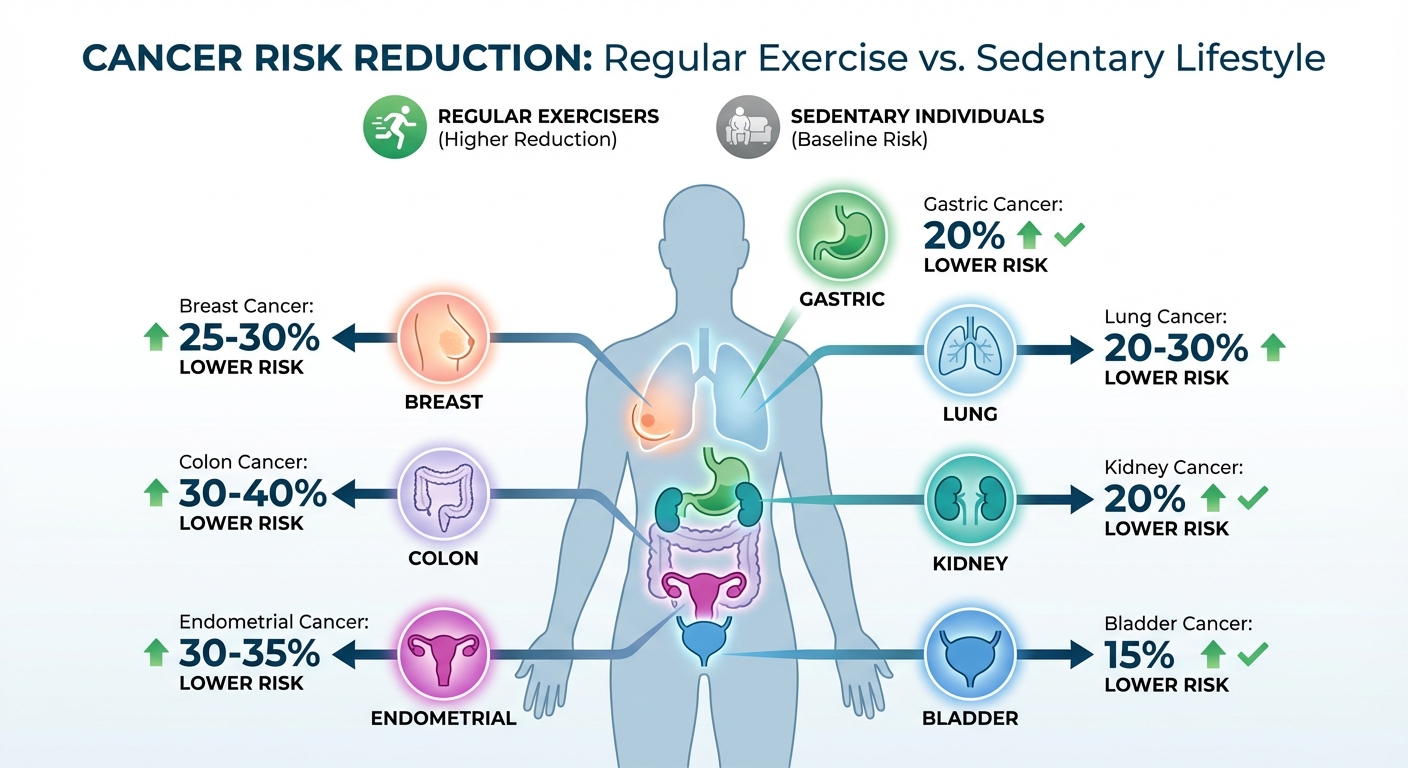
The protective effect spans breast cancer, colon cancer, endometrial cancer, lung cancer, kidney cancer, bladder cancer, and gastric cancer. The dose-response relationship is clear: more exercise provides more protection, up to approximately 300 minutes of moderate activity weekly. Beyond that threshold, additional benefit becomes minimal. The mechanisms are increasingly well-understood, involving hormone regulation, immune enhancement, inflammation reduction, and direct cellular effects that create an internal environment hostile to unregulated cell growth.
Why This Evidence Matters
In medical science, proving that a lifestyle intervention prevents a disease that develops over decades is notoriously difficult. You can’t ethically randomize people to be sedentary or active for 20 years and measure cancer outcomes. Therefore, researchers rely on the next best thing: massive, longitudinal observational studies that track millions of people across diverse populations and methodologies.
The data linking exercise to cancer prevention represents some of the most robust evidence in all of epidemiology. We aren’t looking at a single small study with questionable methodology. We’re looking at a convergence of evidence from millions of people across dozens of countries, with remarkably consistent findings that point toward a genuine biological relationship rather than statistical artifacts.
Several factors distinguish this research from weaker observational studies. The sample sizes are massive, encompassing millions of participants across 170 pooled studies rather than a few hundred people whose experiences might not generalize. Follow-up periods extend 10-20 years, capturing cancer development that occurs slowly over time. The findings remain consistent across diverse populations, geographic regions, and exercise types, suggesting real biological relationships rather than population-specific effects.
The dose-response relationship strengthens the causal argument beyond simple correlation: more exercise provides more protection up to a point, which is exactly what you’d expect if exercise were genuinely preventing cancer rather than merely correlating with some other protective factor. The biological mechanisms are plausible and increasingly well-understood. The specificity of effects, with different cancer types showing different levels of protection, suggests real biological relationships rather than random patterns or confounding variables.
The Biological Mechanisms Behind Protection
How does moving your muscles prevent a tumor from forming in your colon or breast? The connection seems abstract, but it’s grounded in hard physiology. Exercise is a systemic intervention that changes the chemical environment of the entire body, not just the muscles being used.
When you exercise regularly, you alter the levels of insulin, estrogen, and testosterone circulating in your blood. You reduce chronic inflammation and oxidative stress. You literally change the signaling molecules that tell cells whether to grow, divide, or die. By creating an internal environment hostile to unregulated cell growth, exercise acts as a broad-spectrum protective intervention against cancer.
Hormone regulation plays a major role, particularly for hormone-sensitive cancers like breast and endometrial cancer. Exercise lowers circulating estrogen, especially in postmenopausal women, which matters because high lifetime estrogen exposure significantly increases risk for these cancer types. Exercise also improves insulin sensitivity, lowering both insulin and IGF-1 (insulin-like growth factor). Elevated levels of these growth-promoting hormones create an environment that supports cancer development and progression. Regular physical activity keeps these growth signals in check.
Immune enhancement occurs through both immediate and long-term effects. Natural killer cells and T-cells, the immune components that identify and destroy abnormal cells, function measurably better in people who exercise regularly. A single exercise session temporarily increases immune cell circulation and activity, while chronic training creates sustained improvements in immune function. The implication is powerful: better immune surveillance means cancer cells that inevitably develop occasionally are caught and eliminated earlier, before they can establish themselves and grow.
Inflammation reduction matters because chronic low-grade inflammation actively promotes cancer through multiple pathways. Oxidative stress from inflammation damages DNA. Inflammatory signaling suppresses immune function that would otherwise catch cancer cells. Inflammatory cytokines promote angiogenesis, the blood vessel growth that supplies tumors with nutrients. Exercise reduces inflammatory markers like CRP, IL-6, and TNF-alpha by 20-40% in regular exercisers compared to sedentary individuals. Lower systemic inflammation translates directly to lower cancer risk.
Metabolic improvements create an internal environment less hospitable to cancer growth. Reduced body fat means less production of inflammatory adipokines and hormones that excess adipose tissue secretes. Improved glucose regulation matters because high glucose and insulin create conditions that support cancer cell proliferation. Enhanced mitochondrial function reduces the mutations and dysfunction that can initiate cancer at the cellular level.
Direct cellular effects include increased production of antioxidant enzymes that protect DNA from oxidative damage, enhanced DNA repair mechanisms that fix mutations before they become permanent, improved apoptosis (the programmed death of damaged cells that should be eliminated), and increased cellular stress resistance. All of these mechanisms reduce cancer initiation and progression at the most fundamental level.
Specific Cancer Types and Protection Levels
While exercise provides a general protective effect, the data reveals particularly potent protection against specific malignancies. This variance likely reflects the unique biological drivers of each cancer type. Cancers strongly linked to obesity and insulin resistance show the most dramatic risk reductions with physical activity, which makes biological sense since exercise directly targets the metabolic dysfunction that fuels these tumors.
Breast cancer shows 25-30% risk reduction with 150 or more minutes of weekly activity, with the protective effect strongest for postmenopausal women with hormone-sensitive cancers. The mechanism involves reduced circulating estrogen levels, improved insulin sensitivity, and lower chronic inflammation, all of which directly address the hormonal and metabolic factors that drive most breast cancers. For women with family history or other risk factors, regular exercise represents one of the most evidence-based modifiable interventions available.
Colon cancer demonstrates the strongest evidence and largest effect size, with 30-40% risk reduction in regular exercisers. The mechanisms involve increased gut motility (reducing time that potential carcinogens contact the intestinal lining), reduced inflammation in the gut epithelium, improved immune function in gut-associated lymphoid tissue, and better insulin sensitivity. Given that colon cancer is the third most common cancer and third leading cause of cancer death, this risk reduction represents an enormous public health opportunity.
Endometrial cancer shows 30-35% reduction, directly linked to exercise’s effects on estrogen and insulin. Excess body weight increases endometrial cancer risk primarily through increased estrogen production in adipose tissue. Exercise reduces this risk both through direct effects on hormone levels and through weight management.
Lung cancer shows 20-30% reduction even in smokers, though not smoking remains vastly more important than exercise for lung cancer prevention. For former smokers or those exposed to secondhand smoke, regular exercise provides an additional layer of protection. The mechanisms likely involve improved immune surveillance and reduced inflammation in lung tissue.
Pancreatic, kidney, and bladder cancers show 15-25% reductions with regular exercise. The mechanisms are less fully understood but the pattern is consistent across multiple studies, suggesting real protective effects mediated through systemic metabolic and immune improvements.
Prostate cancer notably shows weak or inconsistent associations with exercise. Unlike the cancers listed above, prostate cancer doesn’t appear strongly responsive to the metabolic and hormonal changes that exercise produces. This specificity actually strengthens confidence in the other findings, since it suggests we’re observing real biological relationships rather than artifacts of healthy-user bias.

How Much Exercise Provides Protection
The dose-response relationship between exercise and cancer prevention follows a clear pattern that helps guide practical recommendations. Starting from a sedentary baseline, even small amounts of activity provide meaningful protection, and the benefits continue to accumulate up to approximately 300 minutes of moderate activity per week.
At the baseline recommendation of 150 minutes of moderate activity weekly (30 minutes, five days per week), research shows 15-25% risk reduction for most studied cancers. This matches current public health guidelines and represents a realistic starting point for previously sedentary individuals. The activity doesn’t need to be structured exercise; brisk walking, active commuting, gardening, or recreational activities all count.
Maximum benefit appears at 300-450 minutes weekly, providing 30-40% risk reduction. Beyond this threshold, additional protection becomes minimal. This is good news, since it means you don’t need to become an elite athlete to maximize cancer protection. For most people, 45-60 minutes of daily moderate activity achieves near-maximum benefit.
Intensity matters moderately in the research. Both moderate activities like brisk walking and cycling, and vigorous activities like running and sports, show protective effects. Vigorous exercise might provide slightly more protection per minute of activity, but moderate exercise is more sustainable for most people over the long term. Given that consistency matters more than intensity for cancer prevention, finding activities you can maintain for years or decades trumps maximizing intensity in ways that lead to burnout or injury.
Strength training is less extensively studied than aerobic exercise for cancer prevention, but emerging evidence shows benefits, particularly for metabolically-driven cancers like colon and endometrial cancer. The American College of Sports Medicine now recommends combining aerobic and resistance training for comprehensive health benefits, and this likely applies to cancer prevention as well.
Exercise for Cancer Survivors
For decades, standard advice for cancer patients was to rest and conserve energy. The logic seemed reasonable: the body was already under siege from disease and treatment, so adding exercise stress would be harmful. This dogma has been completely overturned by research showing that exercise is not merely safe for cancer survivors but is a crucial component of recovery.
During active treatment, exercise is safe for most patients undergoing chemotherapy and radiation. Research shows it improves treatment-related fatigue, which affects up to 90% of patients. Exercise maintains physical function and muscle mass during treatment. Quality of life measures improve significantly in patients who remain active. These benefits occur without compromising treatment effectiveness or increasing adverse events.
After treatment, regular exercise reduces recurrence risk for breast and colon cancer by 30-50% in studies of cancer survivors. This effect size is comparable to many pharmaceutical interventions and exceeds the benefit of some adjuvant therapies. The mechanisms likely mirror primary prevention: hormone regulation, immune enhancement, reduced inflammation, and improved metabolic function.
Cancer survivors should work with their medical teams to develop appropriate exercise plans, but the scientific consensus has shifted dramatically toward recommending activity rather than rest. Oncology is increasingly adopting “exercise oncology” as a standard component of care, prescribed alongside conventional treatments.
Starting at Any Age Provides Benefit
A common fatalism among older adults is the belief that “the damage is already done.” If you’ve been sedentary for decades, smoked for years, or developed metabolic dysfunction, does starting to exercise at 60 really matter?
The science says yes, unequivocally. Studies show that previously sedentary people who become active in their 50s, 60s, or even 70s still demonstrate reduced cancer risk compared to those who remain sedentary. The magnitude of benefit may be somewhat less than for lifetime exercisers, but it is absolutely not zero.
The benefit begins quickly. Within months of starting regular exercise, immune function and metabolic markers improve measurably. You can’t erase decades of sedentary behavior, but you can meaningfully change your biological trajectory from the day you start moving. The window for prevention doesn’t close until life ends.
For older adults, the practical implications are hopeful. You don’t need to have been athletic your whole life to benefit. Starting now, whatever your age and previous history, provides genuine protection. The key is sustainability: finding activities you can maintain safely given any existing health conditions, and building gradually rather than attempting sudden dramatic changes.
Practical Recommendations
Based on the totality of evidence, here’s what the research supports for cancer prevention specifically:
Minimum effective dose: 150 minutes of moderate activity weekly (30 minutes, five days per week) provides 15-25% risk reduction. This is the floor, not the ceiling. Examples of moderate activity include brisk walking where you can talk but would find singing difficult, recreational cycling, swimming at moderate effort, gardening with active movement, and dancing.
Optimal dose: 300 minutes of moderate activity weekly (45-60 minutes daily) provides near-maximum protection at 30-40% risk reduction. This can be accumulated throughout the day and doesn’t require continuous hour-long sessions. Taking the stairs, walking to errands, active hobbies, and structured exercise all contribute.
Include both modalities: A combination of aerobic exercise and resistance training likely provides optimal benefits, hitting both cardiovascular and metabolic pathways. The American College of Sports Medicine recommends at least two resistance training sessions per week in addition to aerobic activity.
Prioritize consistency: Long-term regular exercise matters more than sporadic intense bursts. An hour daily of moderate activity sustained for decades provides more protection than alternating between sedentary periods and extreme training phases. Find activities you enjoy enough to maintain indefinitely.
Start now: Regardless of current age or fitness level, beginning exercise provides measurable protection. Previous inactivity doesn’t negate the benefits of starting today.
These recommendations align with guidance for cardiovascular health, diabetes prevention, mental health, and longevity. Exercise is a universal health intervention with remarkably broad benefits, and cancer protection is one of the most compelling.
The Bottom Line
Regular exercise reduces risk of multiple cancers by 20-40%, depending on the cancer type. The mechanisms are understood, involving hormone regulation, immune enhancement, inflammation reduction, and direct cellular protective effects. The evidence is among the strongest in lifestyle medicine. The recommendation is clear and achievable.
Move your body regularly, in ways you can sustain for the rest of your life. You’ll likely live longer. You’ll definitely have lower cancer risk. And you’ll feel better in the meantime.
Next Steps:
- Calculate your current weekly activity (include all movement, not just gym time)
- If below 150 minutes, add 10 minutes daily until reaching that baseline
- Work toward 300 minutes weekly for maximum protection
- Include two or more strength training sessions weekly
- Choose activities you genuinely enjoy to support long-term consistency
If you’re interested in related topics, explore our coverage of strength training benefits for healthy aging and the science behind exercise snacking for metabolic health.
Sources: Exercise and cancer meta-analyses (British Journal of Sports Medicine 2024, analyzing 170 studies), specific cancer type prevention studies (JAMA Oncology), mechanism research on exercise and cancer pathways (Nature Reviews Cancer), cancer survivor exercise studies (American Cancer Society guidelines), public health impact analyses (CDC, World Health Organization).