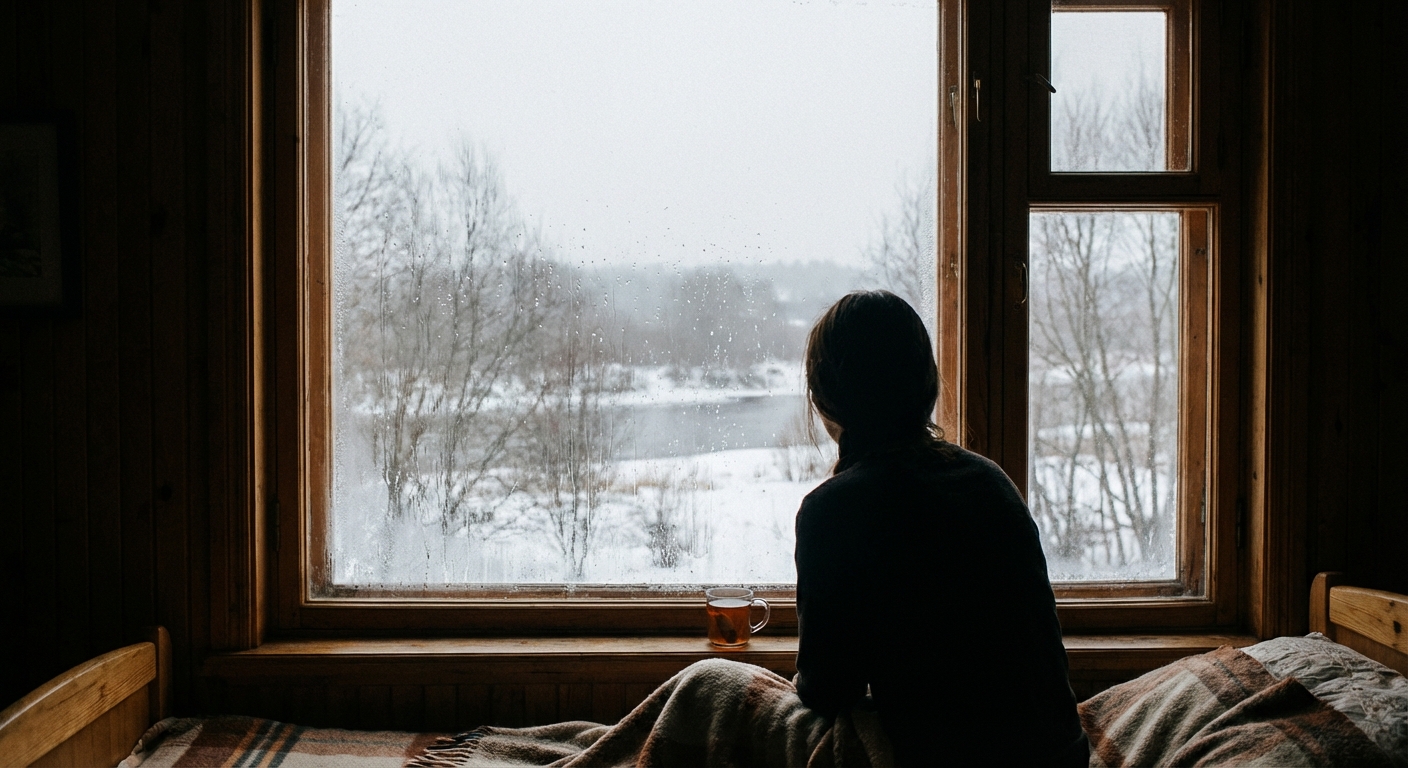
The alarm goes off at 7 AM, but it might as well be midnight. The window shows the same darkness you fell asleep to. You drag yourself through the morning routine, commute in darkness, and by the time you leave work, the sun has already set. December’s shortest days have always been hard, but this year feels different. Heavier. More impossible. You’re not alone in that perception, and you’re not imagining it.
Mental health professionals across the country report that 2025 has brought an unprecedented surge in seasonal affective disorder cases. Patients are experiencing more severe symptoms, longer-lasting episodes, and more difficulty with standard treatments than in previous winters. The explanation isn’t simply that days are short or the weather is cold. It’s that seasonal depression has collided with a collection of external stressors that amplify its effects in ways the brain struggles to manage independently.
Understanding why this winter feels particularly brutal requires examining how multiple stressors compound rather than simply add, why your nervous system may have arrived at winter already depleted, and what evidence-based strategies can help when standard approaches fall short.
The Compound Effect: When Stressors Multiply
Stress doesn’t accumulate like water filling a bucket, where each new input simply adds to a measurable total. Stress compounds, with each additional stressor amplifying the impact of those already present. A single stressor that you might handle easily in isolation becomes overwhelming when layered onto a foundation of existing strain.
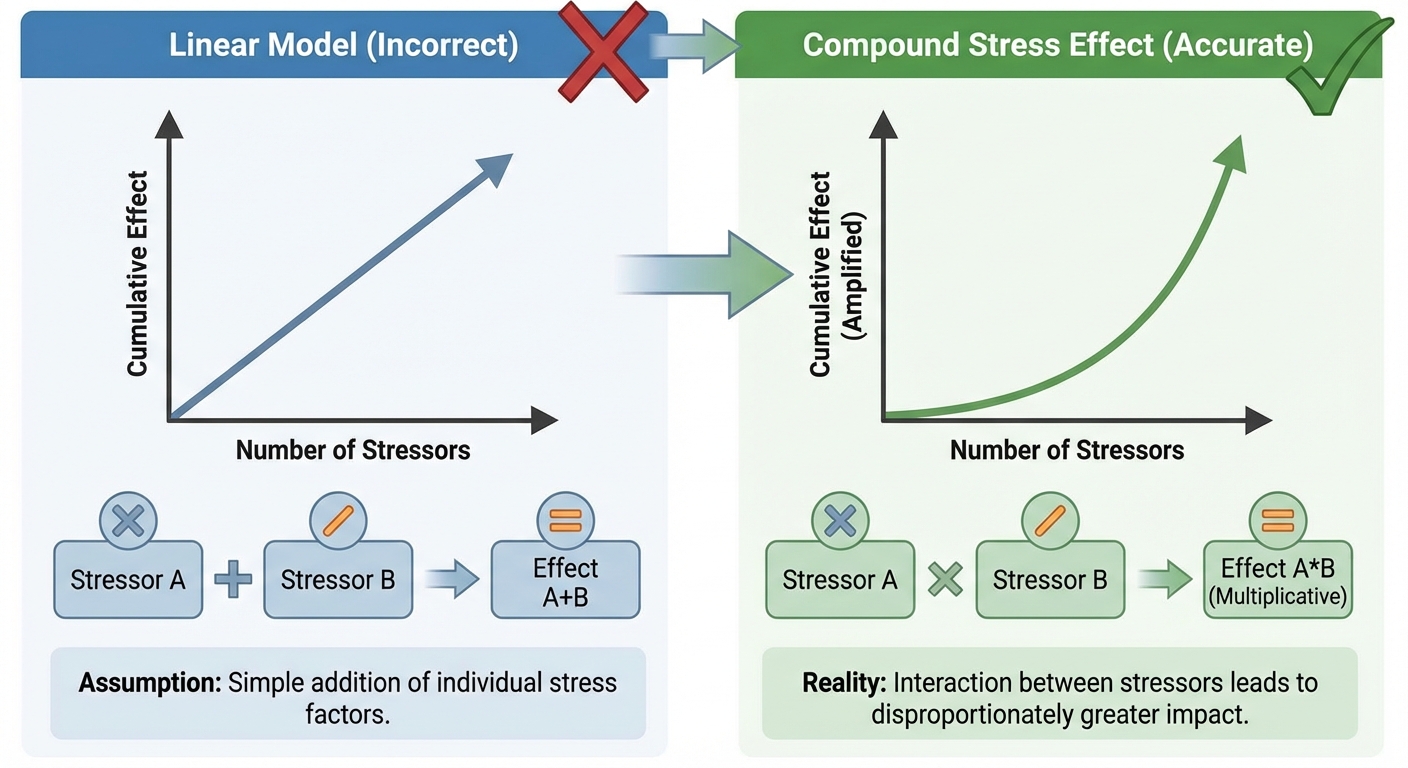
Sarah Martinez, a leading researcher in seasonal mental health, has observed this pattern acutely in her practice this year: “Patients this year aren’t just experiencing SAD symptoms. They’re experiencing SAD on top of an already dysregulated nervous system.” The seasonal darkness isn’t hitting people at baseline. It’s hitting people who have spent years navigating pandemic uncertainty, political division, economic instability, and climate-related disruptions. Their stress response systems were already running hot before winter arrived.
The hypothalamic-pituitary-adrenal (HPA) axis, the body’s central stress response system, can become chronically activated when stressors persist without resolution. Cortisol levels remain elevated, the stress response becomes sensitized, and the threshold for triggering an acute stress reaction drops. In this state, what would normally be a manageable challenge, like reduced winter daylight, can tip the system into dysfunction.
Two out of five U.S. adults report that their mental health worsens in winter. But that baseline statistic doesn’t capture year-to-year variation. When winter arrives atop accumulated stressors, the proportion affected increases, and the severity intensifies.
The 2025 Stress Landscape
This winter’s particular burden includes stressors that affect nearly everyone and others that vary by region and circumstance. The cumulative effect is what mental health experts call “collective trauma fatigue,” the accumulated psychological impact of years of global uncertainty, social upheaval, and constant crisis news cycles.
The 2025 election cycle, described by many analysts as among the most polarizing in modern history, didn’t end when votes were counted. The contentious debates over climate change, reproductive rights, economic policy, and social issues continue to generate stress regardless of political affiliation. The constant barrage of political news and divisive rhetoric has made it difficult for many people to disengage and focus on basic self-care.
For residents of affected regions, the ongoing fallout from the Los Angeles fires has created what some researchers term “double darkness.” Smoke-filled skies have reduced natural light exposure, the primary treatment for seasonal affective disorder, while simultaneously disrupting daily routines, forcing people indoors, isolating individuals from support networks, and limiting physical activity options. When environmental conditions remove access to the treatments that would normally help, seasonal depression becomes self-reinforcing.
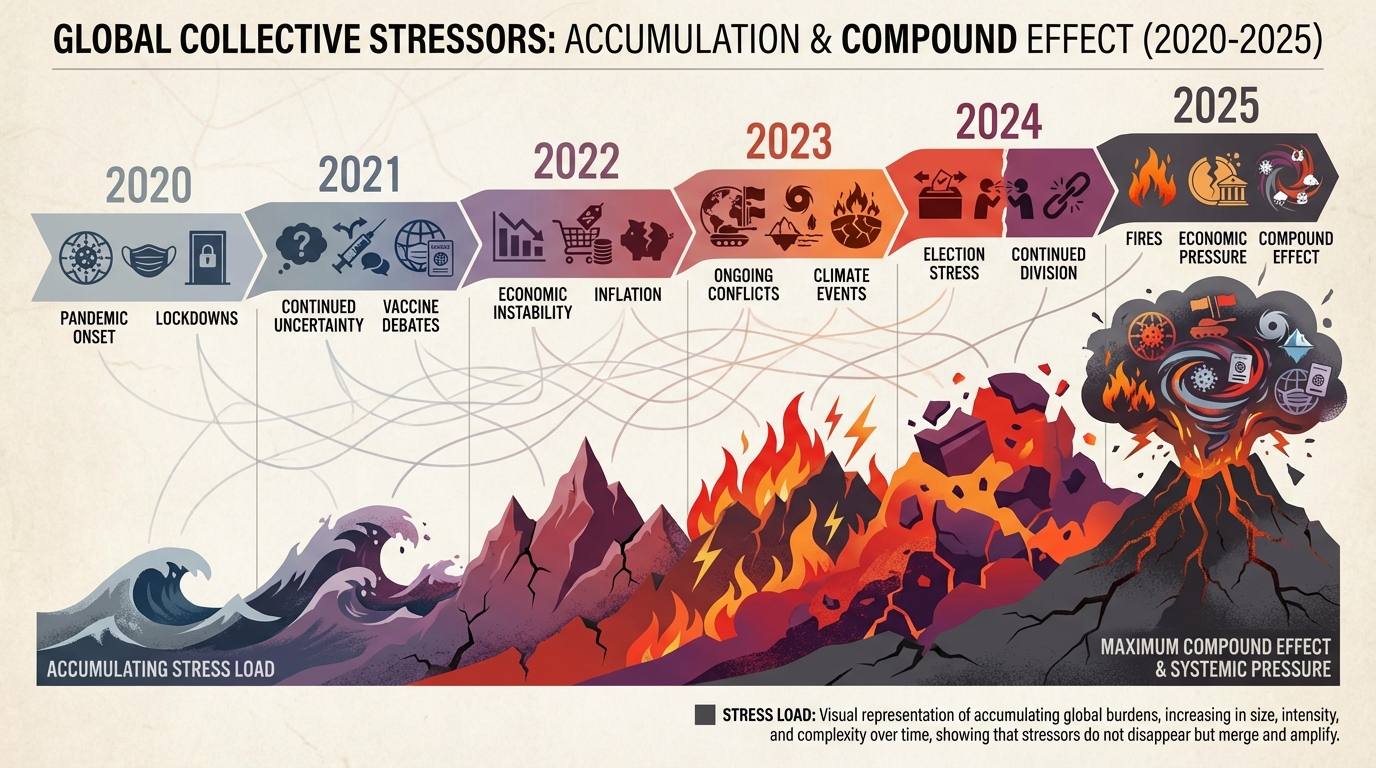
Beyond specific events, the world in 2025 continues to grapple with ongoing conflicts, economic instability, and the lingering effects of pandemic years. The unpredictability of global events has made it difficult for individuals to feel a sense of control over their lives, and perceived loss of control is itself a significant stressor that compounds other pressures.
The Biology of Seasonal Affective Disorder
Seasonal affective disorder affects approximately 4% to 6% of U.S. adults, with an additional 10% to 20% experiencing milder forms often called “winter blues.” The condition is recognized as a subtype of major depressive disorder, with symptoms typically emerging in late fall, peaking in January and February, and resolving by spring.
The primary mechanism involves disrupted circadian rhythms. Your body’s internal clock relies on light exposure, particularly morning light, to calibrate its 24-hour cycles. Reduced winter daylight, especially in northern latitudes, means less light reaching the retinal cells that signal the brain’s circadian pacemaker, the suprachiasmatic nucleus. This disruption cascades through multiple systems.
Melatonin, the hormone that promotes sleep, normally peaks at night and suppresses during daylight. In winter, with less daylight to suppress it, melatonin levels can remain elevated throughout the day, contributing to the fatigue and hypersomnia that characterize SAD. Serotonin, the neurotransmitter associated with mood regulation, also fluctuates seasonally. Brain imaging studies show that serotonin transporter levels increase in winter, effectively reducing serotonin availability in the synaptic space where it does its mood-regulating work.
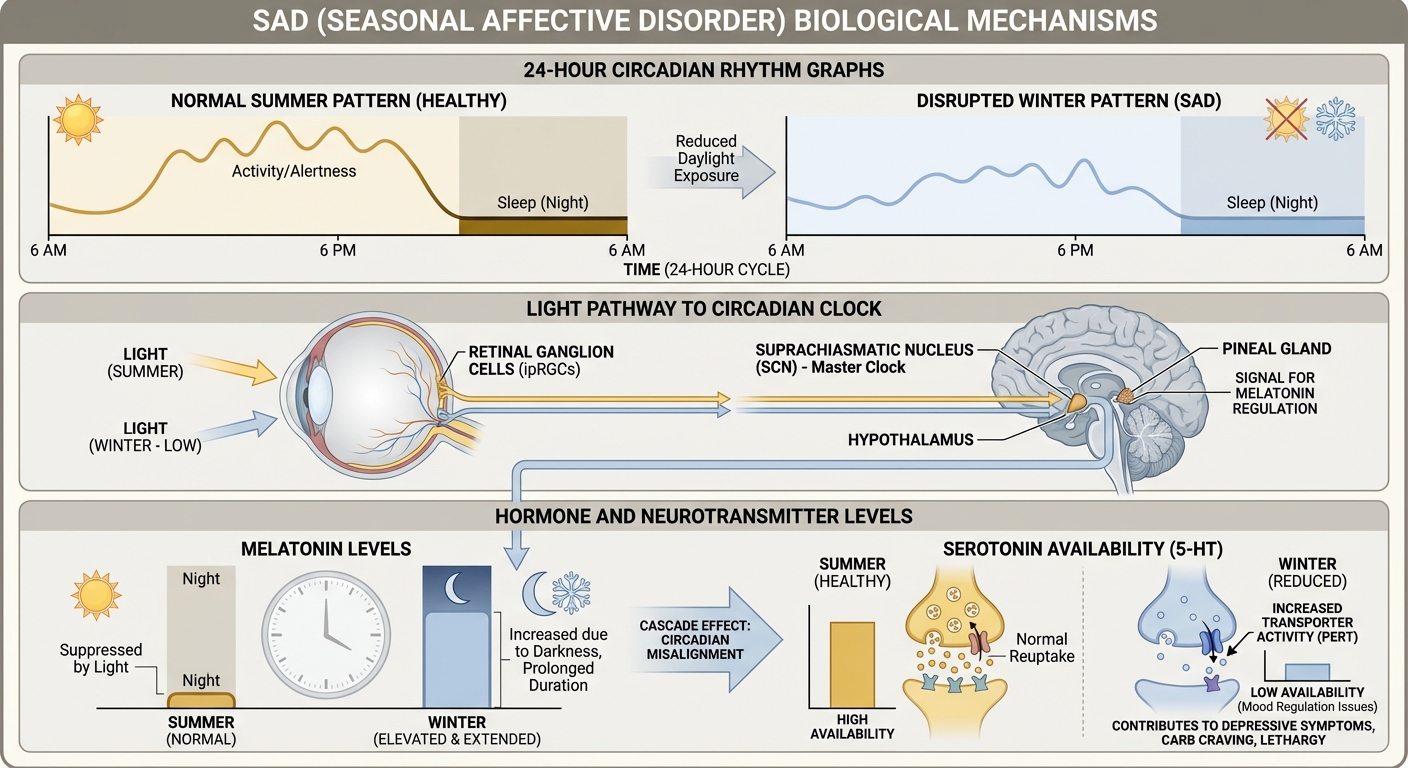
These biological changes don’t occur in isolation from life circumstances. Stress hormones interact with serotonin systems. Sleep disruption affects stress tolerance. The biological vulnerability created by reduced light exposure becomes magnified when it coincides with external stressors that independently strain the same neurochemical systems.
This year’s disrupted timeline adds another layer of complexity. In 2025, the traditional SAD pattern, with symptoms starting in late fall and peaking in midwinter, is getting scrambled by external stressors that can trigger depressive symptoms earlier or extend them longer. Mental health providers report patients arriving with depression in September and October, months before seasonal patterns would typically emerge, because political stress and climate events front-loaded their vulnerability.
When Standard Treatments Fall Short
Light therapy remains the first-line treatment for seasonal affective disorder. A 10,000-lux light box used for 20 to 30 minutes within an hour of waking can effectively reduce symptoms in many people. The light suppresses melatonin, advances circadian rhythms, and appears to influence serotonin function. Multiple studies confirm its effectiveness when used consistently throughout the winter months.
But light therapy treats the light-deprivation component of seasonal depression. When compound stressors are driving additional symptom burden, brightening your morning routine may help but may not resolve the full picture. A lightbox cannot address election anxiety, economic pressure, or the accumulated fatigue of navigating years of uncertainty.
Similarly, the standard recommendation to increase social connection faces practical obstacles this winter. Social isolation is a known amplifier of seasonal depression, and human connection provides access to oxytocin and dopamine that buffer against depressive symptoms. Yet many people report that their social lives have contracted, not just because of winter weather, but because sustained stress has depleted the energy required to maintain relationships. The isolation that would normally lift as days lengthen may persist if people have lost the habit and capacity for connection.
Physical activity, another evidence-based intervention for depression, requires resources that compound stress depletes. The executive function needed to overcome inertia and exercise is precisely what depression impairs. When stress has already taxed willpower reserves, the motivation to go for a winter run or visit the gym can feel insurmountable.
Evidence-Based Strategies for a Harder Winter
Addressing compound stress requires strategies that work at multiple levels simultaneously. No single intervention is likely to be sufficient, but combining approaches can build enough momentum to shift the trajectory.
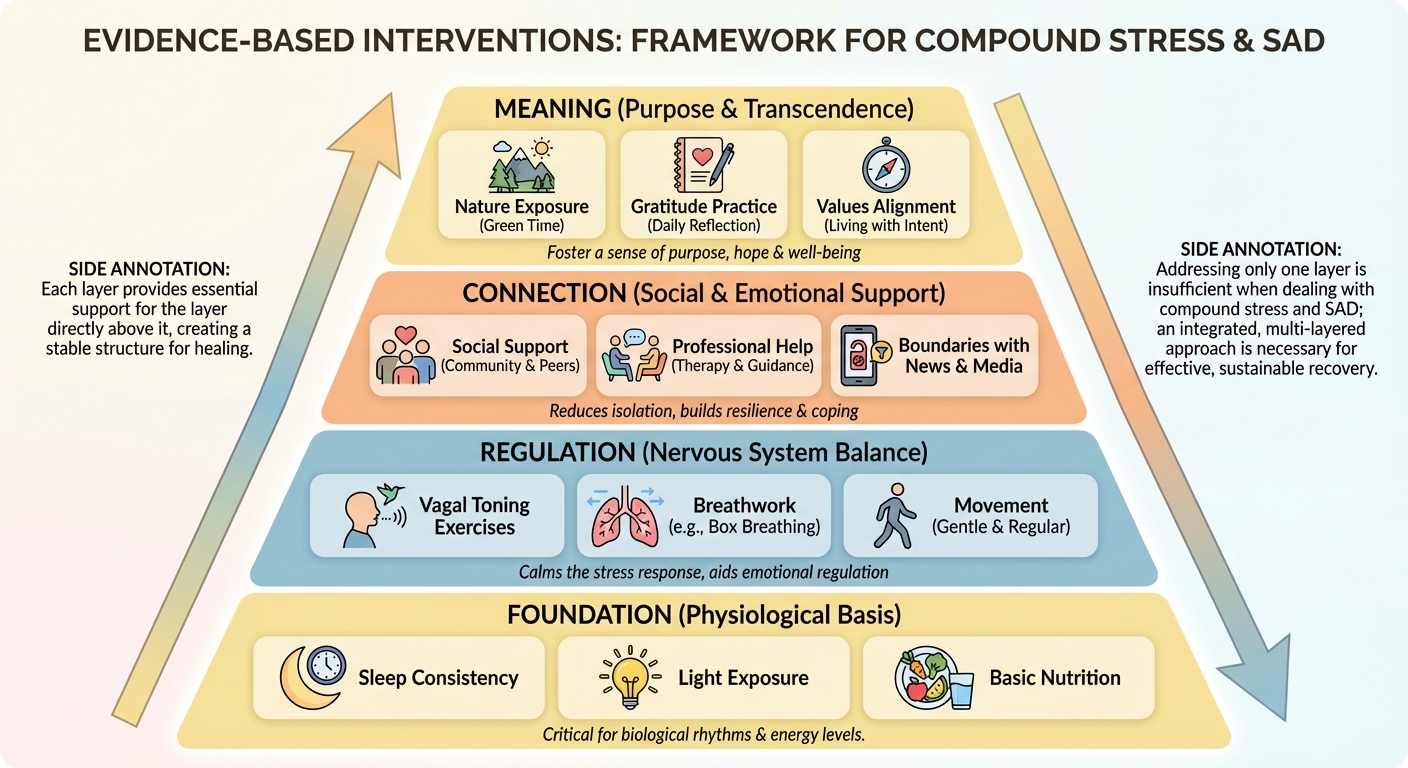
Start with circadian anchors. Even when light therapy alone isn’t sufficient, maintaining circadian consistency provides a foundation for other interventions. Go to bed and wake at consistent times, even on weekends. Get outside for even ten minutes of natural light in the morning, as overcast winter light still provides significantly more lux than indoor lighting. Use a sunrise alarm clock or timed lights to simulate dawn before your alarm. These anchors don’t solve compound stress, but they prevent circadian disruption from adding to the burden.
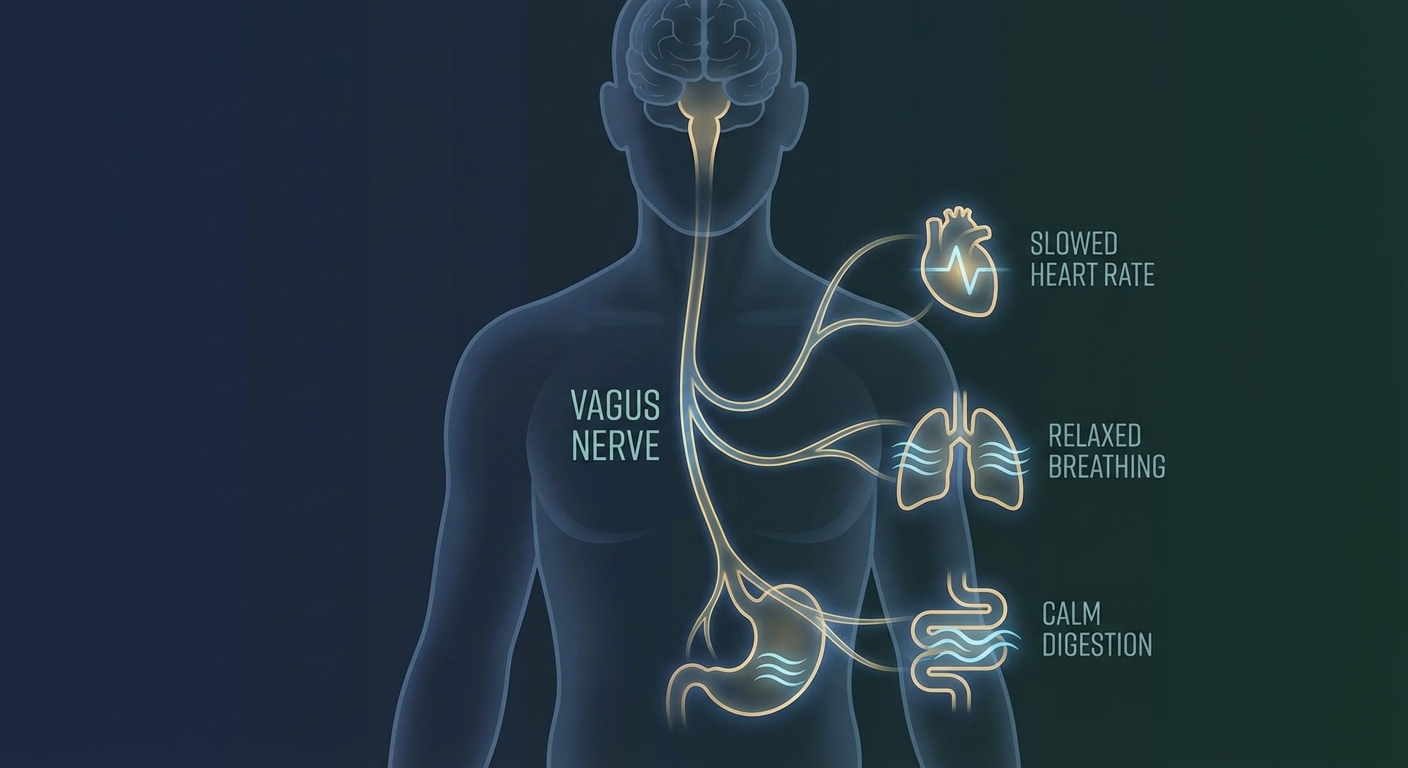
Practice strategic vagal toning. The vagus nerve connects the brain to multiple body systems and plays a central role in shifting from stress response to relaxation response. Simple practices can activate vagal tone and help regulate an overstimulated nervous system. Cold water exposure, even just splashing cold water on your face, activates the dive reflex and promotes vagal activity. For a more intensive cold exposure protocol, ice baths offer powerful vagal activation, though even brief facial immersion provides meaningful benefits. Slow, extended exhalations, where the exhale lasts longer than the inhale, directly stimulate vagal tone. Humming, singing, and gargling also activate vagal pathways. For more structured approaches, see our guide on tactical breathing techniques.
Create news boundaries. Constant exposure to crisis news maintains elevated cortisol and prevents the nervous system from returning to baseline. This doesn’t mean becoming uninformed, but it does mean being intentional about news consumption. Consider specific times for news rather than constant monitoring. Disable news notifications on your phone. When you do consume news, balance it with positive or neutral content. The goal is to remain adequately informed without maintaining continuous crisis activation.
Protect social connection ruthlessly. When energy is limited, social obligations can feel like another demand rather than a resource. But isolation compounds depression in a self-reinforcing cycle. Prioritize quality over quantity. One meaningful conversation may provide more benefit than several superficial interactions. Video calls count when in-person connection isn’t possible. Even brief exchanges with acquaintances, what researchers call “weak ties,” provide mood benefits. If social energy is severely depleted, start with the easiest connections and build from there.
Address sleep as a priority, not an afterthought. Sleep disruption is both a symptom of depression and a driver that worsens other symptoms. When stressed, people often sacrifice sleep to accommodate everything else, but this strategy backfires. Sleep deprivation impairs emotional regulation, cognitive function, and stress tolerance. Prioritize consistent sleep timing even if it means other tasks don’t get done. Avoid screens in the hour before bed; the light disrupts melatonin production. If racing thoughts prevent sleep, consider a “worry journal” where you write concerns before bed to externalize them.
Seek professional support proactively. This year, waiting until symptoms become severe before seeking help means waiting too long. If previous winters have included significant seasonal depression, consider starting therapy or medication before symptoms fully emerge. Research suggests that starting treatment before symptoms typically hit and continuing past the usual end of winter may be especially effective. If standard treatments haven’t worked well in the past, newer options including ketamine-assisted therapy may be worth discussing with a provider.
When to Seek Help
Seasonal depression exists on a spectrum from mild “winter blues” to severe major depressive disorder. Mild symptoms might include low energy, increased sleep, carbohydrate cravings, and general malaise that doesn’t significantly impair functioning. More severe presentations involve persistent sad mood, loss of interest in previously enjoyed activities, difficulty concentrating, social withdrawal, and in serious cases, thoughts of self-harm.
If you’re experiencing persistent symptoms that interfere with work, relationships, or daily functioning, professional evaluation is appropriate. If you’re having thoughts of suicide or self-harm, seek immediate help through a crisis line or emergency services. Seasonal depression is treatable, but severe cases typically require professional intervention rather than self-management alone.
The compound stress of 2025 means that symptoms may be more severe this year than in previous winters, even if your external circumstances haven’t changed dramatically. The nervous system’s accumulated load affects vulnerability regardless of whether specific current stressors are identifiable.
The Bottom Line
Winter 2025 presents a particularly challenging environment for mental health because seasonal depression is landing on nervous systems already strained by years of accumulated collective stress. The compound effect of multiple stressors amplifies what reduced daylight alone would cause. Understanding this mechanism helps explain why this winter feels harder and why standard approaches may need reinforcement.
Effective response requires addressing multiple levels simultaneously: maintaining circadian anchors, practicing stress regulation techniques, protecting social connection, creating boundaries with news consumption, prioritizing sleep, and seeking professional support proactively when needed. No single intervention is likely sufficient when dealing with compound stress.
Action Steps:
- Assess your current baseline honestly: is this winter harder than previous ones?
- Implement light exposure within 30 minutes of waking (10,000-lux lightbox or outdoor light)
- Practice one vagal toning technique daily (extended exhale breathing, cold water on face)
- Set specific boundaries around news consumption; designate news-free periods
- Schedule social connection intentionally; treat it as necessary rather than optional
- If symptoms are moderate to severe, contact a mental health provider now rather than waiting
Sources: NIMH Seasonal Affective Disorder guidelines, Cleveland Clinic SAD research, American Medical Association physician guidance, Johns Hopkins Medicine SAD overview, Sarah Martinez research on seasonal mental health, StrIVeMD Wellness clinical observations, CAMH (Centre for Addiction and Mental Health) coping strategies.