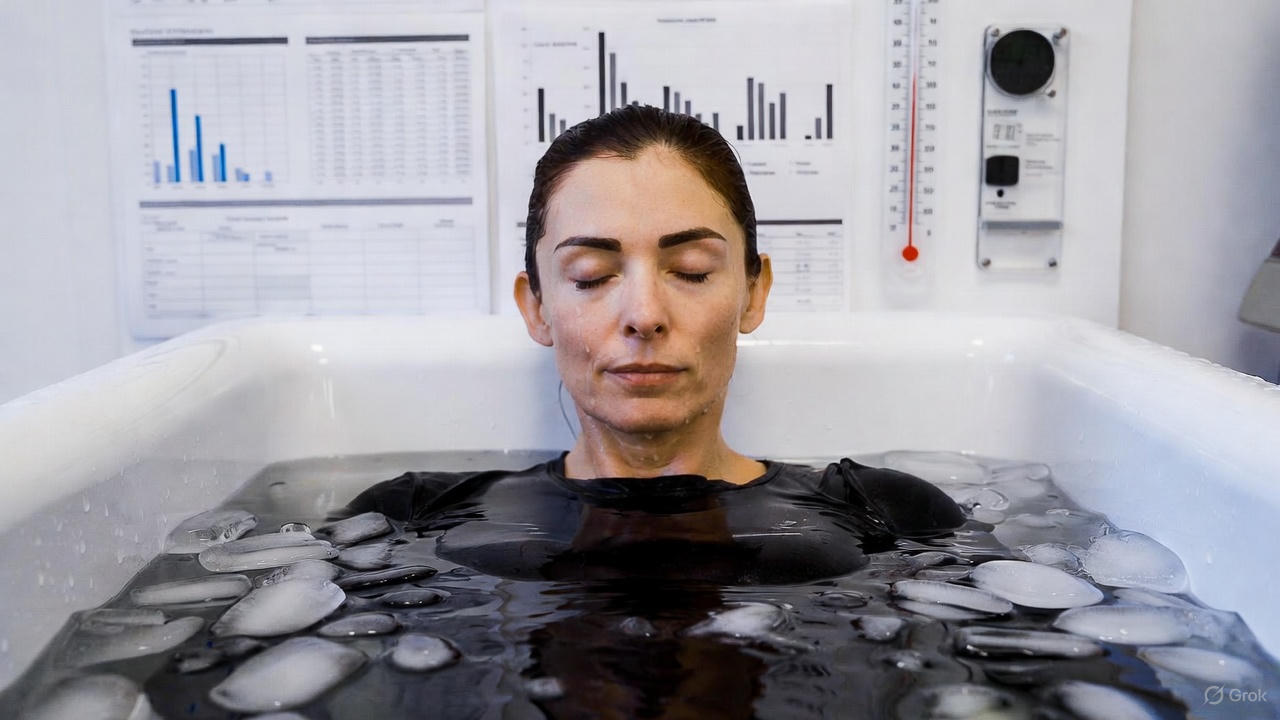
The first time you lower yourself into 50-degree water, your brain screams that you’re dying. Your breath catches, your heart rate spikes, and every instinct demands you get out immediately. Thirty seconds feel like thirty minutes. Then something shifts. Your breathing slows. The panic subsides. And when you finally emerge, shivering but alive, a wave of clarity and energy washes over you that lasts for hours.
This isn’t placebo or machismo. Cold water immersion triggers a cascade of physiological responses that researchers are only beginning to fully understand. From a 250-500% increase in dopamine that rivals prescription stimulants to brown fat activation that burns calories without exercise, deliberate cold exposure offers real benefits backed by real science. The challenge is separating the signal from the noise: how cold, how long, and how often do you actually need to get these effects without risking harm?
The good news is that recent research, particularly from the lab of Dr. Susanna Søberg at the University of Copenhagen, has given us concrete protocols. You don’t need to be a Finnish ice swimmer or social media influencer to benefit. A few minutes per week at manageable temperatures is enough to transform your metabolism, mood, and mental resilience.
The Søberg Principle: 11 Minutes Per Week
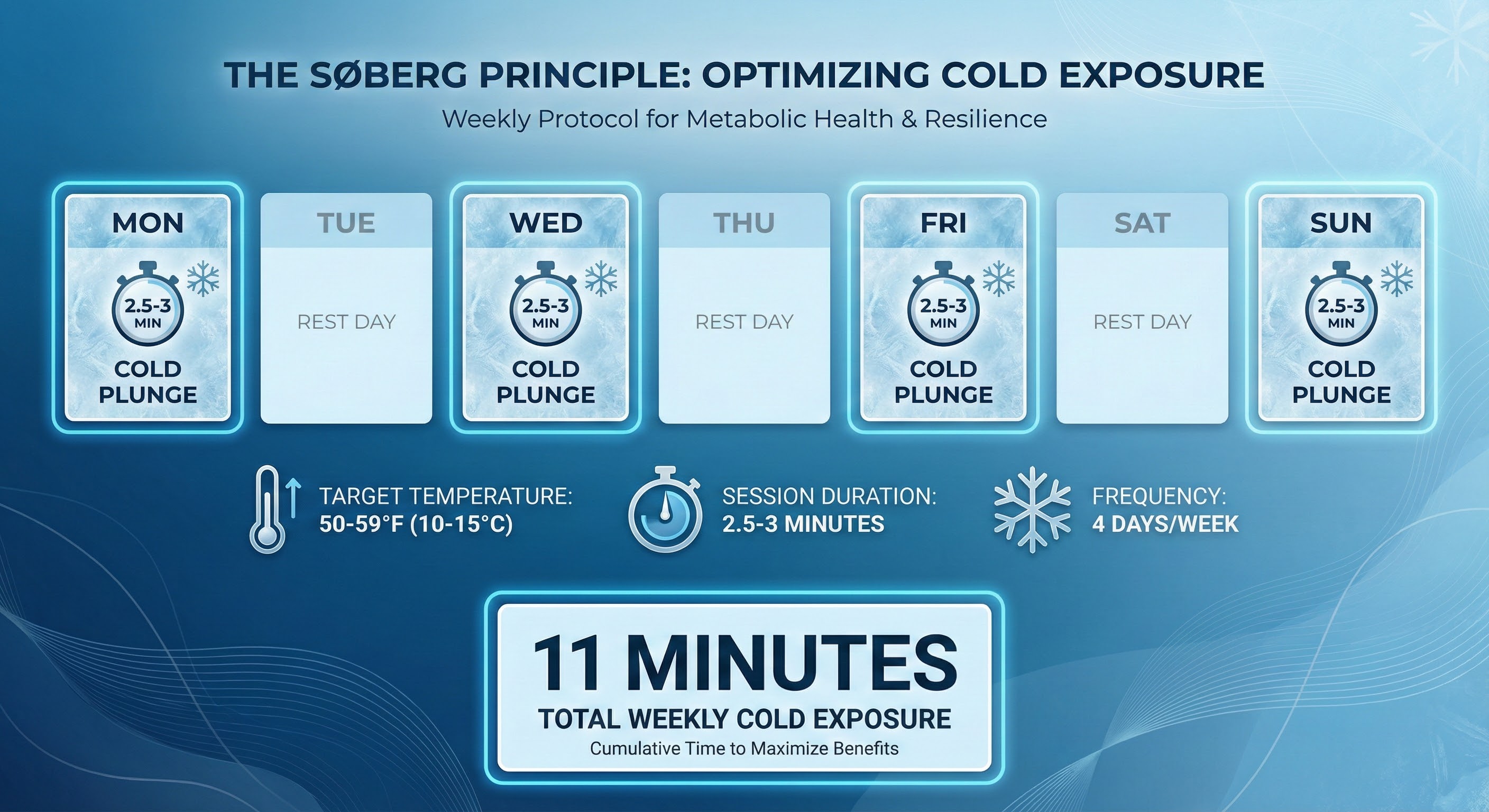
The landmark finding from Dr. Søberg’s research establishes a minimum effective dose for metabolic benefits: 11 minutes of cold water immersion per week. This number comes from her 2021 study published in Cell Reports Medicine, which examined the effects of regular winter swimming on brown fat activity and metabolic health markers.
Crucially, 11 minutes is a weekly total, not a single session. The study participants achieved their results through multiple shorter exposures, typically 2-4 sessions of 2-3 minutes each. Attempting 11 consecutive minutes in cold water would be dangerous for most people and isn’t necessary for metabolic adaptation. The body responds to repeated acute stressors, not marathon endurance feats.
The key adaptations at this weekly dose include increased brown adipose tissue (BAT) activity, improved insulin sensitivity, and enhanced cold tolerance. Brown fat, unlike the white fat that stores excess calories, contains dense mitochondria that burn glucose and fatty acids to generate heat. Regular cold exposure essentially trains this tissue to be more active, creating a metabolic furnace that operates even when you’re warm.
Dr. Søberg’s protocol also emphasizes the “Søberg Principle” for maximizing metabolic benefits: end with cold, not heat. When you finish a cold plunge and allow your body to rewarm naturally (rather than jumping into a hot shower), you force your metabolism to work harder. This extended thermogenic response burns additional calories and further stimulates brown fat activation. The discomfort of shivering is actually the adaptation happening in real time.
Temperature Guidelines: How Cold Is Cold Enough?
Social media has created an arms race of extreme cold exposure, with influencers competing to post the lowest temperatures. This misses the point entirely. The scientific definition of “cold water immersion” typically begins around 59°F (15°C), and meaningful physiological responses occur well before you reach freezing temperatures.
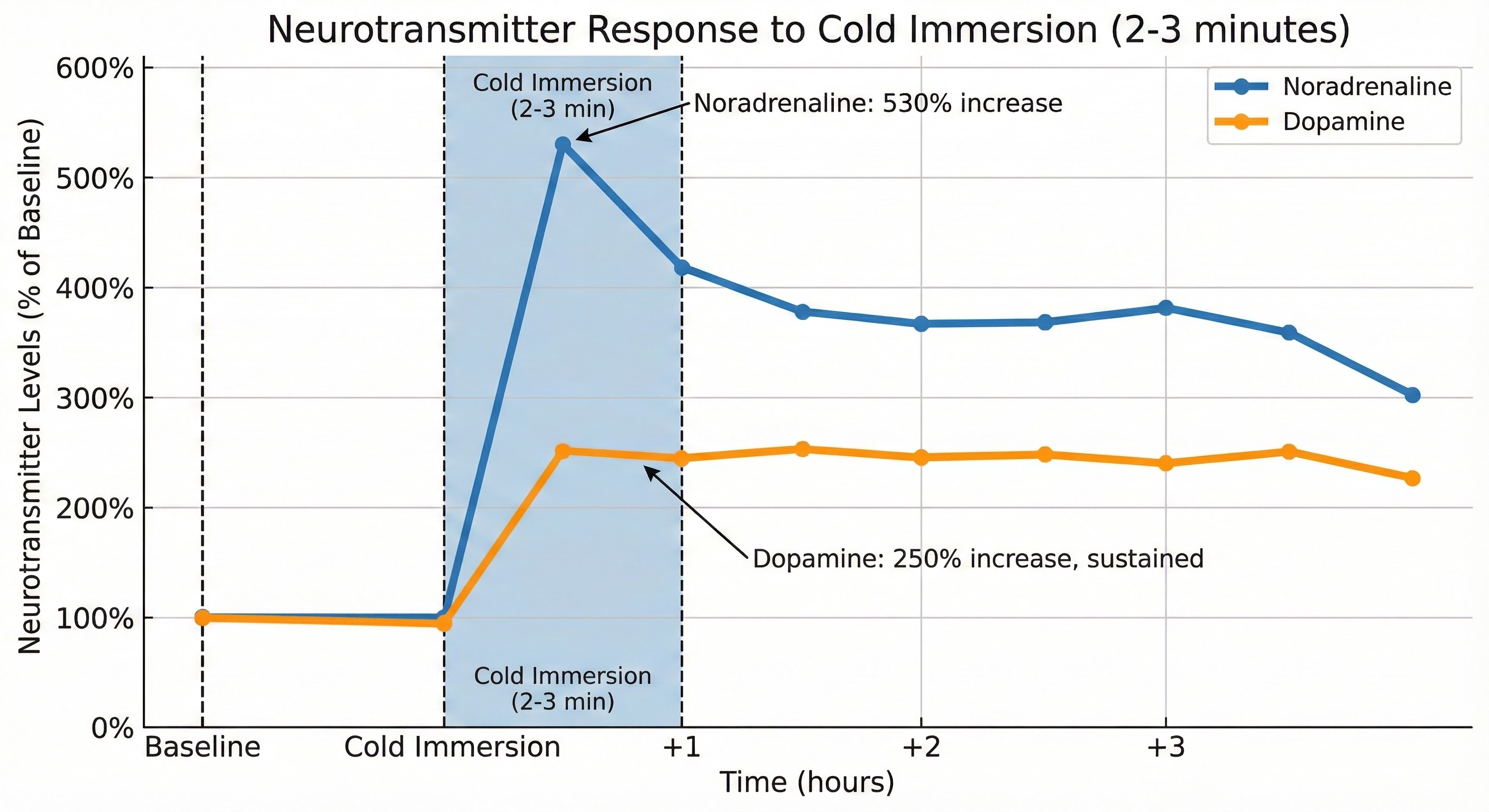
The research suggests a temperature range of 50-59°F (10-15°C) as the sweet spot for most people. At these temperatures, you trigger the catecholamine release (adrenaline and noradrenaline) that produces the characteristic alertness and mood elevation, without the immediate pain and shock of near-freezing water. A 2000 study in the International Journal of Circumpolar Health found that immersion at 57°F (14°C) increased noradrenaline by 530% and dopamine by 250%, effects that persisted for hours after the plunge.
The practical guideline from Dr. Andrew Huberman, a neuroscientist at Stanford who has popularized cold exposure research, is simple: the water should feel uncomfortably cold, and you should have a strong desire to get out, but you should also feel safe. If you’re in so much pain that you can’t control your breathing or you feel genuinely unsafe, the water is too cold for your current adaptation level.
Beginners should start at the warmer end of the range (55-59°F) and shorter durations (1-2 minutes). As cold tolerance develops over weeks, you can gradually lower temperature or extend time, but there’s no evidence that colder is meaningfully better once you’re in the therapeutic range. A 50°F plunge provides similar benefits to a 40°F plunge with considerably less suffering and risk.
For those without dedicated cold plunge equipment, a standard cold shower provides partial benefits. While shower water typically reaches 60-70°F (15-21°C) depending on season and location, the moving water increases heat extraction from the body. Research suggests cold showers can improve mood and potentially support immune function, though the metabolic effects are smaller than full immersion because less body surface area is exposed.
The Neuroscience of Cold: Why You Feel So Good Afterward
The post-plunge euphoria isn’t imaginary. Cold water immersion triggers one of the most dramatic natural neurotransmitter releases available without substances. Understanding this mechanism helps explain both the benefits and the potential for building genuine resilience rather than chasing dopamine hits.
When cold water contacts your skin, thermoreceptors immediately signal danger to your brain. The sympathetic nervous system activates, releasing noradrenaline (norepinephrine) from the locus coeruleus and adrenaline from the adrenal glands. These stress hormones increase alertness, focus, and energy while suppressing inflammation. The effect is similar to what happens during acute stress, but the cold exposure is controlled and time-limited.
The dopamine response is particularly significant. That 2000 Circumpolar Health study measured a 250% increase in baseline dopamine, which remained elevated for several hours after a brief cold water exposure. For context, cocaine produces a 250% dopamine spike that crashes quickly, while cold exposure provides a sustained elevation without the crash or dependency. This sustained dopamine increase improves mood, motivation, and the ability to pursue long-term goals, effects that people often describe as “feeling more alive” or “mentally clear.”
Beyond immediate neurotransmitter effects, regular cold exposure appears to build stress resilience through a process called cross-adaptation. When you voluntarily enter uncomfortable situations and learn to regulate your physiological response (controlling breath, staying calm despite the shock), you’re training your nervous system to handle stress more effectively in other domains. This is why cold plunging has gained popularity among military personnel, athletes, and executives dealing with high-pressure environments.
Brown Fat Activation: Your Built-In Furnace
The metabolic magic of cold exposure centers on brown adipose tissue (BAT), a specialized fat that generates heat rather than storing energy. Unlike white fat, which accumulates around your midsection and contributes to metabolic disease, brown fat is packed with mitochondria that burn glucose and free fatty acids to maintain body temperature.
Infants have abundant brown fat because they can’t shiver effectively. Scientists long believed that adults lost most brown fat during development, but imaging studies using PET scans have revealed that adults retain functional brown fat deposits, primarily around the neck, collarbone, and spine. More importantly, this brown fat can be activated and expanded through cold exposure.
The mechanism works through two pathways. Non-shivering thermogenesis occurs when cold activates brown fat directly, causing it to burn substrates and release heat through a protein called UCP1 (uncoupling protein 1). This process pulls glucose and triglycerides from your bloodstream, improving insulin sensitivity and lipid profiles over time. Shivering thermogenesis kicks in at colder temperatures, releasing succinate from contracting muscles that further stimulates brown fat activity.
A 2014 study in Diabetes found that adults exposed to mild cold (66°F) for 10 hours daily over a month significantly increased brown fat volume and activity. While most people won’t spend 10 hours in mild cold, the finding demonstrates that brown fat is highly plastic and responds to environmental signals. The Søberg protocol’s 11 weekly minutes of more intense cold appears to achieve similar adaptations through higher-intensity, shorter-duration exposure.
The practical implication is that regular cold exposure may help regulate body weight and metabolic health independent of diet and exercise. This isn’t a magic solution for weight loss, as the caloric expenditure from brown fat activation is modest (perhaps 100-200 extra calories daily in adapted individuals), but it represents a genuine metabolic shift that compounds over time. Combined with the improvements in insulin sensitivity, cold exposure becomes a legitimate tool for metabolic health rather than just a recovery technique.
Timing Your Plunge: When Cold Helps and When It Hurts
Cold water immersion isn’t universally beneficial in every context. Understanding when to plunge and when to wait can mean the difference between enhancing your training and undermining it.
Before workouts: Cold exposure can serve as a powerful pre-workout primer. The catecholamine release increases alertness, motivation, and pain tolerance. Athletes sometimes use brief cold exposure before competition or intense training sessions to sharpen focus. The vasoconstriction followed by rewarming also creates a “vascular pump” effect that may enhance blood flow once exercise begins.
After endurance training: Cold water immersion following aerobic exercise appears beneficial for recovery. The reduced inflammation and muscle temperature may accelerate the repair process and reduce delayed-onset muscle soreness (DOMS). Marathon runners and cyclists have used ice baths for decades with generally positive results.
After strength training: This is where timing becomes critical. A 2015 study in the Journal of Physiology found that cold water immersion immediately after resistance training blunted muscle protein synthesis and reduced long-term gains in muscle mass and strength. The cold suppresses the inflammatory signaling cascade that tells your muscles to adapt and grow. If hypertrophy is your goal, wait at least 4-6 hours after lifting before cold exposure, or schedule plunges on rest days.
Morning vs. evening: Cold exposure raises core body temperature during the rewarming phase and increases alertness, making it ideal for morning routines. Evening plunges may interfere with sleep for some people due to the sympathetic nervous system activation, though individual responses vary. If you’re using cold exposure to improve sleep (a common goal), try plunging 3-4 hours before bed rather than right before, allowing time for the stimulating effects to subside.
Contrast Therapy: Combining Heat and Cold
If you have access to both a sauna and a cold plunge, contrast therapy offers additional benefits beyond either modality alone. The alternation between extreme heat and cold creates what researchers call “thermal exercise,” rapidly dilating and constricting blood vessels in a pattern that may improve vascular function over time.
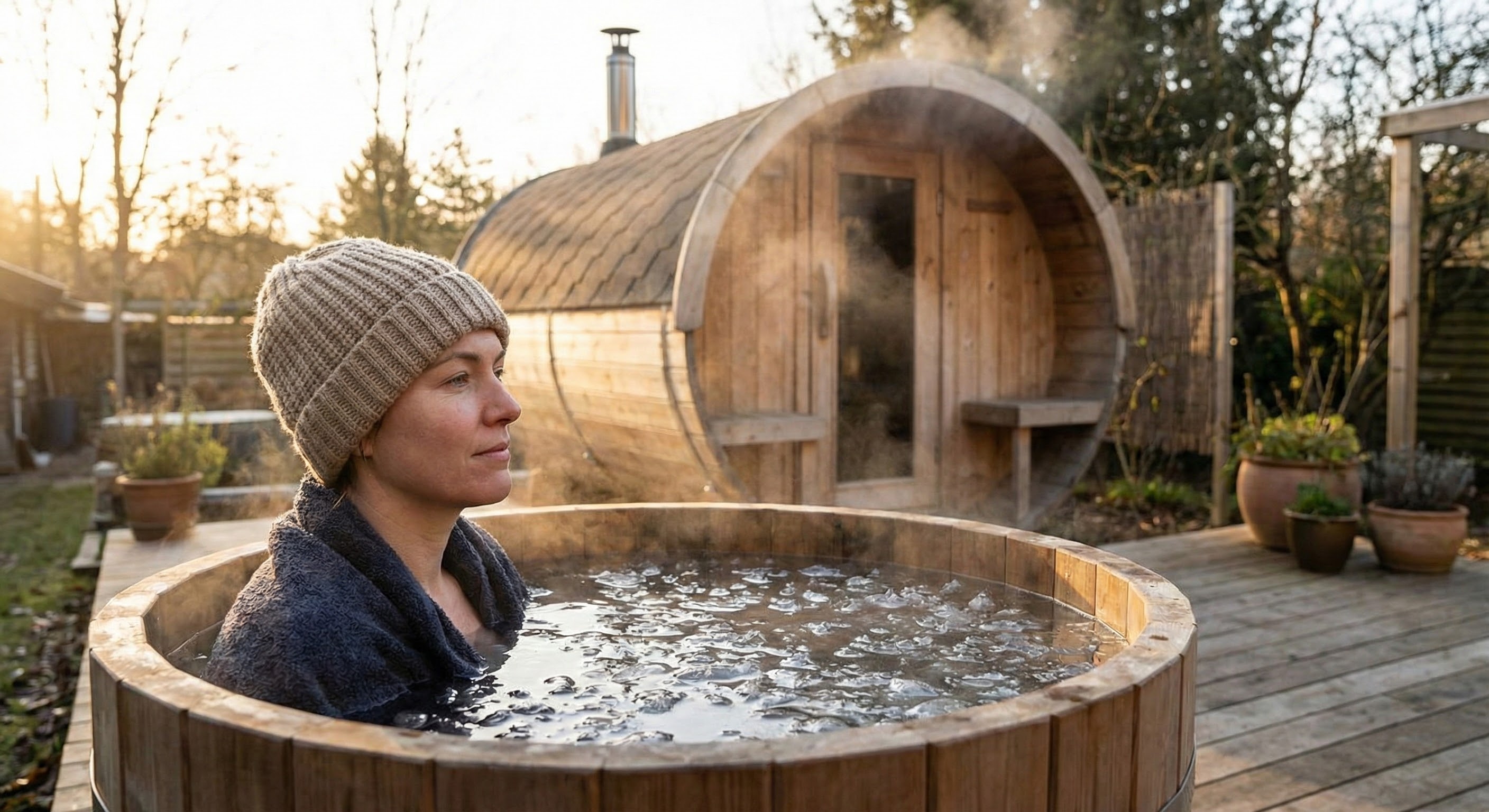
The traditional Finnish protocol involves 15-20 minutes in a sauna (170-200°F) followed by 1-3 minutes of cold immersion, repeated 2-4 times. This pattern produces dramatic cardiovascular responses: heart rate elevates during sauna exposure, then plunges during cold immersion, then rises again as the body attempts to rewarm. The effect is similar to interval training for your cardiovascular system.
A 2018 study in Complementary Therapies in Medicine found that regular contrast therapy improved arterial stiffness and blood pressure in participants with cardiovascular risk factors. The mechanism appears to involve enhanced production of nitric oxide, which relaxes blood vessels, combined with training effects on the autonomic nervous system’s ability to regulate vascular tone.
For maximum metabolic benefit, end your contrast session with cold and allow natural rewarming rather than immediately returning to heat or a hot shower. This extends the thermogenic response and forces brown fat to work harder. The mental discipline required to end on cold rather than comfortable warmth also provides additional stress resilience training.
Safety Considerations and Contraindications
Cold water immersion carries real risks that require respect. Cold water shock, the involuntary gasp reflex that occurs upon sudden immersion, can cause drowning if the head is submerged. Hypothermia becomes a concern with prolonged exposure. Cardiac events, while rare, can occur in people with underlying heart conditions due to the dramatic cardiovascular responses.
Essential safety practices:
Never plunge alone, especially when starting out. Have a training partner or family member present who can assist if needed. Enter the water gradually rather than jumping in, which allows you to control the initial shock response and prevents involuntary gasping. Keep your hands above water initially if you’re struggling with the cold, as hands have high surface area and lose heat rapidly. Never hyperventilate before entering cold water, as this can cause shallow water blackout.
Who should avoid cold water immersion:
People with cardiovascular disease, uncontrolled hypertension, or a history of heart attack or stroke should consult a physician before beginning cold exposure. The dramatic blood pressure fluctuations and cardiac strain can be dangerous for compromised cardiovascular systems. Raynaud’s disease and cold urticaria (hives triggered by cold) are also contraindications. Pregnant women should avoid extreme temperature exposure. If you’re unsure about your cardiovascular health, a stress test can help identify hidden risks.
Progressive adaptation matters: Start conservatively (shorter durations, warmer temperatures) and increase challenge gradually over weeks. The adaptations that make cold exposure beneficial, including improved vagal tone and stress resilience, develop through consistent practice rather than extreme single sessions. One reckless plunge can cause harm that erases months of careful progress.
The Bottom Line
Cold water immersion offers genuine benefits for metabolism, mood, and stress resilience, but only when applied thoughtfully. The Søberg Principle of 11 minutes weekly, split across 3-4 sessions of 2-3 minutes each at 50-59°F, provides a research-backed framework that balances effectiveness with safety. For those new to cold exposure, starting with cold showers builds tolerance before progressing to full immersion. Pairing cold with heat therapy from sauna creates powerful contrast therapy protocols.
Your implementation protocol:
- Start gradually: Begin with cold showers (30-60 seconds at the end of warm showers) for 1-2 weeks to build tolerance.
- Progress to immersion: Move to a cold plunge, ice bath, or natural cold water at 55-59°F for 1-2 minutes.
- Build to protocol: Over 4-6 weeks, work toward 2-3 minute sessions, 3-4 times weekly, totaling 11 minutes.
- Time intelligently: Avoid cold immediately after strength training. Use morning exposure for alertness or afternoon for stress relief.
- End cold, warm naturally: Skip the hot shower afterward. Let your body do the work of rewarming to extend metabolic benefits.
You don’t need to break through ice or suffer through 20-minute endurance sessions. Consistency at manageable doses builds the adaptation. The goal isn’t to prove toughness; it’s to systematically train your nervous system, activate your brown fat, and build a foundation of resilience that serves you in every area of life.
Sources: Cell Reports Medicine on cold exposure and brown fat (Søberg et al., 2021), International Journal of Circumpolar Health on catecholamine response to cold (2000), Journal of Physiology on cold water immersion and muscle adaptation (2015), Diabetes on brown fat plasticity (2014), Complementary Therapies in Medicine on contrast therapy and cardiovascular function (2018), Dr. Andrew Huberman protocols on deliberate cold exposure, Dr. Susanna Søberg research at University of Copenhagen.