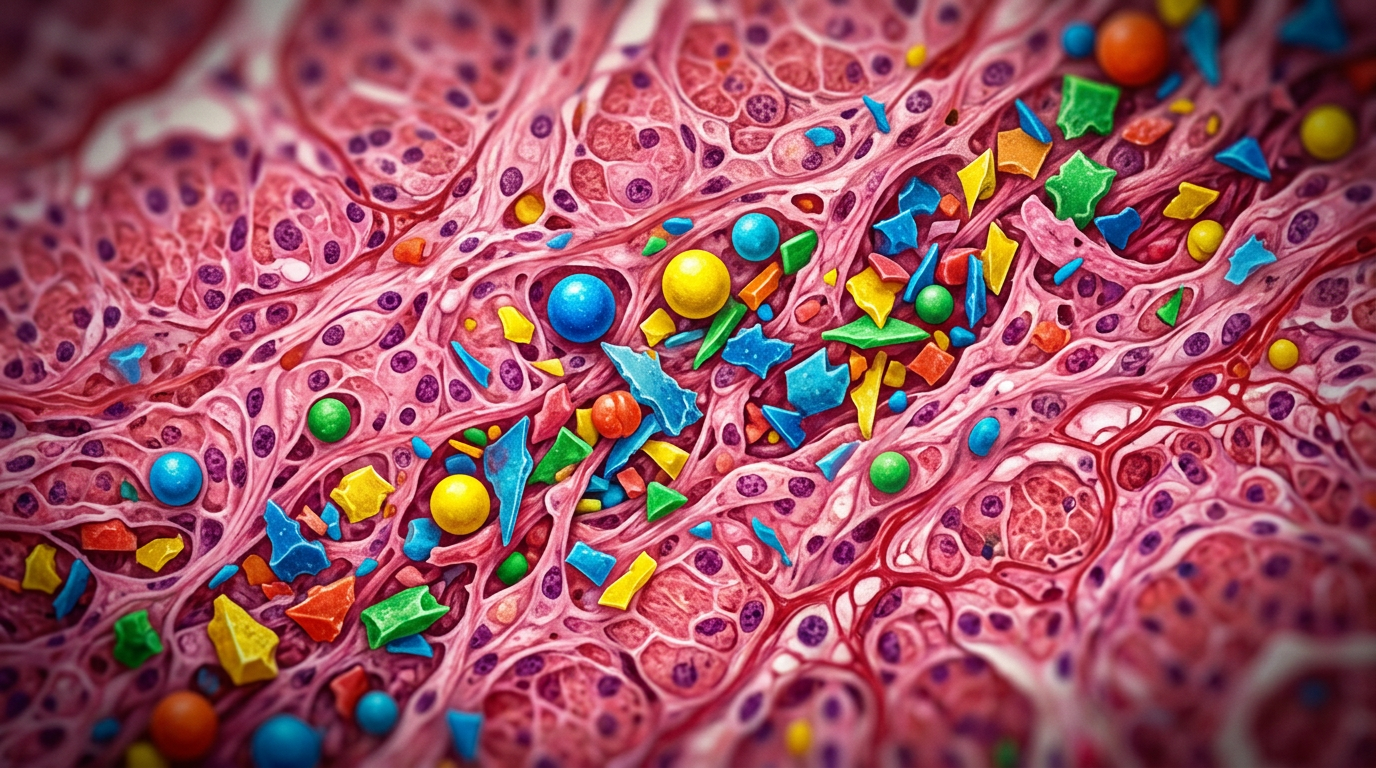
Nine out of ten prostate cancer tumors contain plastic. Not in trace amounts that require sophisticated detection methods to identify, but in concentrations 2.5 times higher than the healthy tissue sitting right next to them.
That’s the central finding from a new pilot study conducted at NYU Langone Health and presented on February 26 at the American Society of Clinical Oncology’s Genitourinary Cancers Symposium, one of the field’s most prominent annual gatherings. The research team, led by Dr. Stacy Loeb, a professor of urology and population health at NYU Grossman School of Medicine, examined prostate tissue from 10 patients who had undergone complete surgical removal of the gland. What they found has the potential to reshape how oncologists think about environmental risk factors for the second most common cancer in men.
“Our pilot study provides important evidence that microplastic exposure may be a risk factor for prostate cancer,” Loeb said. The findings, she added, were “very surprising and concerning.”
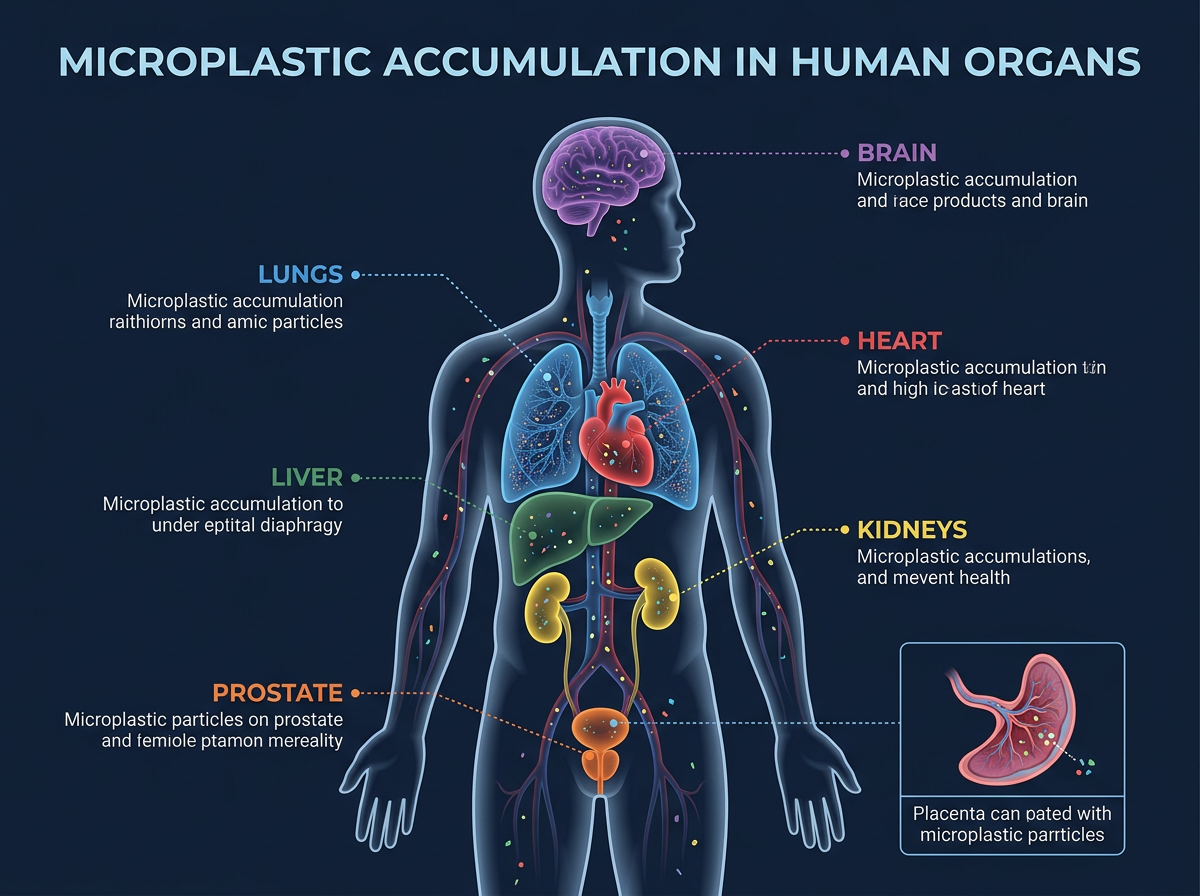
This is the first Western study to directly measure microplastic concentrations in prostate tumors compared to noncancerous tissue from the same patients, and the implications extend well beyond a single organ. Scientists have now detected microplastics in human hearts, lungs, blood, placentas, and breast milk. The prostate study adds another entry to a growing catalog of evidence suggesting that these particles don’t just pass through us. They accumulate, and they may accumulate preferentially in diseased tissue.
Inside the NYU Clean Room: How the Study Worked
The methodology behind this research matters as much as the results, because measuring microplastics in human tissue is extraordinarily difficult. Plastic is everywhere in medical and laboratory equipment, from surgical gloves to sample containers to the tips of pipettes. Any study that claims to measure plastic in tissue must first prove that the plastic didn’t come from the research process itself.
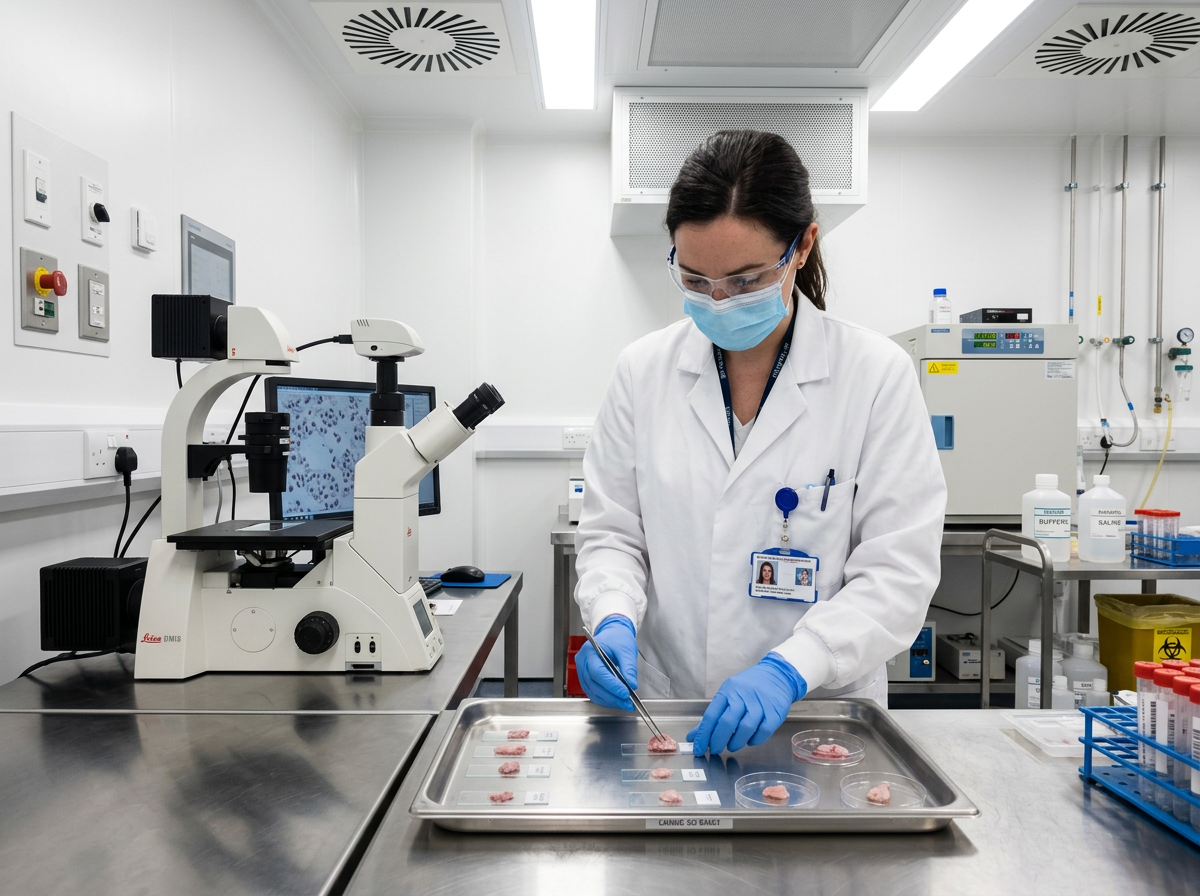
Loeb’s team addressed this problem directly. They replaced standard laboratory tools with instruments made from aluminum, cotton, and other non-plastic materials. All tissue processing occurred in specialized clean rooms designed specifically for microplastic analysis, the same type of controlled environments used in semiconductor manufacturing where even microscopic contamination can ruin a product. The team focused on 12 of the most common plastic polymers, using specialized equipment to determine particle amounts, chemical composition, and physical structure for each sample.
The 10 patients, all men with an average age of 65, had their entire prostate glands surgically removed as part of standard cancer treatment. From each patient, the researchers collected both tumor tissue and adjacent benign (noncancerous) tissue, creating matched pairs that allowed direct comparison within the same organ and the same individual.
The Numbers: Why Tumors Contained 2.5 Times More Plastic
The results were striking in their consistency. Microplastic particles appeared in 90% of tumor samples and 70% of benign tissue samples. But the concentration difference told the more important story. Cancerous tissue contained approximately 40 micrograms of plastic per gram of tissue, compared to roughly 16 micrograms per gram in the adjacent healthy tissue. That 2.5-fold difference held across most of the patients studied.
This concentration gap is what distinguishes the NYU findings from simply confirming that plastic exists in human bodies, something researchers have already established through multiple studies over the past several years. The question this study raises is more specific and more troubling: why does cancerous tissue appear to accumulate more plastic than healthy tissue in the same organ?
The researchers proposed several potential mechanisms. Microplastics may cause oxidative damage to prostate cells, creating the kind of DNA mutations that drive cancer development. The particles could disrupt normal immune function in the tissue, suppressing the body’s ability to identify and destroy abnormal cells before they become tumors. Chronic inflammation, a well-established contributor to cancer progression, could be triggered by the immune system’s ongoing reaction to foreign plastic particles that the body cannot break down or expel. And perhaps most concerning, microplastics are known carriers of endocrine-disrupting chemicals like phthalates and bisphenols, compounds that have their own established associations with hormone-sensitive cancers. The prostate is an androgen-dependent organ, making it potentially more vulnerable to chemicals that interfere with hormonal signaling.
Dr. Andrea Viale, an oncologist at MD Anderson Cancer Center who was not involved in the study, emphasized the public health significance. “The fact that it is being detected in tumors means that from a public health perspective, this issue deserves really serious attention,” Viale said.
The Growing Map of Plastic in the Human Body
The prostate findings don’t exist in isolation. They’re the latest addition to what has become a rapidly expanding body of evidence documenting microplastic contamination across virtually every human organ system.
In 2024, a landmark study published in the New England Journal of Medicine found microplastics in the arterial plaques of patients undergoing surgery for cardiovascular disease. Patients with plastics in their arteries had a significantly higher risk of heart attack and stroke over the following three years. Researchers in China, publishing in The Lancet the same year, detected elevated microplastic levels in kidney tumors compared to healthy tissue, establishing a pattern of preferential accumulation that mirrors the NYU prostate findings.
Microplastics have been identified in human lung tissue, liver tissue, blood samples, and breast milk. A 2023 study found them in every placenta sample tested, raising questions about prenatal exposure. The consistency of these findings across different organs, different research teams, and different countries suggests that microplastic contamination is not an anomaly specific to certain populations or exposure patterns. It is systemic.
What makes the prostate particularly interesting from a research perspective is its hormonal sensitivity. The prostate gland is regulated by androgens, primarily testosterone and dihydrotestosterone. Many of the chemicals that hitchhike on microplastic particles, including bisphenol A (BPA), phthalates, and certain flame retardants, are known endocrine disruptors that can mimic or interfere with hormone signaling. A 2025 review in Environmental Health Perspectives noted that endocrine disruptors concentrate in hormone-sensitive tissues at higher rates than in other organs, which could partially explain why prostate tumors showed such elevated plastic levels compared to surrounding healthy tissue.
For context on how everyday chemicals affect our biological systems, the emerging evidence suggests that the synthetic materials we encounter daily may be disrupting body processes we’re only beginning to understand.
What This Study Cannot Tell Us
The NYU research is important, but it carries significant limitations that deserve honest acknowledgment.
The most fundamental: this is a pilot study of 10 patients. Ten is a sufficient number to detect a signal and justify further investigation, but it is not sufficient to establish causation, calculate population-level risk, or draw definitive conclusions about whether microplastics cause prostate cancer. Correlation between plastic concentration and tumor presence does not mean the plastic caused the tumor. It’s equally plausible that tumors, which have altered blood supply, metabolism, and cellular architecture, simply accumulate more environmental contaminants than healthy tissue does. The relationship could be a consequence of cancer rather than a cause of it.
The study has not yet undergone peer review in a scientific journal. It was presented at a professional symposium, which subjects research to expert scrutiny but not to the formal review process that publication requires. This means the methodology, statistical analysis, and conclusions have not been independently verified by anonymous reviewers. That doesn’t invalidate the findings, but it does mean they should be treated as preliminary.
Sample diversity is another concern. The study examined tissue from 10 men at a single institution. We don’t know whether the patients had similar exposure histories, lived in similar environments, worked in similar occupations, or shared other characteristics that might influence their microplastic burden. A study drawing from a more diverse patient population across multiple institutions would provide much stronger evidence.
Finally, while the researchers controlled for contamination from laboratory equipment, it’s extremely difficult to completely eliminate all sources of microplastic exposure during tissue collection, transport, and processing. The clean room protocols were rigorous, but no protocol is perfect, and critics of microplastic research have consistently raised contamination as a concern.
What Comes Next in the Research Pipeline
The NYU team has already secured funding from the U.S. Department of Defense for a larger follow-up study examining tissue from 30 prostate cancer patients. That expanded study will investigate not just whether microplastics are present, but whether their quantity correlates with specific markers of tissue inflammation, a potential mechanism linking plastic exposure to cancer development.
Other research groups are pursuing parallel questions. Teams at the Karolinska Institute in Sweden and the University of Exeter in the UK have ongoing studies examining microplastic concentrations in colorectal tumors, and a multi-center European collaboration is tracking microplastic levels in blood samples from cancer patients before and after treatment to determine whether chemotherapy or surgical intervention changes the body’s plastic burden.
The field is moving toward a critical question: at what concentration do microplastics become biologically meaningful? Current evidence suggests that plastic particles can trigger inflammatory responses and cellular stress at concentrations found in human tissue, but the threshold, if one exists, has not been identified. Understanding that threshold would transform microplastic research from an observational science into one that can inform actual clinical and regulatory decisions.
For those interested in reducing their own exposure, our earlier guide on how to reduce microplastic exposure from food and water covers practical, evidence-based steps you can take today.

The Practical Takeaway
This study does not mean that every man with prostate cancer should blame microplastics, or that plastic exposure inevitably leads to cancer. What it does mean is that the scientific community is building an increasingly detailed picture of how synthetic materials interact with human biology, and the picture is not reassuring.
Prostate cancer affects approximately 1 in 8 men over their lifetime, making it the most common non-skin cancer in males. The disease’s established risk factors, including age, family history, and race, explain a portion of cases but leave significant room for environmental contributors. If microplastics prove to be even a modest risk factor, their ubiquity in the modern environment would make them a public health concern of enormous scale. Nearly every human on earth carries microplastics in their body. If those particles contribute even marginally to cancer risk, the population-level impact could be substantial.
For individuals, the practical steps remain the same ones that environmental health researchers have been recommending: reduce reliance on single-use plastics, avoid heating food in plastic containers, filter tap water, choose glass or stainless steel for food storage, and minimize exposure to synthetic textiles and packaging where possible. None of these measures will eliminate microplastic exposure entirely, as the particles are now present in rain, soil, and the air we breathe, but reducing the most concentrated sources of exposure is a reasonable precaution while the science continues to develop.
The NYU team’s follow-up study will report results within the next two years. In the meantime, the evidence is clear on at least one point: plastic isn’t just polluting our oceans and landfills. It’s inside us, and it may be accumulating in the places where it can do the most harm.
This article is for informational purposes only and does not constitute medical advice. Consult your healthcare provider for guidance about cancer screening and risk factors.
Sources
- Microplastics found in 90% of prostate cancer tumors, study reveals - ScienceDaily
- Microplastics Discovered in Prostate Tumors - NYU Langone News
- Microplastics found in prostate tumors in small study - NBC News
- Microplastics Found in 90 Percent of Prostate Cancer Samples - The ASCO Post