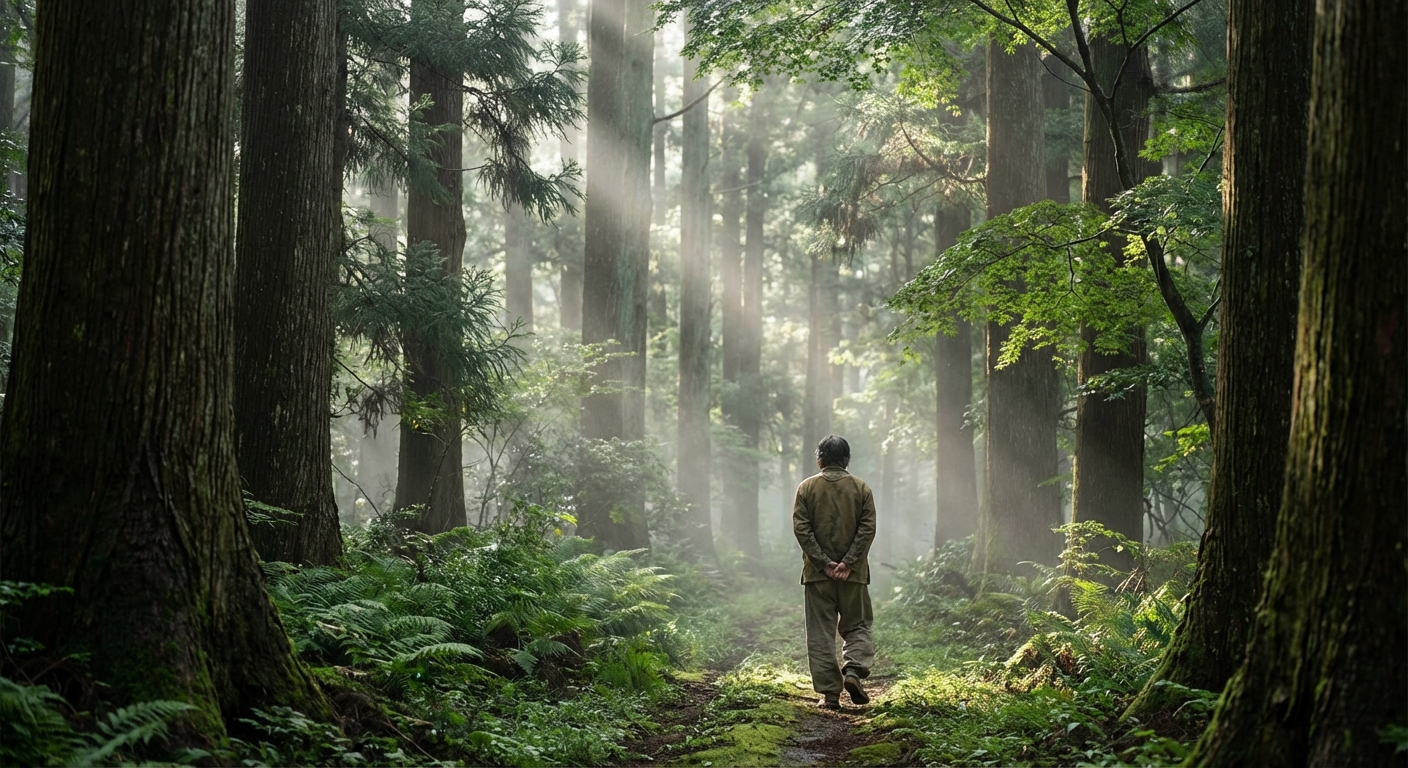
The prescription seems almost too simple to be medical: spend time among trees. Yet when the Japanese Ministry of Agriculture, Forestry, and Fisheries introduced shinrin-yoku, literally “forest bathing,” in 1982, they weren’t promoting a wellness trend. They were launching a public health initiative that would eventually be validated by over four decades of rigorous scientific research. The data that has emerged demonstrates something remarkable: walking slowly through a forest produces measurable physiological changes that no pharmaceutical can replicate, effects that persist for days or weeks after a single session.
This isn’t hiking for exercise or camping for recreation. Shinrin-yoku is deliberate sensory immersion in a forest environment, moving slowly enough to notice the texture of bark, the pattern of light through leaves, the layered sounds of birds and wind and water. The practice engages all five senses in the natural environment, and the body responds with a cascade of beneficial changes: cortisol drops, blood pressure falls, immune cells multiply, mood elevates, and the nervous system shifts from stress activation to restoration.
Western medicine, trained to seek single active compounds and specific mechanisms, initially dismissed these claims as placebo or relaxation effects. But the research has become too extensive and too consistent to ignore. Forest air contains measurable concentrations of biologically active compounds. The human immune system responds to these compounds in specific, reproducible ways. The stress reduction isn’t just psychological; it’s reflected in objective biomarkers that persist long after returning to urban environments. Trees, it turns out, are producing medicine that we absorb simply by breathing among them.
The Physiological Evidence
Over three decades of Japanese research has documented remarkably consistent physiological changes in people exposed to forest environments compared to urban environments. These aren’t self-reported feelings of relaxation; they’re objective measurements that researchers can quantify and replicate across different populations and forest types.
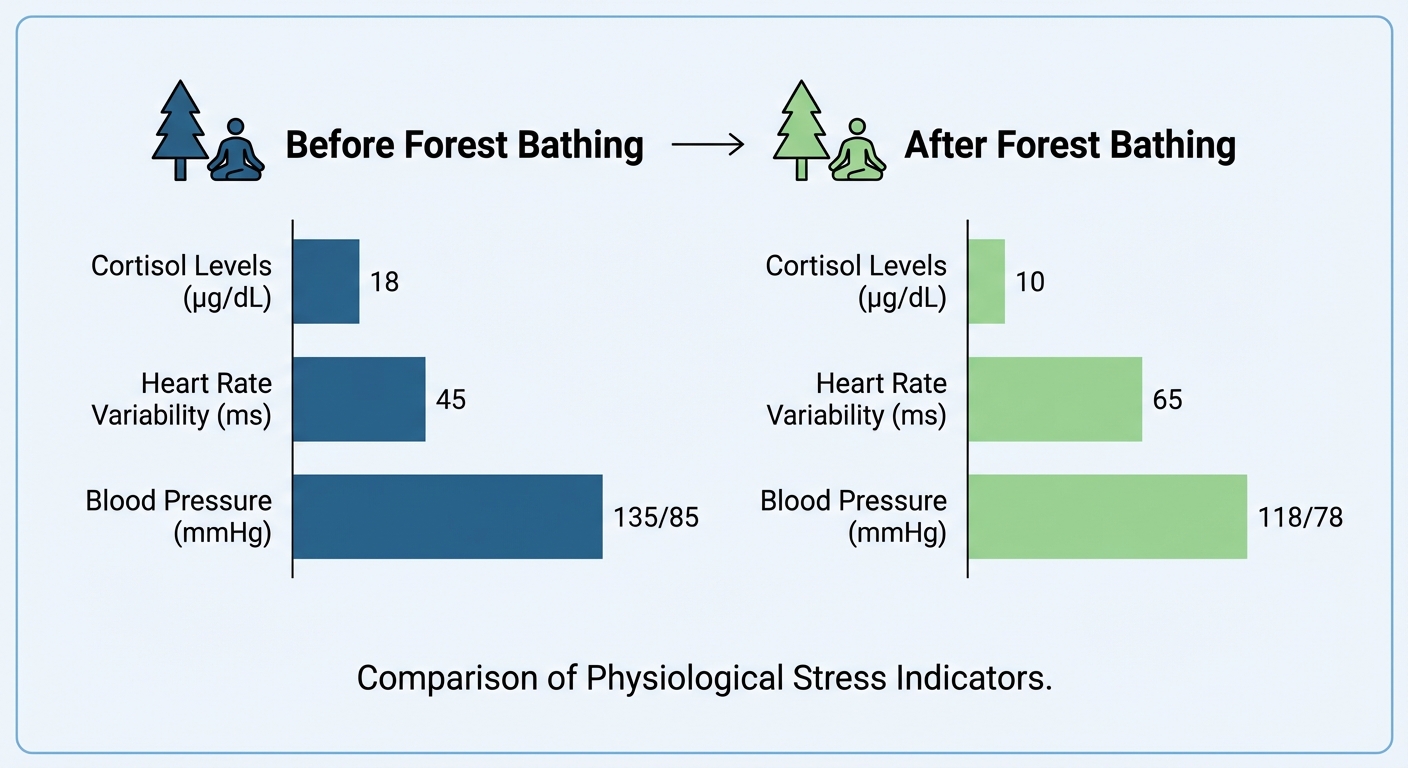
Cortisol, the primary stress hormone, decreases by 12-16% after just 15-40 minutes in a forest environment. This reduction is measured through salivary cortisol assays taken before and after forest exposure, with the effect appearing rapidly and persisting for hours afterward. The magnitude is clinically meaningful, comparable to what some anti-anxiety medications achieve, but without side effects or dependency.
Blood pressure responds with similar consistency. Systolic pressure falls an average of 2-5 mmHg, diastolic by 1-3 mmHg during and after forest bathing. These reductions may sound modest, but population-level data suggests that just a 2 mmHg reduction in average blood pressure could prevent significant cardiovascular mortality. For people with elevated blood pressure, the effects can be more pronounced. The mechanisms involve both stress reduction and direct effects of forest compounds on vascular tone.
Heart rate variability, the gold-standard measurement of autonomic nervous system balance, shows dramatic shifts during forest exposure. Parasympathetic activity, the “rest and digest” mode that promotes recovery and restoration, increases by approximately 55%. Sympathetic activity, the “fight or flight” stress mode that modern life chronically activates, decreases by 19%. This shift reflects the body moving from vigilance to restoration, from stress physiology to healing physiology.
Comparison studies strengthen these findings. When the same participants are exposed to urban environments instead of forests, the patterns reverse. Stress markers increase. Blood pressure rises. Sympathetic activation dominates. The forest effect isn’t simply being outdoors; it’s something specific about forest environments that urban parks and streets don’t fully replicate, though even urban green spaces provide some benefit compared to purely built environments.
The Immune System Enhancement
The most surprising discovery in forest medicine research involves the immune system. Breathing forest air doesn’t just feel refreshing; it measurably upgrades your body’s defense capabilities in ways that persist long after you leave the woods. The key actors are natural killer cells, specialized immune cells that patrol your body destroying virus-infected cells and cells showing signs of cancerous transformation.
A landmark study by Dr. Qing Li, one of the world’s leading forest medicine researchers, documented what happens when people spend three days in a forest environment. Natural killer cell count increased by 40-50%, an enormous jump in immune capacity. Even more remarkably, this elevated NK cell activity persisted for 30 days after the forest exposure ended. Participants who spent the same time in urban environments showed no such changes. The forest was doing something specific and lasting to the immune system.
The mechanism appears to involve phytoncides, volatile organic compounds that trees release into the air as part of their own immune defense against insects, bacteria, and fungi. When you breathe forest air, you inhale these compounds, and laboratory studies confirm that phytoncides directly stimulate NK cell activity. The trees’ chemical defense system, it seems, activates human immune function through pathways that evolution preserved across millions of years of co-existence.
Different tree species produce different phytoncide profiles. Evergreen forests, particularly those dominated by conifers like pine, cedar, and cypress, typically produce higher concentrations of compounds like alpha-pinene and beta-pinene. Deciduous forests produce different profiles with compounds like limonene and camphene. Both forest types enhance immune function, but the highest phytoncide concentrations are generally found in dense evergreen forests during warmer months when trees are most metabolically active.
The practical implication is profound: regular forest exposure may strengthen immune defenses against both infectious disease and cancer. This isn’t proven to the standard that would support medical claims, but the mechanism is biologically plausible, the effects are measurable and reproducible, and the intervention carries no risk. Forest bathing isn’t a replacement for vaccines or cancer screening, but it appears to be a legitimate immune-supporting practice.
The Psychological Mechanisms
The mental health benefits of forest bathing extend beyond the biochemical effects of phytoncides to include psychological mechanisms that complement and amplify the physiological changes. Understanding these mechanisms helps explain why natural environments produce effects that urban green spaces, indoor plants, and nature sounds only partially replicate.
Attention Restoration Theory, developed by environmental psychologists Rachel and Stephen Kaplan, proposes that natural environments restore a specific cognitive resource that modern life depletes. Directed attention, the mental effort required to focus on tasks, filter distractions, make decisions, and navigate complex environments, is finite. Urban life demands constant directed attention: reading signs, avoiding cars, processing advertisements, managing the complexity of built spaces. This effort is mentally exhausting even when you’re not consciously aware of the strain.
Natural environments engage a different mode of attention that the Kaplans called “soft fascination.” Watching leaves move, listening to water, noticing the patterns in bark and branches captures attention without demanding it. This effortless engagement allows directed attention to rest and recover. Studies confirm that time in nature improves performance on cognitive tasks requiring sustained attention, with effects lasting for hours after the nature exposure ends. People emerge from forests not just relaxed but mentally sharper.
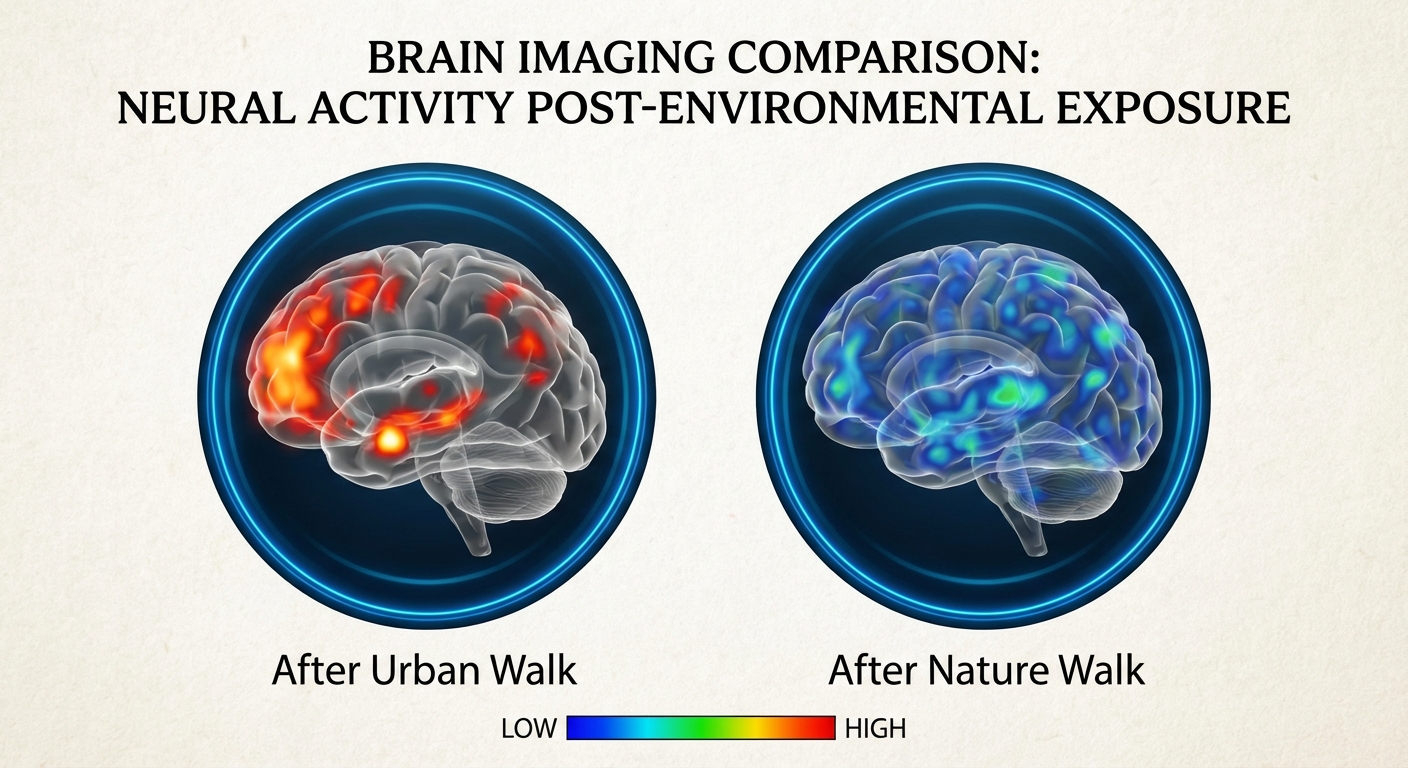
Rumination, the repetitive negative thinking that characterizes depression and anxiety, decreases significantly during nature walks compared to urban walks. Brain imaging studies show reduced activity in the subgenual prefrontal cortex, the brain region most associated with rumination and self-critical thinking, after time in natural settings. The constant internal chatter that plagues many people’s mental life quiets when attention shifts to external sensory experience.
The Biophilia Hypothesis suggests deeper evolutionary roots for nature’s psychological effects. For 99.9% of human history, natural environments were home. Our brains evolved to function optimally in settings that included trees, water, varied terrain, and natural light patterns. Urban environments, with their straight lines, artificial lighting, constant noise, and absence of natural elements, are evolutionarily novel and cognitively taxing. Forests may feel restorative because they’re the environment our brains were designed for.
Practicing Forest Bathing
Forest bathing differs fundamentally from hiking, trail running, or other outdoor activities. The goal isn’t covering distance, achieving cardiovascular benefit, or reaching a destination. It’s immersion and presence, fully experiencing the forest environment through deliberate sensory engagement. The distinction matters because rushing through a forest at hiking pace while thinking about your to-do list delivers minimal benefit. Slowing down and engaging your senses is essential.
Duration research suggests minimum exposure of 15-20 minutes for measurable physiological benefits, with optimal sessions lasting 40 minutes to 2 hours. The sweet spot for most people is around one hour, long enough to fully shift into restoration mode but practical enough to fit into a busy life. Frequency should be weekly at minimum for sustained benefits, with more frequent sessions producing greater cumulative effects. Even monthly forest visits provide measurable benefit compared to no nature exposure.
Pace should be extremely slow, perhaps 1-2 miles per hour or less, often involving extended stationary periods. This isn’t a workout; it’s meditation with a natural setting as anchor. Many practitioners spend significant time sitting on logs, leaning against trees, or simply standing still, fully absorbed in sensory experience. The activity, if it can be called that, is noticing rather than moving.
Sensory engagement is the core practice. For sight, observe the infinite gradations of green, the play of light and shadow, the movement of branches in wind, the details of bark and moss and lichen that you normally walk past without seeing. For sound, listen for the layers: bird calls, insects, wind through different trees, perhaps water. Urban dwellers often find true quiet startling. For smell, breathe deeply and notice the forest’s signature scent, the phytoncides that are simultaneously pleasure and medicine. For touch, feel bark texture, the cool of moss, the difference between sun and shade on your skin. The practice is anchoring attention in sensory experience whenever the mind wanders to thoughts of past or future.
Technology should be absent or silent. Phones, podcasts, and music defeat the purpose by keeping attention internal or directed rather than soft and present. The forest provides all the stimulation needed; adding artificial input drowns out the subtle sensory richness that produces the benefits.
Urban Adaptations
Not everyone has forest access, and those with access often lack time for weekly immersion. The research suggests that the dose-response relationship for nature exposure is real but flexible. While pristine forest provides maximum benefit, significant effects occur in less ideal settings. Understanding what actually matters, and what can be substituted, allows urban dwellers to capture meaningful benefits without requiring wilderness.
City parks provide measurable stress reduction and attention restoration, though less than dense forests. The key factors appear to be vegetation density, distance from traffic noise, and perceived naturalness. A park with mature trees, varied plantings, and some separation from street noise provides more benefit than a manicured lawn adjacent to heavy traffic. Seek out the most “wild” portions of available green spaces.
Tree-lined streets improve upon treeless urban environments for stress markers and self-reported wellbeing, though the benefit is modest compared to actual parks or forests. Trees along your walking route or visible from windows contribute something. Botanical gardens and arboretums can approach forest effects, particularly in sections designed for immersive experience rather than display.
Indoor plants and nature views provide documented but limited benefits. Hospital patients with window views of trees recover faster than those viewing walls. Office workers with plants report less stress than those without. These effects are real but shouldn’t be confused with the fuller benefits of actual nature immersion.
The urban practice adapts forest bathing principles to available settings. Find the nearest green space with some tree cover. Visit 2-3 times weekly. Apply the same sensory awareness, slow pace, and present-moment focus that you would in a forest. Duration still matters; 20+ minutes produces more benefit than a quick walk-through. The practice isn’t perfect without a forest, but it’s substantially better than no nature exposure at all. For those interested in amplifying nature’s benefits, grounding or earthing practices offer a complementary approach that involves direct physical contact with the earth’s surface.

Seasonal and Social Dimensions
Forest bathing benefits exist year-round, though the experience and specific effects vary with seasons. Summer provides peak phytoncide production, maximum green, and the full sensory richness of an active forest ecosystem. The warmth allows longer, more comfortable sessions. Autumn offers different beauty, the smell of fallen leaves, migration activity, and changing light that can be particularly contemplative. Winter brings quiet, stripped-back visuals that reveal forest structure usually hidden by foliage, and evergreen forests maintain phytoncide production. Snow transforms the sensory experience entirely. Spring offers renewal, blossoms, returning birds, and the particular smell of growth resuming. Regular practice across seasons builds connection to natural cycles that most modern lives lack.
Solo practice provides the deepest introspection and complete freedom to move at your own pace, stop when moved, and remain silent throughout. Many find that forest bathing becomes a form of moving meditation more accessible than sitting meditation because the environment naturally anchors attention. Group practice offers different benefits: shared experience, safety in unfamiliar areas, and the social connection that is itself health-promoting. Guided forest bathing sessions, increasingly offered through parks, wellness centers, and trained facilitators, provide structure for beginners and introduce techniques that enhance the practice.
The balance between solo and social practice is personal. Some people need solitude to fully engage with the forest; others find that sharing the experience deepens it. Conversation during forest bathing should be light and intermittent rather than constant; the goal is remaining present to the environment, not using it as backdrop for discussion. Periods of intentional silence, even in groups, enhance the restorative effects.
The Bottom Line
Forest bathing produces measurable, reproducible health benefits: 12-16% cortisol reduction, lowered blood pressure and heart rate, 40-50% increases in immune cell activity lasting up to 30 days, reduced rumination, improved mood, and restored attention capacity. These effects involve both biochemical mechanisms (phytoncides activating immune function) and psychological mechanisms (attention restoration, sensory engagement, evolutionary resonance with natural environments).
The practice is simple: spend time in forests or the most natural green spaces available, moving slowly, engaging your senses deliberately, remaining present to your surroundings rather than lost in thought. Duration of 40 minutes to 2 hours, frequency of weekly or more, and genuine sensory engagement are the key variables. Technology and goal-oriented activity work against the benefits.
Nature isn’t just pleasant. It’s measurably therapeutic in ways that urban environments, indoor spaces, and screen-based relaxation cannot replicate. The research supporting this is now extensive enough that dismissing it as placebo or New Age fantasy requires ignoring substantial scientific evidence. Forest bathing is free, available in most areas at least seasonally, and carries no risks or side effects. For stress reduction, immune support, and mental health, time among trees may be the most underutilized medicine available. Combined with other recovery practices like cold exposure therapy, nature immersion forms a powerful foundation for stress resilience and immune function.
Your Forest Bathing Protocol:
- Find accessible forest or tree-dense green space; visit at least weekly
- Allow minimum 40 minutes per session; 1-2 hours is optimal
- Move extremely slowly or remain stationary; this is not exercise
- Leave technology behind or keep it silent and unstowed
- Engage all senses deliberately: sight, sound, smell, touch, even taste of the air
- When thoughts intrude, gently return attention to sensory experience
- Practice year-round; each season offers distinct benefits
- Consider both solo and group sessions for complementary effects
Sources: Dr. Qing Li’s forest medicine research, Japanese shinrin-yoku studies, phytoncide and NK cell research, cortisol and autonomic nervous system measurements in forest vs. urban environments, Attention Restoration Theory (Kaplan), rumination and nature neuroscience studies, blood pressure and cardiovascular research.