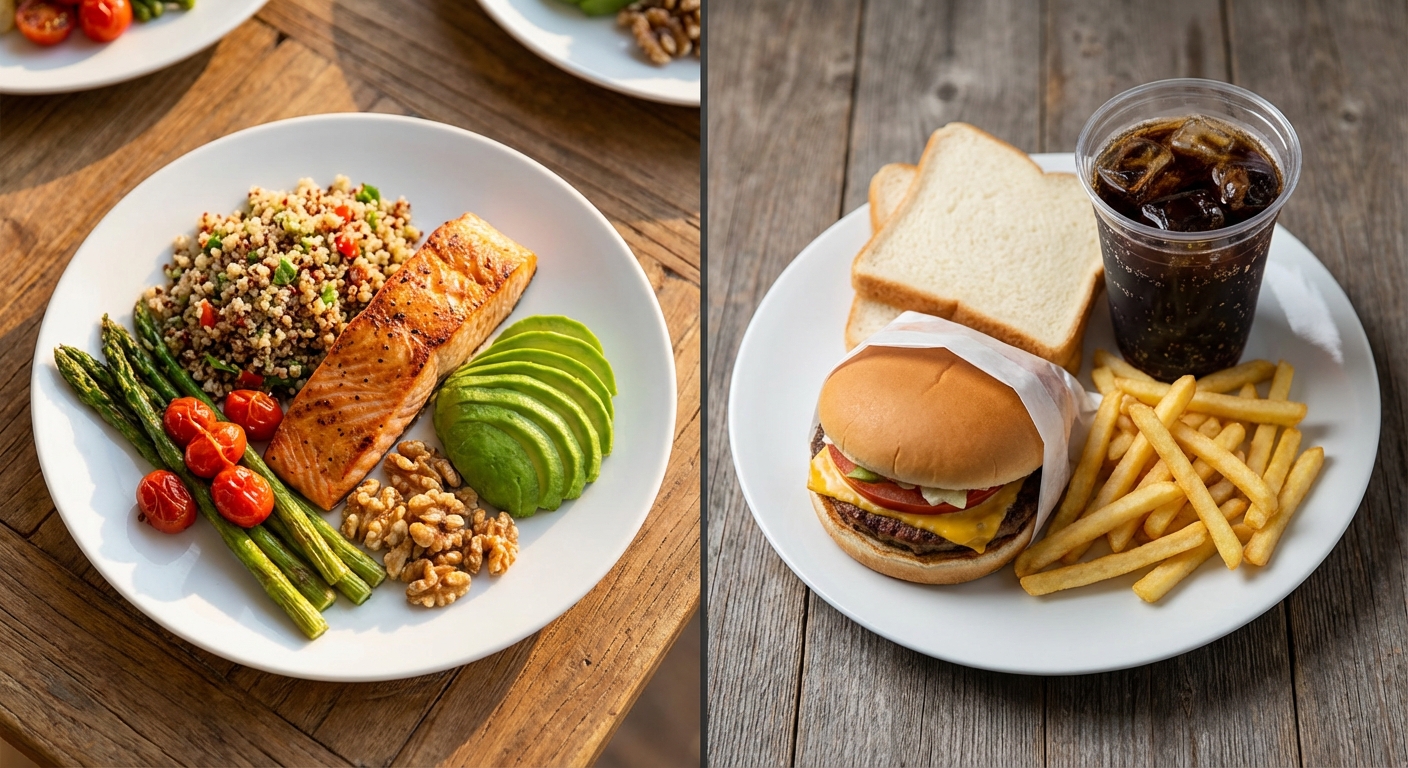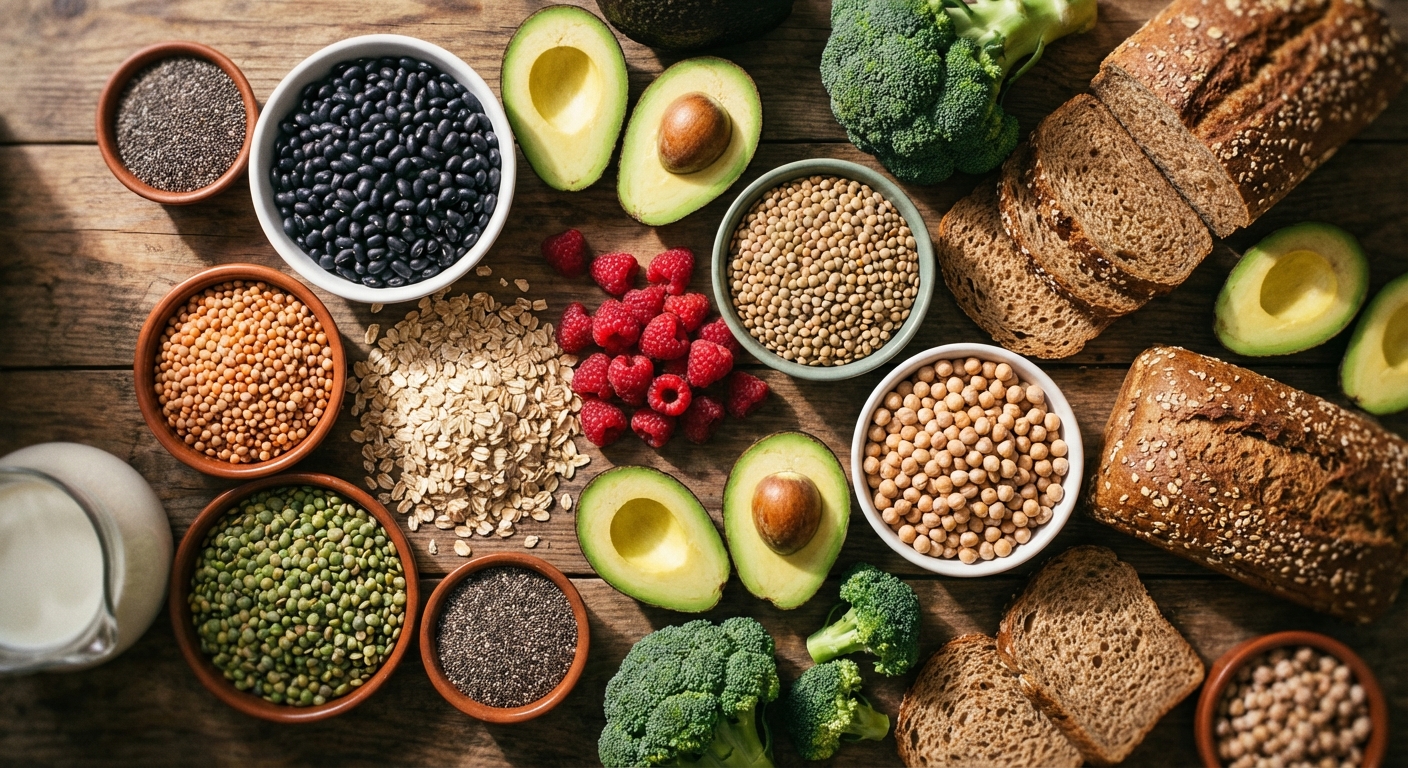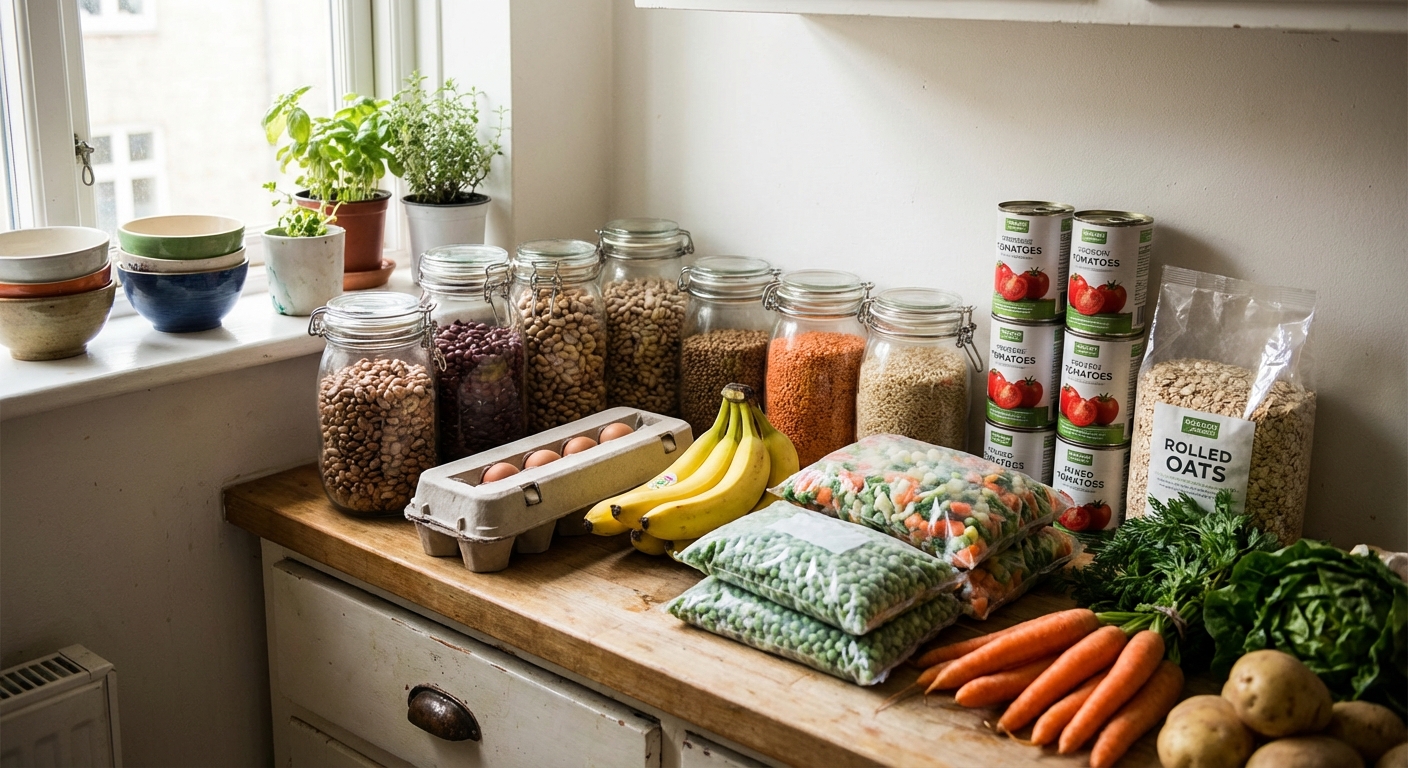
The persistent myth that healthy eating requires a Whole Foods budget has discouraged countless people from even trying. It’s an understandable misconception: organic kale chips cost $7, artisanal almond butter runs $15, and the “health food” section of any grocery store seems designed to empty your wallet. But this conflates nutrient density with luxury branding. The foundational pillars of a genuinely healthy diet, beans, rice, eggs, frozen vegetables, oats, and canned tomatoes, are often the cheapest items in the entire store.
The average American household now spends 11.3% of disposable income on food, up from 9.5% in 2020, according to USDA data. Economic pressure has intensified at exactly the moment when diet-related chronic disease costs the healthcare system over $1 trillion annually. This creates a painful trap: ultra-processed foods remain cheaper per calorie than whole foods, but the long-term health costs of that caloric bargain are devastating. A 2024 study in The Lancet found that ultra-processed food consumption increases all-cause mortality risk by 18%, with higher rates of cardiovascular disease, diabetes, and certain cancers.
The solution isn’t to choose between health and affordability, it’s to understand food economics well enough to get both. Clean eating on a budget requires trading convenience for preparation time, recognizing that store brands often match or exceed name-brand quality, and building meals around versatile whole-food staples that deliver maximum nutrition per dollar. Here’s how to make it work.
The Real Economics of Healthy Eating
The “healthy food is expensive” narrative collapses under scrutiny when you compare cost per nutrient rather than cost per calorie. Ultra-processed foods are indeed cheaper per calorie, but calories aren’t the metric that matters for health. A 99-cent package of ramen provides 380 calories but negligible protein, fiber, or micronutrients. A pound of dried lentils costs $1.20 and provides 1,600 calories with 90 grams of protein, 60 grams of fiber, and significant iron, folate, and potassium. The lentils are far cheaper per unit of actual nutrition.
Research from the Harvard School of Public Health found that a healthy diet costs approximately $1.50 more per day than an unhealthy one, about $550 annually. That’s meaningful money for tight budgets, but it’s dramatically less than the “healthy food is unaffordable” narrative suggests. More importantly, that $550 gap shrinks substantially with strategic shopping, and the healthcare cost differential, averaging $7,000 annually for people with diet-related chronic diseases according to CDC estimates, makes the investment overwhelmingly worthwhile for those who can manage it.
The real cost driver isn’t whole foods versus processed foods, it’s convenience versus preparation. Pre-cut vegetables cost three times more than whole vegetables. Single-serve oatmeal packets cost five times more than bulk oats. Rotisserie chicken costs twice as much per pound as raw chicken thighs. The premium you’re paying for processed and prepared foods is largely a labor fee for someone else’s time. When budgets are tight, trading your time for that savings becomes the most effective strategy.
Store Brands and Private Labels
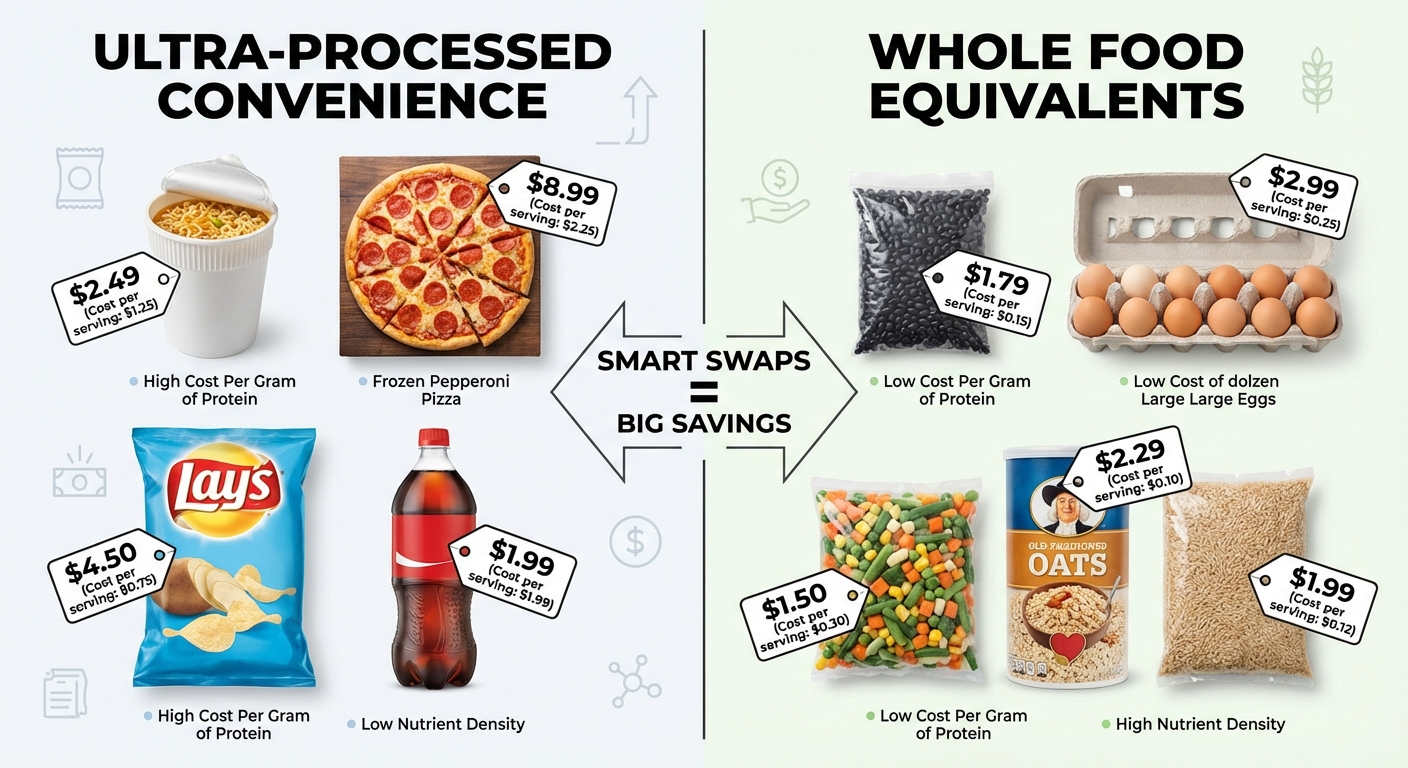
National brands spend billions on marketing, costs that flow directly to consumers through higher prices. Store brands, often manufactured by the same companies using identical or nearly identical formulations, typically cost 20-50% less. Consumer Reports testing has repeatedly found that store brands match or exceed national brand quality in blind taste tests across most food categories.
Dried beans and legumes exemplify this opportunity. Store-brand lentils, black beans, and chickpeas run $0.80-$1.20 per pound versus $2-$3 for name brands, with identical nutrition and often cleaner ingredient lists since there are no ingredients beyond the beans themselves. A pound of dried beans yields approximately 6 cups cooked, providing 90+ grams of protein for roughly a dollar. No animal protein comes close to that cost-efficiency.
Frozen fruits and vegetables under store brands retain the same nutritional quality as name brands, which is to say excellent quality. A study in the Journal of Food Composition and Analysis found that frozen vegetables picked and flash-frozen at peak ripeness matched or exceeded the vitamin content of “fresh” produce that had traveled long distances and sat in warehouses. Store-brand frozen spinach at $1.50 per pound versus $4 for fresh spinach that will spoil in days represents significant savings with potentially better nutrition.
Spices and seasonings from store brands or bulk bins cost 40-60% less than jarred name brands. Better yet, ethnic grocery stores often sell spices in larger quantities at fraction of supermarket prices. Turmeric, cumin, paprika, and other staples can cost $1-2 per ounce at regular groceries but $3-5 per pound at Indian, Middle Eastern, or Mexican markets. The quality is often superior, as higher turnover means fresher products.
The key practice is comparing ingredient lists rather than brand names. Many store brands have cleaner formulations with fewer additives than premium alternatives. The $5 name-brand tomato sauce with added sugar and preservatives is often nutritionally inferior to the $2 store brand with just tomatoes, olive oil, and salt.
Frozen and Canned: The Underrated Nutritional Champions
Fresh produce has earned a health halo that frozen and canned alternatives don’t deserve to lack. The reality is more nuanced and significantly more budget-friendly than the “fresh is best” assumption suggests.
Frozen vegetables and fruits are typically picked at peak ripeness and flash-frozen within hours of harvest. This locks in nutrients at their maximum levels. “Fresh” produce, by contrast, often travels 1,500+ miles over 7-14 days before reaching your grocery store, losing vitamins continuously during transit and storage. Research published in the Journal of Agricultural and Food Chemistry found that frozen blueberries, spinach, and broccoli contained equal or higher levels of antioxidants and vitamins compared to their fresh counterparts after five days of refrigerator storage, which is how most people actually consume fresh produce.
The cost differential is substantial. Fresh broccoli averages $2.50 per pound with significant spoilage waste, frozen broccoli costs $1.20 per pound with zero waste since you use only what you need. Fresh berries cost $4-6 per pound seasonally and more off-season, frozen berries run $2-3 per pound year-round. For a family consuming two servings of vegetables and one serving of fruit daily, the annual savings from prioritizing frozen exceeds $500 without nutritional sacrifice.
Canned goods require more selectivity but offer tremendous value for certain items. Canned beans at $0.80-$1.20 per can provide convenience that dried beans lack, already cooked and ready to use. Canned tomatoes, picked at peak ripeness and processed immediately, often have higher lycopene content than fresh tomatoes, making them nutritionally superior for many applications. Canned wild salmon provides omega-3 fatty acids at roughly half the cost of fresh salmon. The concerns about BPA in can linings have led most manufacturers to switch to BPA-free alternatives, though verifying this on labels is worthwhile.
The sodium content in canned vegetables and beans is a legitimate concern, but easily addressed. Rinsing canned beans under water for 30 seconds reduces sodium by 40%, and many brands now offer low-sodium or no-salt-added versions at minimal price premium.
Batch Cooking: Trading Time for Money
The single most effective strategy for eating clean on a budget is batch cooking, preparing large quantities of staple foods on a single day that serve multiple meals throughout the week. This approach dramatically reduces the per-meal cost while eliminating the decision fatigue that drives expensive last-minute choices.
A Sunday afternoon investment of 2-3 hours can yield 12-15 meals. Cook 4 cups of dried oats ($0.80) for breakfasts. Prepare 3 cups of dry brown rice or other whole grains ($1.50). Cook 2 pounds of dried beans ($2.40, yielding 6 cups cooked). Hard-boil a dozen eggs ($3). Roast 5 pounds of seasonal vegetables ($5-7). Make a large batch of marinara sauce from canned tomatoes ($1.50) and hummus from chickpeas ($0.60). This $15-20 investment provides the foundations for meals costing $1.25-$1.65 per serving versus $8-12 for takeout or $4-6 for convenience foods.
The key is building meals from these prepared components throughout the week. Monday’s lunch is a grain bowl with roasted vegetables, beans, and hummus. Tuesday’s dinner is pasta with marinara and white beans. Wednesday’s breakfast is oatmeal with banana and peanut butter, prepared in two minutes from the cooked oats. The variety comes from different combinations and seasonings rather than cooking entirely new meals each day.
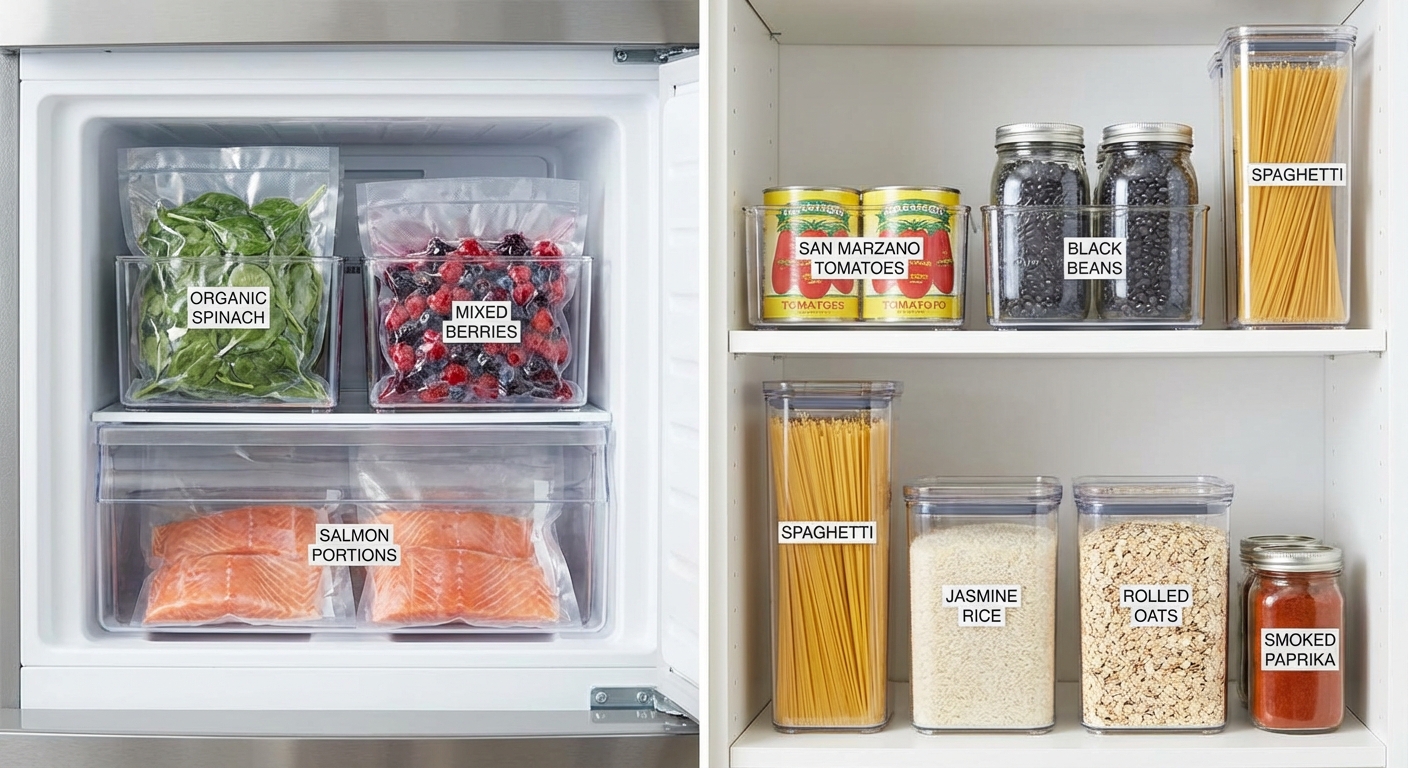
Storage makes or breaks batch cooking success. Invest $20-30 in quality glass containers that allow safe reheating and long refrigerator life. Cooked grains and beans keep 5-7 days refrigerated, and most can be frozen for longer storage. Portioning meals in advance removes the friction that might otherwise lead you to order delivery instead.
Strategic Protein Selection
Protein typically represents the largest budget line item, and strategic choices here yield the biggest savings. The cost per 20 grams of protein, a reasonable single-serving benchmark, varies dramatically across sources.
Dried beans and lentils lead the efficiency ranking at approximately $0.10-$0.15 per 20g of protein. They require soaking and cooking time, making batch preparation essential, but the economics are unbeatable. A $1 bag of lentils provides the protein equivalent of $8-10 worth of chicken breast. Lentils cook faster than other legumes (no soaking required, 20-25 minutes to cook), making them particularly practical for time-constrained cooks.
Eggs offer remarkable value at $0.25 per 20g of protein (roughly three eggs). They’re complete proteins with excellent bioavailability, versatile across meals, and require minimal preparation. At current prices of $2.50-$4 per dozen depending on region and type, eggs remain one of the most cost-effective animal proteins available.
Chicken thighs cost $0.50-$0.70 per 20g of protein and tolerate batch cooking beautifully, baked in large quantities and used across multiple meals. They’re substantially cheaper than chicken breast while being more flavorful and harder to overcook. Canned tuna and salmon run $0.45-$0.90 per 20g of protein and require zero preparation, providing omega-3 fatty acids that most Americans underconsume.
The strategy that maximizes both budget and health involves treating meat as a component rather than a centerpiece. A stir-fry with 4 ounces of chicken and 2 cups of vegetables costs less and provides better nutrition than an 8-ounce chicken breast with a small side. Adopting “meatless” meals 2-3 times weekly, built around beans, lentils, eggs, or tofu, can save a family of four $150-200 monthly without nutritional sacrifice.
Reading Labels to Avoid Hidden Costs
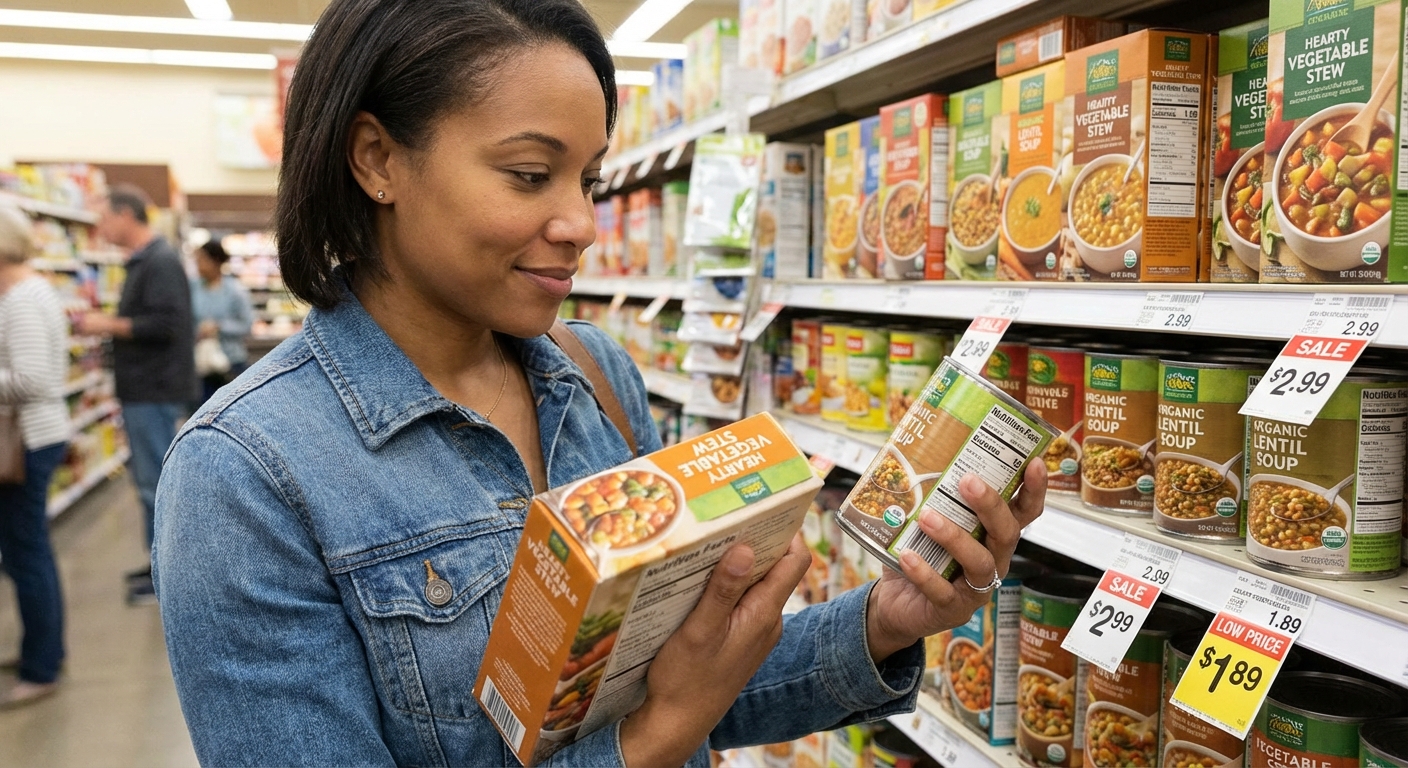
“Clean” eating on a budget requires developing label-reading fluency to distinguish genuinely whole foods from processed products disguised as healthy options. Many budget products are perfectly clean, you just need to verify rather than assume.
Ingredient list length provides a quick screening tool. Products with 5 or fewer recognizable ingredients are generally safe bets. Products with 15+ ingredients, many unpronounceable, are typically ultra-processed regardless of health claims on the front of the package. The first three ingredients constitute the majority of the product by weight, so sugar or refined grains appearing early signal a product to avoid.
Sodium content above 400mg per serving for most packaged foods indicates heavy processing. Frozen vegetables should have zero added sodium, canned products should stay under 400mg or be rinsed. Added sugars appearing in the first three ingredients, or exceeding 5g per serving for savory foods, disqualify a product from “clean” status regardless of other attributes.
“Natural” claims mean essentially nothing legally and shouldn’t influence purchasing decisions. “Organic” certification ensures certain production standards but doesn’t guarantee nutritional superiority, and the price premium often isn’t justified for budget-conscious shoppers. Whole grains as the first ingredient is a meaningful marker for bread and grain products.
The practical application: store-brand plain yogurt with live cultures ($2.50 per quart) is cleaner and cheaper than flavored premium brands ($5 per quart with added sugars). Store-brand canned tomatoes with just tomatoes, salt, and calcium chloride ($0.80) are cleaner than name-brand pasta sauces with sugar, preservatives, and flavor enhancers ($3.50).
Sample Budget Meal Plan
Translating these principles into actual meals demonstrates their practical application. The following day costs approximately $5-6 total for nutritionally complete, satisfying eating.
Breakfast at $0.75-$0.90: Oatmeal (from batch-cooked oats) topped with half a banana, a tablespoon of peanut butter, and a sprinkle of cinnamon. This provides 12g protein, 8g fiber, and sustained energy from complex carbohydrates. Alternative: two scrambled eggs with frozen spinach on whole-grain toast.
Lunch at $1.50-$1.80: Lentil soup made from batch-cooked lentils with canned tomatoes, onion, garlic, and cumin, served with a piece of crusty bread. This delivers 18g protein and 15g fiber per generous serving. Alternative: bean and rice burrito bowl with salsa, shredded cabbage, and a squeeze of lime.
Dinner at $2.20-$2.50: Chickpea curry with brown rice and frozen mixed vegetables. Canned chickpeas, canned coconut milk (a small can stretches across 4 servings), curry powder, and garlic create a rich, satisfying meal. Serve over batch-cooked brown rice with steamed frozen vegetables. This provides 20g protein, 12g fiber, and complete nutrition.
Snacks at $0.50-$0.75: Apple slices with peanut butter, a handful of roasted chickpeas (made from canned chickpeas), or carrot sticks with hummus (made from batch-cooked chickpeas).
This daily total of $5-7 yields approximately 65g protein, 40g fiber, abundant micronutrients, and genuine satiety, dramatically less expensive than the $15-20 daily many people spend on convenience foods and takeout while achieving far better nutrition.
Building Sustainable Habits
Clean eating on a budget is achievable and sustainable, but it requires honest acknowledgment of the trade-offs involved. You’re trading convenience for time, variety for repetition, and spontaneity for planning. For many people, these trades are worthwhile. For others, different compromises make more sense.
Start with one change rather than overhauling everything simultaneously. Perhaps begin batch-cooking grains and beans on Sundays. Or switch to store-brand frozen vegetables. Or commit to cooking at home four nights weekly instead of two. Small changes that stick produce better long-term results than dramatic overhauls that collapse within weeks.
Build a repertoire of 5-7 budget-friendly meals you can execute without recipes or significant mental effort. Stir-fries with whatever vegetables are available, bean-based soups, grain bowls with roasted vegetables, egg-based meals, and simple pasta dishes cover most situations. Once these become automatic, you can expand into more variety.
Accept imperfection as part of the process. Some weeks you’ll rely on frozen pizza and takeout more than you’d like. The goal isn’t perfection, it’s a sustainable average that moves your nutrition in a healthier direction while respecting your financial constraints. Every batch of beans you cook, every label you read, every meal you prepare at home shifts that average slightly better.
The Bottom Line
Clean eating on a budget isn’t about sacrifice or deprivation, it’s about understanding food economics well enough to maximize nutrition per dollar. The cheapest whole foods, beans, eggs, frozen vegetables, oats, canned tomatoes, and affordable proteins, form the foundation of genuinely healthy eating that costs less than the processed alternatives marketed as convenient.
The investment required is primarily time rather than money. Batch cooking, label reading, and strategic shopping take effort that convenience foods don’t require. But the return on that investment includes better health, lower long-term healthcare costs, and the satisfaction of eating well regardless of budget constraints. The gut-brain connection research increasingly shows that whole food diets rich in fiber support both digestive health and mental wellbeing, adding another dimension of value to budget-conscious clean eating.
You don’t need expensive superfoods, premium organic labels, or specialty health products to eat clean. You need dried beans, frozen vegetables, eggs, whole grains, and the willingness to cook them. For those looking to reduce inflammation through diet, our guide on building an anti-inflammatory lifestyle shows how many budget-friendly whole foods naturally support this goal. Start there, build sustainable habits, and let the compound benefits of better nutrition accumulate over time, one affordable meal at a time.
Sources: USDA Economic Research Service (food spending data), The Lancet (ultra-processed food mortality study), Harvard School of Public Health (diet cost research), CDC (diet-related healthcare costs), Journal of Food Composition and Analysis (frozen versus fresh nutrition), Journal of Agricultural and Food Chemistry (antioxidant retention studies).