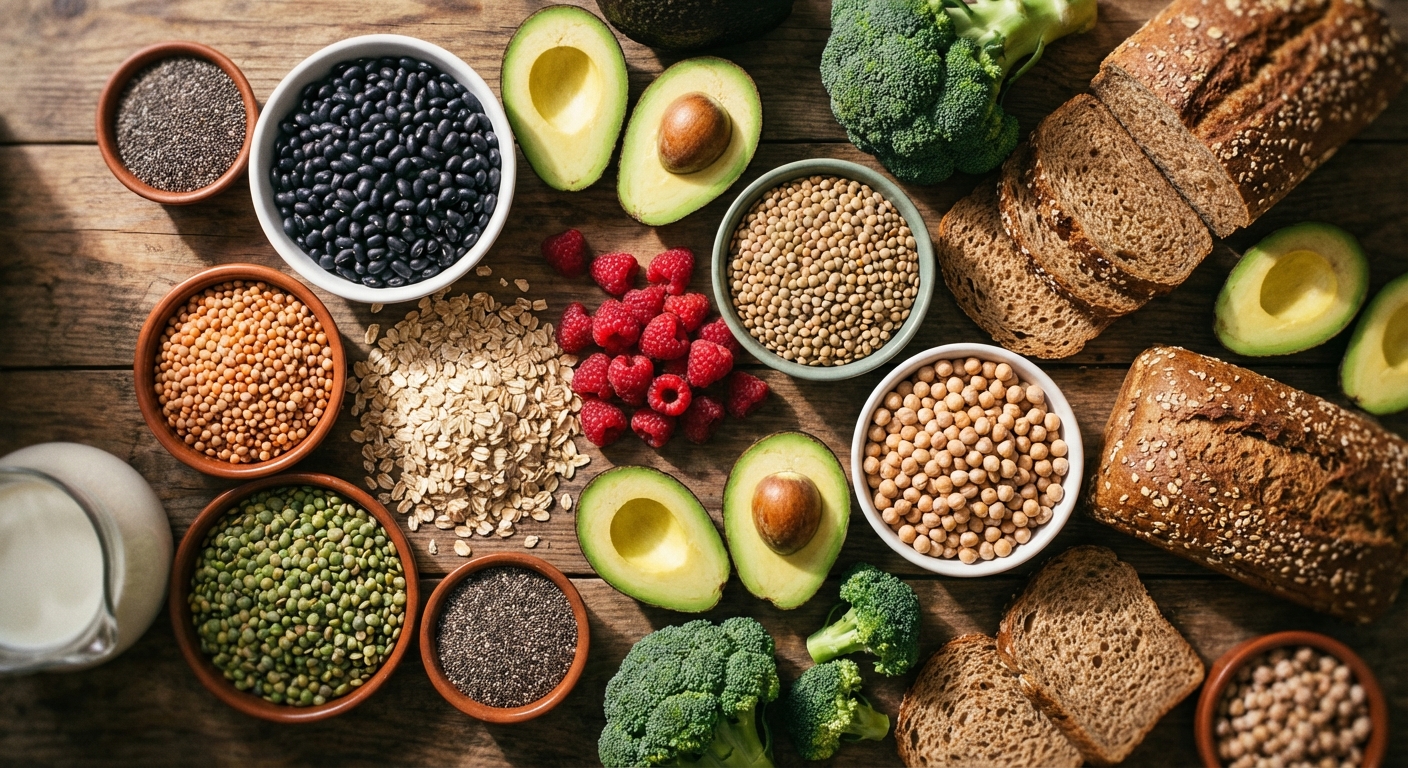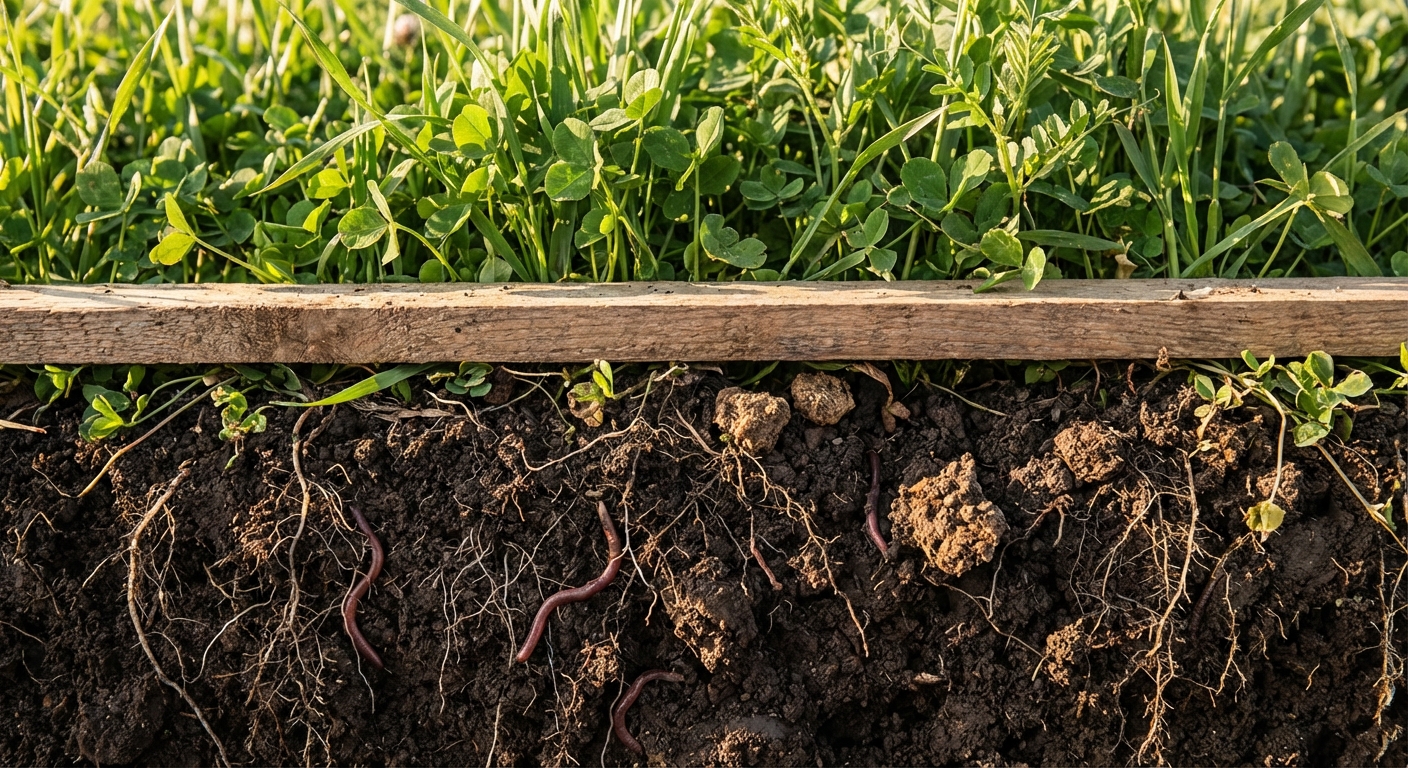
Your grandmother’s tomato probably contained more vitamin C than yours. Not because she was a better gardener, but because the soil she grew it in was fundamentally different from the soil most commercial produce comes from today.
Studies comparing USDA food composition data from 1950 to present show consistent patterns of nutrient decline across dozens of fruits and vegetables. Vitamin C in produce has dropped 15-20%. Iron and calcium in vegetables have declined 15-30%. B vitamins in grains have fallen 10-25%. A 2004 study published in the Journal of the American College of Nutrition analyzed 43 garden crops and found reliable declines in protein, calcium, phosphorus, iron, riboflavin, and vitamin C over the second half of the 20th century.
The causes are complex and debated, but soil depletion from intensive agricultural practices is likely a major contributor. Modern farming has prioritized yield over nutrient density for decades. Monoculture, synthetic fertilizers, heavy tilling, and chemical pest management have produced more food per acre while simultaneously depleting the minerals and biological life that support plant nutrient uptake. We’ve essentially been mining the soil rather than farming it.
Regenerative agriculture, a philosophy and set of practices focused on rebuilding rather than depleting soil health, offers a potential path to reversing this trend. Early research suggests that regeneratively farmed foods may contain meaningfully higher levels of vitamins, minerals, and beneficial plant compounds. This isn’t just an environmental story. This is about whether the food you eat actually nourishes you.
Understanding the Nutrient Density Decline
The decline in food nutrient density isn’t speculation; it’s documented across multiple independent analyses using different methodologies. Donald Davis at the University of Texas analyzed USDA nutrient data spanning 50 years and found “apparent, statistically reliable declines” in the nutritional content of 43 common vegetables and fruits. Similar patterns appear in British food composition data and in studies from other developed nations.
Several factors contribute to this decline. The “dilution effect” is perhaps the most documented: as plant breeders have selected varieties for rapid growth, large size, and high yield, the plants’ ability to uptake and concentrate nutrients hasn’t kept pace with their accumulation of carbohydrate and water. Modern crops grow faster and bigger, but they’re essentially diluting minerals across more plant mass. A tomato bred for high yield and shipping durability may weigh twice as much as an heirloom variety while containing the same absolute amount of vitamin C, meaning half the concentration per bite.
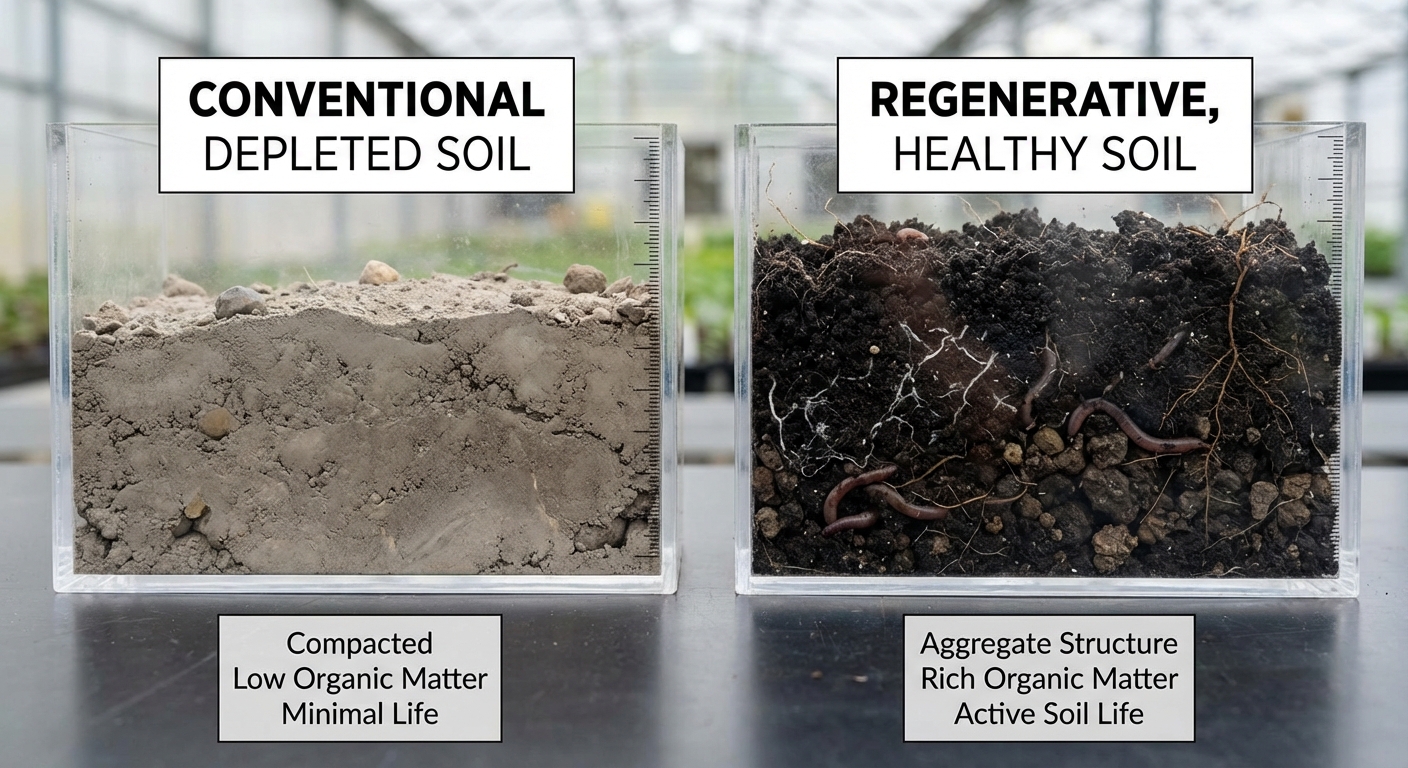
Soil depletion compounds this effect. Healthy soil contains billions of microorganisms per gram, complex communities of bacteria, fungi, protozoa, and other organisms that break down organic matter, cycle nutrients, and form symbiotic relationships with plant roots. Mycorrhizal fungi, in particular, dramatically extend root systems and help plants access minerals they couldn’t reach on their own. Conventional agriculture practices, including annual tilling that destroys fungal networks, synthetic fertilizers that bypass soil biology, and pesticides that kill beneficial organisms, have systematically degraded these systems. The soil becomes less a living ecosystem and more an inert medium for holding plants upright while synthetic inputs provide essential nutrients.
The result is crops that grow fast and look good but contain fewer of the vitamins, minerals, and beneficial plant compounds that make food genuinely nourishing. We’re producing more calories with less nutrition, contributing to what some researchers call “hidden hunger” even in populations with adequate caloric intake.
What Regenerative Agriculture Actually Means
Regenerative agriculture isn’t a single technique or a certification you can buy. It’s a philosophy centered on rebuilding soil health through practices that work with natural systems rather than against them. The specific techniques vary by climate, crop, and farm context, but several core principles appear across most regenerative systems.
Minimal or no tillage is foundational. Every time soil is plowed, carbon stored in the ground oxidizes and releases into the atmosphere, beneficial fungal networks are destroyed, and soil structure is disrupted. The complex three-dimensional architecture of healthy soil, with its water channels, air pockets, and microbial habitats, collapses into compaction. By minimizing tillage, farmers preserve the living infrastructure that supports nutrient cycling and plant health.
Cover cropping means planting crops between main harvests specifically to protect and feed the soil rather than for harvest. During periods when fields would traditionally sit bare and vulnerable to erosion, farmers plant species like clover, rye, radish, or vetch. These cover crops prevent erosion, suppress weeds, and most importantly, keep living roots in the soil feeding microbial communities year-round. Legume cover crops fix atmospheric nitrogen into plant-available forms, reducing or eliminating the need for synthetic nitrogen fertilizers.
Crop rotation and diversity prevent the nutrient depletion and pest buildup that occurs when the same crop grows in the same soil year after year. Different plants have different nutrient demands and contribute different benefits. Deep-rooted crops bring minerals up from subsoil layers; nitrogen-fixing legumes add fertility; diversity disrupts pest and disease cycles. The goal is a polyculture that mimics natural ecosystem diversity rather than industrial monoculture.
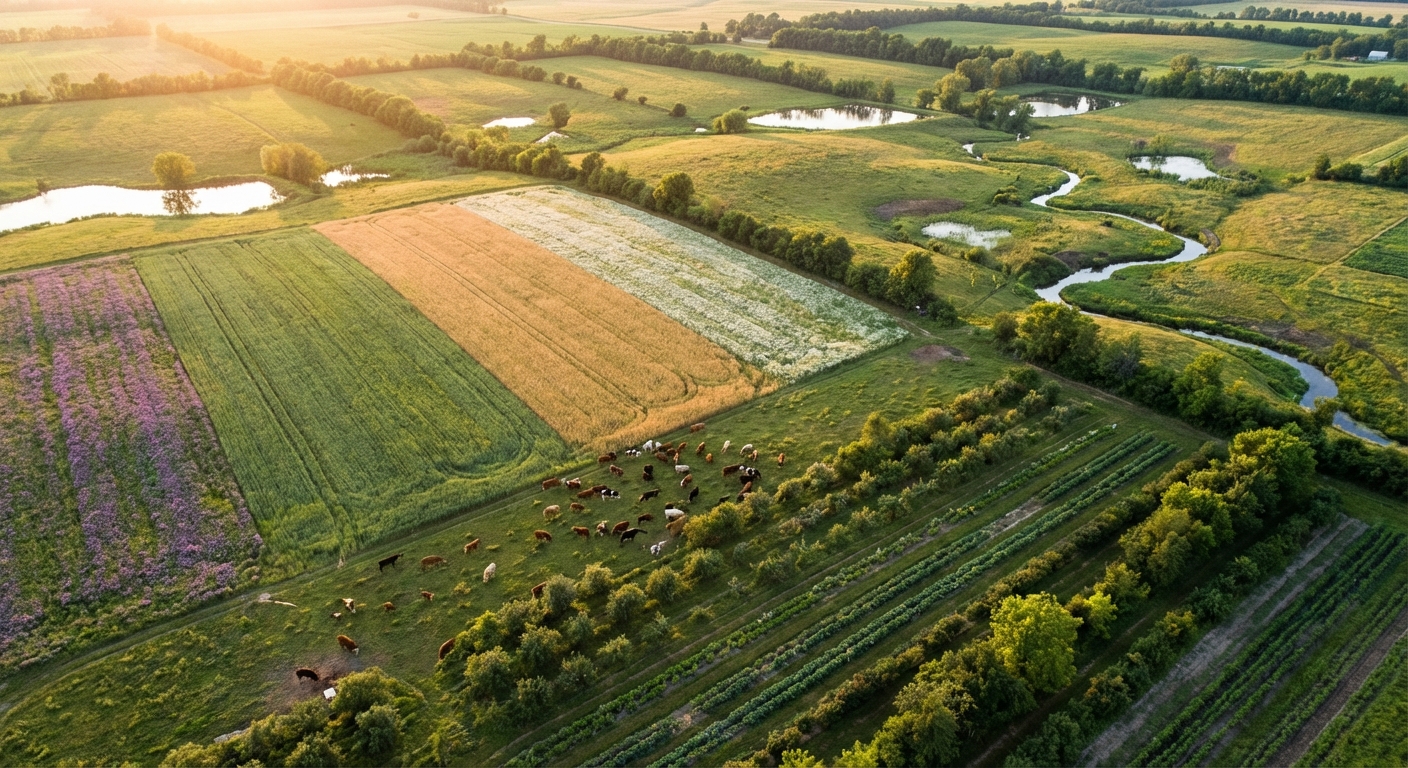
Integrating livestock brings animals back into crop production systems when appropriate. Managed grazing, where animals are moved frequently across pastures in patterns that mimic wild herd movements, stimulates plant growth, distributes manure for fertilization, and gently incorporates organic matter into soil through hoof action. This integration closed the loop in traditional agriculture; separating animals and crops into specialized operations broke nutrient cycles and created waste problems on both ends.
The overarching goal is building soil organic matter, the dark, carbon-rich material that gives healthy soil its color and spongy texture. Each percentage point increase in soil organic matter means dramatically better water retention, more habitat for beneficial organisms, and a larger reservoir of nutrients for plants to access. Regenerative farms aim to build soil rather than deplete it, sequestering atmospheric carbon in the process.
The Emerging Nutrient Density Evidence
The hypothesis that healthier soil produces more nutritious food is intuitive, but the research supporting it is still early-stage. Rigorous studies comparing regenerative and conventional farms face methodological challenges: farms differ in climate, soil type, crop variety, and dozens of other variables that affect outcomes. Isolating the effect of regenerative practices requires either long-term controlled experiments or careful statistical controls in observational studies.
That said, the evidence emerging is promising. A 2022 peer-reviewed study in the journal PeerJ compared crops from regenerative and conventional farms matched for crop type and region. Regeneratively grown crops showed significantly higher levels of certain vitamins, minerals, and phytonutrients. Wheat from regenerative farms contained 23% more calcium, 27% more magnesium, and higher levels of B vitamins. Vegetables showed elevated antioxidant content. The differences were substantial enough to be nutritionally meaningful, not just statistically significant.
Animal products show some of the most consistent differences. Grass-fed, pasture-raised beef contains 2-4 times more omega-3 fatty acids than grain-finished feedlot beef, along with higher levels of conjugated linoleic acid (CLA) and fat-soluble vitamins. Eggs from pasture-raised hens contain dramatically more vitamin A, vitamin E, and omega-3s than eggs from confined operations. These differences reflect what the animals eat: diverse pasture forage versus uniform grain-based feed.
The mechanisms likely include:
- Healthier soil microbiomes help plants uptake nutrients more efficiently through symbiotic relationships
- Higher organic matter content provides a more diverse reservoir of minerals
- Reduced synthetic inputs allow plants to develop robust secondary compound profiles (phytonutrients) as part of their natural defense systems
- Mild stress from organic growing methods can trigger plants to produce more protective compounds that also benefit humans who consume them
Important caveats: The research base remains limited. Results vary substantially by crop, soil type, climate, and specific practices employed. Some studies show minimal differences between regenerative and conventional. “Regenerative” is an umbrella term covering varied practices implemented with varying skill and commitment. The evidence supports cautious optimism rather than strong claims.
Beyond Nutrition: The Broader Case for Regenerative
Even setting aside nutrient density, regenerative agriculture offers compelling environmental benefits that indirectly support human health through ecosystem health.
Carbon sequestration is perhaps the most discussed benefit. Photosynthesis pulls carbon dioxide from the atmosphere, and plants pump roughly 40% of the carbon they capture down through their roots into soil, where it feeds microbial communities and can remain stored for decades or centuries. Building soil organic matter from 1% to 3%, achievable on degraded farmland over 5-10 years of regenerative management, represents substantial carbon sequestration. Scaling these practices globally could meaningfully contribute to climate change mitigation while simultaneously improving food production.
Water cycle benefits affect both farms and broader watersheds. Soil rich in organic matter can hold dramatically more water than depleted soil, roughly 20,000 gallons more per acre per percentage point of organic matter. This means regenerative farms require less irrigation, resist drought better, and produce less runoff during heavy rains. Reduced runoff means less erosion, less nutrient pollution in waterways, and healthier aquatic ecosystems.
Reduced chemical exposure benefits farm workers, rural communities, and consumers. Regenerative systems that eliminate or minimize synthetic pesticides and herbicides reduce occupational exposure risks and potential residues on food. Whether trace pesticide residues on conventional produce meaningfully affect consumer health remains debated, but reducing synthetic chemical use in agriculture has clear benefits for ecosystems and for workers who handle these chemicals daily.
Biodiversity support creates more resilient agricultural systems and healthier ecosystems. Diverse farms with cover crops, hedgerows, and varied rotations support dramatically more insect, bird, and wildlife populations than monoculture operations. Pollinator populations, essential for many crops, thrive in diverse agricultural landscapes. This biodiversity provides natural pest control, reducing the need for pesticides and creating more stable production over time.
The Scalability Question: Can This Feed the World?
The primary criticism of regenerative agriculture is that it represents an elitist niche that cannot feed a growing global population. Critics argue that without the high yields driven by synthetic fertilizers, pesticides, and specialized breeding, we would face food shortages. They view regenerative methods as a luxury for wealthy consumers rather than a scalable solution.
This criticism deserves serious engagement. Global food security is a genuine concern, and any proposed agricultural transition must address whether it can produce enough food. During the regenerative transition period (typically 3-5 years as soil biology rebuilds), yields often drop 10-30% compared to optimized conventional systems. Regenerative farming requires more knowledge and management skill than following a standardized synthetic input protocol. Without industrial economies of scale, regeneratively produced food currently costs more.
However, the conventional system’s “efficiency” looks different when you account for externalized costs: soil erosion (estimated at $44 billion annually in the US alone), water pollution from agricultural runoff, loss of pollinator populations, contribution to climate change, and public health costs from pesticide exposure and diet-related disease. Industrial agriculture has been artificially cheap because society bears these costs separately from the food price.
Furthermore, long-term data from established regenerative farms shows yields that match or exceed conventional after the transition period, with dramatically lower input costs. The Rodale Institute’s 40-year farming systems trial found that organic systems (which share many regenerative principles) matched conventional yields over the long term while outperforming during drought years due to improved water retention. Regenerative farms demonstrate greater resilience to climate variability, a crucial advantage as weather patterns become less predictable.
The likely future involves some combination of regenerative principles integrated into larger agricultural systems, rather than a complete replacement of all conventional practices. Certain crops in certain contexts may continue requiring more intensive management. But the trajectory toward soil health as a foundation for agriculture seems both necessary and achievable at meaningful scale.
Practical Recommendations: Accessing Nutrient-Dense Food
If you’re convinced that how food is grown affects its nutritional quality, how do you actually access regeneratively farmed products?
Farmers markets offer the best opportunity to ask growers directly about their practices. Many small farms use regenerative methods without formal certification. Ask about cover cropping, tillage practices, synthetic inputs, and how they build soil health. Farmers who care about soil health are usually eager to discuss it.
CSA (Community Supported Agriculture) subscriptions connect you directly with local farms, often using sustainable practices. You pay upfront for a season’s share of produce, splitting both the bounty and the risk with the farmer. This model supports farming practices that prioritize soil health over yield maximization.
Look for certifications when shopping retail. Regenerative Organic Certified (ROC) is the gold standard, requiring organic practices plus soil health, animal welfare, and social fairness standards. Land to Market certification verifies regenerative land management for animal products. USDA Organic doesn’t guarantee regenerative practices but does prohibit synthetic pesticides and fertilizers, often resulting in better soil health outcomes than conventional.
Prioritize categories with the biggest differences: Animal products show the most consistent nutritional improvements from regenerative/pasture-based production. Grass-fed beef, pasture-raised eggs, and grass-finished dairy have documented superior nutrient profiles. Leafy greens and vegetables from healthy soil may contain more minerals and phytonutrients. These nutrient-dense foods form the foundation of an anti-inflammatory lifestyle that supports long-term health. Focus your regenerative purchases on these categories if budget is limited.
Cost considerations: Expect 20-50% premiums for regeneratively produced food. This represents the true cost of production that conventional prices externalize. If budget is constrained, prioritize animal products and produce you eat most frequently. Conventional produce is still dramatically better than no produce or processed food substitutes. Don’t skip vegetables because you can’t afford regenerative versions.
The Bottom Line
Regenerative agriculture represents a fundamental rethinking of how we produce food, from an extractive model that depletes soil to a restorative model that builds it. The evidence for nutrient density improvements is emerging and promising, though not yet definitive. Regeneratively farmed foods appear to contain more vitamins, minerals, and beneficial plant compounds, but the magnitude of difference varies and more research is needed to establish consistent patterns across crops and contexts.
Beyond nutrition, regenerative practices offer clear environmental benefits: carbon sequestration, improved water cycles, reduced chemical exposure, and biodiversity support. These benefits matter for long-term human health through ecosystem health, even if the direct nutritional benefits prove modest.
For consumers who can access and afford regenerative products, choosing them likely provides nutritional benefits and definitely supports farming practices better for the environment. The emphasis on fiber-rich whole foods in regenerative systems also supports gut health, which emerging research links to everything from immunity to mental clarity. For those who can’t afford premiums, conventional whole foods remain dramatically better than processed alternatives regardless of farming method. The perfect shouldn’t be enemy of the good.
The future of sustainable, nutrient-dense food production almost certainly involves regenerative principles at increasing scale. We’re in the early stages of that transition, with market demand, corporate commitments, and policy support all moving in this direction. Supporting it when possible helps accelerate that transition.
Next Steps:
- Visit a local farmers market and ask growers about their soil health practices
- Consider a CSA subscription to a farm using regenerative methods
- Look for Regenerative Organic Certified (ROC) products at natural grocers
- Prioritize grass-fed/pasture-raised animal products where differences are most documented
- If budget is limited, focus regenerative purchases on items you eat most frequently
Sources: Journal of the American College of Nutrition 2004 (nutrient decline study), PeerJ 2022 (regenerative vs. conventional nutrient comparison), Rodale Institute 40-year farming systems trial, soil carbon sequestration research, USDA food composition database comparisons, grass-fed vs. grain-fed nutritional analyses.