Shine a specific wavelength of light on your skin and your cells heal faster, produce more energy, and reduce inflammation. It sounds like wellness pseudoscience, another empty promise alongside detox teas and crystal healing. But photobiomodulation (PBM), commonly called red light therapy, stands on a foundation of over 6,000 peer-reviewed studies and has a mechanism that’s well understood at the molecular level.
NASA pioneered the research in the 1990s, using red LEDs to promote plant growth in space and then discovering the technology accelerated wound healing in astronauts. Today, elite athletes from NBA teams to Olympic training centers use PBM devices for faster recovery. Dermatologists employ medical-grade panels for acne, wrinkles, and wound healing. Physical therapists use it for joint pain and inflammation.
The science is legitimate. The problem is the consumer device market. Amazon is flooded with cheap LED masks and handheld wands that promise miraculous results but deliver essentially Christmas-tree-light energy levels, far too weak to achieve any biological effect. Understanding what separates therapeutic devices from expensive decorations requires knowing exactly how photobiomodulation works and which specifications actually matter.
The Cellular Mechanism: Powering Up Your Mitochondria
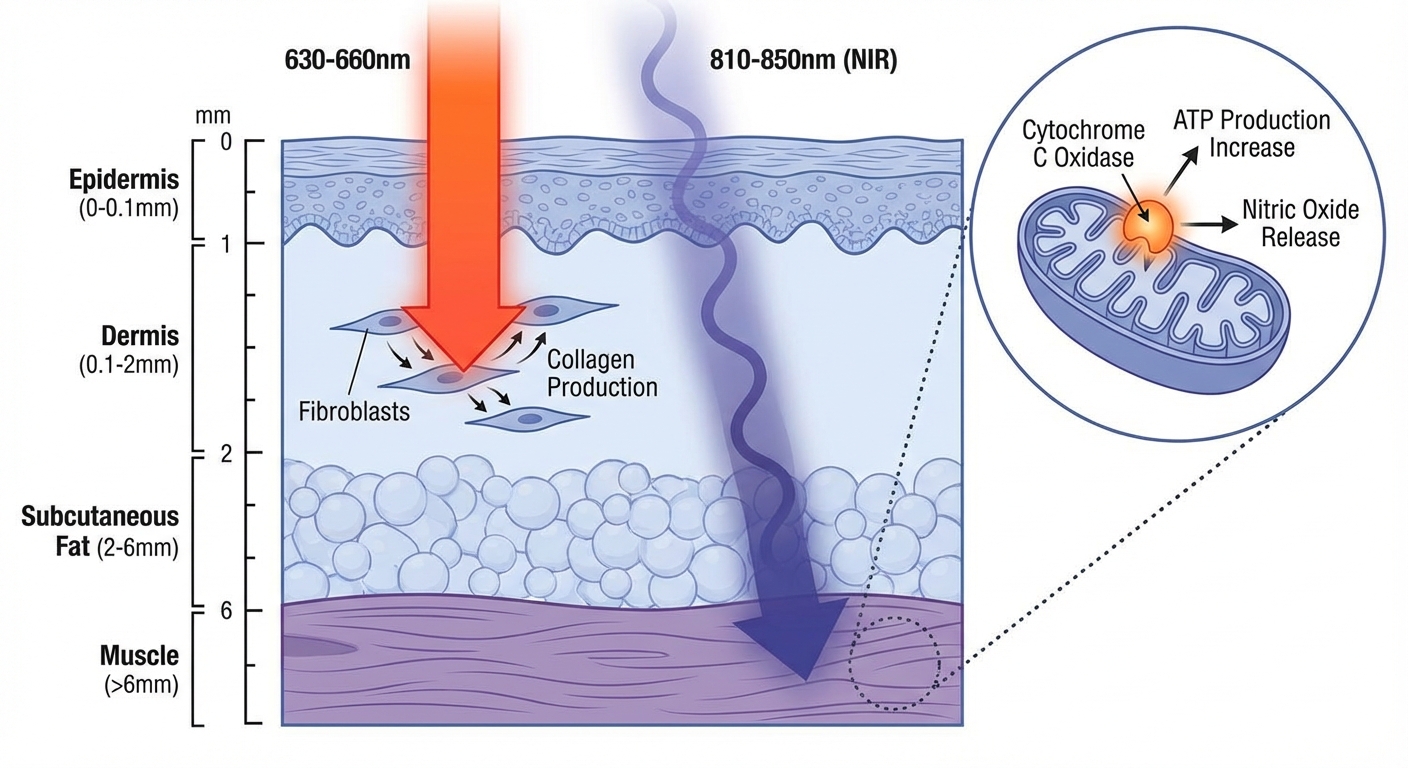
Red light therapy works by delivering photons of specific wavelengths that penetrate your skin and are absorbed by chromophores (light-sensitive molecules) within your cells. The primary target is cytochrome c oxidase (CCO), a crucial enzyme in your mitochondria’s electron transport chain.
When CCO absorbs red or near-infrared light, it enhances the efficiency of oxidative phosphorylation, the process by which mitochondria produce adenosine triphosphate (ATP), the universal energy currency of your cells. A 2017 review in Photomedicine and Laser Surgery summarized decades of research showing that PBM can increase cellular ATP production by 40-70% in treated tissues.
Beyond ATP, light absorption causes CCO to release nitric oxide (NO), which had been binding to and inhibiting the enzyme. This freed NO diffuses into surrounding tissue, where it dilates blood vessels and improves local circulation. The combination of increased ATP and improved blood flow creates an environment optimized for cellular repair, collagen synthesis, and inflammation reduction.
Dr. Michael Hamblin, a former Harvard Medical School researcher and one of the world’s leading PBM scientists, describes it this way: “We’re not adding anything foreign to the body. We’re simply providing the optimal light environment that cells evolved to use, but which modern indoor lifestyles often deny them.”
The Two Wavelengths That Matter
For photobiomodulation to occur, light must be absorbed by cellular chromophores without generating excessive heat that damages tissue. This requires wavelengths within specific “optical windows” where skin is transparent enough to allow photons through but cellular machinery is reactive enough to absorb them.
Decades of research have identified two primary therapeutic bands:
Red Light (630-660 nm): This visible red wavelength penetrates 2-5 millimeters into tissue, primarily affecting the epidermis and dermis. It’s absorbed efficiently by cytochrome c oxidase and fibroblast cells responsible for collagen production. Clinical applications include:
- Accelerated wound healing (20-50% faster closure in controlled trials)
- Increased collagen density and reduced wrinkle depth
- Acne treatment (anti-inflammatory and antibacterial effects)
- Reduced hyperpigmentation and improved skin texture
A 2014 randomized controlled trial in Photomedicine and Laser Surgery found that participants receiving red light therapy (633nm, 10 minutes daily) showed significant improvements in skin complexion, collagen density, and wrinkle reduction after 12 weeks compared to control groups.
Near-Infrared Light (810-850 nm): This wavelength is invisible to the human eye and penetrates much deeper, reaching 30-40 millimeters into muscle, joints, and even bone. NIR has distinct effects:
- Reduced muscle soreness and faster recovery (DOMS reduced by 25-40%)
- Decreased joint inflammation and pain (particularly in arthritis)
- Enhanced nerve regeneration and neuroprotection
- Improved circulation in deep tissues
A 2016 meta-analysis in the Lancet examined 22 randomized controlled trials and concluded that PBM, particularly in the near-infrared range, provided clinically meaningful pain relief for chronic joint disorders, with effects comparable to non-steroidal anti-inflammatory drugs (NSAIDs) but without gastrointestinal side effects.
Many consumer devices marketed as “red light therapy” actually only emit visible red wavelengths, missing the deep-tissue benefits of NIR entirely. Effective full-body devices combine both wavelengths, typically in a 50/50 or 60/40 ratio, to address both surface and deep tissue simultaneously.
The Metric That Matters: Irradiance and Dose
This is where most consumer devices fail and where marketing becomes misleading. The critical specification is irradiance, measured in milliwatts per square centimeter (mW/cm²). Irradiance tells you how much light energy actually reaches your skin at a given distance.
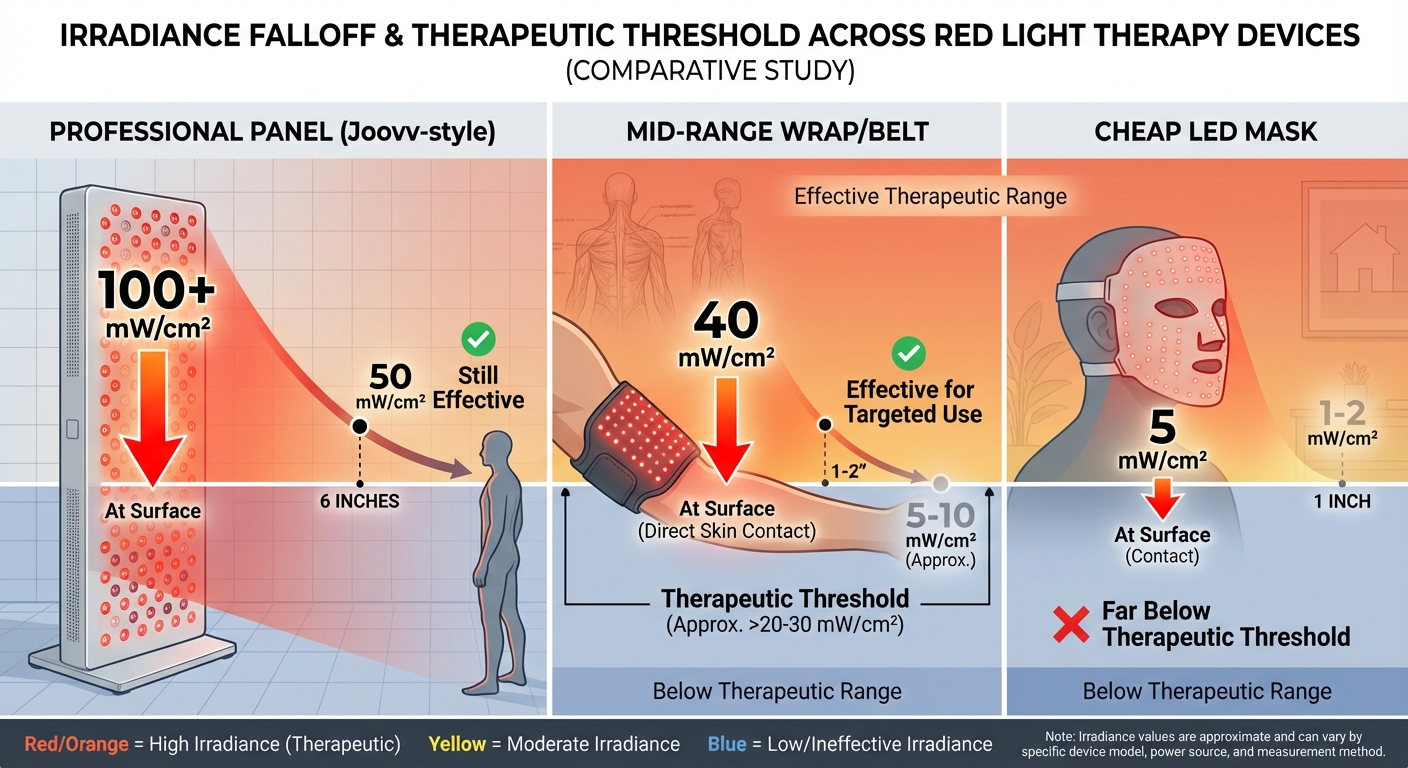
Research consistently shows that therapeutic effects require irradiance of at least 20-50 mW/cm² at the skin surface, with optimal effects typically occurring in the 50-100 mW/cm² range. Below this threshold, you simply don’t deliver enough photons to create meaningful ATP enhancement or cellular signaling.
Here’s where physics punishes cheap devices. The inverse square law dictates that light intensity decreases exponentially with distance. A device measuring 100 mW/cm² at zero inches might deliver only 25 mW/cm² at 6 inches and a useless 6 mW/cm² at 12 inches. Many budget devices advertise their “at surface” power (often measured with the sensor directly touching LEDs) rather than their effective therapeutic distance.
The total dose matters too, calculated as irradiance multiplied by time. Research typically shows optimal doses between 3-50 J/cm² (joules per square centimeter), with most studies clustering around 10-30 J/cm² for skin applications and 20-60 J/cm² for deep tissue. This math is why treatment times range from 10-20 minutes, delivering sufficient cumulative energy to trigger cellular responses.
What this means practically: A high-quality panel with 100+ mW/cm² irradiance at 6 inches allows effective 10-minute treatments. A weak device at 15 mW/cm² would require 60+ minutes of exposure to deliver the same dose, if it could maintain output that long without overheating.
The Biphasic Dose Response: Why More Isn’t Better
Red light therapy follows what researchers call a “biphasic” or “hormetic” dose-response curve, similar to exercise or medication. Too little stimulus produces no effect. The optimal dose produces maximum benefit. Too much exposure actually inhibits the beneficial response.
A 2009 study in Dose-Response by Dr. Hamblin demonstrated this clearly: cells exposed to moderate PBM doses showed enhanced proliferation and healing, while cells receiving excessive doses showed inhibited growth and increased oxidative stress. The cellular machinery that benefits from moderate light stimulation becomes overwhelmed by excessive photon bombardment.
Practical implications are significant:
- 10-20 minutes per treatment area is optimal for most applications
- Longer isn’t better, 60-minute sessions may produce worse results than 15-minute sessions
- Daily treatment is generally fine, but cells need recovery time between sessions
- Falling asleep under a powerful panel for hours could theoretically cause temporary harm
This biphasic response explains why professional treatment protocols are precise about dosing. If someone tells you to use their device for 45 minutes twice daily, they either don’t understand the science or are trying to justify an underpowered device by compensating with extreme treatment times.
Device Categories: Panels, Wraps, and Masks
Understanding the different device form factors helps match equipment to your specific goals and budget.
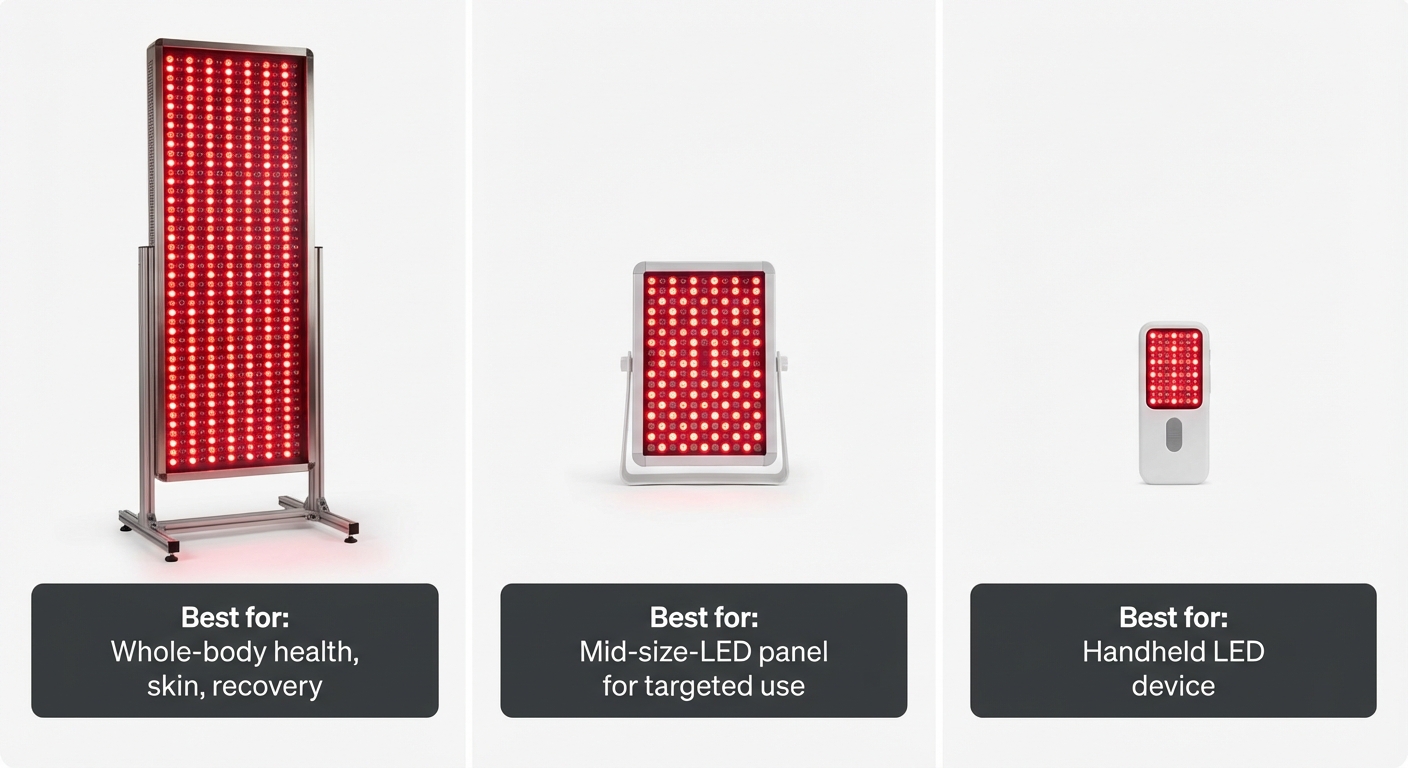
LED Panels (Full-Body and Targeted): These are the gold standard for general health applications. Large panels (like Joovv, Mito Red Light, or Platinum LED) offer high irradiance, cover large body areas, and combine both red and NIR wavelengths. They’re typically wall-mounted or door-hanging and treat your entire front or back torso, face, and limbs simultaneously.
Advantages include high power output, large treatment area, durability, and proven clinical specifications. Disadvantages are significant cost ($300-2,000+), space requirements, and the need to stand or sit in front of them during treatment.
For most people seeking systemic benefits, skin improvement, and general recovery, a quality panel remains the most effective investment.
Flexible Wraps and Belts: These devices strap directly to specific body parts like knees, backs, or necks. Because LEDs contact the skin directly, there’s no distance-related power loss, allowing lower-powered devices to still achieve therapeutic doses.
Wraps are excellent for localized pain, arthritis, specific injuries, and targeted muscle recovery. They’re also portable and can be used while doing other activities. However, they can’t treat large areas efficiently and typically only offer one wavelength.
For people with chronic joint issues or specific injury sites, a quality wrap (like Kineon or FlexBeam) may provide better value than a whole-body panel.
Face Masks: The most problematic category. Many LED masks are dramatically underpowered, delivering 5-15 mW/cm² when 50+ is needed for meaningful skin effects. They’re convenient and require no holding, but convenience doesn’t help if the device is basically a night light.
If purchasing a face mask, look for rigid designs with documented clinical testing. The Omnilux Contour (developed by dermatologists with published trials) is one of the few masks with legitimate therapeutic specifications. Budget flexible masks from Amazon are almost universally too weak.
Evaluating Device Specifications
When shopping for a PBM device, demand specific data for these parameters:
Wavelength accuracy: Look for 630-660nm for red and 810-850nm for NIR. Vague claims like “therapeutic red light” without specific nanometer ratings are a red flag. Quality manufacturers publish spectral analysis showing their LEDs’ actual output peaks.
Irradiance at treatment distance: Not just surface irradiance. A legitimate device will specify irradiance at 6 inches or 12 inches. If the company only lists “total power output” in watts without irradiance data, they’re likely hiding weak specifications.
LED quality and lifespan: High-quality LEDs (from manufacturers like Osram, Cree, or Samsung) maintain 90%+ of their output for 50,000+ hours. Cheap LEDs degrade rapidly, meaning your device loses effectiveness within months.
Third-party testing: The best companies provide independent lab verification of their spectral output and irradiance claims. This documentation indicates a commitment to accurate specifications rather than marketing exaggeration.
EMF emissions: Some powerful devices generate electromagnetic fields that may be concerning for EMF-sensitive individuals. Quality manufacturers test and minimize EMF, especially in devices designed for close-body use.
The Optimal Protocol
Based on current research and clinical practice, here’s a general protocol framework:
Frequency: 3-5 sessions per week for general wellness and skin benefits. Daily treatment is acceptable for acute injury recovery. Rest days allow cellular adaptation but aren’t strictly necessary for most applications.
Duration: 10-20 minutes per body area. If you’re treating your full front torso and face, that’s one 15-minute session. If treating front and back, that might be two 15-minute sessions (one per side).
Distance: Follow manufacturer guidelines, but typically 6-12 inches for panels. Closer isn’t always better due to heat and even coverage concerns.
Timing: Morning sessions may offer circadian benefits, as bright visible light (including therapeutic red) signals daytime to your brain. Using bright panels within 2 hours of bedtime may delay melatonin release. Some practitioners prefer post-workout sessions to enhance recovery.
Skin: Expose bare skin, as clothing blocks most light. Removed jewelry and avoid thick lotions or sunscreen on treatment areas (these can absorb light before it reaches skin).
Eyes: Never stare directly at the LEDs, especially the more powerful panels. Mild incidental exposure is not harmful (red/NIR light has been studied for retinal health), but direct sustained exposure to high-irradiance sources is not advisable. Most quality devices include eye protection.
What Research Actually Supports
Photobiomodulation research has demonstrated significant evidence for several applications:
Strong evidence (multiple RCTs, meta-analyses):
- Skin rejuvenation and collagen synthesis
- Wound healing acceleration
- Musculoskeletal pain reduction (arthritis, tendinopathy)
- Delayed onset muscle soreness (DOMS) reduction
- Oral mucositis treatment (chemotherapy side effect)
Moderate evidence (positive trials, ongoing research):
- Hair regrowth (androgenic alopecia)
- Neuroprotection and cognitive enhancement
- Thyroid function modulation (Hashimoto’s)
- Depression and anxiety (transcranial PBM)
Preliminary/emerging evidence:
- Fat loss (when combined with exercise)
- Testosterone optimization
- Sleep quality improvement
- Gut microbiome effects
Be wary of marketing claims that extend far beyond what research supports. PBM is not a cure-all, and responsible manufacturers don’t position it as one.
The Bottom Line
Red light therapy is legitimate photomedicine with well-understood cellular mechanisms and thousands of supporting studies. However, the consumer device market ranges from clinical-quality equipment to essentially fraudulent products. Physics cannot be cheated. You cannot get biological effects from underpowered LEDs regardless of how long you use them or what the marketing claims. Red light therapy pairs well with other recovery modalities like sauna therapy and cold exposure for comprehensive recovery protocols.
Your Next Steps:
- Define your primary goal – Whole-body wellness and skin? Get a panel. Specific joint pain? Consider a targeted wrap.
- Set a realistic budget – Quality full-body panels start around $300 for smaller units, $600+ for full-size. Effective wraps run $200-400.
- Verify specifications – Demand irradiance at treatment distance, not just surface power. Look for third-party testing documentation.
- Choose reputable brands – Companies like Joovv, Mito Red Light, Platinum LED, Rouge, and Kineon provide verified specifications and responsive customer support.
- Start conservative – Begin with 10-minute sessions 3-4x weekly and adjust based on response.
Sources: Photomedicine and Laser Surgery (2014, 2017), The Lancet (2016), Dose-Response (2009), NASA technical research, Dr. Michael Hamblin (Massachusetts General Hospital/Harvard Medical School), International Society for Photobiomodulation Therapy guidelines.