It’s 9 PM and you’re standing in front of the refrigerator for the third time tonight. You’re not hungry. You ate dinner two hours ago. But something is pulling you toward food with a force that feels almost physical. The deadline at work, the argument with your partner, the credit card bill that arrived today. None of these problems will be solved by the leftover pasta you’re now spooning directly from the container, but for the next few minutes, they fade into the background. This is the cortisol-comfort food cycle in action, and it’s not a failure of willpower. It’s neurochemistry.
The relationship between stress and eating runs deeper than simple emotional distraction. When cortisol floods your system, it triggers a cascade of hormonal and neurological changes that specifically increase cravings for high-calorie, highly palatable foods. Your brain isn’t randomly seeking comfort; it’s executing a biological program designed for survival in an environment of food scarcity and physical threats. The problem is that this program operates identically whether you’re fleeing a predator or dreading a performance review, and the modern world provides unlimited access to the exact foods your stressed brain demands.
Understanding this cycle isn’t about adding guilt to an already stressful situation. It’s about recognizing that stress eating is a predictable biological response with identifiable triggers and intervention points. Once you see the mechanism clearly, you can work with your neurobiology rather than against it. The goal isn’t perfect control; it’s informed choice.
The Cortisol-Appetite Connection
Cortisol, your primary stress hormone, does far more than create the feeling of being stressed. It actively reshapes your appetite, food preferences, and eating behavior through multiple overlapping pathways. Understanding these mechanisms explains why stress eating feels so automatic and why simply deciding to stop rarely works.
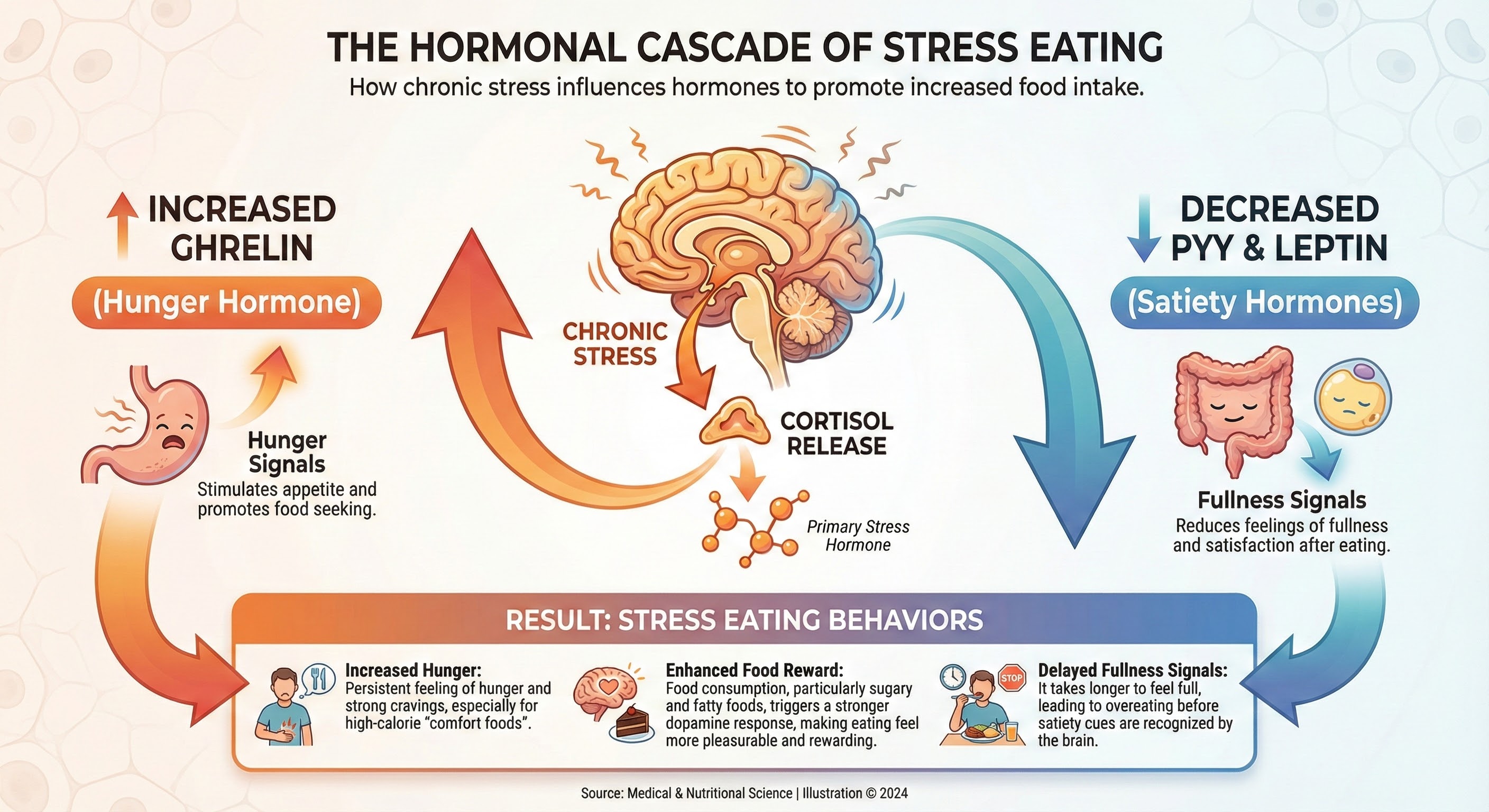
When your hypothalamic-pituitary-adrenal (HPA) axis activates in response to stress, cortisol release triggers immediate metabolic changes designed to ensure energy availability for fight or flight. Blood sugar rises as the liver releases glucose. Insulin sensitivity decreases to keep that glucose circulating rather than stored. And crucially, appetite-regulating hormones shift in ways that promote eating even when energy stores are adequate.
Cortisol directly increases ghrelin, the “hunger hormone” produced primarily in the stomach. Elevated ghrelin doesn’t just increase general hunger; it specifically enhances the reward value of food, making eating feel more pleasurable and satisfying than it would under normal conditions. Simultaneously, cortisol suppresses peptide YY (PYY) and other satiety signals, meaning the “stop eating” message arrives later and weaker than usual. You’re hungrier than your energy needs justify, food tastes better than it normally would, and you feel full later than you should. The deck is stacked toward overconsumption.
Research published in Psychoneuroendocrinology (2024) tracked 200 participants through a standardized stress protocol while monitoring hormone levels and subsequent food intake. Those with the highest cortisol responses consumed an average of 340 additional calories in the two hours following stress exposure compared to their baseline eating patterns. More significantly, 78% of those excess calories came from foods high in sugar and fat, not from increased portions of whatever was available. Stress doesn’t just increase eating; it redirects it toward specific categories of food.
Why Your Brain Craves Comfort Food Specifically
The stress-eating phenomenon isn’t random in its food selection. Stressed individuals consistently reach for foods combining sugar, fat, and salt in specific proportions, what food scientists call “hyperpalatable” formulations. This preference reflects the brain’s reward circuitry operating under stress conditions.
Under normal circumstances, eating activates dopamine release in the nucleus accumbens, the brain’s primary reward center. This dopamine signal serves as a learning mechanism, tagging the behavior as worth repeating. Hyperpalatable foods produce larger dopamine spikes than whole foods, which is why they’re more reinforcing and why food manufacturers engineer products to hit precise “bliss point” ratios.
Stress amplifies this reward response dramatically. Research from the University of California demonstrated that cortisol exposure increases dopamine release from food by approximately 30-40% compared to non-stressed baseline. The same cookie that provides moderate pleasure normally becomes substantially more rewarding when you’re stressed. Your brain isn’t malfunctioning; it’s following its programming to seek maximum reward during perceived threat conditions.
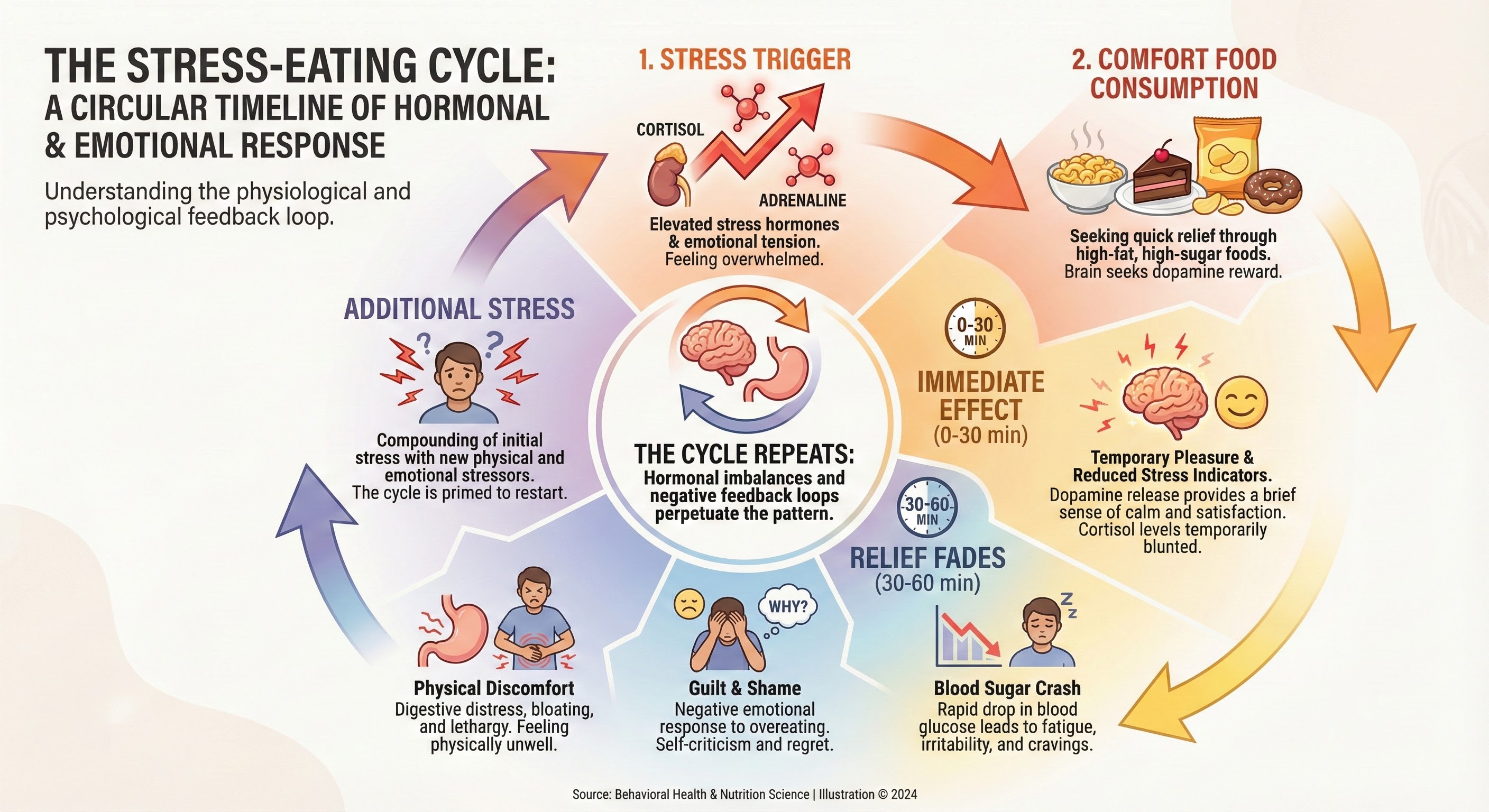
This reward amplification creates a powerful learning loop. Eat comfort food while stressed, experience enhanced pleasure, feel temporary relief as dopamine masks cortisol’s negative effects. Your brain logs this sequence and strengthens the neural pathway connecting stress to comfort food seeking. With repetition, the pathway becomes automatic, a habitual response triggered by stress cues before conscious decision-making can intervene.
The specific foods involved in stress eating vary by individual but share common characteristics. They’re typically energy-dense (high calories per bite), rapidly digestible (quick blood sugar impact), and palatable (engineered flavor profiles). Ice cream, cookies, chips, pizza, and chocolate dominate stress-eating patterns not because of weakness but because they’re precisely optimized to exploit the reward circuitry that stress has sensitized.
The Temporary Relief Problem
Comfort food provides genuine, measurable stress relief, which is precisely why the behavior persists. Research using functional MRI shows that consuming palatable food during stress reduces activity in the amygdala (threat detection) and hypothalamus (stress response coordination) within minutes. The relief is real, not imagined.
The problem is the relief’s duration and what follows. The calming effect of comfort food typically lasts 15-30 minutes before stress signals reassert themselves. Meanwhile, the excess calories are being stored, blood sugar is spiking and crashing, and in many people, the awareness of having stress-eaten triggers additional stress and guilt. This guilt becomes another stress trigger, potentially initiating another round of comfort eating. The cycle becomes self-perpetuating.
A 2023 longitudinal study in Appetite followed participants through a four-week stress period, tracking both stress-eating episodes and overall wellbeing. Those who relied primarily on food for stress relief showed no improvement in stress levels over the study period despite frequent comfort eating. Those who used non-food coping strategies (exercise, social support, relaxation techniques) showed progressive stress reduction. Comfort food masks stress symptoms temporarily but doesn’t address underlying causes, allowing stress to persist and continue triggering eating.
The neurological explanation involves habituation. When a reward pathway is repeatedly activated, the brain adapts by reducing receptor sensitivity, requiring larger or more frequent rewards to achieve the same effect. Regular stress eating can lead to needing more food to achieve the same temporary relief, while simultaneously making normal eating less satisfying. This tolerance development mirrors addiction mechanisms, though stress eating rarely reaches clinical addiction severity.
Breaking the Cycle: Evidence-Based Strategies
Interrupting the cortisol-comfort food cycle requires intervention at multiple points. No single strategy works reliably because the cycle has multiple entry points and drivers. The most effective approach combines immediate coping alternatives with longer-term stress reduction and environmental modification.
The first intervention point is the gap between stress awareness and eating behavior. This gap may be only seconds in an established habit, but it can be expanded through practice. When you notice the urge to stress eat, the goal isn’t immediate resistance but rather delay and inquiry. The acronym HALT (Hungry, Angry, Lonely, Tired) provides a quick check: is this genuine hunger or something else wearing a hunger mask?
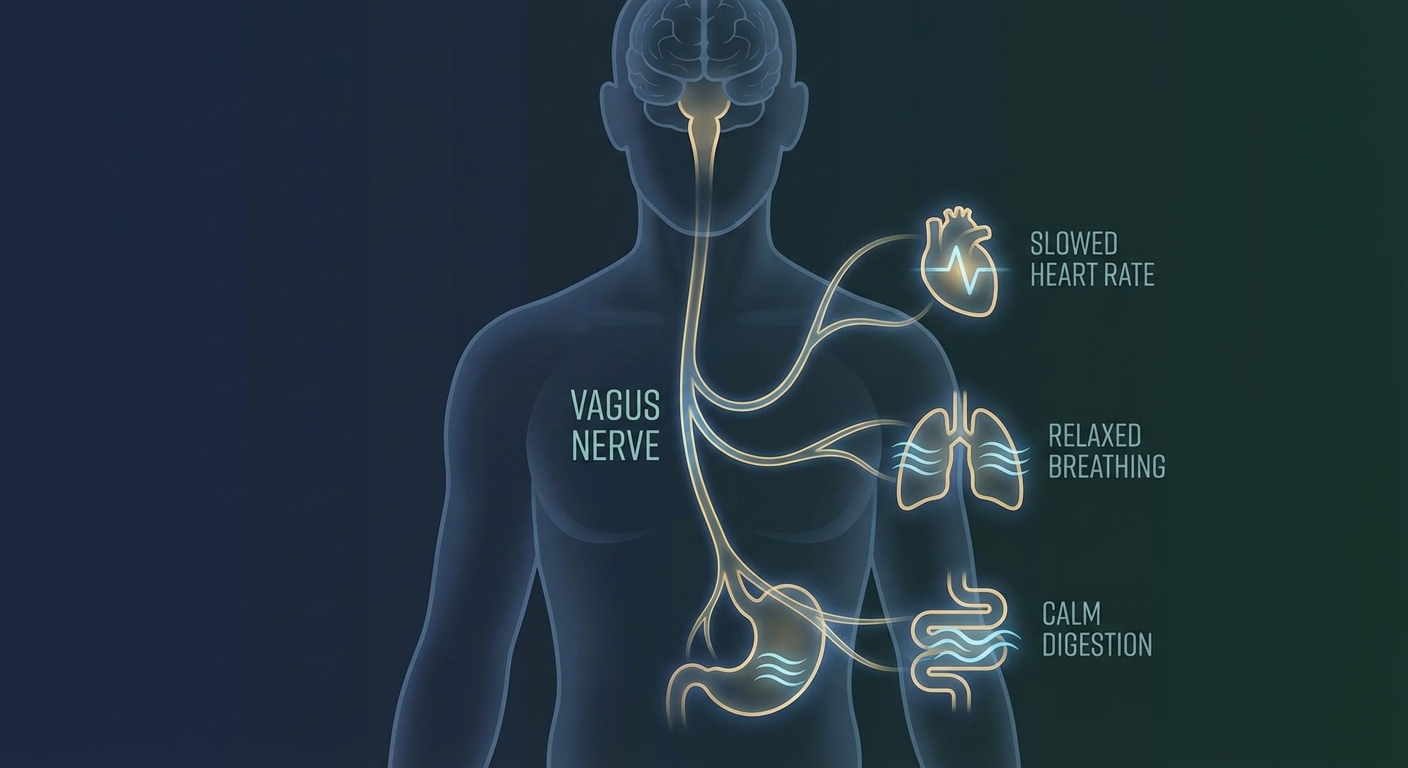
If the urge isn’t genuine hunger, the next question is what you’re actually seeking. Comfort food provides dopamine, distraction, and temporary nervous system calming. Alternative behaviors that provide similar neurochemistry can substitute for eating. Physical movement releases endorphins and burns off stress hormones. Social connection triggers oxytocin release. Breathing exercises activate the vagus nerve, directly shifting from sympathetic to parasympathetic dominance. Any of these can provide the relief that eating promises, often more effectively and without the secondary consequences.
The substitution approach works best when alternatives are pre-planned and easily accessible. Deciding in the moment what to do instead of eating requires prefrontal cortex engagement, which is precisely what stress impairs. Having a default substitute ready, whether it’s a five-minute walk, calling a specific friend, or a breathing exercise, removes the decision load from the stressed moment.
Environmental modification addresses the cycle at a different point. If hyperpalatable comfort foods aren’t immediately available, the friction of obtaining them creates an opportunity for the craving to pass. This isn’t about eliminating all enjoyable food; it’s about making the stress-eating default require effort. Keeping trigger foods out of the house (or at least out of sight), portioning treats into single servings, and increasing access to satisfying but less hyperpalatable options all reduce the automaticity of stress eating.
The Role of Blood Sugar Stability
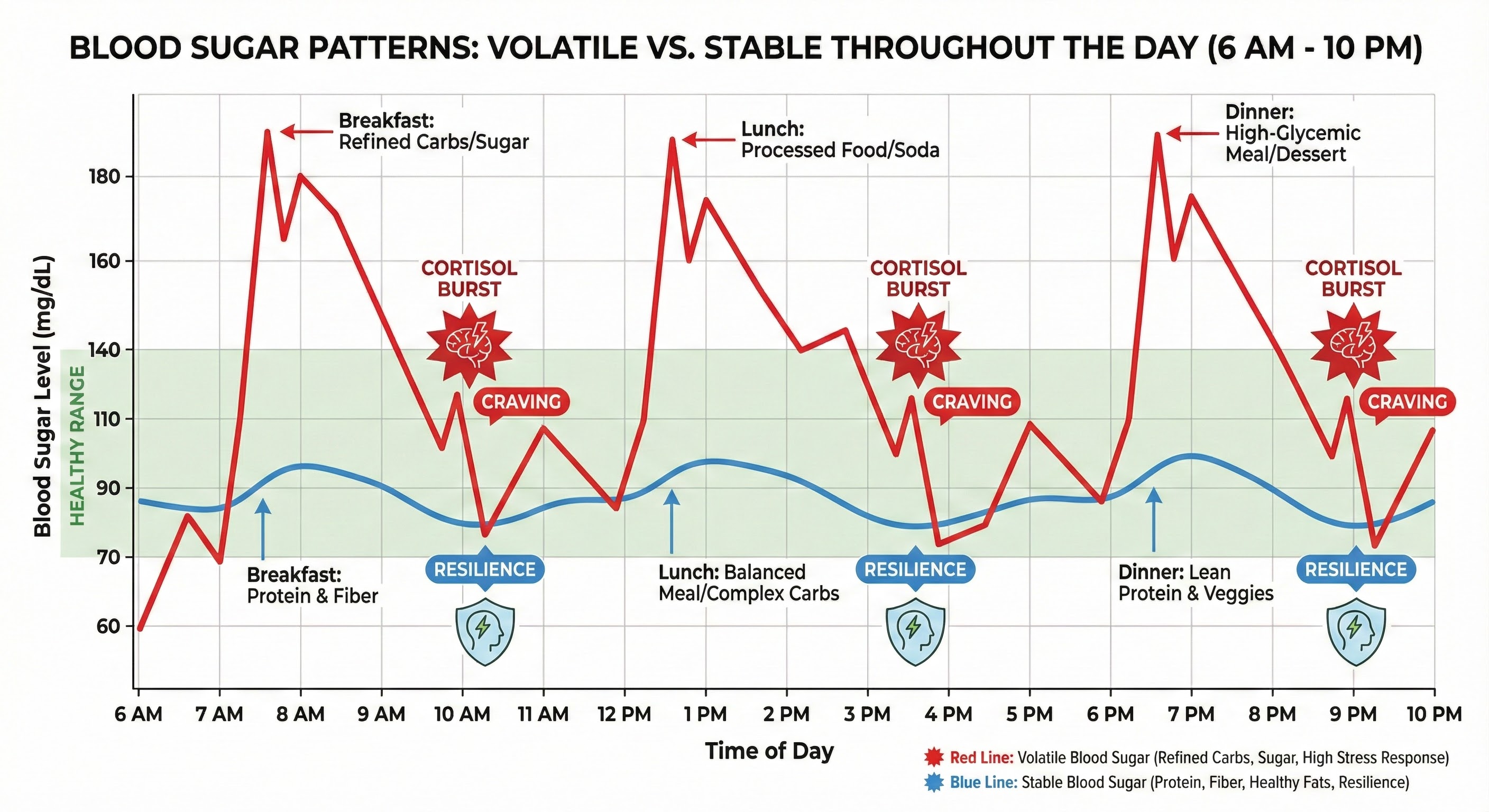
Blood sugar volatility amplifies stress-eating vulnerability. When blood sugar drops rapidly after a spike, the body interprets this as an energy emergency and triggers cortisol release to mobilize glucose reserves. This cortisol spike activates the same pathways that emotional stress does, creating hunger and comfort food cravings even when no external stressor exists.
Many stress eaters are caught in a glucose roller coaster that perpetuates their patterns. A stressful morning leads to comfort food at lunch (high sugar, refined carbs). Blood sugar spikes, then crashes by mid-afternoon. The crash triggers cortisol and cravings, leading to more comfort food. The cycle repeats through the evening. What feels like continuous stress eating is partly blood sugar instability driving repeated cortisol spikes.
Stabilizing blood sugar reduces this biochemically-driven craving pattern. The primary strategies involve protein prioritization (protein slows glucose absorption and promotes satiety), fiber inclusion (same mechanism), and reducing refined carbohydrate intake, especially on an empty stomach. Our guide on blood sugar management strategies provides detailed protocols for maintaining glucose stability during high-risk eating situations.
Meal timing also matters. Skipping meals or extended fasting during stressful periods often backfires by creating blood sugar drops that trigger cortisol and impair decision-making. Regular eating with adequate protein at each meal maintains the stable metabolic state that supports stress resistance rather than stress eating.
Stress Reduction as Upstream Prevention
While coping strategies address stress eating after it’s triggered, reducing baseline stress levels prevents the trigger from activating as frequently or intensely. This upstream approach is more sustainable than constantly managing downstream symptoms.
Chronic stress maintains elevated baseline cortisol, which lowers the threshold for comfort food cravings. Under chronic stress, relatively minor triggers can initiate eating that wouldn’t occur with lower baseline stress. Reducing overall stress load raises this threshold, providing more buffer before the stress-eating response activates.
Evidence-based stress reduction includes regular physical activity (particularly effective for metabolizing stress hormones), adequate sleep (sleep deprivation elevates baseline cortisol), social connection (oxytocin buffers cortisol effects), and contemplative practices (meditation, yoga, breathwork all reduce HPA axis reactivity over time). These aren’t luxuries to pursue after stress eating is resolved; they’re foundational practices that make resolution possible.
The holiday season presents particular challenges for upstream prevention because many stress-reduction activities get deprioritized. Exercise routines are disrupted by travel and social obligations. Sleep suffers from late nights and schedule changes. The result is elevated baseline stress that makes comfort food cravings more frequent and intense. Protecting stress-reduction practices during high-stress periods isn’t selfishness; it’s strategic prevention.
In our clinical work with stress-eating patterns, patients who maintained their exercise routine through stressful periods showed 40-50% fewer stress-eating episodes than those who suspended exercise. The protective effect was dose-dependent: even two or three weekly sessions provided significant buffering compared to complete exercise cessation.
Building Awareness Without Judgment
Perhaps the most crucial shift in addressing stress eating is moving from judgment to curiosity. The moralized framing of stress eating as weakness or failure adds guilt to an already stressful situation, creating additional triggers for the very behavior being addressed. Curiosity, by contrast, opens space for observation and learning without the emotional charge that drives reactive eating.
The practice involves noticing stress-eating urges and episodes with the question “what’s happening here?” rather than “what’s wrong with me?” This seemingly simple reframe produces substantially different neurological effects. Self-criticism activates threat circuits and elevates cortisol, potentially worsening the stress that drove the eating. Curious observation engages prefrontal cortex without threat activation, maintaining the cognitive resources needed for behavior change.
Tracking patterns without judgment reveals useful information. What situations trigger stress eating? What time of day? What emotions precede the urge? What foods specifically? This data points toward personalized interventions. If stress eating occurs primarily in the evening after work, that specific transition point can be targeted with alternative activities. If certain emotions (loneliness, boredom, frustration) consistently precede eating, those emotional needs can be addressed directly.
The mindful eating approach provides complementary tools for building eating awareness. While stress eating operates largely outside awareness, bringing attention to the eating experience itself interrupts automaticity and creates choice points. Even stress eating done mindfully, with full attention to each bite, differs qualitatively from unconscious consumption and often self-limits more naturally.
The Bottom Line
Stress eating isn’t a character flaw; it’s a predictable neurobiological response to cortisol elevation. Understanding the cortisol-comfort food cycle, from ghrelin increases and satiety suppression to enhanced dopamine reward and temporary relief, reveals why willpower-based approaches consistently fail. The cycle has multiple entry points, and effective intervention requires addressing several of them.
The temporary relief that comfort food provides is real but brief, lasting 15-30 minutes before stress reasserts itself while leaving secondary consequences (blood sugar disruption, guilt, excess calories) that can perpetuate the cycle. Alternative coping strategies, including movement, social connection, and breathing exercises, can provide similar neurochemical relief without these costs.
Blood sugar stability matters more than most people realize. Glucose volatility triggers cortisol spikes that drive cravings independently of emotional stress, creating a biochemical layer beneath the psychological one. Protein prioritization, fiber inclusion, and regular meal timing stabilize the metabolic foundation that supports stress resistance.
Upstream prevention through consistent stress-reduction practices (exercise, sleep, connection, contemplative practice) raises the threshold for stress-eating triggers, reducing their frequency and intensity. This approach is more sustainable than constantly managing the downstream behavior.
Breaking the Cycle: Your Action Steps
- Use the HALT check when cravings strike: Am I Hungry, Angry, Lonely, or Tired?
- Pre-plan one non-food coping alternative (5-minute walk, specific friend to text, breathing exercise)
- Reduce environmental availability of trigger foods during high-stress periods
- Prioritize protein at each meal to stabilize blood sugar and reduce biochemically-driven cravings
- Protect exercise, sleep, and social connection as stress-prevention fundamentals, especially during stressful periods
- Approach stress-eating episodes with curiosity rather than judgment to avoid adding guilt-stress to the cycle
Important: If stress eating significantly impacts your physical health, emotional wellbeing, or daily functioning, consult a registered dietitian or mental health professional specializing in eating behaviors. The strategies here support self-management but don’t replace professional treatment for clinical eating disorders.
Sources: Psychoneuroendocrinology cortisol and food intake research (2024), University of California dopamine and stress studies, Appetite longitudinal study on stress coping (2023), Journal of Neuroscience reward pathway research, Frontiers in Psychology emotional eating mechanisms, American Journal of Clinical Nutrition blood sugar and appetite regulation studies, clinical observation from eating disorder treatment programs.