You finish dinner at 9:30 PM, watch television until 11, then grab a handful of crackers while brushing your teeth. The next morning, you skip breakfast because you’re not hungry, finally eating your first meal around noon. By conventional calorie counting, this pattern might work fine. By your body’s internal clock, you’ve just committed metabolic sabotage.
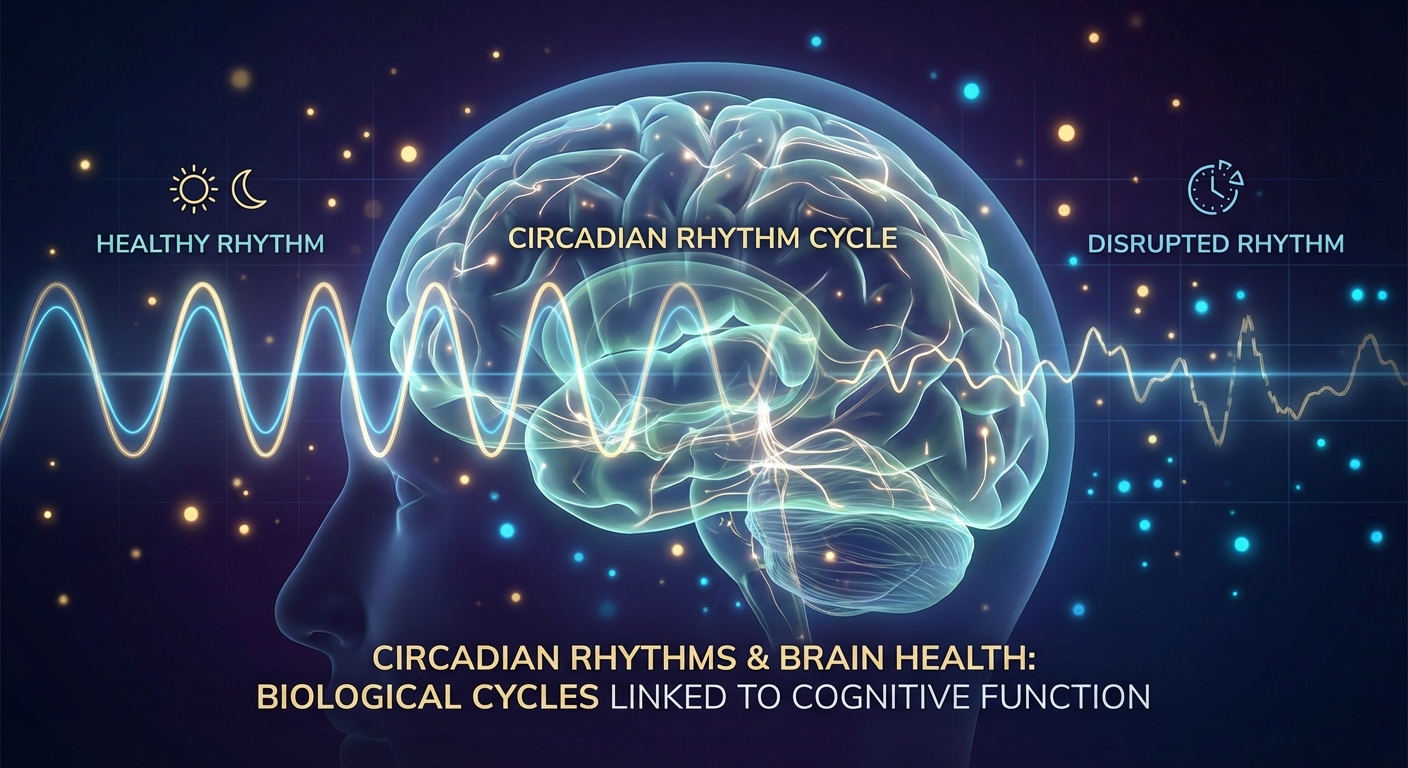
The emerging science of chrononutrition, the study of how meal timing interacts with circadian biology, is fundamentally changing our understanding of metabolism. Your body doesn’t process food the same way at 8 AM as it does at 8 PM. The same meal eaten at different times of day produces different insulin responses, different fat storage patterns, and different effects on hunger hormones. This isn’t fringe science. It’s published in Cell, Cell Metabolism, and the New England Journal of Medicine, backed by randomized controlled trials showing that aligning eating patterns with circadian rhythms improves metabolic markers independent of what you eat or how much.
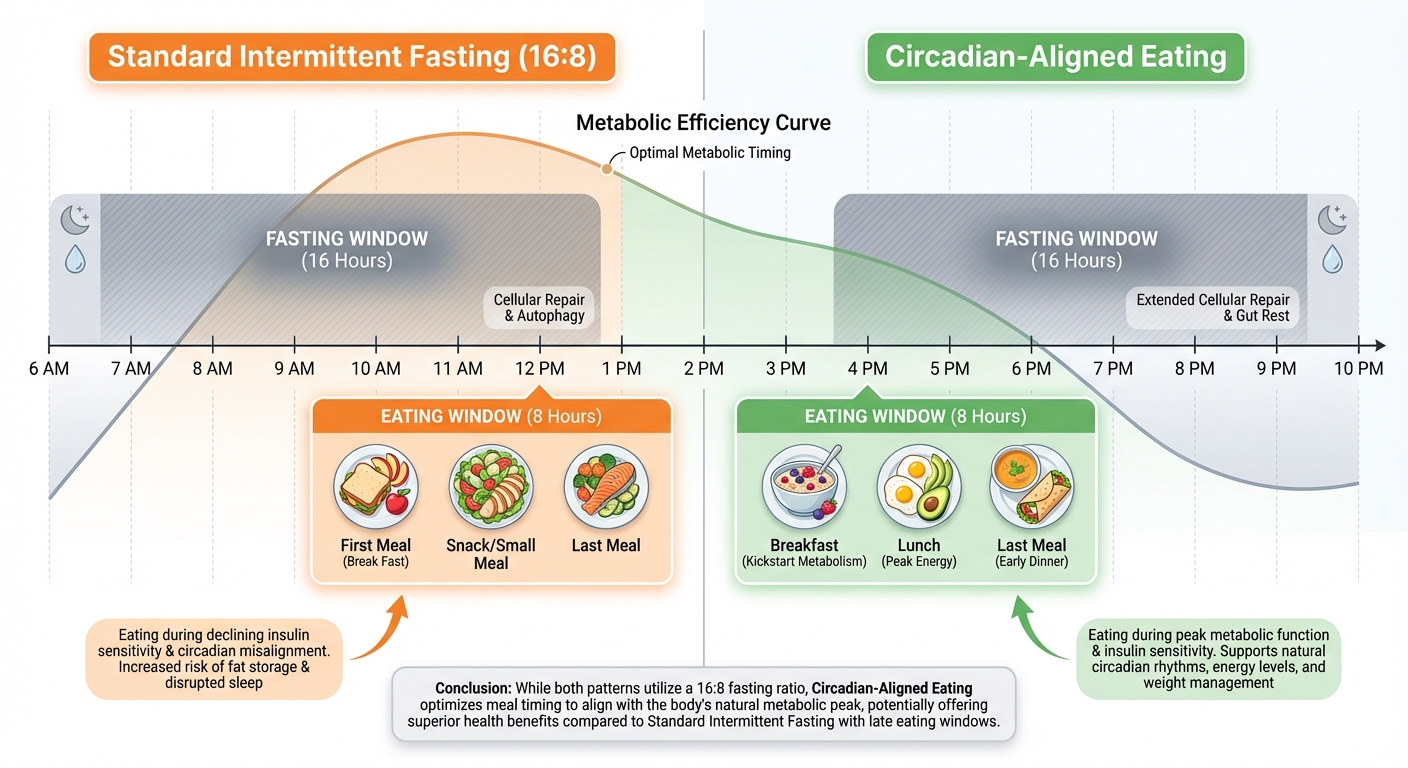
The practical application of this research is called time-restricted eating, or more precisely, circadian fasting. Unlike standard intermittent fasting protocols that focus on extending fasting duration, circadian fasting emphasizes when the eating window occurs relative to your body’s natural rhythms. The distinction matters enormously, because a 16:8 pattern starting at 2 PM produces different metabolic effects than the same pattern starting at 7 AM. The former fights your biology. The latter works with it.
Your Body Runs on a 24-Hour Clock
Every cell in your body contains molecular clocks, protein feedback loops that cycle roughly every 24 hours. These peripheral clocks take timing cues from a master pacemaker in the brain’s suprachiasmatic nucleus, which synchronizes itself primarily through light exposure. But here’s the critical insight from recent research: the clocks in your liver, pancreas, fat tissue, and muscle also respond to feeding signals. Eating at the wrong times can desynchronize these peripheral clocks from your master clock, creating a state of internal circadian misalignment.
Dr. Satchin Panda, a leading circadian researcher at the Salk Institute, has documented this phenomenon extensively. His team found that the liver’s metabolic clock is particularly sensitive to meal timing. When you eat late at night, liver cells receive signals that suggest morning activity, but the master brain clock insists it’s time for sleep. This creates conflicting instructions that impair the liver’s ability to regulate blood sugar efficiently. The result is higher glucose and insulin levels after meals, increased fat storage, and disrupted lipid metabolism.
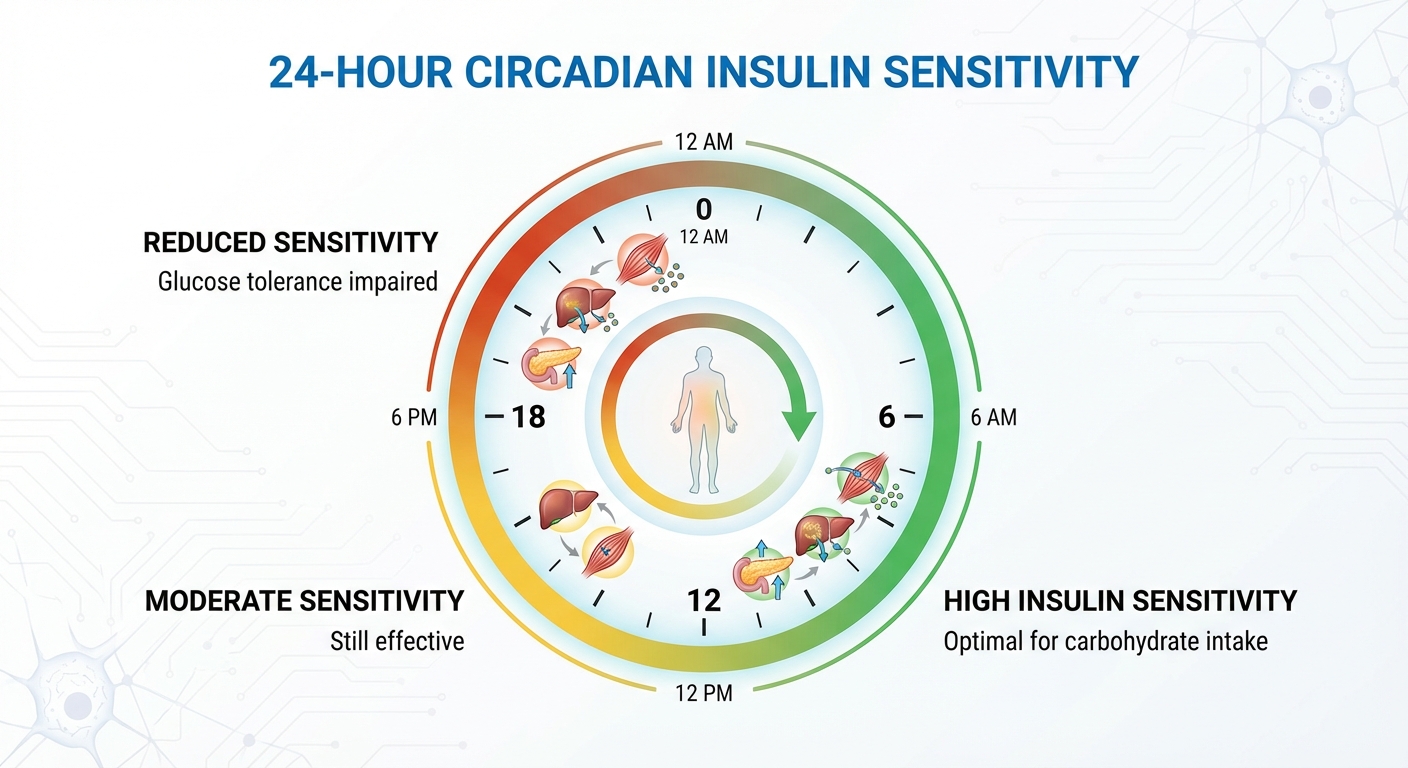
The timing sensitivity extends beyond the liver to the pancreas, which produces insulin. Research published in Cell Metabolism (2019) demonstrated that beta cell function, the capacity of pancreatic cells to release insulin in response to glucose, follows a circadian pattern with peak efficiency in the morning hours and declining capacity as the day progresses. This means your body handles carbohydrates better early in the day, not because of any mystical morning metabolism boost, but because the insulin-producing machinery is operating at full capacity during daylight hours.
Muscle cells show similar circadian patterns in glucose uptake. Insulin sensitivity in skeletal muscle, the primary destination for dietary glucose, peaks in the morning and declines into the evening. This is one reason why front-loading protein intake to the morning hours can be particularly effective. A 2020 study in Diabetologia found that glucose tolerance after an identical carbohydrate load was 17% worse at 8 PM compared to 8 AM in healthy adults. The same food, the same people, dramatically different metabolic responses based solely on timing.
The Evidence: What Studies Actually Show
The theoretical framework for circadian fasting is compelling, but the clinical evidence is what transforms theory into practice. Several well-designed randomized controlled trials have now tested whether eating earlier in the day produces better metabolic outcomes than eating later, even with identical calorie and macronutrient intake.
The landmark study came from Courtney Peterson’s lab at the University of Alabama Birmingham, published in Cell Metabolism in 2018. Researchers assigned overweight adults to either an early time-restricted eating pattern (eating between 8 AM and 2 PM, a 6-hour window ending by early afternoon) or a control pattern (eating over 12 hours, ending around 8 PM). Importantly, both groups ate the same amount of food; the only difference was timing. After five weeks, the early eating group showed significantly lower 24-hour glucose levels, reduced insulin levels, lower blood pressure, and decreased markers of oxidative stress. They also reported reduced evening appetite, suggesting the timing shift helped regulate hunger hormones.
A larger study published in JAMA Internal Medicine (2022) followed 139 adults with obesity for 12 months, comparing time-restricted eating to standard caloric restriction. While both groups lost similar amounts of weight, the time-restricted eating group showed additional improvements in diastolic blood pressure and mood disturbance scores. Critics noted the study didn’t optimize the eating window for circadian alignment, using a noon-to-8-PM schedule rather than morning-focused timing. The metabolic benefits were present but potentially underestimated.
The most striking findings come from studies of isocaloric meal timing, where researchers keep total calories identical but shift the distribution across meals. A 2013 study in Obesity assigned women to either a breakfast-heavy pattern (700 kcal breakfast, 500 kcal lunch, 200 kcal dinner) or a dinner-heavy pattern (200 kcal breakfast, 500 kcal lunch, 700 kcal dinner). Despite eating the same total calories, the breakfast-heavy group lost 2.5 times more weight over 12 weeks and showed significantly greater improvements in fasting glucose, insulin, and triglycerides. The dinner-heavy group also reported more hunger throughout the day, despite consuming identical energy.
These results don’t mean eating dinner is harmful. They demonstrate that front-loading calories to earlier in the day, when your metabolic machinery operates most efficiently, produces better outcomes than back-loading them to evening hours when insulin sensitivity is impaired.
Why Standard Intermittent Fasting Misses the Point
The intermittent fasting movement has popularized time-restricted eating, but most practitioners optimize for fasting duration rather than circadian alignment. The typical approach involves skipping breakfast, eating a first meal at noon, and finishing dinner by 8 PM. This 16:8 pattern extends the overnight fast but places the eating window in late morning through evening, precisely when metabolic function is declining.
This timing works against circadian biology. By eating your largest meals when insulin sensitivity is lowest, you generate higher glucose and insulin excursions after each meal. By skipping the morning window when glucose tolerance is optimal, you waste the metabolic advantages of the early day. This is a key distinction from standard fasting approaches focused primarily on metabolic health. The extended overnight fast provides some benefits, primarily promoting autophagy and allowing insulin levels to remain low for longer periods, but these gains may be partially offset by poor timing of the feeding window itself.
Dr. Satchin Panda’s research at the Salk Institute suggests that ending eating earlier in the evening may be more important than extending the morning fast. In mouse studies comparing early versus late feeding windows, the early eating group showed superior metabolic outcomes even when fasting duration was identical. The human evidence, while less extensive, points in the same direction. The Peterson study described above achieved remarkable metabolic improvements with a 6-hour eating window from 8 AM to 2 PM, a pattern that prioritizes circadian alignment over fasting length.
The practical implication is that a shorter eating window ending earlier in the day likely outperforms a longer window ending later. An 8-hour window from 7 AM to 3 PM may produce better metabolic results than a 6-hour window from 2 PM to 8 PM, even though the latter involves more fasting hours. The quality of the eating window, its alignment with circadian peaks in metabolic function, appears to matter at least as much as its duration.
The Metabolism and Longevity Connection
Beyond short-term metabolic markers, circadian eating patterns may influence aging and longevity. This research remains more preliminary, drawing heavily from animal models, but the mechanistic links are increasingly clear.
Circadian disruption accelerates cellular aging. Night shift workers, who experience chronic circadian misalignment from eating during biological night and sleeping during biological day, show elevated rates of obesity, type 2 diabetes, cardiovascular disease, and certain cancers. While multiple factors contribute to these risks, including sleep deprivation and social disruption, the metabolic effects of mistimed eating play a documented role. A 2021 study in PNAS found that simulated night shift eating in healthy adults caused significant increases in post-meal glucose levels compared to day shift eating, even with controlled sleep duration.
Time-restricted eating appears to enhance autophagy, the cellular recycling process linked to longevity. Autophagy is primarily activated during fasting periods when nutrient-sensing pathways like mTOR are suppressed. By compressing eating into fewer hours and extending the daily fasting window, circadian fasting promotes longer periods of autophagic activity. Dr. Valter Longo, director of the Longevity Institute at USC, has suggested that daily fasting windows of 12-16 hours may be sufficient to activate meaningful autophagy, particularly when combined with circadian-aligned timing that enhances the body’s natural repair rhythms.
The sirtuin pathway, another mechanism linked to longevity, also shows circadian regulation. SIRT1, a protein implicated in metabolic regulation and aging, follows a 24-hour expression pattern with peak activity during fasting and sleep. Eating late at night appears to suppress SIRT1 activity precisely when it should be elevated, potentially accelerating aspects of cellular aging.
Practical Implementation: Building Your Protocol
Translating research into practice requires balancing circadian optimization with real-world constraints. Few people can finish eating by 2 PM while maintaining normal work and family schedules. The goal is to move in the direction of circadian alignment without demanding perfection.
The core principle is simple: eat earlier, finish earlier. Even modest shifts in meal timing can produce measurable benefits, aligning with what we know about chrononutrition and the body’s internal clocks. A 2019 pilot study found that moving the dinner meal from 8 PM to 6 PM, without changing other meals or total intake, improved overnight glucose control and next-morning insulin sensitivity. You don’t need to restructure your entire day to gain benefits.
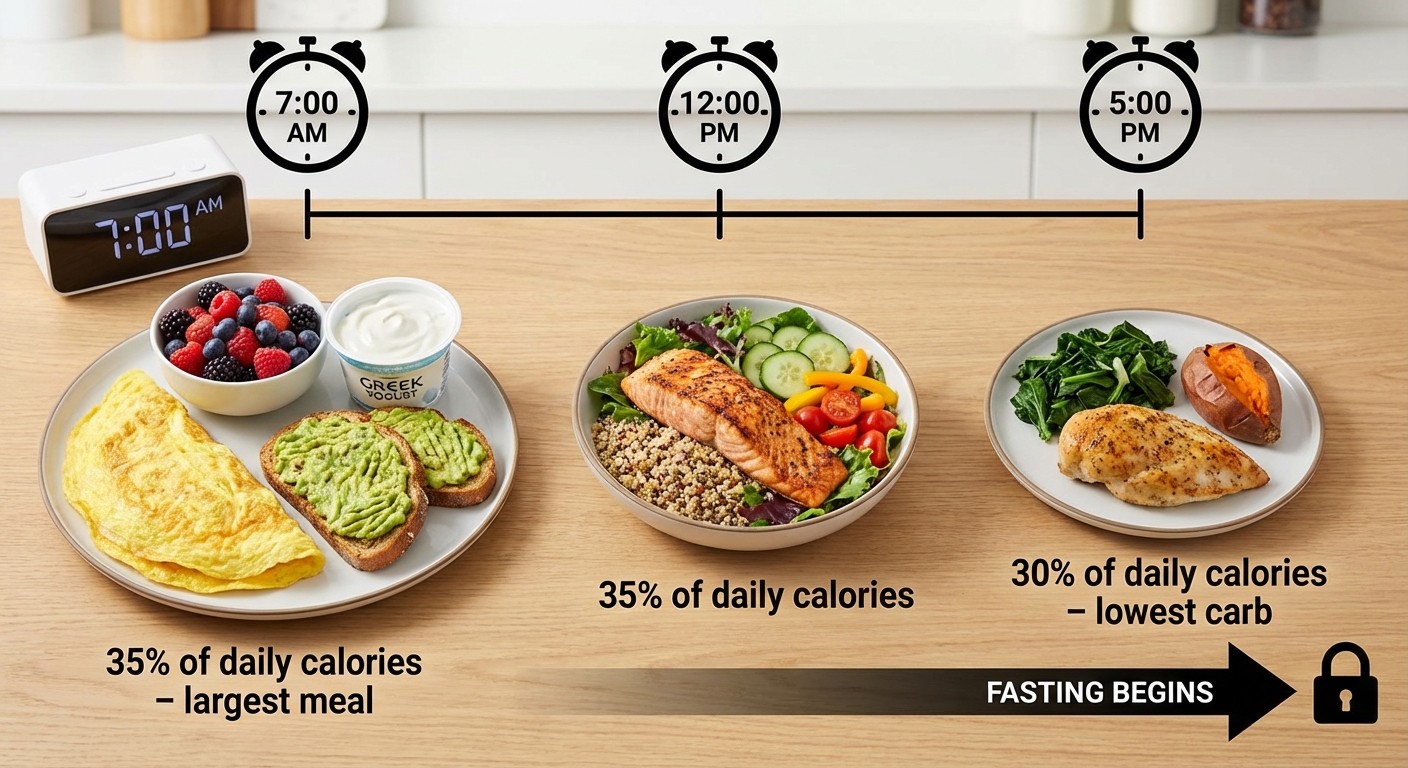
For a realistic circadian fasting protocol, consider a 10-hour eating window beginning with breakfast. If you wake at 6:30 AM and have breakfast at 7 AM, your eating window closes at 5 PM. This schedule aligns the majority of caloric intake with peak metabolic function while allowing an evening that works for most social situations. You can still have coffee or tea after 5 PM; the key is ending significant calorie intake.
If social or work demands make early dinner impossible, prioritize front-loading calories regardless. Eat a substantial breakfast with protein and complex carbohydrates when insulin sensitivity is highest. Have a moderate lunch. Keep dinner smaller and lower in carbohydrates, since glucose tolerance is diminished in the evening. This isn’t as optimal as early eating window closure, but it captures some circadian benefits within practical constraints.
Specific targets for circadian fasting:
- Eating window: 8-10 hours, ideally starting within 1-2 hours of waking
- Breakfast: Substantial, 25-35% of daily calories, protein-rich (30+ grams)
- Dinner: Smaller, 20-30% of daily calories, lower carbohydrate content
- Final food intake: 3-4 hours before sleep minimum
- Morning light exposure: 10-15 minutes of outdoor light within an hour of waking (strengthens circadian entrainment)
Individual Variation and Chronotype Considerations
Circadian recommendations assume a typical morning-oriented chronotype, but significant genetic variation exists in circadian timing. True evening chronotypes, people who naturally wake late and feel most alert at night, may have peripheral clocks that peak later in the day than research averages suggest.
However, the evidence suggests that even evening chronotypes benefit from eating earlier than they naturally prefer. A 2020 study in Nutrients found that late chronotypes who ate breakfast showed improved glucose tolerance compared to late chronotypes who skipped it, despite their subjective preference for later eating. The peripheral metabolic clocks appear to follow environmental light cues more than personal preference, meaning morning metabolic advantages persist even for night owls.
The practical advice is the same regardless of chronotype: shift eating earlier relative to your current pattern. If you naturally eat from noon to midnight, moving to 10 AM to 8 PM represents meaningful progress. If you’re already eating from 7 AM to 7 PM, compressing to 7 AM to 5 PM would be the next optimization. The direction matters more than achieving a specific target.
Women should also note that circadian responses may vary across the menstrual cycle. Preliminary research suggests that luteal phase, the two weeks before menstruation, may involve reduced glucose tolerance and altered circadian gene expression. During this phase, extra attention to early eating and carbohydrate timing may be particularly beneficial, though large-scale human studies are still limited.
The Bottom Line
Circadian fasting represents a refinement of time-restricted eating that prioritizes when you eat within your eating window, not just how long you fast. The research increasingly shows that aligning food intake with natural circadian peaks in metabolic function, primarily the morning and early afternoon hours, produces better outcomes for glucose control, insulin sensitivity, and potentially longevity than simply extending fasting duration with evening eating.
The practical application doesn’t require radical changes. Eat breakfast. Make it substantial and protein-rich. Front-load your calories to the first half of the day. Keep dinner moderate and lower in carbohydrates. Finish eating 3-4 hours before bed. These adjustments work with your body’s natural rhythms rather than against them, producing metabolic benefits that compound over time.
Your Next Steps:
- Track your current pattern for one week without changing anything (note first and last food times daily)
- Identify your earliest feasible breakfast time that fits your schedule
- Move dinner earlier by 30-60 minutes as an initial shift
- Build a substantial breakfast habit targeting 30g+ protein within 2 hours of waking
- Gradually compress your window aiming for 10 hours initially, potentially 8-9 hours longer term
Sources: Cell Metabolism (2018) Peterson et al. early time-restricted eating, Diabetologia (2020) glucose tolerance circadian variation, Obesity (2013) isocaloric meal distribution study, JAMA Internal Medicine (2022) time-restricted eating trial, Dr. Satchin Panda (Salk Institute) circadian research, Dr. Valter Longo (USC) longevity mechanisms, PNAS (2021) night shift eating effects.