You’ve been sitting for two hours straight, deep in a work project, and you haven’t noticed a thing happening in your legs. But something is happening. Your arteries are slowly losing their ability to dilate properly. Blood flow to your muscles is decreasing. Your blood pressure is creeping upward. By the time you stand up and stretch, measurable vascular damage has occurred, and your fitness level won’t protect you from it. Even young, healthy, physically active people experience this decline when they sit for extended periods. But new research from the University of Birmingham reveals a surprisingly simple countermeasure: eating flavanol-rich foods before you sit.
The study, published in the Journal of Physiology in 2025, found that a single high-flavanol cocoa drink consumed before a two-hour sitting session completely prevented the vascular dysfunction that normally occurs. Blood vessel function remained intact in both arms and legs. Blood pressure stayed stable. Muscle oxygenation was preserved. The protection was so robust that it worked equally well in fit participants and less fit participants, even though fitness alone provided no protection whatsoever. This means that for the millions of people with desk jobs, daily commutes, or other sedentary demands, what you eat may matter more than how often you exercise when it comes to protecting your blood vessels during sitting.
The implications extend far beyond office workers. Prolonged sitting is embedded in modern life: meetings, flights, driving, streaming entertainment, working from home. Previous research has shown that even a 1% reduction in vascular function, as measured by flow-mediated dilation, correlates with a 13% increased risk of cardiovascular disease. If flavanols can prevent this decline without requiring you to interrupt your work every few minutes, they represent a practical tool for protecting cardiovascular health in a world designed to keep us seated.
Why Sitting Damages Your Blood Vessels
The human cardiovascular system evolved for movement. When you walk, run, or engage in physical activity, the mechanical forces of blood flowing through your arteries stimulate your endothelium, the single-cell layer lining all blood vessels, to produce nitric oxide. This potent signaling molecule relaxes the smooth muscle surrounding arteries, causing them to widen and accommodate increased blood flow. Regular movement keeps this system calibrated and responsive. Prolonged sitting does the opposite.
When you sit for extended periods, blood flow slows and becomes more stagnant, particularly in the legs. The reduced shear stress on the endothelium diminishes nitric oxide production. Your arteries gradually lose their ability to dilate in response to increased demand. This impairment is measurable within as little as one to two hours of sitting and affects both large conduit arteries (like the femoral artery in your thigh and the brachial artery in your arm) and smaller peripheral vessels that supply muscles and organs.
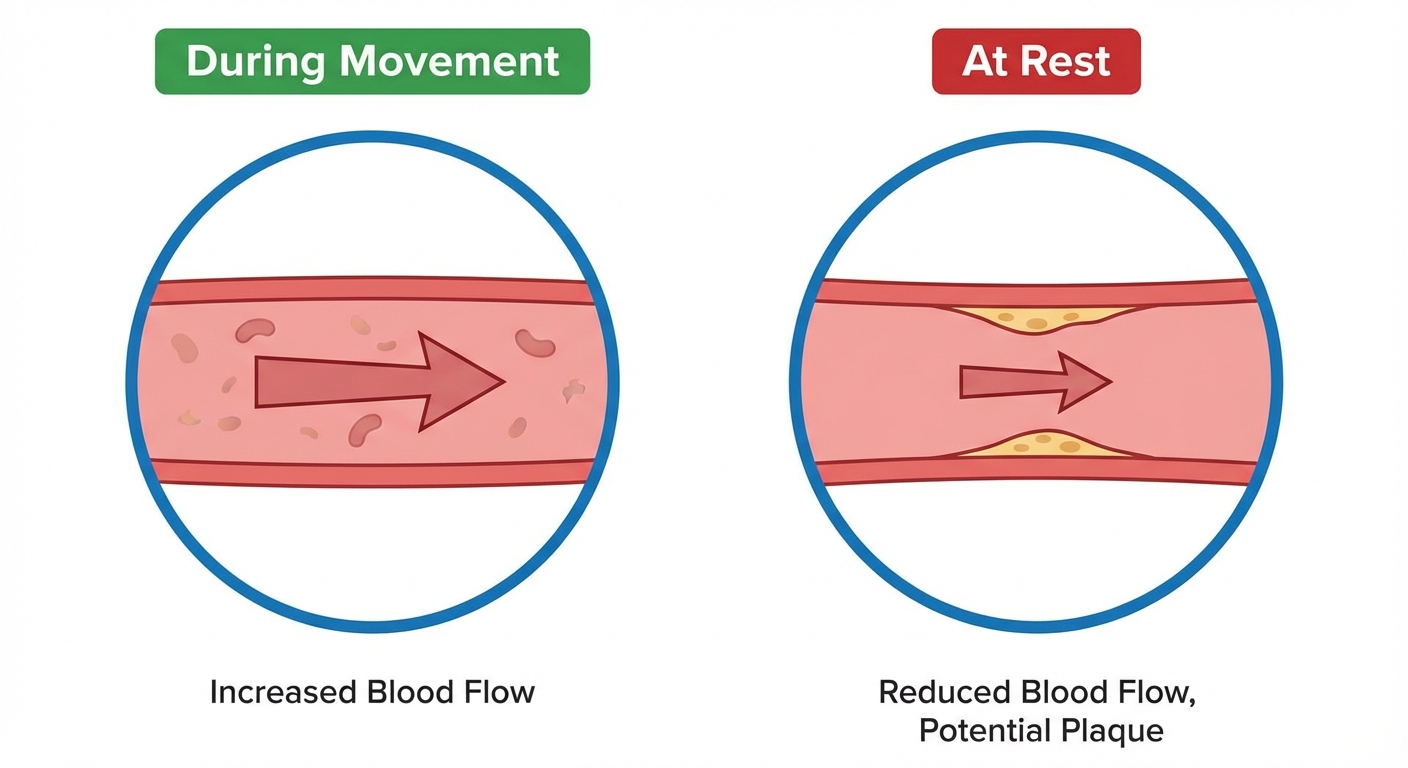
The researchers at Birmingham quantified this damage using flow-mediated dilation (FMD), the gold standard measurement for endothelial function. FMD measures how much an artery can expand when blood flow suddenly increases, mimicking what happens when you exercise or need more oxygen delivery to tissues. In healthy young people, arteries typically dilate by 6-8% in response to this challenge. After two hours of sitting, participants in the low-flavanol group experienced significant FMD declines in both the superficial femoral artery (leg) and the brachial artery (arm).
The decline wasn’t subtle. Participants also showed increased diastolic blood pressure, reduced arterial shear rate and blood flow, and compromised muscle oxygenation. These changes happen in healthy, young individuals with no underlying cardiovascular disease. They happen in people who exercise regularly. The fact that higher fitness levels provided no protection at all underscores that sitting-induced vascular dysfunction is a distinct problem that exercise alone cannot solve. You can’t outrun the damage of eight hours at a desk with an hour at the gym if your blood vessels are impaired for seven of those eight hours.
The Flavanol Solution: What the Study Found
Dr. Catarina Rendeiro and her colleagues at the University of Birmingham designed their study to test whether flavanols, plant compounds known to enhance nitric oxide production, could protect blood vessels during sitting. They recruited 40 healthy young men, divided equally into higher-fitness and lower-fitness groups based on their exercise habits. Each participant completed two sitting trials: one after consuming a high-flavanol cocoa drink (695 mg total flavanols) and one after a low-flavanol placebo drink (5.6 mg flavanols). Vascular function was measured before and after each two-hour sitting period.
The results were striking. In the low-flavanol condition, both fitness groups experienced the expected declines: reduced FMD in arm and leg arteries, increased blood pressure, decreased blood flow, and compromised muscle oxygenation. Fitness provided no protection. But in the high-flavanol condition, neither group showed any decline. Vascular function was completely preserved. Blood flow remained stable. Muscle oxygenation stayed constant. The flavanols had essentially canceled out the vascular harm of sitting.
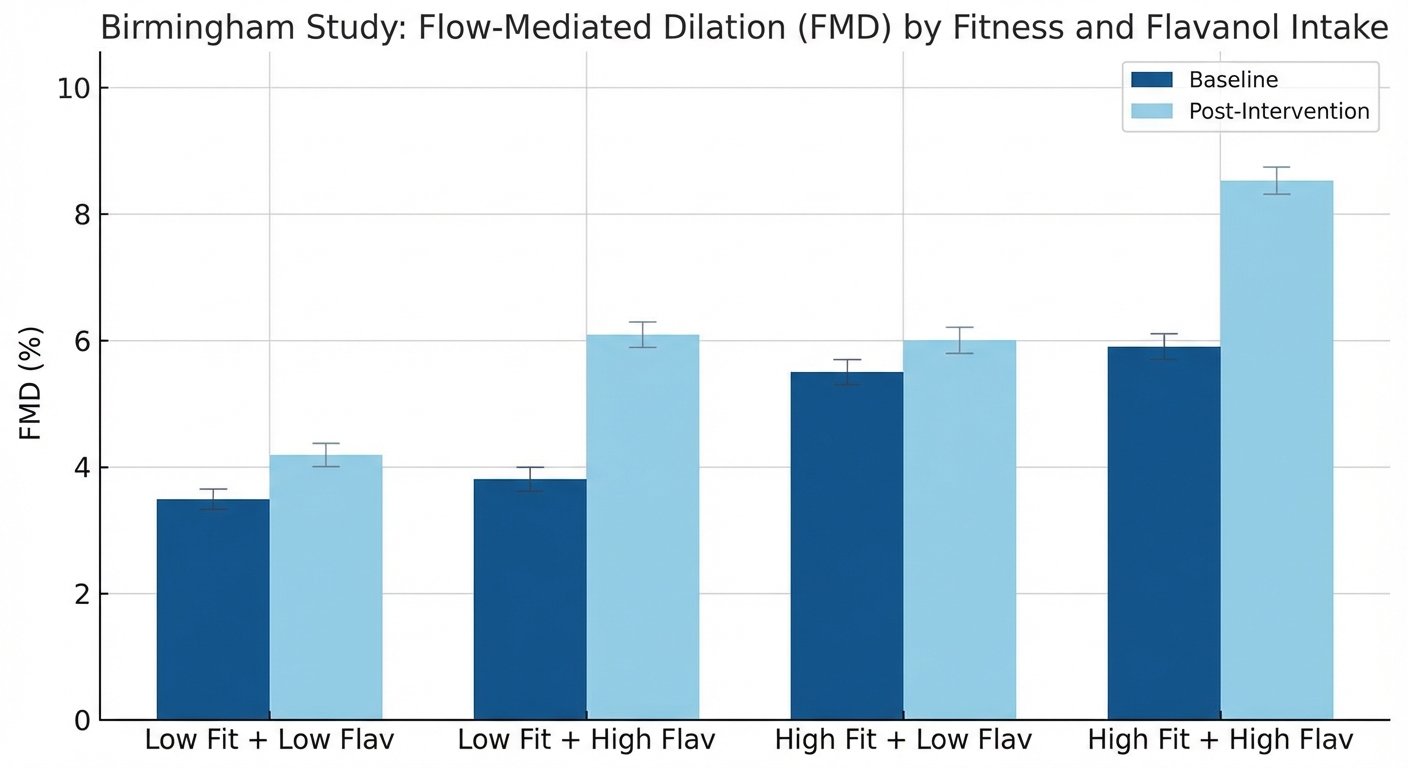
Dr. Sam Lucas, Professor of Cerebrovascular, Exercise & Environmental Physiology and study co-author, emphasized the practical significance: “This is the first time flavanols have been shown to be effective at preventing sitting-induced vascular dysfunction in young healthy men.” The finding suggests that for people who must sit for extended periods, nutritional intervention can provide protection that exercise habits alone cannot.
The 695 mg flavanol dose used in the study is achievable through diet, though it requires conscious effort. A single cup of flavanol-rich cocoa can contain 100-400 mg depending on processing. Adding green tea (100-200 mg per cup), dark chocolate (50-100 mg per ounce at 70%+ cacao), and berries or apples throughout the day could easily reach the protective threshold. The key is consuming these foods before or during periods of prolonged sitting rather than afterward, when the vascular damage has already occurred.
The Nitric Oxide Mechanism
Flavanols protect blood vessels through a specific biochemical pathway: enhancing the body’s production of nitric oxide. This mechanism explains both why they work and why their protection extends to sitting-induced damage specifically. Nitric oxide is the master regulator of vascular tone. When your endothelium produces adequate nitric oxide, your arteries stay supple, responsive, and properly dilated. When nitric oxide production falls, whether from aging, disease, or prolonged sitting, vascular function deteriorates.
The specific flavanols most studied for vascular effects are epicatechin and catechin, both abundant in cocoa, tea, apples, and berries. When you consume these compounds, they’re absorbed in the small intestine and circulate in the blood, where they interact directly with endothelial cells. Research has shown that flavanols increase the activity of endothelial nitric oxide synthase (eNOS), the enzyme responsible for producing nitric oxide. They also reduce oxidative stress that would otherwise degrade nitric oxide before it can act on blood vessels.
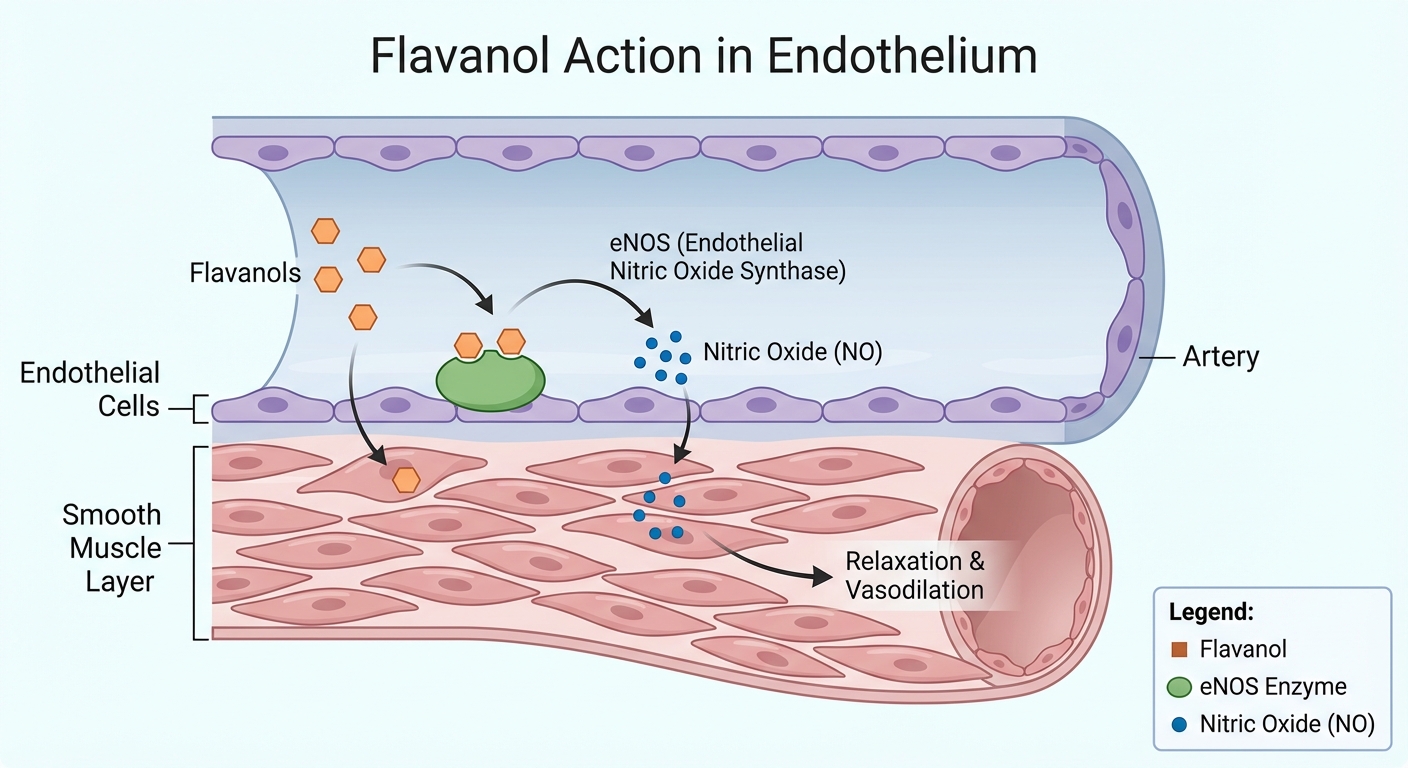
This mechanism explains why flavanols work even when sitting suppresses the normal stimulus for nitric oxide production. Normally, blood flow itself triggers nitric oxide release through mechanical shear stress on the endothelium. Sitting reduces this mechanical trigger by slowing blood flow. But flavanols provide a chemical stimulus for nitric oxide production that operates independently of blood flow. They essentially bypass the problem, maintaining nitric oxide levels through direct enzymatic activation even when the mechanical trigger is absent.
The vascular benefits of flavanols extend beyond acute protection during sitting. Regular consumption has been shown in randomized controlled trials to lower blood pressure (modestly but consistently), improve arterial stiffness, and enhance endothelial function over time. A 2022 meta-analysis in the American Journal of Clinical Nutrition found that cocoa flavanol supplementation reduced systolic blood pressure by an average of 1.8 mmHg and diastolic by 1.5 mmHg, effects that are small individually but meaningful at the population level for cardiovascular risk reduction. The Birmingham study suggests that timing consumption around sedentary periods could provide additional targeted protection beyond these general benefits.
Best Food Sources for Vascular Protection
Not all flavanol sources are equal, and processing dramatically affects flavanol content. Dutch-processed cocoa, for example, loses up to 90% of its flavanols during the alkalization process that gives it a milder taste and darker color. Natural, unprocessed cocoa retains far more. Understanding which foods deliver meaningful flavanol doses helps you plan a protective eating pattern around sedentary periods.
Cocoa and dark chocolate remain the most concentrated sources. Natural cocoa powder provides approximately 200-400 mg of flavanols per tablespoon. Dark chocolate (70% cacao or higher) contains 50-100 mg per ounce. However, the variation between brands is enormous. Some manufacturers have begun listing flavanol content, but most don’t. As a general rule, less processed, more bitter chocolate contains more flavanols. The sweet, smooth dark chocolate bars that taste almost like milk chocolate have likely lost most of their protective compounds.
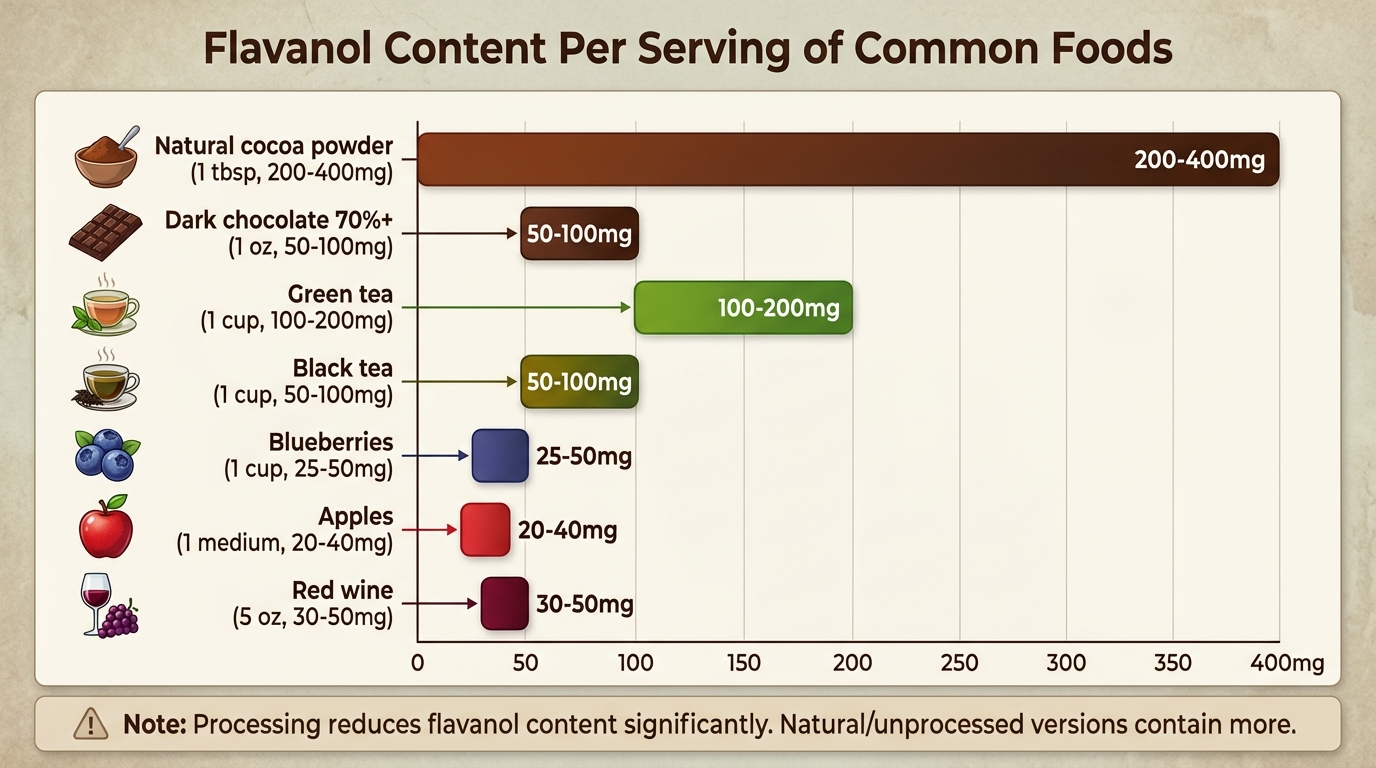
Tea provides a consistent, accessible source. Green tea contains approximately 100-200 mg of catechins (a flavanol subclass) per cup. Black tea, while often considered less healthful than green, still provides 50-100 mg. The brewing time matters: longer steeping releases more flavanols. Three cups of green tea distributed throughout a workday could provide protective levels. The caffeine content is lower than coffee, and there’s no sugar unless you add it.
Berries, apples, and grapes contribute flavanols along with other polyphenols that may enhance vascular effects. Blueberries, blackberries, and raspberries all contain meaningful amounts. Red wine provides flavanols along with resveratrol, though the alcohol content limits practical consumption. Alessio Daniele, PhD student on the Birmingham study team, notes that “apples, plums, berries, nuts, and green and black tea are all good sources” for those who prefer alternatives to cocoa.
The practical strategy involves distributing flavanol-rich foods throughout the day, with particular emphasis on consuming them before or during periods of prolonged sitting. A morning cup of green tea before settling into desk work, a handful of berries as a mid-morning snack, an ounce of dark chocolate after lunch, another cup of tea mid-afternoon. This approach keeps flavanol levels elevated during the times when sitting-induced vascular damage would otherwise occur.
Creating a Protective Daily Pattern
The Birmingham study used a single pre-sitting dose, but real-world application requires thinking about a full day of mixed activity and sedentary periods. Most people with desk jobs don’t have one continuous sitting bout; they have multiple sessions interspersed with brief movement. The goal is maintaining flavanol intake throughout the day to protect against accumulated vascular stress from these sedentary periods.
A protective pattern might look like this: Morning begins with green tea (100-200 mg flavanols) before starting work. Mid-morning includes a small handful of berries or an apple (20-50 mg). Lunch incorporates a square or two of dark chocolate (50-100 mg) as a finishing element. Mid-afternoon tea break adds another 100-200 mg. This distribution reaches the 500-700 mg range used in research without requiring large single doses or unusual foods.
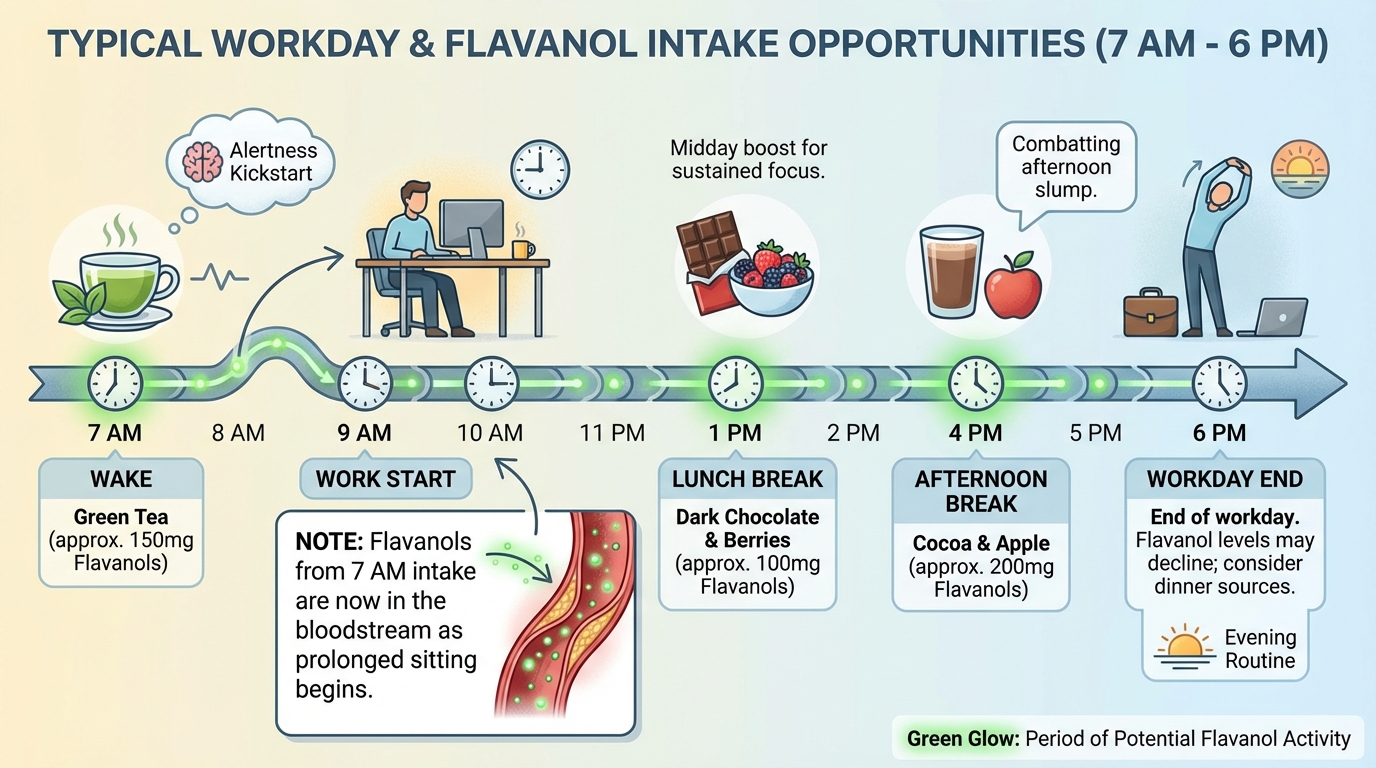
This approach should complement, not replace, movement breaks. The Birmingham researchers emphasize that flavanols prevent vascular dysfunction during sitting but don’t eliminate the other health risks of prolonged sedentary time. Muscle atrophy, metabolic slowing, and postural stress all require movement to address. The combination of regular movement breaks (every 30-60 minutes) plus consistent flavanol intake provides a more complete protection strategy than either alone.
For those who dislike tea or chocolate, the compounds can be obtained from supplements. Cocoa flavanol extracts and green tea catechin supplements provide standardized doses without the sensory elements of food. However, whole food sources offer additional benefits: fiber from berries, polyphenols beyond flavanols, and the general advantages of displacing less healthy snacks. A cup of tea instead of a soda, dark chocolate instead of a candy bar, berries instead of chips, creates positive substitution effects beyond the flavanol content itself.
Beyond Sitting: Broader Vascular Benefits
The protective effects demonstrated in the Birmingham study likely extend beyond just sitting-related damage. The fundamental mechanism, enhancing nitric oxide production and reducing oxidative stress, provides vascular benefits across multiple contexts. Aging naturally reduces endothelial function and nitric oxide availability. Chronic stress, poor sleep, and inflammatory diets all impair vascular responsiveness. Flavanols address the common pathway underlying many of these problems.
The cardiovascular benefits of flavanol-rich diets have been documented in numerous population studies. The Kuna people of Panama, who traditionally consume large amounts of cocoa, have remarkably low rates of hypertension and cardiovascular disease despite genetic backgrounds similar to mainland Panamanians with much higher rates. When Kuna migrate to urban areas and reduce cocoa intake, their cardiovascular risk rises to match their neighbors. This natural experiment suggests that lifelong flavanol consumption provides substantial protection.
Clinical trials have confirmed these observational findings. The COSMOS trial, one of the largest randomized controlled trials of cocoa flavanols, found that daily supplementation reduced cardiovascular events by 27% in the primary on-protocol analysis. Arterial stiffness, a marker of vascular aging, improved significantly. While these trials weren’t specifically studying sitting-related damage, they demonstrate that the vascular benefits observed in acute laboratory studies translate to meaningful long-term health outcomes.
The practical takeaway is that protecting your blood vessels from sitting damage is part of a broader strategy for cardiovascular health. Flavanol consumption provides immediate protection during sedentary periods and long-term benefits for vascular function as you age. Combined with regular movement, anti-inflammatory eating patterns, and other lifestyle factors, it forms one component of a comprehensive approach to maintaining cardiovascular health in a world that constantly pressures us to sit.
The Bottom Line
Prolonged sitting damages your blood vessels within hours, and exercise alone can’t prevent it. The University of Birmingham study provides compelling evidence that flavanol-rich foods, consumed before or during sedentary periods, can completely prevent the vascular dysfunction that normally occurs. This protection works through enhanced nitric oxide production, maintaining arterial flexibility and blood flow even when the mechanical stimulus of movement is absent. For the millions of people with desk jobs, long commutes, or other unavoidable sedentary demands, this represents a practical nutritional strategy for protecting cardiovascular health.
The dose required for protection, approximately 500-700 mg of flavanols daily, is achievable through whole foods without supplements. Natural cocoa, green and black tea, dark chocolate, and berries all contribute meaningful amounts. Strategic distribution throughout the day, with particular emphasis on consuming these foods before sitting periods, optimizes protection. This approach should complement regular movement breaks rather than replace them, providing a layered defense against the cardiovascular costs of modern sedentary life.
Next Steps:
- Start your workday with green tea (150-200 mg flavanols) before sitting down
- Keep dark chocolate (70%+ cacao) at your desk for a mid-day one-ounce serving
- Swap afternoon sugary snacks for berries or an apple
- Take a tea break mid-afternoon to maintain flavanol levels
- Continue movement breaks every 30-60 minutes for complete protection
Sources: University of Birmingham flavanol study (Journal of Physiology, 2025; DOI: 10.1113/JP289038), ScienceDaily coverage, University of Birmingham press release, American Journal of Clinical Nutrition cocoa flavanol meta-analysis, COSMOS cardiovascular outcomes trial.